Dimethyldichlorosilane: More Than Just a Building Block in Modern Chemistry
The Journey from Discovery to Industry Mainstay
Back in the early 20th century, most industrial chemists kept focused on carbon-based compounds. Silicon mostly played a supporting role in sand and glassmaking. That pattern shifted radically after the discovery of organosilicon chemistry, with Dimethyldichlorosilane leading a striking transition. This compound, made first in the mid-1940s, marked out a new path in manufacturing specialty materials. Companies like Dow Corning—born from wartime innovation—pushed for better electrical insulators, flexible waterproof coatings, and new rubbery polymers, and Dimethyldichlorosilane proved central to those developments. Its accessibility meant researchers and industry workers could turn to it as the foundation for making silicones, reshaping everyday life by improving product durability in industries as varied as electronics, textiles, and construction.
Getting to Know the Material Itself
The compound stands out for its sharp, musty smell and volatility. Structurally, the chemical links two methyl groups to a silicon atom, with two reactive chlorine atoms hanging off the sides. This simple formula, (CH3)2SiCl2, gives it power to react quickly and create new compounds. Its colorless liquid form can fume in moist air, giving off hydrogen chloride—a feature that commands respect and careful handling. The low boiling point, hovering near 70°C, means it doesn’t stick around if left open. That volatility works great for certain syntheses, but the biting fumes mean anyone around it needs suitable ventilation and solid respect for industrial safety.
The Label Tells a Story
Carrying the UN number for hazardous materials and falling under strict shipping guidelines, Dimethyldichlorosilane comes with standardized labeling described in the Globally Harmonized System. The data sheets sent along with the product detail flammability, severe respiratory danger on inhalation, and causticity on contact with water or skin. That’s all based on real incidents and regulatory history—each one a reminder that handling this chemical means putting knowledge ahead of convenience. Any label with words like “Causes severe burns” and “Toxic if inhaled” signals experience learned the hard way. Regulations keep updating as occupational health research uncovers more nuance in exposure risks.
Pathways of Preparation
Industry relies on the direct reaction of methyl chloride with silicon powder at elevated temperatures. This “direct process” ditches complicated steps for an efficient route, using copper as the activator. The raw materials keep coming from petroleum distillation and sand, keeping supply lines close to energy and raw material infrastructure. Even decades after its introduction, engineers still look for ways to stretch yields and make the reaction less energy-intensive. This prep method matured in parallel with the silicone industry. The end result: less waste, purer product, and smoother scale-ups for new global players entering the market.
Not Just a One-Trick Molecule—Chemical Versatility
Dimethyldichlorosilane springs into action the minute it hits water, breaking its Si-Cl bonds and producing hydrochloric acid along with silanol groups. Those silanols condense to lay the groundwork for silicone polymers, like the sturdy sealants around kitchen sinks and the flexible parts in medical devices. Chemists love tinkering with this framework, swapping out the methyl groups or stringing together longer chains to get just the right kind of silicone rubber, oil, or resin. It doesn’t stop at building polymers; it can sit at the start of dozens of routes into specialized industrial or lab reagents. The only limit is how much risk a lab or manufacturer wants to take in pursuit of a novel material.
Other Names — Tracing the Compound’s Identity
Dimethyldichlorosilane turns up under a stack of other names. You’ll see it on labels as DMDCS, Dimethylchlorosilane, or dichloro(dimethyl)silane. Sometimes catalogs list it next to its molecular formula or CAS number. In the global market, translation and local custom spin up new versions of the name, but every chemist recognizes its biting smell and the unmistakable chemistry.
Safety Grounded by Legacy and Data
This isn’t a chemical that tolerates carelessness. The reaction with water—spitting out clouds of hydrochloric acid gas—calls for chemical goggles, nitrile gloves, and solid procedures in case of a leak or spill. Lessons from past accidents have changed how storage tanks are fitted with scrubbers and remote sensors, proving that real-world mishaps drive safer routines faster than dull bulletins from regulatory agencies. Over the years, fire marshals and occupational health groups collected evidence to refine how workspaces are ventilated, what emergency showers must deliver, and how training pushes rescue drills beyond ticking off boxes. Every container brings hazard symbols, bold letters, and emergency numbers—living proof of regulatory memory at work.
Shaping Modern Markets
Automakers, clothing manufacturers, construction firms, and electronics giants all benefit from the reaction chemistry of Dimethyldichlorosilane. The silicone products that spring from it keep sealing out rain, wrapping circuit boards, and making textiles stain-resistant. Every time a new process needs high temperature tolerance, ultraviolet resistance, or non-stick coatings, researchers dip into the base chemistry provided by molecules like this one. Without Dimethyldichlorosilane and its kin, entire sections of modern industry would return to heavier, less reliable alternatives. Lightweight medical tubing, kitchen caulking, circuit encapsulation—these everyday items look the way they do because of innovative chemistry rooted in this simple, reactive molecule.
What Lab Researchers Can’t Ignore
Anyone researching new silicone materials starts with a hard look at precursor chemicals like Dimethyldichlorosilane. Cutting-edge work in drug delivery, 3D printing, and renewable energy pulls in customized silicones with tailored flexibility and stability. Research labs keep testing safer additives, react faster to new regulations, and measure the effect of trace impurities. Some of the smartest minds in chemistry and engineering target improved efficiency in the direct process, dreaming of ways to cut carbon output and reduce toxic byproducts. For the next generation, the question hangs in the air: can new catalysts or renewable approaches outpace entrenched supply chains?
Facing Up to Toxicity—No Room for Complacency
Reports from industrial hygiene researchers keep piling up: respiratory irritation, lung damage, and skin burns follow careless handling. Longitudinal studies track exposed workers to catch subtle, long-term effects. Animal studies and cell culture tests feed into regulatory thresholds. Once, this class of chemicals went into production lines with little more than gloves and open windows. Now, every new file from the National Institute for Occupational Safety and Health or European Chemicals Agency updates best practices, forcing a reckoning with just how quickly harm can come from a lapse in routine. Real people suffered—the legacy of those stories shapes protocols in every lab and plant today.
Toward a Smarter, Safer Industry
The future for Dimethyldichlorosilane will probably mean balancing its proven value against demand for greener, less hazardous alternatives. New catalyst research may allow less energy-intensive production. Process engineers talk about recycling chemical by-products, finding value in what used to be chemical waste streams. Environmental impact assessments nudge researchers to rethink water use, waste disposal, and emissions. Students learn not just reaction chemistry but the stories of mishaps and hard-won improvements. The next breakthrough may come from interdisciplinary teamwork—chemists, safety experts, policy makers, and sustainability advocates hashing out trade-offs instead of going it alone. Dimethyldichlorosilane set the stage for the silicone revolution, but its next chapter will reflect what today’s industry learns about responsibility, accountability, and innovation that leaves nobody behind.
What is Dimethyldichlorosilane used for?
A Foundation for Modern Silicone
Dimethyldichlorosilane has a name that doesn’t exactly roll off the tongue, but its impact shows up in places we rarely stop to notice. Take a good look around the kitchen or the bathroom—many of those soft, flexible sealants, cooking utensils, and waterproof coatings owe their performance to silicone. And at the core of making those materials, you find dimethyldichlorosilane.
This compound steps in as a main ingredient to produce silicone polymers. Silicone rubber and oils start out in chemical factories where dimethyldichlorosilane reacts with water, producing long chains of repeating silicone-oxygen units. Chemists figured this process out back in the early 20th century. The result? Silicone materials that serious industries and regular people lean on every single day.
How It Reaches Us
You pour cake batter into a flexible spatula and trust it won’t melt. You use a medical device in a hospital and count on it being stable and safe for the human body. Both situations benefit from silicone’s resilience and chemical resistance. What helps manufacture these silicones? The workhorse chemical, dimethyldichlorosilane.
This chemical gets made by reacting chloromethane with silicon at high temperatures. The process itself involves some tough safety protocols, since the raw material releases hydrochloric acid when exposed to moisture. Engineers and chemists who’ve worked with the reaction know all too well why proper equipment and protective gear matter. The rewards for managing risks correctly are clear: a steady supply of dimethyldichlorosilane ready for shaping into essential silicone products.
Beyond Kitchen Gadgets
Construction crews apply silicone caulk in high-rises, stopping air and water leaks in harsh climates. Tech companies need clean, non-conductive coatings on semiconductors and electrical parts. Even in space programs, NASA uses silicone elastomers derived from this foundational chemical for gear that withstands massive temperature swings. The reliability of dimethyldichlorosilane-based products stretches across fields you wouldn’t expect—textiles, personal care, automotive, and even food processing.
Health, Safety, and Sustainability
Handling dimethyldichlorosilane calls for respect. Chemical burns and lung irritation become real threats if mistakes happen. Plant operators, lab technicians, and anyone else who’s worked with chlorosilanes will tell you they read safety sheets, follow training, and invest in proper storage every step of the way. Regulators across countries set rules for how manufacturers store and move this compound. Following these rules keeps workers healthy and helps preserve public trust in the products built from these chemicals.
Thinking About Solutions
Plenty of research focuses on safer and greener ways to make and use dimethyldichlorosilane. Some companies explore recycling byproducts, others invest in designs that cut down how much raw material or energy they use. Universities test new catalysts to produce fewer emissions and minimize hazardous waste. Real solutions won’t come from one place—they build from experience, data, and a willingness to improve practices year after year.
Dimethyldichlorosilane isn’t a household name. Still, its influence in the materials that surround us remains hard to ignore. The challenge now comes down to using knowledge, experience, and solid science to keep its benefits while further shrinking the risks.
What are the safety precautions when handling Dimethyldichlorosilane?
Why This Chemical Deserves Respect
Anyone who’s worked with silane compounds knows that dimethyldichlorosilane can be a real handful. Its job out in the world includes making silicone rubbers, sealants, and even water-repellent coatings. The flip side: get careless and you’re asking for trouble. I’ve been in labs where this clear liquid’s sharp, biting odor hits you as soon as you uncap a bottle. That tells you right away—take precautions or pay the price.
PPE: The Gear Isn’t Optional
Gloves, goggles, and lab coats make up the bare minimum. Nitrile gloves offer more reliable resistance than latex, which quickly loses its barrier power. Goggles, not just safety glasses, shield eyes from splashes. I’ve seen a surprised tech jump back as a drop hit the bench—a strong reminder that exposed skin means instant burn risk. Fume hoods keep vapors from collecting at nose level, where you don’t want them.
Air Quality and Ventilation
Breathing in dimethyldichlorosilane’s fumes lands you in a world of hurt. It reacts with moisture, which lines your airways, forming hydrochloric acid and methanol. Coughing, burning eyes, and throat pain crop up within seconds. I learned the hard way that working on an open bench invites lingering clouds of vapor. An efficient ventilation system keeps the air moving and means you’re not taking in toxic gases with every breath.
Reacting with Water: The Unseen Risk
Mixing this compound with water brings an aggressive reaction—fizzing, heat, toxic gas. Storing it next to sinks or damp chemicals turns into a disaster waiting to happen. I make it a rule to check for spills, keep absorbent material handy, and only clean up with dry cloths designed for solvent work. That's not just for show; a single humid day can trigger problems if containers aren’t tightly sealed.
Storage: Out of Sight, Not Out of Mind
Sealed glass bottles with PTFE-lined caps handle storage best. Metal caps corrode, leaving leaks and chemical stains over time. Flammable liquid cabinets offer an extra layer of protection. Every season, I check for crusted lids and warped seals—no one wants to find out too late that vapors have escaped overnight. Labels need to stay bright and legible; I’ve scrambled to remember which bottle was which before, and that’s not a safe position.
Handling Spills and Emergencies
No matter how careful you are, spills happen. It pays to have a spill kit close by with compatible absorbents, not the generic granules that spark a reaction. Once, I watched a trainee toss ordinary kitty litter on a spill, causing a plume of stinging fumes—lesson learned. After any contact, using an eyewash or emergency shower beats waiting it out. Medical attention follows right after, whether or not symptoms look serious.
The Culture Around Safe Handling
Every workplace benefits from training that covers more than the basics. I appreciate sessions with hands-on demos and stories of near misses. No checklist replaces knowing how these chemicals behave when things go sideways. Real trust builds when everyone feels empowered to speak up and slow down if something’s off—no shame in double-checking a label or asking about storage.
Looking Ahead: Building Better Habits
Better safety starts by treating dimethyldichlorosilane with the respect it demands. Instead of slapping on basic PPE and hoping for the best, thoughtful planning keeps people out of the ER. Investing in equipment, labeling, and clear protocols does more than tick boxes for compliance. It builds a culture where dangerous shortcuts don’t stand a chance.
How should Dimethyldichlorosilane be stored?
Understanding the Chemical’s Value—and Risks
Working with chemicals was part of my daily routine for two decades in industrial labs, and certain names always grabbed my attention. Dimethyldichlorosilane stands out for both its utility and its risks. This compound acts as a backbone in creating silicone products, from caulks to medical-grade tubing, and it only takes a quick whiff to realize it isn’t something to handle casually. Its fumes can irritate the eyes and lungs, and one misstep with water can mean an uncontrolled reaction. Mishandling brings risk not just for people, but for entire facilities.
What Happens Without Proper Storage
I remember a scene from my early days: a small spill in a storage area led to a hasty evacuation. Someone had placed containers too close to a leaky water pipe, which turned out disastrous given dimethyldichlorosilane’s ability to release corrosive hydrochloric acid gas on contact with moisture. That event cost hours of safety time, ruined materials, and left folks rattled. Manufacturers and handlers ignoring basic storage needs risk facility shutdowns, product loss, and real harm to staff.
Practical Steps for Safe Storage
Experience and industry guidelines agree on the basics. Dimethyldichlorosilane belongs in a cool, dry, and well-ventilated spot. Never pick storage areas near water sources or humid rooms. Use tightly sealed, corrosion-resistant containers—stainless steel and properly lined drums perform better than glass, which can break and isn’t always resistant to fumes or pressure buildup. Even a minor leak can mean trouble.
Temperature shifts tend to accelerate its decomposition. Stable, moderate temperatures—often under twenty-five degrees Celsius—slow down any unwanted reactions. My team always relied on climate-monitored rooms, with sensors wired to alarms. Many times, those alarms signaled temperature changes after a storm or power outage, buying us precious minutes to secure our materials before trouble could start.
Don’t Skimp on Personal Protection and Training
I’ve seen a colleague ignore the “no synthetic gloves” rule once—his gloves broke down quickly after exposure. Use chemical-resistant gloves, splash goggles, and full-face shields when handling or moving dimethyldichlorosilane. An eyewash station and emergency shower within ten strides of any storage site offer extra assurance. This isn’t overkill; a splash or a lungful of fumes can lead to hospital visits, not just discomfort.
Fire Safety and Spill Plans: The Overlooked Essentials
Combining this silane with air and a spark can ignite fires most extinguishers won’t handle. Dry chemical extinguishers work best. Automatic sprinkler systems only raise the risk by adding unwanted water. It’s wise to post visible instructions and train every staffer until the steps become second nature. I found that regular, hands-on drills—clearing spills, extinguishing small blazes, alerting teams—made everyone more confident and cut response times.
Why Good Storage Boosts Confidence
A reliable storage system for dimethyldichlorosilane does more than just comply with regulations. Workers feel safer, managers lose less sleep, and businesses curb hazmat accidents. The investment in airtight, labeled containers, temperature alarms, and regular training pays off. Safe storage never amounts to wasted time or money—it builds trust in the workplace and ensures product quality from start to finish.
What is the chemical formula of Dimethyldichlorosilane?
Chemical Formula: Simple, Yet Vital
Dimethyldichlorosilane carries the formula Si(CH3)2Cl2. You’ve got one silicon atom, two methyl groups, and two chlorine atoms attached. Chemical structure sounds straightforward, but its impact stretches wide. The real power of a formula like this is more than memorization; it forms the backbone of a major class of compounds—organosilicon chemicals.
Connecting the Dots: Industry, Safety, & Health
These organosilicon compounds show up in daily life but don’t usually announce themselves. They get used to make silicones—think sealants, lubricants, medical implants. Without dimethyldichlorosilane, these products would cost more to make or wouldn’t perform as well. A small shift in the silicone supply chain can end up changing product prices at the hardware store or pharmacy.
Production and use always bring up questions about safety. Dimethyldichlorosilane reacts quickly with water, creating hydrochloric acid and dimethylsilanediol. That hydrochloric acid especially deserves respect. Exposure can lead to burns, breathing trouble, or worse. Workers on the floor learn quickly to use proper gear and handle even splashes with care. Labeling, storage, and ventilation make a difference here. The stories from older colleagues drive the lesson home: one careless move and you could end the day at the emergency room.
Accidents create knock-on effects beyond the plant. When these chemicals escape containment, they can hurt local water or air. The costs—both in cleanup and health—run high. Regulations force regular audits, equipment checks, and safety training. In practice, that means carving out time for drills, holding supervisors accountable, and fixing issues before they snowball. Honest reporting and a culture where people admit mistakes help everyone get home safe.
Science Behind the Formula
The structure makes this compound practical for building long chains—polymers—by swapping out those chlorine atoms for other groups. This method has helped chemists create materials that don’t crack, melt, or react the way most plastics do. The final properties depend on subtle changes in the starting molecule, and dimethyldichlorosilane’s arrangement gets things off on the right foot.
In research, I’ve watched how small details change the game. If you mess up in measuring reactants or let things get damp too soon, hydrochloric acid clouds can appear fast. That risk means you need both good tools and strong habits, not just printed instructions. The experience from the bench transfers directly to safe handling and consistent product quality.
Looking Toward Better Solutions
There’s always room for smarter processes and greener chemistry. Some labs focus on capturing the hydrochloric acid right at the source. Modern systems use closed loops and better seals, which shrink waste and protect the folks on the front lines. Training new staff takes time, but it pays off—low turnover usually leads to fewer incidents.
Broader discussions push industry to adopt cleaner processes or shift to alternatives with fewer byproducts. Public scrutiny, plus consumer awareness, means everyone involved faces pressure to improve. Strong policies and open communication keep surprises down and trust up, from those who make the chemicals to those who use the end products.
What are the potential health hazards of Dimethyldichlorosilane exposure?
What Really Happens During Exposure
Dimethyldichlorosilane gets used a lot in making silicone products. This chemical has a sharp smell, and contact with the liquid or its fumes burns skin, eyes, and lungs pretty badly. A lot of workers in industries like electronics and sealant production might have seen warning labels on drums of this stuff. Those labels show more than legal caution. The health risks have been well documented. My own brief time in a lab setting taught me to respect it: handling even a tiny drop made everyone tense up since the consequences can be immediate.
How the Chemical Affects the Body
Dimethyldichlorosilane does not mess around. Contact with eyes leads to burning pain, watering, even blindness if a splash sits for too long. It attacks skin so fast you can see the damage within minutes—deep reddening and blisters, which do not heal quickly. People who breathe in fumes end up with a painfully sore throat, cough, and sometimes tightness in their chest. The burning sensation runs down into the lungs, setting off bronchitis or pulmonary edema in tough cases. Old research from NIOSH shows that repeated exposure leads to chronic respiratory irritation, and over time some workers developed symptoms that lingered long after leaving the site.
Water Triggers Extra Trouble
One scary thing about this chemical comes from its reaction with water. Dimethyldichlorosilane breaks down when it touches moisture—air humidity is enough—and releases hydrochloric acid vapors as a byproduct. In a humid room, the stuff hisses and steams. Those acid fumes can eat away at both equipment and unprotected airways. From what I've seen, engineers and maintenance crews pay extra attention to venting, and always keep spill kits nearby for this reason.
Long-Term Effects
The long-term story of dimethyldichlorosilane is not fully known, but repeated unprotected exposure brings chronic coughing, skin allergies, and possible lung disease. Factories where safety rules slip tend to see higher asthma and dermatitis rates, and several occupational health studies have flagged this. The American Conference of Governmental Industrial Hygienists put it on their hazard lists because even low doses add up over time.
Safety Solutions that Protect Workers and Communities
Nothing beats a good safety routine at work. In industries where dimethyldichlorosilane plays a role, the best managers invest in well-ventilated workspaces and full-face chemical respirators. Nobody gets lazy about gloves—always chemical-resistant, always checked for holes. Eyewash stations next to mixing areas make a real difference, and those must never run dry. To keep exposure down, many factories switched to enclosed transfer systems that keep the air and human hands far from the chemicals.
Beyond the factory floor, disaster planning in transport and waste disposal has tightened up. Proper training stands out as one of the most important factors in reducing accidents. From my experience, real stories—photos of injured hands or workers talking about their own bad days—motivate safety habits more than any written rule.
What the Public Should Know
Dimethyldichlorosilane stays tucked away at most job sites, but the risk grows if a spill reaches water supplies or the air near neighborhoods. First responders focus on containment and fast evacuation. Public education means local people need to recognize the signs—stinging eyes or a chemical cloud—and know not to try neutralizing it themselves. The main lesson for any community near chemical plants: pay attention to hazard drills, and never skip emergency info sessions.
Keeping this chemical out of trouble is everyone’s job—from plant managers down to the neighbors living near a manufacturing zone. The consequences of slipping up reach much further than the factory gate.
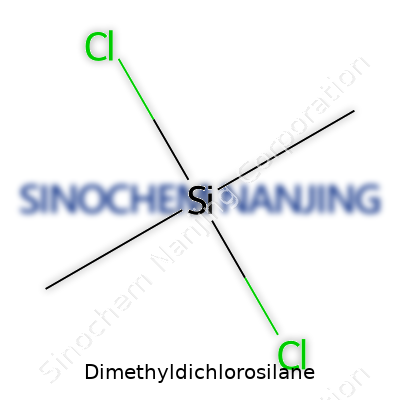
| Names | |
| Preferred IUPAC name | dichloro(dimethyl)silane |
| Other names |
Dichlorodimethylsilane Dimethyldichlorosilicon Dimethylsilicon dichloride Dichloro(dimethyl)silane DMDC |
| Pronunciation | /daɪˌmɛθɪlˌdaɪˌklɔːroʊˈsaɪleɪn/ |
| Identifiers | |
| CAS Number | 75-78-5 |
| Beilstein Reference | 1209227 |
| ChEBI | CHEBI:85155 |
| ChEMBL | CHEMBL44596 |
| ChemSpider | 8723 |
| DrugBank | DB01835 |
| ECHA InfoCard | 13f83e36-95cf-4fb5-88b0-bca784df1e1a |
| EC Number | 200-661-7 |
| Gmelin Reference | 66422 |
| KEGG | C06842 |
| MeSH | D004105 |
| PubChem CID | 6613 |
| RTECS number | TS3150000 |
| UNII | I8T2Z72M7A |
| UN number | UN1162 |
| Properties | |
| Chemical formula | C2H6Cl2Si |
| Molar mass | 129.10 g/mol |
| Appearance | Colorless to yellowish liquid |
| Odor | Sharp, pungent |
| Density | 1.06 g/cm3 |
| Solubility in water | Decomposes |
| log P | 0.7 |
| Vapor pressure | (1200 mmHg at 20 °C) |
| Acidity (pKa) | pKa ≈ 2.0 |
| Basicity (pKb) | 3.36 |
| Magnetic susceptibility (χ) | -41.0e-6 cm³/mol |
| Refractive index (nD) | 1.410 |
| Viscosity | 0.65 mPa·s (25 °C) |
| Dipole moment | 1.30 D |
| Thermochemistry | |
| Std molar entropy (S⦵298) | 222.6 J·mol⁻¹·K⁻¹ |
| Std enthalpy of formation (ΔfH⦵298) | -389.8 kJ/mol |
| Std enthalpy of combustion (ΔcH⦵298) | -1296.4 kJ/mol |
| Hazards | |
| GHS labelling | GHS02, GHS05, GHS07 |
| Pictograms | `GHS02`, `GHS05`, `GHS06` |
| Signal word | Danger |
| Hazard statements | H225, H314, H335 |
| Precautionary statements | P210, P260, P262, P264, P280, P301+P330+P331, P303+P361+P353, P304+P340, P305+P351+P338, P310, P321, P363, P405, P501 |
| NFPA 704 (fire diamond) | 3-4-2-W |
| Flash point | 32 °F |
| Autoignition temperature | 456°C |
| Explosive limits | Explosive limits: 4-16% |
| Lethal dose or concentration | Lethal dose or concentration: "LD50 (oral, rat): 2260 mg/kg |
| LD50 (median dose) | LD50 (oral, rat): 2290 mg/kg |
| NIOSH | T0995 |
| PEL (Permissible) | PEL (Permissible Exposure Limit) for Dimethyldichlorosilane: "5 ppm (ceiling, OSHA) |
| REL (Recommended) | 5 ppm |
| IDLH (Immediate danger) | 50 ppm |
| Related compounds | |
| Related compounds |
Trimethylchlorosilane Methyltrichlorosilane Tetramethylsilane Dimethylsilane Dichlorosilane |



