N,N-Dimethylacetamide: Beyond the Beaker
Historical Development
N,N-Dimethylacetamide (DMAc) traces its roots back to a time when chemists looked to amides for their versatile applications. In the post-war chemical boom, when companies across the US and Europe pushed for more robust solvents to meet industrial demand, DMAc began finding its place in labs and factories. Looking at articles from that era, it's clear DMAc didn't become widely recognized overnight. Chemists experimented with many solvents until they noticed DMAc’s particular ability to dissolve tough polymers as well as inorganic salts. Its introduction brought significant momentum to synthetic fiber production and plastics manufacturing. For someone who has sifted through mid-century patents, it's hard not to appreciate how a simple structure like DMAc could push technological boundaries, especially in textile and pharmaceutical development.
Product Overview
DMAc generally appears as a colorless, high-boiling liquid with a faint, amine-like smell. Thanks to its polar nature, clients from all kinds of industries lean on its dissolving power. You can find DMAc in the textile world where it handles the spinning of acrylic and polyurethane fibers. In pharmaceuticals, it earns its keep in drug synthesis and formulation. Manufacturers value DMAc mainly because it walks the line between affordability and performance, surviving conditions that would see weaker solvents break down or evaporate. My years collaborating with chemical engineers have shown me that few solvents balance performance and cost quite like DMAc, especially with demanding polymers such as polyimides and aramids.
Physical & Chemical Properties
Its boiling point hangs around 165°C, making it reliable in processes needing heat without regular top-ups from evaporation. With its strong affinity for water, DMAc mixes freely with alcohols, ethers, and even some chlorinated solvents. Chemists favor it for this, as it allows a wide choice of reactants and conditions. Its molecular design, with two methyls flanking an acetamide core, gives it both strength and flexibility in tough synthesis schemes. Not every solvent can claim low viscosity and high polarity, and this sets DMAc apart for multi-phase reactions. Many engineers, myself included, have witnessed on the shop floor how its stability under pressure reduces batch failures or unexpected crystallization.
Technical Specifications & Labeling
DMAc usually hits the market at high purities—often above 99%—meeting tightly regulated standards for residual water and acidity. Any deviations can affect product quality in manufacturing fibers or drugs, so most processors insist on lot-to-lot consistency and clear batch records. Purity checks through chromatography and titration remain routine. Proper labeling covers concentration, storage instructions, and official hazard designations, which are crucial in moving DMAc between global borders safely. Experience in manufacturing reminds me that a mislabel or bad batch hurts production runs, puts worker safety at risk, and can shut down supply chains for days. The rigorous documentation surrounding DMAc isn’t overkill; it’s a well-earned practice rooted in decades of regulatory learning.
Preparation Method
Most industrial producers synthesize DMAc from acetic anhydride and dimethylamine, usually in closed reactors to minimize emissions. The process kicks out heat and requires careful control to prevent runaway reactions. Lab-scale setups look simple, but scaling to commercial quantities involves high-pressure containment and robust purification loops. By-products and waste streams challenge operators to improve recovery and reuse strategies, especially as environmental scrutiny mounts. In my time collaborating on pilot plants, we often reworked distillation sequences for DMAc to squeeze out more yield while sending less waste for incineration. Each tweak in process chemistry shows up down the line in cleaner air, fewer compliance headaches, and more predictable costs.
Chemical Reactions & Modifications
DMAc stands up well in aggressive chemical environments, but it’s no bystander. Under basic conditions, it acts as a methylating agent, donating methyl groups to nucleophiles. Strongly acidic or oxidizing environments break it down to simpler amides or acids, which operators try to avoid. DMAc’s stability allows it to shuttle highly reactive intermediates during pharmaceutical synthesis and advanced materials production. In semiconductor wafer cleaning, its non-reactivity means more precise results without unexpected residues. I’ve worked alongside groups that tried replacing DMAc with milder solvents, only to find side-reactions increasing yield losses or fouling expensive reactors.
Synonyms & Product Names
People in the trade use several names for DMAc: dimethylacetamide, N,N-Dimethylacetamide, or sometimes DMAC. Safety data sheets and product labels tend to stick with the full chemical name to reduce confusion around similar amides. Across continents, buyers might ask for “dimethylacetamide” in Europe while American suppliers lean into the abbreviation “DMAc.” Keeping nomenclature straight sounds trivial until you order the wrong drum, halt production, or mix up safety procedures.
Safety & Operational Standards
DMAc poses health hazards that demand respect. Inhalation or prolonged skin contact can irritate the body, and studies link it to possible reproductive risks after chronic exposure. Companies must enforce strong ventilation, sealed transfer systems, and personal protective gear. The U.S. Occupational Safety and Health Administration and its European counterparts publish exposure limits. Any work I’ve done in facilities using DMAc required strict leak detection, solvents transfer via closed pumps, and rapid spill management. Incidents happen fast and leave lasting consequences, so every operator learns the importance of field-level hazard communication and quick response plans. Workers and managers alike recognize that cutting corners on protective gear or monitoring systems saves nothing in the long run.
Application Area
Textile spinners swear by DMAc for dissolving and wet-spinning tough polymers like aramid fibers, which make up bulletproof vests and high-end filtration equipment. In pharmaceuticals, it works as both a reaction medium and a carrier for complex active ingredients. The paint and coatings world loves its ability to blend stubborn resins and create uniform films. Research and commercial battery makers rely on DMAc to dissolve electrolytes for advanced lithium-ion designs. Watching the ways chemists and engineers adapt DMAc for everything from cable insulation to industrial adhesives proves just how broad one solvent’s reach can be in modern manufacturing.
Research & Development
Current R&D projects zero in on DMAc’s role as a carrier or reactant for advanced polymers with heat resistance and mechanical strength. Academics look for ways to tweak the molecular structure, hoping for similar dissolving power with less toxicity. Researchers pair DMAc with emerging green chemistry approaches for catalytic cycles or more circular solvent lifecycles. In collaborative projects, new analytical methods aim to detect trace DMAc contamination in finished goods, protecting both worker health and consumer safety. So far, results show progress, but the transition to safer alternatives is slow due to entrenched process economics and performance requirements.
Toxicity Research
Long-term studies in lab animals flagged DMAc for risks tied to reproduction and organ toxicity. Regulatory agencies responded by mandating tighter workplace exposure and effluent controls. Workers report headaches, skin rashes, and nausea when protections fail. Regulators in Europe and North America keep reviewing the toxicity data, leading to changing classifications and, in some cases, restricted use in consumer products. From experience, it’s clear that effective training and robust safety gear mark the difference between routine handling and medical complications. Industry groups and academic labs continue sharing fresh toxicity results, pushing manufacturers towards both transparency in chemical use and real investment in worker health.
Future Prospects
The pressure grows for industry to keep DMAc in check, balancing its technical usefulness with health and environmental risks. Companies invest in greener alternatives and process redesigns. Solvent recycling grows in popularity, both to contain costs and to answer regulators’ calls for waste reduction. Industry’s move toward closed-loop systems lowers emissions and stretches DMAc’s utility without leaving a mess for local communities. Academic teams attack the challenge from both ends: replacing DMAc or creating better protective technologies for those who still need it. Society expects cleaner chemicals and safer work, and the next generation of chemists can already see the stakes in keeping solvents like DMAc well managed or finding the next best thing.
What is N,N-Dimethylacetamide (DMAc) used for?
Everyday Chemicals with Big Roles
Take a look around—most of us have something in our lives that owes a nod to N,N-Dimethylacetamide, or DMAc. This chemical sits in places you wouldn’t expect, especially if you use synthetic fibers or work in a medical setting. DMAc isn’t a household name, but in the industrial world, it works behind the scenes in powerful ways.
The Backbone of Flexible Plastics and Fabrics
People who’ve ever worn workout gear, used high-performance rain jackets, or even old reliable polyester, are probably closer to DMAc than they think. DMAc acts as a solvent in the production of synthetic fibers like polyacrylonitrile and spandex. Manufacturers lean on DMAc because it dissolves polymers that water or standard solvents can’t touch. What does that mean in plain terms? Better elasticity, softer touch, and clothes that keep their shape after dozens of washes. Without a solvent as reliable and strong as DMAc, getting these fibers from raw material to final thread would take longer, cost more, and consume even more energy.
Supporting the Electronics and Pharmaceuticals Industry
Modern electronics rely on thin films and coatings that need to be just right. DMAc steps up here, acting as a solvent for polymer materials in everything from smartphone screens to rechargeable batteries. In the pharmaceutical world, DMAc makes life-saving drugs possible. Pharmaceutical chemists use DMAc to dissolve challenging compounds and speed up reactions that create active ingredients in medications. The ability to support both research and mass production helps get medicines from the lab to the pharmacy shelf. So, next time you check your phone for a doctor’s prescription, DMAc might’ve had a small but crucial hand in both.
Smoothing Out Paints and Adhesives
Crafters, contractors, and even parents dealing with sticky messes unknowingly cross paths with DMAc in paints and adhesives. A strong solvent base helps these products spread evenly and hold fast where it counts. Water-based glues have their limits—DMAc handles heavier jobs such as in industrial laminates and specialty adhesives, the kind holding your favorite sneakers or car interiors together. This kind of versatility keeps DMAc locked into formulas across retail and construction alike.
The Health Debate and Safer Handling
Now, where there’s great industrial power, there’s responsibility. DMAc comes with real health and environmental concerns. Handling DMAc without proper safety protocols can cause skin and respiratory issues. Studies have raised concerns over reproductive risks in workers exposed over long periods. Regulatory bodies require chemical manufacturers to regularly test workplace air, offer protective gear, and train staff thoroughly. Replacing older ventilation systems and investing in containment reduces hospital visits and environmental leaks. Innovation isn’t only in products; safer manufacturing matters just as much.
Looking Forward
Modern life keeps finding new uses for chemical workhorses like DMAc. Some companies already invest heavily in closed-loop systems, recycling solvents after use instead of releasing them. Ongoing green chemistry research aims to develop alternatives that offer all the technical punch, without the downsides. Consumer demand for safe, sustainable goods helps keep that pressure up. The textile, electronics, and pharmaceutical industries have a responsibility to keep dialing up protection—so society can keep enjoying the benefits, with less of the worry.
What are the safety precautions when handling N,N-Dimethylacetamide?
Why This Chemical Demands Respect
N,N-Dimethylacetamide shows up in labs and factories where solvents can't cut corners. It’s tough, breaking down stubborn polymers, and useful in industrial coatings. Still, working with it is much more than just setting a beaker on a workbench. I've seen too many techs shrug off the warnings at first. It smells no stronger than faint ammonia, but don’t be fooled. This solvent means business, and the stories that stick come from accidents—the person who lost focus, spilled a few drops, and paid with skin rashes or worse.
The Real Hazards
OSHA and European regulators agree: N,N-Dimethylacetamide slips right through the skin and into the bloodstream. It causes irritation, burns, and, over time, can disrupt the liver. The vapor blindsides people who trust an open cabinet’s airflow. People in chemical handling usually share tales about headaches, nausea, or those gloves eaten through after minutes, not hours.
Handling this stuff without respect is careless. Go light on it and soon you’ll get a sharp lesson in why the MSDS (Material Safety Data Sheet) is more than paperwork. It’s information that can save skin, lungs, or eyesight.
What Safe Practice Looks Like
People who work safely with N,N-Dimethylacetamide rely on clear routines. It’s not just about equipment—though the right gloves, coats, and goggles are non-negotiable. The real safety net comes from habits and discipline.
Gloves: Nitrile or butyl rubber gloves give the best protection. Latex or vinyl never cut it; this solvent slides right through. Replace gloves at the first sign of wear or splash, no matter what the schedule says.
Eye Protection: Chemical splash goggles keep droplets out better than regular safety glasses. Face shields work best if there’s a risk of spills or pouring from height.
Clothing: Long sleeves and lab coats shield skin, but those alone won’t stop a soak-through. Cloaks and aprons made for chemicals do a better job.
Ventilation: A chemical fume hood or strong exhaust system is a must. This stuff vaporizes quickly, and it doesn’t show up in the air like smoke. Regular checks of the ventilation system aren’t just maintenance—they protect everyone in the room.
Spill Control: No one plans a spill, but everyone should expect one. Absorbent pads, proper chemical spill kits, and training—these make the difference between a minor incident and a hospital trip.
Labeling and Storage: Storage means clear labels, child-proof caps, and keeping incompatible stuff far away. Amides like this one are tough, but mix-ups with strong acids or oxidizers lead to nasty reactions.
Solutions Anyone Can Apply
Hands-on training works better than manuals alone. Bring new employees into safety drills as soon as they walk in the door. I have always found that short, frequent sessions stick better than giant binders. Test gloves with every new shipment, since suppliers sometimes change without warning. Audit storage spaces monthly, not yearly, and you’ll spot problems before they grow.
Strong safety comes from culture, not just equipment. Workers should set an example for each other—point out mistakes and share smart hacks, like double-gloving for tricky jobs or taping cuffs for extra security. Tell stories of close calls, because real voices stick with people far longer than diagrams or warning symbols.
Final Thoughts
N,N-Dimethylacetamide doesn't offer second chances. Staying safe comes from respect, real-world habit, and support at every level, from the lab bench through to company policy. Safety isn’t complicated, but it’s never automatic; it takes constant, everyday attention.
Is N,N-Dimethylacetamide hazardous to health or the environment?
Everyday Uses Bring Everyday Questions
N,N-Dimethylacetamide, known in industry circles as DMAc, pops up in places many folks wouldn’t expect. People making plastics, fibers, and pharmaceuticals count on this solvent for its ability to dissolve tough materials. Every so often a chemical like this moves from the background to the front page, and concerns about its safety for both people and the planet get louder.
Health Hazards: Workers on the Frontline
Most regular citizens never come near a drum of DMAc. It’s the factory workers, lab technicians, and chemical handlers who breathe its fumes or get it on their skin that face the real risks. Toxicologists learned that DMAc passes through skin easily and travels through the body. Past studies linked long-term exposure to liver and reproductive harm. Reports from exposed workers have included nausea, dizziness, and irritation in the eyes and airways. People who’ve spent years around open DMAc containers sometimes wind up with altered liver enzymes.
Agencies in Europe flagged DMAc as toxic for reproduction, and it’s one of those rare chemicals where you actually notice a difference at work after better ventilation or gloves are introduced. On a personal note, I worked with adhesives in my twenties, and we used plenty of strong solvents. Standing next to an open bucket for an hour always left my head spinning and my throat burning. Workplace safety hinges on two points: adequate ventilation and real enforcement of personal protective gear.
Environmental Concerns: More Than Just Clean Air
DMAc easily evaporates, sending invisible vapors drifting wherever the wind blows. Air quality suffers near busy production sites. The compound resists breaking down in water, which means it sticks around long after spills or washdowns reach local streams. There’s evidence it can hurt fish and some aquatic plants, particularly in places where wastewater treatment plants don’t fully remove it.
Environmental agencies in the U.S. and Europe keep a watchful eye on DMAc. Factories have to keep airborne levels below tough limits. That said, enforcement depends on local governments having both the muscle and the will. Sometimes communities near production sites end up in the middle—regularly reporting strange smells or increased headaches—but see slow progress. In neighborhoods around chemical plants, trust comes through regular water and air testing, not just press releases.
Possible Solutions: Reducing Risks, Protecting People
Science made DMAc possible, and now science offers ways to cut its hazards. Some companies switched to safer alternatives in their recipes. Where substitution doesn’t work, engineering controls like closed systems and real-time leak detectors reduce worker exposure. Genuine training, not just a video and a test, helps workers understand when and why gloves matter.
Policy changes play a big role, too. Tougher disclosure rules make it easier to track chemical releases and force companies to take real steps instead of just reporting numbers. Legal pressure alone rarely fixes an industrial problem. Industry and government cooperation—along with straight talk from impacted communities—gives the best shot at safer workplaces and cleaner neighborhoods.
What is the chemical formula and molecular weight of N,N-Dimethylacetamide?
Chemical Formula and Molecular Weight
N,N-Dimethylacetamide carries the chemical formula C4H9NO. Its molecular weight clocks in at 87.12 g/mol. Not the biggest molecule in the lab, but definitely one that packs a punch when used properly. I remember grappling with its peculiar smell through a face mask, trying not to splash a drop on my gloves.
Why Its Properties Matter
This liquid dissolves many polymers and resins, so the folks working in synthetic chemistry or pharmaceuticals keep it stocked nearby. Don't be fooled by its clear, watery appearance. Once, during a university project, I reached for water and almost grabbed the dimethylacetamide. That lesson stuck, especially after a lab partner called out that it can absorb right through your skin. Respect for PPE hit home for me right there.
According to the PubChem database and the CDC, N,N-Dimethylacetamide shows up on lists of common solvents. It’s not just for big industry, either. Artists who work with specialty paints might run into it, and anyone working with adhesives or synthetic fibers, like in some sportswear, depends on its unique ability to dissolve and blend tough polymers. The molecule might feel small, but its reach goes far beyond the chem lab.
Potential Health and Environmental Issues
If you’ve never read the safety label on a bottle of N,N-Dimethylacetamide, now’s as good a time as any. Known for its ability to float through latex and even nitrile gloves, it deserves careful handling. Some studies, including ones published by the National Institutes of Health, highlight effects on liver function below acute toxicity levels. Workers without access to chemical-resistant gloves face a real risk, and too many small shops overlook this detail.
Repeated exposure has also been linked to reproductive risks, and nobody needs unnecessary surprises in their workplace. I've seen how often employers rely on "industry standard" gloves, only to learn those don’t hold up against this solvent. The right kind of chemical-resistant glove, plus proper ventilation, takes the guesswork out of safety. Facts like these underline the importance of real training, not just warnings taped to a lab door.
Solutions and Best Practices
Good safety training beats warnings printed small on a label. People need honest, face-to-face explanations about why standard gloves don’t cut it. Supervisors who make PPE part of the culture see fewer incidents and less cleanup. Regular glove changes and a habit of washing hands after handling dimethylacetamide go a long way. One practical solution involves engineering controls — closed handling systems, careful spill containment, and a ready eye-wash station. These steps keep small accidents from turning into big problems.
Proper storage counts too. Keep N,N-Dimethylacetamide away from acids and oxidizers. Store it in a dry, cool place with clear labels. I once saw a bottle incorrectly labeled as regular acetone — an honest mistake but one that could have turned dangerous. Double-checking storage and labeling prevents that sort of mix-up.
Final Thoughts
N,N-Dimethylacetamide earns its spot as an indispensable tool in science and manufacturing. Its molecular formula C4H9NO and weight of 87.12 g/mol mark it out on paper, but the real story unfolds wherever it’s put to use. Attention to safety, respect for its properties, and honest conversations in the workplace make all the difference. Those small steps add up, keeping people and projects on track.
How should N,N-Dimethylacetamide be stored and transported?
What Makes N,N-Dimethylacetamide Challenging?
N,N-Dimethylacetamide (DMAc) pops up a lot in manufacturing, especially with fibers, plastics, and pharmaceuticals. Its effectiveness stems from how readily it dissolves complex substances. That same property means it can be tough on the skin and can creep into the air if not contained. So ignoring the risk costs real money, time, and sometimes health.
I spent some time in a fibrous yarn facility that ran DMAc in the spinning process. One thing everyone learns fast—an ordinary barrel and a drafty shed won’t pass inspection, let alone keep workers safe.
Clear Steps for Proper Storage
People underestimate small mistakes in chemical storage. DMAc seems clear, thin, almost harmless, but it eats away at certain plastics, seeps through thin gloves, and fills up the room with fumes above room temperature. Because of its high flash point, most folks feel safe, but long-term exposure does just as much harm.
A few tried-and-true rules always seem to matter:
- Use the right container: Drums and tanks lined with stainless steel or HDPE keep the liquid from reacting with the walls. Steel works only if coated correctly. Cheap containers buckle within months, and no one wants a leaky drum in a warehouse corner.
- Temperature control counts: DMAc flows just fine at room temperature but climbs in pressure and turns volatile with heat. Storing it in a cool, shaded space, far from ovens or welders, reduces the risk. My old lab manager loved redundant thermometers—turns out, they save more product than they cost.
- Keep a lid on it: Tight sealing stops evaporation, so fume hoods and vapor recovery systems cover both the product and the people. I learned the value of a proper gasket on a windy day—one bad seal filled half the plant with that telltale odor within minutes.
- Avoid water and incompatible mixes: DMAc pulls in moisture from the air, and reacts with oxidizers. Store it away from acids, bases, or open sewers. Keeping chemicals on separate shelves or in dedicated storage sheds brings peace of mind—and meets every inspector’s expectations.
Safe Transport—What Actually Works
Anyone who’s received a delivery gone wrong knows how even stable-seeming chemicals turn risky in motion. Once, a driver left DMAc drums rolling unsecured in the back. By the end, he cleaned up a spill for hours and filled out incident paperwork even longer.
- Seal drums and containers tightly and check every time they’re loaded or unloaded. Even well-built highways throw enough bumps to loosen a lazy cap.
- Label everything clearly with hazard signs recognizable from a distance. Emergency teams react faster to clear labels, and neighbors know what’s rolling by.
- Set up spill kits and train handlers how to use them. The most expensive kits don’t help unless the frontline workers know how to grab them and contain a leak instantly.
- Regulate temperature during long transports. Shade, insulation, or temperature-controlled vehicles stop pressure buildup. The risk is higher in the summer, but even mild climates call for vigilance.
Looking Forward—Protect Health, Save Money
Workers deserve to know what’s in their hands. Continuous training, open emergency exits, and regular audits help keep safety real. Even for experienced crews, repeating safety basics never hurts, especially with chemicals like DMAc that seem mild until mishandled. Answers aren’t found in complicated gear but in good habits and reliable inspection logs. Pay attention early, and most hazards never appear.
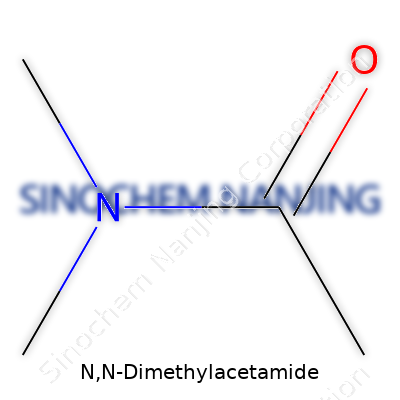
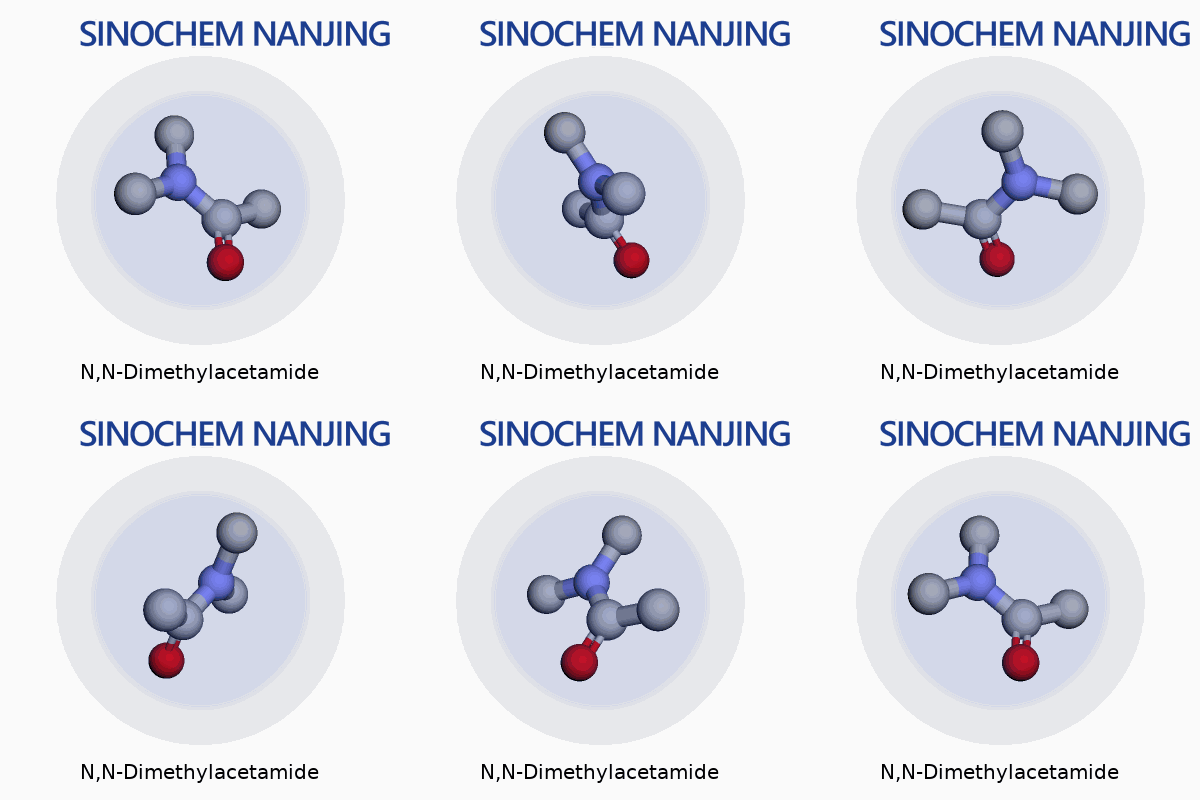
| Names | |
| Preferred IUPAC name | N,N-dimethylacetamide |
| Other names |
Dimethylacetamide DMA DMAC Acetic acid dimethylamide N,N-Dimethylacetic acid amide |
| Pronunciation | /ˌdiːˌɛmˈaɪˈeɪ.sɪˌtæm.ɪd/ |
| Identifiers | |
| CAS Number | 127-19-5 |
| Beilstein Reference | 604108 |
| ChEBI | CHEBI:4615 |
| ChEMBL | CHEMBL1428 |
| ChemSpider | 5797 |
| DrugBank | DB01711 |
| ECHA InfoCard | 100.058.223 |
| EC Number | 3.5.4.7 |
| Gmelin Reference | Gmelin 8344 |
| KEGG | C01780 |
| MeSH | D003184 |
| PubChem CID | 31375 |
| RTECS number | AF3675000 |
| UNII | 7O02E9E3CT |
| UN number | 2264 |
| Properties | |
| Chemical formula | C4H9NO |
| Molar mass | 87.12 g/mol |
| Appearance | Colorless transparent liquid |
| Odor | Faint amine odor |
| Density | 0.944 g/mL at 25 °C (lit.) |
| Solubility in water | Miscible |
| log P | “-0.77” |
| Vapor pressure | 3.7 mmHg (20°C) |
| Acidity (pKa) | Acidity (pKa): 30 |
| Basicity (pKb) | pKb = 13.32 |
| Magnetic susceptibility (χ) | -7.44 × 10⁻⁷ |
| Refractive index (nD) | 1.438 |
| Viscosity | 0.92 mPa·s (20 °C) |
| Dipole moment | 3.72 D |
| Thermochemistry | |
| Std molar entropy (S⦵298) | 235.6 J·mol⁻¹·K⁻¹ |
| Std enthalpy of formation (ΔfH⦵298) | -184.0 kJ/mol |
| Std enthalpy of combustion (ΔcH⦵298) | -2268.6 kJ/mol |
| Pharmacology | |
| ATC code | V03AX22 |
| Hazards | |
| GHS labelling | GHS02, GHS06, GHS08 |
| Pictograms | GHS05,GHS07,GHS08 |
| Signal word | Warning |
| Hazard statements | H226, H312, H319, H360 |
| Precautionary statements | P210, P261, P280, P304+P340, P312, P308+P313, P403+P233 |
| Flash point | 65 °C |
| Autoignition temperature | 340 °C |
| Explosive limits | Explosive limits: 1.8–11.5% |
| Lethal dose or concentration | LD50 oral rat 4263 mg/kg |
| LD50 (median dose) | LD50 (median dose): Oral, rat: 4260 mg/kg |
| NIOSH | NIOSH: JF6475000 |
| PEL (Permissible) | PEL (Permissible Exposure Limit) of N,N-Dimethylacetamide: 10 ppm (TWA) |
| REL (Recommended) | 10-20 ppm |
| IDLH (Immediate danger) | 100 ppm |
| Related compounds | |
| Related compounds |
Acetamide Dimethylformamide N,N-Dimethylethanolamine N-Methylacetamide N,N-Diethylacetamide |



