Dimethoxymethane: Past, Present, and Emerging Roles
Historical Development
Dimethoxymethane didn’t just drop into the lap of industry overnight. Chemists began to notice its unique structure—two methoxy groups hugging a central methylene—back in the late 1800s, after formaldehyde chemistry caught people’s eye. Early applications showed up in labs as solvent and reagent. Researchers realized quickly that this molecule could do things ethyl ethers couldn’t handle. In the post-war years, chemical industries riding the wave of growth started looking for new, safer, and more versatile solvents. By the 1960s, dimethoxymethane started showing up in engine and electronic sectors, thanks to its low boiling point and low toxicity compared to older ether solvents. Its formula spread out from laboratory benches into factory floors and research centers.
Product Overview
What sets dimethoxymethane apart isn’t just its clear, colorless liquid nature or faint, sweet aroma. The molecule brings a level of utility tough for many competitors to match. With the ability to dissolve wide classes of resins, fats, and oils, it welcomes chemists and industrial users looking for a versatile partner. It handles moisture with more grace than diethyl ether. Fuel blenders value it, as it lends volatility and oxygen content to gasoline, helping engines fire up cleaner and more reliably. Environmental regulations keep squeezing older solvents, and dimethoxymethane steps up—often with safer handling and lower emissions.
Physical & Chemical Properties
The structure—CH3OCH2OCH3—sounds simple, but it makes a difference in labs and on production lines. The boiling point hovers around 42°C, so it leaves the scene quickly during distillations. Nonpolar and barely mixes with water, yet it dissolves a broad array of organic compounds. It doesn’t grab onto water like some ethers do, so users get more predictable results. Its vapor holds a low flash point, which means risk of ignition stays a real concern in any workspace. The molecular weight measures in at 76.1 g/mol, adding the right balance for fuel blending and chemical synthesis.
Technical Specifications & Labeling
Chemists and safety officers pay attention to more than just CAS numbers, which for dimethoxymethane is 109-87-5. The purity of commercial solutions often reaches 99% or higher, with trace impurities like methanol or water monitored closely. Flammability warnings crop up on every container. The labeling must relay GHS-compliant warnings. Concentration and contamination limits can make or break product performance in pharmaceutical or electronics manufacturing. Ability to deliver the right grade to meet process tolerances separates reliable suppliers from the rest.
Preparation Method
Manufacturing dimethoxymethane usually rides on the reaction of methanol with formaldehyde—either as an aqueous solution or paraformaldehyde—under acidic catalysis. Industries lean on mineral acids like sulfuric acid to drive the process, stripping water out as the dimethoxymethane forms. This process produces byproducts, mainly water and unreacted methanol. Companies recycle solvents and vent offlight gases, keeping waste in check and yields high. With mounting pressure to limit greenhouse emissions, process engineers tweak reaction conditions and catalysts to squeeze extra efficiency from every batch.
Chemical Reactions & Modifications
Dimethoxymethane stands out as both building block and intermediate. In pharmaceutical synthesis, chemists use it to introduce methoxymethyl protective groups onto alcohols, shielding sensitive sites during multi-step syntheses. This “MOM” group detaches under mild acidic conditions, letting the core molecule shine once the synthetic work is done. Beyond protection, dimethoxymethane reacts with strong acids or halogens, giving rise to methyl halides and formaldehyde derivatives. Its ability to act as a mild methylating agent sometimes replaces harsher, more toxic chemicals. Sometimes, chemists tweak it under catalytic cracking, looking to produce lighter molecules and value-added intermediates for fuel or plastics manufacturing.
Synonyms & Product Names
Dimethoxymethane wears several hats in catalogs and research papers. Common synonyms include methylal, methoxymethane, or even formaldehyde dimethyl acetal. Certain regions or producers lean on trade names, though the core identity stays the same. The abundance of names can confuse buyers and researchers unfamiliar with broader chemical nomenclature. Every container needs clear identification, cutting confusion and matching the right compound to the right use.
Safety & Operational Standards
The flammability of dimethoxymethane makes strict handling protocols a must. Lab workers and industrial operators keep sources of ignition away. Facilities need proper ventilation, explosion-proof lights, and up-to-date fire suppression plans. Spills threaten air quality due to rapid vaporization, so closed systems and spill containment become everyday realities. The vapor irritates the eyes and respiratory tract, but doesn’t pose the severe toxicity of some classic lab ethers. Respirators and splash goggles aren’t optional in high-exposure environments. Workers receive regular training, including fire drills and hazard recognition instruction. Storage rules require containers to rest in cool, dry spaces, far from oxidizing agents or acids, keeping incidents rare and manageable.
Application Area
Industries look to dimethoxymethane for more than its solvent power. In paint and coatings, it spans uses from cleaning to shellac thinning, thanks to its volatility and residue-free evaporation. Fuel companies blend it into gasoline, especially where low emissions matter. Its role here lies in adding oxygen and promoting cleaner combustion, sometimes offering alternatives to traditional anti-knock agents. Electronic manufacturers rely on it to wash delicate components free from organic debris, using its volatility as a quick-dry benefit. The pharmaceutical sector values its protection chemistry, shielding sensitive molecules along synthetic routes. Some research even investigates its use as a refrigerant or heat transfer fluid, though safety concerns keep bulk adoption in check.
Research & Development
Research into dimethoxymethane stretches from applied engineering to fine chemistry. Chemists pursuing greener syntheses dig into ways to produce it from renewable feedstocks. There’s curiosity about using biogenic formaldehyde or methanol, turning agricultural waste into a high-value product. Others explore its use as an energy carrier, leveraging its high hydrogen-to-carbon ratio for cleaner-burning fuels. Catalysis experts chase new acidic materials or metal complexes to streamline the preparation and curb energy use. On the analytical side, researchers scrutinize purity, contaminant profiles, and trace-residue impacts in finished products to meet global regulatory demands.
Toxicity Research
Dimethoxymethane draws far less concern than some cousins like diethyl ether, yet toxicity studies keep industry vigilant. Acute exposure rarely produces long-term harm in controlled settings, but headaches, dizziness, and eye or throat irritation show up with careless handling. Animal studies suggest low toxicity through oral, dermal, or inhalation routes, as its rapid metabolism leads mainly to methanol and formaldehyde—though both raise red flags at higher exposure levels. Regulatory agencies track OELs, making sure workplaces keep airborne concentrations well below trouble thresholds. Ongoing studies check for chronic effects and impacts on sensitive populations, especially in communities near production sites or heavy users. The quest goes on for even safer solvents, but dimethoxymethane’s lower toxicity profile keeps it in use while researchers keep an eye on the latest data.
Future Prospects
Dimethoxymethane faces a changing landscape with regulators and consumers turning up the heat on chemical safety and environmental impact. Its potential as a fuel additive grabs headlines, promising lower particulate emissions and fewer aromatic compounds in tailpipes. Researchers aren’t convinced by hype alone, so pilot programs look at long-term engine wear and real-world emissions. Momentum in the energy space could push for production from renewable methanol, making it a truly green addition to biofuels. Electronics and coatings industries likely keep it in play, unless new regulations push for even lower vapor emissions or non-flammable alternatives. On the chemistry research side, recent publications still spotlight improved synthesis methods and greener reaction conditions. A combination of regulatory pressure and market demand steers its future: those investing in cleaner, safer dimethoxymethane production likely secure its place in industrial chemistry for years to come.
What is Dimethoxymethane used for?
Where the Solvents Meet Reality
Dimethoxymethane, often called methylal, seems just a technical name at first glance, but most folks bump into its handiwork more often than they realize. I recall my college chemistry lab smelling faintly sweet occasionally—turns out, that was methylal doing its job as a solvent. In industry, this liquid pops up everywhere from adhesives to fuel blends. Its main strength: it cleans up well, evaporates quickly, and doesn't leave much behind. Factories put it to work for jobs where strong cleaning needs a solvent that disappears without residue.
Fueling Cleaner Combustion
The environmental talk around dimethoxymethane comes from its use in fuels. Refiners blend it into gasoline and diesel to boost oxygen content. With more oxygen in the fuel, engines burn cleaner. This doesn’t overhaul climate change overnight, but every cleaner combustion counts for those living near busy roads or industrial parks. Researchers point to reductions in particulate matter and lower soot emissions in diesel engines when methylal enters the mix. For drivers, this brings cleaner air—at least a step in the right direction while bigger changes in transportation unfold.
Behind the Scenes in Production
Dimethoxymethane makes a difference off the highway too. Paint factories, resin production, and even pharmaceutical labs turn to this compound. In plastics and coatings, the solvent keeps ingredients in motion before setting everything in place. It enables precision and speed, which means less downtime and fewer problems on the assembly line. I’ve watched workers in small auto body shops prefer thinner mixtures with dimethoxymethane, since it doesn't gunk up equipment as fast as traditional options.
Why It Matters for Safety and Health
Handling any chemical solvent comes with safety concerns, and dimethoxymethane rates no exception. Its sweet smell masks the fact it can cause headaches, dizziness, and even harm the liver in high concentrations. Tight controls in the workplace—good ventilation, protective gloves, and goggles—help avoid problems. Companies that skip on safety measures often pay for it through health costs and lost productivity. Regulators and health watchdogs keep dimethoxymethane on the radar, especially since it shows up in places not everyone expects, from brake cleaners to perfume production.
Room for Smarter Solutions
Some groups push for greener chemistry, looking for alternatives that offer similar strength with fewer risks. Labs continue testing plant-based or biodegradable solvents that mimic methylal's qualities. Industry always likes saving money, and safer solvents can cut insurance claims and environmental fines. It matters in today’s world to look beyond just what works in the short term. Dimethoxymethane’s story fits into bigger questions about sustainability and innovation—how to solve present needs without causing future headaches.
Learning from Our Choices
A small change like picking the right solvent affects lots of people. For those working with paints or fuels, daily choices pile up over time. I’ve seen crews swap methylal for safer options once they understood the trade-offs. It all comes down to asking: does the benefit outweigh the risk, and are better choices within reach? Science keeps moving, and so can industry, as long as everyone pays real attention to both facts and experience.
Is Dimethoxymethane hazardous or toxic?
Real Risks Behind a Common Solvent
Dimethoxymethane, sometimes called methylal, shows up in plenty of labs and factories. It works as a solvent, and its faint sweet smell tends to mask its risks. Folks who have handled paint removers, adhesives, or specialty fuels might have come across it in action. The trouble with dimethoxymethane isn’t always as obvious as it deserves to be.
What Users Face Every Day
The big issue starts with how dimethoxymethane evaporates quickly, filling rooms with fumes before anyone notices. Even without an intense odor, these fumes can get into your lungs faster than you might expect. Inhaling vapors irritates the nose, throat, and lungs. People can experience dizziness, headaches, and nausea. Touching the liquid mainly dries and cracks the skin, but it doesn’t always burn or sting right away, which leaves workers thinking they're safe until rashes start forming.
Years ago, I spent a summer in a shop where this solvent got used to thin paints. The boss kept windows open, but in hot weather, everyone wanted to shut up the place and use fans. A few hours in, headaches were a daily complaint. Someone eventually fainted. That day we learned what “ventilation” really means—and how easily folks underestimate mild-smelling chemicals.
Fire Danger Lurks in Everyday Use
Dimethoxymethane burns easily. Vapors catch fire if sparks or flames are nearby. Imagine someone sanding or cutting metal in a cramped shop just a few feet away—that’s all it takes. More than half of serious accidents involving this chemical come from carelessness around ignition sources. One insurance report from European industry showed several fires and small explosions related to methylal leaking from poorly closed drums. Flames traveled along vapor trails right into barrels.
Toxicity and the Long Term View
Acute danger comes from breathing in too much at once. The chemical passes through the lungs straight to the bloodstream. Poison centers don’t get daily calls about dimethoxymethane, but mild poisoning doesn’t always get reported. Folks complain of confusion or weakness and often blame the heat or dehydration instead. Reports over thirty years point to mostly low short-term toxicity, but animal testing has shown possible liver and kidney effects at high doses.
No one has proved that methylal causes cancer in humans. Still, the absence of long-term data shouldn’t mean putting up with headaches, dizziness, or skin problems day after day. Lab techs and cleaners both deserve the same level of protection. Most European and US guidelines set an exposure limit of 1000 ppm over an eight-hour work shift. Hotline poison data suggests sticking far below this. Breathing less means fewer headaches and stronger focus at work.
What Can Be Done Right Now
Reducing risk comes down to changing daily habits. Protective gloves and goggles matter for anyone who even splashes a little on their skin. Never use dimethoxymethane in a closed space without a fan and windows open wide. Even a cheap fume hood beats improvisation. Make strict storage rules—seal drums, keep them far from fires, and never rely on smell to locate leaks.
Simple workplace chats about the symptoms make a bigger difference than giant posters or policy handbooks. Hearing firsthand stories about dizziness or sudden rashes stays with new hires. My own lesson: even low-key chemicals cause big trouble without respect and planning. Dimethoxymethane should serve as a reminder—never underestimate the quiet ones in a chemical lineup.
What is the chemical formula of Dimethoxymethane?
Getting Straight to the Basics: Answering the Core Question
Dimethoxymethane’s chemical formula is C3H8O2. Chemists write it out as CH3OCH2OCH3. In simpler terms, it looks like a methane backbone with two methoxy groups attached. Some folks also refer to it as methylal. Most people see it as a clear liquid, with a mild, somewhat sweet smell. Its real pull comes from what the molecule can do, beyond just how it’s written on paper.
Why This Chemical Gets Used
Plenty of everyday products and processes rely on compounds like dimethoxymethane. It gets added as a solvent to resins, lacquers, and even paints. The texture of engine cleaners and degreasers often owes a big debt to it. Car manufacturers and repair techs run into it in repair shops—especially during cleaning, thanks to its volatility and quick evaporation.
In my years covering stories at industrial sites, I’ve watched workers appreciate solvents that evaporate fast but don’t leave much residue. Dimethoxymethane pulls that trick off. Lab workers value this chemical for how quickly it can be distilled. Modern laboratories often need reactions to finish fast—having a solvent like this can speed things up.
Understanding Safety Concerns and Health Risks
One truth about dimethoxymethane: it’s flammable. With an ignition point lower than a lot of other solvents, any storage area must be labeled and ventilated. Stories from factories show that it doesn’t take much—a dropped rag, a spark, and suddenly the air feels a lot hotter than it should. Safety training becomes a routine drill, not just a box to check.
Direct skin contact may cause irritation. Anyone handling it for long stints can end up with headaches or dizziness if ventilation falls short. Health and safety regulators like OSHA keep a close eye on its use, and science backs up their concern. The National Institutes of Health continues to list it as a possible hazard, not just for workers, but for anyone at risk of repeated exposure.
Potential Solutions for Safer Use
Safe storage begins with a cool, dry spot, away from heat sources. Building owners running old ventilation might want to look at upgrading their systems. Every worker deserves a clear mask, gloves, and eye protection. Switching from open buckets to closed-system dispensers can cut risks, too—wouldn’t hurt to standardize that in more shops.
Some companies have started swapping dimethoxymethane for less volatile solvents in closed environments. Labs testing greener alternatives get a lot of support from industry insiders these days. New solvent blends, based on natural alcohols or glycols, have begun popping up in automotive applications. They don’t always match every use-case, but progress happens with each project. Balancing safety and performance feels like a never-ending project, but new tech keeps the energy high.
Looking Forward
As industries lean harder into sustainability, chemical companies have begun stating their emissions and sourcing up front. Dimethoxymethane will likely hold its spot as long as efficiency matters, but demand for safer and greener solutions keeps rising. Research teams digging up bio-based and recyclable alternatives are rewriting old rules, making safety less of a headache for the people on the front lines.
How should Dimethoxymethane be stored and handled?
Understanding the Risks
Dimethoxymethane isn’t just another bottle on a lab shelf. It’s a clear, flammable liquid, and while some folks might see alcohol listed on its label and think it’s harmless, that’s not the case. Its flash point sits below room temperature, which means vapors can catch fire fast. If you’ve ever dealt with solvents that move quicker than you can cap them, you’ll know that spills don’t just ruin your day—they threaten everyone working nearby.
Real-World Hazards
Left in a warm corner or anywhere sunlight touches, this chemical turns from a useful tool to a big problem. Vapors spread out, and if there’s a spark or even static electricity from synthetic clothes, you’re dealing with an explosion risk. In the past, I’ve seen what happens when someone opens a poorly sealed container: fumes fill the room, and the fire alarms don’t always give you much time.
Common-Sense Storage Solutions
If you keep Dimethoxymethane on site, the right storage area matters. Use metal cans or glass bottles with airtight lids. No plastic jugs—chemicals like this can eat through them over time. Find a cool, dry spot. No sunlight, no heat sources, and definitely no open flames. Good chemical storage lockers have metal doors. Shelves need a lip to catch leaks. Add clear labels so nobody mistakes it for something else.
Keep fire extinguishers handy, and make sure everyone knows where they are. A dry chemical type works best. My own rule is to do a quick check every week—look for cracked lids, sticky shelves, or anything that doesn’t smell right.
Handling Without Risking Health
Dimethoxymethane vapors can irritate lungs and eyes. Wear splash goggles and gloves made to stop solvents. If it splashes, don’t shrug it off—wash your skin with lots of water. Work in a fume hood. Even if you’re only pouring out a few milliliters, it’s worth the extra minute.
Some accidents start with small habits that snowball. I learned early to never pipette by mouth, never pour over your hands, and always check lids twice. Never eat or drink in the workspace. Cross-contamination trips up even the most experienced professionals.
Emergency Steps Everyone Should Know
An accident usually doesn’t ask for permission. If you spill Dimethoxymethane, nobody should run for the door without helping contain the area. Cover spills with sand or special absorbent material, and throw the waste into a sealed, clearly labeled drum. Call your safety officer and don’t wait for leaks to get bigger.
Ventilate the room right away. If you feel dizzy or your eyes sting, get outside and breathe fresh air. I keep the local fire department’s number on my wall—once saw a lab tech try to tough it out and pay for it with a trip to the ER.
Looking Ahead: Smarter Practices
Modern organizations invest in chemical tracking software and employee training. Staff get yearly refreshers, and updated procedures catch changes in safety rules. Most of all, trust the instincts of those working hands-on with Dimethoxymethane every day. If a storage method feels risky, it probably is. Protecting people never falls out of fashion.
What are the physical properties of Dimethoxymethane?
Dimethoxymethane by the Numbers
Dimethoxymethane, sometimes called methylal, carries a simple structure but handles a range of duties out in the field. Its boiling point hovers right around 42 °C, which registers below the boiling point of water and even ethanol. So, compared to the everyday alcohol bottle or a glass of water left out on a hot summer day, dimethoxymethane doesn’t stick around long as a liquid under normal room temperature if the lid is off. This tendency makes storage and transportation a priority in safety protocols. Nobody wants a chemical vanishing quietly from an open drum.
Lightweight and Volatile
The density for dimethoxymethane falls at about 0.863 grams per cubic centimeter at 20 °C. Each time I handled small containers in the lab, I’d notice the liquid felt lighter compared to water, almost as if carrying an empty bottle. That sensation provides a hint at its flammability risks: lighter liquids often vaporize more easily, and dimethoxymethane is no exception. Its vapor forms quickly in open air, so ventilation counts for a lot in workspace safety. It also catches fire pretty easily, with a flash point close to -14 °C. Even colder conditions won’t stop this liquid from producing enough vapor to ignite.
Clear and Smells Sweet
One telltale feature is its sweet, ether-like smell. Many who worked in chemistry recognize that scent right away—it’s the easy signal that dimethoxymethane is present in the air, and it’s tempting to keep sniffing, but that’s a habit to break. High concentrations carry health risks, with headaches and dizziness showing up fast. Its appearance adds nothing to clue you in: it’s clear and colorless, nearly identical to water by sight. I’ve seen students mistake it more than once, only for the sharp scent to signal a mistake.
Mixing In: Solubility and Compatibility
Dimethoxymethane dissolves well in many organic solvents and forms a solution with water, but only up to about 15% by mass at room temperature. That behavior shows up in industrial cleaning work—it’s often used as a solvent managing oils, greases, and resins where water alone falls flat. No need to work up a sweat with scrubbing when a cleaning solution can dissolve stubborn stains from machine parts in less time.
Evaporation, Expansion, and Handling
Vapor pressure numbers tell a revealing story: at 20 °C, the vapor pressure comes in around 0.53 bar, much higher than the air pressure in a bicycle tire. This ease of vaporizing means that sealed containers expand, risking rupture in heat unless designed for chemical transport. In practice, I’ve seen older drums bulge during hot weather, leading to careful monitoring and better storage recommendations. Simple steps, like storing in well-ventilated, cool areas, bring the risk down.
Environmental and Safety Considerations
It evaporates so swiftly that spills disappear fast, tempting folks to overlook residue. Clean-up must still happen, since evaporation just shifts a liquid spill to an airborne exposure. That difference makes workplace monitoring essential. Regulations call for personal protective equipment—gloves, eyewear, and fume hoods—because no one wants to trade a clean surface for a lungful of vapor.
Looking Toward Smarter Uses
Dimethoxymethane’s impact shows up each day in labs, cleaning, and fuel blending. Keeping an eye on its volatility and flammability means fewer accidents—and better outcomes overall.
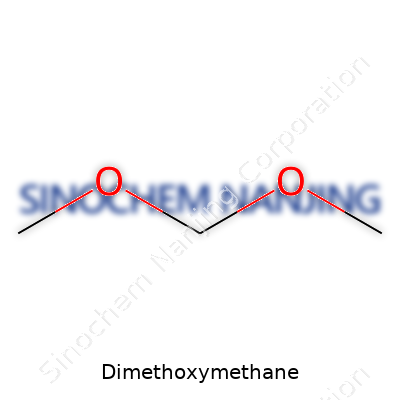
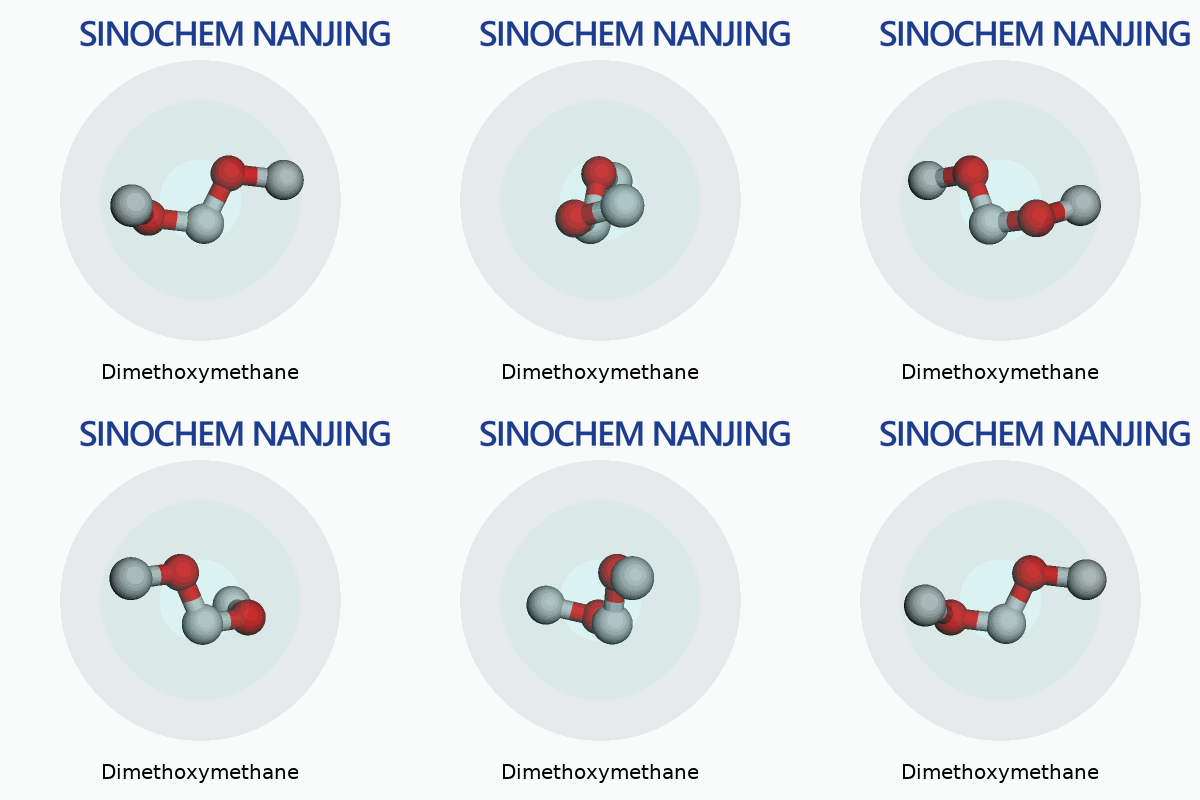
| Names | |
| Preferred IUPAC name | Methoxymethane |
| Other names |
Methylal Dimethoxymethane Methoxymethane Formaldehyde dimethyl acetal |
| Pronunciation | /daɪˌmiːθɒksiˈmeɪn/ |
| Identifiers | |
| CAS Number | 109-87-5 |
| 3D model (JSmol) | `load =C(OCOC)OC` |
| Beilstein Reference | 1361111 |
| ChEBI | CHEBI:35840 |
| ChEMBL | CHEMBL14039 |
| ChemSpider | 595 |
| DrugBank | DB01855 |
| ECHA InfoCard | 03b6b8e2-bdd6-4bc8-9880-667916efb4a7 |
| EC Number | 203-714-2 |
| Gmelin Reference | 60638 |
| KEGG | C01574 |
| MeSH | D003976 |
| PubChem CID | 8027 |
| RTECS number | PA9800000 |
| UNII | 18I5MGZ026 |
| UN number | UN1165 |
| CompTox Dashboard (EPA) | DTXSID3024118 |
| Properties | |
| Chemical formula | C3H8O2 |
| Molar mass | 76.094 g/mol |
| Appearance | Colorless liquid |
| Odor | Mild, pleasant odor |
| Density | 0.860 g/mL at 25 °C |
| Solubility in water | miscible |
| log P | 0.21 |
| Vapor pressure | 84 mmHg (20 °C) |
| Acidity (pKa) | pKa = -0.2 |
| Basicity (pKb) | -0.30 |
| Magnetic susceptibility (χ) | Magnetic susceptibility (χ): -62.0·10⁻⁶ cm³/mol |
| Refractive index (nD) | 1.344 |
| Viscosity | 0.45 mPa·s (20 °C) |
| Dipole moment | 1.30 D |
| Thermochemistry | |
| Std molar entropy (S⦵298) | 175.1 J·mol⁻¹·K⁻¹ |
| Std enthalpy of formation (ΔfH⦵298) | -393.1 kJ/mol |
| Std enthalpy of combustion (ΔcH⦵298) | -1575 kJ/mol |
| Hazards | |
| GHS labelling | GHS02, GHS07 |
| Pictograms | GHS02,GHS07 |
| Signal word | Warning |
| Hazard statements | H225, H319, H336 |
| Precautionary statements | P210, P261, P271, P301+P310, P304+P340, P312, P403+P233, P501 |
| NFPA 704 (fire diamond) | 1-3-0 |
| Flash point | -17 °C |
| Autoignition temperature | 430 °C |
| Explosive limits | 3.5–23.5% |
| Lethal dose or concentration | LD50 (oral, rat): 13,400 mg/kg |
| LD50 (median dose) | LD50 (median dose): 13,000 mg/kg (oral, rat) |
| NIOSH | KN3325000 |
| PEL (Permissible) | PEL (Permissible Exposure Limit) for Dimethoxymethane: "1000 ppm (3100 mg/m³) |
| REL (Recommended) | 2 ppm |
| IDLH (Immediate danger) | 1000 ppm |
| Related compounds | |
| Related compounds |
Formaldehyde Methanol Dimethyl ether 1,2-Dimethoxyethane |



