Diisobutyladipate: A Clear Look at an Industrial Staple
Tracing the Journey: Diisobutyladipate’s Place in Chemistry’s Timeline
Most folks outside the world of chemistry and plastics have never heard of diisobutyladipate, yet its story stretches back over decades. Growing out of the search for smoother, more flexible plastics starting around the middle of the 20th century, engineers and chemists worked relentlessly to dial in a plasticizer that wouldn’t turn brittle or break down under everyday temperatures. Eventually, the answer landed on compounds like diisobutyladipate. Today, this ester slides quietly into products ranging from those beloved squishy rubber duckies to sophisticated coatings used in cars and electronics.
What Makes It Tick: The Guts and Texture of Diisobutyladipate
Diisobutyladipate comes out as a clear or slightly yellowish liquid. It doesn’t smell like much. The material boasts a low viscosity, making it easy to pour or mix. Unlike some plasticizers that act sticky or picky with temperatures, this one stands up over a wide range, hanging onto flexibility during both summer’s heat and chilly winters. It mixes well thanks to its chemical backbone—formed by linking two isobutyl alcohol groups to adipic acid. The molecular structure gives it a nice flexibility and compatibility with an array of plastics, especially polyvinyl chloride (PVC) and similar polymers.
Breaking Down the Label: Standards and Honest Measurement
What’s inside the barrel matters a whole lot more than what’s slapped on its side, but accuracy stays vital for end users. Reliable producers make sure the label reflects consistent purity—often 99% or more when it matters for delicate applications. Numbers like boiling point, melting point, flash point, and specific gravity show up for a reason. Each tells manufacturers how far to push a process, or what kind of container won’t melt during storage. Regulators and industry partners keep tabs on labeling, especially if batches move across country lines, since chemical loopholes can lead to nasty surprises in end products.
The Nuts and Bolts: How Diisobutyladipate Happens
Creating diisobutyladipate boils down to a straightforward esterification reaction. Adipic acid lines up with isobutyl alcohol, a classic acid-catalyzed process kicks in, and water drips away as a byproduct. Several tweaks can give higher yields—raising temperature, swapping different catalysts, or running the reaction under vacuum. Each adjustment helps, but every lab chasing higher output pays attention to energy and waste. As pressure mounts globally for cleaner, less resource-hungry chemistry, facilities tweak conditions to reduce emissions and scrap. Green chemistry has begun to creep into these staple reactions, thanks to incentives in both environmental rules and public image.
Not Just for Plastics: Where Diisobutyladipate Ends Up
Diisobutyladipate’s reach stretches into all sorts of daily tools and toys. Flexible plastics soak it up—the stuff softens PVC in garden hoses, rain boots, and electric cables, giving them that bit of “give” we take for granted. Beyond plastics, certain paints and coatings pick it for its ability to spread evenly and cure with fewer cracks or bubbles, especially in automotive or protective finishes. In cosmetic products, it occasionally acts as a skin-conditioning agent, slipping into lotions thanks to its non-greasy feel and low skin irritation. Industrial adhesive makers lean on its lubricating properties—stopping glue from drying too quick—and even the pharmaceutical sector has explored it as a pill-coating agent, leveraging its easy spread and reliable performance.
Chemical Curiosity: Reactions and Tweaks Grown from the Lab
Once on the bench, diisobutyladipate doesn’t just sit around unchanged. Chemists enjoy poking and prodding—sometimes breaking it down, sometimes building it up—to chase new additives or specialty plasticizers. It stands up well to heat but will break down if strong acids or bases come knocking. It’s not especially prone to forming dangerous gases, which keeps storage and handling a bit simpler compared to edgier chemicals. Blends and derivatives often hit the market for special uses, sometimes changing solubility, sometimes tweaking the softening point, each tailored for a window of performance that’s just right for the job.
Names and Lingo: Why the Same Thing Wears Many Hats
Anyone who’s ever ordered a chemical shipment knows the same stuff comes wrapped in all sorts of names. Alongside “diisobutyladipate,” you might hear “DIBA,” “adipic acid diisobutyl ester,” or local language equivalents. This sprawl of synonyms sometimes stirs confusion, especially for buyers piecing together global supply chains. Clear labeling, careful order tracking, and robust documentation remain the best ways to keep goods moving where they need to go, especially as regulation tightens on the global movement of chemicals.
Playing Safe: Handling Diisobutyladipate Responsibly
From my own years on the factory floor, good safety habits matter more than any glossy manual. Goggles, gloves, and basic ventilation stand as non-negotiables. Diisobutyladipate doesn’t explode or catch fire easily, but careless handling can bring on skin irritation or headaches after a long shift in a closed space. Most facilities keep spill kits close and run regular training for their operators. Waste isn’t poured down any drains; it lands in drums slated for careful disposal or upstream recycling. Smart companies also keep their workers in the loop about what’s in a drum, instead of burying warnings in fine print. Over decades, I’ve learned honest, ongoing communication about possible health impacts does a lot more good than any scary signage mounted above the workbench.
What Science Tells Us: Toxicity, Safety, and Unanswered Questions
Toxicity research on diisobutyladipate digests well in a few lines: it registers low acute toxicity, meaning anyone exposed to small spills or vapors isn’t in line for immediate danger. Long-term studies, though, never finish as quickly as industry hopes. Rodent tests suggest little risk of cancer or reproductive harm at normal exposure levels. Still, cracks remain in the literature—especially around microplastics, or how chronic exposure stacks up alongside other industrial chemicals. No chemical deserves a free pass just because it hasn’t landed a company in court, so ongoing study always deserves funding, especially as our tools for measuring low-dose impacts keep sharpening.
Science in Motion: Research, Development, and Looking Down the Road
Companies want more than just the same plasticizer they had last year. Research labs and industrial teams pull apart the molecule, hunting for tweaks that promise better performance or a smaller footprint. They experiment with bio-based routes, looking to swap out fossil-based feedstocks for renewable resources. Some newer projects chase plasticizers with faster biodegradation rates, aiming for less build-up in landfills and the environment. Regulatory shifts in places like the European Union push for more transparency and better reporting, which in the long run, keeps everyone safer. Scientists dig deeper into mixture effects, asking how diisobutyladipate plays with other legacy chemicals in our air and water, knowing that toxicity in the real world rarely arises from single sources.
What Comes Next: The Forks in the Road for Diisobutyladipate
Looking at the road ahead, the pressure piles on for cleaner chemistries and less toxic raw materials. Diisobutyladipate stands on a line—valuable enough to keep in rotation, but not immune to regulation or public risk perception. Researchers hustle to generate new performance plastics, sometimes phasing out legacy ingredients or dialing in safer-by-design alternatives. End users—whether in the toy shop, car factory, or electronics plant—keep pushing for cheaper, safer, greener ingredients. With new policy shifts and evolving industrial methods, the story of diisobutyladipate could swing in several directions. The key lies in honest evaluation, steady hands in manufacturing, and science that doesn’t stand still.
What is Diisobutyladipate used for?
Everyday Encounters with Diisobutyladipate
Diisobutyladipate sounds like the sort of chemical you would only run into deep inside a laboratory. In reality, people brush against it more often than most realize. This ingredient shows up in lotions, sunscreens, and plenty of personal care products. The reason is pretty simple: it works — it helps lotions glide smoothly, locks in moisture without clogging pores, and plays well with both oils and water. Anyone who enjoys a moisturizer that doesn’t leave behind a greasy mess is experiencing the quiet handiwork of diisobutyladipate.
Digging into Industry Uses
Companies in the plastics world keep diisobutyladipate on hand as a plasticizer, basically a helper that makes plastics softer and more flexible. It gets mixed into things like vinyl and other synthetic materials to keep them from cracking or turning stiff. Think of the wires that never get crumbly, or the inside of a new car where plastics have to withstand heat and still bend a little. The same quality makes it useful for making rubber items last longer and feel smoother.
Why Do Manufacturers Rely On It?
Not every softening agent is safe for skin or the environment, but diisobutyladipate wins points for both. Cosmetic companies turn to it because studies show low toxicity and gentle interaction with the skin. Medical products, such as ointments or stick-on patches, lean on it for ease of application and good compatibility with active drugs. It helps deliver medication without adding any harshness. Plus, it’s usually considered biodegradable, which fits well with rising concerns about how chemicals break down after disposal.
Staying Safe with Widespread Use
As with any chemical in consumer goods, safety hinges on clear science and transparent information. Regulators, like the European Chemicals Agency (ECHA), have given diisobutyladipate favorable marks, pointing to minimal risk at the concentrations found in most products. Still, allergic reactions can happen, though reports are pretty rare compared to other cosmetic ingredients. As someone with sensitive skin, I always appreciate seeing ingredients like diisobutyladipate get studied in detail, since allergic flare-ups are never fun. Patch tests and careful labeling go a long way in helping people avoid unpleasant surprises.
What Could Change Moving Forward?
The conversation about chemicals in personal care keeps evolving. Groups call for more natural ingredients, fewer additives, and stronger environmental protections. Some new research is testing plant-based alternatives to traditional plasticizers and moisturizers. These newer options might cost more for now, but many consumers are ready to pay a bit extra for peace of mind. Companies paying close attention to ingredient safety, clear labeling, and the eco-impact of their products are likely to earn more trust.
Building on Knowledge and Trust
Knowledge leads to better decisions, both in the lab and in the aisle of the corner store. Diisobutyladipate serves a clear purpose across different industries, from keeping plastics flexible to making creams smoother. Personal health matters, so it’s important to stay tuned to new science, read labels, and push for both safety and sustainability. As choices expand, clear information helps everyone pick the product that feels right for their life.
Is Diisobutyladipate safe for skin contact?
What is Diisobutyladipate?
Diisobutyladipate comes up in a surprising number of personal care products, from sunscreens to moisturizers. It acts as an emollient and softener, helping lotions glide more easily and making skin feel smooth. The cosmetic world likes this ingredient because it’s light, non-greasy, and rarely causes strong odors or stickiness. It helps dissolve other ingredients, too, like sunscreen actives, making them easier to apply and spread.
Looking at the Safety Evidence
Plenty of cosmetics ingredients sound daunting if you look at the chemical name. Instead of letting that push us toward fear, it pays to review what science actually says. Several groups have reviewed Diisobutyladipate for possible health risks. The Cosmetic Ingredient Review (CIR), an independent U.S. panel of dermatologists and toxicologists, checked out the evidence and found this compound safe for intended use on skin. They looked at tests of irritation, allergic reactions, and whether it gets absorbed into the body. At common levels in skincare formulas, there weren’t signals of danger.
The European Commission’s Cosmetic Regulation, which bans plenty of questionable compounds, doesn’t put restrictions on Diisobutyladipate. That speaks to a general scientific confidence about its safety in personal care. Researchers haven’t flagged cancer, hormone disruption, or birth defects in real-world scenarios or animal testing at cosmetic doses. Product formulations using this substance regularly land well under thresholds set by world health agencies.
Real-World Experience with Skin Contact
As someone who’s tried nearly every type of clean, conventional, and “dermatologist-recommended” lotion, I’ve noticed that products with Diisobutyladipate never set off my eczema or rosacea. Dermatologists in practice rarely see allergic responses to it, which aligns with what larger scientific reviews have recorded. Parents sometimes worry about what’s in products for kids and babies. In my own family, unscented diaper creams with this ingredient cleared up dryness without any redness or rash.
That doesn’t mean everyone’s reaction will be perfect. Any skincare ingredient, even something as simple as olive oil or shea butter, could trigger a rare allergy. Most adverse events tracked so far show that the risk of developing itching, bumps, or discomfort stays extremely low—almost always for those with extremely sensitive, allergy-prone skin.
Areas for Caution and Improvement
Companies want to produce effective, stable lotions, so Diisobutyladipate still finds use in a wide range of products. For healthy adults and older kids, there’s very little reason to worry about its inclusion in lotions or creams based on research so far. Still, some people—especially infants or those with severe skin disease—prefer to avoid any less familiar synthetic. Patch tests can help uncertain users find out their own tolerance. Brands could make formulas without it for extra-sensitive populations.
Keeping tabs on ingredient transparency matters. Reading labels and researching ingredient safety through trusted sources, like government health agencies or independent review boards, gives people more control over what goes on their skin. Those interested in “natural” or minimalist routines should know that many plant oils work well as alternatives, but they can bring their own allergens and shelf-life issues.
People who have a track record of allergies to other plasticizer-type ingredients, or have been told by an allergist to avoid certain chemicals, might want to ask their dermatologist about personal risk. For most people, the level of scientific scrutiny backing Diisobutyladipate means they can use their chosen products without unease.
What is the chemical formula of Diisobutyladipate?
What Is Diisobutyladipate?
Diisobutyladipate pops up in conversations among chemists, cosmetic formulators, and even farmers. Most people just want a straight answer to its formula—C16H30O4 sums it up. This detail matters more than trivia fans think. It sets the foundation for how this compound interacts with other substances, shapes product performance, and ultimately impacts your daily life, often without you realizing it.
Why the Formula Matters Beyond the Lab
The chemical formula—C16H30O4—gives you more than numbers and letters. Every element in the chain plays a role in how diisobutyladipate works as a plasticizer, which means it lends flexibility to plastics, films, and coatings. If you have used a garden hose or pulled a plastic bag from a grocery store, chances are you brushed up against adipate derivatives. The hydrogen, carbon, and oxygen atoms—put together in that specific way—let manufacturers tweak hardness, softness, and durability. In the real world, that means fewer cracks in your phone cable and more resilience in that vinyl poolside chair that survives every summer scorch.
Tracing the Ingredients to Real-Life Uses
The presence of isobutyl groups connected to the adipate core (the bit chemists love discussing) defines both the chemical’s name and behavior. Esters like diisobutyladipate slip into lotions and sunscreens to create that silky finish most people take for granted. A lot of high-end skincare relies on these hidden helpers for smoother texture and even spreading, without sticky residue. I’ve caught myself turning a bottle of sunscreen over to check the ingredients. Sure enough, there it is. Turns out, a lot of people have sensitive skin, so companies pick formulas expected to keep irritation in check.
Potential Risks and Responsible Choices
No chemical gets a free pass. While diisobutyladipate doesn’t feature in scary news headlines like phthalates, it still enters the environment when plastics break down or as personal care products wash away. Each time that happens, researchers stop and weigh the health and ecological impact. Most studies so far suggest low toxicity. The EU and the US Environmental Protection Agency both keep tabs on exposure thresholds, aiming to keep products both useful and safe. Companies catch on quick. Some phases out alternatives if risks show up, swapping them for better-tested compounds, often in step with new scientific reviews.
What Can Help Going Forward?
Better testing and clear labeling support smart choices for both industry and consumers. People need to know what’s in their everyday items. Regulations alone won’t cover everything—real progress usually comes from manufacturers and consumers asking questions, reading up on chemical data, and making thoughtful substitutions when needed. Scientists keep searching for safer, greener ester compounds that still deliver the benefits. Maybe one day, labeling will seem as vital as nutrition information, letting families choose with greater confidence.
Is Diisobutyladipate biodegradable?
What Sets Diisobutyladipate Apart?
Plenty of folks might hear “diisobutyladipate” and picture a long, hard-to-pronounce chemical name with no bearing on daily life. Yet chances are, you’ve found it in sunscreen, nail polish, and even some plastics. This ester, made from adipic acid and isobutanol, helps things spread smoothly and stay soft. As industries push for eco-friendly options, the spotlight lands on how this ingredient breaks down in nature.
Breaking Down the Biodegradability Question
During my time working on community recycling initiatives, folks often assumed any “organic” molecule would just disappear in the soil. Diisobutyladipate sounds like it fits the bill. Scientific research, mainly from European Chemicals Agency data and OECD test guidelines, reports that many adipate esters, including diisobutyladipate, meet the criteria for “readily biodegradable” in standard tests. This means, under the right laboratory conditions—think optimal temperature, hungry microbes, and good aeration—over 60% of the substance goes away in days or weeks.
In real life, conditions change. A well-kept compost pile hums with life and breaks things down fast. Sloppy landfill layers, cold rivers, or tightly packed soils slow everything. I learned the hard way digging through the compost heap behind an urban community garden: plenty of supposedly ‘biodegradable’ plastics and lotions just sat there, unchanged, when folks forgot to aerate or weather cooled. Microbes, temperature, and oxygen all factor in. Diisobutyladipate might vanish quickly in an active compost system; stashed deep in landfill, it lingers much longer.
Safety and Exposure
Scientists have not found major red flags for consumers who encounter this chemical in lotions, cosmetics, or household plastics. Regulatory bodies in the US and Europe reviewed it for skin absorption and toxicity. Data showed low toxicity and no major concerns for common use. Still, high exposures can irritate eyes or skin, which manufacturers must consider for worker safety.
Plasticizers, Microplastics, and the Bigger Picture
No single additive shapes the plastic industry more than plasticizers. Diisobutyladipate takes the place of phthalates—a group linked with health worries—in some materials. This swap helps some brands market their products as ‘greener’ or ‘phthalate-free.’
From working with city waste and local clean-up crews, I’ve seen firsthand how even supposedly “biodegradable” plastics clog waterways, break into pieces, or hang around for years. Diisobutyladipate breaks down faster than some stubborn plasticizers, but its fate depends on what it’s mixed with. Shampoos, cosmetics, and packaging all form complex waste streams where breakdown rates shift by the day.
This reality calls for better design from the ground up. Manufacturers embracing biodegradable additives need to think about the product’s whole journey, including what happens if it lands in a landfill or leaches into groundwater. Home composting sounds good, but only industrial-scale systems guarantee breakdown within months.
Looking Toward Real Solutions
Stronger recycling systems and clearer standards for “biodegradability” will help consumers choose brands that back up green claims. Consumers can push for stricter rules so products using biodegradable plasticizers, like diisobutyladipate, actually leave less behind in landfills and waterways. Local governments and watchdog organizations already monitor false environmental claims, but it takes teamwork—a mix of honest marketing, transparent science, and everyday awareness—to shift the system. For now, diisobutyladipate shows promise in the lab and real benefits compared to older synthetic additives, but folks will have to stay alert to its full impact in the wild.
What industries commonly use Diisobutyladipate?
Personal Care and Cosmetics: Comfort Matters
Walking down the personal care aisle, most shoppers don’t think about the science inside every lotion or sunscreen. Brands use diisobutyladipate as an emollient, giving creams a light, smooth feel instead of unpleasant greasiness. Anyone who dislikes thick, heavy sunscreen knows the value of a product that absorbs quickly. Dermatologists value this ingredient because it helps reduce sticky residue—especially in hot, humid weather—making sunscreen more wearable. According to research published in the International Journal of Cosmetic Science, brands often add diisobutyladipate to formulas for oily or acne-prone skin because it feels lighter than some alternatives.
Makeup manufacturers also find it useful. Foundations, primers, and BB creams use this ester to help pigments glide over the skin, blending in a more natural-looking way. I’ve watched makeup artists seek out products containing this ingredient for clients with sensitive or acne-prone skin, as it doesn’t clog pores as much as some other emollients. The result: Better comfort and better appearance, with science backing up those benefits.
Pharma: More Than Just Fillers
In pharmaceuticals, this compound sees action as a plasticizer for capsules and tablets. Pill coatings need flexibility to resist cracking, and diisobutyladipate does the job without introducing odd flavors or compromising safety. Regulatory agencies in Europe and America allow its use when strict purity standards are met. In my time volunteering at a pharmacy, patients sometimes asked why capsule coatings look shiny and stay intact. The answer often came down to flexible, well-chosen plasticizers like this one, helping medicine do its job without crumbling in the bottle.
Plastics and Polymers: Everyday Strength
Manufacturers turn to diisobutyladipate to give plastics extra flexibility, especially PVC. Flexible vinyl shows up everywhere—think about shower curtains, medical tubing, pool liners. Kids who play with soft rubber toys or use bendable school binders have probably handled plasticized materials. Unlike some older plasticizers, diisobutyladipate comes with a better safety profile, so parents don’t have to worry as much about harmful chemical exposure. The U.S. Environmental Protection Agency notes that switching to safer additives reduces health risks for both workers and consumers.
Food Packaging: Safer Barriers
Packagers need materials that keep food fresh and safe during transport. Flexible films made with diisobutyladipate act as barriers, holding up against oils and moisture that might spoil our snacks or ready-to-eat meals. Unlike plasticizers that have come under fire for possible health effects, this one has made its way into some newer, safer food packaging options. Materials engineers in the food industry confirm that these films improve shelf-life, reducing food waste and saving families money over time.
Adhesives and Sealants: Holding Things Together
Contractors searching for long-lasting adhesives encounter diisobutyladipate in plenty of sealants. It offers the stretch and give needed for caulks and glues on construction sites or home repair projects. Without flexible additives, adhesives can dry out and crack—leading to leaks or failed repairs. In my own experience fixing leaks around window frames, choosing caulk with good plasticizers made a major difference. That durability isn’t just good for builders; it keeps homes safer and maintenance costs down.
The Takeaway: Everyday Benefits
Most people may never hear about diisobutyladipate, but its presence in personal care, healthcare, manufacturing, and even the kitchen shows its quiet importance. Researchers, safety agencies, and industry experts keep a close watch on its performance and impact, adjusting standards as needed. That means the products people use every day get just a little bit better—often thanks to small, behind-the-scenes ingredients like this one.
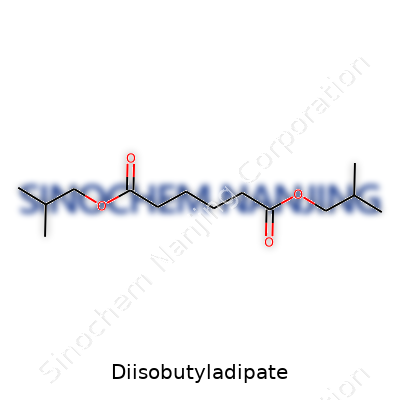
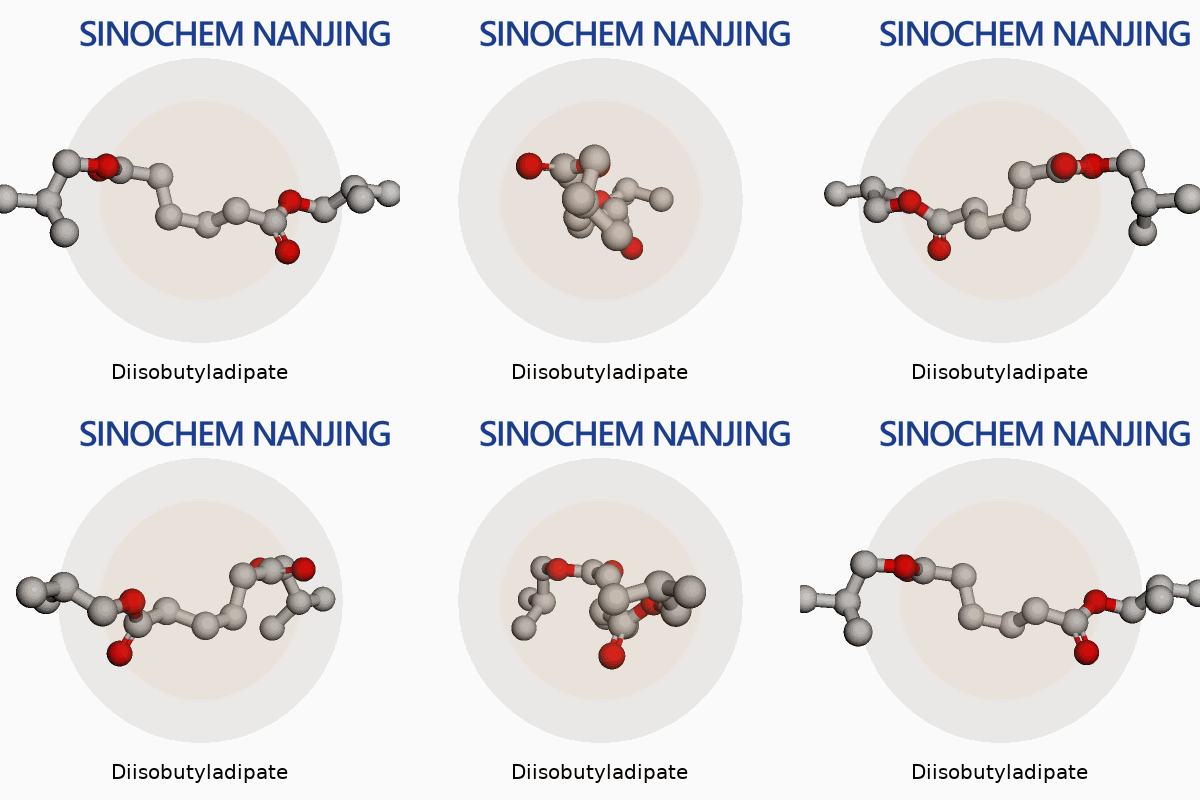
| Names | |
| Preferred IUPAC name | bis(2-methylpropyl) hexanedioate |
| Other names |
Adipic acid diisobutyl ester DIBA Diisobutyl adipate NSC 72399 |
| Pronunciation | /ˌdaɪˌaɪsəˌbjuːtɪlˈædɪpeɪt/ |
| Identifiers | |
| CAS Number | 141-04-8 |
| Beilstein Reference | 637930 |
| ChEBI | CHEBI:88870 |
| ChEMBL | CHEMBL3180448 |
| ChemSpider | 16689 |
| DrugBank | DB14095 |
| ECHA InfoCard | ECHA InfoCard: 100.011.010 |
| EC Number | 203-090-1 |
| Gmelin Reference | 69028 |
| KEGG | C19605 |
| MeSH | D000927 |
| PubChem CID | 7495 |
| RTECS number | AR9100000 |
| UNII | WU76T6LL9C |
| UN number | UN3082 |
| CompTox Dashboard (EPA) | DTXSID9020605 |
| Properties | |
| Chemical formula | C16H30O4 |
| Molar mass | 286.42 g/mol |
| Appearance | Colorless clear liquid |
| Odor | Odorless |
| Density | 0.95 g/cm3 |
| Solubility in water | Insoluble |
| log P | 3.9 |
| Vapor pressure | 0.03 mmHg (25°C) |
| Acidity (pKa) | 12.93 |
| Basicity (pKb) | Diisobutyladipate has a pKb of approximately 16. |
| Magnetic susceptibility (χ) | -8.68×10⁻⁶ |
| Refractive index (nD) | 1.438 (lit.) |
| Viscosity | 10 mPa·s (at 25 °C) |
| Dipole moment | 2.85 D |
| Thermochemistry | |
| Std molar entropy (S⦵298) | 689.7 J·mol⁻¹·K⁻¹ |
| Std enthalpy of formation (ΔfH⦵298) | -726.6 kJ/mol |
| Std enthalpy of combustion (ΔcH⦵298) | -3887.6 kJ/mol |
| Pharmacology | |
| ATC code | D11AX10 |
| Hazards | |
| Main hazards | Harmful if swallowed. Causes serious eye irritation. May cause respiratory irritation. |
| GHS labelling | GHS07, GHS08 |
| Pictograms | GHS07 |
| Signal word | Warning |
| Hazard statements | H319: Causes serious eye irritation. |
| Precautionary statements | Precautionary statements for Diisobutyladipate: "P261, P280, P305+P351+P338, P337+P313 |
| Flash point | 145 °C |
| Autoignition temperature | 355°C |
| Lethal dose or concentration | LD50 (oral, rat): 9100 mg/kg |
| LD50 (median dose) | LD50 (median dose): Rat oral 7600 mg/kg |
| NIOSH | NAI000010 |
| PEL (Permissible) | PEL (Permissible Exposure Limit) for Diisobutyladipate: Not established |
| REL (Recommended) | 10 mg/m³ |
| Related compounds | |
| Related compounds |
Dibutyl adipate Dimethyl adipate Diethyl adipate Bis(2-ethylhexyl) adipate Diisobutyl phthalate |



