Taking a Closer Look at Diethylene Glycol Monopropyl Ether
Historical Development and Context
Tucked away in some of the world’s busiest manufacturing halls, diethylene glycol monopropyl ether has a backstory that reflects many of the bigger changes in the chemical industry. Factories eager to replace older, less efficient solvents and wetting agents pushed research into ethers that could strike a balance between solvency, compatibility with both water and oil, and safety on large production lines. Over time, stronger environmental and health oversight drove makers to rethink additives in everything from paint strippers to inks. The push for more stable, lower-volatility solvents kept diethylene glycol monopropyl ether on the radar, and it found its way into a surprising array of products across several decades.
Product Overview and Naming
In labs and supply chains, this chemical wears a few hats. Chemists label it as “DEG monopropyl ether,” sometimes abbreviating the full name for convenience. Synonyms appear all over technical catalogs: propoxy diglycol, propoxydiglycol, and some regions tag it under trade names influenced by local suppliers. Don’t confuse it with other glycol ethers, even though their uses often overlap. Its versatility and properties keep it relevant in coating, cleaning, agrochemical, and electronics sectors. Despite changing trends, demand always springs from the molecule’s unique mix of polarity, volatility, and solubility—not marketing.
Physical and Chemical Properties
If you’ve handled diethylene glycol monopropyl ether in a lab or plant, you recognize its faint, somewhat sweet odor and clear, nearly colorless appearance. With a boiling point around 230°C, it stands out from lighter ethers that evaporate too quickly on open surfaces. Viscosity and surface tension numbers catch attention in formulation labs, because they offer flexibility across liquid systems. It dissolves in both water and many organic solvents, which earns it a central place in emulsions and specialty mixtures. Its structure slots two ethylene glycol units between an ethereal oxygen and a propyl tail, explaining its dual affinity.
Technical Specs and Labeling
Labels might highlight technical details, but for formulators, it’s all about purity, moisture content, and acid value. Impurities disrupt performance in critical coatings, so quality control leaders push for high-purity lots. Handling practices center on proper ventilation because, even though it carries a relatively modest vapor pressure, any glycol ether raises questions for worker comfort and air quality. Most labeling sticks closely to the globally harmonized system, emphasizing signal words and pictograms that matter on busy shop floors. It’s clear why solid documentation is non-negotiable for end-users and inspectors alike.
Preparation Method
Manufacturers who scale up production lean on controlled etherification processes. Breaking it down, diethylene glycol reacts with propylene oxide under alkaline conditions, driving the right degree of substitution. There’s little room for shortcuts since reaction conditions decide not only yield but also the profile of byproducts, which nobody wants drifting into the final containers. Investing in reaction efficiency and post-purification helps meet both technical specs and regulatory targets. Even small inefficiencies multiply when tons pass through the plant every week, so experienced operators focus on temperature, catalysts, and solvent recovery to keep both cost and product quality in check.
Chemical Reactions and Modifications
A big part of this glycol ether’s appeal is its receptiveness to chemical modifications. Technicians have used it as a base to generate esters for specialty surfactants or as a coupling agent in new ink technologies. The ether linkages add chemical stability—a valuable trait in blends prone to oxidation or hydrolysis. Researchers sometimes functionalize the terminal groups for new applications, but that’s rarely necessary for bread-and-butter uses. Chemical engineers appreciate its compatibility with acids and oxidizers, although nobody ignores potential for exothermic reactions. These traits open the door for innovations in high-performance coatings, inkjet formulations, and perhaps even greener chemical processes over time.
Safety and Operational Standards
Some see glycol ethers as workplace hazards, given their history. Regulations on exposure limits have tightened, and many plants now install advanced monitoring. Respiratory and dermal exposure deserve respect—not fear. Well-designed ventilation, containment, and robust personal protective equipment keep operational standards high. Data connects long-term exposure to subtle but significant health changes: some animal studies show reproductive effects, which guide authorities to set conservative limits. Professional training and rigorous documentation reduce the chance of mishaps, especially where volume use invites the risk of spills or skin absorption.
Applications and Industry Reach
It might be tempting to think solvents are fading, but the need for tailored glycol ethers never dips. Paint formulators rely on diethylene glycol monopropyl ether to keep coatings smooth and workable during application. In textiles, it acts as a powerful dye carrier. Cleaning product designers appreciate its ability to bridge water-based and oil-based stains. Agricultural chemists fold it into pesticide formulations, counting on its low volatility and spreading characteristics. Electronics industries turn to it for circuit-board cleaning and precision manufacturing. Whenever new processes demand solvents that play well in both lipid and aqueous environments, industrial chemists circle back to this molecule.
Research, Development, and Toxicity Review
R&D timelines haven’t slowed much. Environmental and toxicological tests have flagged glycol ethers for targeted attention. Government agencies in Europe, North America, and Asia require toxicity evaluations as solvents migrate into consumer goods and new technologies. Data from rodent models shows a range of outcomes—acute toxicity stays low, but chronic exposure, especially at high doses, can hit kidneys and trigger reproductive changes. Researchers now link molecular structure to toxicity potential, using this info to design safer alternatives and push for new formulations with reduced biological impact. Ongoing studies examine both direct and environmental impacts as regulations force the industry to get creative with safer blends or substitutes.
Future Prospects
Looking past decades of established use, the outlook for diethylene glycol monopropyl ether blends caution with cautious optimism. Market demand shifts as regulations adjust and players seek safer, more sustainable solvents. Some producers explore bio-based glycol ethers, cutting reliance on fossil feedstocks. Research teams pursue tweaks to minimize off-target toxicity without losing chemical flexibility and functional performance. Ultimately, the industry expects to see stricter controls on workplace exposure, electronic reporting of emissions, and increased pressure to recapture waste solvent streams. Diethylene glycol monopropyl ether has hung around by adapting, and its future now hinges on skillful innovation—delivering user safety, regulatory trust, and performance that keeps up with modern product demands.
What are the main uses of Diethylene Glycol Monopropyl Ether?
Getting to Know the Chemical
Over twenty years in the specialty chemicals field have taught me that many ingredients in the products we use have unfamiliar names but clear and practical purposes. Diethylene Glycol Monopropyl Ether, often seen on lists of glycol ethers, ends up in many products because it carries unique solvent properties. This clear, barely aromatic liquid helps dissolve substances that water and many common solvents can't handle. It's not a household name, but it supports the comfort, cleanliness, and functionality of countless items at home and in the workplace.
Paints and Coatings Rely on It
People painting a wall or refinishing a piece of furniture probably don't realize how much work goes into keeping paint smooth, even, and workable. Diethylene Glycol Monopropyl Ether helps keep paints from drying on the brush, improves flow, and lets color spread out evenly. Research from the European Solvents Industry Group points to glycol ethers as key ingredients in water-based coatings. Without this chemical, many modern paints would clump, streak, or demand harsher solvents. Precise control over drying times also means fewer headaches—literally and figuratively—for painters and those nearby.
Industrial Cleaners Use It for Stubborn Grime
Factories, trucks, workshops, even restaurants, all build up stubborn soil—grease, inks, residues, and labels. Many degreasers and heavy-duty cleaning solutions count on solvents that dissolve oils but rinse away cleanly. Here, Diethylene Glycol Monopropyl Ether steps up. Its gentle action on surfaces helps break down sticky or oily messes without damaging finishes, unlike many high-strength alternatives. In my own experience overseeing commercial kitchen cleaning, switching to cleaners with this solvent led to far less scrubbing and fewer complaints about strong chemical smells.
Textile and Printing Applications
In textile mills and print shops, efficiency and precision go hand in hand. Dyeing and printing require solvents that spread evenly and carry color deep into fibers or across the page. Diethylene Glycol Monopropyl Ether has performed reliably in these tasks for decades. It acts as a carrier for dyes, speeding up penetration in fabrics and keeping inks workable longer for vivid, detailed printing. Companies making specialty paper coatings or synthetic textiles continue to rely on solvents like this to meet strict quality standards.
Personal Care and Cosmetics
Personal care products rely on mild solvents to help mix fragrances, active ingredients, and water—all in one bottle. Many cosmetics, lotions, and hair dyes need a solvent that dissolves a wide range of chemical compounds without irritating skin. While consumer safety regulators keep a close watch on allowable quantities, manufacturing experience shows that this ingredient – in controlled levels – can boost product texture and stability. With the shift away from volatile organic compounds, formulators have found glycol ethers helpful for creating less aggressive alternatives to older solvents.
Balancing Safety with Practical Use
Diethylene Glycol Monopropyl Ether stands out because it gets the job done in settings where both performance and safety matter. It has a broad range of uses, but public health always comes first. Regulatory agencies limit how much can be used in any product type—and for good reason. History offers lessons in why proper labeling, training, and safe handling procedures are essential. As with any powerful tool, knowledge and care separate safe use from risky shortcuts.
Is Diethylene Glycol Monopropyl Ether safe to handle?
Understanding the Substance
Diethylene Glycol Monopropyl Ether, usually shortened to DPGPE, finds a place in industrial settings for cleaning formulas, coatings, paints, and ink production. Factories rely on it for its solvent qualities, making it easier to dissolve both oil and water-based substances.
What Science Tells Us About Exposure
Exposure through skin contact, breathing in vapors, or eye splashes can trigger a reaction. The most common issue? Skin irritation. Headaches and nausea also come up among workers who handle it without enough ventilation. Long-term heavy exposure to glycol ethers shows links to blood and liver concerns, based on Harvard’s work with cleaning workers in 2015. The US National Institute for Occupational Safety and Health says that regular skin contact raises risks for organ damage, especially if protective gloves or goggles are skipped.
Real-World Safety Challenges
Factories do issue safety goggles and gloves, but busy shifts sometimes mean corners get cut. Sometimes one sees a worker rinse paint from their hands using whatever liquid is closest, not realizing how fast DPGPE can seep through bare skin. The EPA notes that many glycol ethers move straight through unprotected hands, and that routine brief contacts add up over time.
Ventilation matters too. In places with lots of heat and poor airflow, vapor can hang in the air, building up fast. It’s easy to forget about something that doesn’t smell strong—DPGPE tends not to give off much odor warning. Day after day, breathing it in at close quarters hits the central nervous system. I remember talking with a painter who noticed fatigue and headaches vanishing after improving air flow near his mixing bench.
Facts Supporting the Need for Caution
DPGPE sits under the EPA’s glycol ether action plan, meaning inspectors keep reviewing its risks. Animal testing points out possible birth defects with persistent high-level exposure. European regulators set workplace limits for DPGPE because there’s clear evidence it irritates eyes and lungs. Australia’s Safe Work agency, after reviewing real incident data, lists it as harmful in concentrated forms and flags skin absorption as the biggest hazard.
People sometimes compare DPGPE to ‘less toxic’ solvents, but no change in label removes the basic truth: this is still a chemical that can hurt people without safeguards.
Working Toward Practical Safety
Clear labeling goes a long way. Well-marked containers mean nobody grabs the wrong solvent by mistake. Training sessions that use real-life spills and first aid help staff remember the importance of immediate rinsing and glove replacement. Managers stepping onto the floor and talking through jobs cement safety habits. In shops I’ve visited, teams who ran regular ‘spill drills’ handled emergencies more smoothly and stuck with their protection gear even during stressful jobs.
Local exhaust fans and regular breaks from closed rooms help prevent vapor buildup. Using gloves rated for glycol ether resistance, paired with wraparound eye protection, reduces accidental contact. Washing hands with soap and water—never solvents—cuts down risks after a shift. Bringing in occupational health feedback after near misses keeps protocols current.
What Leaders and Workers Can Do
Chemicals like DPGPE don’t belong on bare skin or in the air we breathe all shift long. Safety comes from a mix of the right gear, looking out for each other, and a willingness to report even minor leaks or splashes. Blowing off ‘minor’ safety steps doesn’t just break rules—it stacks up health risks, day by day, for anyone around.
What is the chemical formula and structure of Diethylene Glycol Monopropyl Ether?
The Essentials of Diethylene Glycol Monopropyl Ether
Diethylene glycol monopropyl ether might not ring a bell for most people, but anyone working in industries like paints, coatings, or cleaning solutions has crossed paths with this chemical. Its formula, C7H16O3, puts it in the family of glycol ethers. The molecule comes from diethylene glycol, with a propyl group attached to one end. This kind of structure plays a big role in the properties it brings to commercial and industrial products. Knowing the details helps everyone keep safety and performance in check.
Chemical Formula and Its Meaning
The chemical formula C7H16O3 stands for seven carbon atoms, sixteen hydrogen atoms, and three oxygen atoms. This isn’t just another string of letters and numbers. Each piece means something important. Two ethylene units (–CH2CH2O–) are joined by oxygen, and a propyl group (–C3H7) attaches at the end of the chain, usually connected through an oxygen atom. So, the structure can be written out in shorthand as CH3(CH2)2O(CH2CH2O)2H. A clear, consistent pattern like this helps chemists quickly understand how the molecule behaves or what it might react with.
How the Structure Helps in the Real World
Looking at the molecule’s shape, the main chain bends and flexes, making the ether soluble in both water and organic solvents. That’s no accident. The propyl tail creates just enough greasiness to dissolve oily stains and residues, while the glycol part keeps it from floating away from water-based solutions. This dual ability pops up in glass cleaners and degreasers. Before using it myself to remove stubborn adhesive from a workshop bench, I wondered how something could cut through grease and rinse off so quickly. Learning about its structure answered that question. The secret lies in the way the oxygen atoms let the molecule grab onto water on one end and grease on the other.
Where Safety Fits In
Not every solvent has a friendly record with health. Diethylene glycol monopropyl ether sits in the middle compared to harsher cousins. Its use in closed systems keeps vapor down, but skin or prolonged inhalation still matters. Studies from regulatory bodies, such as the European Chemicals Agency, point out potential irritation or toxicity risks at high doses. Reading the structure alone, I can see how the oxygen-rich backbone can interact with living tissues so easily. A little knowledge like that makes safety equipment and ventilation less of a chore and more of a habit.
Room for Better Practices
Landfills and water supplies don’t need more contamination, so manufacturers stepping up to recycle solvents or filter waste make a difference. I’ve seen labs that shift to closed-loop systems using glycol ethers, sharply cutting down on waste with basic filtration and storage upgrades. Technologies for spill control and containment, developed from understanding the molecule’s mobility, limit how far it can travel in case of accidents.
Final Thoughts
Getting familiar with formulas and structures goes beyond exam answers. It shapes safer procedures on factory floors and helps small businesses choose better products for the environment. Diethylene glycol monopropyl ether is a small piece in the picture, but the details in its formula and structure guide decision-making every step of the way.
How should Diethylene Glycol Monopropyl Ether be stored?
Simple Steps for Handling
Most people won’t ever hear about Diethylene Glycol Monopropyl Ether, unless they work in a laboratory, paint factory, or cleaning product plant. For those who do, storage isn’t just a technical issue—it’s about health, safety, and protecting the workspace. I’ve worked around chemicals, and the right storage often makes the difference between an ordinary day and a trip to the emergency room.
This solvent stays liquid under normal conditions and has a faint odor, so some folks forget how important storage really is. Leaving it out in the open isn’t harmless. The fumes can build up, leading to headaches or worse. Even a closed container on a warm shelf may not be as safe as it looks. A bit of care goes a long way.
Keeping Risks in Check
Flammable liquids like this need respect. A spark, a cigarette, or a bit of careless heat can turn a bottle into a fire hazard. In our old site, someone put a jug by a window that saw the midday sun. After a few hours, condensation formed inside. That’s a warning sign. Heat changes the liquid, and that can lead to leaks, spoiled product, or dangerous air quality. Storing this chemical in a cool, shaded spot does more than keep costs down. It keeps people protected and fire risks low.
Storing in steel or polyethylene drums, with strong, airtight seals, makes the process safer. Avoiding glass or thin plastics blocks the chance of a spill if someone bumps a container. Labeling is not a box to check for regulators—it’s how the new hire figures out what not to pick up, and how an emergency response crew finds a problem fast. I’ve seen what confusion looks like during a chemical scare, and clear labels cut the panic.
Ventilation and Space Matter
There’s a mistaken notion that shutting everything up tight keeps chemicals safe. If a solvent leaks, fumes need a path out, not a way to build up. Good ventilation makes the air inside storage rooms healthy enough for workers, and helps everyone stay alert for leaks. I’ve spent hours in stuffy chemical sheds before we upgraded the air system. Breathing easy isn’t just about comfort.
Crowding shelves brings other problems. A heavy canister that tips or spills doesn’t just waste product; it can spoil a whole shift, or worse. Plenty of space, with chemicals stacked below shoulder height, keeps storage manageable and safe. Use spill trays for bigger drums to catch accidents before they turn into problems on the floor.
The Human Side of Chemical Safety
Regulations exist for a reason. In my experience, rules printed on paper mean little without a team that takes them seriously. Regular checks—a quick glance for leaks, reading expiration dates, testing for vapor—add up to strong protection over time.
Being ready with gloves, goggles, and spill cleanup kits should be an everyday routine and not just something for inspections. Staff training matters more than any sign on the wall. When everyone on a shift knows the difference between caution and carelessness, the whole building feels safer.
Safe storage isn’t glamorous, but it protects the backbone of any lab or plant: the folks who come in every day and expect to return home in one piece.
What are the potential health hazards associated with Diethylene Glycol Monopropyl Ether?
Understanding Where Exposure Happens
Diethylene Glycol Monopropyl Ether pops up in a lot of places. It flows into certain manufacturing processes and sneaks its way into household cleaning products, paints, inks, even cosmetics. If someone spends time working with large quantities in factories, it’s almost impossible to avoid a bit of skin contact or catching a breath of fumes from time to time. My years of living near industrial zones taught me how overlooked chemical safety can get, especially where regulations run thin.
Short-Term Health Effects
People who work with this solvent, or even just use products containing it at home, can run into some immediate symptoms. Red, itchy skin and watery eyes tell you something’s not right after exposure. The solvent can seep through the skin over time, leaving you with more than just a rash. Breathing in vapors can bring on headaches, nausea, dizziness, and sometimes a scratchy throat. Once, a friend of mine accidentally splashed some during a cleaning job and came home nursing stomach cramps and a splitting headache.
Long-Term Health Risks
Stories about long-term damage tend to make the rounds among workers because folks stick around these chemicals day after day. Frequently breathing in vapors or getting it on your hands cranks up risk for liver and kidney trouble, since both organs work overtime to flush toxins out. Enough exposure adds up, and research from toxicology journals has linked repeated contact to organ injury, affecting how those organs break down waste or manage fluids.
I’ve listened to retired factory workers describe lingering numbness in their hands and feet—possible nerve involvement that can come with chronic chemical exposure. Animal studies and some case reports have hinted at reproductive or developmental side effects, though scientists still need more population data before saying for sure. Still, these hints push people to call for more thorough safety checks in workplaces and consumer goods.
Who’s At Risk
Anyone working around solvents without decent protection gets the worst of it. Assembly line workers, janitors, painters, even families using certain cleaning products at home have a chance of exposure. It hits harder in countries with weak labor protection laws or in buildings where poor ventilation lets fumes settle. Children in households that use cleaning products containing this solvent get exposed, and kids are more vulnerable to most chemicals.
Looking at Solutions
The best fix always comes from limiting direct exposure. On factory floors, workers deserve properly fitted gloves and face masks—gear built for the job, not just thin fabric. Management should install better ventilation so fumes don’t linger or concentrate. I’ve seen places drop exposure rates just by switching to solvents with lower risk where possible. For folks at home, checking product labels and opting for “low-VOC” or greener cleaning alternatives can cut back on risk. Public health agencies play a powerful role by running education campaigns and enforcing stronger regulations. Anyone can report suspected violations or harmful effects through poison control lines or health departments. Direct feedback and whistleblowing can wake up slow-moving regulators and spark positive change.
Final Thoughts
Chemical hazards aren’t always flashy, but the effects creep up over years—especially without sensible protections. Advocacy alone doesn’t solve the problem, but open communication between workers, families, and healthcare providers makes a real difference. Push for workplace transparency, push for safer alternatives, and keep your eyes wide to what’s inside the products you bring home.
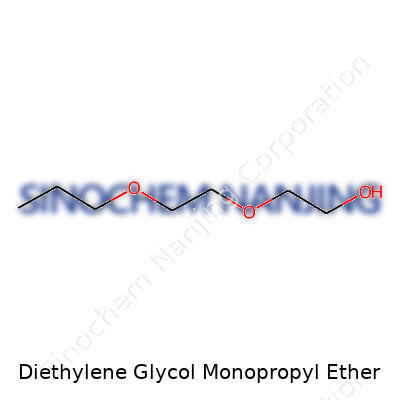
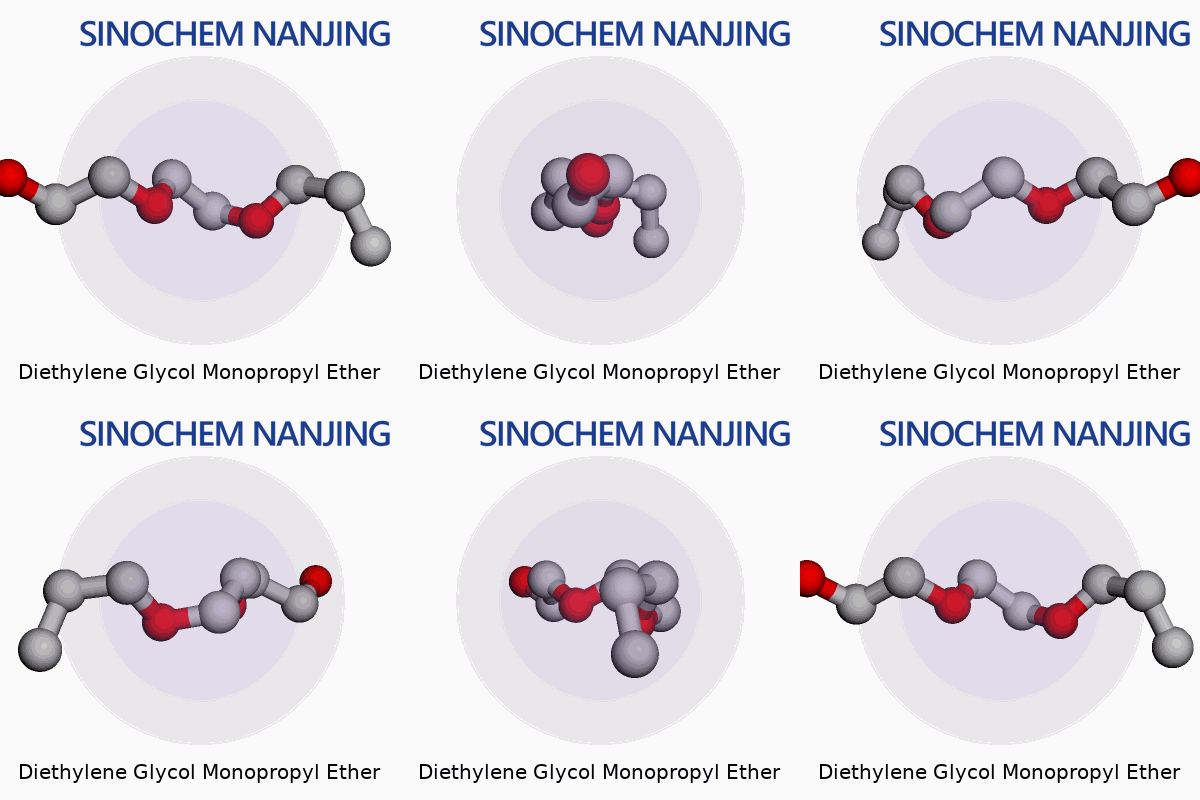
| Names | |
| Preferred IUPAC name | 2-(2-Propoxyethoxy)ethan-1-ol |
| Other names |
Propyl Carbitol Propylglycol Ether DEGPE Diethylene Glycol n-Propyl Ether 3,6-Dioxaoctanol-1 2-(2-Propoxyethoxy)ethanol |
| Pronunciation | /daɪˈɛθɪliːn ɡlaɪˈkəʊl ˌmɒnəˈprɒpɪl ˈiːθər/ |
| Identifiers | |
| CAS Number | [122-96-3] |
| Beilstein Reference | 1833443 |
| ChEBI | CHEBI:81328 |
| ChEMBL | CHEMBL81913 |
| ChemSpider | 6741 |
| DrugBank | DB14170 |
| ECHA InfoCard | 100.007.419 |
| EC Number | 203-962-1 |
| Gmelin Reference | 1085 |
| KEGG | C19583 |
| MeSH | D017335 |
| PubChem CID | 8127 |
| RTECS number | UB8200000 |
| UNII | ZIO2P7MA6P |
| UN number | UN3082 |
| Properties | |
| Chemical formula | C7H16O3 |
| Molar mass | 134.18 g/mol |
| Appearance | Colorless transparent liquid |
| Odor | Odorless |
| Density | 0.972 g/cm³ at 25 °C |
| Solubility in water | Miscible |
| log P | 0.14 |
| Vapor pressure | 0.02 mmHg (20 °C) |
| Acidity (pKa) | 14.8 |
| Basicity (pKb) | 7.43 |
| Magnetic susceptibility (χ) | '-66.0 x 10^-6 cgs' |
| Refractive index (nD) | 1.420 |
| Viscosity | 2.7 mPa·s (25°C) |
| Dipole moment | 4.31 D |
| Thermochemistry | |
| Std molar entropy (S⦵298) | 247.6 J·mol⁻¹·K⁻¹ |
| Std enthalpy of formation (ΔfH⦵298) | -726.3 kJ/mol |
| Std enthalpy of combustion (ΔcH⦵298) | -4497.6 kJ/mol |
| Pharmacology | |
| ATC code | D07AX |
| Hazards | |
| Main hazards | Harmful if swallowed. Causes serious eye irritation. Causes skin irritation. |
| GHS labelling | GHS07, Warning |
| Pictograms | GHS07 |
| Signal word | Warning |
| Hazard statements | H302: Harmful if swallowed. H319: Causes serious eye irritation. |
| Precautionary statements | P210, P233, P240, P241, P242, P243, P280, P303+P361+P353, P370+P378 |
| Flash point | Flash point: 100°C (212°F) (closed cup) |
| Autoignition temperature | 224°C |
| Explosive limits | Explosive limits: 1.1% - 12% |
| Lethal dose or concentration | LD50 oral rat 3089 mg/kg |
| LD50 (median dose) | 1,900 mg/kg (rat, oral) |
| NIOSH | Not established |
| PEL (Permissible) | No PEL established |
| REL (Recommended) | REL (Recommended Exposure Limit) of Diethylene Glycol Monopropyl Ether is "10 ppm (60 mg/m3) TWA". |
| IDLH (Immediate danger) | Not established |
| Related compounds | |
| Related compounds |
Diethylene glycol Diethylene glycol monoethyl ether Diethylene glycol monobutyl ether Diethylene glycol dimethyl ether Triethylene glycol Ethylene glycol monobutyl ether |



