Diethyl Ether: From Surgical Pioneer to Scientific Cornerstone
Turning Points in Diethyl Ether’s History
Long before modern anesthetics hushed the pain of surgery, physicians and chemists turned to diethyl ether as one of the first effective general anesthetics. Back in the 19th century, it shook up the medical world, giving both patients and doctors a fighting chance against the agony of the knife. In fact, W.T.G. Morton’s public demonstration of ether anesthesia in 1846 at Massachusetts General Hospital marked a watershed in the history of medicine. Ether then found a home not just in operating rooms but also on the benches of laboratories wherever researchers had to extract compounds or run reactions that demanded an easily evaporating, non-polar solvent. Still, running through hospital corridors with a canister of ether or setting up makeshift labs with open containers eventually raised questions about safety. People learned the hard way about its flammability and subtle dangers—fires, explosions, and chronic exposure issues.
Physical Nature That Shapes Its Use
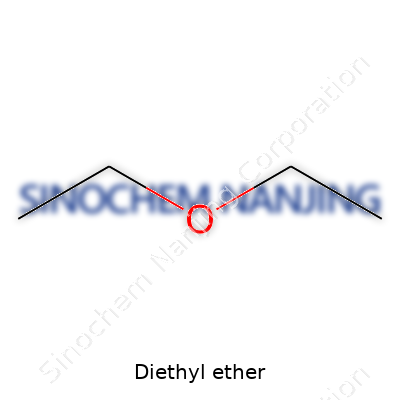
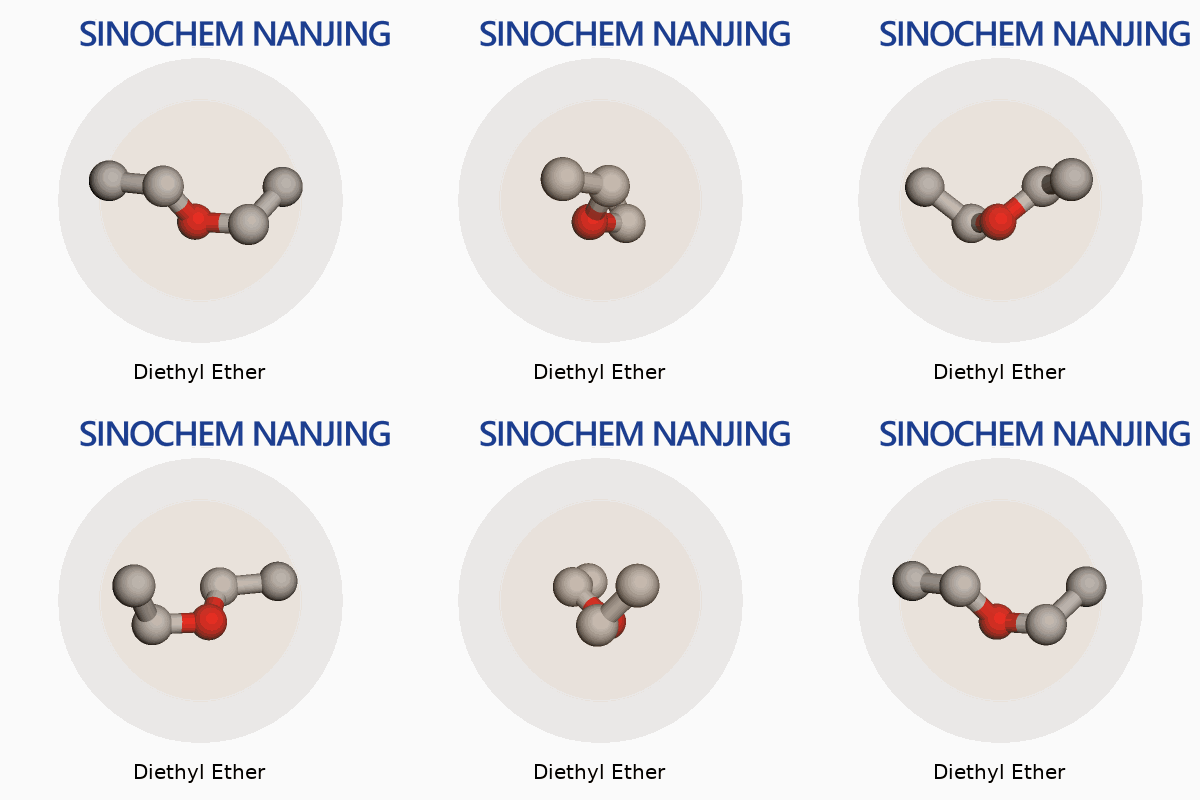
Diethyl ether, at room temperature, comes as a volatile, colorless liquid with a distinct, even nostalgic, sweet odor that lingers around old chem labs. With its low boiling point around 34.6°C and density just under that of water, ether evaporates in the palm, cooling it instantly. Chemically, its structure—two ethyl groups bookending one oxygen atom—lets it dissolve a splash of nonpolar and slightly polar compounds. That mix of volatility and solubility explains the bottles of ether beneath every university fume hood and why it served as a favorite for extractions long before more modern solvents appeared. Its built-in danger carries weight—open flames or poorly ventilated rooms turn it from helpful to hazardous fast.
Technical Details and Labels: Balancing Practicality with Caution
Anybody working with diethyl ether learns to read its labels carefully. It isn’t only about listing boiling points, flash points, or refractive indices. Ether demands close attention to shelf life and proper storage, including peroxide formation—a silent, slow creep that can turn an old bottle into a ticking bomb. Labs keep inhibitors on hand, regularly test for peroxides, and store ether in tightly sealed amber containers away from light and heat. These habits don’t stem from bureaucratic paranoia but hard lessons learned over decades. What's on the bottle matters, but the unwritten rules—never open a dusty old can, never leave it near ignition sources, always use a spark-proof hood—often matter more. If someone skips these steps, the news sometimes ends up grim.
Old-School Methods Meet High-Grade Production
For centuries, basic chemistry produced diethyl ether; sulfuric acid meets ethanol, and after some heating and careful handling, vapors condense into the liquid that fills the flask. Industrial synthesis still starts this way, scaling up the process with towers, column distillation, and tight temperature control. Distilling off water and side products, producers pull the purest drops when the thermometer kisses the boiling point. Labs stick to these roots, running micro-scale versions when only a small splash is needed. Over time, companies improved safety, efficiency, and purity, but the bones of the reaction remain the same—a testament to how some chemical crafts endure.
Chemical Behavior and Tweaks
Diethyl ether reacts slowly with oxygen, forming peroxides that can explode on opening or distillation. Chemists turn to simple tests—adding potassium iodide and looking for a color shift—to check for these hidden dangers. As a solvent, ether plays the background role in Grignard reactions and organolithium chemistry, supporting lively, moisture-sensitive molecules without competing or reacting. Here, minor variations matter: swapping one group for another delivers an array of ethers with tweaks on solubility, volatility, or polarity. The parent molecule resists acids and bases better than alcohols, holding together in demanding environments. Its flexibility comes not from changing much, but from accommodating the wild ambitions of chemists worldwide.
Naming, Nicknames, and Identity Shifts
Chemistry folks refer to diethyl ether in casual shorthand—plain “ether,” sometimes “ethyl ether” or “DE.” Dusty old books and regulatory lists call out many synonyms, from “petroleum ether” (a misleading cousin) to “naptha” and “sulfate ether,” all depending on context and region. These nicknames can cause headaches; confusion breeds mistakes, especially when ordering chemicals or following vintage procedures. It tells us that clear naming is more than academic—it saves time in the lab and headaches in the storeroom.
Lab Safety: Years of Lesson Learned and Applied
If you’ve spilled a bit of ether or breathed it by accident, you know never to make the same mistake twice. Diethyl ether’s low flash point means that even a spark or hot plate could ignite the vapor. Regulations require flame-proof hoods, grounded containers, and continuous ventilation. Beyond fire risks, chronic inhalation causes narcosis—a creeping drowsiness that sneaks up while working late. Strict monitoring and good habits protect workers more than warning signs ever could. Annual refreshers, regular spill drills, and peroxide checks aren’t overkill—they keep labs open and accidents down.
Where Ether Still Makes a Difference
Hospitals have phased ether out as a frontline anesthetic, favoring safer, more predictable agents. Its former status as the backbone of anesthesia now lives mostly in history books and stories from older clinicians. In chemical synthesis and research, ether’s role endures—Grignard reactions, extractions, and chromatography often depend on its unique properties. Flavor and fragrance industries sometimes use it in extracting delicate aromatics, where harsh solvents would ruin the final product. In everyday life, its presence faded, but on the edges of chemistry and research, it continues to help unravel nature’s secrets.
Research Opens New Doors—and Uncovers Old Dangers
Recent work shifts attention away from ether’s risks to its scarcity as a model system for studying solvent interactions. It’s the “control” solvent in many experiment suites, establishing baselines for reactivity and selectivity. At the same time, environmental and health researchers probe the consequences of chronic exposure. Long-term studies link repeated exposure to subtle nerve damage and organ strain, reminding everyone that the price of progress sometimes hides in the background. There’s a push for safer, greener replacements, but none offer quite the same blend of volatility and gentle solvency.
The Challenge of Managing Ether’s Toxicity
Every lab accident or near-miss becomes its own lesson plan. Ether’s acute toxicity causes headaches, dizziness, even unconsciousness if used carelessly in poorly ventilated rooms. Old-timers remember storing bottles near hotplates or using open pans during summer, unaware that vapors creep into corridors or build up in unguarded spaces. Now, studies collect data from industries, looking for subtle long-term effects—liver stress, nerve changes, reproductive risks—driving more restrictions on workplace exposure. MSDS sheets can’t cover everything, but raising awareness and building experience into training can sidestep many risks. Modern labs run regular audits, keep tight logs, and never work alone with significant amounts. Those improvements save lives and protect careers just as much as gloves or fume hoods.
Looking to the Future: Can Ether Stay Relevant?
Diethyl ether’s simplicity and power keep it on lab shelves, but regulatory pressures and shifting trends toward safer, less flammable solvents keep nibbling at its dominance. Green chemistry pushes researchers to develop solvents derived from renewable materials or adopt alternative reaction paths that sidestep ether altogether. Automation and improved analytical tools support this shift. Still, some reactions behave best in ether—there’s no direct substitute in certain cases. Where possible, safer containment and micro-scale protocols reduce risk and waste without slowing discovery. In teaching labs and industry, more thoughtful training mixes the wisdom of the past with emerging technology, ensuring that ether remains a tool, not a relic. The work underway today—improving storage, tracking exposure, refining substitutes—reflects both respect for its potential and an honest reckoning with its limits.
What are the main uses of Diethyl Ether?
A Solvent That Changed Chemistry
Diethyl ether shows up early in chemistry labs. Its low boiling point and ability to dissolve a wide range of other compounds make it a frequent go-to. I remember working with it during an undergraduate organic synthesis project—measuring out that clear, volatile liquid and catching its distinct smell in the air. Even in a world of modern solvents, ether still holds value. In extractions or for washing reactions, efficiency directly depended on its power to separate components. Its status as a traditional solvent comes partly from habit, but also from reliability. For tasks like recrystallization, particularly where delicate molecules require gentle handling, chemists reach for ether knowing exactly what to expect.
Anaesthesia: Medical Milestone, Fading Use
Before modern medicine took shape, major surgeries looked like nightmares for both patients and doctors. The biggest breakthrough came with the discovery that inhaling ether gas could put a person “under.” No anesthesiology degree required to understand its impact: fewer patients screamed out in pain, and surgeons actually had time to work properly. Anecdotes from medical textbooks or first-hand stories from families recall those days when ether’s heavy, fruity fumes meant relief from agony. Today, more precise compounds have replaced it for anesthesia, mainly because of flammability and patient recovery issues. Yet, ask anyone who’s studied medical history and they’ll tell you: ether opened the door to pain-free surgery on a mass scale.
Automotive Starter Fluid and Fuel Additive
Working on a car during cold months gets tricky. Ether, in the form of starter fluid, lives on garage shelves for a reason. Small engines that struggle in winter or after long rests often start right up with a quick spray. Diethyl ether’s high volatility helps fuel vaporize, especially in cold weather when gasoline alone won’t catch a spark. Outdoor workers, mechanics, or regular drivers in rural areas might keep a can handy simply for peace of mind. While it’s less common in high-tech engines now, older diesels and small machines like chainsaws or lawnmowers still respond to ether’s reliable kick.
Laboratory Applications That Reach Beyond Chemistry
Large teaching labs use diethyl ether for cleaning and preparing samples, especially in analytical chemistry and drug testing. It helps extract particular substances from complex mixtures; for example, isolating components in biological samples works smoother and yields higher-quality results with ether. Environmental labs analyzing pollution, or hospitals examining blood for toxins, count on ether’s separating power. The efficiency it brings speeds up diagnosis and research. A chemist friend of mine, working in forensic science, described how even today, ether gives more consistent results than some newer alternatives when dealing with tricky residues. For companies meeting medication purity standards, or labs checking residue in food, ether’s clear advantages still stand out.
The Risks That Come With The Uses
Almost every longtime chemist remembers the sharp warnings about ether storage. Its volatility and risk of forming explosive peroxides have led to countless safety stories and expensive precautions. In hospitals and schools, strict rules surround its handling. These real risks encourage ongoing research into safer alternatives and stricter regulation. Flammability and hazardous waste add complications that every user must take seriously.
Looking Forward—Alternatives and Education
Most sectors continue to experiment with replacements and tighter controls. Some companies rely on customized solvent blends with reduced hazard profiles. Others invest in better education, so users understand both the benefits and the risks. The lesson that sticks: even with its drawbacks, diethyl ether’s impact on medicine, science, and engineering remains part of the foundation. Proper handling, respect for the risks, and smart innovation can let us keep its practical benefits without repeating the mistakes of the past.
Is Diethyl Ether flammable or hazardous?
The Real Deal With Diethyl Ether
For anybody who’s spent time in a lab, the sharp, sweet smell of diethyl ether lingers in memory. It’s the kind of solvent that shows up in organic chemistry, maybe in extractions or as a starting fluid in some engines. What often gets glossed over in textbooks is how risky this liquid can turn after you open a bottle.
Fire: Not Just A Lab Cautionary Tale
Light a match anywhere near an open flask of diethyl ether, and you’re risking more than just a scare. Ether has an outrageously low flash point, below room temperature—meaning it goes from harmless to flammable without warning. On a summer day, you can walk into a room and find vapors from a half-closed bottle lingering at floor level, waiting for an ignition source. Those vapors spread fast, slipping under doors and down hallways because they’re heavier than air, almost invisible but far from safe.
Everyday Experiences With Danger
In my own university days, a classmate spilled a cup on the floor. The air seemed fine, but someone flicked on a light switch; a spark set the whole mess off. Flames shot sideways, not upwards, because the vapor hugged the ground. Everyone panicked, but fire suppressors tamped it out before it reached the shelves of stored chemicals. I’ve never forgotten how easily disaster nearly happened.
Beyond Fire: Health Hazards That Don’t Get Enough Notice
It’s easy to focus on fire, but ether brings extra baggage. Even a short exposure knocks you off balance—dizziness, nausea, even blackouts if you’re breathing too much of it. Worse, bottles of the stuff can form explosive peroxides over time, especially if stored under light or air. Many old-school labs found that out when bottles exploded after months on dusty shelves.
Facts And Figures To Ground The Worry
Diethyl ether routinely ranks near the top of “most flammable” lists for solvents, with a flash point at −45 degrees Celsius and boiling around 35 degrees. Its lower explosive limit sits around two percent vapor in the air. The US Occupational Safety and Health Administration (OSHA) sets strict limits on workplace exposure, recognizing ether’s speedy way into your central nervous system. The National Fire Protection Association slaps a high hazard rating on ether for both flammability and instability.
Simple Strategies To Stay Safe
Too many labs run through ether by habit, skipping over the basics meant to keep everyone out of trouble. Using small amounts, opening windows, and never working near open flames or spark sources makes a difference. Instead of storing big bottles, split up the supply into smaller amber containers and label them with the dates—old ether needs prompt disposal. Peroxide detection strips can flag dangerous buildup so a manager can clear old stock before it turns deadly.
Clear procedures aren’t just bureaucratic; they keep communities from tragedy. Training every student, chemist, or mechanic who grabs a bottle can save lives and property. Ethanol may not give quite the chemical performance, but it’s often an appropriate swap in recipes not requiring ether’s extreme volatility.
Everyday vigilance beats fancy equipment or warning stickers. With a bit of grit and the right mindset, it’s possible to use ether effectively and safely, keeping both fire and long-term health issues off the table.
What are the storage requirements for Diethyl Ether?
It’s More Than Just a Flammable Liquid
Diethyl ether is familiar to people working in labs or manufacturing plants. The stuff evaporates quicker than rubbing alcohol and, once it mixes with air, anything from a spark to static electricity can ignite it. I remember walking into my college lab and seeing every diethyl ether bottle tucked away with more care than most of the expensive equipment. That early exposure drilled one thing into me: storage mistakes bring real danger.
Open Flames and Warm Rooms Spell Trouble
If you look at the data, diethyl ether holds a flash point of about -45°C — way below freezing. You can’t leave this solvent anywhere near a heat source. Hot summers or sunlit windows in the lab boost evaporation, and the vapors spread fast along benches and floors. Those vapors are heavier than air, so cracks along baseboards and under doors easily collect invisible clouds, waiting for an ignition source. Years of experience show even static discharge from synthetic clothing can set off a fire.
Proper Containers and Ventilation Matter
Labs and factories can’t just throw diethyl ether into any glass bottle or plastic jug. Good practice means sealed metal or amber glass containers with tight caps, locked up in flammable storage cabinets. These cabinets keep the inside cooler and offer fire resistance. Building codes and OSHA rules both say ether bottles should never sit with acids or oxidizers, either. I’ve seen too many close calls to take that lightly.
Strong ventilation turns a hazardous area into a safer one. Ether vapors need a reliable route outside—ducted hoods over the workspace, always-closed lids right after pouring, and periodic air monitoring. Some big labs invest in automatic sensors for vapor buildup, but even low-tech setups mean making sure the air never grows stale or still.
Explosion Risk Grows with Time
It’s tempting to tuck away half-used bottles at the back of a cabinet and forget about them. Ether reacts with air and light to create explosive peroxides. The more time passes, the riskier it gets. Labels showing opening and expiration dates cut the risk. I always encourage discarding bottles older than six months, if not sooner. Periodic tests for peroxides pay off: simple test strips or small chemical kits give anyone peace of mind.
Taking Personal Responsibility
Storage guidelines don’t exist to make life harder—they’re built on decades of painful accidents and tough lessons. No one wants to see a fire drill turn real because someone ignored a label or stashed ether near oxidizing acids. Employees need up-to-date training. This can mean walking new hires to storage areas and reviewing the reasons behind each rule. In my experience, anything that reduces fear and builds healthy respect for diethyl ether gives better results than just relying on written protocols.
Smart Solutions for Safer Workplaces
Practical improvements such as clear labels, regular peroxide checks, and scheduled disposal days can make all the difference. Some labs invest in lockable storage cabinets with alarms; others install spark-proof refrigerators for longer-term needs. It helps to keep detailed logs of purchase, opening, and disposal dates. Double-checking storage compatibility goes a long way. All of this work guards more than property—it protects lives.
What are the potential health effects of exposure to Diethyl Ether?
The Draw of Diethyl Ether and What Gets Overlooked
Diethyl ether once played a leading role as the go-to anesthetic in busy hospitals and makeshift field tents. Today, it shows up mostly in laboratories and certain industries. Most folks might not consider it part of their everyday lives, but its presence in academic settings and chemical workspaces brings real-world risks. The sweet, fruity odor can fool people into thinking it’s harmless, yet quick whiffs don't tell the full story.
Health Hazards Right in the Air
Over the years, I’ve seen how routine exposure chips away at workers' well-being. The immediate effects come on strong—dizziness, coughing, headaches, and sometimes a dry scratch in the throat. That sleepy feeling people get isn’t just discomfort; it’s a red flag. Diethyl ether acts on the nervous system, knocking people out of focus and, in higher doses, putting them briefly under as if for surgery. One careless gulp of vapor from an uncapped beaker and concentration fades. In more serious cases, nausea, vomiting, and anxiety cloud judgment and raise safety risks, especially around delicate lab tools or chemical reactions. According to the CDC, ether vapors can get dangerous fast if ventilation doesn’t keep pace or careless handling occurs.
Risks That Linger Beyond the Short Term
People often ignore the long-term effects because the acute symptoms steal the spotlight. Keeping ether around as a solvent means regular, even low-level exposure over weeks or months. Studies point out that chronic inhalation may dull memory, impact balance, and erode sleep patterns. There’s no joy in bargain science when a single slipup leaves health on the line—and these effects tend to creep in so slowly that workers think they’re just tired. While diethyl ether isn’t known for causing cancer in humans, its constant irritation of the airways can worsen asthma and other chronic breathing problems.
Accidents Sparked by Flammable Fear
No way to talk about diethyl ether without raising the fire issue. Labs fear explosions not only because vapors accumulate rapidly, but also because ether catches fire at low temperatures. One stray spark or lingering static charge can ignite an entire workspace. In my time handling chemicals, I’ve seen the fear on colleagues’ faces when someone gets careless. Ether’s volatility and its ability to form dangerous peroxides as it ages cranks up the risk even more, as highlighted in reports from the National Institutes of Health. Fumes that linger in closed spaces don’t need much to cause mayhem, signaling a daily hazard for both health and safety.
Practical Ways Forward
Reducing harm starts with prevention and respect for the substance itself. Strict fume hood use, regular air quality checks, and well-trained staff serve as the front lines. Storing ether in proper, tightly sealed containers, dated and inspected, limits the buildup of hazardous peroxides. Wearing protective eyewear, gloves, and long sleeves buys another layer of defense. Even with all these measures, awareness makes the biggest difference. Real stories about close calls and hard lessons carry more weight than dry manuals. Policies need more than rules—they need buy-in at every level, from classroom to warehouse.
Ultimately, understanding diethyl ether as more than just a tool keeps accidents at bay and people healthy. Experience in the lab proves that thinking one step ahead saves more than time. Smart handling, honest education, and vigilance around storage will always matter more than shortcuts or misplaced confidence.
How should Diethyl Ether be safely handled and disposed of?
Respecting the Hazards in Real Life
Diethyl ether shows up in labs and some industrial settings, and it brings excitement for those who work with chemicals. It brings the very real risk of fire and explosion. Diethyl ether’s low flash point means even a tiny spark can set it off, and that’s not a risk worth gambling with. Some folks think lab goggles and a fume hood protect them from everything, but it really comes down to respect for what this stuff can do.
Solid Habits Keep Trouble Away
Small habits make all the difference. Before starting any procedure, check for peroxides in the container. Diethyl ether loves to form peroxides if left exposed to air, and those can go off without warning. Simple peroxide test strips provide peace of mind, and labs should keep them handy. A positive test means it’s not time for experimentation—call the waste disposal team.
Store ether away from sunlight and heat, tight in a metal can with a tight-fitting cap. Skip the old glass bottles. Metal containers with proper labels make life easier for everyone sharing the space. Once the work is done, move whatever remains back to its storage spot without delay. Leaving open ether around just invites trouble.
Looking Beyond the Fume Hood
Wearing gloves and eye protection is part of the drill, but it’s not enough unless workers take care with every action. Pouring ether should be done slowly, and no one lights a match anywhere nearby. Even static electricity can set it off, so grounding containers before transfer isn’t just for show—science backs this up. The big warehouse fires and lab explosions across the country connect back to overlooked safety steps.
Disposal: There Are No Shortcuts
Pouring diethyl ether down the drain or tossing it in the trash just spreads risk. It belongs in a waste container clearly marked for flammable organic solvents. University and industry safety departments repeat this lesson for good reason. Diethyl ether disposal relies on professionals who know how to handle chemicals in bulk, with proper incineration in approved facilities.
Remember, some containers sit on a shelf for months and form unstable peroxides over time. If a container looks old, do not open it. Alert the experts instead. Trained hazmat teams know how to evaluate and remove such hazards safely, preventing injury or disaster.
The Case for Training and Teamwork
Teaching newcomers the risks and safe techniques for ether handling goes further than posting signs. Shared stories about near-misses in the lab resonate more than any poster. Experience says it’s those little short cuts—skipping peroxide tests, not labeling a container—that catch up eventually.
Being a scientist or technician working with diethyl ether isn’t just about technical know-how. It leans on personal responsibility and looking out for coworkers. Set up regular safety workshops and drills. Bring everyone, new and experienced, into a culture where questions are encouraged and mistakes become lessons. That keeps both people and facilities out of trouble.
Thinking Forward
Too many accidents trace back to overconfidence or neglect. Handling diethyl ether with care costs much less than cleaning up after an accident. The chemical itself isn’t the villain. It’s the way people choose to work with it that shapes the outcome. Each time a container comes off the shelf, that’s a new opportunity to do it right. Responsibility, training, and teamwork go further than any written rule.
| Names | |
| Preferred IUPAC name | ethoxyethane |
| Other names |
Ether Ethoxyethane Sulphuric Ether Ethyl Ether Diethyl Oxide |
| Pronunciation | /daɪˈiːθəl ˈiːθər/ |
| Identifiers | |
| CAS Number | 60-29-7 |
| Beilstein Reference | 604425 |
| ChEBI | CHEBI:35702 |
| ChEMBL | CHEMBL14238 |
| ChemSpider | 6826 |
| DrugBank | DB01002 |
| ECHA InfoCard | ECHA InfoCard 100.003.273 |
| EC Number | 200-467-2 |
| Gmelin Reference | 825 |
| KEGG | C00426 |
| MeSH | D004046 |
| PubChem CID | 3283 |
| RTECS number | KI5775000 |
| UNII | 3WX7A14Y2R |
| UN number | UN1155 |
| Properties | |
| Chemical formula | C4H10O |
| Molar mass | 74.12 g/mol |
| Appearance | Clear, colorless, volatile liquid with a characteristic, sweet, ethereal odor. |
| Odor | Sweet, ethereal |
| Density | 0.713 g/mL at 25 °C |
| Solubility in water | 6.9 g/100 mL (20 °C) |
| log P | 2.0 |
| Vapor pressure | 58.7 kPa (at 20 °C) |
| Acidity (pKa) | 15.9 |
| Basicity (pKb) | pKb = 3.8 |
| Magnetic susceptibility (χ) | −9.5 × 10⁻⁶ |
| Refractive index (nD) | 1.352 |
| Viscosity | 0.224 mPa·s (at 25 °C) |
| Dipole moment | 1.15 D |
| Thermochemistry | |
| Std molar entropy (S⦵298) | 336.5 J·mol⁻¹·K⁻¹ |
| Std enthalpy of formation (ΔfH⦵298) | -277.0 kJ/mol |
| Std enthalpy of combustion (ΔcH⦵298) | -2723 kJ·mol⁻¹ |
| Pharmacology | |
| ATC code | N01AA02 |
| Hazards | |
| GHS labelling | GHS02, GHS07, GHS08 |
| Pictograms | GHS02,GHS07 |
| Signal word | Danger |
| Hazard statements | H224, H302, H312, H315, H319, H335, H336, H351, H370, H373, H402 |
| Precautionary statements | P210, P233, P240, P241, P242, P243, P261, P271, P280, P301+P310, P303+P361+P353, P304+P340, P305+P351+P338, P312, P337+P313, P370+P378, P403+P233, P403+P235, P501 |
| NFPA 704 (fire diamond) | 3-4-2 |
| Flash point | -45 °C |
| Autoignition temperature | 160 °C |
| Explosive limits | 1.9% - 36% |
| Lethal dose or concentration | LD50 oral rat 1215 mg/kg |
| LD50 (median dose) | LD50 (median dose): 1,200 mg/kg (rat, oral) |
| NIOSH | NIOSH: **KN8575000** |
| PEL (Permissible) | 400 ppm |
| REL (Recommended) | 400 ppm |
| IDLH (Immediate danger) | IDLH: 1900 ppm |
| Related compounds | |
| Related compounds |
Dimethyl ether Diisopropyl ether Methyl tert-butyl ether Ethylene glycol Tetrahydrofuran |



