Diamyl Oxalate: An Editorial Look at a Chemical with History and Potential
Understanding Diamyl Oxalate Through Its Roots
Diamyl oxalate doesn't turn up in most conversations about industry breakthroughs, but its story stretches back to the rise of organic chemistry in the 19th century. Chemists in that era explored the quirks of esters and carboxylates, often with little more than basic glassware, a good nose for reactions, and a real hunger for discovery. Diamyl oxalate came about through that spirit, as scientists experimented with the interaction between alcohols and dibasic acids, finding novel ways to link carbon chains with oxygen bridges. Its development was no accident; it followed the trail blazed by experiments into esters like diethyl oxalate, showing that tweaking the length of the alcohol side-chains—substituting pentanol for ethanol, for instance—yielded not just new compounds but fresh textures, aromas, and functions. This kind of hands-on chemistry, powered by both curiosity and necessity, changed manufacturing, pharmaceuticals, and flavor chemistry. Diamyl oxalate became a marker in this evolution, a quiet presence in the background of more high-profile chemical innovations.
Product Overview: More Than a Lab Curiosity
Think of diamyl oxalate as an ester that connects two amyl (pentyl) chains through an oxalic acid backbone. It’s a structurally simple molecule, but it stands out for the way it bridges groups that otherwise don’t align naturally. Industrial chemists have recognized its role in specialty synthesis, particularly where volatility and solubility patterns need careful tuning. Its presence in lab stockrooms has lingered for decades, less for glamour and more for utility in custom reactions and, in some cases, as a starting point for scent and flavor chemistry thanks to its mild, pleasant aroma.
Diving Into Physical and Chemical Properties
Diamyl oxalate typically appears as a colorless, oily liquid. Its faint scent hints at the underlying pentyl groups, echoing the fruitiness seen in other small esters, though it’s less sharp and more subdued. It won’t dissolve in water easily, showing a clear affinity for organic solvents like ethanol, ether, or chloroform. Its boiling point sits well above common esters like ethyl acetate, reflecting the bulkier amyl side-chains. This property can be a real advantage in process chemistry where lower volatility is a bonus. On the chemical front, diamyl oxalate stands up to moderate heating without rapid decomposition, but comes apart in the presence of strong acids or bases, breaking back down into pentanol and oxalic acid through classic saponification or hydrolysis. That balance between stability and reactivity keeps it relevant for transformations where time and temperature are not always easy to control.
Technical Specifications and Product Labeling in Practice
Experienced lab hands know that the real world rarely matches the pristine labels of chemical catalogues. Diamyl oxalate, like most organic esters, can pick up impurities from its raw materials or from the glassware used in its synthesis. High-purity samples will often be labeled with a focus on percent purity, residual solvents, and acidity. The International Union of Pure and Applied Chemistry gives a systematic name to this compound—pentyl oxalate or pentyl oxalate ester—reminding users that synonyms abound across literature. Regulatory standards for labeling in laboratories emphasize clear hazard identification, due to its mild skin and eye irritant qualities, though it doesn’t carry the same risk as its parent acid or corresponding alkali salts.
Preparation Methods: Practical Chemistry at Work
The classic method for preparing diamyl oxalate is a textbook example of Fischer esterification: letting oxalic acid react with excess amyl alcohol, with a dash of concentrated sulfuric acid as a catalyst. Stirring this mixture under heat causes water to evaporate and pushes the reaction toward completion, producing the diester and a waft of mixed aromas. The key to a good yield is carefully removing water as it forms, either by Dean-Stark apparatus or gentle vacuum, since water pushes the equilibrium back to the starting materials. After isolation, washing and distillation help separate pure diamyl oxalate from leftover alcohols, acids, or byproducts. This process isn’t glamorous, but it delivers what industry and academia need—a direct route from available chemicals to a targeted molecule without excessive waste or byproduct headaches.
Chemical Reactions and Modifications: Pathways for Innovation
Most chemists look at diamyl oxalate and see opportunity. The ester linkages invite hydrolysis, one of the simplest and most telling transformations in organic chemistry. In basic or acidic conditions, it gives back pentanol and oxalate. But more than just a reservoir for alcohols and oxalates, diamyl oxalate sometimes takes part in transesterification, where its amyl groups swap places with other alcohols under catalytic influence. This property opens up access to a suite of related esters, useful when quick adjustments to solubility or volatility are needed. Some labs also leverage the molecule’s structure for tailored syntheses of functionalized oxalate compounds, using mild oxidation or reduction techniques. Each reaction highlights the balance between the stability of its ester bonds and the potential to pivot into different chemical families.
Synonyms and Product Names: Navigating Naming Conventions
Some days, locating diamyl oxalate on a shelf comes down to recognizing its aliases. The substance pops up as pentyl oxalate, pentyl oxalic acid ester, and in older literature as n-amyl oxalate. The naming sometimes trips up new researchers, especially since amyl refers to a five-carbon alcohol moiety that shows up in related compounds like amyl acetate or amyl butyrate. Standard chemical databases stick with pentyl oxalate for clarity, though stockists and catalogs will often list both synonyms to bridge gaps in global terminology. This habit reflects a broader challenge in specialty chemistry, where trade names, systematic names, and abbreviations all overlap, and attention to detail matters as much as reaction conditions.
Safety and Operational Standards: Practicality in the Workplace
Anyone who’s spent time around medium-chain esters knows to keep the gloves and goggles handy. Diamyl oxalate doesn’t threaten catastrophe like reactive alkali metals or peroxides, but neglecting basic safety can still lead to regrettable mishaps. Liquid exposure might cause skin or eye irritation, though inhalation risks are relatively modest thanks to its high boiling point and slower evaporation. Spills need prompt clean-up with absorbents, as residue tends to linger and stain. Disposal follows typical protocols for organic solvents: collected as hazardous waste, away from drains or regular trash. Long-term storage works best in cool, sealed bottles, away from acids or strong bases that might chew through the ester bonds. Training staff on these details has led to safer labs and fewer accidents, allowing diamyl oxalate to support research without stealing headlines for the wrong reasons.
Applications: From Niche Synthesis to Scent and Beyond
Despite its quiet profile, diamyl oxalate finds clear utility where selective solubility and moderate volatility count. Formulators in fragrance and flavor industries have tinkered with it, sometimes as a component in green, fruity notes for perfumes or flavors mimicking exotic fruits, though regulations limit its use in ingestible goods given lingering questions about breakdown products. In research, its use is more diverse—acting as a model compound for studying ester reaction kinetics, solvent extraction properties, and even as a carrier in specialty lubricants. Its chemical flexibility, particularly as a platform for making tailored oxalate esters, keeps it on the shortlist for custom synthesis in academic and industrial labs. My experience working with esters of this class has taught me the value of having such a compound in-reaching distance; sometimes a unique solvent or reactant unlocks a stuck process or unexplored pathway.
Research and Development: Pushing Beyond the Familiar
Researchers continue to look for new uses for oxalate esters, diamyl oxalate included, particularly in green chemistry and sustainable manufacturing. Some modern approaches involve harnessing biobased pentanol feedstocks to reduce fossil input, and others examine how the compound fares under enzymatic catalysis—moving away from harsh acid catalysts toward milder, environmentally friendly options. This area, blending traditional organic synthesis with new catalytic systems, remains a hotbed of innovation. In many cases, the raw material costs and supply chain for amyl alcohols or oxalic acid drive investigation into alternatives, aiming to make the compound both cheaper and greener. Looking at toxicology, researchers have probed how the body processes diamyl oxalate and similar molecules, searching for less hazardous substitutes for common solvents or additives in consumer goods. This kind of work blends practical goals—safer, lower-impact production—with scientific curiosity.
Toxicity Research: Health and Environmental Considerations
Toxicity research on diamyl oxalate focuses on how it interacts with both human health and the environment. Early toxicology studies found that skin and eye irritation mark the main workplace hazards, which echo what lab protocol already signals—avoid direct contact. Ingestion represents a greater risk because its metabolism leads to pentanol and oxalate ions; oxalate in excess can cause kidney stones and other health problems. This concern has limited its use in food or oral pharmaceuticals. The environmental fate of the compound ties into its hydrolysis behavior; in water and soil, it breaks down to its original acid and alcohol, both of which degrade further under biological or oxidative processes. Still, high concentrations spell trouble for aquatic environments since oxalates can chelate calcium and disrupt delicate balances. Regulations have tightened around similar esters, prompting ongoing monitoring and periodic review of workplace exposure limits. Real progress comes when new research pinpoints benign pathways for breakdown, reducing long-term residue or toxicity.
Future Prospects: What’s Next for Diamyl Oxalate?
Looking ahead, diamyl oxalate sits at a crossroad of persistent utility and emerging innovation. The rise of sustainable feedstocks, better catalysts, and advanced purification has put new wind in the sails of old esters. Industry interest in biodegradable lubricants, safer specialty solvents, and designer fragrance ingredients continues to draw attention to molecules exactly like this one—simple, modifiable, and mostly overlooked in big-market applications. Controlling purity, understanding health impacts, and exploring pathways for greener synthesis are key steps forward. My experience points to one lasting truth: the chemicals that quietly support progress, turning up in supporting roles, matter just as much as those stealing the limelight. Diamyl oxalate offers a window into both the legacy of synthetic chemistry and the promise of smarter, safer, and more sustainable manufacturing. Watching this field evolve won’t make the nightly news, but it will shape the direction of specialty chemistry for years to come.
What is Diamyl Oxalate used for?
Understanding a Niche Chemical
Most people haven’t heard of diamyl oxalate until they wander into a specialty chemistry shop or read a label on a glow stick. This compound belongs to a family of chemicals called oxalate esters. Diamyl oxalate played a surprising role in my college chemistry lab, where we spent a semester decoding chemical reactions that make everyday things work. It’s not a household name, but it quietly shapes experiences and products we often take for granted.
Glow Sticks and Light Production
Glow sticks aren’t just fun toys at concerts or Halloween—chemically speaking, they’re a marvel of applied science. Diamyl oxalate acts as a “fuel” for the process known as chemiluminescence. Snapping a glow stick breaks a glass tube inside, letting diamyl oxalate mix with hydrogen peroxide. This reaction doesn’t just give off energy; it creates light without any heat. Compared to burning candles or bulbs, glow sticks using diamyl oxalate keep things safe for a crowd. Emergency responders grab these sticks for light in disasters, or divers take them deep underwater, far from any electric power. This simple chemical helps prevent hazards and brings a touch of brightness where darkness usually rules.
Environmental and Health Considerations
Once you’ve watched dozens of glow sticks fizzle out at a music festival, or seen discarded chemical tubes after a safety drill, waste comes to mind. Some chemists push for less toxic, more biodegradable alternatives, and public pressure helps. Diamyl oxalate, unlike some of its chemical cousins, doesn’t build up as a poison in soil or water, according to recent environmental studies. But the byproducts of glow stick reactions—mainly dibutyl phthalate and trace dyes—raise questions about how industries balance safety, clean-up, and consumer convenience.
Anybody who’s tried to clean up after a night event knows glow stick fluids can stain. The medical side interests me too. Poison centers deal with kids and pets accidentally biting into glow sticks. Health authorities stress that diamyl oxalate can irritate eyes or mouths, but it doesn’t cause serious harm in the tiny amounts found inside these products. Still, parents and teachers need simple ways to explain what’s inside these sticks, and how to clean up safely if any leaks.
Industrial and Research Uses
Diamyl oxalate rarely shows up in massive quantities outside of light production, but some labs use it to research chemiluminescent reactions. I remember a project where we compared different oxalate esters for reaction speed and light intensity. By testing variations, researchers improve everything from glow duration to brightness. Safety checks stand front and center: European regulators and the U.S. Environmental Protection Agency set limits on workplace exposure and chemical handling.
Looking Forward
The future of diamyl oxalate depends on continued research and feedback from two main camps: environmental watchdogs and consumers. More eco-friendly packaging and alternative chemicals already reach the shelves. Engineering teams push hard for recyclable materials, with university teams looking at water-based gels that reduce leftover chemical messes. If the public gets information about how these chemicals work, the industry will feel more pressure to cut the hassle of cleanup and waste.
From lighting up a campsite to guiding safety teams in dark tunnels, diamyl oxalate proves that small, overlooked chemicals power more of daily life than most admit. Chemists, teachers, and consumers all have their part in shaping its story.
Is Diamyl Oxalate safe to handle?
Understanding Diamyl Oxalate’s Role
Diamyl oxalate often surfaces in conversations about chemistry sets, glow sticks, and specialty lab experiments. Its unique blend of two amyl groups with oxalic acid makes it valuable for creating chemiluminescent reactions – the glow people see when they snap a glow stick. As someone who has spent time around university chemical stockrooms and taught basic lab techniques, I’ve seen diamyl oxalate labeled with a thick red stripe and warnings that invite respect rather than fear. People sometimes forget the risks involved in handling chemicals that promise nothing more dramatic than a soft green glow.
Risks Linked to Handling
Inhaling diamyl oxalate fumes or letting the liquid sit on skin can lead to real trouble. Skin contact might not burn right away, but oxalates can irritate over time and cause redness or itching. If it splashes in the eyes, expect pain and lasting sensitivity. Swallowing it brings harsher consequences: headache, dizziness, sometimes kidney problems. I remember one freshman opening a leaky glow stick barehanded in a dark dorm. The fun faded once his palms started to tingle and he realized school nurses took chemical exposure seriously.
Regulatory bodies recognize the risks too. The European Chemicals Agency and OSHA both rate oxalate esters as harmful if swallowed, irritating to skin, and a hazard to eyes. The U.S. Environmental Protection Agency urges anyone working with diamyl oxalate to use gloves, safety glasses, and proper ventilation. These aren’t suggestions; they reflect real case evidence from emergency rooms and poison control logs.
Safety Measures That Matter
Gloves and goggles might sound like overkill to someone just triggering a glow stick, but residue on skin or a little accidental splash becomes a big deal if someone forgets and rubs their eye. Washing hands after handling does more than keep things tidy; it significantly lowers accidental secondary ingestion.
Ventilation matters for more than comfort. Diamyl oxalate doesn’t give off a strong odor, so people often miss exposure until headache or nausea kicks in. Fume hoods or at least open windows protect everyone in the room. I keep spill kits and activated charcoal nearby, since absorbing chemicals quickly often limits damage.
The Knowledge Gap
A lot of folks see diamyl oxalate as “safe enough” because it’s found in household glow sticks, yet lab-grade chemicals call for more respect than their retail cousins. School science classes sometimes glide over safety, which leads to more accidents at home and in novice labs. Direct instruction – showing how to use personal protective equipment and dispose of even a pinch of chemical residue – prevents long-term harm.
Proper labeling, careful storage, and basic caution keep diamyl oxalate useful and not dangerous. Education around responsible chemical handling ought to start early, so those fun moments with glow sticks don’t turn sour. Official data supports the idea that attention to basic safety rules makes all the difference.
What are the storage requirements for Diamyl Oxalate?
Knowing What You’re Dealing With
Diamyl oxalate isn’t a household name for most people. Those who’ve spent any time in chemical storage or laboratory settings know that esters like this one ask for careful attention. Chemical suppliers list it as a flammable, moderately toxic liquid, and they don’t do that just to fill up documents. Flammability alone raises red flags. I remember walking into a cramped storage room in my early lab days and getting a whiff of strange fumes—chemicals like diamyl oxalate, if overlooked, quickly remind you how real the risks are.
Temperature and Fire Safety Really Matter
Letting diamyl oxalate warm up in the wrong place risks disaster. Its low flash point—right around 92°C—means it catches fire faster than you might expect. Storing it away from heat sources, direct sunlight, and open flames remains non-negotiable. At my old university, technicians always kept such chemicals in flame-proof cabinets, and I’ve followed that habit in any lab since. Routine fire drills often point out that bottles half-forgotten near radiators count as a serious hazard. Concrete action speaks louder than manuals.
Containers and Airtight Sealing
Esters like diamyl oxalate can sneak into the air surprisingly easily. If you’ve ever opened an old bottle and got hit by a fruity odor, that’s the ester making its way out over time. Make sure any storage involves tightly sealed glass or compatible plastic bottles. I once lost half a sample to evaporation because I trusted an old push-on stopper. That mistake made me rethink every seal in our chemical storage. Strict labeling doubles both as a safety precaution and as a practical routine, especially when you’re passing jobs off between shifts or team members.
Ventilation and Spill Prep
Proper ventilation does more than just stop the room from stinking up. Chemicals like diamyl oxalate can irritate the nose, throat, and skin. Beyond the usual eye-wash stations, fume hoods become best friends. Older labs sometimes cut corners here, but it only takes a minor leak to clear out a workspace for hours.
Accidental spills often feel like part of the job in research—until they’re not. Having spill kits on standby, along with proper gloves and goggles, isn’t overkill. I learned to check the kit every month after seeing one outdated kit turn an easy cleanup into a three-department shouting match. Keeping extra absorbent pads and easily accessible waste disposal containers helps keep things smooth.
Legal and Environmental Responsibility
Local and national rules for chemical storage get updates for good reason. One regulatory check-in at a biotech firm where I worked caught us on an outdated storage list. You want someone on staff keeping up with the latest labeling, reporting, and waste-disposal rules. Instead of waiting for a surprise audit, regular in-house checks and updates to the chemical register save everyone trouble down the road.
Safe storage isn’t just a compliance box to tick. Proper handling of diamyl oxalate means valuing the health and safety of everyone in the space, the broader public, and the planet. Chemicals in the wrong place or container create problems that ripple outward, sometimes in ways you can’t fix after the fact.
What is the chemical formula of Diamyl Oxalate?
What Is Diamyl Oxalate?
Diamyl oxalate comes up in many discussions about organic chemistry, usually linked to efforts in flavor chemistry, solvents, or even as part of niche chemical synthesis. To put it simply, diamyl oxalate is the diester formed from oxalic acid and amyl alcohols. Folks in the lab would recognize it for its role as a building block or sometimes as a reference material.
The Chemical Formula Uncovered
The formula for diamyl oxalate is C13H24O4. Breaking this down, diamyl oxalate is derived from two amyl (or pentyl) groups attached to an oxalate backbone. The oxalate part, known in the formal nomenclature as ethanedioate, connects two pentyl groups. If you look up its structural formula, it reads as (C5H11O)2C2O2—or more systematically, the oxalic acid diester of amyl alcohol.
Why Accuracy with Chemical Formulas Matters
Mixing up chemical formulas causes confusion, especially when safety and functionality depend on exact composition. Labs keep close track of this. Getting a formula wrong can set a project back, waste money, or potentially cause hazards. I once saw a team attempt a synthesis project, but they had to stop and troubleshoot a simple paperwork error involving the difference between diamyl and dipentyl compounds—so clear records made all the difference.In this case, diamyl (C5H11) refers to pentyl, and with two of them combined with oxalic acid, the correct arrangement results in C13H24O4. Confirming this through reputable databases or reputable peer-reviewed articles closes the gap for anyone in doubt.
Practical Impact in the Real World
While diamyl oxalate doesn’t make the news as often as everyday chemicals, it holds an understated role in a number of specialized fields. Industrial chemists occasionally use diamyl oxalate as a solvent, and it has been tested in the creation of glow sticks (though diethylhexyl oxalate is more common for that). It serves to remind us that chemistry has a deep bench of lesser-known compounds that quietly support big industries.
Addressing the Challenges and Ensuring Reliability
Knowing the correct formula puts researchers and students a step ahead. Misinformation spreads easily, especially online. Accuracy here isn’t just a nerdy priority—it’s essential if someone needs to understand chemical reactivity or manage lab inventory. I have seen undergraduates thrown off by unreliable blog posts, losing hours trying to reconcile conflicting information.
Trusted sources like PubChem, ChemSpider, and IUPAC-indexed references generally agree—diamyl oxalate’s molecular formula is C13H24O4. If you’re ever unsure, double-check using these platforms instead of relying on word-of-mouth or third-party summaries. Open-source chemistry communities and science educators can further support accurate sharing by referencing up-to-date data and correcting errors when spotted.
Fostering Credibility in Chemistry Education
Chemical literacy hinges on specificity. Teachers, chemists, and students do well to pay close attention to nomenclature and formulas. The stakes might feel small for a rare compound like diamyl oxalate, but the principles involved scale up to bigger challenges in drug design, environmental analysis, or food chemistry. Each time accuracy prevails, it prevents future mistakes—sometimes costly or dangerous ones. Reliable chemical formulas enable better science.
How should Diamyl Oxalate be disposed of?
Understanding the Problem
Diamyl oxalate creeps up in lab inventories and ends up taking space until someone asks, “What should we do with this stuff?” This compound, an ester with a distinctive fruity smell, shows up in chemical syntheses, fragrance research, and sometimes as a leftover from academic projects. Some chemicals grab headlines for being dangerous; diamyl oxalate sits in a quieter corner, a little obscure but not something you can ignore. Tossing odd bottles down the drain or mixing them in the trash may seem tempting, but doing that creates risks no one wants—especially for groundwater, public health, or the folks down the waste chain.
Practical Hazards to Watch For
I’ve worked in labs where curious bottles lounge in the chemical store room far too long. Diamyl oxalate can be flammable under the right conditions, and when hydrolyzed, releases alcohols and oxalic acid. The resulting oxalic acid ranks as a strong irritant and can damage soil and water. Plus, we’re talking about a chemical that breaks down pretty slowly in nature, so careless disposal adds up. People sometimes downplay smaller chemical stocks, but experience shows that even minor waste piles up and contaminates ecosystems faster than expected.
Best Approaches to Disposal
Proper disposal starts with making an inventory. Keeping track avoids forgotten hazards and opens the door to safe solutions. For small amounts, many university and commercial labs use hazardous waste pick-up services. These professionals follow EPA and local environmental agency regulations—nothing beats handing questionable material to a licensed handler who knows how to neutralize, incinerate, or process waste correctly. Most municipal landfills and standard waste systems can’t deal with chemicals like diamyl oxalate. The right service transports materials to a facility equipped to burn organic waste at high temperatures or chemically neutralize it.
If you work in a remote setting or on a tight budget, it’s tempting to try chemical degradation on your own. Experienced chemists can hydrolyze diamyl oxalate with a water and base mixture, turning it into amyl alcohol and soluble oxalates. But this method means handling two hazards at once and creates a new set of waste products—which still need proper disposal. Only those with the right training and fume hood access should even think about managing this step in-house. Too often, I’ve seen well-intentioned shortcuts end in regulatory headaches and accidental exposure.
Regulations and Responsibility
Disposing of anything toxic, especially in the United States, means following federal and state rules under the Resource Conservation and Recovery Act (RCRA). Ignoring the law isn’t just risky for the environment; fines rack up quickly, and regulatory audits are stressful. Even small labs at a university face big penalties for improper chemical management. During my time working with environmental services teams, the most successful labs were the ones that set up regular waste collection and trained everyone on chemical handling, not just the full-timers. Taking responsibility goes beyond checking a box—it matters for everyone’s health.
Why Safe Disposal Matters
People sometimes think small-scale chemical waste won’t matter, but the numbers add up across communities and organizations. A single careless disposal can taint local waterways or expose sanitation workers to unexpected hazards. Safe chemical management builds trust with neighbors and keeps workers safe. Something as basic as a good inventory process, clear training, and a relationship with a reputable disposal service goes a long way. Treating every bottle in the storeroom with care pays off long after you’ve cleared the shelf.
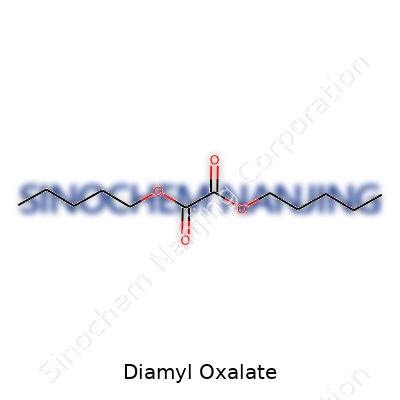
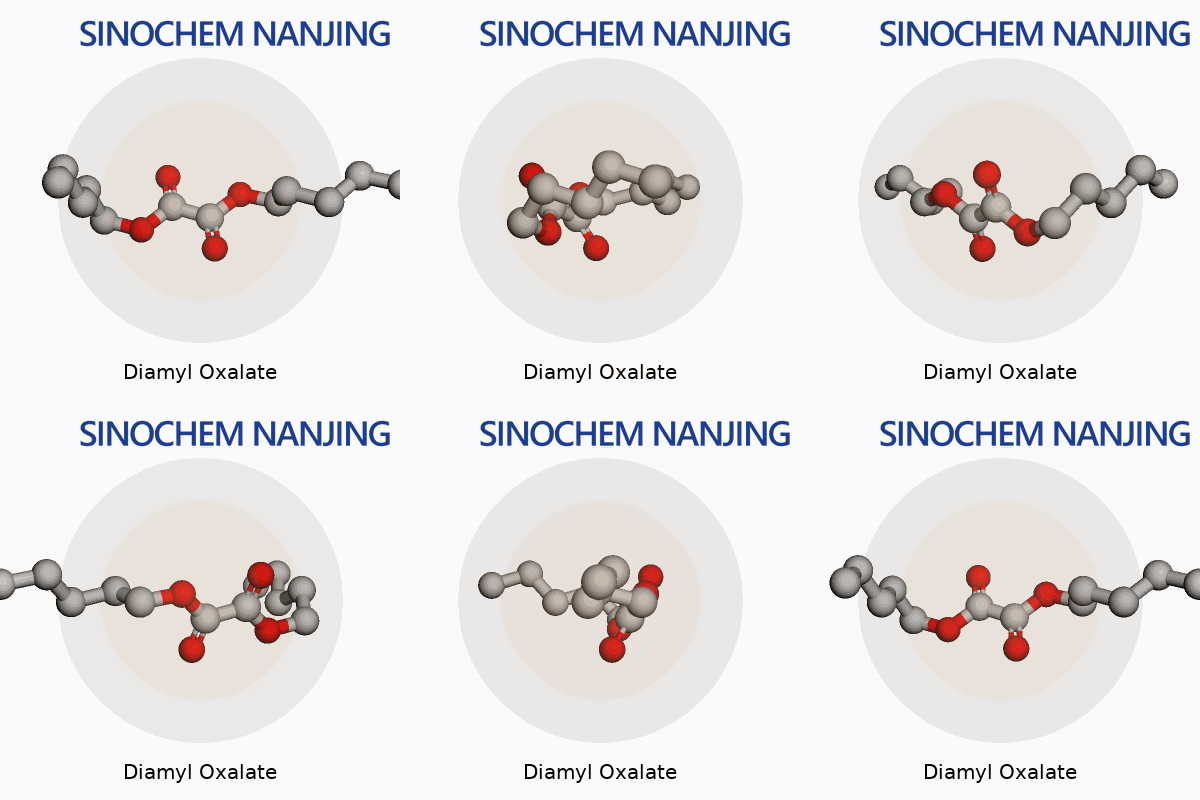
| Names | |
| Preferred IUPAC name | Pentyl pentyl oxalate |
| Other names |
Oxalic acid diamyl ester Diamyl oxalic ester Pentyl oxalate Amyl oxalate |
| Pronunciation | /daɪˈæmɪl ˈɒk.sə.leɪt/ |
| Identifiers | |
| CAS Number | 818-58-4 |
| Beilstein Reference | 1861105 |
| ChEBI | CHEBI:87356 |
| ChEMBL | CHEMBL468302 |
| ChemSpider | 91493 |
| DrugBank | DB14637 |
| ECHA InfoCard | 05b0a8f6-8470-4dfa-bf48-26c4babdcb28 |
| EC Number | 210-048-5 |
| Gmelin Reference | 69319 |
| KEGG | C19641 |
| MeSH | Dicarboxylic Acids |
| PubChem CID | 8895 |
| RTECS number | OS0800000 |
| UNII | 6QK2952HKT |
| UN number | UN3271 |
| Properties | |
| Chemical formula | C13H24O4 |
| Molar mass | 346.494 g/mol |
| Appearance | White crystalline powder |
| Odor | Odorless |
| Density | 0.991 g/cm3 |
| Solubility in water | insoluble |
| log P | 3.9 |
| Vapor pressure | 0.00021 mmHg (25°C) |
| Acidity (pKa) | Approximate pKa: 13.2 |
| Basicity (pKb) | > 11.52 |
| Magnetic susceptibility (χ) | -72.0e-6 cm³/mol |
| Refractive index (nD) | 1.4230 |
| Viscosity | 3.47 mm²/s at 20 °C |
| Dipole moment | 1.15 D |
| Thermochemistry | |
| Std molar entropy (S⦵298) | 354.7 J·mol⁻¹·K⁻¹ |
| Std enthalpy of combustion (ΔcH⦵298) | -6847.7 kJ/mol |
| Pharmacology | |
| ATC code | A08AX10 |
| Hazards | |
| Main hazards | Harmful if swallowed, causes skin and eye irritation. |
| GHS labelling | GHS02, GHS07 |
| Pictograms | GHS07,GHS08 |
| Signal word | Warning |
| Hazard statements | H302: Harmful if swallowed. |
| Precautionary statements | Precautionary statements: "P261, P264, P271, P272, P273, P280, P301+P312, P302+P352, P304+P340, P305+P351+P338, P312, P321, P332+P313, P337+P313, P362+P364, P403+P233, P501 |
| NFPA 704 (fire diamond) | 1-2-2-0 |
| Flash point | 82°C |
| Autoignition temperature | 375 °C |
| Lethal dose or concentration | LD50 (oral, rat): 1100 mg/kg |
| LD50 (median dose) | LD50 (median dose): 500 mg/kg (rat, oral) |
| NIOSH | VX8400000 |
| PEL (Permissible) | Not established |
| REL (Recommended) | Recommended Exposure Limit (REL) for Diamyl Oxalate: "Not established |
| IDLH (Immediate danger) | Unknown |
| Related compounds | |
| Related compounds |
Diethyl oxalate Di-n-propyl oxalate Dimethyl oxalate |



