Cyclopentylamine: A Chemical’s Role in Progress and Challenge
Historical Development
Turning to the story of cyclopentylamine, people from the chemical industry have often experienced that progress happens in fits and starts. Decades ago, understanding amines felt like peering into a black box—cyclohexylamine grabbed attention long before its close relative, cyclopentylamine, made it into mainstream conversation. Scientists in organic chemistry labs back in the mid-20th century recognized cyclopentylamine chiefly as a lab curiosity, but demand shifted as more nuanced organic syntheses called for intermediate amines sporting unique ring structures. Teams in pharmaceutical research started showcasing its use for tailored syntheses, leveraging its cyclic form for specific receptor interactions. Over time, access to pure and affordable cyclopentylamine improved, and previously limited patents became expiring assets. This shift opened doors for wider industrial adoption, giving manufacturers and researchers new options that shaped drug design, agrochemicals, and even fragrance chemistry.
Product Overview—Setting Cyclopentylamine Apart
Experience in the lab has shown that cyclopentylamine doesn’t fit every role, but several features make it valuable. Unlike open-chain amines or larger cyclic relatives, its five-membered ring gives the molecule both flexibility and stability for synthetic pathways that demand unique ring strain or geometric constraints. You see it in small-molecule drug leads where steric bulk can tweak receptor activity or mask basicity. Chemical supply catalogs list it as a clear liquid, pungent but not as acrid as some lower amines, signaling its manageable volatility and handling properties. Chemical formulators gravitate toward this amine when seeking something less basic than methylamine but more robust than cyclohexylamine—a sweet spot for select organic transformations.
Physical & Chemical Properties
Anyone who has handled cyclopentylamine knows the importance of its volatility and solubility profile. Boiling around 106°C, the liquid form remains stable under moderate conditions, with little tendency to polymerize or decompose at room temperature. It dissolves well in water and a range of organic solvents, offering real flexibility for solution-phase chemistry. Its moderate basicity (pKa value near 10.7) steers certain reactions, such as reductive amination or ring-opening substitutions, toward predictable outcomes while minimizing unpredictable polymer byproducts. In a practical sense, its moderate vapor pressure means you don’t need specially vented containment for short-term use, but long lab days prove it can evaporate faster than more robust amines if left open.
Technical Specifications & Labeling
Purchasing cyclopentylamine from reputable chemical suppliers, most users find bottles labeled clearly with hazard statements and purity percentages. Purity ranges climb up to 99%, and users in regulated industries, such as drug manufacturing, expect trace analyses covering water, residual solvent, and possible secondary amines. These details matter because even minor impurities can disrupt catalytic reactions or trigger regulatory headaches. Storage in dark amber bottles helps fend off light-driven degradation, and those working with significant quantities often invest in grounded metal containers to address flammability concerns—a real risk every lab hand encounters sooner or later.
Preparation Method
Synthesizing cyclopentylamine has evolved since its earliest documented procedures. Once, chemists leaned heavily on ammonolysis of cyclopentyl halides or reduction of cyclopentanone oximes. These classic routes lived on in bench-scale laboratories, often limited by yields and hazardous byproducts. Today, demand for greener chemistry pushes toward catalytic hydrogenation using supported metal catalysts, which reduces nitro or imine precursors more cleanly. Teams in production settings emphasize atom economy and minimal waste, a nod to changing environmental regulations and the relentless drive for cost reduction. Safety officers and process engineers alike recall close calls with earlier synthesis routes when uncontrolled exotherms or pressure surges put staff on edge—catalysts and new solvents did more than boost efficiency; they made large-scale production tenable and safer.
Chemical Reactions & Modifications
Ask any seasoned synthetic chemist about cyclopentylamine, and the conversation quickly turns to its versatility. Developers of pharmaceuticals or fine chemicals value its primary amine group, which serves as a launching point for acylation, alkylation, reductive amination, and more. The five-carbon ring resists many unwanted side reactions, making it a solid base fragment for further elaboration. Derivatives show up as building blocks in antihistamines, corrosion inhibitors, and agricultural fungicides. Real-world experiments reveal a knack for selective functionalization—such as halogenation on the ring without disturbing the amine group—placing cyclopentylamine in a respected spot among aliphatic amines. Modifications to the molecule, by introducing electron-donating or withdrawing groups, unlock whole new avenues for drug analog development, material science, and even flavor chemistry, where cyclopentylamine derivatives alter sensory thresholds.
Synonyms & Product Names
Depending on the context, people refer to cyclopentylamine by several names—aminocyclopentane crops up in some papers, while trade names in global markets spring up as supply chains extend. Textbooks sometimes list it under its CAS number for clarity across languages and vendor catalogs. These synonyms reflect a rich but fragmented community of buyers and users, and it pays to double-check you’re sourcing what you actually need—mislabeling has tripped up more than a few projects, wasting weeks on analytical confirmation when a simple naming slip derailed a batch upstream.
Safety & Operational Standards
Safety never gets old in handling cyclopentylamine—even old hands respect its hazards. Personal experience in lab settings shows the dangers of underestimating its flammability and acute toxicity. Safety data sheets spell out the risks in bold, but it takes witnessing a spill in a poorly ventilated fume hood to really understand how quickly eye and respiratory irritation can set in. Wearing gloves, splash-resistant goggles, and using chemical hoods prevent most problems, yet users stay alert for leaks and vapors, especially since amines bleed through nitrile gloves faster than most assume. Industry protocols standardize measures for storage, transfer, and emergency response—automatic shut-off valves and vapor detectors invest in peace of mind, especially for large-scale installations.
Application Area
Cyclopentylamine crops up in surprisingly diverse sectors. Pharmaceutical labs slap its structural skeleton onto drug candidates aimed at neurological or cardiovascular targets, leveraging ring geometry to harness unique receptor activity. Crop protection chemists fold it into agrochemical scaffolds, finding that the cyclic amine reduces off-target effects in some newer fungicides. In material science, it acts as a curing agent in epoxy resins, lending the final product flexibility and chemical resistance that linear amines can’t achieve. Perfumers, though a niche audience, experiment with its derivatives to deliver subtle green notes in fragrance bases. All these applications push manufacturers to refine processes and up their game in impurity control and supply reliability—one broken supply chain link can hold up multiple product lines.
Research & Development
Teams in academic and industrial R&D labs continue to drive innovation with cyclopentylamine. Structural modifications take the spotlight, often aimed at tuning pharmacokinetics or enhancing selectivity in catalytic cycles. Conferences and journals showcase how slight changes on its ring can shift biological outcomes or open up new polymerization catalysts. Recent breakthroughs highlight sustainable process improvements, such as enzyme-catalyzed amination routes, which reduce reliance on hazardous reagents and trim energy use—a real win for firms facing pressure from eco-conscious regulators and customers. Collaborations with computational chemists further accelerate the discovery of new derivatives, particularly as machine learning tools predict binding affinity and reactivity before any glassware comes out.
Toxicity Research
Labs over the decades have unraveled much about the risks associated with cyclopentylamine exposure. Its acute toxicity profile draws attention, with studies showing both inhalation and dermal routes can cause irritation and more severe reactions at higher doses. Chronic exposure research paints a nuanced picture—repeat handling without proper gear risks cumulative effects, flagging concerns about occupational safety. Animal testing in the toxicology literature shows that, while not the most dangerous of amines, cyclopentylamine doesn’t rank as benign, either. Regulators enforce strict workplace limits and guidelines, and ongoing work looks closely at metabolite profiles and residual presence in pharmaceuticals or food-contact materials. The push for safer derivatives and more effective personal protection continues as part of ongoing workplace health evolution.
Future Prospects
Looking ahead, cyclopentylamine faces both opportunities and challenges. The steady growth in personalized medicine and precision agriculture expands its relevance in custom syntheses and hybrid crop chemicals. Market dynamics remain tricky, with raw material costs and environmental regulations tightening in many developed regions. Sustainability metrics shape procurement decisions, favoring processes with lower waste and safer reagents. Process intensification technologies, such as continuous flow reactors, promise to boost efficiency and minimize risk, while broader adoption hinges partly on how well manufacturers can demonstrate safe, scalable, and clean production. Fresh eyes from a new generation of researchers may repurpose cyclopentylamine and its derivatives for uses nobody expected—whether in next-generation material composites, greener polymerization methods, or the design of smart pharmaceutical scaffolds. How the industry responds to shifting health and safety expectations will play a defining role in cyclopentylamine’s place in the future chemical toolkit.
What is Cyclopentylamine used for?
A Closer Look at Cyclopentylamine
Cyclopentylamine looks like just another chemical name on a long list, but in the real world, it plays a sneaky but essential part in plenty of industries. You might not spot it in headlines or on ingredient labels at your local pharmacy, but it shapes the way everyday medicines and products work. From my own work with research chemistry, a clear pattern pops out: it serves as one of those unsung helpers behind the scenes, laying the groundwork that allows more visible ingredients to shine.
If You’re Working With Pharmaceuticals
Drug makers turn to cyclopentylamine as a building block. Its unique ring structure helps lay the foundation for several active pharmaceutical ingredients. In the lab, this amine often acts as a starting material for making drugs aimed at heart health, allergies, and sometimes even as part of molecules that fight depression. Scientists use raw materials like this because they offer stability and react the way chemists want during multi-step syntheses.
Most drug companies keep a steady supply on hand for research as well. You see, the pharmaceutical world constantly pushes for new treatments, and small changes in a molecule can yield a big difference in results. Because cyclopentylamine is fairly straightforward to modify, it pops up in experiments meant to design better, safer, or longer-lasting medicines. The fact that even a modest lab can use it safely speaks to its versatility.
Industrial Uses Show Cyclopentylamine’s Flexibility
Move over to the world of chemicals and you’ll catch cyclopentylamine proving itself useful in other ways. Factories rely on it to create corrosion inhibitors. Basically, these inhibitors stop metal parts in equipment, pipes, and big machines from rusting out too fast. Prevention goes a long way; fewer breakdowns mean smoother business and less waste.
Beyond pipes and pumps, it finds its way into rubber production. Here, it helps speed up the reactions that turn sticky, gooey rubber sap into the solid tires we drive on and the sealants that keep water out. That makes me remember touring a tire plant and seeing mountains of chemicals prepped for a new batch. Each one there for a reason, each one tied to performance and cost.
Cyclopentylamine in Everyday Products
Cleaning supplies and personal care items use cyclopentylamine in small but important ways. It acts as an intermediate that helps link other, sometimes more complex, molecules together. Think shampoos, soaps, and certain lotions—the behind-the-scenes chemistry relies on substances like this for quality and functional performance. A bottle of soap might never mention it, but each wash reflects its hidden role.
Safety and Transparency Matter Most
Of course, there’s always a safety question. Anyone handling cyclopentylamine in pure form needs gloves, ventilation, and solid training. Exposure can irritate the skin or lungs, so safety rules stay strict. The bigger issue, for me, revolves around transparency. Both factories and pharmaceutical companies should keep clear records and follow all health and safety laws. It builds trust, especially when so many everyday items have long chemical trails behind them.
What’s Next for Cyclopentylamine?
Demand for strong, reliable building blocks like this one holds steady, but pressure grows for more sustainable sourcing and less risky byproducts. Green chemistry offers one way forward, urging chemists to design processes that waste less and protect people working with these substances. In the end, understanding chemicals like cyclopentylamine makes for smarter choices—both in research and in the products that land on your shelves.
What is the chemical formula of Cyclopentylamine?
Chemistry’s Lingering Questions
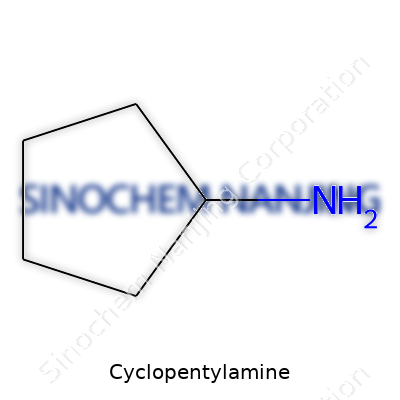
Many have poked around for the details behind cyclopentylamine. This compound crops up in everything from chemical synthesis to pharmaceutical development. With its strong ammonia-like scent, it’s not exactly subtle in the lab. The formula is C5H11N. That pairing sticks to my memory from time spent measuring out bulky bottles in a grad school prep room. Cyclopentylamine features a five-carbon ring—the cyclopentyl group—hooked to an amine (NH2) functional group, which flips it from an inert hydrocarbon into a lively participant in organic reactions.
Learning By Getting Hands-On
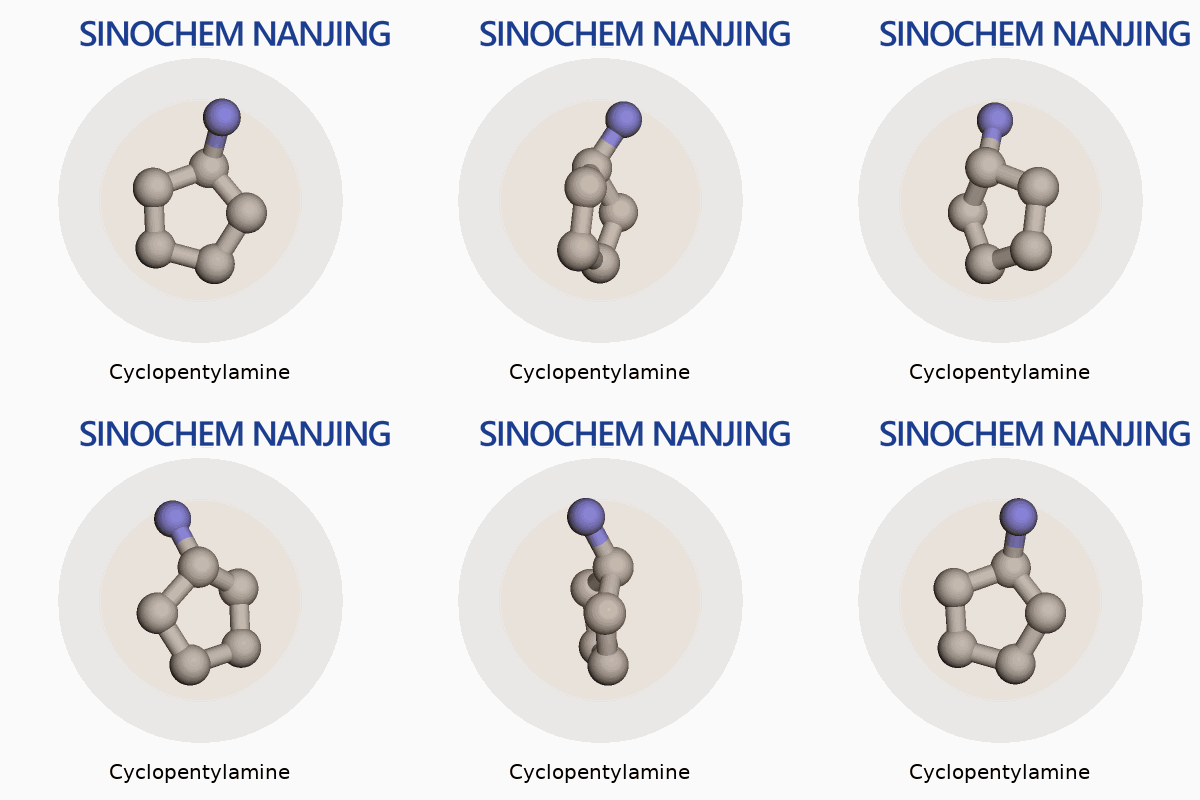
It’s hard to forget the moment when a simple carbon ring gains new possibilities. Unlike straightforward hydrocarbons, cyclopentylamine brings nitrogen to the table. The molecular formula, C5H11N, sums up five carbons, eleven hydrogens, and one nitrogen atom. This combo delivers properties you won’t find in cyclopentane alone. If you turn to the molecular structure, you’ll spot a single, saturated five-membered ring carrying an NH2 group. A touch under the nose—the strong scent—usually sends folks scrambling for the fume hood, myself included.
Why This Amine Matters
In my experience, cyclopentylamine earned respect on synthetic benches. It serves as a building block for bigger molecules, especially when tweaking pharmaceutical candidates or creating agrochemicals. Its reactivity owes much to the amine: that lone nitrogen grabs the attention of chemists hungry for nucleophiles, or groups ready to donate electrons in a crowded reaction flask. Simple transformations, such as creating amides or linking with acids, get much easier with this compound in your toolkit.
Safety: Crucial Lessons from the Benchtop
Labs often store cyclopentylamine next to other amines—there’s a good reason for keeping it labeled and away from vulnerable materials. With a pungent odor and volatility, leaks get detected quickly. Skin contact leads to irritation, and breathing in vapors brings more trouble than you might expect. So, gloves, splash goggles, and a working fume hood move from formality to necessity. A couple of times I’ve watched junior researchers skip gloves, only to see red knuckles and regret minutes later. Cyclopentylamine doesn’t forgive sloppy technique.
Moving Toward Safer Handling and Greener Chemistry
Many companies focus on reducing workplace hazards, and finding alternatives when possible remains on the list. Industrial hygiene improvements like sealed delivery systems and better scrubbers cut down on accidental exposure. I’d also put in a plug for constant updates in safety training—real experiences stick more than dense text in old manuals. Swapping in less hazardous amines or adjusting protocols so smaller quantities get used can also lower risk.
Why Details Count in Everyday Chemistry
The formula C5H11N may read like a trivia answer, but understanding what it represents carries real benefits. You see how structure informs reactivity, hazard, and practical use. Scientists lean on lessons learned directly from the benchtop and peer-reviewed literature to make smarter choices. Anyone working with or studying cyclopentylamine stands to benefit from this careful approach, whether blending reagents or developing safer labs for the next group of students. The chemical formula anchors all these facts—a simple group of atoms mapping out a wide realm of discovery and caution.
Is Cyclopentylamine hazardous or toxic?
Understanding the Risks Behind Cyclopentylamine
Cyclopentylamine doesn’t get the spotlight outside certain labs, but it turns up in industrial and chemical circles. It has a sharp, fishy smell and gets used in making pharmaceuticals, corrosion inhibitors, and rubber chemicals. Its presence in workplaces—rather than homes—means the main concern won’t involve the average person. I once worked for a lab that bought small quantities for synthesis work, and our safety officer always briefed us thoroughly before we even cracked open the bottle. That smelled strong for a reason: amines like this can bite you fast if you treat them lightly.
Health Hazards You Should Know About
Chronic exposure to cyclopentylamine can lead to irritation in the eyes, nose, and throat. Acute exposure—getting a big whiff or splash—can feel worse. Even minimal contact makes eyes burn and water. A little on the skin brings stinging and redness; larger contact causes chemical burns. Inhalation comes with headaches, dizziness, and respiratory trouble. Honestly, after handling it once without gloves (a mistake I regret), my fingers tingled all day. Nausea or vomiting sometimes shows up if the exposure gets serious enough.
Manufacturers label the chemical as harmful if swallowed, and it can irritate the stomach or the digestive tract. The U.S. National Institute for Occupational Safety and Health (NIOSH) recognizes cyclopentylamine as a potential workplace hazard, urging care with every step. They recommend local exhaust ventilation and personal protective equipment—goggles, gloves, proper lab coats—to keep risks down. I’ve seen gloves dissolve or degrade when workers cut corners, and that’s a recipe for a chemical coming in direct contact with the skin.
Fire and Environmental Dangers
Cyclopentylamine is flammable. It forms vapors that are heavier than air and can sit low to the ground, spreading away from spills. All it takes is a spark for things to get dangerous. Many workplaces install special storage cabinets and keep fire extinguishers close. I remember a safety drill where the spill team went through the procedure: soak up liquid with absorbent pads, ventilate the area, and never use water streams, since they could spread the chemical or help vapors form more quickly.
If spilled, cyclopentylamine runs the risk of entering water systems where it can harm aquatic life. This chemical doesn’t break down quickly and sticks around in the environment. The Material Safety Data Sheet warns about preventing runoff into drains. Labs train staff to intercept spills right away, gather up waste for special disposal, and double-check for any residue that could linger unnoticed.
Reducing Harm: Steps That Work
Solid training always makes the difference. When everyone knows what could go wrong, they use fume hoods every time. Investing in good gloves—not cheap substitutes—pays off. Regular checks catch tears or wear-and-tear early. Instead of half-open bottles, workers keep tight lids and label chemicals with the date opened. Emergency procedures, with eye wash stations and chemical spill kits, shouldn’t get dusty in a corner; they only help if the team feels confident using them.
Anyone buying or working with cyclopentylamine should read up on the latest safety data. The European Chemicals Agency and EPA offer public health sheets that explain exposure risks in clear language. Employers who listen to their people and address concerns—like by updating protective gear or fixing ventilation—see fewer incidents. At the end of the day, treating cyclopentylamine with care keeps workers safe and limits the risks to the environment.
How should Cyclopentylamine be stored?
Everyday Handling and Safety
Cyclopentylamine shows up in a handful of labs and manufacturing settings, but it often gets overlooked compared to bigger-name chemicals. It's tempting to treat it just like any other amine, but experience tells a different story. One day, I knocked over a mislabeled bottle by mistake. The sharp, fishy odor hit hard, and everyone in the room felt it. It’s not only about the smell — this chemical brings real risks if overlooked in storage.
Why Safe Storage Matters
Spills can lead to skin irritation and, if the vapors build up, breathing problems. People who work with amines see these issues pop up all too often. The root cause often traces back to simple mistakes in storage: a cap not screwed tight, a container left in the sun, or a chemical put near incompatible substances. The label might warn about keeping it sealed and stored away from heat, but labels don’t always get the respect they deserve.
Take flammability seriously. Cyclopentylamine catches fire more easily than water boils. One spark is enough. That means storing it away from open flames, hot surfaces, and even that old electric hotplate someone uses for quick experiments.
What the Experts Recommend
The American Chemical Society, folks at NIOSH, and countless safety officers all say the same things for a reason. Use a tightly closed container. Don’t stash it on the edge of a bench or right under sunlight. Go for a cool, dry spot away from acids and oxidizers — cyclopentylamine doesn’t play well with those, and the results can turn dangerous without warning.
Smaller bottles usually make it easier to avoid big disasters. Even the toughest secondary containment trays catch drips or leaks if a bottle breaks or ages out. And those chemical-resistant trays aren’t just for show — they keep spills from spreading to other things nearby.
Labeling and Personal Responsibility
Mark every bottle and container clearly. "Unknown" or faded labels have ended up causing panic and lost product more than once in my time. I’ve watched as teams have had to evacuate over an unknown chemical, later revealed to be a common amine. These interruptions cost time and money, but they’re nothing next to the human risk.
One lesson that sticks with me: don’t trust assumptions. Sometimes people assume an old brown bottle is just water or ethanol. But all it takes is a wrong pour or mix and a flare-up starts. Training everybody around you, including new folks and those just passing through, helps keep accidents down.
Ventilation, PPE, and Practice
It’s tough to ignore how often cyclopentylamine evaporates if ventilation falls short. Fume hoods work well, but not everyone uses them faithfully. It doesn’t take much vapor to cause headaches or worse. Gloves, goggles, and lab coats shield against skin and eye contact. The effort spent on prevention usually saves embarrassment — or a trip to the medic — later on.
Sound storage habits for cyclopentylamine don’t require fancy equipment, just steady attention and the will to keep things safe. People deserve to end the day in the same shape as they started. That makes proper storage a point of respect — for the chemical and for everyone sharing the same space.
What are the safety precautions when handling Cyclopentylamine?
Respect the Risks, Not Just the Rules
Cyclopentylamine’s sweet odor doesn’t give away the trouble it can cause if handled carelessly. This chemical burns skin and eyes, and inhaling its vapors usually leads to nausea, coughing, and a burning throat. Treating hazardous chemicals with anything less than full attention risks real health setbacks. Safety is about respect for both the material and the people standing next to you.
PPE: Gear That Actually Works
Chemical-resistant gloves and splash goggles do more than check boxes. Try skipping them while cleaning up a spill; you’ll feel the sting fast. Nitrile gloves tend to shrug off cyclopentylamine, but latex won’t hold up. Face shields won’t make you look silly—getting out of the ER waiting room with both eyes matters more. Cotton or polyester lab coats protect arms and keep spills off your clothes.
Air Matters
Fume hoods weren’t built for show. Cyclopentylamine fumes climb fast in rooms with poor ventilation. Relying just on open windows won’t clear the air. Whenever possible, use a certified fume hood. Portable fans stir up vapors and actually make things worse. For bigger jobs, half-mask respirators packed with organic vapor cartridges offer reliable backup, especially where fumes collect in corners or travel on air currents you never notice until it’s too late.
Simple Storage Rules Beat Fancy Cabinets
Common sense beats expensive storage gadgets every time. Keep cyclopentylamine in tightly sealed containers, away from acids, oxidizers, and food—sounds like basic chemistry, but people still mess this up and it ruins lives and careers. Storage areas should stay cool and shady. The material’s flammable, so keep it away from ignition sources, like those old power strips everyone ignores. Label up containers clearly, and top off labels as they fade—it helps the next shift avoid ugly surprises.
Spill Response Makes All the Difference
Immediate cleanup matters more than paperwork. Small spills wipe up with absorbent pads followed by soapy water, but folks should take care—it’s easy to forget about splash-back. Bystanders shouldn’t crowd, and extra towels don’t replace the right absorbents. If a large spill breaks out, evacuate until professionals sort it out. Quick touches can leave chemical burns even with one careless swipe. Always have a sink or eye wash close, and practice reaching it from your bench. Seconds count.
Waste Disposal Isn’t Trash Night
Dumping cyclopentylamine down the drain or in regular bins lands you in fines—or worse, causes environmental damage. Hazardous waste bins should line up with your workflow. If you’re unsure, ask the safety officer—nobody regrets making that call. Containers need chemical-proof labels with dates, so tracking becomes clear at a glance. Don’t cut costs on disposal.
What I Learned in Real Labs
People get comfortable and start skipping steps, especially after years in the same lab. That’s usually the day someone winds up in occupational health. I remember cleaning glassware on autopilot—once, I let my guard down on splash protection and spent the next week itching. Since then, I never handle cyclopentylamine, or similar amines, without wearing full gear and double-checking labels before every move. The best lesson: take every step, no shortcuts. The chemicals won’t cut you slack.
| Names | |
| Preferred IUPAC name | Cyclopentanamine |
| Other names |
Aminocyclopentane Ciclopentilamina Cyclopentylamin cyclopentanamine |
| Pronunciation | /ˌsaɪ.kləˈpɛn.tɪl.əˌmiːn/ |
| Identifiers | |
| CAS Number | 1003-03-8 |
| 3D model (JSmol) | `3D:CC1CCCC1N` |
| Beilstein Reference | 363928 |
| ChEBI | CHEBI:33137 |
| ChEMBL | CHEMBL26648 |
| ChemSpider | 7190 |
| DrugBank | DB03277 |
| ECHA InfoCard | 03ad0458-0000-001b-0000-000006eeb39b |
| EC Number | 203-630-6 |
| Gmelin Reference | 6635 |
| KEGG | C06053 |
| MeSH | D003489 |
| PubChem CID | 70038 |
| RTECS number | GR8750000 |
| UNII | 08J84K153H |
| UN number | UN2245 |
| CompTox Dashboard (EPA) | DTXSID3020383 |
| Properties | |
| Chemical formula | C5H11N |
| Molar mass | 85.15 g/mol |
| Appearance | Colorless to pale yellow liquid |
| Odor | fishy |
| Density | 0.866 g/mL at 25 °C |
| Solubility in water | miscible |
| log P | 0.62 |
| Vapor pressure | 3 mmHg (at 25 °C) |
| Acidity (pKa) | 11.3 |
| Basicity (pKb) | pKb = 3.33 |
| Magnetic susceptibility (χ) | -6.3×10⁻⁶ cm³/mol |
| Refractive index (nD) | 1.448 |
| Viscosity | 1.06 mPa·s (at 25 °C) |
| Dipole moment | 2.05 D |
| Thermochemistry | |
| Std molar entropy (S⦵298) | 160.5 J·mol⁻¹·K⁻¹ |
| Std enthalpy of formation (ΔfH⦵298) | -67.3 kJ/mol |
| Std enthalpy of combustion (ΔcH⦵298) | -3326 kJ·mol⁻¹ |
| Pharmacology | |
| ATC code | C01CA18 |
| Hazards | |
| GHS labelling | GHS02, GHS05, GHS06 |
| Pictograms | GHS05,GHS07 |
| Signal word | Warning |
| Precautionary statements | P210, P233, P260, P264, P271, P301+P312, P304+P340, P305+P351+P338, P405, P501 |
| NFPA 704 (fire diamond) | 2-3-2 |
| Flash point | 43 °C |
| Autoignition temperature | 325 °C |
| Explosive limits | 1.3% - 10.7% |
| Lethal dose or concentration | LD50 oral rat 210 mg/kg |
| LD50 (median dose) | LD50 (median dose): Oral rat LD50 280 mg/kg |
| NIOSH | SKC800 |
| PEL (Permissible) | Not established |
| REL (Recommended) | 7.7 mg/m³ |
| IDLH (Immediate danger) | 400 ppm |
| Related compounds | |
| Related compounds |
Cyclohexylamine Cyclopentanol Cyclopentane Pyrrolidine |



