Cyclohexylamine: A Deeper Look into an Essential Industrial Amine
Historical Development
Cyclohexylamine carries a story that traces back to the early days of organic chemistry, where researchers looked for ways to modify simple molecules into useful compounds. In the beginning, chemists chased after unique ring structures, and cyclohexylamine came onto the scene as a reduced form of aniline, introducing an aliphatic backbone where aromatic rings once stood. Over decades, industries leaned on cyclohexylamine not just for its ready reactivity, but for its adaptability across multiple applications. Chemical companies explored both the hydrogenation of aniline and the amination of cyclohexanol, giving rise to industrial-scale production that could support needs ranging from water treatment to pharmaceuticals. Watching the journey of cyclohexylamine gives insight into how innovations in reaction methods have shaped the tools available to today’s industrial chemists.
Product Overview
Cyclohexylamine sits among the fundamental amines, marrying a cyclohexane ring with an amino group. It holds onto a pungent fish-like odor and presents itself as a colorless liquid at room temperature. While many see cyclohexylamine as a basic building block, there’s more to it than a simple structure. The versatility comes from the balance it strikes—offering solubility in organic solvents, a moderate boiling point, and a reactivity profile suited for both bulk-scale synthesis and high-value specialty uses. Factories worldwide count on stable supplies to keep major chemical streams flowing, especially where intermediates for rubber chemicals, accelerators, or corrosion inhibitors are needed.
Physical & Chemical Properties
With its molecular formula C6H13N, cyclohexylamine has a molar mass of about 99.18 g/mol. It brings together a six-membered ring that pushes out typical aliphatic amine behavior while avoiding some of the hazards seen in aromatic cousins. Its boiling point hovers around 134°C, and it takes on water and solvent compatibility that allows it to slip into numerous formulations. At room conditions, its volatility calls for careful storage. Strong alkalinity means that it quickly reacts with acids, forming salts, and this is the property most in demand in water treatment or separation technologies. Its flames flash at 32°C, marking it as a flammable hazard needing vigilance around heat or spark.
Technical Specifications & Labeling
Specifying cyclohexylamine for industrial use often means confirming purity, moisture content, and any trace impurities like cyclohexanol or aniline. Manufacturers routinely deliver it in high-purity grades, since downstream uses—such as rubber production or pharmaceuticals—can be sensitive to contaminants. Regulatory requirements mean the product carries labeling that highlights flammable nature, toxicity, and environmental risk. Storage recommendations direct users to keep it in cool, ventilated settings with safe distancing from oxidizing materials. Safety sheets and warning labels are not just bureaucratic add-ons—they’re informed by hard-earned lessons from past incidents where overlooked hazards led to injury or loss.
Preparation Method
Cyclohexylamine enters the chemical industry through two main routes. The hydrogenation of aniline under pressure and with catalysts like nickel or platinum gives one straightforward avenue. Another route makes use of cyclohexanol or cyclohexanone, where ammonia reacts under suitable conditions and yields the target amine. Commercial outfits fine-tune pressures, temperatures, and catalytic setups to maximize yield while keeping costs in check. These processes resemble those used for other amines in some ways but draw attention because even slight tweaks to the formula can kick up side-reactions that introduce unwanted byproducts. Production teams have to watch for such leaks, not just to improve output, but also to meet environmental and safety regulations.
Chemical Reactions & Modifications
Cyclohexylamine acts as a flexible starting point for chemical synthesis. It goes through acylation to produce amides, which find use in corrosion inhibitors and surfactant manufacture. Alkylation steps expand the backbone, while sulfonation or nitration open the door to specialty compounds for water treatment or dyestuffs. Cyclohexylamine’s basic nitrogen atom grabs onto protons or electrophiles, letting chemists attach a variety of side chains or functional groups. Chemists regularly work to optimize yields, control side-products, and develop greener, less wasteful reaction flows. Its reactivity, balanced with process safety, helps drive the evolution of cleaner amine chemistry.
Synonyms & Product Names
The world of chemicals often deals with multiple names for one substance, and cyclohexylamine is no exception. Other names show up in lab books and product lists—Aminocyclohexane, Hexahydroaniline, or even CHA. These synonyms trace historical naming conventions and regional preferences in the global market. Recognizing the many aliases of cyclohexylamine proves important, especially when comparing literature, translating specifications, or troubleshooting across supply chains. Industry veterans know that missing a synonym can cost time and safety in real-world operations.
Safety & Operational Standards
Working with cyclohexylamine challenges plant operators and researchers alike to keep controls tight. Inhalation or skin contact brings risk—acute exposure irritates mucous membranes, while longer contacts may sensitize the body or provoke allergic reactions. Adequate ventilation, reliable spill containment, and access to safety gear stand as non-negotiables in facilities handling this compound. Regulated workplaces monitor ambient concentrations, invest in closed transfer systems, and train staff to respond to leaks or fires. Stories from chemical plants highlight the difference preparation and compliance make—failures in containment or a lack of personal protective equipment have led to preventable injuries in the past. Strong oversight not only keeps employees healthy, but it preserves the reputation of firms in an age where public attention to chemical safety keeps rising.
Application Area
Cyclohexylamine finds its way into a surprising range of industries. In water treatment, it neutralizes acids that speed up corrosion in boilers and pipelines—helping power plants and factories keep maintenance downtime under control. In pharmaceuticals, chemists use cyclohexylamine to form intermediates or as a counterion in formulations. Rubber production relies on cyclohexylamine-based accelerators to fine-tune curing, impacting everything from tires to industrial seals. On the agricultural side, it pops up in herbicide production. Pesticide makers use it to build active ingredients with targeted effectiveness. The flavor and fragrance sectors tap into cyclohexylamine for selected odorants, while dye producers shape the molecule into colorants for textiles and inks. Its broad utility stems from a blend of reliability, ready availability, and compatibility with a host of reaction partners.
Research & Development
Cyclohexylamine research has not stood still. Scientists keep looking for greener ways to produce it, reduce hazardous byproducts, and develop safer formulations. Green chemistry initiatives lead to exploration of bio-based synthesis, using renewable feedstocks instead of fossil-derived precursors. Analytical chemists probe new detection and removal methods for cyclohexylamine in environmental samples, since uncontrolled release poses risks to both ecosystems and communities. Medicinal chemistry groups play with its structure, searching for more potent or selective pharmaceutical agents. Innovation at the intersection of catalysis, environmental science, and process engineering pushes the boundaries of what cyclohexylamine can do while keeping sustainability in mind. Driven by market demand and regulatory pressure, R&D departments keep stretching established boundaries for safety, efficiency, and minimal environmental impact.
Toxicity Research
Toxicological studies show cyclohexylamine as an irritant with moderate acute toxicity if inhaled or swallowed. Animal studies show effects on the nervous system and, at higher doses, damage to vital organs such as kidneys and liver. Human exposures in industrial settings have resulted in headaches, dizziness, and respiratory irritation, highlighting the importance of strong facility controls. Environmental work reveals cyclohexylamine can cause harm to aquatic life if it escapes into waterways. Regulatory agencies have responded by setting occupational exposure limits and groundwater thresholds. Continuing research on sub-chronic and chronic exposures aims to fill gaps that matter for both workers and communities living near manufacturing sites. Investing in long-term health tracking and independent research brings scientific clarity to risk management and safeguards public trust.
Future Prospects
Looking ahead, cyclohexylamine faces both opportunity and challenge. Demand in Asia, North America, and Europe holds steady, but is shaped by tightening safety and environmental rules. The industry seeks production processes with smaller environmental footprints, reduced hazardous waste, and improved worker safety. Advances toward bio-based raw materials could shift the supply landscape, while new uses in advanced materials or fine chemicals may push the molecule further into specialty markets. The future likely belongs to researchers and firms able to deliver cyclohexylamine’s benefits while showing responsibility and flexibility. Transparent communication, consistent regulatory compliance, and investment in process modernization will define the next phase for this essential industrial amine.
What is cyclohexylamine used for?
Getting to Know Cyclohexylamine
Cyclohexylamine is one of those behind-the-scenes chemicals that nobody thinks about until something goes wrong. It doesn’t have the buzz of big-name compounds, but it keeps a lot of everyday things running smoothly. I first came across it working at a water treatment plant right out of college. My supervisor showed me rows of drums labeled with complicated names — cyclohexylamine was one of them. Since then, I’ve seen it turn up in more places than you’d expect.
Water Treatment: Protecting Equipment and People
One of cyclohexylamine's main roles lies in water treatment, especially in boiler systems for factories and power plants. Water turns to steam, then back again, over and over. Bits of oxygen and carbon dioxide hanging around love to eat away at metal pipes. Cyclohexylamine works as a corrosion inhibitor — basically, it gives the inside of those pipes a protective barrier by making the water less acidic. Big companies rely on it so equipment lasts longer and fewer contaminants get into the air or water supply.
Boosting the World of Chemicals
Chemical manufacturing often depends on basic building blocks no one ever thinks about. Cyclohexylamine helps churn out things like rubber accelerators, which speed up rubber production for tires and belts, and herbicides that keep weeds from taking over farmland. It even plays a part in making sweeteners — the kind you add to diet sodas — since it’s used to produce artificial sugar like sodium cyclamate. Some folks worry about food additives, and for good reason; studies on cyclamates led to bans in certain places. That brings up a bigger conversation about keeping a close eye on what goes into processed foods and how it impacts health over time.
Everyday Encounters: A Hidden Ingredient
Most people have never heard of cyclohexylamine, but traces show up in surprising places. It helps in the production of lubricants, makers use it in dyes, and it occasionally finds its way into cleaning products. I first realized how common it was when I saw it listed as a component in industrial degreasers at a factory job. This chemical helps break down stubborn grime that collects on motors and gears.
Health and Environmental Stakes
Using cyclohexylamine comes with challenges. Breathing in vapors or getting it on your skin can cause some nasty reactions — headaches, skin burns, or worse, especially for people working around it every day. Accidents at work sites or transportation spills can put people at risk and send it into the environment, affecting plants and animals. Safety rules help, but they only work if everyone pays attention: proper storage, good ventilation, and protective gear go a long way.
Looking Ahead: Finding Balance
Progress sometimes means stopping to ask if old tools still fit the job. Companies can look into substitution with safer chemicals, wherever that makes sense. Training helps workers handle it with less risk, and regulators can check that manufacturers stick to environmental limits. From dealing with rust in industrial boilers to making flavors and coatings, cyclohexylamine won’t disappear anytime soon, but it deserves respect for the hidden work it does — and for the health and safety issues it brings along.
Is cyclohexylamine hazardous to health?
The Basics of Cyclohexylamine
Cyclohexylamine shows up as a clear liquid with a fishy odor. It often finds its way into water treatment, rubber processing, and as an ingredient in some artificial sweeteners. Industries use it for plenty of reasons, but few workers or consumers get a chance to read past its label. My own story with chemicals dates back to handling solvents in a factory job in my twenties—gloves on, goggles slipping, hoping the label told enough truth. Most people never see the details hiding in chemical safety data sheets unless they end up with a nasty headache and start searching for answers.
What Science Tells Us
People want to know if this stuff is truly hazardous. The answer lands on ‘yes’; evidence supports genuine risks. Cyclohexylamine irritates skin, eyes, and airways. Touching it can leave burns if you don’t get it off quickly enough. Breathing in the vapor gives you headaches and dizziness, and in worse cases, can cause faster or irregular heartbeat. According to the National Institute for Occupational Safety and Health (NIOSH), exposure over certain levels can even mess with your nervous system. A study published in Regulatory Toxicology and Pharmacology found repeated exposure in rats led to organ damage at high concentrations. While rats aren’t people, researchers still take animal data seriously when it comes to worker protection.
Real-Life Exposure
Most average folks don’t come face-to-face with cyclohexylamine on a daily basis, but crews in chemical plants or water treatment facilities deal with it often. Factory floors sometimes cut corners or run short on protective gear to speed up the workday. Friends who have worked in industrial cleaning shared stories about mild nosebleeds and peeling skin after a shift—never sure if it’s the chemicals or dry winter air, but the suspicion always hangs over you. Cyclohexylamine can also linger in low amounts in products that claim artificial sweetness, because it serves as a building block in creating some sweeteners. The FDA caps how much can end up in food, but watchdog groups argue the ‘acceptable’ limits deserve regular review.
Reducing the Hazards
The right gear makes a difference. Gloves, goggles, and a tight protocol for handling spills reduce the risk for plant workers. States like California require specific training before anyone works with cyclohexylamine. I remember my first chemical safety orientation: most workers rolled their eyes, but years later I understood why trainers drilled those lessons. Things like fume hoods and strong ventilation shouldn’t just be afterthoughts. Air quality monitors help too, giving early warning before vapor levels creep into the danger zone.
Medical experts and regulators insist on clear labels and frequent health screenings for those who spend time around cyclohexylamine. Greater transparency makes sure fewer workers get caught off-guard by its effects. More public research would help everyone understand the long-term risks—even at the small amounts that might drift into finished food. Europe bans certain uses entirely, preferring caution when solid evidence seems limited.
Taking Responsibility
Staying informed keeps both workers and consumers safer. Companies shouldn’t just settle for minimum legal standards; real responsibility means checking on chemical exposure levels and updating safety protocols when new research comes in. None of this should fall on individual workers alone—the most basic protection starts long before the first shift starts. Sharing hard-won knowledge, whether at home or on the job, builds trust and keeps communities from repeating old mistakes.
What is the chemical formula of cyclohexylamine?
Looking at Cyclohexylamine Up Close
Chemistry class threw a lot of strange words my direction, but cyclohexylamine stuck with me. Maybe because its name sounds like something you’d hear in a science fiction show. If you strip away the mystery, you find a pretty straightforward molecule. The chemical formula for cyclohexylamine is C6H13N. That arrangement shows it’s got six carbons, thirteen hydrogens, and one nitrogen. It’s not just a fancy set of letters — that one nitrogen makes all the difference in how it behaves compared to something like plain cyclohexane (which is just C6H12).
Why Cyclohexylamine Matters in the Real World
Factories and labs across the world lean on cyclohexylamine for jobs you'd never probably guess. It doesn’t just hide out in a flask; it goes to work as a building block for other chemicals. During my time studying chemical engineering, I learned how valuable these “amines” are. Cyclohexylamine, for one, finds use in rubber processing, water treatment plant systems, and the creation of corrosion inhibitors. It even pops up in some pharmaceuticals and pesticides.
Everyday uses sound a bit technical, but the real-world impact is huge. Take water treatment: cyclohexylamine acts as a neutralizer for acidic substances, fighting rust and decay in pipes and boilers. When pipeline failures happen, businesses lose money, and folks lose access to clean water. Reliable chemicals keep the show running behind the scenes.
The Risks That Sneak In
Even chemicals with practical value can cause trouble. Cyclohexylamine gives off a pretty strong, fishy smell if mishandled. Years back, I worked in a research lab where accidental spills were always a concern — even with safety gear. The fumes irritate eyes, nose, and can hit lungs hard if someone isn’t careful. Contact with skin or getting it in eyes leads to burns. Regulatory agencies keep watch because this chemical, like many amines, shows up on hazardous substance lists.
Facts from the Environmental Protection Agency show why caution matters. Chronic exposure to cyclohexylamine, especially in workplaces, has sparked research into possible effects on the liver, kidneys, and nervous system. Short-term exposure makes itself known right away, but longer contact sometimes means subtle, slow-moving health issues.
Responsible Use Calls for Smarter Practices
Having a useful compound means using it smartly. At facilities where cyclohexylamine works hard, proper ventilation and protective gear remain non-negotiable. Companies have moved over time toward using closed systems and automated monitoring to keep human exposure as low as possible. Having spent time around old-school setups with open chemical drums to more modern closed-loop systems, the difference in safety is obvious.
People have pushed for greener alternatives to tough amines, too. Some researchers explore plant-based or biodegradable chemicals for cleaning and corrosion prevention. Progress takes patience but what’s clear is that regulation and innovation go hand in hand. Investing in training and regular audits cuts down on accidents and makes workplaces safer for everyone except the rust in boilers.
What Counts Now
Bringing a chemical like cyclohexylamine into the conversation asks us to think beyond just the formula — C6H13N. It’s about how people, machines, and processes handle it day in, day out. Mastering safety practices, supporting ongoing research, and staying on top of regulatory shifts allow us to use chemistry’s tools without letting their dangers take over.
How should cyclohexylamine be stored?
An Everyday Chemical with Hazards You Can’t Ignore
Cyclohexylamine shows up in all kinds of workplaces—from water treatment to the synthesis of rubber chemicals. Many folks might see it as just another clear liquid, but there’s a real risk if you treat this amine like it’s harmless. My early days working in a dye intermediate plant taught me that even familiar chemicals can turn into a problem if people start getting comfortable, especially around storage.
Risks Lurk in the Details: The Case Against “It’ll Be Fine”
This compound is flammable and corrosive, and it’s got a sharp, unpleasant odor that fills the room if a container leaks. Vapors catch fire easily, and contact with skin or eyes leads to chemical burns. One misstep—like leaving a drum open—and you learn fast how easily it escapes, saturating a workspace and causing health complaints. I remember colleagues who dismissed PPE after hours of safe work, only to regret it when a little spill ended up causing serious eye irritation and weeks of medical checks.
Safe Storage Begins with the Right Materials
Not every barrel or tank will hold cyclohexylamine without trouble. Metal, especially some steel types, can corrode unless lined properly. Any stored material—especially over long weekends or plant shutdowns—ought to sit in containers made from high-quality stainless steel or plastics like polyethylene that don’t react with amines. One site I knew learned this the hard way: they saved on container cost and ended up cleaning up leaks and corrosion by the next season.
Cool, Ventilated, and Away from Trouble
Temperature control makes a big difference. Heat increases vapor pressure; vapors, in turn, find their way into the air and can ignite with any tiny spark. Air conditioning in chemical stores costs money, but it saves insurance claims and health costs in the long run. Ventilation is just as important. Proper vent fans, exhaust ducts, and gas-sensing alarms aren’t extras, they’re essential tools to keep small leaks from turning into workplace emergencies.
Location Matters More Than You Think
Keeping cyclohexylamine away from oxidizers, acids, and any open flame really matters. Too many small businesses ignore this rule and end up with dangerous reactions or huge fines during inspections. I’ve seen workshops in older buildings try to “make do” sharing space with incompatible chemicals—eventually, fire chiefs cleared them out. Segregation in chemicals isn’t just good policy. It keeps people and property safe.
Everyday Safety Habits: PPE, Labels, and Training
Steel-toed boots and basic gloves alone won’t help if you get splashed with cyclohexylamine. Goggles, chemical-resistant gloves, and long-sleeved aprons cut down risk in a real way—every plant accident review I’ve read had a common thread: lax PPE meant worse outcomes. Clear labels and safety sheets at hand also make a difference—especially if someone unfamiliar with the tank needs to move or open it in a hurry.
Planning Ahead Means Fewer Surprises
Routine inspections, written checklists, and documented spill plans serve as insurance against the sudden chaos of a leak or fire. Most storage failures stem from skipped steps—one missing bolt, one unlabeled drum, and troubles pile up. Getting every worker tuned in to the right way to handle cyclohexylamine beats relying on luck or outdated advice every day of the week.
What are the safety precautions when handling cyclohexylamine?
Understanding What’s At Stake
Cyclohexylamine shows up in chemical processing, water treatment, and even some production lines I’ve visited. You’re dealing with something that can cause both short- and long-term issues if safety takes a back seat. This isn’t just theory. After working a summer in a water treatment facility, I saw what careless handling can do. One guy ignored warnings and ended up with nasty burns on his arms. That left an impression—and a reminder that protective habits really do pay off.
Personal Protective Gear: The First Step You Can’t Skip
The stuff vaporizes quickly and carries a strong ammonia-like odor that stings. Bare skin doesn’t fare well against it, so gloves rated for chemicals always go on first. Nitrile or neoprene gloves work best in those settings. I’d never step foot near cyclohexylamine without full-coverage goggles or a face shield, either. I’ve watched someone rinse splashed compound from their eyes—no job should cost your eyesight.
Then comes clothing. Cotton shirts don’t cut it. Full-body coveralls and chemical-resistant aprons keep splashes off. I’ve found that the small step of taping sleeves and gloves together blocks leaks, especially when transferring liquids from big drums.
Ventilation Makes a Real Difference
Even in bigger warehouses, cyclohexylamine vapor builds fast. It can knock you off balance, cause headaches, and attack your lungs without warning. I once had to drag an unconscious coworker outside after he ignored the fume hood in a rush. He spent the night at the hospital. Proper ventilation—exhaust fans, open windows, fume hoods—needs to be treated as essential, not a bonus. You want fresh air moving through at all times, and portable sensors can track air quality for real.
Spill Response and Clean-up: Don’t Just Wing It
Spills happen, sometimes as simple as a container tipping on a rolling cart, or as dangerous as a busted valve. I was taught to treat every spill as a potential crisis: stop the source, evacuate anyone without gear, and contain the liquid with absorbent material that’s rated for corrosive chemicals. Never use bare hands—not even for a second. Emergency showers and eyewash stations belong close enough to reach in under ten seconds. I’ve watched a crew drill these procedures until they could do them in their sleep, and it makes all the difference when seconds count.
Storage: More Than Shoving It on a Shelf
Cyclohexylamine doesn’t like heat, light, or moisture. Shelves need to be sturdy, with ventilation around each container, and no chance of bottles dripping onto others. Store it away from acids and oxidizing agents—those combinations spell disaster. I’ve checked inventory before and found containers sweating or with loose caps. There’s no excuse for poor housekeeping when lives are on the line.
Training and Communication
People get hurt when they don’t know the risks or forget the steps. In my experience, regular safety training—real drills, not just videos—sticks with people. Labels need to be clear and up-to-date, and everyone should know where to find the Material Safety Data Sheet. Nobody should ever work alone with cyclohexylamine, and it pays to check on each other. Quick communication during an accident can save a life.
Staying alert, knowing the risks, and insisting on the right gear form the backbone of safe cyclohexylamine handling. It’s never about luck; it’s about doing things right, every single time.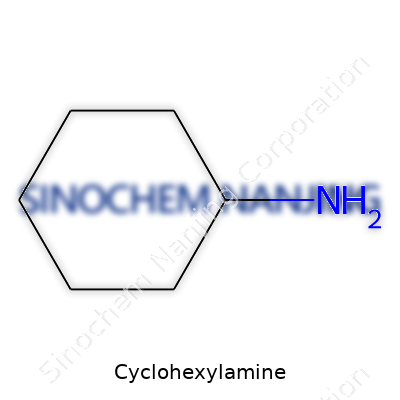
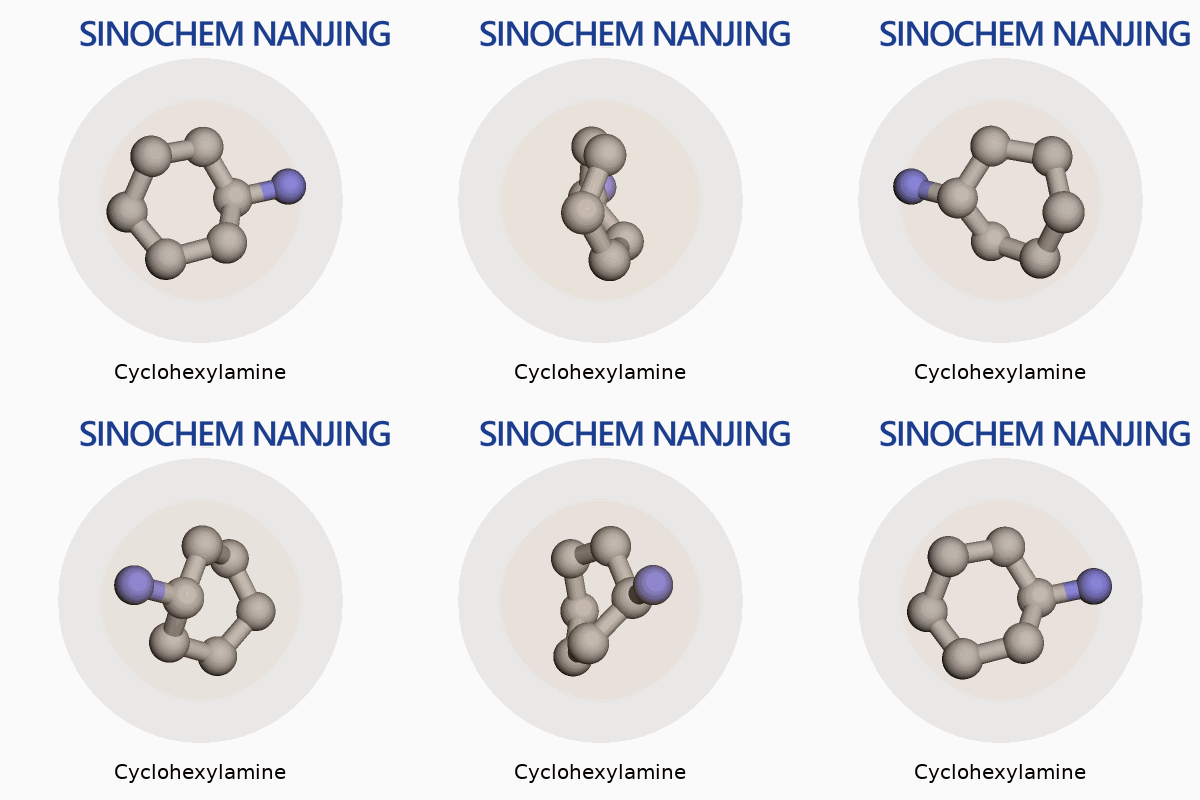
| Names | |
| Preferred IUPAC name | Cyclohexanamine |
| Other names |
Aminocyclohexane Hexahydroaniline CHA |
| Pronunciation | /saɪ.kloʊˈhɛk.sɪl.əˌmiːn/ |
| Identifiers | |
| CAS Number | 108-91-8 |
| Beilstein Reference | 1360677 |
| ChEBI | CHEBI:15688 |
| ChEMBL | CHEMBL415 |
| ChemSpider | 8031 |
| DrugBank | DB06709 |
| ECHA InfoCard | 03dbc907-2a6b-4cfd-9c8a-3d3de4a07a01 |
| EC Number | 205-411-0 |
| Gmelin Reference | 6767 |
| KEGG | C01746 |
| MeSH | D003478 |
| PubChem CID | 8019 |
| RTECS number | GT3675000 |
| UNII | 68A214F6RL |
| UN number | UN2357 |
| Properties | |
| Chemical formula | C6H13N |
| Molar mass | 99.18 g/mol |
| Appearance | Colorless to yellowish liquid with a strong, fishy, ammoniacal odor |
| Odor | Ammonia-like |
| Density | 0.864 g/cm³ |
| Solubility in water | miscible |
| log P | 0.75 |
| Vapor pressure | 7 mmHg (20°C) |
| Acidity (pKa) | 10.7 |
| Basicity (pKb) | 3.23 |
| Magnetic susceptibility (χ) | -7.08×10⁻⁹ |
| Refractive index (nD) | 1.458 |
| Viscosity | 2.27 mPa·s (at 25 °C) |
| Dipole moment | 1.33 D |
| Thermochemistry | |
| Std molar entropy (S⦵298) | 229.6 J·mol⁻¹·K⁻¹ |
| Std enthalpy of formation (ΔfH⦵298) | -77.2 kJ/mol |
| Std enthalpy of combustion (ΔcH⦵298) | -4327.7 kJ/mol |
| Pharmacology | |
| ATC code | C01CA03 |
| Hazards | |
| GHS labelling | GHS02, GHS06, GHS05 |
| Pictograms | GHS05,GHS06 |
| Signal word | Danger |
| Hazard statements | Harmful if swallowed. Causes severe skin burns and eye damage. Toxic if inhaled. May cause damage to organs through prolonged or repeated exposure. Harmful to aquatic life with long lasting effects. |
| Precautionary statements | P210, P261, P264, P271, P280, P301+P310, P303+P361+P353, P304+P340, P305+P351+P338, P311, P312, P321, P330, P362+P364, P405, P501 |
| NFPA 704 (fire diamond) | 3-3-0-ALTH |
| Flash point | 27 °C (closed cup) |
| Autoignition temperature | 293°C (559°F; 566 K) |
| Explosive limits | 1.1% - 8.4% |
| Lethal dose or concentration | LD50 oral rat 156 mg/kg |
| LD50 (median dose) | LD50 (median dose): 1,400 mg/kg (oral, rat) |
| NIOSH | K34 |
| PEL (Permissible) | 10 ppm |
| REL (Recommended) | 5.1 mg/m³ |
| IDLH (Immediate danger) | IDLH: 200 ppm |



