Cyclohexane: Still Turning the Scientific Wheel
Historical Development
Cyclohexane didn’t make a flashy debut in the world of chemistry. Its story began back in 1894, when Adolf von Baeyer and Vladimir Markovnikov separately made discoveries about its structure and synthesis. Up until then, the chemical world favored benzene for its stability and unique flat shape. Cyclohexane brought something different — a saturated ring, which plays by its own rules and challenged many ideas about molecular arrangements. Over the decades, chemists honed preparation methods, moving from slow reductions of benzene to clever industrial routes using catalytic hydrogenation. Every improvement didn’t just widen the gap between theory and application; it made cyclohexane a workhorse for both chemical industry and academic laboratories. Its relevance didn’t fade, thanks to its role in manufacturing nylon and tying together some of the earliest discussions on strain theory, molecular conformations, and organic synthesis.
Product Overview
Cyclohexane looks unremarkable — clear, colorless, and pretty indifferent to casual inspection. But beneath this simplicity lies a key building block for modern materials. Its main job, nowadays, is to produce adipic acid and caprolactam, essentials in nylon production. Cyclohexane doesn’t chase headlines, yet it keeps supply chains humming for fabrics, carpets, and engineered plastics. The compound shows up in paints, solvents, degreasers, and many specialty applications. For me, the lasting impression isn’t just utility but a sort of silent reliability — the way something so plain remains indispensable, quietly holding things together.
Physical & Chemical Properties
Cyclohexane boils at about 80.7°C and melts just above 6°C, so it slips easily between liquid and vapor states at everyday conditions. Its low density — lighter than water — means spills float. Cyclohexane resists mixing with water, but blends well with organic solvents. Its volatility and characteristic mild odor often catch your attention in the lab long before you glance at the label. Chemical stability makes it safe around acids and most bases, but oxidation, strong acids, or extended sunshine can still spark transformation. The energy stored in the cyclohexane ring does not erupt without cause, yet it's always lurking as a source of reactivity, especially when fire or other strong oxidants get involved.
Technical Specifications & Labeling
Industry looks for high-purity cyclohexane. Impurities like benzene, toluene, or methylcyclopentane often cause trouble downstream, especially in polymer manufacturing. Labs and factories usually get product in steel drums or tanker truckloads, with purity grades up to 99.9% for demanding processes. Labeling follows strict standards, listing hazards like flammability and health precautions. Some countries require pictograms and specific handling directions. I've noticed increased scrutiny on labeling in recent years, fueled by both regulatory pressure and better understanding of occupational health risks. The details on the drum are there to protect everyone in the supply chain.
Preparation Method
Cyclohexane production moved from laboratory oddity to bulk manufacture thanks to hydrogenation of benzene. Modern catalytic systems — often using nickel or platinum — deliver steady conversion under relatively mild pressures and temperatures. In some plants, side streams from petroleum refining offer another source, with distillation and separation units designed specifically for cycloalkanes. Over the years, researchers trimmed waste and improved energy use, reflecting the wider chemical industry’s focus on sustainable practice. Even with older methods still lingering, new technology continues to boost yields and cut costs, a practical win both for bottom lines and for reducing environmental footprint.
Chemical Reactions & Modifications
On its own, cyclohexane doesn’t leap to react with mild reagents. Its main chemical fate comes through oxidation, especially when aiming for cyclohexanone and cyclohexanol. Process chemistry here is all about controlled transformation — too much heat or oxygen and you lose product to unwanted byproducts. Substitution and ring-opening reactions require more aggressive conditions, but open doors to interesting intermediates in pharma and specialty chemicals. From a researcher’s angle, cyclohexane has long inspired discussions about ring strain, chair and boat conformations, and reactivity patterns that show up again and again across organic chemistry.
Synonyms & Product Names
Cyclohexane answers to several names across industry and research. Chemists may abbreviate as CHX or call it hexahydrobenzene, highlighting its relation with benzene. On traders’ lists, you might see “hydrocarbon solvent” or “alicyclic hydrocarbon solvent.” These synonyms reflect both chemical structure and end-use. By any name, users recognize its role in keeping processes moving where simple aromatics won’t do the job.
Safety & Operational Standards
Working with cyclohexane means paying attention. It catches fire easily. Vapors can form explosive mixtures with air. Inhalation can cause dizziness and headaches, and high exposures threaten the nervous system. In some places, regulatory agencies classify cyclohexane as hazardous, with workplace limits on airborne concentrations and strict rules for handling, storage, and disposal. PPE requirements focus on splash protection, solvent-resistant gloves, and good ventilation. Emergency response protocols drill down on spill containment and fire control, marrying common sense with lessons learned from past accidents. Training and vigilance pay off, as every chemical user eventually learns — sometimes the hard way.
Application Area
The biggest share of cyclohexane goes to making nylon precursors — both adipic acid and caprolactam require it. Textile and plastics industries depend wholeheartedly on this link, and shortfalls ripple through the supply chain fast. Cyclohexane sees action as an industrial solvent, cleaning agent, and in hydrocarbon blends for paints, adhesives, coatings, and inks. In laboratories, chemists often use it as a reference compound or to study physical and conformational chemistry. Every classroom that ever discussed chair and boat forms owes cyclohexane a nod. Its practical uses outnumber textbook mentions, reflecting how basics sometimes turn out to be unexpectedly versatile.
Research & Development
Research on cyclohexane is far from finished. Analytical chemists keep pushing for faster, safer, and cheaper detection methods in air and water, due to environmental regulations. Process chemists have worked for decades at tweaking catalytic systems, pursuing greener hydrogenation and cleaner oxidation. Theoretical work on the molecule’s conformers helped shape much of modern stereochemistry. Today, investigations look at cyclohexane not simply for itself, but for its analogs and derivatives in energetic materials, green solvents, or as models for drug design. In my own experience, students get hooked on molecular modeling with cyclohexane before moving on to bigger, more complicated targets. The ring never quite loses its appeal.
Toxicity Research
Cyclohexane poses lower acute toxicity than some of its aromatic cousins, though misuse still brings health risks. Animal studies point to nervous system effects at high exposures, with little evidence for chronic toxicity or human carcinogenicity at normal workplace levels. Still, regulatory agencies urge caution, since the compound’s volatility raises the chance of accidental high-dose inhalation. Research goes beyond toxicity testing — environmental impact gets close attention, considering what happens during spills or in wastewater streams. Calls for greener substitutes have grown louder across the last decade. Personal experience keeps reinforcing one lesson: treating even “mild” solvents with respect makes a big difference to short and long-term health.
Future Prospects
Cyclohexane won’t fade from the industrial scene soon. Durable demand in nylon production anchors steady manufacturing, and no scalable alternatives sit ready to take its place. That said, sustainability pressures have forced producers to look for bio-based feedstocks and more circular chemistry. Innovations in catalytic hydrogenation could further reduce energy use and greenhouse emissions. For applications in solvents and cleaning, some sectors already test greener blends or consider phasing down use altogether, but the gap between ambition and technical feasibility remains. The real excitement, from a research perspective, bubbles up in cross-disciplinary connections: modeling more complex ring systems for pharmaceuticals, probing new oxidation catalysts, or designing process systems with cyclohexane at their core but using entirely new thinking for safety and lifecycle analysis. If I’ve learned anything from watching chemical supply chains and academic labs over the years, it’s that a simple molecule with an old history can keep writing new chapters, quietly but persistently shaping the future.
What is cyclohexane used for?
What Cyclohexane Does in Industry
Cyclohexane plays a huge role in the chemical industry, way beyond what most people realize. In my early days working in a plastics lab, cyclohexane showed up all the time as a feedstock. The main draw is that it’s a building block for nylon. Chemical producers use cyclohexane to make intermediates called adipic acid and caprolactam. Both of these go into nylon 6 and nylon 6,6, which turn into fibers for clothing, airbags, carpets, and even parachutes. This isn’t a niche use—over half of all cyclohexane each year heads towards making these materials.
It’s easy to overlook these polymers because most of us use them every day. Think about your toothbrush bristles, the seat belts in your car, or the casing for tools. The world’s huge demand for these items leans on cyclohexane as a starting material. The scale is impressive: manufacturers produce millions of tons yearly just to keep up.
Solvents and Special Applications
Cyclohexane doesn’t just stick close to nylon production. It works as a solvent for resins, paints, and adhesives. One place I’ve seen it used is in laboratories and research settings, where it helps extract certain compounds from mixtures or clean glassware. Its relatively low reactivity compared to aromatic hydrocarbons like benzene makes it a safer option in closed environments. The distinctive smell of cyclohexane lingers around chemical storage rooms—strong, slightly sweet, unmistakable.
Paint companies rely on cyclohexane to dissolve polymers and resins, helping deliver that smooth finish you see on cars and appliances. In the rubber sector, cyclohexane helps shape and clean products during manufacturing. Everyday goods like shoelaces, packaging, and even some medical devices all trace their lineage back to this colorless, flammable liquid.
Concerns and Safer Practices
Cyclohexane’s flammable nature demands respect. I once witnessed a small spill ignite in a warehouse—things escalated quickly. Workers need proper training, good ventilation, and protective gear when handling it. Regulators like OSHA in the US track air exposure, since inhaling too much can cause dizziness and headaches. Chronic exposure poses greater risks, so chemical plants and labs use monitoring systems to flag leaks.
On an environmental side, cyclohexane doesn’t hang around long in soil or water. It breaks down in air when sunlight hits it, but spills can still cause short-term harm to waterways and wildlife. Safety protocols help, but older equipment sometimes lets vapor escape, so maintenance and modern technology matter.
Looking Toward Sustainable Solutions
As demand for nylon and other synthetics rises around the world, chemists search for greener alternatives and recycling methods. Companies experiment with bio-based feedstocks and closed-loop production to reduce dependence on fossil-derived cyclohexane. I see greater transparency in supply chains, which pushes firms to reduce accidents and waste. There’s progress, but no silver bullet just yet.
Cyclohexane isn’t likely to disappear anytime soon. Its value in everyday products and industrial processes keeps it in high demand. The challenge: safeguarding workers and the environment while still meeting global needs for durable, versatile materials.
Is cyclohexane hazardous to health?
Understanding What Cyclohexane Brings to the Table
Cyclohexane shows up in all sorts of industries. From someone mixing chemicals in a lab to workers making paints or adhesives, this colorless liquid finds lots of uses. I’ve handled cyclohexane myself in the lab, and its strong smell stood out right away—almost sweet but not in a good way. The reality is, many people handle this liquid every day without realizing what it can do to the body.
Why Cyclohexane Raises Health Flags
Breathing in fumes for too long brings a different kind of concern. Cyclohexane can get into the lungs, enter the bloodstream, and make a person feel dizzy or lightheaded. Several studies back this up—one NIOSH report outlines short-term exposure causing headaches, drowsiness, and nausea. Too much inhalation can depress the nervous system. You can’t always tell how much is too much until the symptoms start.
Working with this solvent and getting it on your skin might not leave burns, but over time, it strips skin oils and leads to dryness, cracking, maybe even rashes. Using gloves wasn’t a suggestion in the lab. It was a must. Splashing it in the eyes brings irritation and stinging right away, and a trip to the eyewash station isn’t pleasant.
Cyclohexane is classified as a volatile organic compound. That means it turns into vapor quickly. With poor ventilation, vapors linger and build up fast. Some safety data sheets note that heavy exposure, especially in confined or unventilated spots, can knock someone out or cause irregular heartbeat. The American Conference of Governmental Industrial Hygienists (ACGIH) places recommended limits on workplace exposure—these numbers exist for a reason, and ignoring them puts health on the line.
Environmental Concerns and Fire Hazards
This compound lights up easily, and a stray spark can cause a fire or explosion. Several labs and storage sites post warnings for good reason. Cyclohexane doesn’t just evaporate into nothing. It can spread through soil and water, impacting wildlife and groundwater if not stored right. There have been spills in manufacturing sites that required serious cleanup, with lasting effects on local air and water.
Safe Handling Takes Commitment
Shortcuts don’t work. Anyone working with cyclohexane gets safer results using goggles, gloves, and lab coats. It’s important to check that the workspace stays well-ventilated. Local exhaust ventilation or even a simple fume hood prevents vapor from hanging around. Training matters. I watched a new coworker underestimate the solvent’s danger—he learned the hard way after feeling nauseous within an hour. A printed safety protocol near the workstation and clear emergency instructions help avoid mistakes.
For anyone using cyclohexane at home or in DIY projects, basic PPE and a breeze from open windows make a difference. Storing it in well-sealed, labeled containers away from heat sources isn’t an option—it’s a necessity.
Building a Safer Work Environment
Regular monitoring can catch those times when vapor creeps up past safe levels. Encouraging a safety culture, where even small symptoms get reported, protects everyone. Some companies switch to less hazardous solvents if the job allows. This doesn’t just cut health risks; it helps meet environmental rules too.
Cyclohexane’s everyday presence reminds us that just because a chemical feels familiar, it doesn’t mean it’s safe. Information, respect for warnings, simple habits, and practical protective gear go a long way in reducing harm.
What are the storage requirements for cyclohexane?
Understanding the Hazards Upfront
Cyclohexane gets used in a lot of places: making nylon, paints, plastics, and more. At first glance it seems no different from the lineup of other solvents stacked in drums and tanks across a chemical warehouse. Experience speaks differently. Cyclohexane catches fire easily. That risk demands every worker pays attention to both rules and the small details that come from real experience—rules alone don't keep a warehouse from burning or a worker from getting hurt.
Fire Doesn’t Take a Break
If you've ever spent any time near fire-damaged storage tanks, the smell sticks with you. Cyclohexane vapors stay heavy, even at average room temperatures. Vapors can travel. All it takes is a single static spark from nylon coveralls, or a cigarette flicked outside the right container, and you watch flames light up. Metal storage drums—because they shed heat better than plastics—are best. These drums do their job, but safety builds from routine, not just the types of containers. Good air flow around each drum or tank, plus space between them, stops random sparks from turning disaster into tragedy.
Keep It Cool, Keep It Safe
Heat management turns into a straightforward issue with cyclohexane. Above 80°F, vapor pressure climbs and safety gaps vanish. Anyone stacking containers near a welding shop or exposed wall at midday ends up courting risk. Cyclohexane belongs in a cool, dark area. No sunlight, no lines of radiant heat, no forgotten old heaters humming nearby. If you’ve ever unloaded a truck full of drums on a hot afternoon, you don’t rush. You keep checks on drum temps and stay realistic about weather shifts between seasons. A storage thermometer doesn’t cost much and earns peace of mind fast.
Ventilation: The Real Game Changer
Old warehouses used to rely on a couple of open doors. That doesn’t cut it anymore. Chemical fumes hang close to the floor, pooling like water. Cyclohexane fumes, besides being flammable, cause dizziness and headaches, a feeling you don’t quickly forget. Investing in forced ventilation—think fans set low along the floor, not just up by the windows—cuts vapor buildup nearly to zero. From experience, it’s always easier to get workers on board with new safety procedures if you walk them through the why, not just the how. Being able to actually smell the difference after a system goes in can change attitudes fast.
Labeling and Emergency Plans Save Lives
Simple, clear labeling solves problems before they start. People trip up with hand-written tags snagged during rain, or faded ink after just a few days in the sun. Nothing beats bold-print, weatherproof tags on drums and emergency instructions that sit eye-level. Regular fire drills seem over-the-top until a tank starts hissing one quiet night. Reliable fire suppression—foam systems do better than plain old sprinklers for chemicals like cyclohexane—serves as an insurance policy you hope never gets called in.
Learning from Every Spill
No matter how careful any team thinks they are, spills happen. I can remember one incident, short-handed on a Friday afternoon, where moving a drum without a drum dolly led to one falling and leaking. Absorbent kits were nearby, but open access to drains turned a small leak into a big deal. After that, secondary containment—spill basins, sealed flooring—became a must, not a suggestion. Clean-up is easier, and you sleep better at night knowing runoff can’t sneak anywhere it doesn’t belong.
Conclusion
The details matter more than the brand of lock or size of your warehouse. Real attention and common sense, paired with up-to-date practices, keep cyclohexane from being more trouble than it’s worth.
What is the chemical formula of cyclohexane?
Getting to Know Cyclohexane
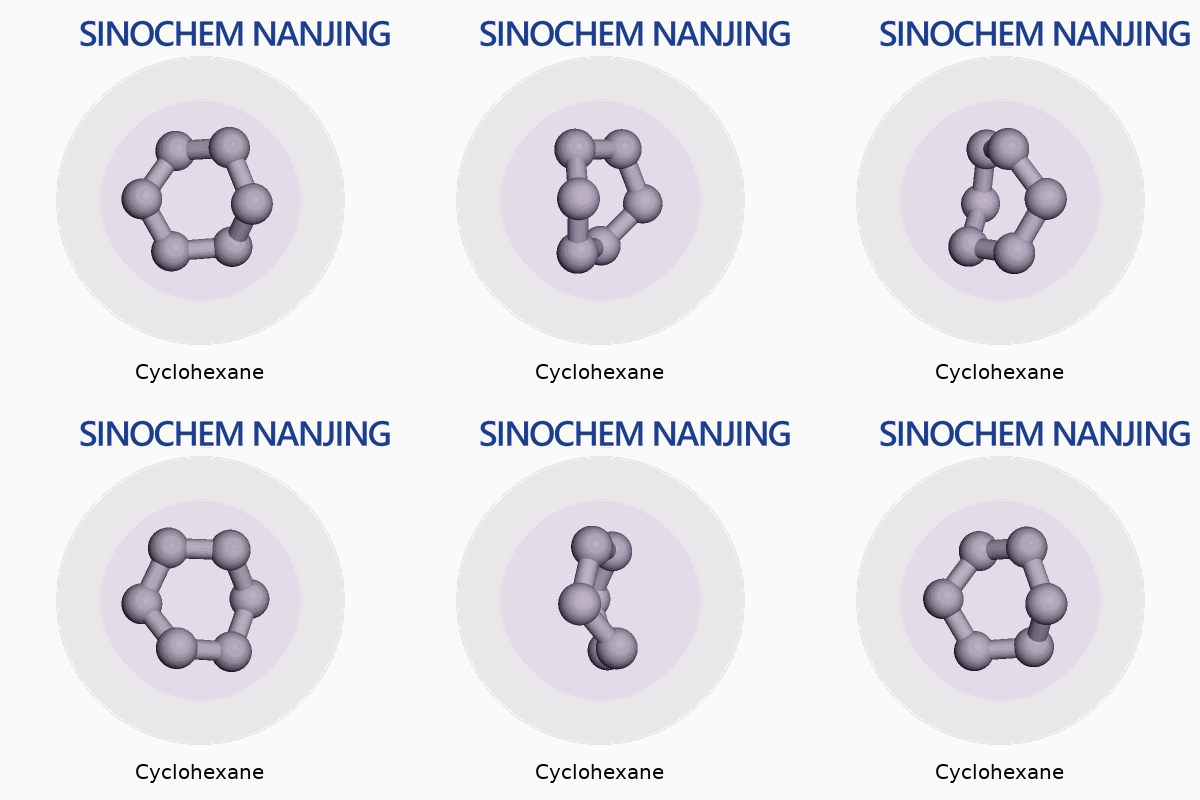
Cyclohexane carries the chemical formula C6H12. At first glance, it's easy to dismiss this as a string of letters and numbers, something that belongs in a chemistry worksheet. But there’s a pretty interesting story behind that formula. Cyclohexane forms a ring of six carbon atoms, each holding on to two hydrogen atoms. Picture a simple hexagon, sturdy yet versatile. What’s truly special about this structure is that it gives cyclohexane its unique set of properties — from its chemical stability to how it behaves in everything from labs to industrial plants.
Where Cyclohexane Shows Up
My first time handling cyclohexane in a college lab, the first thing that hit me was the smell — clear, sweet, and not quite like anything else we used. It's not just stuck in the science world. Cyclohexane stands out as a major player in making nylon, tires, and coatings. About half of the world’s cyclohexane heads straight for nylon production. That's clothes, carpets, ropes, and even that old tent stashed in your garage. Manufacturers prize cyclohexane for its stable ring structure, which makes reactions predictable and the manufacturing a lot safer.
Safety and Environmental Impact
Working with cyclohexane means dealing with a highly flammable liquid. If you've spent time in any chemistry lab, you know the mix of caution and respect these chemicals demand. Cyclohexane catches fire easily and turns into a vapor that spreads fast. On top of that, breathing in cyclohexane vapor even briefly can cause dizziness and headaches. In places that use it in bulk, strict protocols matter. Handling safety goes beyond lab goggles — we're talking engineered ventilation, spill kits, and regular emergency drills.
Spills and releases don’t stay in the lab. Cyclohexane can evaporate into the air or leak into water, breaking down to form other compounds. That's not good news for fish, plants, or people relying on clean water. The U.S. Environmental Protection Agency keeps a close eye on cyclohexane emissions, setting limits designed to protect both the environment and public health.
Why This Formula Matters
Understanding the formula C6H12 connects far beyond a textbook quiz. Most of us don't think about the manufacturing chain behind a piece of fabric or the soles of our shoes. Yet cyclohexane, with its reliable six-carbon ring, represents a key step in that chain. This knowledge matters — not just for chemists and engineers, but for anyone interested in cleaner production and safer products. Knowing how and why something is made can influence better choices, from safer products to smaller environmental footprints.
Looking for Safer, Smarter Use
I remember a wave of new lab protocols after a near-miss with a spill. It taught me that even common chemicals like cyclohexane deserve respect and diligence. Industry has a real chance here to use technology for tighter process controls and advanced leak detection. In my view, training people well and investing in newer, greener alternatives carries just as much weight as a well-written Material Safety Data Sheet. By blending practical know-how with thoughtful design, companies can keep people safe and make their products a little kinder to the planet.
How should cyclohexane be disposed of safely?
Cyclohexane and Its Everyday Risks
A lot of folks in labs work with cyclohexane. It pops up in industrial processes, research settings, and even classroom experiments. You might look at a small jar of this clear liquid and think it’s easy to handle. The problem starts once you’re ready to get rid of it. You can’t just pour cyclohexane down the drain or toss it in with regular trash. Cyclohexane gives off toxic fumes, and its chemical properties can stir up trouble for both people and the environment.
The Hazards Are Real—And Close to Home
Chemicals like cyclohexane change the rules. They’re flammable and create harmful vapors that quickly spread indoors. I once saw a rushed disposal in a school lab—a bottle dumped into a sink by someone unaware of potential dangers. By that evening, complaints of nausea and headaches sent maintenance workers scrambling to vent the room. Even small spills demand respect. Local waterways can’t process solvents like these; they contaminate water and harm wildlife, sometimes destroying delicate aquatic ecosystems for years.
Knowledge Means Responsibility
Talk to any seasoned technician, and you’ll hear stories about near-misses—minor spills, skipped steps, or broken bottles waiting for a better solution. Cyclohexane evaporates easily, filling the air before people get a chance to notice. It doesn’t break down quickly out in the open, adding stress for everyone involved. Law backs up these concerns, with hazardous waste guidelines in place across the globe. The Resource Conservation and Recovery Act classifies cyclohexane as hazardous waste, calling for special handling. Fines get hefty for those who cut corners and the risk to community health can’t be ignored.
Safe Disposal Starts With Good Habits
Preparation saves headaches later. Always store leftover cyclohexane in well-labeled, airtight containers away from heat or sparks. Most places expect you to use containers made from materials that resist corrosion and leaks. Taping the lid or sealing the cap is a small step that keeps volatile fumes inside. Schools, universities, and many companies keep a designated area for hazardous chemicals awaiting collection. One piece of advice that’s stuck with me: never mix leftover cyclohexane with other chemicals—especially chlorinated solvents. Incompatible materials sometimes react, boil over, or create even more dangerous waste streams.
Find a Trusted Waste Contractor
The safest route almost always leads to professional hazardous waste contractors. These service providers understand local and federal regulations, keeping you off the wrong side of the law. They track and transport waste to certified disposal facilities—usually specialized incinerators or chemical treatment plants. By documenting every shipment, both your record and community safety get a boost. If you work or study at any institution with a safety office, they can guide you to approved contractors or municipal drop-off days. Some cities run hazardous waste collection events for small generators and households, giving everyone a shot at playing their part in pollution prevention.
Reuse, Reduce, and Teach Others
Leaving less waste in the first place beats dealing with it later. Measure just what you need at the start of each project or lab session. Train each new participant about the risks and proper storage routines. Sharing firsthand stories changes attitudes much faster than a stack of handouts. If someone on your team comes up with a creative way to cut down on cyclohexane use, celebrate it. Protecting local water, air, and health isn’t some distant goal; it starts right inside the lab or workshop where cyclohexane finds its place.
| Names | |
| Preferred IUPAC name | cyclohexane |
| Other names |
Hexahydrobenzene Hexamethylene Hydrohexanaphthene Hexanaphthene |
| Pronunciation | /ˌsaɪ.kləˈhɛk.seɪn/ |
| Identifiers | |
| CAS Number | 110-82-7 |
| Beilstein Reference | 1361111 |
| ChEBI | CHEBI:2926 |
| ChEMBL | CHEMBL941 |
| ChemSpider | 8078 |
| DrugBank | DB00869 |
| ECHA InfoCard | 100.029.133 |
| EC Number | 203-806-2 |
| Gmelin Reference | Gm. 516 |
| KEGG | C01433 |
| MeSH | D003434 |
| PubChem CID | 8078 |
| RTECS number | GU6300000 |
| UNII | 8ETH945L6T |
| UN number | UN1145 |
| Properties | |
| Chemical formula | C6H12 |
| Molar mass | 84.16 g/mol |
| Appearance | Colorless liquid |
| Odor | sweet, chloroform-like |
| Density | 0.779 g/cm3 |
| Solubility in water | slightly soluble |
| log P | 3.44 |
| Vapor pressure | 13 kPa (at 20 °C) |
| Acidity (pKa) | 48 |
| Basicity (pKb) | 15.27 |
| Magnetic susceptibility (χ) | -7.72×10⁻⁶ |
| Refractive index (nD) | 1.42647 |
| Viscosity | 0.894 mPa·s |
| Dipole moment | 0.00 D |
| Thermochemistry | |
| Std molar entropy (S⦵298) | 173.0 J·mol⁻¹·K⁻¹ |
| Std enthalpy of formation (ΔfH⦵298) | -123.1 kJ/mol |
| Std enthalpy of combustion (ΔcH⦵298) | -3920.7 kJ/mol |
| Pharmacology | |
| ATC code | V04CX01 |
| Hazards | |
| GHS labelling | GHS02, GHS07, GHS08 |
| Pictograms | GHS02,GHS07 |
| Signal word | Warning |
| Hazard statements | H225, H304, H315, H319, H336, H411 |
| Precautionary statements | P210, P261, P280, P301+P310, P303+P361+P353, P304+P340, P331, P370+P378, P403+P233, P501 |
| NFPA 704 (fire diamond) | 1-3-0-F |
| Flash point | -20 °C |
| Autoignition temperature | 245 °C |
| Explosive limits | 1.3-8.0% |
| Lethal dose or concentration | LD50 oral rat 5,000 mg/kg |
| LD50 (median dose) | LD50 (median dose) of Cyclohexane: "12,705 mg/kg (oral, rat) |
| NIOSH | CJ9700000 |
| PEL (Permissible) | 300 ppm |
| REL (Recommended) | 250 mg/m³ |
| IDLH (Immediate danger) | 1300 ppm |



