Choline Chloride: More Than Just a Feed Additive
Historical Development
Choline chloride hasn’t always been a topic people pay attention to, but look anywhere livestock or poultry feed is used, and this chemical has a seat at the table. Chemists first explored choline in the 19th century, hunting for ways to map the basic building blocks animals need. Choline itself became familiar as something essential to life—part vitamin, part oddball member of the B-complex world. By the early-to-mid 20th century, industry found ways to make choline chloride at scale; not long after, it worked its way into everything from medicine to agriculture. These days, choline chloride earns its keep in both industrial and scientific circles, its roots going right back to the search for nutrients about as old as industrial chemistry itself.
Product Overview
For most people, choline chloride looks like a humble, off-white or colorless crystal, usually with a faint fishy smell. It’s more than just a chemical with a funny odor—think of it as a workhorse in a suit, moving quietly through animal feed bags, running through the production lines for pet food, and making an occasional appearance in pharmaceuticals and vitamin tablets made for humans. Grain farmers and livestock producers depend on blends that often include this compound not because it’s flashy, but because the results stand out: stronger animal growth, better reproductive health, and fewer metabolic problems in livestock. For me, when I see a bag marked choline chloride on a farm, it means someone’s paying attention to the invisible details that keep a supply chain running.
Physical & Chemical Properties
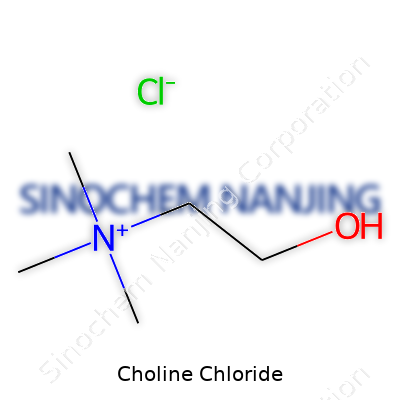
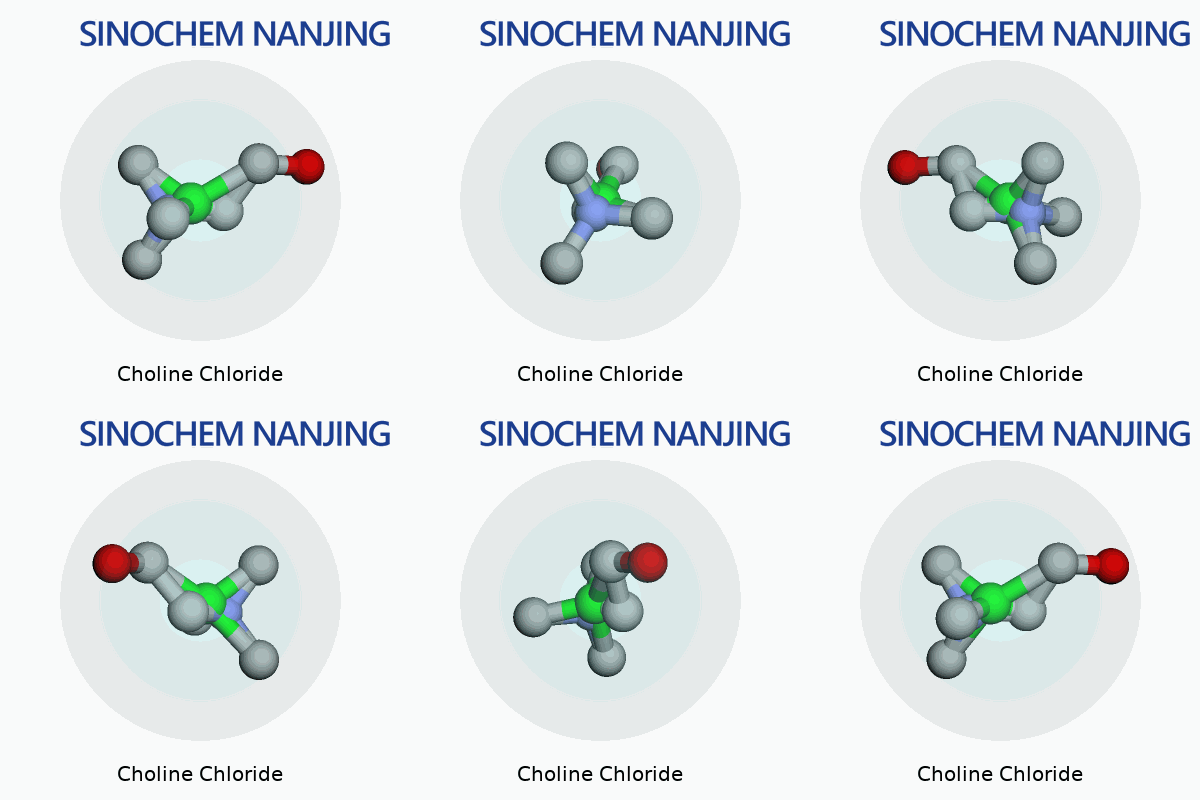
Chemically, choline chloride wears its quaternary ammonium salt badge with pride. Its formula—C5H14ClNO—maps onto a structure that dissolves easily in water, forming clear and colorless solutions. In the lab, it gives off an unmistakable hygroscopic flair, pulling in moisture if left out in the air too long. Its physical stability means transport and storage don’t require colossal investment in advanced systems. Yet, a quick look at the safety sheet points out why handlers shouldn’t get too casual—its irritation risk increases with exposure, especially to eyes and skin. From my own time around feed mills and small animal clinics, mistakes with powders or dust mean headaches down the line; wearing gloves, goggles, and a dust mask always made sense as a practical rule rather than something for show.
Technical Specifications & Labeling
Labeling matters in any supply chain that supports both industrial users and end consumers, and choline chloride falls under a patchwork of global regulations that shift with destination and intended use. Labels typically highlight content purity, common forms—like 50% or 70% solution or pure crystal—and recommended handling precautions for workers. Specifications often demand a low percentage of heavy metals or other contaminants, not only to meet legal demands but to avoid risk to animals and humans down the chain. In my work reviewing technical documents, seeing a well-labeled drum of choline chloride reassures me someone thought of traceability, proper dosing, and the need to keep hazards out of the food and pharma stream.
Preparation Method
Choline chloride these days usually comes from combining trimethylamine with ethylene oxide and hydrochloric acid, resulting in a compound that crystallizes well and can be bundled up for transport. Manufacturing scales up using reactors designed to handle these chemicals safely—because trimethylamine and ethylene oxide both pack a punch when it comes to volatility and toxicity, and even a small slip-up could spell disaster in the wrong hands. Environmental releases must be tightly controlled, not only for worker safety but also for communities living near production sites. From the practical side, I’ve watched industrial chemists run these setups and know firsthand that clarity in process design and redundancy in safety systems mean fewer expensive shutdowns and less environmental worry.
Chemical Reactions & Modifications
As a quaternary ammonium salt, choline chloride takes part in some interesting chemistry, like acting as a methyl group donor in biological systems or as a raw material for thermochemical transformations. In the research lab, it’s used for making deep eutectic solvents—mixtures with applications in green chemistry and extraction processes. The reactivity doesn’t stop at the factory gate, since mixtures containing choline chloride can potentially break down or react with other substances if left in the wrong conditions or stored too long. I’ve seen projects where researchers look to unlock higher-value uses for this compound, whether it involves tweaking its structure or blending it with other biochemicals to expand its application range.
Synonyms & Product Names
The name choline chloride may sound plain, but in catalogs and technical datasheets it pops up with variants—like "choline base chloride," "cholinium chloride," or even just as certain feed grade formulations. Some companies sell specialized forms, sometimes adding proprietary touches to the product codes. For people working in procurement or quality control, recognizing these names helps sort through the noise and keeps purchasing accurate. I’ve watched misunderstandings over synonyms delay deliveries or lead to miscommunication between sales teams and warehouse staff. Getting these terms straight means more than linguistic precision; it keeps operations moving smoothly.
Safety & Operational Standards
Workplace safety around choline chloride depends on systems built to minimize dust, exposure, and accidental release. Dust from powders can irritate skin, eyes, and respiratory tracts, and can build up if facilities don’t pay attention to ventilation and cleanup. Regulatory standards require training for workers, regular equipment maintenance, and strict control on how chemicals are stored and handled. The chemical even has threshold limit values for workplace exposure in several countries, reflecting its potential risks when mishandled. I have seen instances where cut corners led to costly incidents—learning from those, plant managers typically invest in personal protective equipment, closed transfer systems, and periodic review of safety protocols. Pulling this together requires a mindset that values both efficiency and caution.
Application Area
Most people encounter choline chloride through animal feed, where it supports growth, boosts milk yield in dairy cows, and trims the risk of fatty liver syndrome in poultry and swine. By supporting lipid metabolism, it turns otherwise ordinary rations into optimized fuel for growth and reproduction. Veterinary medicine and human nutrition use it in smaller doses, as it’s a recognized source of choline for tablet and injection formulations. The chemical even finds its way into industrial settings—used as a raw material in green solvents or as part of complex organic syntheses. In my own consulting work with feed manufacturers, I’ve seen what happens when choline is either too low or entirely missing: slow weight gain, metabolic problems, and profit pain for producers. Addressing deficiency through robust supply of choline chloride pays off quickly in both animal health metrics and economic returns.
Research & Development
R&D teams globally keep pushing the boundaries of how choline chloride can be used, especially in areas beyond feed. The rise of deep eutectic solvents, combining choline chloride with partners like urea or glycerol, has carved out a green chemistry niche by offering less hazardous substitutes for traditional organic solvents. Academic labs investigate new roles in crop protection, seeking to boost plant stress resistance or improve uptake of micronutrients. Human health researchers look at choline’s connection to memory, neural development, and metabolic function, exploring whether boosting dietary intake through supplements (which often use choline chloride as the starting material) delivers long-term benefits. Each advance comes with complex questions about dosing, long-term impacts, and environmental footprints—requiring balanced, evidence-based investigation and transparent dialogue with both regulators and the public.
Toxicity Research
Despite its widespread use, choline chloride isn’t free of concern. Toxicity studies mostly show it as having low acute toxicity, but repeated overexposure can cause irritation or longer-term impacts. Research in animals generally confirms its safety at recommended levels, yet overdosing—usually the result of poor formulation or mismanagement—can lead to negative outcomes like gut irritation or even hepatic problems in extreme cases. Chronic exposure in manufacturing settings, especially through inhalation, raises occupational health challenges that demand ongoing surveillance. Toxicologists continue to explore less obvious risks, such as impacts on gut microflora or environmental persistence. These efforts help ground policies and best practices with real data instead of guesswork, which protects both workers and end users.
Future Prospects
Choline chloride has already transformed animal nutrition, but its trajectory looks set to climb further. As livestock demands rise to meet growing global protein requirements, optimizing feed conversion and animal health will become even more critical. But what excites researchers and entrepreneurs most is the expansion into sustainable chemistry, turning choline chloride into a backbone for green solvents and crop inputs that leave lighter environmental footprints. Ongoing genetic and nutritional research may reveal more about choline’s subtle roles in metabolic and cognitive health—including potential roles in preventing liver disease or neural degeneration in people. The challenge going forward will be managing resources, ensuring safety, and keeping research honest and transparent, so end users—from farmers to families—aren’t left guessing about what goes into their food and medicine.
What is Choline Chloride used for?
Why Choline Chloride Matters
If you’ve spent time on a farm, visited a feed mill, or even taken a walk through a pet supply aisle, you’ve brushed past products fueled by choline chloride. At first glance, it looks like any other white or yellowish powder, but dig deeper and you realize this compound plays a role in almost every barn or backyard across the world. Its impact stretches from cattle yards to kitchen tables.
Building Healthier Animals
Big commercial farms rely on choline chloride to support animal growth. In poultry and livestock feed, choline chloride helps strengthen cell membranes, support normal liver function, and improve how fats get processed in the animal body. Inadequate choline in young chicks or piglets has shown up as sluggish growth, weak legs, and dull feathers or fur. You’ll spot choline chloride on nutrition labels for layer hens because eggs, especially the yolks, demand high choline input. Producers who skip or minimize it risk seeing their birds lay fewer eggs, or deal with deformities and shortened lifespans.
Supporting Everyday Nutrition
Choline chloride also finds its way into the food we eat. The Food and Nutrition Board established recommended daily choline intake years ago after medical research linked deficiency to nonalcoholic fatty liver disease and muscle damage. The modern diet sometimes falls short, especially among groups like pregnant women, vegetarians, and vegans. As a result, you’ll spot choline as a fortification ingredient in breakfast cereals, dairy products, and infant formula. Supplement companies craft tablets and powders using choline salts to fill dietary gaps that everyday foods can’t close for some families.
From Crops to Chemistry
Farmers don’t stop at livestock feed. Greenhouses and commercial growers turn to choline chloride as a source of plant growth stimulation. By acting as a methyl donor, it’s been shown to help with chlorophyll synthesis and bolster stress tolerance, especially under extreme heat or drought. Science backs up these claims—studies published in journals like Frontiers in Plant Science show choline chloride can help keep yields up when the weather turns unpredictable.
The Bigger Picture: Animal Welfare and Sustainability
Choline chloride does more than just bump up weight gain. Balanced rations with proper choline can cut down on metabolic diseases in dairy cows and sows, leading to fewer antibiotics and interventions. That’s good for animal welfare and also lightens the workload for farmers. In my own time raising backyard chickens, feed with choline kept flocks vibrant through cold snaps and spring molts, making a visible difference in both productivity and animal demeanor.
Trouble Spots and Solutions
One ongoing headache is the risk of oversupply. Overdoing it can bring nutrient imbalances or environmental issues, like runoff into local streams. Comprehensive feed analysis and targeted supplementation help tame these risks. Traceability also matters. As demand for “clean label” food grows, transparent sourcing and routine compliance checks by regulatory agencies like the FDA and EFSA keep feed and food safe.
Looking ahead, research labs keep searching for natural alternatives and optimized delivery methods to get more out of every dose. Organic feed blends swapping out synthetic choline sources for natural ones, and new coatings that keep choline stable in hot, humid storage conditions push the field forward. With gaps in both raw knowledge and supply still lingering, there’s plenty of room for practical innovation.
Is Choline Chloride safe for animal consumption?
Understanding Choline’s Role in Animal Nutrition
Choline isn’t something you hear about over breakfast, but livestock nutritionists have kept an eye on it for decades. Choline chloride delivers this essential nutrient to chickens, pigs, cattle and even pets. Fact is, animals need choline to keep cell walls healthy, shift fat through the liver, and support strong growth—especially through early life. I remember a neighbor raising layers who kept a close watch on nutrition labels after he noticed patchy feathers; a nutritionist found the feed short on choline. Once he switched, the hens bounced back, and egg production picked up within weeks.
Looking at the Safety Record
Decades of university studies and official risk reviews back up the safety of choline chloride when mixed into animal diets at recommended levels. The European Food Safety Authority (EFSA) took a long, hard look in 2017, checking everything from animal growth to meat residues. They gave choline chloride a green light. In the United States, the FDA sets clear dosage limits—usually maxing out near 1,000 mg per kilo for broilers. Evidence from practice lines up with the science; I’ve heard from poultry farmers who track flock health, and unexpected issues tied to choline just don’t come up unless someone massively overdoses the mix.
Where Problems Begin
Trouble starts if a feed contains too much choline chloride. In rare cases, animals might get digestive upsets or poor feed intake. High doses over long stretches can stress kidneys or affect growth. These problems are almost always the result of a feed mixing mistake. Routine quality checks in feed mills and steady record-keeping at the farm protect against those mistakes. Still, overreliance on premixes without verifying sources leaves the door open for errors.
Concerns Beyond the Animal
Feed and food safety aren’t the only worries. Workers can breathe in choline chloride dust when handling pure powder or concentrate, sometimes developing skin or eye irritation. Most commercial feed arrives as safe, pre-mixed pellets or crumbles that avoid this hazard, but on-farm mixing should always use basic protective gear. Environmental groups have flagged risks tied to large-scale spills near waterways. At responsible mills, sealed systems and clear protocols help cut down those dangers.
What Matter Makes the Difference?
Transparency and trust define feed safety. It’s easy to lose that by cutting corners. Animal producers who keep complete buying records, ask for quality certificates, and regularly audit suppliers ward off problems before they happen. Feed makers who label packages clearly and train workers improve animal welfare and build customer loyalty. Science and experience say that choline chloride fills a crucial gap in animal diets without threatening animal or human health, but that safety depends on sticking with recommended dosages and safe handling practices.
Better Solutions for Tomorrow
Feed-makers could support safety with digital tracking, from raw material intake right through farm delivery. Nutritionists might help smaller producers by offering feed audits and on-farm education—sometimes a short farm visit spots a measuring slip that lab tests miss. Regulators should keep public standards updated, especially as new research comes out and operations scale up. With collective effort, choline chloride will keep supporting healthy livestock, safe food, and peace of mind for those filling feed troughs every day.
What is the recommended dosage of Choline Chloride in feed?
Understanding Choline Chloride in Animal Nutrition
Choline chloride carries a lot of weight in animal nutrition. I’ve seen firsthand how poultry, swine, and cattle producers pay careful attention to nutrient balance. Keeping livestock productive and healthy means paying close attention to something as basic as choline. Choline offers support for fat metabolism, nerve health, and liver function. Flip through any textbook or ask a reputable nutritionist, and you’ll hear that deficiencies lead to fatty liver, poor growth, and tanking productivity. Not all feed ingredients supply enough of this nutrient. That’s why proper supplementation remains a practical reality for most operations.
Practical Dosage Recommendations
Animal species and their life stages affect choline requirements in a big way. Broiler chickens often thrive when given 500-1,500 mg/kg of choline chloride in feed. Layers need less—usually 300-800 mg/kg. With swine, formulas point to 350-1,000 mg/kg for piglets and 300-750 mg/kg for grower-finisher pigs. Dairy cattle and beef calves get even wider recommendations based on intake, diet, and production goals. These numbers come from years of scientific trials and are backed by industry groups such as the National Research Council and the European Food Safety Authority. Livestock operations making real profits pay attention to guidelines like these, rather than guessing or listening to rumors.
There’s a reason you don’t see one-size-fits-all charts nailed to every barn wall. Diets change with local ingredients, water content, and production targets. I’ve seen some farms overspend on supplementation hoping for extra performance. Others run into trouble because they cut corners or skip lab analysis and end up with spotty performance or health problems. Every nutritionist worth their salt insists on measuring and adjusting, not just following a recipe. For example, soybean meal and alfalfa hay already provide some choline, while corn-packed diets run lower. That changes how much choline chloride needs to go into a premix. Age, health status, seasonal changes, and even stress levels nudge requirements up or down.
Risks of Getting Dosage Wrong
Choline chloride isn’t expensive, yet there’s a cost to careless use. If an operation feeds too little, birds and pigs show rough feathers, poor weight gains, or higher mortality. Go too high with the dose, and costs rise without benefit. Large overdoses may trigger runny manure, mineral imbalances, or feed palatability issues. No producer wants to pay for a nutrient that doesn’t bring returns. Veterinarians and feed consultants catch these problems sooner when looking at performance data, drop in egg quality, or lagging growth numbers.
Solutions for Feed Formulation
The fix comes down to getting nutrition facts straight, using tested feeds, and tracking animal response. Routine feed analysis can pinpoint what comes from local grains and forages, letting managers supplement only what’s lacking. Blenders and premix suppliers with a track record for quality help deliver precision. Recording outcomes—whether that means average daily gain, percent saleable eggs, or cow milk output—gives clear feedback for future adjustments. Regular staff training stops costly errors, too. Good nutrition for animals starts with accurate measurement and a willingness to tweak rather than assume everything stays the same year after year.
Final Thoughts on Responsible Supplementation
Choline chloride deserves its spot in balanced feeds, but using it well comes down to science, observation, and flexibility. Quality products, reliable consultants, and continued education keep livestock healthy and deliver strong returns for those putting feed into practice every day.
What are the storage requirements for Choline Chloride?
Why Good Storage Matters
Choline chloride shows up in a surprising number of places: animal feed, dietary supplements, and even some industrial processes. As someone who has worked around feed mills and chemical stores, I have seen what happens when common-sense storage rules get ignored. Moisture gets in, clumps form, and value quickly disappears.
Moisture is the Real Enemy
Choline chloride is hygroscopic. It pulls water right out of the air. Once the powder or granular material grabs onto that moisture, it starts to stick together, forming hard lumps. Given enough time, you may see some caking that turns a bag into a solid block that’s tough to break apart. For this reason, keeping it dry equals protecting your investment. That means sealed bags or drums, never leaving containers open, and checking that the warehouse or store stays free from leaks and high humidity.
Heat and Sunlight Cause Trouble
Heat can cause many chemicals to degrade, and choline chloride is no exception. Sunlight and high temperatures speed up this breakdown. Over time, the product inside starts losing its punch. I once opened a bag left too close to a sunny window and the difference was clear—odor and texture off, and color changed. Keeping things cool and away from direct sunlight might seem basic, but it cuts down on waste and returns.
Safe Storage Means Safe People
Direct contact with choline chloride isn’t particularly risky compared to other chemicals, but it can irritate skin or eyes. Splashes or dust in the air after careless handling can cause problems. Storing it in a low-traffic area of the storeroom where accidental knocks rarely happen protects both product and people. Simple habits like marking shelves and using scoopers or gloves keep things tidy and safe. Safety data sheets and labels also deserve attention—just grabbing from an unmarked drum is asking for mistakes, which, in my experience, always seem to happen at the worst possible time.
Pest and Contamination Control
Animal feeds are magnets for pests. Choline chloride often ends up as an additive here, so pest control becomes part of the storage job. Rodents and insects go after any product with a strong smell or easy access. Stepping up security with tight containers and putting traps near storage keeps out unwanted guests. External contamination—dust, dirt, and even trace chemicals from other products—can creep in without good housekeeping rules. Sweeping, labeling, and sticking to a “clean as you go” mindset pays off every time, avoiding contamination scares that cost both money and reputation.
Practical Upkeep
Routine checks ensure bags and drums haven’t torn, seals hold up, and storage conditions haven’t changed. Industry guidelines recommend keeping choline chloride below 30°C (86°F), with relative humidity under 60%. Temperature and humidity monitors help avoid unpleasant surprises. Training staff makes a difference too—even new hires can spot leaks or spills with a bit of education.
Solutions for Better Storage
Managing storage for choline chloride calls for practical fixes. Try proper pallet stacking: avoid having containers touch floors or outside walls, as temperature swings hit those spots hardest. Shelving clears up space, keeps air moving, and cuts down on wasted product. For bulk storage, lined bins and silos can control moisture even better than bags. In my work, keeping a checklist by the doorway—a quick “what to check before you leave” chart—catches most mistakes before they become costly problems. Commitment to solid routines pays off in both peace of mind and company bottom lines.
How should Choline Chloride be handled and transported?
Why It Matters
Choline chloride shows up in plenty of industries. You find it in animal feed, human nutrition, and sometimes in chemicals for industrial processes. It looks mild-mannered—often a white or yellowish powder—but anyone who’s actually handled bulk bags or drums knows that careless transport or poor storage spells real trouble. Having spent long shifts in storage yards and warehouses, I can say from experience: nobody wins when a leaky bag prompts an emergency cleanup, puts workers at risk, and forces managers to explain preventable accidents.
Human Health and Environmental Hazards
Some folks overlook the hazards, thinking of choline chloride as just another ingredient. Direct contact might not burn through gloves, but eyes and lungs pay the price if dust gets loose. You won’t find sharp odors, which lulls some into skipping masks. During a busy season some years back, a coworker ignored safety advice—it led to days off work with burning eyes and a persistent cough.
The environment reacts to careless handling, too. If choline chloride escapes, especially in larger spills during shipping, it causes harm to waterways. Fish and microbes in streams don’t cope well if runoff isn’t stopped; I’ve seen local creeks take months to recover after one transport mishap.
Basic Handling Tips from the Floor
Storing this material right starts with the basics: airtight containers and low humidity do most of the work. Where possible, load it into sealed bags or drums. I’ve watched teams grow frustrated by clumped or caked product after ignoring this rule on hot, damp days, only to fight through extra cleanup and wasted loads.
Always use gloves and masks. A good face shield keeps stray dust from surprising you. After a few shifts, you’ll appreciate having a sturdy apron; more than one shirt has headed to the garbage after a careless spill.
Lifting and moving always works better with two people and a cart. Forklifts help, but too much speed or carelessness leads to torn bags or cracked containers. I remember one rush job—haste led to a spill, and hours disappeared cleaning up what could have been avoided.
Shipping: Steps to Prevent Problems
Choline chloride ships best in tough, sealed packages. Forget thin-walled bags—use heavy duty materials with reliable closures. Labels matter because mix-ups with other powders complicate emergency responses and risk cross-contamination.
Truck floors need to stay clean and dry. It pays to lay down spill mats where pallets rest. Once, a few unnoticed holes beneath a bundled pallet meant powder leaking all over—drivers faced stiff fines and wasted half a day scrubbing out their rig.
Documents for shipping deserve extra care: chemical details, hazard warnings, and emergency numbers all help if something goes wrong farther down the line. While it feels like paperwork overload sometimes, I’ve seen how critical these sheets become for emergency services after a spill.
Prevention and Accountability
Some pitfalls occur despite all the rules, but most accidents trace back to skipping steps or bad training. Companies owe it to workers and nearby communities to run real drills and refresh safety basics every season. Repairs shouldn’t get delayed—patch the roof, fix the leaky container, and update outdated forklifts. Peer checks help everyone catch mistakes early.
Good handling and transport set the tone for safe workplaces and healthy communities. Having spent years around chemicals like choline chloride, I know the payoff: less wasted product, less worker injury, clean water, and more trust with neighbors around every warehouse and shipping yard.
| Names | |
| Preferred IUPAC name | 2-hydroxy-N,N,N-trimethylethan-1-aminium chloride |
| Other names |
Choline hydrochloride Choline base chloride Vitamin B4 |
| Pronunciation | /ˈkoʊ.liːn ˈklɔːr.aɪd/ |
| Identifiers | |
| CAS Number | 67-48-1 |
| Beilstein Reference | 3587264 |
| ChEBI | CHEBI:18154 |
| ChEMBL | CHEMBL1082 |
| ChemSpider | 1121 |
| DrugBank | DB03755 |
| ECHA InfoCard | 17e9ef55-2c17-4b3e-b880-65e5d287c273 |
| EC Number | 200-655-4 |
| Gmelin Reference | 82236 |
| KEGG | C00650 |
| MeSH | D02BB01 |
| PubChem CID | 6209 |
| RTECS number | KH2975000 |
| UNII | F5C5180L3T |
| UN number | “UN9188” |
| Properties | |
| Chemical formula | C5H14ClNO |
| Molar mass | 139.62 g/mol |
| Appearance | White crystalline powder |
| Odor | Odorless |
| Density | 0.98 g/cm³ |
| Solubility in water | Very soluble |
| log P | -4.0 |
| Vapor pressure | Negligible |
| Acidity (pKa) | pKa = 13.9 |
| Basicity (pKb) | -4.00 |
| Magnetic susceptibility (χ) | -64.0e-6 cm³/mol |
| Refractive index (nD) | 1.445 |
| Dipole moment | 8.96 D |
| Thermochemistry | |
| Std molar entropy (S⦵298) | 284.0 J·mol⁻¹·K⁻¹ |
| Std enthalpy of formation (ΔfH⦵298) | -277.2 kJ/mol |
| Std enthalpy of combustion (ΔcH⦵298) | -2185 kJ/mol |
| Pharmacology | |
| ATC code | A16AA10 |
| Hazards | |
| Main hazards | May cause eye, skin, and respiratory irritation. |
| GHS labelling | GHS07,Exclamation Mark |
| Pictograms | GHS05,GHS07 |
| Signal word | Warning |
| Hazard statements | H319: Causes serious eye irritation. |
| Precautionary statements | P261, P264, P270, P272, P273, P280, P301+P312, P302+P352, P305+P351+P338, P312, P321, P330, P362+P364, P403+P233, P501 |
| NFPA 704 (fire diamond) | 2-0-0 |
| Autoignition temperature | 160°C |
| Lethal dose or concentration | LD50 Oral Rat 3500 mg/kg |
| LD50 (median dose) | LD50 (median dose): Oral rat LD50: 3500 mg/kg |
| NIOSH | KM0475000 |
| PEL (Permissible) | PEL: 5 mg/m³ |
| REL (Recommended) | 60 mg/kg |
| Related compounds | |
| Related compounds |
Choline Acetylcholine Betaine Choline bitartrate Choline citrate Choline stearate Choline alfoscerate Phosphatidylcholine |



