Chloropentane: More Than Just a Building Block
The Road to Chloropentane’s Discovery
Half a century ago, chemists added chloropentane to their toolkit out of the same motivation that drives chemistry today: curiosity, problem-solving, and a drive to tweak what nature gives us. Chloropentane surfaced through organic synthesis hunts in the late 1800s. Back then, the push to understand halogenated hydrocarbons focused on practical outcomes—think dyes, pharmaceuticals, and solvents. Researchers, experimenting with how to substitute hydrogen for chlorine in straight-chain alkanes, learned that the addition of a chloride atom to pentane not only changed its behavior but unlocked new industrial uses. This history underlines how incremental discoveries shape whole industries, pushing us to see everyday chemicals like chloropentane as milestones in the evolving relationship between people, science, and industry.
What Is Chloropentane, Really?
Chloropentane sits in that group of organic molecules where a chlorine atom replaces one of pentane's hydrogens. The structure involves a five-carbon chain with a single chlorine atom tacked on, usually at the first carbon, making 1-chloropentane its most discussed form. This chemical falls into the category of alkyl halides, which have become a backbone for hundreds of industries. The fascination behind chloropentane lies in its reactivity, making it both a challenge and a blessing for chemists who need it as an intermediate or solvent. For a long time, it’s been used as a stepping stone—never the final product—because of its ease of transformation into so many other reagents.
Physical and Chemical Insights
Chloropentane carries familiar traits among alkyl halides. You pour it out, and a colorless liquid emerges, carrying a scent that might remind you of typical laboratory solvents. The boiling and melting points provide practical clues; the chlorine attachment raises its boiling point compared to pentane, which matters in designing distillation or purification steps. Its slight solubility in water but strong love for organic solvents speaks to its non-polar base and the influence of the halogen. Handling it means bracing for a level of volatility and flammability that can’t be ignored, a reminder to anyone in the lab that respect for chemistry isn’t optional.
What the Label Tells You
Anyone who stores or ships chloropentane knows its labels shout for attention: flammable, harmful if inhaled, and needs careful handling. The technical specs—like purity percentages, permissible impurities, and physical constants—reflect the confidence or caution with which labs and factories approach their feedstocks. A bottle with “1-chloropentane” or “n-amyl chloride” on it alerts you to its linear structure, as opposed to the branched cousins that smell or behave differently. Regulatory language frames chloropentane as both a tool for research and an industrial risk, so storage requirements tend to echo broader best practices for solvents and organohalides.
How Chloropentane Finds Its Way Into Labs and Factories
Making chloropentane comes down to swapping a hydrogen atom in pentane with a chlorine. Old-school approaches used direct halogenation, driving pentane and chlorine under heat or light to fumble through radical chemistry; now, most chemists rely more on controlled substitution, using reagents like thionyl chloride and pentanol to manage yields and byproducts more tightly. This change reflects persistent demand for higher efficiency and cleaner processes, with reaction waste and worker safety no longer ignored for the sake of throughput. If you’ve spent any time in a lab, you’ve felt the pressure to maximize product and minimize headaches, and the continual evolution of chloropentane preparation proves this thinking endures.
From One Chemical to Another
Chloropentane’s greatest value lies in its utility as a chemical “handle.” Its C–Cl bond functions like a lever, making it easy to swap in new groups through nucleophilic substitution. In undergraduate chemistry, students learn how compounds like this let them “build out” more complex molecules—ether synthesis, creating amines, or weaving together bigger carbon frameworks. In industrial catalysts, its transformation can mean large-scale production of specialty chemicals, surfactants, or even agrochemicals. Coupling reactions, elimination to pentenes, and formation of Grignard reagents illustrate how chloropentane keeps its profile as an essential intermediate, always heading toward something new, rarely ending up as the star of the show.
Names in the World of Chemicals
One chemical—many names. When you talk to manufacturers, researchers, or regulators, you’ll hear “n-amyl chloride,” “1-chloropentane,” or even its systematic IUPAC version. Looking at safety sheets or catalogs, synonyms keep cropping up. This diversity in product naming sometimes causes confusion, especially in international trade or multi-industry supply chains, but it reflects the different languages and traditions that come together in global chemistry.
Safety and Everyday Practice
Every time chloropentane gets unpacked, caution dominates. Its volatility and flammability put it in the same category as solvents that need careful attention, especially if people without strong chemistry backgrounds are working nearby. Accidental releases risk vapor inhalation, which can irritate respiratory systems and, in extreme cases, knock out nervous system function. Facility standards underscore leak detection, well-ventilated work, good personal protective equipment, and never cutting corners on storage or disposal. In my early days working in teaching labs, we lost count of fire alarms set off by straightforward solvents; familiarity never bred contempt, thanks to constant reminders that “minor” lapses with compounds like chloropentane lead to real harm.
Where Chloropentane Fits in the Real World
You don’t see chloropentane on store shelves or discussed in the news, but trace its connections and you end up in pharmaceuticals, agriculture, and specialty material manufacturing. It’s a foundational building block, converted quickly in the supply chain into new antibiotics, crop protection products, or specialty lubricants. The drive for green chemistry spotlights chloropentane’s transformation into intermediates with lower toxicity or higher reactivity, reflecting wider industry priorities to boost both yield and safety. Chloropentane rarely headlines as a “key ingredient,” but every round of development in polymer chemistry, pesticide synthesis, or advanced materials depends in part on its availability and performance.
Digging Deeper: Research and Innovation
Recent years have drawn new scrutiny to chloropentane’s preparation and impact. Researchers keep challenging themselves to develop greener synthesis routes—think less hazardous conditions, lower waste, or better atom economy. Analytical chemists hone new detection tools for chloropentane traces in environmental monitoring, especially around industrial sites. Synthetic organic chemists test novel catalysts designed to handle chloropentane with pinpoint selectivity, minimizing side reactions. The pace of innovation—driven by regulatory scrutiny and practical performance goals—shows the industry’s evolving expectations that every compound should be made and used in a way that does less harm and delivers more benefit.
Understanding Toxicity and Health Concerns
Investigation into chloropentane’s toxicity builds on a broader body of work on alkyl halides. Known risks involve inhalation and skin exposure, with symptoms linked to central nervous system depression and respiratory irritation at higher concentrations. Long-term exposure studies are less common in literature, but short-term effects already drive stringent workplace exposure limits and careful monitoring. Anyone with their hands on this chemical understands its double-edged nature—powerful in synthesis, hazardous without tight control. Practical adjustments like improved ventilation, spill plans, and personal protection make up the foundation of occupational safety with chloropentane.
Looking Ahead: Where Do We Go From Here?
Chloropentane’s future depends on its ability to adapt to tighter regulatory frameworks and the rising demand for sustainable chemistry. Substitution reactions remain a core strength, but more research invests in greener pathways that cut down on hazardous byproducts. Increased transparency in supply chains ensures better control over purity, emissions, and end-of-life treatment. Meanwhile, advances in chemical recycling and degradable intermediates hint at a future where even stalwarts like chloropentane fit into circular economies, supporting everything from pharmaceutical innovation to fine chemicals with less environmental baggage. Watching this shift play out, it’s clear that the way we make, use, and treat chemicals like chloropentane will keep changing—driven by equal parts regulation, invention, and the collective push to do things better than before.
What is Chloropentane used for?
Why Chloropentane Matters in Industry
Chloropentane, also called 1-chloropentane, doesn’t get splashed across headlines or pop up in everyday talk. It seems simple – it’s just an organic compound with a chlorine atom tacked onto a five-carbon chain. In the world of chemicals, though, chloropentane plays a big role. Plenty of companies across the globe count on chloropentane to keep their operations moving. Its use shows up in several critical industries, especially those that create things we use every day but rarely think about.
Stepping into Pharmaceuticals and Specialty Chemicals
A lot of people with a background in industrial chemistry see chloropentane as a useful base. Drug makers reach for it when they’re building complex molecules. Adding a chlorine atom in the right spot can change a drug’s effectiveness or its safety. Chloropentane often acts as a starting point in these syntheses. You’ll find chemical engineers turning these straightforward “alkyl halides” like chloropentane into medicines for all sorts of diseases. Its structure helps link together other small molecules, making it a building block for scientists piecing together new treatments.
Chemical Industry Relies on Precise Reactions
Working in a chemical plant taught me that success often depends less on flash and more on consistency and access to the little molecules that help everything fit together. Chloropentane is one of those. You’d see it stored away, ready to react with magnesium, forming Grignard reagents. In the real world, those reactions spin off materials that shape everything from plastics to fragrances. One batch gets turned into flavors or scents that end up in laundry detergents and baked goods. Another batch winds up as part of anti-foaming agents needed by factories everywhere to keep things running smoothly.
Unexpected Roles: Solvents and Cleaners
Some companies use chloropentane as a solvent, helping dissolve or transport other chemicals around. Lab techs appreciate it because it’s easy to handle — not as volatile as lighter solvents, but it still does the job without forcing workers to put on extra protective gear every time they pour it out. You’ll also find it contributing to specialty cleaners that target stubborn grease and oils in automotive or machine shops. People who’ve spent hours cleaning parts by hand know that the right solvent saves time and cuts down on waste.
Balancing Use and Safety
Just like any chemical, chloropentane brings both benefits and risks. Safety standards have stepped up in recent years. Long-term exposure to organic solvents like this one can impact human health and chip away at air quality. Companies with strong track records invest in proper containment, employee training, and waste disposal systems so chemicals don’t end up in the water or air. Regulatory agencies keep a close watch on how compounds like chloropentane get used, with rules shaped by studies from health organizations and environmental researchers. The Chemical Safety Board tracks incidents and pushes for updates whenever new research points out concerns.
Where Industry Goes Next
Chloropentane will stick around as a handy tool in the chemist’s kit, but shifting expectations about safety and sustainability might change how often it gets used. Researchers keep searching for greener alternatives, focusing on substances that break down more easily and cause less harm. Factories invest in newer equipment that reduces leaks and emissions. Anyone working with chemicals holds a responsibility to think about the bigger picture — using what works today while searching for options that protect communities and the planet tomorrow.
What are the safety precautions when handling Chloropentane?
Understanding the Risks
Chloropentane turns up in chemical labs and industry settings, showing up as a clear, flammable liquid with a strong scent. It’s more than just a line on a materials list. The stuff can irritate your skin, nose, and throat. High concentrations have knocked folks out or messed with their breathing. I once watched a careless coworker wave off “just a whiff”—by lunch, he had a mean headache. Lessons like that stick with you.
Protective Gear: Non-Negotiable
Gloves matter—a lot. Not just any gloves either, but ones rated for organochlorines, like heavy nitrile or neoprene. Lab coats or chemical-resistant aprons keep splashes from sticking to skin or clothes. Goggles seal out vapors and accidental sprays. Some labs hand out full face shields if you’re pouring big quantities. Every layer counts when one spill can burn or trigger allergies.
Ventilation Fixes Most Mistakes
Getting enough fresh air in the space keeps chloropentane vapors in check. Fume hoods mean you’re not breathing in anything you shouldn’t. If you have to work out on the floor or in a space with slow air, try extra fans or portable extraction units. Even with a quick task, open windows help. Old labs without fans always seemed to make folks cough more. Open air clears that right up.
Storage Done Right Prevents Trouble
Chloropentane should stick to its own labeled, tightly closed bottles away from heat or spark sources. No storing near oxidizers or strong bases, since surprise reactions can get ugly. Flammable chemicals belong in locked cabinets—preferably those made for solvent storage. A buddy of mine lost half a bench to a stray bottle left on a heater. If he’d locked it up, his cleanup would’ve been a lot easier.
No Eating or Drinking Where Chemicals Live
Drinks and snacks don’t belong near a spot where you work with chemicals. It seems like common sense, but too many breakroom sandwiches have picked up traces of solvents. Only work with chloropentane in spots where everyone understands the “no food or drink” rule. Hand-washing isn’t optional afterward—soap plus warm water, every time. I’ve known a few scientists who got skin problems just from looking the other way here.
Cleaning Up and Disposal
Small spills mean immediate action. Wipe spills with absorbent material (like spill pads) and toss them into a labeled hazardous waste bin. Never sweep liquid spills under a bench or down the drain. Waste barrels labeled for organic halides keep problems from spreading. Larger spills call for backing off and calling trained staff—no heroics. If you catch a whiff or get it on your clothes, change fast and step outside for air. Labs I’ve worked in set up emergency showers and eyewash stations close to the action for good reason.
Wrapping Up: Safety Culture Pays Off
I’ve learned that cutting corners with chemicals like chloropentane bites back sooner or later. The habits you build up, from glove checks to good ventilation, protect everyone on the team. You can’t avoid every accident, but you can keep bad ones from turning worse. Good training—made real by stories and experience—keeps you safe as much as any rulebook ever will.
What is the chemical formula of Chloropentane?
Understanding Chloropentane’s Structure
I’ve always found that chemistry starts making sense once you look past intimidating names and get curious about what’s really going on. Chloropentane, sometimes called 1-chloropentane, is a great example. Its formula is C5H11Cl. You’ve got five carbon atoms, eleven hydrogen atoms, and one chlorine atom. The chemistry classroom or lab can sometimes make this sound abstract, but it pays off to break it down.
What That Formula Means
Chemical formulas aren’t just for exams or textbooks. They act like blueprints, showing exactly what kind of molecule we’re dealing with. Chloropentane’s five carbons lined up in a chain tell us it’s part of the alkyl halide family. Those compounds pop up in plenty of manufacturing processes, lab syntheses, and industrial applications. What makes this molecule notable is not only the way it’s constructed but also how it behaves compared to its cousins—like 2-chloropentane or other halogenated hydrocarbons.
Everyday Impact and Risks
Most people don’t run into chloropentane in their daily routine, but its uses filter out far and wide, especially in the chemical industry. I remember talking to a friend who works in a materials lab. Handling these compounds requires strict attention because exposure brings risks. The presence of chlorine changes the way the molecule interacts with living systems, making it toxic if breathed in or touched. As a hydrocarbon derivative, it’s also highly flammable. Anyone working near or with it needs detailed safety procedures. A single misstep can trigger symptoms from dizziness to more severe health threats.
Why Accuracy Matters in Chemical Naming
Too often, people overlook the bone-dry details in chemistry—what’s one more chemical name in a list? The problem: swapping “1-chloropentane” with another similarly named compound could throw off an experiment, a production line, or even spark a hazard. The difference between 1-chloropentane and 2-chloropentane sounds minor, but their effects and reactivity can diverge. Each version handles differently in a reaction vessel or manufacturing process. Getting the formula correct keeps projects on track and people safe.
Trusted Information Makes a Difference
The internet is loaded with chemistry answers, but it’s not always a reliable teacher. Pulling from respected resources, like PubChem or scientific journals, makes sure information lines up with real-world outcomes. It's always smart to double-check formulas and safety data from these sources. Relying on expertise—whether a seasoned chemist or a trusted peer-reviewed journal—reduces risk and confusion. Nobody wants to discover halfway through a synthesis that the starting material was misidentified. That mistake doesn’t just waste time; it could endanger people in the lab or the wider community, depending on how the chemical gets used.
Pathways Forward
In my experience, promoting better chemical literacy sounds simple but works wonders. More practical training—both for students and workers—can shine a light on why chemical formulas like C5H11Cl matter. Digital tools can help flag errors and ensure accurate communication. Teaching teams to value clarity and precision can push workplaces to a safer, more productive future. The formula for chloropentane looks short, but it holds a lot of meaning beneath those numbers and letters. Understanding it pays off, in and out of the classroom.
How should Chloropentane be stored?
Understanding What’s at Stake
Chloropentane, better known to most as 1-chloropentane, has a set of traits anyone handling chemicals recognizes right away. It brings a flammable vapor, a sharp odor, and a knack for sneaking into the air if you let your guard down. Like many volatile chemicals, a careless approach opens the door to fires, health problems, leaks, and an expensive cleanup. This all becomes clear after spending years around lab shelves and storage rooms, watching what goes smoothly and what quickly turns sour.
Choosing the Right Container
Steel drums coated to resist corrosion and thick-walled amber glass bottles stand up to the job far better than your typical plastic jug. Polyethylene bottles sometimes soften or crack when exposed to aggressive solvents, so strong-walled glass or specific metal containers are the way to go. The cap, often overlooked, plays just as big a role. Screw caps with PTFE (Teflon) liners keep those vapors from creeping out.
Securing the Storage Area
Fans and open windows only promise trouble. Storing flammables like chloropentane calls for a spot far away from sparks and sunlight. Solid metal safety cabinets, labeled for flammables, help keep chemicals out of reach and away from stray heat or accidental bumping. The importance of a cool location goes beyond theory; I’ve seen how a warm windowsill can lead to bottles bowing with pressure, sometimes popping the cap or leaking fumes. Professional storage means dark, dry, and well ventilated—but never part of the building’s return air system. Ventilation pipes leading straight outdoors limit exposure, keeping air inside the workplace clean.
Fire Prevention and Emergency Prep
It only takes one spill or a misplaced flame to start a fire. Chloropentane’s vapors ignite easily, so no one should ever store it next to oxidizers, acids, bases, or chemicals that react strongly with organics. Mixing such substances sometimes goes wrong even with a small mishap. Fire extinguishers, rated for chemical fires, need to live close by—along with absorbent spill pads and emergency showers. Quick access to these supplies can turn a potential disaster into a routine cleanup.
Labeling and Everyday Care
The memory of a poorly labeled solvent bottle once cost me a whole afternoon and taught an important lesson. Manufacturer labels often wear off with time, so routine relabeling with chemical name, date received, and hazard icons saves confusion during stressful moments. Chemists and facility managers know to check labels before every use, never relying on sight or smell alone. Wiping down the outsides and checking for cracks or leaks takes only seconds but prevents long-term messes and possible health issues.
Training and Documentation
In every workplace, clear written protocols matter. Standard Operating Procedures (SOPs) spell out exactly how to store, handle, and dispose of chloropentane. Training sessions, even short refreshers, keep accidents low. OSHA’s guidance and material safety data sheets (SDS) should always remain handy—especially if someone new joins the team or regulations change. Relying on people to “figure it out” without documentation usually ends up costing time, money, or safety.
Solutions for Real-World Storage Problems
Leaking stoppers, forgotten bottles, and poor ventilation show up in both big and small labs. Tough containers, routine checks, and keeping only as much as needed on hand shrink the risk substantially. Working with suppliers to limit order sizes can help smaller outfits avoid old, forgotten chemicals lurking on back shelves. In larger operations, digital inventory systems track what goes in and out, flagging overstock situations. Small steps, repeated over time, build a culture of safety. Simple habits like double-checking lids and storing chemicals by compatibility rather than alphabet prevent almost all mishaps.
What are the physical properties of Chloropentane?
Straight Talk: What Is Chloropentane?
Chloropentane shows up in labs and industrial sites mostly as a clear, colorless liquid. This compound, sometimes called 1-chloropentane, belongs to a class known as alkyl halides or, more specifically, haloalkanes. You catch a faint, sharp odor with it, which gives away the fact that this is not just water in your flask. Most people outside chemistry circles have never heard about it, but anyone handling organic synthesis or industrial chemical processes learns pretty quick what it looks, smells, and acts like.
Liquid, Volatile, Yet Manageable
On a regular day, at room temperature, you’re dealing with a liquid that feels decidedly lighter than water. Its density floats around 0.87 g/cm³. If you pour it in a graduated cylinder, it won’t sink to the bottom like syrup. Instead, it’s light enough that it will layer on water, refusing to mix. This quality shows up often when trying to separate organic compounds after a reaction. It’s awkward if you drop it: it doesn’t dissolve in water, so there’s cleanup to consider.
Chloropentane boils around 107–108 degrees Celsius. This seems low, particularly for people used to compounds with far higher boiling points in the lab. That’s why it evaporates pretty fast if left uncapped. This volatility makes containment important—no one wants the sharp, irritating smell lingering in a workspace. Its melting point sits just a touch below −93 degrees Celsius, so freezer storage won’t solidify it in normal circumstances.
Not Just the Basics: Flammability and Solubility
Walk near an open flame with this chemical, and you’re asking for trouble. Chloropentane catches fire easily, producing smoky flames and, worse, releases hydrochloric acid and nasty chlorinated byproducts if burned. Storing or transporting it means watching out for heat sources and sparks. Safety experts always talk about proper ventilation: this is why. Years working in labs have taught me to check that spark-proof fans are running before opening the bottle. The stories of ruined experiments and fire scares stick with you.
Water doesn’t do much to dissolve it—chloropentane is nonpolar, water is polar, and the two don’t mix. Dump some in a beaker with water, and you’ll see clear layering, not even a hint of mixing. But bring in organic solvents like ether, ethanol, or acetone, and it blends right in. This property plays into both its practical uses and its risks. Cleanup isn’t as simple as just rinsing things off. Fume hoods exist for a reason, and here’s a textbook case why.
Why This Matters: Real-World Handling and Health Implications
It’s one thing to rattle off the numbers on a safety data sheet. Yet anyone working with volatile organics like chloropentane needs more than numbers—they have to respect what these properties mean for daily use. An overlooked spill can vaporize quickly, leading to headaches or dizziness in closed spaces. Safety goggles and gloves? Non-negotiable. Chemical-resistant aprons aren’t just a formality during synthesis or transfer.
Accidents with solvents and flammables have injured countless people. Regulations guide us now, but common sense and healthy respect do the heavy lifting in reducing those incidents. Spill kits, eyewash stations, and training give a fighting chance at preventing harm. People need to skip shortcuts—personal experience in chemical plants hammered that home for me. Trusting that a low boiling point means “not dangerous” could be disastrous. Respect for the physical properties, far more than mere checklists, keeps everyone safer.
Moving Forward with Safer Chemistry
Researchers and safety officers keep pushing for greener, safer alternatives. Reducing reliance on flammable, volatile organics calls for investment in new methods. Some labs now use enclosed systems or gloveboxes, avoiding unnecessary exposure. Industry-wide collaboration and a willingness to adapt go hand in hand with safe, efficient chemical work. Sharing practical experiences helps others avoid known pitfalls, building cultures focused on real safety, not just compliance. Watching out for the next person makes every property of chloropentane—and every similar agent—much less intimidating for everyone.
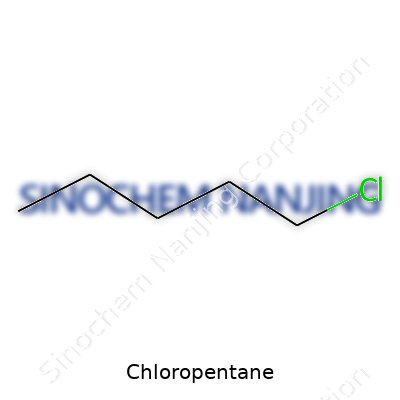
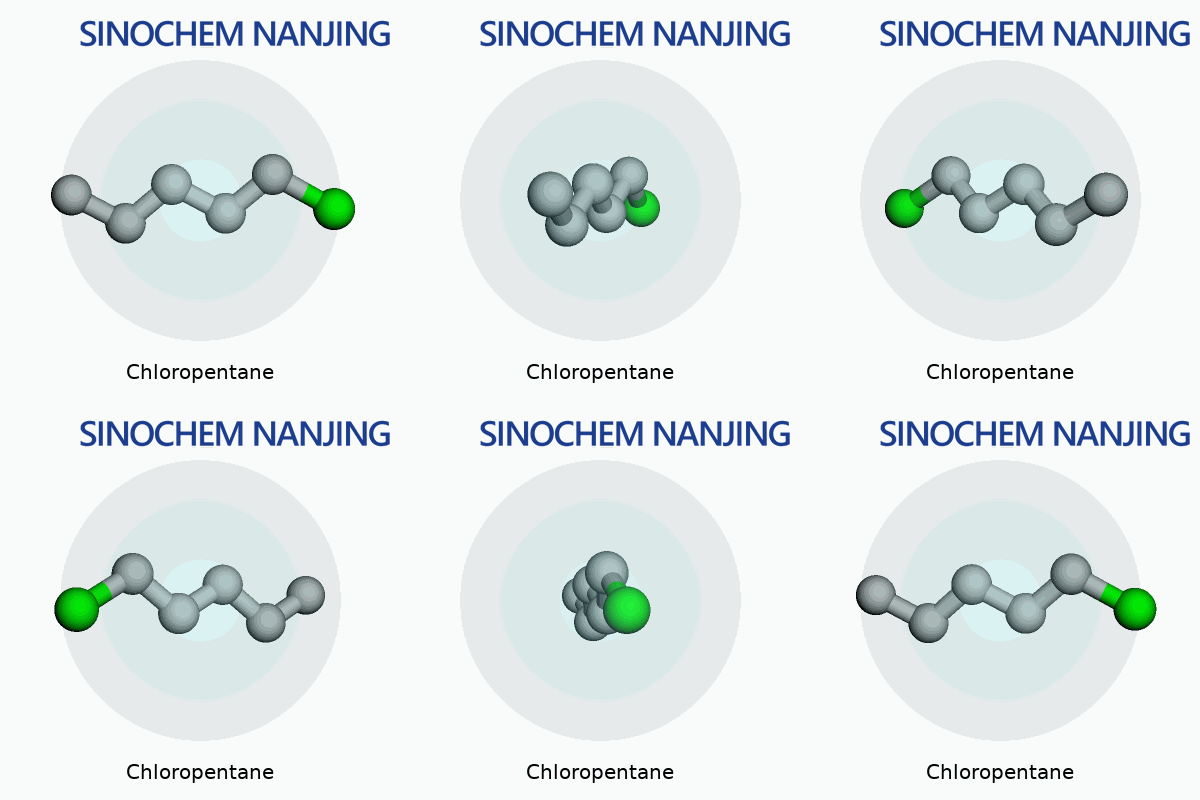
| Names | |
| Preferred IUPAC name | 1-chloropentane |
| Other names |
1-Chloropentane n-Pentyl chloride n-Amyl chloride |
| Pronunciation | /ˌklɔː.roʊˈpɛn.teɪn/ |
| Identifiers | |
| CAS Number | 142-82-5 |
| 3D model (JSmol) | `CCCCCl` |
| Beilstein Reference | 1840262 |
| ChEBI | CHEBI:82229 |
| ChEMBL | CHEMBL182678 |
| ChemSpider | 15431 |
| DrugBank | DB13855 |
| ECHA InfoCard | 100.003.910 |
| EC Number | 206-077-7 |
| Gmelin Reference | 87834 |
| KEGG | C02690 |
| MeSH | D002696 |
| PubChem CID | 8039 |
| RTECS number | EK2975000 |
| UNII | K4455V6E7S |
| UN number | UN1133 |
| Properties | |
| Chemical formula | C5H11Cl |
| Molar mass | 124.64 g/mol |
| Appearance | Colorless liquid |
| Odor | Penetrating odor |
| Density | 0.866 g/cm³ |
| Solubility in water | Insoluble |
| log P | 2.8 |
| Vapor pressure | 15.9 kPa (at 20 °C) |
| Acidity (pKa) | 16 |
| Basicity (pKb) | pKb = 4.75 |
| Magnetic susceptibility (χ) | Diamagnetic |
| Refractive index (nD) | 1.397 |
| Viscosity | 0.613 mPa·s (at 20 °C) |
| Dipole moment | 2.05 D |
| Thermochemistry | |
| Std molar entropy (S⦵298) | 218.5 J·mol⁻¹·K⁻¹ |
| Std enthalpy of formation (ΔfH⦵298) | –146.2 kJ·mol⁻¹ |
| Std enthalpy of combustion (ΔcH⦵298) | -3138.7 kJ/mol |
| Pharmacology | |
| ATC code | Not assigned |
| Hazards | |
| GHS labelling | GHS02, GHS07 |
| Pictograms | GHS02,GHS07 |
| Signal word | Warning |
| Hazard statements | H225, H315, H319, H336 |
| Precautionary statements | P210, P261, P271, P301+P312, P305+P351+P338, P370+P378, P403+P233 |
| NFPA 704 (fire diamond) | 1-4-0 |
| Flash point | “-18°C” |
| Autoignition temperature | 160 °C |
| Explosive limits | 1.2–7.3% |
| Lethal dose or concentration | LD50 (oral, rat): 690 mg/kg |
| LD50 (median dose) | LD50 (median dose): 3,600 mg/kg (rat, oral) |
| NIOSH | Not Listed |
| PEL (Permissible) | Not established |
| REL (Recommended) | 200 ppm |
| IDLH (Immediate danger) | Not established |
| Related compounds | |
| Related compounds |
Chlorobutane Chlorohexane 1-Chloropentane 2-Chloropentane Bromopentane Pentane |



