Butyric Anhydride: Past, Present, and Future
Historical Development
Chemists have tinkered with butyric anhydride since the early 19th century, back when organic synthesis felt more like kitchen alchemy. Its story tracks the broader path of organic acid derivatives taking a front seat in labs and, later, industrial settings. Early use focused on understanding its structure and scent. Scientists poked and prodded at this substance, aware of its powerful odor and aggressive reactivity. Butyric acid itself comes from the breakdown of butter — the name gives that away — and taking that further, chemists created butyric anhydride, a more reactive form. Its place in the growing toolkit of organic synthesis became clear with rising demand for specialized esters, flavors, and agricultural chemicals. Through each decade, research flipped the page, finding new quirks and uses for this compound. Industrialization and the push for efficient chemical processes in the mid-20th century gave butyric anhydride a real platform.
Product Overview
Butyric anhydride does not pull punches. It grabs your attention before you open the bottle. As a colorless to slightly yellowish liquid, its intense, rancid smell comes from its heritage — it's made from butyric acid, after all. This compound is a workhorse in organic chemistry, used far beyond its roots in annoying smells. Butyric anhydride doesn’t feel limited to the lab; it slips into certain manufacturing lines as a precursor to specialty esters, artificial flavors, and fragrances, plus as a modifier in several polymers and plastics. For those who have handled this stuff in a chemical plant, they remember its smell and its intense reactivity — it’s not a shelf-sitter, but a moving part of a living process.
Physical and Chemical Properties
This liquid boils at a modest temperature and throws off vapor that you unmistakably smell across a lab. Its density sits lower than water, so spills pool and spread. Water makes it break down into butyric acid, dealing out that sour, strong odor. The molecule itself — built from two butyric acid units stripped of water — reacts with nucleophiles with impressive speed. Exposure to air allows hydrolysis, and the reactivity does not stop with water. Many see it as a building block for further chemistry, offering a clean entry point for making esters or for adding butyryl groups to other compounds. This is not a shy compound; it takes charge in most chemical mixtures, demanding respect and careful handling.
Technical Specifications and Labeling
Every drum and bottle of butyric anhydride needs clear, practical labeling in order to keep people safe. Chemical suppliers and end users check concentration, purity, and the presence of stabilizers, which keep it from breaking down in storage. Regulations in the EU, US, and many parts of Asia dictate hazard pictograms and warning statements for corrosivity and environmental risk. These labels don’t just help in the event of a spill or exposure — they give every tech or worker a checkpoint before grabbing a container. From my own experience, labeling matters most late in the shift, when tired eyes scan for safety. Keeping specifications tight helps the whole chain — from transport companies to end users in manufacturing or research labs.
Preparation Methods
Butyric anhydride comes mostly by reacting butyric acid with acetic anhydride, or through dehydration of butyric acid using phosphorus pentoxide. Both methods yield the same pungent liquid, though slight impurities can linger depending on the source and reagents. Industrial manufacturers engineer processes to minimize that residual acid and manage water content, since any lingering water kicks off hydrolysis and waste. These reactions need care with temperature, pressure, and containment, or else you wind up losing product to vapor and fouling up equipment with sticky residues. The best facilities automate much of the handling, keeping operator exposure to a minimum.
Chemical Reactions and Modifications
Reactivity stands at the center of why butyric anhydride finds such varied uses. It reacts eagerly with alcohols to give butyric esters — those help with flavors and fragrances, cutting through bland profiles in food and perfume chemistry. It butyrylates amines as well, dropping in as a tailoring agent during the creation of specialized drug molecules or upgraded polymers. In some plastics and cellulose derivatives, modified by this anhydride, properties like solubility or flexibility shift for the better. Reacting with water reverses the core process, breaking it down to butyric acid again. Chemists love it for that very reason: it goes forward and backward readily but never passively.
Synonyms and Product Names
Butyric anhydride moves on the market under several tags. Names like butanoic anhydride, dibutyryl oxide, or butyric acid anhydride show up on shipment manifests and lab order forms. Synonyms can confuse people not familiar with its different listings. Knowledge of these variants matters because, in a complex supply chain, small differences in naming lead to big headaches with safety documentation or hazard communication. Chemical names pop up in regulatory filings, in shipping documents, at customs — clarity and standardization help prevent dangerous mix-ups.
Safety and Operational Standards
Safety deserves every ounce of our attention. Butyric anhydride is corrosive — not just to tissue, but also to many materials. It burns skin, irritates eyes, and causes breathing problems if inhaled. Its vapors can make a crowded workspace empty out quickly. Anyone who handles it wears chemical-resistant gloves, goggles, and face protection. Facilities need working vents and fume hoods — not just to spare noses, but to keep the compound from eating into lungs or mucous membranes. Storage works best in cool, dry areas, inside airtight containers meant for strong acids or acid derivatives. Spills happen, but fast cleanup — using appropriate neutralizers and absorbents — saves time and pain. Emergency showers and eyewash stations near handling areas provide a last line of defense. Training matters much more than people expect — you cannot wing it with this chemical. Established procedures and regular drills build safe habits that last.
Application Areas
Butyric anhydride powers transformation all over the chemical world. In flavors and fragrances, it helps spin out compounds that smell better than the raw material. Chemical manufacturers rely on it to make certain esters. Some pharmaceuticals need butyryl modifications at specific spots, and this anhydride fits the bill nicely. Its reactivity also draws in researchers aiming to upgrade plastics and cellulose. You can trace its use from the flavor of imitation butter in snack foods to the refinement of chemical sensors in research settings. It does not drip quietly into a single niche — it spreads across multiple industries faster than most realize.
Research and Development
Ongoing R&D surrounds butyric anhydride. Chemists look for cleaner, more sustainable routes to make it, aiming to cut hazardous byproducts and lower process emissions. Environmental impact stands front and center, both in academic research and in guidelines set by industry groups. Companies also dig for more efficient derivatization patterns — how to use this chemical’s reactivity in next-generation drugs, biosensors, or biodegradable plastics. Some projects explore using milder catalysts or water-free systems. For every new application, researchers map new safety parameters and handling techniques. Competing interests — cost, performance, regulatory limits — shape the direction of each project.
Toxicity Research
Toxicologists treat butyric anhydride with real caution. Contact burns tissue. Vapor inhalation damages the respiratory system. Studies have mapped out both acute and chronic effects. High concentrations kill fish and aquatic invertebrates, so any process discharges get extra scrutiny for containment and neutralization. Research on long-term, low-level exposure continues, with lab animals showing irritation and respiratory issues, but no clear evidence of carcinogenicity so far. Workers and environmental scientists call for strict monitoring, both in the workplace and near chemical production zones. Consistent recordkeeping for health effects and accident records matter — they guide updates to guidelines and help prevent cumulative harm down the line.
Future Prospects
Butyric anhydride’s role in specialty manufacturing seems set to grow. Demand for advanced flavors and more environmentally friendly plastics draws attention to its core chemistry. Researchers explore green pathways for synthesis, hunting for catalysts that sidestep harsh reagents or lower energy use. Regulatory agencies increase pressure to minimize occupational risk and environmental waste. In my own experience, the next decade will bring tighter integration between production and safety — not the old model of engineering efficiency then patching safety on top, but something more proactive. Smart storage, automated handling, and comprehensive training lay a path to use without regret. If the chemical sector invests in circular processes and cleaner production, butyric anhydride can play a safer, more responsible part in modern industry.
What is Butyric Anhydride used for?
Digging Into Butyric Anhydride’s Real World Uses
Stepping into a chemical lab, the smell of butyric anhydride doesn’t leave much to the imagination. It’s sharp, almost offensive—like rancid butter meets stinging vinegar. Most people don’t come across this chemical day-to-day, which is probably a good thing, but it ends up touching more parts of life than you’d expect.
The Chemical Building Block That Makes Things Happen
People in the chemical manufacturing world rely on butyric anhydride as a building block. Its most visible work appears in plastics. Removing the odor is half the battle, but when it gets blended into cellulose acetate and cellulose butyrate, the end result is a plastic with better flexibility. Try holding an old camera film or sunglasses—these items may use derivatives springing out of this pungent starting point.
Moving to the fragrance and flavor industries, butyric anhydride plays a sort of hidden hand. The chemical gets transformed, producing butyrate esters. These esters, in small amounts, become the backbone behind certain fruit flavors and buttery notes we smell in processed foods or perfumes. In my own experience tasting imitation butter snacks, that odd aftertaste lingers due to these signature molecules. They echo the original butyric acid’s aroma, just dialed back and reined in by careful chemistry.
Lab Synthesis and Pharmaceuticals: Behind the Scenes
People with advanced degrees spend a lot of time coaxing small changes in a molecule’s structure. Butyric anhydride comes in handy for them, acting as a reagent to add the butyryl group to other compounds. This sort of tinkering often supports research into medicines. Medical chemistry teams look for new anti-inflammatory or anti-cancer candidates, and sometimes they need this substance to shape potential drug molecules.
The chemical can also appear in the making of herbicides. Farmers probably never see the original anhydride, but the crop sprays—built up through a chain of reactions—start with simple compounds like this one. In turn, this eventually affects the food market and crop yields, so the chemistry echoes far beyond the lab.
Safety and Regulation: Not a Casual Substance
What stands out about butyric anhydride is its notoriety outside the law. A handful of headlines in the last decade mention its links to controlled substances. Illicit labs use it as a precursor, trying to sidestep regulations. That triggers law enforcement responses worldwide. Several countries now keep this chemical on lists that demand strict tracking, hoping to slow down the misuse. A friend who works in specialty chemicals mentioned extra paperwork, inspections, and recordkeeping, all designed to keep the legitimate industry transparent and honest.
Improving Handling and Responsibility
Mitigating risk requires real steps. Chemical firms teach their workers about splash hazards and have eyewash stations at close reach. Ventilation in workspaces keeps the strong fumes in check. On the regulatory level, clearer tracking and better international cooperation help reduce unauthorized diversion. From experience, lab safety drills feel tedious or repetitive, but they protect those down the supply chain and everyone who ends up handling the finished product.
Butyric anhydride seems unremarkable on a page, but its journey influences everything from taste to technology. Paying close attention to sourcing, safety, and control keeps this chemical working for society, not against it.
What are the safety precautions when handling Butyric Anhydride?
The Real Dangers Behind the Chemical
Many lab workers have come across chemicals that demand real respect. Butyric anhydride, with its sharp smell and corrosive bite, belongs in that group. Fumes sting the eyes and nose. My lab coat picked up the scent more than once, and it never washed out. Direct contact leads to burns. Even quick exposure can irritate skin, lungs, and eyes. There’s more risk when the chemical gets overlooked, and the trouble can show up fast.
Basic Precautions Start with Protection
Gloves and goggles become non-negotiable. Ordinary latex gloves don’t always block the chemical, so thicker nitrile or neoprene varieties work better. In my experience, skipping eye protection never pays off; one splash can take recovery time—or vision. A sturdy lab coat resists splashes, and keeping sleeves down adds a layer of confidence.
Importance of Air Quality
No one wants to inhale butyric anhydride. Its vapor irritates the airway. Labs with strong ventilation keep everyone safer. Fume hoods don’t just look official—they earn their spot every day with chemicals that attack mucus membranes and lungs. Running an experiment outside a hood exposes everyone in the room. Air handling should not rely on open windows or small fans. Mechanical exhaust systems and regular airflow checks are essential.
Storing the Chemical the Right Way
Butyric anhydride reacts with water. It eats through some containers, so nobody should just stash it with ordinary supplies. Store it in tightly sealed glass or compatible plastic, away from moisture and anything reactive—especially acids and bases. In practice, this means labeling clearly and double-checking seals. Several times, I opened old stocks to discover corrosion or vapor leaks. Repeated training and routine inspections catch those problems before they catch you.
Spill and Exposure Action Plan
Plans for spills and accidents feel unnecessary—until the day they aren’t. The chemical moves quickly through thin materials. In one lab, a careless transfer landed a few drops on an unprotected wrist. Immediate rinsing limited the reaction, but the skin still felt raw for days. Workers should reach for the eyewash or shower station at any sign of exposure. Spill kits with absorbent pads and neutralizing agents control cleanup, but speed matters more than perfection.
Health Monitoring and Hygiene
Some dismiss headaches or coughing as background noise, but persistent symptoms may signal low-level exposure. Knowing how to spot hazardous exposure, and taking breaks away from the source, cuts down on risk. Washing up before eating makes a real difference. I’ve seen colleagues skip handwashing, then brush their eyes or grab a snack—bad move. Contamination spreads easily.
Everyone Stays Accountable
No one works alone with a chemical like this. Teams should refresh training often and talk through near-misses to keep memory sharp. Written procedures, reviewed after every incident, help protect both new and seasoned workers. If questions pop up, always ask. The “seen it all” attitude never trumps up-to-date safety habits. Trusted sources like the National Institute for Occupational Safety and Health (NIOSH) and the CDC give straightforward, field-tested guidance anyone can use.
What is the chemical formula of Butyric Anhydride?
Getting to Know Butyric Anhydride
Folks who have spent any time working in a lab, or even just around the chemical manufacturing space, probably recognize the name Butyric Anhydride. Its chemical formula, C8H14O3, isn’t just some jumble of letters and numbers—it maps out exactly what makes this compound tick. Butyric Anhydride forms when two molecules of butyric acid shed a molecule of water and combine. That simple move changes its personality and use.
A Formula With Real-Life Impact
Chemists and industry pros rely on formulas for lots of reasons, but clarity tops the list. Knowing C8H14O3 means anybody—no matter which country or industry—can communicate about this compound without confusion or language games. I once watched a team fumble through a product development meeting just because somebody had scribbled an outdated formula on the whiteboard. Bad data slows everything down, or worse, it sets up health and safety risks.
Health and Safety Risks Deserve Attention
No two ways about it: chemicals bring people together and move the world forward, but they need respect. Butyric Anhydride doesn’t cut corners on this score—it packs a pungent odor and can cause serious irritation if not handled with good ventilation and proper gear. Safety teams look to formulas like C8H14O3 so they can run calculations and set up the right measures. Getting a formula wrong in a lab recipe or on a shipping manifest could spell trouble. Workers have every right to expect transparency about what’s in their environment. Fact sheets and clear labeling prevent accidents and keep everyone at the bench or the plant table safer.
Production and Real-World Uses
Butyric Anhydride shows up in everything from pharmaceuticals to fragrances. People who work in synthesis or who support the design of specialty molecules often reach for this chemical to help build up esters and other building blocks. A little extra knowledge about its formula opens up safer handling and, by extension, smoother production runs. For instance, certain regulatory reports require detailed formulas. The Environmental Protection Agency and other watchdogs won’t settle for guesswork or generic naming.
Room for Better Understanding and Solutions
Even with digital databases and smart labels, mistakes still slip through. I remember a supplier sending mislabeled drums to a pharmaceutical plant, triggering confusion and a shutdown. Root of the mess? Someone swapped out a chemical’s formula. The entire process, from purchasing to education for new lab staff, benefits from slowing down and double-checking formulas and safety sheets. Cross-checking every shipment using the proper formula C8H14O3 ensures not just efficiency but trust throughout the supply chain.
Building Trust Through Accuracy
Honest, experience-backed information forms the backbone of science and industry. Yes, even a simple string like C8H14O3 plays its part. For teachers, lab techs, and regulators, using the right chemical formula for Butyric Anhydride means cooperation, safety, and trust—both with coworkers and with the communities that depend on our work. I’ve learned that mistakes with formulas aren’t just little slip-ups; they can break confidence and lead to tangible harm. It’s why this kind of accuracy demands attention every single day.
How should Butyric Anhydride be stored?
Beyond the Label — What Butyric Anhydride Demands
Butyric anhydride sits on the shelf looking rather plain, but it deserves serious respect. The stuff packs a powerful punch, both in terms of chemistry and risk. That sharp, acrid scent tells you right away something in this bottle won’t forgive mistakes. In my years dealing with chemicals, one simple truth stands out: shortcuts with compounds like this can get ugly fast. Storage isn’t just about following a manual — it’s about not giving the fumes or the liquid the slightest chance to escape into your workspace, or worse, your home.
Moisture Is Its Enemy
Even short exposure to water vapor turns butyric anhydride into a caustic stew. I’ve seen what a careless seal on a bottle lid can do — that distinctive “off” smell lingers for days, even after ventilation. Keeping containers tightly closed is more than a good idea. Use glass, stainless steel, or materials shown to withstand strong corrosives. Forget about storing it in sloppy plastic jugs or anything with a sketchy seal. If moisture gets in, you’re looking at a reaction that could pressure up the container or eat right through packaging.
Cool, Dry, and Ventilated — No Exceptions
Flammable chemicals bring one set of rules, but butyric anhydride demands its own. Heat ramps up those nasty fumes and pushes up pressure. Most guides recommend keeping it somewhere below 25°C, away from direct sunlight or any heat sources. A well-ventilated, fireproof storage cabinet gives you two things: lowered risk of accidental inhalation, and real protection if something leaks. I wouldn’t even think about storing a bottle in a workspace without a dedicated cabinet and a chemical-rated spill tray.
Keep Acids, Bases, and Water Far Away
Butyric anhydride reacts with common acids and bases. Storing it even one shelf over from these chemicals opens you to accidental mixing. I once watched a messy storeroom handle a small acid spill near anhydrides — we all learned the hard way that fumes spread fast. Good practice means organizing the storeroom so oxidizers, water-reactive chemicals, and acids don’t come within a few meters of each other. Segregation lowers the odds of disaster. Clear labels and regular shelf checks put real distance between chemicals that don’t play well together.
PPE and Spill Kits: Always Close By
Even the best storage plans encounter surprises. I’ve seen leaking caps and cracked bottles catch even seasoned lab techs off guard. With butyric anhydride, a spill is no small matter. Splash-resistant gloves, goggles, and an apron rest near my workbench for a reason. Dedicated spill kits, with absorbents that won’t trigger dangerous reactions, turn a big problem into a cleanup job — not an emergency. Make it a rule: no opening a container before checking your gear and knowing where the showers and eyewash stations are.
Training Protects Everyone
No written rule replaces hands-on training. New staff or students often trust the label’s warnings but underestimate the ferocity of chemicals like this. Every year, I walk through the storage procedures with new lab techs, showing them what butyric anhydride can do if ignored. Practical knowledge — knowing the smell, the feel of a good seal, spotting corrosion — makes all the difference. If you handle or even store this chemical, ongoing training isn’t a luxury. It’s the barrier between routine and regret.
What are the potential health hazards of Butyric Anhydride exposure?
Behind the Chemical — What Workers Face
Butyric anhydride isn’t exactly something most people chat about over lunch. It mostly shows up in places like chemical plants, labs, and factories where specialty chemicals come together. From personal experience, walking past a shipping area where barrels of it get stored, the smell alone could make you take another route. The sharp, acrid scent isn’t just an inconvenience; it’s a warning sign.
Breathing in Trouble
Just a whiff can set off coughing, throat pain, and that burning feeling deep in your nose. According to data from NIOSH and OSHA reports, inhaling even small amounts may trigger inflammation in your lungs. Workers have shared stories about headaches, dizziness, and shortness of breath — especially after a spill or poor ventilation.
Scientists have measured airborne levels that can cause problems if proper respirators aren’t handy. In my own visits to manufacturing shops, complaints about “choking” air always turned out to come from broken ductwork or exhaust fans that couldn’t keep up.
Skin and Eye Contact: Not Worth the Risk
Butyric anhydride eats away at skin, causing rashes and nasty burns with just a splash. It stings the eyes instantly, leading to blurry vision and swelling. Personal protective equipment isn’t just for show in these cases. I once watched someone brush off wearing gloves “just this once,” only to end up with red, irritated hands by the end of the shift.
According to the CDC, contact lenses can trap fumes, making things worse. Eye wash stations and gloves are workplace essentials, not decorations.
Longer-Term Consequences
Chronic exposure often goes overlooked in fast-paced work environments. That smoldering cough some workers ignore can build up over months, leading to asthma-like symptoms and higher risks of respiratory problems. Epidemiological studies from industrial regions highlight higher rates of chronic bronchitis among chemical plant workers, with butyric anhydride often among the exposures noted.
There’s talk among unions and occupational nurses about the need for regular lung function tests and more honest conversations about symptoms. Few want to admit a “chemical cold,” fearing they’ll get sent home or replaced. In my experience, the staff who actually speak up about mysterious coughs tend to fare better over the long haul.
Environmental Drips and Drips Downstream
Spills don’t only affect immediate workers. Runoff leaks into the environment, threatening water supplies and air quality for surrounding neighborhoods. A 2018 incident in Texas required evacuations after fumes escaped during a container transfer gone wrong. Local residents complained of headaches and eye irritation for days. City officials connected the dots with soil and air test results, confirming that workplace events ripple out farther than plant gates.
Keeping Exposure in Check—Practical Steps
Real solutions start with real talks on the floor. Companies adopting stricter ventilation rules, improving PPE training, and investing in faster spill response have seen numbers of work-related injuries drop. I’ve talked to safety managers who push for “stop work” authority—so anyone can halt a job if something looks or smells off.
Regular air monitoring, investing in closed-system handling, and open-door policies for reporting symptoms go a long way. Medical staff offering confidential checkups and clear explanations about exposure risks earn more employee trust. These changes don’t cost much compared to stopping the cycle of exposure and illness.
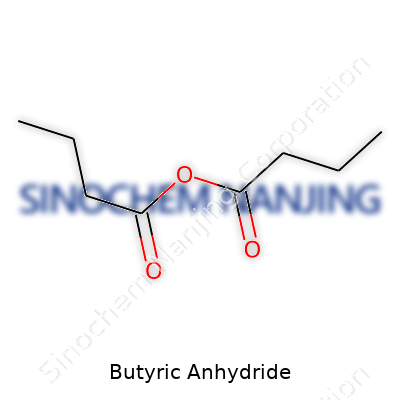
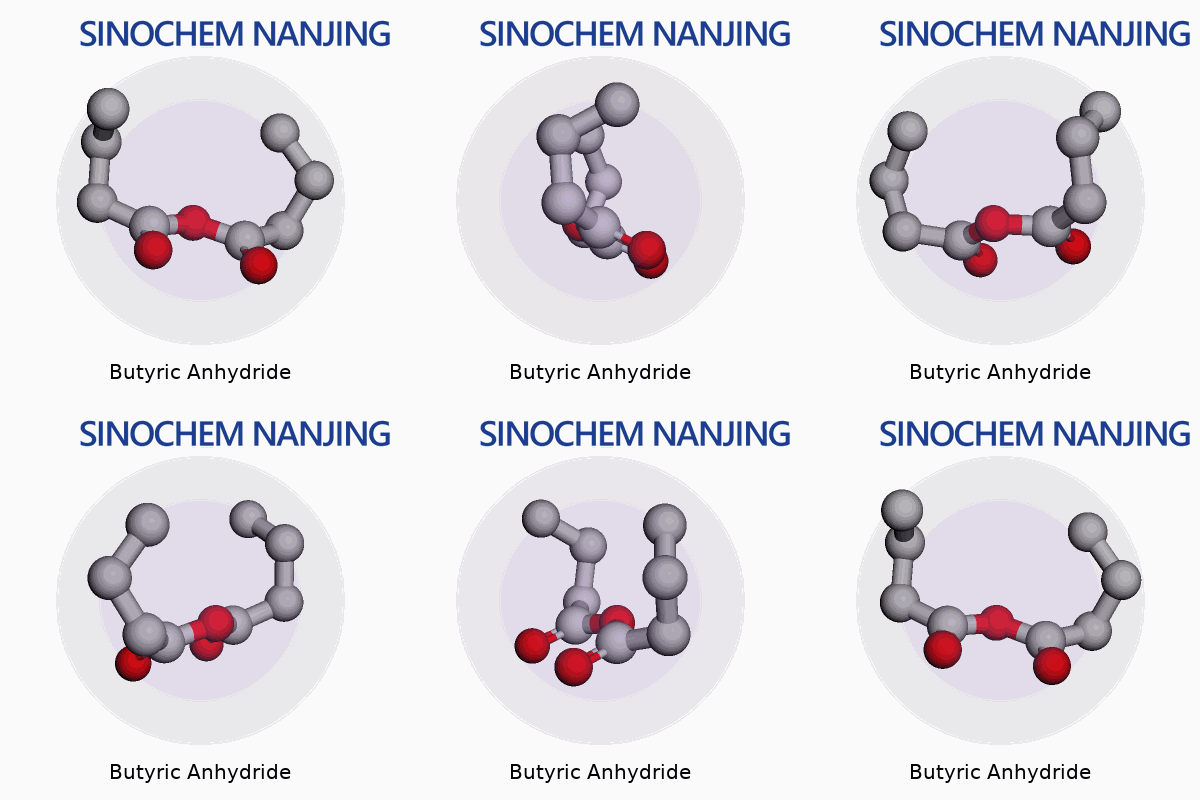
| Names | |
| Preferred IUPAC name | butanoic anhydride |
| Other names |
Butyric acid anhydride Butanoic anhydride Dibutyric anhydride |
| Pronunciation | /ˈbjuː.tɪ.rɪk ænˈhaɪ.drɪd/ |
| Identifiers | |
| CAS Number | [Butyric Anhydride CAS Number: "106-31-0"] |
| Beilstein Reference | 1209247 |
| ChEBI | CHEBI:52281 |
| ChEMBL | CHEMBL1372439 |
| ChemSpider | 8556 |
| DrugBank | DB04114 |
| ECHA InfoCard | EC100.004.384 |
| EC Number | 203-701-6 |
| Gmelin Reference | 543 |
| KEGG | C06320 |
| MeSH | D001970 |
| PubChem CID | 8749 |
| RTECS number | AF8050000 |
| UNII | 7426WQ2FYA |
| UN number | UN2820 |
| Properties | |
| Chemical formula | C8H14O3 |
| Molar mass | 174.20 g/mol |
| Appearance | Colorless to yellow liquid |
| Odor | Pungent, penetrating, unpleasant |
| Density | 0.959 g/mL at 25 °C |
| Solubility in water | Reacts with water |
| log P | 0.83 |
| Vapor pressure | 0.4 mmHg (20 °C) |
| Acidity (pKa) | 4.77 |
| Basicity (pKb) | 3.66 |
| Magnetic susceptibility (χ) | -49.5·10⁻⁶ cm³/mol |
| Refractive index (nD) | 1.418 |
| Viscosity | 2.1 mPa·s (20 °C) |
| Dipole moment | 2.44 D |
| Thermochemistry | |
| Std molar entropy (S⦵298) | 289.6 J·mol⁻¹·K⁻¹ |
| Std enthalpy of formation (ΔfH⦵298) | -572.6 kJ/mol |
| Std enthalpy of combustion (ΔcH⦵298) | -2165.9 kJ/mol |
| Pharmacology | |
| ATC code | V03AB37 |
| Hazards | |
| GHS labelling | GHS02, GHS05, GHS07 |
| Pictograms | GHS02,GHS05,GHS07 |
| Signal word | Danger |
| Hazard statements | H314: Causes severe skin burns and eye damage. H302: Harmful if swallowed. H332: Harmful if inhaled. H317: May cause an allergic skin reaction. |
| Precautionary statements | P210, P233, P260, P264, P271, P280, P301+P330+P331, P303+P361+P353, P304+P340, P305+P351+P338, P310, P312, P363, P370+P378, P403+P235, P405, P501 |
| NFPA 704 (fire diamond) | 3-3-2-W |
| Flash point | 63 °C |
| Autoignition temperature | 434 °C |
| Explosive limits | Upper: 7.1% ; Lower: 2.2% |
| Lethal dose or concentration | LD50 (oral, rat): 1760 mg/kg |
| LD50 (median dose) | LD50 (median dose): Oral rat LD50: 1780 mg/kg |
| NIOSH | CN3675000 |
| PEL (Permissible) | PEL (Permissible Exposure Limit) of Butyric Anhydride: "5 mg/m3 |
| REL (Recommended) | 0.5 ppm |
| IDLH (Immediate danger) | 200 ppm |
| Related compounds | |
| Related compounds |
Acetic anhydride Propionic anhydride Valeric anhydride Butyric acid |



