Butyric Acid: A Practical View on Its Journey and Impact
The Long Road from Discovery to Industry Regular
People might find it odd, butyric acid first made headlines when a French chemist caught its unmistakable smell wafting from rancid butter more than 200 years ago. Since then, this four-carbon fatty acid has traveled far—from puny flasks in old laboratories right into the heart of today's food, chemical, and pharmaceutical businesses. In those early days, folks used butyric acid as proof that chemistry could decode hidden structures inside something as basic as spoiled dairy. What these early experiments unlocked gave rise to a building block for synthetic molecules and even highlighted links between diet, digestion, and health. From running distillation through glassware to today’s massive batch reactors, each step built on trial, error, and gradual refinement. It’s a solid example of how science doesn't just stumble on household products overnight but builds on the daily grind of different generations.
Understanding the Core Qualities
Open a bottle of pure butyric acid and you’ll get punched by a strong smell—some call it cheesy, others call it just plain nasty. In its liquid form, butyric acid pours out like water. At room temperature, it looks clear, but get it out in the sun for long and things turn yellow. It dissolves pretty easily in ethanol and ether, handles water better than some other fatty acids, and starts boiling at a relatively low temperature. These physical quirks line up with its structure, a short straight chain carboxylic acid, which gives it both a bite in odors and a reactive edge in chemical settings.
Labeling and Regulations: The Fine Print That Can't Get Ignored
Slap any chemical on a shelf and expect paperwork to follow. Butyric acid's labeling reflects its hazards more than its usefulness. Most safety rules force a clear signal—corrosive, causes burns, should not come near unprotected skin or eyes. In Europe, Asia, and the Americas, registration standards and hazard marks keep producers and shippers in check. From warning triangles to hazard codes, every container tells a story of what could go wrong if someone skips proper training or gear. Government bodies like the EPA and REACH took decades drawing up the rules. Good labeling puts the risks up front and saves lives—a lesson many old-timers learned from hard experience, not a rulebook.
The Old and New Ways of Getting Butyric Acid
Factories used to rely mostly on fermentation—feeding bacteria from stuff like starches or molasses and skimming butyric acid from a bubbling broth. That practice still holds up for “natural” food additives or certain pharmaceutical uses, where a “biological” label carries weight. On the synthetic end, commercial plants react butyraldehyde with water using strong acid catalysts, or they oxidize butanol—methods that work faster and scale up more easily. The shift between these routes might look like just a choice of convenience, but it shapes costs and supply chains across plenty of industries. Where your butyric acid comes from could change not just the price tag, but which markets it can legally enter.
Playing with Molecules: What Butyric Acid Can Become
In the right hands, butyric acid does not sit still. A chemist can tweak it into esters to create flavors like pineapple or apricot—sweet, fruity, and useful in hard candy or perfumes. On another track, the acid can form salts like sodium butyrate, favored in animal feed and sometimes in lab studies on cell growth. Simple reactions with alcohols, amines, or halides could turn out a rainbow of small molecules, each with its own use and quirks. There’s a certain logic at work, where butyric acid is not the last stop but a fork in the road. Over the years, this adaptability bridged the gap between industries as diverse as plastic manufacturing and biomedicine, all on the backbone of a molecule once just known for its stench.
Other Names—Butyric Acid’s Disguises
Walk through chemical catalogs or scan research articles and you’ll spot this acid answering to a list of aliases. Some scientists stick to its formal “butanoic acid.” Flavor chemists might call it “C4 acid” or just shorthand GA. Dairy scientists use “butyrate” to talk about its role in butter flavor or gut microbiome studies. In truth, the variety in names speaks more to butyric acid’s ability to fit into different worlds than any branding campaign ever could. Each alias hints at where and how the acid leaves its mark—whether in cheese, experimental drugs, or cleaning products.
Operational Standards and Safety Right on the Ground
Practical folks handling chemicals often say: rules matter most when mistakes get costly. With butyric acid, the smell alone alerts you before technical thresholds show up on instruments. Yet the bigger risks come from skin contact or breathing it in for too long. Industrial sites install scrubbers and ventilators, workers suit up with thick gloves and protective glasses, and storage areas stay cool and well marked. Training usually goes beyond checking boxes—it involves hands-on drills, real spill simulations, and walk-throughs of emergency protocols. In the real world, safety isn’t about paperwork alone but lived experience, catching a splash or sudden leak before it lands someone in the hospital. Legislation like OSHA guidelines or the GHS brings muscle to the front line, but the old lesson holds: keep respect for the hazards and take nothing for granted.
Everyday Uses: How This Acid Shapes Our World
Let’s talk application because butyric acid pops up in more places than you’d think. Animal nutrition specialists blend it into feed to support gut health, especially in young pigs or poultry. Ask a cheesemaker or a confectioner, and they’ll confirm butyric acid’s esters show up in flavors that make their products stand out. Leather processing plants use it for tanning, where it helps soften hides. Pharma companies see it as a precursor for synthesizing certain drugs, while researchers study its effects on cell differentiation, gene expression, and even cancer cell behavior. As a person living in a farming region, I’ve seen it firsthand—farm supply stores ship in barrels destined for feed mills, and local chemists pick it up to run yeast growth trials or clean lab glassware. Butyric acid doesn’t make headlines like high-tech enzymes or rare metals, but its footprint stretches across these vital industries, down to the level of daily routines and business survival.
The Research Edge: Unpacking Butyric Acid’s Untapped Potential
Scientists probing the gut microbiome often stumble onto butyric acid’s key role in colon health. In animals, it acts as a major fuel for epithelial cells lining the colon. Regulatory agencies and academic labs work to spell out whether higher butyric acid levels in food or supplements drive better health outcomes in humans too, especially for conditions like inflammatory bowel disease. On the other hand, researchers look at new catalysts and biotechnologies aiming to cut waste or boost yield during production. In food safety, work is still in progress to ensure microbe-derived butyric acid never poisons a batch with unwanted by-products. My own brush with academic research taught me that even a small difference in pH control, fermentation time, or raw feedstock quality can shift not just the yield, but also the flavor and purity of end products. For every quick answer in this space, a dozen new questions bloom—each with real consequences for health, safety, or profits.
Facing the Risks Up Close: Toxicity and Real-world Impact
Exposure to butyric acid is rarely fatal, but it’s a headache if you don’t respect what happens to eyes, skin, or lungs. Studies in rodents and livestock mapped out dose effects, revealing that short-term contact mostly irritates, but breathing droplets in tight quarters or ingesting high doses triggers nausea and, at higher levels, metabolic disruption. For workers, even low-level, chronic exposure means keeping respirators, eyewash stations, and showers nearby. Medical cases in labs where protocols slipped point to lessons paid for in trips to urgent care, reinforcing the value of training over paperwork in everyday terms. Toxicology databases tracked the thresholds and marked them down for regulators and scientists, paving the way for smarter guidelines that talk straight to those on the front lines—in the factory, the barn, or the study lab.
On to Tomorrow: Where Butyric Acid Might Head Next
Future prospects for butyric acid look less about its old problems and more about growing opportunities. With the world hunting for green production methods, bioprocessing continues to attract investment. Next-generation bacteria and enzymes, tweaked for yield and stability, could lower energy costs and carbon footprints while fueling larger-scale output. Pharmaceuticals and nutrition science keep opening new doors, studying how butyric acid treatments shift metabolic pathways or play a part in gut-brain health. For farmers and feed suppliers chasing higher animal productivity, fine-tuned blends and supplement forms like microencapsulated butyrate bring both economic edge and animal welfare gains. Watching it all from both research and industry sides, I see a field full of gritty, incremental progress—pushed by both regulatory pressure and the drive for better business. In the end, butyric acid tells a story of chemistry’s practical power, reaching quietly into daily life, and keeping scientists, regulators, and factory workers busy shaping what comes next.
What is butyric acid used for?
Pungent Smell, Powerful Uses
Step into a cheese shop, and you might notice that strong, sour smell lingering in the air. That’s butyric acid. It’s not just hiding in cheeses—this short-chain fatty acid turns up in butter, some fermented foods, and even the human gut. Most folks try to avoid strong-smelling chemicals, but butyric acid has built a solid reputation across food, animal feed, and even medical research.
Making Food Taste—and Smell—Right
Butyric acid in small amounts brings out flavors in butter, Parmesan, and other aged cheeses. It bumps up the tang and creates the rich, melt-in-your-mouth bite that keeps taste buds coming back. The food industry adds it to some seasonings to give snacks that savory hit, or to boost the butter flavor in popcorn. Just a tiny dose gives a bold punch. On its own, straight butyric acid reeks. Used right, it turns up the appetizing notes you expect from your favorite comfort foods.
Crucial for Gut Health
Many people never give much thought to how their intestines keep humming along. Gut bacteria break down dietary fiber into short-chain fatty acids. Butyric acid stands out here. It feeds cells in the colon, and helps reinforce the gut lining. This extra support can reduce inflammation—a big deal for people with digestive issues. Research shows a healthy gut, with plenty of butyric acid, can mean a stronger immune system and fewer stomach troubles.
Role in Animal Feed
Farmers and feed manufacturers look to butyric acid to promote healthy growth in young animals, especially chickens and piglets. Feed additives containing butyric acid encourage a balanced gut environment, reducing the need for excessive antibiotics. This shift matters, since antibiotic resistance grows every year. Healthier livestock translates to more efficient farming—and a safer food supply down the road.
Getting Rid of Pests and Acts as a Marker
Some people might not know that butyric acid’s odor makes it a handy tool against some pests. Certain repellents use it to keep animals like raccoons or rodents away. Police dog trainers even use butyric acid to simulate the scent markers found in arson investigations, making it an unlikely assistant in solving crimes.
Medical Research and Future Possibilities
Researchers dig into butyric acid for its anti-inflammatory and potential anticancer properties. Early studies suggest it might play a role in preventing colon cancer. Scientists also look at its benefits for treating conditions like Crohn’s disease or ulcerative colitis. More trials in humans will help get clear answers. Still, the evidence points toward a strong link between butyric acid and better digestion—or even disease prevention.
Supporting Smarter Nutrition
I grew up in a household where fermented foods—think sauerkraut and homemade yogurt—graced the table often. Only later did I realize these foods help gut bacteria churn out more butyric acid naturally. A high-fiber diet does more than keep things regular; it builds up a chemical that supports gut health, immunity, and maybe more. With processed diets on the rise, people lose out on these benefits.
Building Better Solutions
Factories crank out butyric acid through both chemical and biological fermentation. Supporting safer, more sustainable fermentation methods reduces costs and pollution. At home, eating more fiber-rich foods and natural fermented products can boost butyric acid where it counts: in your gut, not just in the lab.
Final Thoughts
Butyric acid rarely makes headlines, but its role in food, health, and agriculture keeps growing. People might wrinkle their nose at the smell, but the science shows this compound has a bright future—from your plate to your well-being.
Is butyric acid safe for human consumption?
What Is Butyric Acid?
Butyric acid has a strong, almost unforgettable smell—think sweaty cheese meets old butter. Not exactly what most people want to put on their dinner table. Still, it shows up naturally in a place we often don’t expect: our own gut. This short-chain fatty acid forms as friendly gut bacteria break down certain fibers. Some folks also encounter it in small amounts in Parmesan, butter, or even in plant roots.
Digestive Health and Butyric Acid
I’ve seen digestive health go off the rails from stress or poor diet, so learning that butyric acid actually helps feed colon cells caught my interest. Researchers report that butyric acid helps keep the lining of the gut healthy. People who want fewer tummy troubles often look for ways to keep butyrate-producing bacteria happy by eating more fiber.
Regulatory Insights and Side Effects
Butyric acid does get official approval. The U.S. Food and Drug Administration (FDA) considers butyric acid “Generally Recognized As Safe” (GRAS) to use in food at low concentrations. The European Food Safety Authority (EFSA) gave it the green light in animal nutrition and some supplements. That being said, pure butyric acid isn’t something people chug for fun. It can irritate the skin and eyes. Swallowing a concentrated form straight up could cause nausea or burning in the throat. In normal foods like cheese or as part of a fiber-rich diet, the levels stay far below risky amounts.
Supplement Use and Precautions
Some companies bottle up butyrate as a supplement, often in capsules with sodium or calcium attached. Science has only started to dig into who might really benefit—maybe people with irritable bowel syndrome, inflammatory bowel disease, or other digestive issues. Not enough clinical trials exist yet to support miracle claims. The gut’s own teamwork with butyric acid works best alongside a balanced diet, mostly plants, beans, oats, gnarly root vegetables.
Misunderstandings About Butyric Acid
Questions pop up because “acid” sounds scary and chemical. People worry about toxicity or allergic reactions. In reality, as seen in cheese and butter, humans navigate low doses of this compound without trouble every day. My own experience with fermented foods shows no scary effects—just better digestion. At the end of the day, concern usually surfaces when people isolate chemicals, dose them in high numbers, or ignore the larger context.
Practical Tips and Ways Forward
Getting enough fiber in the diet naturally boosts the body’s butyric acid production. That comes from whole grains, legumes, and vegetables. For most people, there's no need to seek out pure butyric acid. Anyone thinking about a supplement, especially with gut conditions or children, should check with a doctor or dietitian first. Natural sources almost always work best. Clean, balanced diets encourage a more resilient gut without adding risky concentrations.
Perspective and Final Thoughts
Butyric acid, by itself, isn’t Darth Vader in the biochemical galaxy. At rational levels, and in food, it supports gut health and nourishes helpful bacteria. I believe looking at the whole diet, instead of one compound in isolation, keeps things safer and smarter. Balance always matters more than buzzwords and hype.
What are the health benefits of butyric acid?
What is Butyric Acid?
Every so often, a topic crosses my path that’s too interesting to ignore. Butyric acid gets a lot of attention in conversations about gut health, and for good reason. Found in foods like butter and produced naturally in the gut, this fatty acid plays a big role in keeping the digestive system running smoothly.
What Butyric Acid Really Does Inside Us
Plenty of research points to the gut as more than just a place for digesting food. It keeps immunity strong, shapes mood and even impacts the brain. Butyric acid acts as fuel for colon cells. When we eat fiber, good gut bacteria produce butyric acid as they chomp through it. These simple, short-chain fatty acids power up the cells that line the colon, helping them stay healthy. Without enough of this fuel, colon cells start to weaken, setting the stage for issues like inflammation and ulcers.
As someone who dealt with bloating and cramping for years, adding fiber into meals and giving attention to gut health really made a difference. The science supports this: higher butyric acid levels line up with less inflammation in the gut and a lower risk of diseases like ulcerative colitis or Crohn's disease. A study in the journal Gut found that folks with higher butyrate in their colon were also less likely to develop colon cancer.
Soothing Effects Beyond Digestion
One surprise in the research comes from the effect butyric acid has on inflammation in the whole body. Chronic inflammation sits at the root of many health conditions—including arthritis and diabetes. Butyric acid seems to calm things down, making it harder for harmful bacteria to set up shop and even encouraging the production of anti-inflammatory cells. In animal studies, higher levels of butyric acid led to balanced immune responses and a stronger, leak-proof gut wall. That means fewer unwanted substances leaking into the bloodstream and triggering an immune attack.
The Mental Side of Gut Health
Everyone knows about the gut-brain connection now. Stress, anxiety or depression often show up with belly trouble. Some evidence points to butyric acid as a key reason. Gut bacteria that produce butyric acid also help make neurotransmitters—the chemical messengers the brain uses to communicate. Studies show that enough butyric acid may protect against mood swings and even sharpen focus. People dealing with anxiety report some relief after boosting intake of fiber-rich foods, which tells good gut bacteria to get busy producing this important acid.
How to Boost Butyric Acid Naturally
Diet remains the most straightforward way to help the body make more butyric acid. Whole grains, beans, lentils, nuts and plenty of fruit and vegetables feed good bacteria in the colon. Some people turn to direct supplements, but the evidence for these in healthy adults looks thin compared to simply shifting what’s on the plate. As someone who tried both, the real difference began after prioritizing daily fiber—smooth digestion, fewer energy crashes and better focus throughout the day.
Doctors and registered dietitians agree: a diverse diet rich in plant-based foods not only boosts butyric acid, but also strengthens the whole web of beneficial bacteria that keep the digestive system in top shape.
Looking Ahead
More research will show how butyric acid interacts with the immune system, mood and metabolism. For now, the evidence encourages people to listen to their gut and nourish it well. The simplest strategy often starts with what’s on the fork.
Does butyric acid have any side effects?
What is Butyric Acid?
Butyric acid often comes up in health discussions, especially among those looking at gut health. It’s a short-chain fatty acid produced when gut bacteria break down dietary fiber. Some people turn to supplements or foods rich in this compound hoping for digestive benefits. Yet, before jumping in, it makes sense to ask: does butyric acid carry any side effects worth worrying about?
Experiences with Butyric Acid
Personal experience tells me that stomachs aren’t one-size-fits-all. After reading reports from users and medical case reviews, reactions range from none at all to some real discomfort. The most common complaint? Gastrointestinal upset. Some folks, when taking butyric acid supplements or butyrate salts, describe bloating, gas, or cramping. A friend experimenting with supplements for ulcerative colitis once mentioned strong, sour burps and an unsettled belly that lasted hours.
Strong smells and tastes spill into this story, too. Butyric acid has a pungent odor, a bit like rancid butter or cheese gone off. I’ve cooked with foods that contain it naturally—think Parmesan and some aged cheeses—and even then, a little goes a long way. The same goes for supplements. If a capsule leaks or isn’t formulated well, opening a bottle can clear a room.
Dosing and Sensitivity
Trouble starts to show when folks take large doses or use products that don’t control the release. Research from clinical trials trying butyric acid for IBS, Crohn’s disease, or other digestive issues points to mild to moderate side effects in some participants. In one Italian study, people taking 300-600 mg daily sometimes dropped out because their stomachs just couldn’t handle it. Reports mention diarrhea or loose stools, mostly early on. Usually, these fade after the body adjusts, though not everyone sticks around to find out.
Who Should Be Careful?
Anyone with allergies should check supplement labels carefully. Butyric acid, even in small amounts, can trigger skin or respiratory reactions in sensitive people. Asthmatics sometimes notice symptoms flare after inhalation—think of working with butyric acid in a laboratory setting or spending extra time in a cheese shop.
Pregnant and breastfeeding women won’t find enough safety data on supplementing with butyric acid. Kids, too, aren’t high on the list for clinical research, so caution makes sense. People with metabolic disorders or those who process fats differently might want to ask a healthcare provider first.
Potential Solutions
For anyone experiencing side effects, cutting the dose or switching to enteric-coated capsules often helps. These capsules break down deeper in the gut instead of the stomach, reducing burping and irritation. Taking butyric acid with food or after a meal smooths out some rough edges as well. Food sources like butter and hard cheeses offer butyric acid in lower amounts, which may be easier to handle for sensitive digestive systems.
Let your body’s response guide you. Unexpected or severe symptoms, such as persistent diarrhea or signs of an allergic reaction, deserve professional attention. Discuss intentions to supplement with a doctor, especially if you take medications or have underlying health problems.
Staying Informed
Butyric acid plays a role in gut health, but like any supplement, it comes with a set of side effects that shouldn’t be ignored. Real experience, scientific studies, and a little common sense all point to this: be careful, start low, and listen to your body.
How should butyric acid be stored?
What Makes Butyric Acid Challenging?
Butyric acid has a smell no one can forget. It reminds many folks of rancid butter. This isn’t just a minor concern for those who use it in labs or on farms. If the cap isn’t tightly sealed, the odor can quickly take over a room. This unpleasant stench hints at something deeper: the liquid evaporates quickly. That volatility brings safety risks like flammable vapor buildup. Fires and indoor air contamination become possible in the wrong storage situation.
Getting Temperature and Ventilation Right
Direct sunlight heats butyric acid, pressurizes containers, speeds up degradation, and makes fire more likely. Storing it at room temperature, away from heat sources, gives some breathing room, but the best option is a cool, dry cabinet. Keeping it below 20°C preserves quality. Some large-volume users, including feed additive makers, even dedicate whole chilled rooms for butyric acid and similar compounds.
Another thing that stands out: the room’s airflow. Good ventilation keeps fumes from building up. Chemical storerooms often rely on continuous exhaust fans or vented flammable-liquid lockers. Stale, still air creates problems not just for noses, but for workers’ lungs and safety.
Container Integrity
I’ve seen old jugs of chemicals slowly corrode or leak after years in a back corner. Polyethylene and glass both stand up better than some other plastics or metals, which can react or even rust. Screw caps or specialty-sealed drums slow evaporation. Manufacturers often ship butyric acid in high-density polyethylene drums or glass bottles for smaller volumes. At home, nobody wants to risk a cracked bottle on a basement shelf, so checking for brittleness, corrosion, or any change in appearance during routine inventory helps prevent accidents. Labels need to stay readable—if you can’t see who made it and when it expires, you’re asking for trouble.
Separation from Incompatibles
Mixing strong acids, bases, oxidizers, or organic peroxides with butyric acid creates real hazard potential. These chemicals can react with it, sometimes violently. Warehouses usually put flammable organics together but clearly separated from oxidizers or alkalis. Even in a basic lab, chemicals need their own shelves or dedicated cabinets for flammables and corrosives. Keeping inventory lists accurate makes it much harder to accidentally store butyric acid near peroxide cleaners or strong bleach.
Spill Plans and Emergency Readiness
I’ve had to clean up my share of leaks, and butyric acid is not a chemical anyone wants on their hands or in the air. Spill kits suited for acids—complete with absorbent granules, goggles, and heavy gloves—should sit within easy reach of storage sites. Quick action after a spill limits health risks and prevents stubborn odor from lingering. Knowing where emergency eyewash stations live, and having clear access paths to exits, turns an annoying cleanup into a manageable one—and keeps people safer.
Training and Oversight Shape Safety
New staff in science labs or feed companies deserve solid walk-throughs on how and where to store butyric acid. Regulations vary by region, but proper signage, consistent label checks, and regular safety refreshers all reinforce good habits. Experienced workers spot leaks or mistakes early; clear oversight builds a culture that values both safety and efficiency.
Every step—right down to always closing the lid after a pour—shapes how well butyric acid stays where it belongs and out of people’s way. Professional pride doesn’t just look good; it keeps everyone breathing easier.
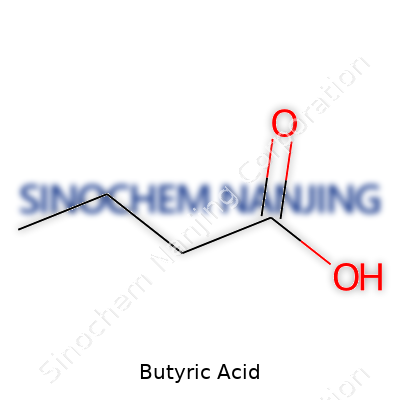
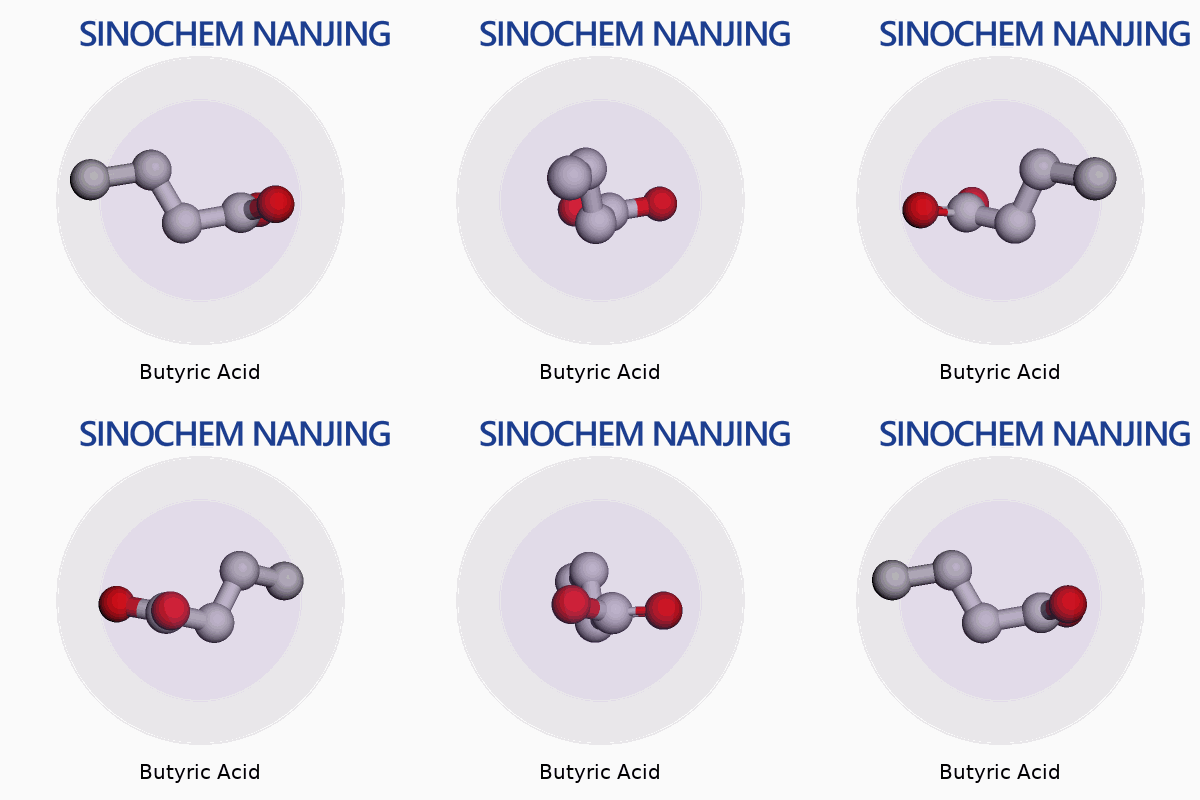
| Names | |
| Preferred IUPAC name | butanoic acid |
| Other names |
Butanoic acid n-Butyric acid Propane carboxylic acid Butyric acid, normal n-Butanoic acid |
| Pronunciation | /ˈbjuː.tɪr.ɪk ˈæs.ɪd/ |
| Identifiers | |
| CAS Number | 107-92-6 |
| Beilstein Reference | 2840737 |
| ChEBI | CHEBI:30772 |
| ChEMBL | CHEMBL418 |
| ChemSpider | 6198 |
| DrugBank | DB04210 |
| ECHA InfoCard | 100.003.784 |
| EC Number | 204-677-5 |
| Gmelin Reference | Gmelin Reference: 83341 |
| KEGG | C00246 |
| MeSH | D001970 |
| PubChem CID | 264 |
| RTECS number | EO2625000 |
| UNII | 4P6FH4FB8P |
| UN number | UN2820 |
| Properties | |
| Chemical formula | C4H8O2 |
| Molar mass | 88.11 g/mol |
| Appearance | Colorless to light yellow liquid with an unpleasant, rancid odor |
| Odor | unpleasant, rancid, butter-like |
| Density | 0.96 g/cm³ |
| Solubility in water | soluble |
| log P | 0.79 |
| Vapor pressure | 0.4 mmHg (20°C) |
| Acidity (pKa) | 4.82 |
| Basicity (pKb) | pKb ≈ 10.24 |
| Magnetic susceptibility (χ) | -7.9×10⁻⁶ |
| Refractive index (nD) | 1.399 |
| Viscosity | 2.20 mPa·s (at 25 °C) |
| Dipole moment | 1.73 D |
| Thermochemistry | |
| Std molar entropy (S⦵298) | S⦵298 = 248.0 J·mol⁻¹·K⁻¹ |
| Std enthalpy of formation (ΔfH⦵298) | -482.6 kJ/mol |
| Std enthalpy of combustion (ΔcH⦵298) | -2181 kJ/mol |
| Pharmacology | |
| ATC code | A07XA01 |
| Hazards | |
| GHS labelling | GHS02, GHS05, GHS07 |
| Pictograms | GHS02,GHS05,GHS07 |
| Signal word | Warning |
| Hazard statements | H226, H302, H314, H335 |
| Precautionary statements | P210, P260, P264, P273, P280, P301+P330+P331, P303+P361+P353, P305+P351+P338, P304+P340, P312, P330, P403+P235, P501 |
| NFPA 704 (fire diamond) | 3-2-0-A |
| Flash point | 72 °C |
| Autoignition temperature | 343 °C |
| Explosive limits | 1.8% - 10.3% |
| Lethal dose or concentration | LD50 oral rat 2940 mg/kg |
| LD50 (median dose) | LD50 (median dose): Rat oral 2,940 mg/kg |
| NIOSH | NA8400000 |
| PEL (Permissible) | 50 ppm |
| REL (Recommended) | 2500 mg |
| IDLH (Immediate danger) | 200 ppm |
| Related compounds | |
| Related compounds |
Butyric anhydride Butyryl chloride Isobutyric acid Crotonic acid Valeric acid Propionic acid Caproic acid |



