Butylbenzene: More Than Just an Organic Compound
Historical Development
Long before synthetic chemistry exploded in complexity, butylbenzene entered the scene as another member of the alkylbenzene family. At first glance, it didn’t grab the spotlight; toluene, xylene, and ethylbenzene were getting all the attention thanks to their obvious roles in fuel blending and industrial solvents. The story of butylbenzene starts in research labs during the 20th century, when chemists needed specific aromatic hydrocarbons to probe various catalytic reactions. Early reports identified its production as a side route in Friedel–Crafts alkylation reactions, where benzene was exposed to butyl chloride using Lewis acids like aluminum chloride as a catalyst. This wasn’t groundbreaking in the market sense, but slowly, the expanding demand for tailored intermediates in chemical manufacturing drew eyes to its potential.
Product Overview
Today, butylbenzene enjoys a place in the toolbox of chemists and manufacturers who seek more than just commodity solvents. Breaking it down, there are four isomers—n-butylbenzene and its branched cousins isobutylbenzene, sec-butylbenzene, and tert-butylbenzene. Each brings unique structural quirks, giving slightly different chemical traits. Bulk sourcing comes from major chemical suppliers. Applications range from industrial solvents, resin modifiers, to intermediates in pharmaceutical synthesis. Butylbenzene might not carry the name recognition of other aromatics, but in advanced organic chemistry and industry decision-making, it fills a gap between mass-use solvents and specialty fine chemicals.
Physical & Chemical Properties
Pick up a container of n-butylbenzene and the nose reports a subtle, slightly sweet aromatic odor, less aggressive than toluene or xylene but unmistakably present. With a boiling point hovering just over 180°C, it stays liquid under most working conditions, unlike lighter aromatics. Viscosity is low, so it pours cleanly and evaporates more slowly than its lighter cousins. Its solubility in water is minimal, which can complicate spill responses but often helps when designing selective extraction steps. Flash point sits outside the range of everyday volatility hazards but still demands care near ignition sources. On the molecular side, the benzene ring dominates reactivity while the butyl tail adds bulk and modulates physical traits, influencing its behavior during distillation, extraction, and purification processes.
Technical Specifications & Labeling
Industry usually expects a colorless liquid, free of haze and residual acids. Labeling varies by isomer, but most bottles highlight the CAS number for accurate tracking in research and compliance paperwork. Documentation reports boiling point, purity, and sometimes residual moisture or acidity, especially when small impurities could derail sensitive reactions or pharmaceutical syntheses. It’s funny to think how often staff skip technical labels, yet for butylbenzene, purity really matters. Trace metallic or halide contaminants sabotage downstream synthetic steps involving catalysts. For those in regulated sectors, like pharma or agrochemical R&D, specification sheets also outline rigorous testing protocols that back up label promises.
Preparation Method
Most commercial butylbenzene travels out of purpose-built reactors using Friedel–Crafts alkylation. Chemists combine benzene with various butyl halides—chlorides, bromides—and run the mixture over anhydrous aluminum chloride. While the classic recipes deliver high yields of n-butylbenzene, branching the butyl chain requires tweaks in reaction conditions or feedstock. Reaction byproducts, especially branched isomers, get separated through fractional distillation. Working with these processes taught me the importance of reaction monitoring and careful heat regulation; runaway exotherms can surprise even seasoned operators because those Lewis acids remain stubbornly reactive. Green chemistry efforts now test solid acid catalysts to cut down on hazardous waste, hinting at how process safety and environmental impact enter every production discussion.
Chemical Reactions & Modifications
Butylbenzene’s chemical stubbornness owes much to the stable aromatic ring. Electrophilic substitutions, such as nitration or sulfonation, favor the para-position relative to the butyl group. Yet, the bulk of its applications stem from its role as a building block. In polymer science, the compound sometimes becomes part of alkyd or epoxy resins. Hydrogenation takes away the aromaticity, giving cyclohexyl derivatives with different physical performance. In lab syntheses, subtle electronic effects from the butyl group change reaction selectivity—a trick often exploited when multiple alkylbenzenes join a synthetic plan. My own frustrations came at purification: after modification, butylbenzene derivatives stick stubbornly to column packing, slowing labs working with tight deadlines.
Synonyms & Product Names
Chemists rarely settle on a single name. Beyond “butylbenzene,” you’ll see “n-butylbenzene,” “sec-butylbenzene,” “tert-butylbenzene,” and “isobutylbenzene” in technical literature and reagent catalogs. Trade names are scarce, as the compound supports the market quietly, mostly in semi-bulk containers rather than branded retail bottles. In paperwork, expect to find the standard IUPAC naming, relevant CAS registry numbers, and, occasionally, older nomenclature hanging on in legacy documentation or supplier listings.
Safety & Operational Standards
Work with butylbenzene calls for simple routines and respect for its aromatic structure. Vapor is heavier than air, and people often forget how quietly aromatic fumes settle in low-lying areas of a lab or plant. Flammable limits don’t create as much drama as lighter hydrocarbons, but ignition sources still spell risk. Direct skin exposure leads to irritation, and inhalation—especially in enclosed spaces—can produce dizziness and headaches, something I’ve seen too often in rushed warehouse situations. Standard PPE—goggles, nitrile gloves, lab coats—handles most benchwork. Any operation involving scale-up sees enhanced ventilation or local exhaust. Material safety sheets push home the importance of clean-up, good storage practices, and fire-fighting protocols. To avoid chronic exposure, engineering controls prove more reliable than personal habits.
Application Area
Butylbenzene might not headline market reports, but its impact ripples through several industries. In resin production, it modifies curing speed or final texture, enabling targeted performance in coatings and adhesives. In synthetic chemistry, it steps in as a starting point for making pharmaceuticals and agricultural agents—a “silent intermediate.” Solvent markets lean on butylbenzene when other aromatic options prove too reactive or volatile. In niche formulations, it tweaks viscosity and drying time, judged only by the final look and feel of varnishes, not the label on the tin. Reach for butylbenzene in blending fuel experiments and laboratory model reactions, and the compound showcases its subtlety and versatility.
Research & Development
R&D minds chase efficiency, selectivity, and environmental improvement. Chemists continue probing catalyst replacements to minimize hazardous waste during Friedel–Crafts synthesis, such as exploring zeolites or other robust solid acids. Analytical improvements, including advanced chromatographic techniques, help pick out trace impurities—useful both for regulatory compliance and for troubleshooting process hiccups. In materials science, new modifications promise resins with greater heat resistance or water repellency, helping coatings survive outdoor exposure. Each new paper expands the chemical playbook, leveraging high-throughput screening and computational modeling to find better synthesis pathways or improved downstream uses.
Toxicity Research
Concerns over butylbenzene’s health effects persist, especially among workers in production and those routinely handling large volumes. Chronic inhalation studies in rodents highlight potential impacts on liver and kidney function, a reminder that exposure limits ought to be respected. Acute toxicity stays low for single exposures, but repeated contact raises questions, particularly where personal protective habits lapse. Environmental fate turns up other issues: the compound biodegrades slowly, and persistent spills risk harming aquatic life by depriving oxygen or accumulating in fatty tissues. Regulatory guidelines, such as those from OSHA and EU REACH, increasingly focus on long-term monitoring and exposure minimization, pressing supervisors and EHS managers to rethink how routine tasks unfold.
Future Prospects
Development teams and chemical engineers keep seeking out greener, safer, and more cost-effective ways to make and use butylbenzene. Shifting to solid-acid catalysts and continuous reactor technology may stop old-fashioned waste and drive down environmental footprints. On the applications front, new product formulations, particularly specialty resins and engineered materials, bring butylbenzene further from its roots as just another alkylbenzene. Toxicological research promises better worker health and refined exposure guidelines. Meanwhile, automation and artificial intelligence accelerate both lab discovery and industrial optimization, from reaction design to hazard detection. For the next generation of chemists and product developers, butylbenzene offers not only a familiar challenge but new potential in safer, smarter, and more sustainable chemical manufacturing.
What is Butylbenzene used for?
The Unsung Role of Butylbenzene
Most folks pass through daily life never hearing about butylbenzene, yet industries count on it for all kinds of tasks. This clear liquid, made by attaching a butyl chain to benzene, finds its way into products you’d never expect. Over years working in labs and talking with chemical engineers, I’ve seen how substances like butylbenzene work quietly behind all the flashier chemical stars, shaping the things we use every day.
Building Blocks for Industry
Manufacturers turn to butylbenzene because it’s a great starting point for building other compounds. Paint companies and plastics suppliers rely on it as an intermediate. That means it’s changed through chemical reactions so it can be turned into better, safer, or more useful ingredients. The fragrance world, for example, uses parts made from butylbenzene for perfumes and household scents. I’ve talked with shop-owners in the cleaning trade and their fragrances often trace back to chemicals like this one.
Resin-makers use butylbenzene for specialized coatings that need just the right mix of flexibility and toughness. My time working near a coatings production facility showed me how tightly these companies track every chemical. Even slight tweaks, like swapping one benzene variation for another, changes how paint dries or how long a finish survives in the sun. Here, butylbenzene comes through as a reliable ingredient, offering good stability and solubility for mixing into paint bases and specialty varnishes.
Solvents That Get the Job Done
Not all solvents can keep up with the demands of heavy-duty polishers, adhesives, or electronics cleaners. I remember in a small electronics repair shop, we struggled to get the right cleaner for circuit boards—strong enough to remove grease but not so aggressive it damaged the plastic or gold contacts. Manufacturers use butylbenzene in some of these cleaning agents thanks to its balance between oil-dissolving power and safety around sensitive parts. While it’s nowhere near as common as acetone or toluene, there are jobs that call for its unique mix of properties.
Concerns and Safer Practices
Even though butylbenzene is useful, handling it calls for care. Exposure can irritate skin and eyes, so workers in plants use gloves, goggles, and well-ventilated spaces, which is a lesson I picked up early on during chemistry training. Environmental rules require companies to prevent spills and treat any waste properly. Groups like the Environmental Protection Agency keep a close eye on these chemicals, making sure communities stay safe.
Pushing for Greener Alternatives
Green chemistry pushes every industry to rethink its ingredients list. University researchers, including some I’ve met at science events, look for ways to cut down on substances that linger in the environment. Some labs experiment with plant-based chemicals that can replace traditional organics like butylbenzene. Companies that produce adhesives and coatings try to get ahead by using chemicals that leave less residue and work safely at lower concentrations.
Knowing where each chemical fits keeps our daily lives running smoothly. From the paint on walls to the electronics we rely on, butylbenzene continues to prove its worth. With ongoing attention to safety and the search for better options, the future could see cleaner, safer choices for everyone.
Is Butylbenzene hazardous to health?
Understanding Butylbenzene and Its Uses
Butylbenzene sits on the long list of chemicals making their way into factories, labs, and even products people use daily. Most folks rarely hear about it, unless they dig into ingredient lists or work around industrial solvents and adhesives. As an organic compound, butylbenzene exists mostly as a colorless liquid that smells faintly sweet. It pops up during the manufacture of plastics, resins, and sometimes appears as a byproduct in the petrochemical industry. Homeowners using certain cleaning agents, or workers in chemical plants, might cross its path more often than they’d like to realize.
Health Risks Tied to Butylbenzene
Chemicals like this often get filed under the “handle with care” category for a reason. Direct exposure to butylbenzene can irritate the eyes, nose, and throat. I’ve spent time in industrial labs, and those fumes can hit hard even before trouble brews. Inhaling high levels, some workers start coughing, feel nausea, complain of headaches, or feel light-headed. If concentrated vapors linger, people may find themselves gasping for air or, worse, fainting. The skin doesn’t get off easy, either—splashes can cause redness and dryness, building up to dermatitis if contact keeps happening. Long-term contact is where worries set in, since chronic exposure could mean ongoing respiratory problems, or even nerve complications. Hard data ties related petrochemicals to nerve damage and toxic effects on the liver, although butylbenzene hasn’t been studied as thoroughly as the giants like benzene or toluene. That doesn’t mean it’s safe. There’s just less research and a lot of unanswered questions.
What Science Says and Where Gaps Remain
Government agencies put out numbers and thresholds to help people steer clear of risky levels. The Occupational Safety and Health Administration, for example, provides guidance that sets airborne exposure limits well below the concentration causing irritation. I’ve seen workplace safety sheets call for masks, gloves, and good ventilation whenever this chemical comes out. The material safety data sheets, which workers trust for a reason, flag butylbenzene as flammable and toxic if mishandled. Animal testing suggests long-term, high-dose exposure can mess with major organs. Still, scientists keep cautioning that gaps in research don’t prove something is harmless—just under-studied. It makes sense to err on the side of caution.
Minimizing Risks in Real Life
People can take steps to stay safe, especially if they work with chemicals like butylbenzene. In places I’ve worked, it’s standard to use gloves, chemical-resistant aprons, goggles, and decent ventilation. That’s basic protection, not overkill. Home users often neglect these practices, acting like household products carry no risk, but plenty of garage fixes and hobby kits call for the same precautions. Respirators should be kept nearby in rooms without fresh air, and clean-up routines can’t be skipped. Companies bear responsibility too – regular training keeps safety habits fresh, and emergency wash stations or air extractors help people bounce back from accidental exposure.
Reducing Dependency and Building Healthier Habits
Switching to safer alternatives, wherever possible, eases the burden on workers and the environment. Manufacturers could reformulate products, consumers can read labels more closely, and regulators ought to encourage more research and transparency about lesser-known chemicals. Butylbenzene’s health mysteries only reinforce the need for oversight, education, and a bit of vigilance from everyone, not just experts in lab coats. Staying healthy around chemicals demands respect for what we still don’t know, as much as for what has already been proven.
What are the storage requirements for Butylbenzene?
Storing Chemistry’s Wildcards: Lessons from Butylbenzene
I remember walking through a warehouse filled with odd-smelling barrels and realizing every one of those metal drums had its own story — and its own set of rules. Butylbenzene stood out among them, not just for its faint, sweet odor but for the way it demanded careful handling. Folks who store chemicals like butylbenzene face genuine risks far beyond spilled liquid or lost money: we’re talking explosions, fires, and very real harm to human health.
Butylbenzene is flammable. That single word shapes how anyone should approach storage. A spark from a loose wire, a heat source left unattended, or even direct sunlight creeping in through a window is enough to spell disaster. I watched a small solvent fire once in a poorly ventilated lab — the type of panic that catches in your throat and rattles you for months. The rules exist for a reason. Simple as that.
No Corners to Cut: Temperatures and Containers Matter
Safe storage for butylbenzene starts with temperature: keep it cool, away from heat or open flames. Store it in a neat row of tightly sealed containers, made from materials that won’t react — steel or heavy duty plastic often gets the job done. I’ve seen colleagues pay the price for using cheap plastic containers; over time, chemical vapors seep out, eating at the container, eventually leaking and raising hell. No savings justify the risk.
A good ventilation system means the difference between a routine day and an emergency room visit. Butylbenzene fumes build up quickly. Without fresh air circulating, those vapors don’t just make folks dizzy — they create a floating blanket of fire hazard. I’ve met warehouse managers who sleep better at night knowing their spaces have proper exhaust fans and air exchanges running day and night.
Barriers Protect People, Not Just Property
If a leak happens, the liquid eats through some floor coatings and slips into drains. Imagine that carrying toxic runoff straight into the local water system. Gravity won’t show mercy. Secondary containment, like spill trays or bunded areas around storage, is the kind of barrier that keeps accidents small and manageable. It’s easy to shrug off until someone has to clean up a puddle on their hands and knees, with every breath getting heavier from the fumes.
Clear labeling turns out to be as important as the container itself. Workers in a hurry grab the wrong bottle, splash butylbenzene where it shouldn’t be, or even mistake it for something less risky. Labels save time, confusion, and a trip to the emergency shower. Training helps too. Every person who works near these drums should know the risks and the plan if something goes sideways. Regular drills, real conversations, not just forms checked off in a dusty logbook, make a difference.
Solving the Problems, Not Living with Them
It’s tempting for operators and small businesses to nudge containers into odd corners or use whatever space is handy. But abdicating responsibility leads to real consequences: insurance rates climb, legal headaches start, and reputations erode. Modern storage options don’t need to break budgets — modular walk-in flammable liquid cabinets, monitoring devices for air quality, affordable spill kits. These investments help prevent loss and protect people before regulators show up or accidents force new habits upon us all.
Butylbenzene stores without drama if people treat it with respect, not fear. Safe habits grow from knowledge and daily vigilance; shortcuts claim more than just convenience. For anyone around these chemicals, the real lesson comes in sweat and vigilance, not wishful thinking.
What is the chemical formula of Butylbenzene?
Understanding the Building Blocks
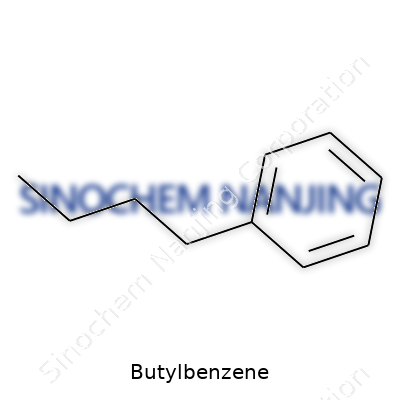
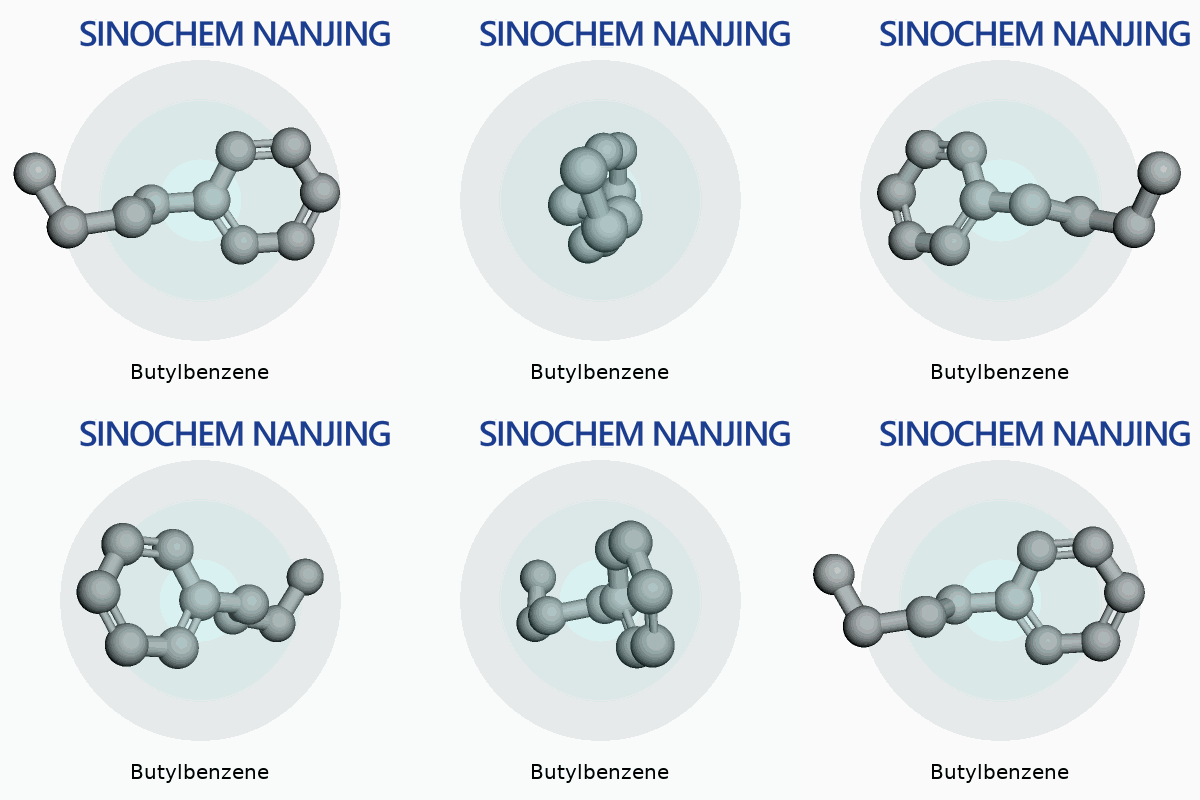
Growing up around a family business that dealt with solvents and cleaners, I heard about chemicals like butylbenzene long before I ever took a chemistry class. On paper, butylbenzene has a short and sweet formula: C10H14. This formula tells a bigger story, though. Butylbenzene refers to a group of aromatic hydrocarbons, where a benzene ring gets attached to a butyl group, resulting in several potential structural isomers. The formula isn’t just a statement; it’s a signal that this molecule can interact with countless other materials in our daily world.
Why Chemical Structure Matters in the Real World
Many folks don’t realize how often their lives run into chemicals like butylbenzene. Every time I helped clean old paintbrushes at my family’s workshop, I was dipping my hands into solvents that owed some properties to the same kind of ringed hydrocarbon backbone found in this molecule. The combination of a benzene ring and a butyl chain doesn’t just affect its appearance on paper. It changes how the molecule behaves—its boiling point, solubility, smell, and its ability to dissolve resins and oils.
Butylbenzene’s core structure gives it special traits used in the chemical industry, specialty solvents, and even in research as a standard to calibrate instruments. Just seeing C10H14 doesn’t capture all the nuance or the ways it ends up in products on hardware store shelves or in dozens of labs worldwide. These details mean something, from the consistency of an adhesive in cold weather to the punch in a can of degreaser.
Risks and Oversight: Interacting with Butylbenzene
No one wants to talk about risks until something goes wrong. A cousin of mine once came home coughing from using industrial solvents without protection. Chemicals like butylbenzene bring safety concerns—respiratory irritation, potential for skin contact, lingering fumes. The scent reminds you that you’re dealing with something that doesn’t belong inside your body. Workers, hobbyists, and even kids scraping paint at home need common-sense protections; gloves, ventilation, keeping solvents away from open flames.
Industry groups and government agencies have set exposure guidelines for aromatic hydrocarbons. These controls might seem strict, but I’ve seen old-timers in the shop benefit from following even the simplest safety advice, like opening a few windows and taking breaks. Transparency from companies and regulators helps keep people safer, and up-to-date labeling makes a difference for everyone who touches the stuff.
Looking for Better Solutions
Butylbenzene’s versatility sometimes pushes it onto lists of chemicals targeted by green alternatives. Demand grows for safer, plant-based solvents. Still, the transition isn’t just about swapping one chemical for another—it demands new processes, equipment, even customer behavior shifts. Labs and factories can’t turn on a dime, and the replacement’s price matters, too. Having worked alongside people tasked with reformulating products, I know change can be slow and frustrating, but I’ve watched smart chemists make small, steady progress.
Understanding what C10H14 means in practice connects science to daily life. Butylbenzene’s formula is key knowledge for chemists, but remembering the real effects on health, safety, and the push for innovation keeps that formula from fading into the background.
How should Butylbenzene be handled safely?
Why Butylbenzene Demands Respect
Most folks haven’t heard much about butylbenzene, but it plays a big role in chemical labs and industrial settings. This colorless substance can give off a sweet, almost gasoline-like odor, tipping you off if a spill happens. As someone who spent long hours in university labs, that scent still takes me back. The thing is, inhaling or touching this liquid isn’t harmless. Short exposure can cause skin and eye irritation, headaches, and even dizziness. Prolonged contact ups the risks. NIOSH and OSHA both set clear limits for how much you should encounter on the job.
Making Safety a Daily Habit
Wearing goggles and gloves isn’t just for show. I learned pretty quickly that chemical splashes happen fast, and personal protective equipment blocks those stray drops from landing on your face or getting absorbed through the skin. Lab coats, nitrile gloves, and fitted eyewear always come before handling butylbenzene. It seeps through some plastics, so glove material makes a difference. Ventilation keeps vapors from building up, a lesson hammered in every time I noticed workers busy under fume hoods. Open windows aren’t enough—dedicated exhausts matter.
If a spill happens, avoiding panic goes a long way. Clear the area and tackle it with absorbent pads, not your everyday rags. Trying to sweep it away with plain paper towels just spreads the problem. Used cleanup materials need their own sealed containers. Never pour this stuff down the sink. The waste can harm local water supplies and break safety regulations, which is a headache nobody needs.
Storing Butylbenzene Without Trouble
Secure storage creates peace of mind. Flammable liquids like this one demand flameproof cabinets away from sunlight and heat. I still remember strict labels and logs for every bottle—no exceptions. Any leaky cap can turn a benign shelf into a big risk to air quality or trigger a fire hazard. Employees using clear inventory charts tend to spot problems before they escalate. Keep incompatible chemicals separated; an improperly stored jug mixing with acids can lead to toxic fumes or worse.
Staying Informed and Ready
Before working with butylbenzene, brushing up on the safety data sheet isn’t just bureaucracy. It tells you exactly what to expect, from the right storage temperature to what to do if it comes into contact with your skin. Knowledge cuts down on guesswork and mistakes. Company supervisors who push regular drills make a difference. I’ve seen places where workers run through emergency spill response scenarios—and that muscle memory saves time when every second counts.
Good safety culture grows from access to proper gear, easy-to-read warning signs, and training that connects the dots. If employers cut corners to save cash or employees treat shortcuts casually, the real cost hits later—sometimes through harmful exposure, sometimes through fines, sometimes both. Tackling safety issues starts early: from showing new hires the ropes to checking gear fits right.
Looking Toward Solutions
Digital tools help track chemicals, expiration dates, and training records. Using mobile apps for inventory can flag low supplies and help with auditing what’s opened, stored, or ready for disposal. Remote monitoring adds alerts if airflow in a fume hood drops, helping nip problems in the bud. If teams feel comfortable reporting safety misses or close-calls, that openness often prevents bigger incidents. Building a culture where everyone cares about each other beats any checklist. If labs and warehouses put these bits in place, handling butylbenzene shifts from a headache to part of a regular, safer routine.
| Names | |
| Preferred IUPAC name | 1-Phenylbutane |
| Other names |
1-Phenylbutane n-Butylbenzene |
| Pronunciation | /ˌbjuːtᵊlˈbɛnzˌiːn/ |
| Identifiers | |
| CAS Number | 104-51-8 |
| Beilstein Reference | 1718736 |
| ChEBI | CHEBI:13849 |
| ChEMBL | CHEMBL135697 |
| ChemSpider | 7278 |
| DrugBank | DB16635 |
| ECHA InfoCard | ECHA InfoCard: 100.008.401 |
| EC Number | 202-852-1 |
| Gmelin Reference | 76654 |
| KEGG | C01725 |
| MeSH | D001444 |
| PubChem CID | 7698 |
| RTECS number | CY1400000 |
| UNII | 5T8VYL617F |
| UN number | UN«2689» |
| Properties | |
| Chemical formula | C10H14 |
| Molar mass | 134.22 g/mol |
| Appearance | Colorless liquid |
| Odor | aromatic |
| Density | 0.862 g/mL at 25 °C(lit.) |
| Solubility in water | Insoluble |
| log P | 4.2 |
| Vapor pressure | 0.5 mmHg (at 25 °C) |
| Acidity (pKa) | 43 |
| Basicity (pKb) | pKb ≈ 19.99 |
| Magnetic susceptibility (χ) | -72.09·10⁻⁶ cm³/mol |
| Refractive index (nD) | 1.491 |
| Viscosity | 2.785 cP (20°C) |
| Dipole moment | 0.71 D |
| Thermochemistry | |
| Std molar entropy (S⦵298) | 365.8 J·mol⁻¹·K⁻¹ |
| Std enthalpy of formation (ΔfH⦵298) | -2.4 kJ/mol |
| Std enthalpy of combustion (ΔcH⦵298) | –5746 kJ·mol⁻¹ |
| Hazards | |
| GHS labelling | GHS02, GHS07 |
| Pictograms | GHS02,GHS07 |
| Signal word | Warning |
| Hazard statements | H226, H315, H319, H335 |
| Precautionary statements | P210, P261, P273, P301+P310, P305+P351+P338 |
| Flash point | 126 °F (52 °C) (closed cup) |
| Autoignition temperature | 490 °C |
| Explosive limits | 0.9% - 6.4% |
| Lethal dose or concentration | LD50 (oral, rat): 4300 mg/kg |
| LD50 (median dose) | LD50 (median dose): Oral rat LD50 = 4,300 mg/kg |
| NIOSH | NIOSH: EU1575000 |
| PEL (Permissible) | 50 ppm |
| REL (Recommended) | 50 mg/m³ |
| IDLH (Immediate danger) | 500 ppm |
| Related compounds | |
| Related compounds |
Benzene Cumene Ethylbenzene Isopropylbenzene n-Butylbenzene sec-Butylbenzene tert-Butylbenzene Propylbenzene Toluene Xylene |



