Butyl Formate: More Than Just a Solvent—A Deep Dive into Its Journey and Potential
From Laboratories to Workshops: Tracing the Story of Butyl Formate
Butyl formate finds its roots in the early exploration of organic solvents, right around the era when chemists stayed up late tinkering with distillation and extraction. The real uptick in interest came once the chemical industry realized the value of esters beyond their scents and flavors. Folks often think about solvents as bland, faceless chemicals, but their stories tell us a lot about industrial progress and hazards. Butyl formate slid into industrial processes as equipment improved for esterification, and as workers chased safer alternatives to the really nasty solvents like benzene and carbon tetrachloride. Every chemical carries a legacy, shaped by advances, mistakes, and a few regulatory pushes.
Butyl Formate: Smell, Look, and Use in the Everyday World
Open a bottle of butyl formate and you catch a fruity, pleasant smell—something between pears and green apples, though it probably wouldn’t sit well in your kitchen. Clarity comes easy: it pours out colorless and runs a bit thinner than water. Its volatility—the rate at which it evaporates—puts it right in line for industries that value fast-drying properties, like lacquers, nail polish removers, and inks. Unlike compounds that hover around on surfaces, butyl formate likes to bolt for the atmosphere, which poses clear challenges and values at the same time. It forms part of a toolbox for anyone blending chemicals for paints, adhesives, or cleaners, so it regularly shows up where fast evaporation is a selling point.
The Chemistry Behind the Scenes: Why Butyl Formate Works the Way It Does
Boiling at temperatures a bit below 110 degrees Celsius and weighing in lighter than many industrial solvents, butyl formate brings a combination of good solvency and low surface tension. Its miscibility with organic liquids, but relative stubbornness around water, means it picks its friends—a trait that lets technicians choose between sharp separation and blend. In terms of structure, this ester emerges from coupling butanol with formic acid, ditching water through a well-worn dehydration route. This build gives the compound both a reactive formate group and a butyl tail, letting it dance in reactions where other esters might stumble or react too slowly.
Forming Butyl Formate: Straightforward Chemistry, Room for Tweaks
The process to create butyl formate doesn’t ask for rare tools. Set up a vessel, add butanol and formic acid, keep things acid-catalyzed, and collect the ester as it forms. Plenty of chemistry teachers use esterification as an entry point for students, since it blends familiar smells with visual changes. Large-scale plants, though, need to maximize yield, cut down energy costs, and manage water byproducts, so real industry brings in new tricks: continuous removal of water, clever distillation columns, and sometimes recyclable catalysts. Researchers poke at these edges, looking for ways to boost output without turning out extra waste or relying on harsh reagents.
What Happens After: Chemical Modifications and Industrial Reactions
Butyl formate’s modest reactivity hides some real possibilities in synthesis. It can act as a starting point for more complex esters or get picked apart in hydrolysis to return formic acid and butanol—making it fit for closed-loop processes where waste reduction counts. On top of that, it sometimes serves in transfer reactions, such as alkylation, thanks to the flexibility of its ester group. Its stability gives it a longer shelf life versus more temperamental esters, meaning less spoilage and lower costs for storage.
What’s in a Name? The Many Aliases of Butyl Formate
In the wild, butyl formate answers to several names: n-butyl formate, formic acid butyl ester, or, less poetically, the IUPAC version. Some labs and catalogs use shorthand codes or historic trade names, mostly to track purity or production routes. But in every corner of the world, when someone reaches for this solvent, there’s rarely confusion, since the physical quirks—smell, boiling point, and reactivity—set it apart. Labeling laws want details nailed down, so workers know exactly what sits inside their drum or tank before pouring it into a blend or reaction.
Keeping Safe: Real-World Risks and Protections
Handling butyl formate safely matters because, like many volatile organics, it evaporates quickly and forms flammable vapors. Workers can catch headaches, dizziness, or even short-term eye and respiratory irritation if they linger over open containers without good ventilation or proper gloves. In academic and industrial settings, getting the right air circulation, using spark-safe equipment, and training staff make all the difference. Chemical hygiene isn’t just paperwork—incorrect storage or improper disposal can mean fire risks or soil and water contamination. Long-term studies keep digging into exposure effects, but early flags suggest caution, not panic. Gloves, goggles, fume hoods, and sturdy containers hold the line against most common mishaps.
Industries and Everyday Uses: Where Butyl Formate Shows Up
This solvent doesn’t hang around for show—it gets to work where fast drying and light residue are crucial. The coatings industry leans on it to speed up lacquer drying without the unwanted hazard profile of more toxic solvents. In electronics cleaning, it washes away flux residues without leaving films that foul up delicate parts. Perfumery labs sometimes use it as a blending element for fruity notes, especially in formulations that need a kick of volatility. Add to that uses in ink manufacture, resin production, and even specialty adhesives, and you see why butyl formate gets steady demand across sectors. Most users care about ease of handling as much as performance, a balance where this ester often lands in the sweet spot.
Beyond Today: Research and New Possibilities for Butyl Formate
Chemists still see untapped promise in butyl formate, especially as green chemistry keeps gaining importance. Research now looks at bio-based synthesis, using renewable feedstocks with less reliance on crude oil derivatives. Analysts compare lifecycle emissions, hoping to trim the carbon footprint of large-scale operations. Teams push to improve selectivity and yield with innovative catalysts made from earth-abundant elements. There's also attention to recycling streams, trying to recapture evaporated solvent for reuse, cutting down volatile losses to the atmosphere. Some groups explore butyl formate’s use as a reactant in emerging organic frameworks or high-value specialty chemicals, digging deeper into its versatility.
Following the Trail: What We Know (and Worry) About Toxicity
Anyone who spends time in chemical plants knows you can never ignore toxicity data. For butyl formate, acute exposure tends to cause temporary irritation rather than the lasting harm linked with some old-school solvents. Still, risk assessments tell us to stay cautious—especially around high concentrations or poorly ventilated rooms. Animal studies provide most of the toxicology so far, laying out safe threshold limits for worker exposure. Regulatory agencies keep tabs on research, pushing for tougher guidance if any new findings pop up. Factoring in chemical sensitivity among workers matters just as much as raw numbers on a safety data sheet.
Tomorrow’s Priorities: Innovation and Safety Together
Looking ahead, the industry needs to juggle increasing environmental scrutiny with demands for higher-performance solvents. Green sourcing, closed-loop production, and tougher emission limits will shape how butyl formate and its cousins feature in future materials and processes. The push for biodegradable solvents draws in research funding, inviting more academic eyes to its properties and novel applications. Companies adopting circular economy strategies may see more value in solvent recovery and reduction of environmental burdens, making butyl formate a touchstone for broader trends. It’s rarely the main character, but often an indispensable supporting act in the chemistry stage—waiting for the next generation of thinkers to find creative, responsible uses.
What is Butyl Formate used for?
Practical Uses Behind the Name
Butyl formate might not win any popularity contests at the local hardware store, but ask anyone in the chemical industry or anyone who’s spent time figuring out how nail polish dries quickly without smelling too offensive, and it’s a different story. This clear liquid, which has a fruity, rum-like scent, finds its way into labs, factories, and even everyday items in ways most folks overlook.
Why Solvents Like Butyl Formate Matter
Butyl formate plays a role in making paints less sticky and adhesives workable. Its power lies in how easily it evaporates, making it useful as a solvent. For anyone who’s ever painted furniture or stripped old varnish, the ability to thin a product for smooth application matters. Too thick, and the paint clogs up; too thin, and it doesn’t stay put. I remember refinishing an old dresser during a summer job. The paint needed a bit of adjustment and a decent solvent to get that brush-stroke-free finish. Butyl formate steps up in these situations, helping ensure smooth coatings without leaving behind too much mess or lingering odor.
Perks in Production
Manufacturers value butyl formate for its versatility. It mixes easily with plenty of other solvents and ingredients, so it can clean precision equipment, help in extraction processes, or assist in the creation of flavors and fragrances. The characteristic aroma, often compared to pear or rum, even gives artificial flavors a nudge in the right direction without being overpowering. In flavor and fragrance labs, certain esters like butyl formate mimic notes we love in fruit and fine alcohol, which tends to draw creative recipe-makers and perfumers.
Environmental and Health Considerations
Personal safety and environmental impact always come up with any solvent. Butyl formate isn’t the worst offender in terms of toxicity—brief skin contact won't create chaos, and it doesn’t stick around in nature forever. That said, good ventilation and protective gloves remain important during any project. I’ve learned the hard way that ignoring the label or skipping a mask leads to headaches and trouble concentrating, no matter how benign the chemical seems.
Workplaces handling butyl formate look for responsible disposal practices. Even low-toxicity solvents can pose risks to aquatic life or air quality if dumped carelessly. So, the push for greener chemicals and better recycling applies here. Biodegradable solvents earn a bigger slice of the market every year, and companies look for ways to recover and reuse what they can. Sometimes, swapping out butyl formate for something from renewable materials offers a safer route without sacrificing performance.
Looking at Safer Handling and Smart Choices
Workers and DIYers benefit from better labeling and education. The clearer folks are about what goes into their products, the fewer surprises down the road. I encourage those working with solvents to treat each one, even the familiar, with respect. Solutions often come from sharing tips, reviewing new research, and choosing the safest option that still gets the job done. Regulations nudge companies in the right direction, but users hold a lot of power. Staying informed helps everyone balance performance, safety, and the planet’s health—values that matter just as much as drying time or finish quality.
What is the chemical formula of Butyl Formate?
The Straightforward Formula
Butyl formate carries the chemical formula C5H10O2. This simple combination unlocks plenty of nuance once you dig a bit. At face value, you’ve got carbon, hydrogen, and oxygen arranged as the ester formed from butanol and formic acid. Working in the lab, the formula moves from paper to bottle, with each atom shaping the character of this colorless, fragrant liquid.
Personal Encounters with Butyl Formate
I’ve worked alongside this compound in fragrance projects and solvent blending. The first draw is always the apple-peel aroma cutting through a room of candidates for flavor and fragrance bases. If you sniff an artificial apple candy or a green note in a fresh perfume, butyl formate often plays a key role. The reason is straightforward chemistry—with its chemical backbone, it mimics the natural aroma compounds found in fruits.
Industry Relies on Stable Formulas
C5H10O2 isn’t just another sequence on the periodic table. For fragrance designers, that formula signals safety profiles, volatility, flash points, and reactions. A supplier worth their salt can rattle off this formula and explain its low boiling point, which runs around 107°C. That matters for anyone developing fast-evaporating solvents or blends that leave no heavy residue—key in paint thinners and specialty cleaners.
All this chemistry knowledge doesn’t float alone; regulatory professionals scrutinize the same formula for human safety. Agencies like the FDA and EPA reference C5H10O2 every time they review new submissions in flavor or industrial use. Traceability and repeatability hang on the certainty of this basic chemical info. If you’re in charge of laboratory stock, it pays to know what’s in each container, both for accuracy and for compliance standards enforced worldwide.
Potential Hazards and Risk Reduction
Butyl formate shows off its bright side in small amounts, but volume and exposure flip that. Prolonged inhalation or skin contact dries and irritates, and fire risk increases if ventilation stumbles. Chemistry teachers like to emphasize these hazards for a reason: an informed user stays healthier. Experience in quality control taught me to always use fume hoods, check gloves, and read up on the latest hazard data sheets. These old habits stick because the risks are real. Good organizations invest in up-to-date training and prioritize personal protective equipment. My advice runs simple—never treat a familiar compound as harmless just because it smells nice.
Best Practices for Safe Application
Labs and factories turn to built-in venting and automated transfer systems. Our approach relied heavily on labeling and secondary containment. Labeling every bottle, every time, ensured no one mistook butyl formate for ethanol or water. By keeping storage in tightly sealed containers, we cut down on leaks and unexpected evaporation, both of which tend to raise costs and accident potential fast. Seriously, a little due diligence at the storage shelf saves time and safety headaches down the line.
Building Solutions out of Informed Chemistry
Butyl formate’s formula, C5H10O2, highlights how a small molecule can span across industries, from flavor to cleaning agent. Safety controls, regulatory strictness, and transparent sourcing all play a part in keeping quality high and communities safe. It’s a sharp reminder that chemistry isn’t just for textbooks—it shapes what we taste, smell, and use daily.
Is Butyl Formate hazardous or toxic?
What Butyl Formate Is and Where People Meet It
Butyl formate shows up in industries like paint, coatings, and sometimes fragrances. It smells a bit like rum, and that distinctive scent catches your notice during lab work or old-school restoration jobs. Most folks outside chemistry have little reason to think about this chemical. Still, people working in factories or small businesses often have to handle it, and safety questions always pop up as a result. Genuine curiosity about what you’re breathing at work keeps things honest.
What Research and Experience Reveal
Breathing butyl formate vapors too long feels rough. Eyes start to water, nose grows irritated, and a headache isn’t far behind. Short-term exposure in well-ventilated rooms mostly brings discomfort. High concentrations — especially without protective gear — raise bigger problems. The National Institute for Occupational Safety and Health lists it as a hazardous substance, which matches what workers report: burning sensations, coughing, and sometimes dizziness. The way it affects the central nervous system reminds me of stories from the old paint shop, where one lapse with a faulty ventilator ended the day early for everyone.
Longer-term effects get less attention. Most of the time, exposure stays short since people notice the smell and symptoms quickly. Chronic cases seem rare, but no one should assume this clears it of risk. Repeated exposures made my old chemistry professor nearly walk away from working with solvents altogether, simply because the constant irritation became too much.
Questions Around Toxicity
Animal testing and limited human data both point to moderate toxicity. The chemical doesn’t score among the deadliest, but it pushes the body in uncomfortable ways, especially if you don’t respect workplace rules. Skin contact sometimes causes mild dermatitis. Swallowing it brings nausea at the very least. The U.S. Environmental Protection Agency doesn’t label butyl formate as a known carcinogen. Tiny doses slipping into perfume formulas in tightly regulated concentrations rarely present any danger to the average person. Still, mistakes in manufacturing or storage can cause real harm.
Keeping People Safe — Practical Steps
Good ventilation tops the list. Walk into any paint booth and you’ll see massive fans running hard. Gloves and goggles protect hands and eyes, keeping the most obvious routes sealed off. Proper training matters more than anything: everyone in a workshop benefits from honest talks about risks and symptoms. I spent months in spaces where the real hazard grew from bad communication and ignored protocols, not the chemicals themselves.
Spills call for quick cleanup — not just letting them evaporate into the air. Companies using butyl formate by the barrel should have spill kits within arm’s reach. Storage in tightly sealed containers away from heat eliminates fire risk. If accidents happen, emergency eye washes and showers prove vital. Too many times, people count on luck. Respecting these basics creates environments where butyl formate never becomes a hospital visit.
A Few Straight Facts
Butyl formate, while useful, demands caution. Ignoring guidelines invites trouble. Most industrial solvents share this reality — safety comes down to habits and honest communication, not just rules on paper. Speaking from experience, risk shrinks when the whole crew treats chemical safety as a shared responsibility. Signs, training sessions, and real conversations about symptoms often mean the difference between mild irritation and a five-alarm emergency. That’s more important than the technical details of any single chemical.
How should Butyl Formate be stored?
Why Butyl Formate Needs Your Attention
I’ve seen plenty of workplaces where chemicals like butyl formate get stashed wherever there’s a free shelf. It's a big mistake. This colorless liquid gives off a fruity smell but it's flammable, and that ought to shape every decision you make about where it goes. A slip when handling or storing it just once can mean property damage or a trip to the emergency room. We’re not talking about theoretical risks—fire marshals and medical sources cite real examples often enough.
Choosing the Right Room and Environment
Start with a spot that stays cool and well ventilated. Heat turns butyl formate into a fire risk. Direct sunlight can raise storage temperatures fast, especially in metal sheds or containers. A stable indoor area beats out anywhere that experiences big daily temperature swings. Fresh air gets rid of vapors that might otherwise settle and spark up with the tiniest static, and you don't want people inhaling this stuff either—it’s not as benign as it smells.
Giving It Space and Respect
I’ve seen janitorial closets crammed with every chemical under the sun. Putting butyl formate near oxidizers, acids, alkalis, or sources of ignition is looking for trouble. Physical separation keeps things simple. Don’t stack it above head height; in a spill, every second dragging a leaking container from an unreachable shelf counts against you.
Containers Count More Than You Think
Butyl formate comes in metal or sealed glass bottles. Polyethylene works too, but not all plastics play nicely with it—they can degrade and leak over time. Tightly sealed caps lock out moisture and keep vapors from escaping. Labels matter more than on milk cartons; accidents happen when containers get reused without proper cleaning or relabeling. There’s a good reason that chemical safety trainers harp on labeling, as mix-ups lead to hazardous reactions or incorrect disposal.
Fire Protection Isn’t Optional
I never want to see a workplace missing fire extinguishers rated for flammable liquids, but it still happens. Employees need clear exits and access to fire blankets or sand. Automatic sprinkler systems make a big difference in shared spaces. Knowing the flash point of butyl formate (around 32°C) should push every safety manager to include regular fire drills and spill control plans.
Training Makes a Real Difference
All the best equipment means little if no one teaches new staff where to store chemicals, how to read a safety data sheet, or what gear fits the task. Staff on every shift—day or night—should know how to spot signs of a leak, wear splash-proof goggles and gloves, and handle an emergency. The Occupational Safety and Health Administration (OSHA) keeps the bar high for a reason: their data links training directly to lower injury and fire rates.
Regulations Aren’t a Penalty—They’re Insurance
Following codes from groups like OSHA, the National Fire Protection Association (NFPA) and local fire authorities doesn’t just avoid fines; it means you’re taking tried-and-true steps that other folks have tested the hard way. I learned long ago not to gamble on shortcuts. Manual logs, regular audits, and supervised access help prevent ‘disappearances’ of dangerous chemicals and reduce the risk of forgotten drums.
Practical Steps to Protect People and Property
No chemical should get the “out of sight, out of mind” treatment. For butyl formate, the right room, containers, and routine checks pay off in lower hazards and fewer near-misses. Smart handling and solid rules mean fewer headaches, lower insurance costs, and a safer team. Sustainable workplace safety grows from real habits, not just paperwork or compliance checklists.
What are the physical properties of Butyl Formate?
What Exactly Is Butyl Formate?
Butyl formate belongs to a family called esters, which shows up in our world often without us noticing. The chemical formula—C5H10O2—gives a hint that it’s made from butanol (a type of alcohol) and formic acid. In real life, this liquid brings a pear-like, fruity aroma that’s hard to miss in certain fragrances and even some cleaning solutions.
Physical Appearance and Texture
Pour butyl formate into a glass, and you’ll see a clear liquid that fans out quickly, thanks to its low viscosity. Water can’t mix with it well, so you’ll see the two form distinct layers. This behavior—called immiscibility—tells us a lot about how butyl formate interacts with other chemicals, especially during cleanup or industrial blending.
Boiling Point, Melting Point, and Volatility
Butyl formate boils at around 107°C (225°F). That’s pretty low, considering water boils at 100°C. In practice, this means it evaporates fast—faster than many oils but just a bit slower than those sharp-smelling solvents you find at hardware stores. Its melting point sits below minus 80°C, so it stays liquid in nearly every climate people live and work in.
Density and Solubility
This liquid clocks in with a density near 0.88 grams per cubic centimeter at room temperature—lighter than water. Put a drop in a glass of water and it floats on top. While you can’t dilute it much in plain water, it mixes easily with alcohol, ether, and chloroform. That matters when chemists look for solvents that need to work together in a laboratory recipe or factory process. Solubility becomes the bridge between ingredients—if butyl formate refuses to dissolve, it can’t do its job.
Odor and Color
Anyone who has spent time in a chemistry lab remembers the sweet, pear-like scent of butyl formate. The colorless, almost invisible appearance sometimes fools new users—there’s nothing to see until you catch a whiff. That fragrance shows up in trace amounts in foods (though careful regulation keeps it in check).
Flammability and Safety Concerns
Butyl formate catches fire easily. Its flash point hovers around 22°C (just above room temperature), and once ignited, it burns with a nearly invisible flame. Workers who spend time around this liquid need to respect its fire risk just as much as they do with gasoline or alcohol. Factories that store it use closed containers, good ventilation, and clear signs to keep hands and eyes safe. Accidental spills release vapors that may catch a spark from a tool or heating element—so focused safety training comes first.
Why Knowing These Properties Matters
Nobody wants a costly surprise during manufacturing or transport. The low boiling point points to storage in cool, shady spots with tight lids. The flammability pushes businesses to use spark-proof equipment. Chemists watch how butyl formate swaps places with other solvents without losing strength. These fundamentals affect everything from recipe development to training. In my experience, even a tiny spill of butyl formate in a poorly ventilated space brings headaches—sometimes literally. The smell can fill a room fast, revealing just how volatile this compound is.
Practical Steps to Stay Safe
People get the best results with butyl formate by planning ahead. Proper labeling, spill kits, and routine checks for leaks or evaporation cut down on risks. Specialized ventilation systems and fire suppression gear further limit hazards in labs and factories. With a keen eye and respect for its volatility, users can tap into butyl formate’s helpful properties while keeping accidents and confusion at bay.
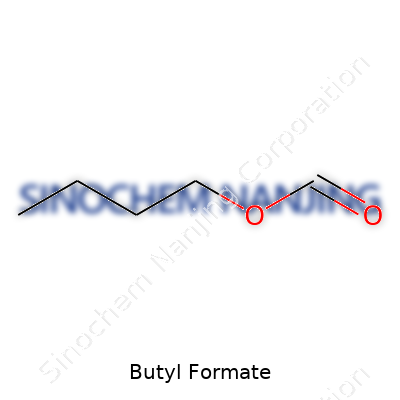
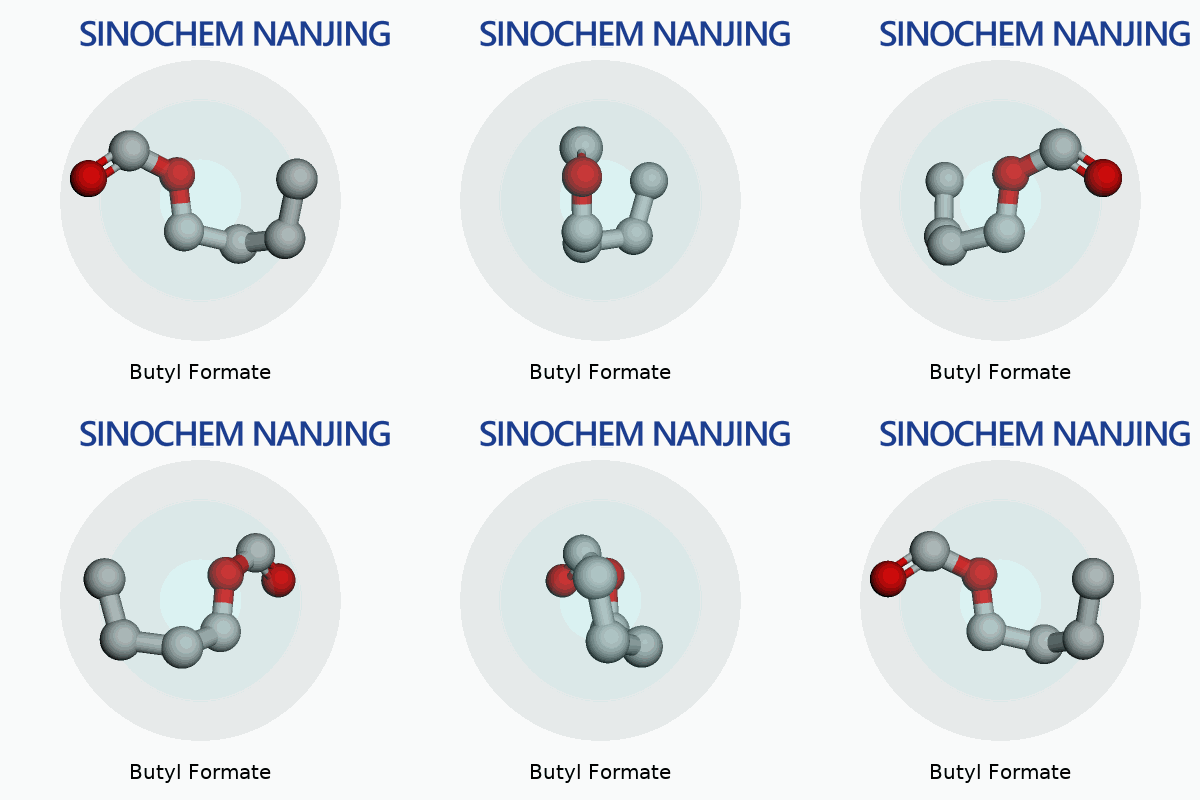
| Names | |
| Preferred IUPAC name | Butyl methanoate |
| Other names |
Formic acid butyl ester n-Butyl formate Butyl methanoate |
| Pronunciation | /ˈbjuːtɪl ˈfɔː.meɪt/ |
| Identifiers | |
| CAS Number | |
| 3D model (JSmol) | `JSmol("data", "C(CC)OC=O")` |
| Beilstein Reference | 2082469 |
| ChEBI | CHEBI:44315 |
| ChEMBL | CHEMBL15868 |
| ChemSpider | 5953 |
| DrugBank | DB14006 |
| ECHA InfoCard | 03b475b7-5edf-4f48-bdd1-7a642b777bda |
| EC Number | 203-740-4 |
| Gmelin Reference | Gmelin 1460 |
| KEGG | C05938 |
| MeSH | D017355 |
| PubChem CID | 8019 |
| RTECS number | UC6460000 |
| UNII | 8YB77QY93E |
| UN number | UN 2059 |
| CompTox Dashboard (EPA) | DTXSID8020268 |
| Properties | |
| Chemical formula | C5H10O2 |
| Molar mass | 116.16 g/mol |
| Appearance | Clear, colorless liquid |
| Odor | fruity |
| Density | 0.868 g/cm³ |
| Solubility in water | 6 g/L (20 °C) |
| log P | 1.78 |
| Vapor pressure | 10 mmHg (20°C) |
| Acidity (pKa) | 7.83 |
| Basicity (pKb) | pKb: 15.9 |
| Magnetic susceptibility (χ) | -54.6·10⁻⁶ cm³/mol |
| Refractive index (nD) | 1.378 |
| Viscosity | Viscosity: 0.501 mPa·s (at 25°C) |
| Dipole moment | 1.66 D |
| Thermochemistry | |
| Std molar entropy (S⦵298) | 237.70 J·mol⁻¹·K⁻¹ |
| Std enthalpy of formation (ΔfH⦵298) | -483.6 kJ/mol |
| Std enthalpy of combustion (ΔcH⦵298) | -2291 kJ/mol |
| Hazards | |
| GHS labelling | GHS02, GHS07 |
| Pictograms | GHS02,GHS07 |
| Signal word | Warning |
| Hazard statements | H226, H315, H319, H336 |
| Precautionary statements | P210, P261, P271, P280, P301+P312, P303+P361+P353, P304+P340, P312, P370+P378, P403+P233, P501 |
| NFPA 704 (fire diamond) | 1-3-2 |
| Flash point | 20 °C (68 °F) (closed cup) |
| Autoignition temperature | 190 °C |
| Explosive limits | Butyl Formate explosive limits: 1.4% - 8.3% |
| Lethal dose or concentration | LD50 oral rat 3,650 mg/kg |
| LD50 (median dose) | LD50 (median dose): 3,460 mg/kg (rat, oral) |
| NIOSH | BJ8575000 |
| PEL (Permissible) | PEL = "150 ppm (710 mg/m3) |
| REL (Recommended) | REL (Recommended Exposure Limit) for Butyl Formate is 100 ppm (360 mg/m³) as a TWA. |
| IDLH (Immediate danger) | 1400 ppm |
| Related compounds | |
| Related compounds |
Methyl formate Ethyl formate Propyl formate Isobutyl formate Butyl acetate |



