The Many Sides of Butyl Butyrate
Historical Development and Product Overview
Butyl butyrate, a compound with a fruity aroma, grabbed attention in the late 19th century when chemists began systematically investigating esters. As part of a family known for their role in flavors and fragrances, butyl butyrate emerged from synthesis experiments that started with simple combinations of organic acids and alcohols. Once scientists realized its presence in some fruits and its potential for flavor replication, it didn’t take long for it to find a place in the food and fragrance industry. Over time, production moved from laboratory scales to industrial reactors, aligning with the growth in demand for artificial flavors and solvents. Anyone familiar with early synthetic flavor work can appreciate how compounds like butyl butyrate became part of a larger movement to mimic nature and stretch scarce natural resources.
Physical & Chemical Properties and Technical Specifications
With its clear, colorless liquid form at room temperature and a scent reminiscent of pineapple or apple, butyl butyrate stands out among esters. It has a boiling point of about 167 degrees Celsius, and typically remains stable at ambient conditions. Its solubility in water stays low, so it tends to separate into its own layer. From a chemical handling point of view, the density, volatility, and flammability influence the operational protocols in places like flavor houses and chemical plants. Butyl butyrate’s vapor can catch fire when exposed to an ignition source, so storage always involves tightly sealed containers and minimal static electricity. Handling this ester, you smell that burst of ripe fruit, and it’s easy to forget it’s not something squeezed fresh from an orchard, but crafted through chemistry.
Preparation, Chemical Reactions, and Modifications
Creating butyl butyrate typically calls for an esterification reaction between butyric acid and n-butanol, using an acid catalyst. In my own lab days, sulfuric acid was often the go-to, driving the equilibrium toward ester formation and stripping away water. The process generates a distinct scent that tends to linger. There’s something almost nostalgic about being in a space filled with that sweet smell while watching the phases separate. As with most organic esters, chemical modification means playing with the acid or alcohol backbone, opening up pathways to related molecules, each carrying subtle differences in aroma or reactivity. While side-chain changes shift the boiling point or miscibility, the central appeal of butyl butyrate—its fruity signature—remains hard to duplicate.
Synonyms, Product Names, and Chemical Identity
In the world of industrial chemistry, butyl butyrate goes by a slew of names, from butyl butanoate to n-butyl butyrate. Though the commercial packaging sometimes features legacy names picked up over decades, the CAS number 109-21-7 often leads procurement lists. In some catalogs, you see references to butanoic acid butyl ester, showing how names follow conventions set by international bodies. Anyone who’s navigated a chemical storeroom knows synonyms help cross-reference what’s already on the shelf, especially when juggling materials from different suppliers.
Safety and Operational Standards
Lab veterans know you don’t take shortcuts with volatile organics like butyl butyrate. The keen, fruity smell fooling newcomers fades when fumes start to irritate airways. Gloves, goggles, and solid ventilation always join the toolkit. Even in pilot plants, fire safety measures, grounding, and robust evacuation plans rule the floor. Inhaling concentrated vapors gets uncomfortable, and skin contact can lead to mild irritation. Material Safety Data Sheets highlight routes of exposure and incident actions, making safety training something you go over again and again. Fire codes and chemical storage guidelines exist for good reason. I remember a close call with a heating mantle and an unattended flask—lesson learned about temperature control and the value of clear labeling.
Application Area
At first blush, butyl butyrate conjures thoughts of candy factories and soft drink labs, given its use as a flavoring and fragrance additive. Food scientists rely on its ability to evoke the sensation of real fruit, bridging gaps in crops lost to disease or climate. Beyond taste, this ester acts as a solvent, thinning paints, coatings, and inks thanks to a balance of evaporation rate and solvency power. Industrial users chase performance attributes in lacquers or cleaning products. What surprises many is its application in laboratory settings for chromatography and research processes. People often get caught up thinking only about the end product, forgetting about the dirt-under-the-nails work of people who make those flavor drops or ink cartridges do their job.
Research, Development, and Toxicity
Research into butyl butyrate’s effects on health and the environment doesn’t stop with its approval as a flavoring. Scientists continue studying how chronic exposure impacts workers and whether there’s cumulative toxicity across a working life. Acute toxicity stays low for humans, yet concerns arise about bioaccumulation in aquatic systems or VOC emissions. Regulatory bodies require rigorous assessment before granting food additive status, and toxicology labs run repeated animal studies to root out potential long-term hazards. Having worked alongside toxicologists, I’ve seen how tough it gets to keep processes clean from start to finish, especially when thresholds tighten and detection methods improve.
Future Prospects and Innovation
Market pressures keep pushing researchers to find greener ways to make esters like butyl butyrate. Academic groups explore biocatalysis, swapping out strong acids for enzymes and reducing energy needs. Scaling up these lab successes into industry takes grit, since yields, costs, and robustness need to add up before the big players make the switch. Sustainability carries real business impact. Packaging might tout “bio-based esters” before long, if consumer demand pushes hard enough. Down the road, stricter VOC limits in paints or flavors may drive adoption of alternatives or recycling schemes. Investors, researchers, and plant operators all eye margins, safety, and green credentials—each group pulling the market in different directions as laws, demand, and technology keep moving the goal posts.
What is Butyl Butyrate used for?
The Unmistakable Scent of Simplicity
Biting into a ripe apricot or enjoying the warmly sweet smell of pineapple, most people don’t realize a small molecule like butyl butyrate helps shape these flavors. Growing up around fruit stands, I used to notice how some peaches or strawberries smelled stronger than anything from the supermarket. Later, I learned that a few key chemicals, including butyl butyrate, give fruits their powerful aromas. Chemists use this compound to recreate and boost those same scents in food and fragrance products.
How Food and Beverages Get Their Fruity Kick
The flavor industry relies on butyl butyrate to deliver bold, long-lasting fruit notes. In drinks, candies, and ready-to-eat snacks, butyl butyrate turns mild, bland bases into something mouthwatering. For example, many sodas and hard candies use it to punch up the taste of artificial pineapple or apple. There’s a reason it’s listed among the principal flavor compounds in fruit-flavored products. Sometimes people talk about additives with suspicion, but food science has a rich history of using safe, well-understood molecules like this to make eating a more joyful experience. With decades of research supporting its safety, butyl butyrate helps both small and large manufacturers keep flavors dependable in every batch.
Fragrance and the Power of Memory
An aftershave or air freshener with a bright, tropical top note probably owes some of its effect to butyl butyrate. Unlike heavier components, this one evaporates quickly, reaching the nose in seconds. In perfume making, experts often add this ester to create sunny, fruity blends that evoke childhood picnics or summer holidays. Early in my own explorations into DIY fragrance, I found a drop of this liquid could tip a home formulation from dull to delicious. For candle makers and soap producers, butyl butyrate offers a reliable, easy way to capture happy, familiar smells people want in their homes.
Other Uses: Solvents, Fuel, and More
The uses of butyl butyrate don’t stop at flavors and scents. In labs, technicians use it as a solvent for resins, oils, and waxes. Paint makers turn to it to help lacquers spread more evenly. In some cases, industry blends it into gasoline or other fuels to tweak combustion properties. These practical applications show the value of a simple, accessible compound in everyday products, beyond what’s visible on labels. Safety standards mean it’s managed in controlled settings, keeping risks low for workers and end users alike.
Keeping It Safe for People and Planet
Over years of working with chemicals in different settings, I’ve seen the care that goes into handling, storing, and disposing of compounds like butyl butyrate. Regulators in the United States and Europe have set limits to minimize health risks. Companies train staff in emergency response and personal protection, because even low-toxicity substances need respect in large quantities. At home, products that use it as a fragrance or flavor additive fall far below any dangerous levels, and consumer watchdogs keep a close eye on new studies. If society wants the benefits of modern flavors and fragrances, it makes sense to keep science and safety at the front of the conversation.
Is Butyl Butyrate safe for use in food and cosmetics?
Straight Talk on Butyl Butyrate
Walking down any supermarket aisle, most folks aren’t combing ingredient lists for “butyl butyrate.” This clear liquid carries a fruity scent, popping up in everything from gummy candies to shampoo. The safety of what goes into both our mouths and skin should never take a back seat to a catchy flavor or fresh fragrance. With that in mind, it pays to look at where butyl butyrate comes from, how it behaves, and what scientists say about its effects.
Where It Shows Up
Manufacturers use butyl butyrate to mimic pineapple, pear, and apricot flavor notes. You’ll catch a whiff of it in some perfumes, room sprays, and food syrups. It might sound synthetic, but this compound sneaks into nature too—apples, pineapples, and strawberries make their own. Companies lean on it for a real fruit vibe without squeezing a single actual fruit.
Safety Backed by Science
Some folks see chemicals with names like “butyl butyrate” and instantly worry. That reaction makes sense since ingredient lists rarely come with plain-English explanations. Research and food safety reviews show that butyl butyrate gets broken down in the body just like other fats and oils. The Joint FAO/WHO Expert Committee on Food Additives (JECFA) has looked at its safety and set daily intake guidelines. They report that levels used in foods right now stay far below anything risky. The Flavor and Extract Manufacturers Association in the United States puts butyl butyrate on their “Generally Recognized as Safe” (GRAS) list.
Cosmetic makers are no strangers to safety hurdles. Ingredients get run through tests for skin irritation and allergic reactions. Butyl butyrate in creams or perfumes lands at low amounts—often less than one percent of the formula. Studies on rabbits and mice, along with patch tests on people, show a low likelihood of irritation when diluted properly. The European Food Safety Authority, known for strict reviews, finds no solid evidence that butyl butyrate in food or cosmetics causes harm.
Questions Still Worth Asking
You can find plenty of parents and health-conscious shoppers who choose “natural” over anything that sounds lab-made. Even if scientists give the green light at current levels, people want to know who exactly checks these safety claims. Oversight groups like the FDA and EFSA set rules, but enforcement sometimes gets patchy, especially in countries with weaker regulation. Additives that seem harmless alone could interact with other chemicals, so ongoing research needs attention. Asthma patients, folks with allergies, and kids might react differently—and no single report should cover every health scenario.
Where Do We Go From Here?
One clear path toward trust involves transparency in ingredient labeling. Companies could do a better job letting consumers know why butyl butyrate gets added and where it comes from. Clear language and honest answers about sourcing (plant-derived or petroleum-based) add peace of mind, especially for those trying to avoid synthetic ingredients.
Regulators and researchers need to keep updating safety reviews as new studies come out. The science on food and fragrance chemicals keeps evolving. More long-term studies would reveal whether daily, low-level exposure leads to health changes down the road. Until then, shoppers can stay informed, read labels, and reach out to brands for sourcing details.
Most evidence points to butyl butyrate staying inside safe limits in foods and cosmetics—but the conversation about ingredient safety never stands still. It deserves regular, science-backed updates so everyone can make the choices that fit their own comfort zones.
What are the physical and chemical properties of Butyl Butyrate?
What’s Special About Butyl Butyrate?
Butyl butyrate smells like pineapple. For anybody who’s handled this compound, the scent comes through sharply, making it easy to pick out in a lab—or, more likely, in a warehouse storing food flavors and fragrances. Not every chemical evoking a tropical note ends up so widely used. There’s something fitting about the way butyl butyrate crosses paths with both chemistry nerds and food scientists.
How It Looks and Acts
Butyl butyrate is a clear, colorless liquid. If you see anything brown or cloudy, it’s been contaminated. It flows easily, not viscous like syrup or heavy oils. At room temperature, it feels and pours a bit like many common solvents. Its boiling point lands around 167°C (332°F), which means it doesn’t pop off easily in warm conditions, but regular kitchen heat won’t boil it either. Its density is a bit less than water, around 0.87 g/cm³, so it floats if poured carefully on top of water. That lightness matters in processing and separation—especially if accidental spills happen.
Butyl butyrate won’t dissolve in water much. Its solubility runs less than 1g/100ml. Water and this compound mostly ignore each other. Instead, it mixes freely with alcohols, ethers, and other organic solvents. You’ll find it used as a flavor solvent exactly because it sits so comfortably with these liquids while steering clear of water. This limited water solubility also means it won’t easily wash away during cleaning or processing, so people working with the stuff pay close attention to effective solvents when cleaning up spills or rinsing out containers.
Chemical Behavior
This chemical is an ester, made from the reaction of butyric acid and butanol. Its structure gives it that signature fruitiness and helps explain its chemical reactivity. Esters can hydrolyze—basically, break apart in water and acid or base—giving back the starting acid and alcohol. In practice, stored in dry, cool places, butyl butyrate stays stable for a pretty long time. Exposure to strong acids or bases, or extended sitting in humid conditions, leads to breakdown, loss of flavor, and sometimes a sour smell from the released butyric acid.
It can catch fire. Its flash point lands near 44°C (111°F), so while it isn’t highly flammable like ether, hot surfaces or sparks near open containers still spell trouble. People storing or transporting butyl butyrate follow the same rules as they would for other volatile fragrances or flavor agents: keep it capped, cool, and away from ignition sources.
What Matters for Everyday Use
Butyl butyrate’s low toxicity sets it apart from a lot of industrial chemicals. The FDA considers it generally recognized as safe (GRAS) for food uses within certain limits, which is handy for flavor makers. Used correctly, it delivers pineapple and apricot notes—no need for bulk fruit imports. Manufacturers and labs pay attention to ventilation and keep eye protection ready, since like many organic solvents, it can irritate eyes and mucous membranes.
People in processing or flavor industries track purity closely. Even tiny impurities change the taste or safety profile. Reliable suppliers and quality control checks show up for every lot shipped. Waste disposal stays simple enough—a licensed handler collects old product, and the main concern is avoiding leaks or dumping to waterways because of that low water solubility.
Room to Improve
For all its food-friendly traits, long-term contact with the chemical should be minimized. Gloves and closed containers are basic standards. Spill response could use more attention, especially in busy flavor plants or fragrance bottling lines. Some labs and manufacturers call for ashless, non-reactive cleaning agents to deal with any residue, rather than just rinsing with a splash of alcohol or water. People on the packaging side look out for chemical resistance and permeability—liners matter, and the right plastics cut down on evaporation.
How should Butyl Butyrate be stored and handled?
Why Good Storage Habits Matter with Butyl Butyrate
Butyl Butyrate shows up in flavorings, fragrances, and sometimes as a solvent. It smells like ripe fruit, which might trick someone into thinking it poses little risk. Years ago, I watched a fellow worker ignore warnings about breathing its fumes. He thought the “nice” smell meant the chemical did not do much to harm people. A month later, he was dealing with headaches and complaints about his skin; it turned out he just wasn’t handling the vapors seriously. That stuck with me. Safe storage and handling are simple steps, but skipping them gets folks into avoidable trouble—both health-wise and financially.
Understanding the Real Hazards
Butyl Butyrate evaporates quickly and gives off flammable vapors. A single spark, even static electricity, can turn a careless moment into a warehouse fire. Even without open flames, breathing in strong concentrations day after day can lead to coughing, dizziness, and worse problems over time. If you spill it on your skin, expect some irritation that only gets worse if not washed off quickly. Anyone who doubts this only needs to check health data from the National Institute for Occupational Safety and Health: enough accidents have happened to prove carelessness makes life harder.
Choosing the Right Containers and Places
I prefer using metal cans with tight lids for this liquid. My shops keep these containers in single rows, spaced out inside flammable-liquid storage cabinets. No one stacks boxes on top or tries to squeeze in extra. Warm areas speed up vapor build-up, so every container stays in cooler parts of the building. Never store them near acids, oxidizers, or food-prep spaces. You just don’t want those chemicals mixing—cross-contamination causes fires or toxic reactions.
Everyday Handling: Gloves, Masks, and Common Sense
Chemical gloves and splash goggles lie at the door to every storage area. Workers get easy reminders: if your nose picks up more than a faint smell, mask up. Ordinary cloth doesn’t cut it. Only approved organic-vapor cartridges keep out the fumes. It only takes a few seconds to slip on the right gear, but it saves so much trouble later. The oiliness of Butyl Butyrate means it sticks to the skin longer; plain soap and cold water clear it out best. Too many skip this step, giving rashes time to develop.
Leaning on Routine, Not Luck
A lot of incidents happen on “just another Tuesday.” People take shortcuts with storage or handling because nothing went wrong last week. The best way forward involves routine checks—inspect cans for dents, leaks, and rust every month. Cleaning up any spill quickly, then tossing the rags in tightly closed metal bins, cuts down risks. Proper signage deters newcomers from getting curious. I always encourage new hires to speak up if they see something odd; most close calls get caught by someone with fresh eyes. A strong safety culture protects everyone and proves that Butyl Butyrate belongs only in trained hands.
What are the potential health and safety hazards of Butyl Butyrate?
What Butyl Butyrate Brings to the Table
Butyl butyrate pops up in a bunch of places, mainly as a flavor or fragrance ingredient. It carries a fruity scent, so food, perfume, cosmetics, and even cleaning products often feature this chemical to make things smell good or taste sweet. In small doses, like in foods, it’s generally recognized as safe according to the U.S. Food and Drug Administration. Still, routine exposure in manufacturing or poor ventilation paints a different picture. Not everyone who interacts with butyl butyrate runs into harm, but repeated or careless handling pushes the risk higher.
Health Concerns During Exposure
Strong fumes don’t just irritate the nose—they make eyes water and coughs come out hard and fast. Short bursts of exposure often leave behind a mild sting or a headache, but spending hours around the vapors can lead to dizziness, confusion, or even feeling drunk. Over the years in a lab, I saw workers forget gloves or masks "just for a second," thinking nothing of it. One time, a spill left the air stifling; even a brief inhalation put people on edge and pushed management to open all the windows. Skin contact can cause a mild rash or redness, especially for anyone who already battles eczema. Long-term effects in low doses haven’t been fully mapped for the average consumer, but clear links exist between larger repeated exposures and breathing trouble, nausea, or dermatitis.
Safety Hazards Beyond Human Health
Storing and transporting butyl butyrate isn’t a cakewalk. The liquid evaporates in the open and releases fumes that mix quickly with air. Sparks or static around the storage area can trigger a fire. Standard warehouse routines that ignore proper storage away from heat sources or open flames invite a real disaster. Years in a college chemistry lab reinforced this lesson—one forgotten bottle, left too close to a Bunsen burner, nearly caused a bad accident before someone caught the mistake. Small measures matter.
Environmental Risks
This compound leaks into soil or drains during spills. Animals, especially smaller ones like fish or frogs, suffer most from runoff that’s not cleaned up. Direct release during disposal spells trouble for groundwater. Companies that don’t train crews to handle chemical spills risk polluting more than just the floor. Regulations in the United States say spills need prompt reporting and response, but gaps pop up. Workers on the ground who know where and how to store hazardous waste make a big difference in stopping ecological damage before it grows out of hand.
Practical Steps Towards Safer Use
No replacement for education here. Workers who handle the stuff every day need clear labeling, fresh gloves, and real respirators—not the thin paper masks. Proper air circulation and prompt cleanup routines make the biggest difference. In my own experience, simple checklists kept near the storage containers cut down on mistakes and gave peace of mind. Small-scale users—home tinkerers or small fragrance makers—should store butyl butyrate in sealed containers away from heat. Genuine commitment by management to safety drills and regular inspection beats complacency every time. Reporting symptoms early—before they turn into something serious—gives health professionals a fighting chance. These habits bring the industry closer to a culture of honesty and protection, not just rules on paper.
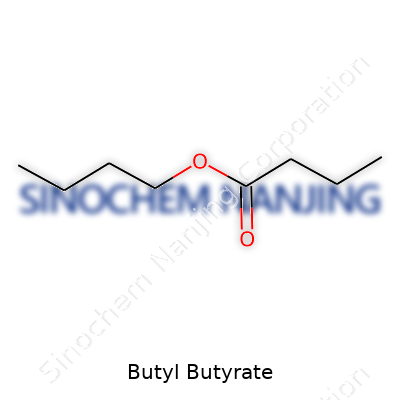
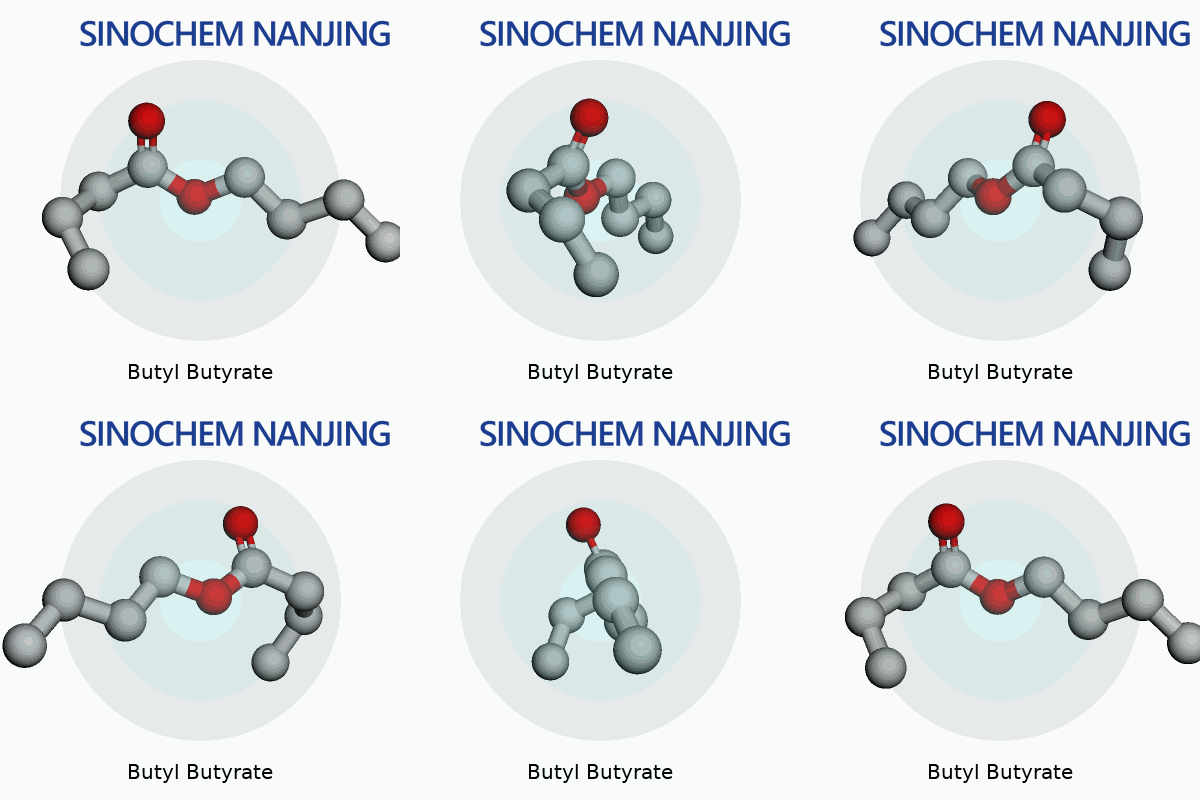
| Names | |
| Preferred IUPAC name | Butyl butanoate |
| Other names |
Butyl butanoate Butyric acid butyl ester Butanoic acid butyl ester |
| Pronunciation | /ˈbjuːtɪl ˈbjuːtɪreɪt/ |
| Identifiers | |
| CAS Number | 109-21-7 |
| Beilstein Reference | 635970 |
| ChEBI | CHEBI:31328 |
| ChEMBL | CHEMBL31870 |
| ChemSpider | 11819 |
| DrugBank | DB14006 |
| ECHA InfoCard | 100.011.472 |
| EC Number | 203-745-1 |
| Gmelin Reference | Gmelin Reference: 102520 |
| KEGG | C06222 |
| MeSH | D015232 |
| PubChem CID | 7979 |
| RTECS number | EO1925000 |
| UNII | O4N7I8RU7N |
| UN number | UN 2349 |
| Properties | |
| Chemical formula | C8H16O2 |
| Molar mass | 128.21 g/mol |
| Appearance | Colorless liquid |
| Odor | fruity |
| Density | 0.872 g/cm³ |
| Solubility in water | 0.6 g/L |
| log P | 0.98 |
| Vapor pressure | 0.3 mmHg (20°C) |
| Acidity (pKa) | Estimated pKa ≈ 25 |
| Basicity (pKb) | 3.99 |
| Magnetic susceptibility (χ) | -7.21×10⁻⁶ cm³/mol |
| Refractive index (nD) | 1.406 |
| Viscosity | 2.80 mPa·s (20 °C) |
| Dipole moment | 1.82 D |
| Thermochemistry | |
| Std molar entropy (S⦵298) | 287.7 J·mol⁻¹·K⁻¹ |
| Std enthalpy of formation (ΔfH⦵298) | -516.2 kJ/mol |
| Std enthalpy of combustion (ΔcH⦵298) | -3310.4 kJ/mol |
| Hazards | |
| GHS labelling | GHS02, GHS07 |
| Pictograms | GHS02,GHS07 |
| Signal word | Warning |
| Hazard statements | H226, H315, H319, H335 |
| Precautionary statements | P210, P233, P240, P241, P242, P243, P261, P264, P271, P301+P312, P303+P361+P353, P304+P340, P305+P351+P338, P312, P337+P313, P370+P378, P403+P235, P405, P501 |
| NFPA 704 (fire diamond) | 1-2-0 |
| Flash point | 68°C |
| Autoignition temperature | 370 °C |
| Explosive limits | Explosive limits: 1.4% to 7.6% |
| Lethal dose or concentration | LD50 oral rat 13,360 mg/kg |
| LD50 (median dose) | LD50 (median dose): Oral-rat LD50: 7900 mg/kg |
| NIOSH | BUA |
| PEL (Permissible) | PEL (Permissible Exposure Limit) of Butyl Butyrate: "150 ppm (710 mg/m3) |
| REL (Recommended) | 300 mg/L |
| IDLH (Immediate danger) | 1700 ppm |
| Related compounds | |
| Related compounds |
Propyl butyrate Ethyl butyrate Methyl butyrate Amyl butyrate |



