Sec-Butyl Acetate: Substance at the Crossroads of Chemistry and Industry
Historical Development
Sec-butyl acetate’s journey didn’t begin with a bang; this compound quietly emerged as chemists started tinkering with esters during the early advances in synthetic organic chemistry. By the mid-20th century, as the coatings industry expanded and solvents became crucial, sec-butyl acetate earned a spot as a key player. The path from obscure lab curiosity to essential industrial chemical reflects how small tweaks in molecular structure—shifting around a mere couple of carbons—result in entirely new uses and commercial value. It stands alongside other acetate esters as a testament to the iterative, hands-on progress that shapes chemical manufacturing, often blending curiosity with practical need.
Product Overview
Sec-butyl acetate (also known by its synonyms like 1-methylpropyl acetate, acetic acid sec-butyl ester, or sec-butyl ethanoate) operates as both a solvent in industrial coatings and a flavoring agent. Its less famous status compared to isobutyl or n-butyl cousins doesn’t mean it lacks utility; sec-butyl acetate fills specific roles where volatility, solvency, and a characteristic fruity aroma are all desired. My firsthand experience sampling solvents in a coatings lab showed just how quickly sec-butyl acetate can dissolve resins that frustrate other solvents. In practice, this speed means less downtime and faster production rates. The chemical never gained the shelf recognition of some others, but in the right hands, it works as an unsung workhorse.
Physical and Chemical Properties
Sec-butyl acetate boils right around 112°C and shows moderate solubility in water. Its flash point hovers near 22°C, which signals a clear need for care with open flames or high-heat equipment. This solvent evaporates more slowly than ethyl acetate but leaves faster than heavier butyl esters. The sweet, banana-like scent isn’t just a laboratory curiosity—flavor chemists put this to use in artificial flavors and aromas. Its moderate polarity makes it tough enough for stubborn coatings but gentle enough to avoid stripping paint along with dirt. I’ve watched seasoned chemists judge evaporation speed and odor almost as signposts, valuable metrics for painting contractors not interested in waiting around or breathing heavy vapors all day.
Technical Specifications and Labeling
Labels on cans of sec-butyl acetate aren’t cluttered with vague warnings. Instead, they highlight flammability, storage temperature limits, and the need for good ventilation. Regulatory status usually draws from GHS and REACH guidelines, especially in the European context. Manufacturers provide purity specs above 99 percent for industrial use, underscoring the importance of preventing trace contaminants—those can ruin a lacquer or foul up a batch of pharmaceutical intermediates. In real-world handling, nothing beats knowing molecular weight, density (just above 0.87 g/cm³), and vapor pressure—painfully practical numbers that separate a safe, successful workday from a hazardous one.
Preparation Method
Laboratories typically prepare sec-butyl acetate through Fischer esterification. Mixing sec-butanol with acetic acid and letting sulfuric acid catalyze the reaction does the trick. Engineers scale up this process by tweaking reaction times, adjusting catalyst amounts, or recycling byproducts. While the basic chemistry looks straightforward, production becomes a test of operational discipline—distilling to separate the ester from the acid, scrubbing out unwanted water, keeping costs reasonable, and never letting safety slip. Many stories from plant operators reflect a constant balance between maximizing throughput and keeping the exothermic reaction under strict control.
Chemical Reactions and Modifications
Sec-butyl acetate brings a measure of stability, but acids and bases can break it down by hydrolysis. It stands up well to heat unless you push it far past its boiling point. Chemists sometimes reduce it or oxidize related esters, but the compound itself doesn’t lend itself to countless modifications. The value lies in its relatively unreactive backbone, which gives it the reliability needed for stable solvent blends. Most process tweaks focus on the preparation and purification rather than seeking subtle alterations in the base structure, because the utility stems from the specific balance of volatility and solvency it provides.
Synonyms and Product Names
Sec-butyl acetate masquerades under several names, confusing those who don’t bother memorizing synonyms. Alongside the obvious “1-methylpropyl acetate,” product listings sometimes cite “sec-butyl ethanoate” or simply “SBA.” Customs logs and shipping manifests often use the CAS Registry Number 105-46-4 to sidestep these confusions. It’s worth checking every alias if you source solvents globally because a missed synonym could mean a shipment lost in translation.
Safety and Operational Standards
Every solvent job I’ve done involving sec-butyl acetate started with goggles, gloves, and a check for proper ventilation. The tendency for rapid evaporation means inhalation risks, and that easily overlooked flash point makes any spark or static discharge a potential disaster. Major authorities like OSHA and NIOSH spell out safe exposure levels; ignoring these leads to headaches and dizziness—a warning your body gives long before the paperwork piles up. Spill protocols continue to evolve, not from bureaucratic caution but from real incidents where a dripped flammable liquid ended a productive shift and launched a full investigation. Knowing peer routines and respecting rescue plans isn’t an afterthought but a required part of working with any volatile ester.
Application Areas
Sec-butyl acetate does heavy lifting in the paint and coatings world, showing up in automotive finishes and factory floor lacquers. I recall industrial floors shimmering a bit brighter, thanks to its ability to dissolve polymers that cheaper solvents couldn’t budge. Its distinctive fruity note means food technologists sometimes add it to artificial flavors—though only in minuscule, regulated amounts. Botanists and lab techs turn to this solvent for extractions or analytical work; the compound’s clean volatility cuts down on residue left behind in sensitive gear. No single niche owns this chemical, but technicians across industries quietly respect its footprint.
Research and Development
Recent R&D on sec-butyl acetate orbits around greener preparation routes, recovery methods, and the hunt for less hazardous analogs. Chemists test biotechnological syntheses, sometimes feeding engineered microbes with sugars to coax out the right alcohol and acid precursors. Others focus on smart recycling—capturing used solvent from the air or from washwater, saving cash and trimming environmental impact. Most lab managers I’ve met measure solvent progress by how little escapes into the workspace or ends up in disposal barrels, not just by the novelty of the chemistry. Each incremental gain in recovery or energy use counts in an industry under pressure to meet stricter environmental standards.
Toxicity Research
Toxicologists note that sec-butyl acetate enters the body through inhalation, ingestion, or skin contact. Animal studies peg its acute toxicity below many industrial solvents, but chronic exposure discussions always return to headaches and mild narcosis. Most industrial settings set occupational exposure limits to prevent build-up in closed work spaces. Over time, repeated exposure still poses organ stress; researchers continue to track metabolites and long-term effects. For those on the frontlines—factory workers, lab assistants—the research matters not as an academic exercise but as a blueprint for keeping workplaces safe and healthy. Missteps come at a cost measured in real symptoms and lost labor hours.
Future Prospects
Markets for sec-butyl acetate look towards both sustainability and specialization. As automakers swap oil-based paints for waterborne systems, the demand for solvents with precise volatility and low odor continues. Regulatory momentum pushes for less toxic alternatives, driving chemists to engineer analogs with similar properties but harsher safety profiles. The rise of bio-based solvents shows real promise, and some startups pitch biotechnologically produced sec-butyl acetate as both cleaner and cost-competitive. From conversations at conferences and vendor meetings, there’s a clear hunger for substances balancing technical performance with environmental footprint—categories where sec-butyl acetate, or its successors, will need to prove their worth on both the lab bench and the factory floor.
What is sec-butyl acetate used for?
Bringing Color to Life: Paints and Coatings
Step into a hardware store, and the rows of paint cans carry more than just color. Sec-butyl acetate, a clear liquid with a pleasant smell, makes its way into many of those cans. Paint manufacturers rely on it to help paint glide onto walls, metal, and wood. It thins paint just the right amount and gives the painter enough time to brush or roll before the surface dries. That means fresher-looking walls, smoother finishes, and less frustration from sticky, dry paint during the job.
Driving Industrial Cleanliness
Factories and workshops deal with greasy equipment and oily residues every day. Sec-butyl acetate finds a place in cleaning products strong enough to cut through those residues without being too harsh or corrosive. People working with industrial machinery often talk about how solvents used for degreasing can be tough to handle, but sec-butyl acetate has a milder odor than some other alternatives, which makes a difference during long shifts.
The Backbone of Inks and Adhesives
Packaged goods, magazines, and even the labels on water bottles—producing these relies on fast-drying, high-quality inks and strong adhesives. Sec-butyl acetate helps print shops produce vibrant images and text by making ink dry at the right speed. Too fast, and you get streaks or clogs in the machines. Too slow, and products end up smeared. The same goes for adhesives: box manufacturers use this solvent to give adhesives their spread and stick.
Everyday Fragrances and Flavors
Most people don’t think about what gives nail polish its signature smell or why some perfumes linger just long enough without being overpowering. Sec-butyl acetate shows up here too. Its fruity scent is pleasant, and it helps balance stronger aromas in cosmetics and polishes. I've worked in small workshops where different solvents get compared side by side, and it's clear that products with sec-butyl acetate are more tolerable—they don’t drive you out of the room like harsh chemicals do.
Safety on the Shop Floor
Like many solvents, sec-butyl acetate needs careful handling. Overexposure can cause headaches or dizziness, so ventilation and protective gear remain vital. Factories now use better ventilation systems and teach workers about safe limits. Regulatory agencies set tight rules because of its flammability and health impact if used carelessly. I remember a worker telling me how simple practices—like using gloves and keeping solvent containers closed—dramatically cut down complaints of headaches or skin irritation.
Looking at Sustainable Options
As people push for greener manufacturing, sec-butyl acetate faces new competition from bio-based solvents. Research in recycling and improving production methods could make sec-butyl acetate safer and less resource-intensive. The balance between performance, safety, and environmental footprint always comes up in meetings about paints and coatings. Manufacturers experiment with mixing traditional and plant-based ingredients, but it’s not always a smooth road. Every step toward safer processing or renewable sourcing carries cost, but demand keeps rising for both worker safety and products that tread lightly on the planet.
Is sec-butyl acetate hazardous to health?
Understanding the Chemical
Sec-butyl acetate usually pops up in manufacturing plants, laboratories, and sometimes even in household products. This clear liquid carries a fruity smell, making it seem less threatening than it really is. Workers use it as a solvent in paints, coatings, and adhesives. The fact that it’s so common means more people come into contact with it regularly, not just folks in hazmat suits.
Health Risks: What Science Tells Us
Breathe in enough sec-butyl acetate, and the body speaks up. According to studies and safety data collected by agencies like the U.S. National Institute for Occupational Safety and Health (NIOSH), this chemical irritates eyes, nose, and throat. High doses make people dizzy, disoriented, or even feel “drunk” for a while. Folks dealing with this substance day in and day out often complain of headaches and nausea. In some extreme situations, passing out from too much exposure isn’t unheard of.
With skin, things get tricky. Direct contact causes irritation or a rash after longer exposure. If spilled, sec-butyl acetate passes through skin and can affect parts of the nervous system. It is not something anyone wants soaking into their hands.
People working in closed rooms or poorly ventilated areas face bigger risks. Inhaling or absorbing large amounts leads to more serious symptoms—think confusion, lack of coordination, and, at its worst, effects on the heart. It doesn’t cause cancer based on data so far, but the acute effects are nothing to ignore.
The Wider Impact: Not Just the Factory Floor
This chemical doesn’t only affect plant workers. Sec-butyl acetate sometimes drifts into surrounding neighborhoods when mishandled. Vapor leaks or poor storage mean communities nearby can pick up the scent, and sometimes the symptoms. Children, the elderly, and people with breathing trouble feel the impact quickest and hardest.
In everyday life, few people check what goes into their cleaning agents or polishes. Products bought at the hardware store sometimes contain this solvent, and users get exposed by accident, usually without proper protection. People who work on cars, boats, or home repairs also run into this stuff. So the risk isn’t locked away in a lab.
Protecting People: Steps That Actually Help
Greater safety relies on a mix of smart choices and good habits. Jobs involving sec-butyl acetate should insist on proper ventilation. Open windows and strong fans make a big difference. Gloves and goggles provide reliable shields for folks handling liquids. If spills happen, quick cleanup cuts down the chance of bigger trouble. Regular breaks and medical check-ins spot symptoms before problems get worse.
Labeling and communication matter outside workplaces too. Manufacturers can do more by warning buyers openly and clearly on product labels. Basic instructions for safe use—wear gloves, avoid inhaling fumes—help prevent accidents in garages and kitchens.
Regulatory agencies like OSHA set limits for exposure based on solid research. Listen to those limits, and it reduces hospital visits and long-term health costs. The science keeps getting better, which means guidance and standards should keep up as well.
Paying Attention Makes a Difference
Sec-butyl acetate doesn’t get much attention in the news, but many people use products containing it every day. The fact that health risks crop up in both jobsites and homes means awareness is everyone’s business. Simple steps like using gloves, keeping the air moving, and reading warning labels help keep the danger in check. Lives improve when simple precautions become part of daily routine, both on and off the job.
What are the storage and handling requirements for sec-butyl acetate?
The Real Risks Behind This Solvent
Sec-butyl acetate shows up in many workshops, labs, and industrial settings. Paints, coatings, inks—this solvent helps things flow, mix, and cure as expected. Yet, for all its usefulness, sec-butyl acetate carries its own hazards. It evaporates quickly, generates flammable vapors, and, if ignored, turns a simple job into a crisis.
The Fire Factor
Nobody forgets the smell of spilled solvent, and few things spread faster than a flash fire. Sec-butyl acetate ignites at relatively low temperatures, about 28°C (82°F). In warm storage spaces or bustling mixing halls, it doesn’t take much—a stray spark from a switch, friction, or nearby equipment. The fire in a paint shop downtown last year started with just a few cans left beside a heater. A little negligence moved fast.
Proper Containers: Keeping the Lid on Trouble
Storing sec-butyl acetate in metal drums or approved high-density polyethylene containers cuts down accidents. These drums must seal tightly to keep vapors inside. Leaving cans open or using old, rusty containers might seem convenient, but corrosion quickly becomes a leak, and a leak means trouble.
The U.S. Department of Labor’s OSHA guidelines advise keeping all flammable liquids in self-closing containers, kept away from sources of ignition. Sturdy shelving keeps containers from tipping. Labels must stay readable, even through spills or splashes. Clear storage keeps everybody in the loop, halting mistakes before they happen.
Climate Control: Why the Thermostat Counts
Sec-butyl acetate doesn’t like heat. Warm buildings send vapors into the air, raising the risk of both health problems and explosions. Locked flammable cabinets, properly vented, keep temperatures in check and block sunlight. Ventilation fans help remove fumes, especially in small or crowded rooms.
On some jobs, workers feel the headaches and dizziness after a few hours with poor airflow. Chronic exposure risks kidney and liver problems, but with good air movement and closed containers, problems shrink fast.
Mixing and Dispensing: No Shortcuts Allowed
Transferring sec-butyl acetate between containers needs more than a steady hand. Static electricity builds up on drums, especially with plastic funnels, and a single zap can set off the whole stack. Grounding and bonding wires handle these silent sparks. Many facilities train staff to discharge static before pouring, and a checklist by the door lowers the odds of a skipped step.
Splashes also pose risks, so workers take gloves and goggles seriously. Simple steps—changing gloves, wiping up puddles, reporting damaged barrels—stop bigger problems down the line.
Emergency Readiness: Planning for the Worst
No rulebook covers every situation. Still, quick access to fire extinguishers, eye wash stations, and spill kits keeps panic at bay. If sec-butyl acetate escapes, sand or absorbent pads work better than water. Fire extinguishers rated for chemical flames stand by every storage area.
Smarter Choices Protect People
Many accidents shrink or disappear with training. Regular safety drills and posted instructions turn storage into habit, not just afterthought. Companies finding ways to substitute less flammable chemicals, improve labeling, or add local ventilation show respect for their employees and their bottom line. Safe storage isn’t only following rules; it’s an everyday safeguard for a complicated chemical.
What is the boiling point of sec-butyl acetate?
The Boiling Point—Not Just a Number
Sec-butyl acetate boils at 112 °C or 234 °F. That’s not just trivia for a chemistry quiz, it plays a role in how people store, transport, and use this chemical every day. Industries like paints, varnishes, and coatings lean on sec-butyl acetate for its ability to dissolve tough substances without leaving behind residues that ruin a finish. The boiling point sits high enough to avoid quick evaporation but low enough to clear out before sticky messes form.
Temperature Affects Risk—And Opportunity
Every degree counts in a factory. At room temperature sec-butyl acetate sticks around, letting workers blend it into products without rushing. Raise things past 112 °C, and it turns to vapor fast. If factories ignore that line, vapors build up, raising the risk of headaches or even fires. Safety engineers pay close attention to numbers like 112 °C, using local exhaust ventilation and temperature controls to keep air healthy and floors safe from flash fires.
Why the Boiling Point Shapes Regulations
In countries with strict chemical guidelines, regulators set rules using boiling points because fast-evaporating chemicals like sec-butyl acetate demand controls. The Occupational Safety and Health Administration (OSHA) and the European Chemicals Agency recognize sec-butyl acetate’s volatility. In a crowded workspace, that volatility shapes exposure limits and gear requirements. Not every solvent gets this kind of scrutiny, but one that vaporizes just above water’s boiling point demands extra care.
Product Quality Depends on Knowing the Limit
A wrong guess about the boiling point hurts the bottom line. In paint shops, for example, evaporation rates drive drying times. Go too hot, and you lose product to the air, wasting material and cash. Too cold, and the work grinds to a halt. A glossy finish only shows up if the chemist respects the 112 °C boiling point, picking temperatures that line up with the formula. That’s not just science, that’s keeping customers happy and cutting complaints about sticky coatings or strong odors.
Learning From Accidents—Room for Improvement
Stories about chemical spills often trace back to boiling-point mixups. In 2016, a fire at a New Jersey paint factory broke out after sec-butyl acetate vapors built up in a faulty mixing tank. An investigation pointed to poor ventilation and a lack of real-time temperature tracking. The tools exist—thermal sensors, monitoring alarms—but managers juggle budgets and don’t always choose upgrades. Sharing these cautionary tales reminds teams not just to learn the boiling point, but to use that fact in training and planning.
How Workers and Scientists Can Respond
Attention to details like a chemical’s boiling point leads to smarter choices all around. For those on the shop floor, this means following daily temperature logs and storing chemicals in labeled containers. Researchers looking for alternatives pay attention because switching to a solvent with a higher or lower boiling point might mean retooling a production line. The number—112 °C—becomes a touchstone for safer workspaces and better-made products. It matters in ways that go beyond textbooks, right out to the places people work, paint, and build.
Is sec-butyl acetate flammable?
What You Need to Know About Sec-Butyl Acetate and Fire Safety
Sec-butyl acetate isn’t a substance most people come across every day, but it shows up in industrial settings, labs, coating materials, and even in some specialty cleaners. The big question goes beyond chemical jargon: “Is this stuff flammable?” The short answer is yes, sec-butyl acetate catches fire easily, and that makes handling it a serious responsibility. I’ve seen too many accidents happen when folks don't respect what a flammable liquid can do, so let’s get real about why this matters.
What Makes Sec-Butyl Acetate Flammable
With a flash point around 25°C (or 77°F), sec-butyl acetate gives off vapors that can ignite near room temperature. If it leaks or spills, those vapors mix with air and can catch fire from a spark, static electricity, or even a hot piece of equipment. The US National Fire Protection Association lists it as a Class IB flammable liquid because of this low flash point. That’s the same flammability class as gasoline. So, nobody should treat it like ordinary liquid waste or take shortcuts on safety practice.
Workplace Hazards and Real-World Consequences
It’s easy to shrug off labels on drums and containers, but lives depend on those warnings. In my years working around chemical warehouses, mistakes around flammable liquids looked pretty similar: somebody props open a storage room door, or uses a regular light switch near open drums, not thinking that a quick zap of static could light off invisible vapor. One spark, and a workplace turns into chaos. Reports from OSHA highlight that fires caused by improper storage and careless handling of volatile solvents cost lives every single year. Not long ago, an industrial fire in a paint factory came down to a missed check on ventilation systems—several injuries and a million-dollar loss later, the lesson was still the same: always respect what’s in the container.
Protecting People and Property
Keeping sec-butyl acetate from starting a fire takes some low-tech discipline: grounded storage tanks, spark-proof tools, proper ventilation, and well-trained workers. You can’t control every variable, so building habits like checking for leaks or keeping containers tightly sealed pays off. The Environmental Protection Agency and OSHA spell out clear rules: store flammable liquids in grounded, approved containers, use explosion-proof equipment, and make sure sprinkler systems actually reach storage areas. These aren’t red tape—they stop real disasters. I can remember audits when enforcement teams found folks storing incompatible chemicals together or stacking too many drums on unstable shelves. Every shortcut raises the odds of something going wrong.
A Culture of Safety—Not Just Rules
No flammability warning saves someone who never reads it. It’s not enough to post the Material Safety Data Sheet or run through a single safety training. I learned most safety lessons from people who shared near-misses, talked openly about screw-ups, and pushed for slow, careful habits even on boring Friday afternoons. There are plenty of products and industries where sec-butyl acetate earns its keep, but one accident overshadows all the convenience. Regular fire drills, new PPE, up-to-date alarms—those aren’t extras, they’re the basics in any place using flammable solvents. Nobody can claim ignorance once everyone shares what they’ve seen first-hand.
Common-Sense Solutions
It only takes one mistake to cause a disaster, but everyday precautions are simple: review safety data sheets, keep flammables away from ignition sources, and never get lazy about leaks or open containers. Regularly check that storage rooms have enough airflow, fire extinguishers work, and alarms are loud enough to hear anywhere on the floor. Investing in smart storage, employee training, and honest communication cuts the risk to workers and property. Fire doesn’t care about excuses or intentions, so every person on the floor counts.
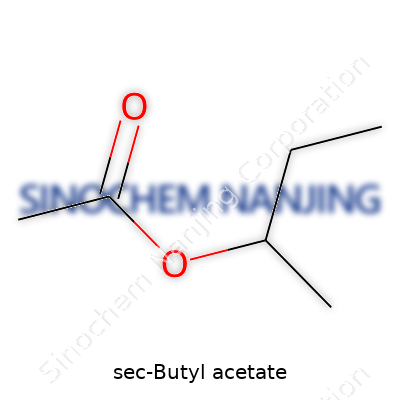
| Names | |
| Preferred IUPAC name | Butan-2-yl acetate |
| Other names |
n-Butyl acetate sec-Butyl ethanoate 2-Butyl acetate Acetic acid sec-butyl ester SBAC |
| Pronunciation | /ˌsɛkˈbjuːtɪl əˈsiːteɪt/ |
| Identifiers | |
| CAS Number | 105-46-4 |
| Beilstein Reference | 635068 |
| ChEBI | CHEBI:86443 |
| ChEMBL | CHEMBL140711 |
| ChemSpider | 7422 |
| DrugBank | DB14183 |
| ECHA InfoCard | 100.116.579 |
| EC Number | 203-300-1 |
| Gmelin Reference | 6076 |
| KEGG | C19665 |
| MeSH | D018118 |
| PubChem CID | 8038 |
| RTECS number | AF7350000 |
| UNII | W1WQ49MKGU |
| UN number | UN1123 |
| Properties | |
| Chemical formula | C6H12O2 |
| Molar mass | 116.16 g/mol |
| Appearance | Colorless liquid |
| Odor | Pleasant, fruity odor |
| Density | 0.868 g/mL at 25 °C |
| Solubility in water | 6 g/L (20 °C) |
| log P | 1.78 |
| Vapor pressure | 4.9 kPa (at 20 °C) |
| Acidity (pKa) | pKa ≈ 25 |
| Basicity (pKb) | 13.46 |
| Magnetic susceptibility (χ) | -7.31×10⁻⁶ cm³/mol |
| Refractive index (nD) | 1.394 |
| Viscosity | 1.17 cP (20°C) |
| Dipole moment | 1.72 D |
| Thermochemistry | |
| Std molar entropy (S⦵298) | 309.9 J·mol⁻¹·K⁻¹ |
| Std enthalpy of formation (ΔfH⦵298) | -482.7 kJ/mol |
| Std enthalpy of combustion (ΔcH⦵298) | -3475.7 kJ/mol |
| Hazards | |
| GHS labelling | GHS02, GHS07 |
| Pictograms | GHS02, GHS07 |
| Signal word | Warning |
| Hazard statements | H226, H336 |
| Precautionary statements | P210, P233, P240, P241, P242, P243, P261, P271, P280, P303+P361+P353, P304+P340, P305+P351+P338, P312, P337+P313, P370+P378, P403+P235, P501 |
| NFPA 704 (fire diamond) | 1-2-0 |
| Flash point | 23°C (73°F) |
| Autoignition temperature | 422 °C (792 °F; 695 K) |
| Explosive limits | 1.7 - 8.0% |
| Lethal dose or concentration | Lethal dose or concentration: LD50 (oral, rat): 13,100 mg/kg |
| LD50 (median dose) | LD50 (median dose): 13 g/kg (oral, rat) |
| NIOSH | WN5600000 |
| PEL (Permissible) | PEL: 200 ppm (600 mg/m³) |
| REL (Recommended) | 200 ppm |
| IDLH (Immediate danger) | 200 ppm |
| Related compounds | |
| Related compounds |
n-Butyl acetate Isobutyl acetate tert-Butyl acetate Methyl acetate Ethyl acetate |



