Isobutanol: More than Just a Simple Alcohol
Introduction from the Ground Up
Isobutanol never makes headlines the way gasoline or lithium batteries do, yet the story behind this colorless alcohol can change the way we produce fuels, solvents, and even plastics. It’s familiar for those who spend long hours working with chemicals or studying fuel systems but still a mystery for most people. The world started looking at isobutanol as early as the 19th century, with early chemists figuring out how to separate alcohols from fermentation broths. Back then, nobody really cared if you had butanol, isobutanol, or some other version, but technology pushed more careful studies, and companies sat up straight once they realized this particular isomer carried key advantages for industry.
Getting to Know the Stuff
Many solvents seem boring on paper, but isobutanol deserves another look. It holds its own as a clear, flammable liquid with a faintly sweet odor. You pour it out of a bottle and think it’s just another lab chemical until you realize it shares the formula C4H10O with three other isomers, and a little tweak in the atom arrangement separates it from normal butanol or tert-butanol. That subtle difference means better performance as a fuel blend—one reason it pops up as an alternative to ethanol in gasoline. Handling isobutanol can remind you how important it is to respect every chemical. It boils at around 108°C, dissolves in organic solvents, and doesn’t mind mixing with water—traits that drive its use far beyond a chemistry class curiosity.
Labels, Data, and Technical Specs—But Keep It Real
Digging into the technical side, you read about density sitting at about 0.81 g/cm³, vapor pressure below 9 mmHg at 20°C, and a flash point above 28°C. These numbers actually matter if you store drums of the stuff or try to blend your own fuels out on a test track. The fire risk sticks with you—don’t splash it around near a spark, and ventilation should never be just an afterthought in storage rooms. In the real world, isobutanol comes with labels that hint at all these specs, urging safe handling but also giving clues to the careful dance companies do to meet legal safety standards.
How It Gets Made
Turning raw materials into isobutanol often starts with carbon sources and a lot of clever chemistry. Traditional methods rely on hydroformylation—old-school chemical routes that pull together propylene, carbon monoxide, and hydrogen. Some of us remember the pride of watching biotechnologists push fermentation tech far enough to coax genetically modified bacteria to turn sugars into isobutanol instead. This is where science fiction shakes hands with farming, as corn or even waste biomass can become the backbone of a fuel or chemical supply chain rather than just cattle feed. Every advance in yield gives industry a boost and makes the future a bit cleaner.
Reaction Playground
Once on hand, isobutanol’s chemical flexibility opens up whole worlds. It reacts to form esters for fragrances and flavors—I’d wager almost every perfumer and food scientist has used a derivative at some point. Esterification with acids, oxidation to isobutyric acid, and alkylation to make lubricants or plasticizers turn a simple molecule into an economic engine. In practice, each reaction brings quirks that keep chemists humble, as yields and side products won’t always go as expected, especially at scale.
Not Just One Name
If you’ve ever shopped for isobutanol, you find it listed under a string of names: 2-methyl-1-propanol, i-butanol, or even isobutyl alcohol. Each label reflects a slightly different technical community—industrial, academic, or trade—but they all mean the same core material. Understanding the aliases matters when dealing with regulations or suppliers who use terminology from different countries and eras.
Navigating Workspaces—Safety Is More Than Paperwork
Walking into a plant where isobutanol moves through pipes or stands in storage tanks, you catch the effort poured into safety systems. It carries recognizable hazards—flammability on par with solvents like ethanol and health risks that demand respect. Prolonged exposure can irritate the eyes, nose, and respiratory tract, while higher concentrations in air risk central nervous system effects. You can’t just trust labels or hope good luck covers your mistakes; education, personal protective equipment, and engineered ventilation become normal parts of working life. It’s not just about rules or checklists but about coming home safe every day. From experience, a solid safety culture saves more headaches than any single engineering control.
Real Applications Change Lives (and Industries)
Isobutanol’s value shines brightest in application, not just in the lab but across real-world industries. Fuel blending keeps popping up, because it dodges water-absorption headaches that dog ethanol. Companies testing next-gen jet fuels see isobutanol as a candidate for cleaner, more efficient power. In coatings, labs swap it in for other solvents, chasing better performance and lower emission profiles. Pharmaceuticals draw on its reactivity. Paints, plastics, lubricants, personal care products—all find a place for isobutanol somewhere in the mix, from process steps to finished goods. Every new breakthrough in application brings a ripple effect, boosting efficiency or lowering environmental impacts.
Where Research Pushes Boundaries
Research labs push isobutanol forward, both in its production and new uses. Biotechnologists are never satisfied with current yields, driving projects that turn more renewable sugars into alcohol at lower cost. Some current work focuses on engine optimization to make gasoline with isobutanol run cleaner and smoother. Material scientists chase polymers that leverage isobutanol’s branching to deliver better flexibility or resistance to chemicals. Beyond pure profit, there’s real excitement about the environmental benefits: every step towards more efficient, less polluting production or use helps chip away at global climate headaches. Reading journals, you can’t miss the sense of competition and camaraderie among researchers who want to make a dent in carbon emissions through smart chemistry.
Toxicity Can’t Be Shrugged Off
Toxicity research on isobutanol underlines the saying that “the dose makes the poison.” Short-term exposure in industrial settings needs close attention—skin contact dries and irritates, inhalation above recommended limits can bring dizziness or headaches, and it won’t take much more to create a truly risky situation. Most case studies highlight how predictable problems become when staff stick with recommended handling procedures and monitoring, but the reality is still simple: mistakes happen. Regular medical surveillance makes sense wherever isobutanol is handled daily, and investing in detection equipment or stronger exhaust systems pays off in fewer workplace injuries. Good records from decades of use help regulators fine-tune exposure limits, with responsible operators taking them as bottom lines, not suggestions.
What Tomorrow Could Look Like
Looking forward, isobutanol stands out as one of the most promising tools for transitioning industry away from fossil-based chemicals and fuels. Sustainable production routes draw interest from policymakers and green investors alike. Over the next years, progress likely depends on better microbes for fermentation, reactors that save more energy, and process designs that let small-scale producers participate alongside the giants. Regulators will keep weighing toxicity and environmental impacts against the growing benefits in energy and materials. If research achieves better yields and lower costs, the global chemical supply chain could see a shift, pushing isobutanol into roles once dominated by more polluting, less flexible molecules. For those working up close, that future looks as challenging as it does rewarding—a chance for science, industry, and sustainability to move forward, if we keep asking the tough questions.
What is Isobutanol used for?
Fueling Vehicles and Stretching Petroleum Resources
Pulling up at the pump, most people see the price and octane number, but rarely think about what mixes into each gallon of gasoline. Aside from ethanol, isobutanol enters more fuel blends each year. Refineries use it because isobutanol packs a higher energy punch than ethanol. Drivers get better mileage, and engines run cooler. Boats and classic cars, in particular, see fewer problems with water corrosion since isobutanol absorbs less moisture than ethanol does. The marine industry grabbed onto it for this very reason, hoping to stretch the lifetime of engines exposed to moisture and long storage.
A key fact stands out: isobutanol blends up to 16% in gasoline without needing major tweaks under the hood. This gives governments and refineries extra flexibility to hit emissions targets without completely switching infrastructure. For the everyday driver, isobutanol keeps tailpipe carbon dioxide down and fights off some of the smog-forming ingredients that gasoline stockpiles bring.
From Plastics to Paint: Industry’s Quiet Workhorse
Isobutanol does more than power cars. Step into a hardware store and look at the paint aisle — the window cleaner and paint stripper shelf shows isobutanol on almost every label. Its power as a solvent helps paint flow evenly, dries quickly, and keeps colors bright. Thanks to its low toxicity compared to older chemicals, it earns a spot in products used indoors and around families.
Behind the scenes, chemical manufacturers pull isobutanol for plastics production. It acts as a building block for acrylics that wind up in outdoor signs, glues, and screens for phones and tablets. The reason? Isobutanol packs more carbon atoms, offering a more robust material than alternatives. It supports adhesives that actually stick under heat and pressure. Many find it strange that a fuel additive also helps make so many ordinary items tougher and longer-lasting.
Sustainable Sourcing and Future Benefits
Most isobutanol today comes out of petrochemical plants. These places start with oil and gas and use chemical tricks to shape molecules. A new chapter opens up as scientists brew isobutanol with engineered yeast or bacteria, using corn or plant waste as their starting point. This resembles the way local breweries ferment sugar into ethanol, only with a different product at the end. Grown from living feedstocks, bio-isobutanol makes a case for dramatically shrinking the carbon footprint of fuels and plastics.
A few companies have already scaled up bio-based isobutanol for shipping. Farmers watch closely since corn crops or even crop waste could mean extra income. Backpackers and campers might notice smaller companies advertising greener, less smoky camp stove fuels. Airlines keep experimenting with it to lower the carbon output of jet fuel on thousands of flights.
Room for Improvement and Health Questions
Like any chemical, isobutanol raises a few questions about exposure. At high doses in enclosed spaces, workers handling solvents or fuel can experience headaches or dizziness. Factories use ventilation and personal safety gear, and regulations keep track of air quality. Compared with its toxic cousins, like methanol or benzene, isobutanol stands out as a safer element for both workers and end users.
As the world’s taste for cleaner, more reliable fuels grows, and industries hunt for stronger building blocks, isobutanol’s role likely gets bigger. With more investment into plant-based production, this once-overlooked alcohol could help bridge petroleum’s past and a greener future — if companies scale up at affordable costs.
Is Isobutanol hazardous to health?
Getting to Know Isobutanol
Isobutanol pops up in a lot of industries. You might spot it around paint shops, in fuel blending, and even as a solvent in chemical plants. Folks lean on it because it works as a building block for other chemicals and cleans up grease better than water ever could. You wouldn’t find it advertised on a soda can, but its fingerprints still reach into some everyday products.
Human Health: What Studies Show
Most people don't come across large amounts of isobutanol in daily life unless their job puts them right in its path. Breathing it in is a bigger worry than swallowing it, mainly because fumes can sneak into your lungs before you notice them. Researchers have noticed that, in high-enough doses, isobutanol irritates the eyes and nose. People exposed over extended periods often report dizziness, headaches, or feel their breathing change. I remember working near a storage site; just a quick whiff left my head spinning and my nose stinging.
Using it in enclosed spots can really ramp up the risk. Skin contact isn’t as dangerous for most folks, but splash it in your eyes or let it sit on your skin too long, and you’ll know about it right away. The U.S. National Institutes of Health say the stuff can make your skin red and dry, especially if you handle it without gloves.
No evidence points to isobutanol causing cancer in humans. Toxicologists have dug through long-term studies and haven’t found links to birth defects either. Still, animals exposed to ultra-high doses did show signs of liver and kidney stress, and nobody wants to take that gamble with people.
Workplace Responsibility and Fixes
Factories that use isobutanol normally follow strict rules to keep people safe. Air-handling systems, special gloves, and goggles make a huge difference. The Occupational Safety and Health Administration (OSHA) sets legal limits: 100 parts per million in workplace air over an 8-hour day. Factories running well below that line rarely see major complaints. In places where rules get ignored — and I’ve seen some skip steps to save time — you find more sickness and absenteeism.
Good labeling cuts a lot of risk before it starts. Isobutanol bottles need a clear hazard symbol, so nobody mistakes it for something harmless. Training workers matters even more. Spending an hour teaching people about the dangers and showing how to clean up a spill beats any stack of printed warnings. In smaller shops, safe storage turns out to be a lifesaver. I can’t count how many fires and inhalation accidents came from someone leaving lids open or bottles near heat sources.
Substitutes exist, but most alternatives come with side effects of their own. Ethanol produces less irritation but won’t always do the job as well, so companies rarely swap unless forced by law.
Protecting the Community
Regulators monitor isobutanol’s spread into water and air. Spills don’t linger forever; sunlight and bacteria tend to break it down fast. If a tanker tips over, though, local water sources need immediate checks since contamination above safe levels can cause nausea and stomach pain. Emergency crews carry special absorbent pads — I’ve seen those pads turn dark gray in minutes, making cleanups safer for local families.
Isobutanol deserves caution, not panic. It takes effort and honesty from managers, workers, and regulators to keep risks under control. Respect for the chemical means fewer accidents on the job and a safer neighborhood for everyone nearby.
What are the physical properties of Isobutanol?
Clear-Cut Details About Isobutanol’s Appearance and State
Isobutanol looks just like water—clear and colorless. Touch or sniff around a chemistry lab, and you’ll likely run across its distinct yet not overpowering alcoholic odor. Pour some into a beaker, and you’ll notice it flows easily, much like rubbing alcohol. This fluid nature comes from its low viscosity. Nothing thick or syrupy about it, which matters if you’ve ever tried pumping or transferring it from one container to another.
Boiling and Melting Points: Everyday Relevance
Let’s talk heat. Isobutanol boils at 108°C (226°F). That comes in handy because, in my experience, it won’t evaporate away as quickly as lighter solvents. Its melting point sits just below -108°C, so don’t expect it to freeze up in any regular freezer. In real-world storage, you can almost forget about it turning solid without hitting extreme temperatures. If you try to distill it, you’ll find that enough energy is needed to separate it from water or other chemicals.
Density and Solubility: Practical Considerations
Isobutanol sits on the lighter side, coming in at roughly 0.802 g/cm³ at room temperature. You pour it in water, and it floats. This matters for chemical separation and even for spill cleanup, as it floats rather than sinks. It mixes well with most organic solvents—put it in acetone, ether, or ethanol, and it dissolves easily. In water, isobutanol is only somewhat soluble. You can’t blend it endlessly, so there’s a natural limit. This partial solubility creates that familiar two-layer look in a glass container when too much gets added. Industries use this characteristic to pull out unwanted byproducts or extract specific compounds.
Flammability and Safety in Everyday Life
Fire safety gets important fast with isobutanol around. Its flash point, about 28°C (82°F), means it ignites at a lower temperature than water boils. I’ve worked in workshop environments, and you always need to mind heated equipment or sparks when using isobutanol. It burns with a clear, almost invisible flame, which poses a unique hazard. Knowing that this liquid has a vapor pressure of about 10 mmHg at 20°C gives you a clue—it doesn’t stick around forever in an open container. Vapors can collect, so proper ventilation is always a must.
Why These Characteristics Matter
Many industries—paint, solvents, fuel blending, or pharmaceuticals—lean on these properties to get the job done properly. Storage decisions rely on its vapor pressure and flammability. Shipping shops travel by land rather than air because of the fire risks. At-home hobbyists use it cautiously because of the same safety profile.
All these numbers and traits become important beyond the lab. In manufacturing, folks use isobutanol in plasticizers or paint thinners because it evaporates at just the right rate. It works as a fuel additive, partly because it doesn’t absorb much water from the air. Anyone managing storage tanks gets peace of mind knowing that isobutanol won’t freeze easily or settle into layers. Anytime the chemical ends up in wastewater, its partial solubility comes into play, dictating what kind of treatment works best.
Solutions for Safer, Smarter Use
Handling isobutanol asks for a careful approach. Good ventilation, proper flame-proof storage, and tight containers cut down on risk. In my own workshop, I label every bottle and keep fire extinguishers nearby. Large operations use vapor recovery systems or cold traps to avoid waste and air pollution. Local regulations set limits on storage quantities and mandate clear labeling for safety. Responsible use starts at purchase and keeps going all the way to disposal—because these everyday properties shape safety, shipping, and the final use of every drop.
How should Isobutanol be stored and handled?
Safety Starts with the Right Container
Isobutanol works hard as a solvent and fuel additive, but it demands respect when you put it in storage. Metal drums or tanks lined with materials that resist corrosion manage the job better than plastic containers, which spiral into trouble once solvents start eating away at the lining. Choosing the right container stops leaks before they start. I remember seeing a small shop switch from poly drums to steel ones after a minor spill, and their headaches dropped overnight—the smells, too.
Moderate Temperatures, No Drama
Isobutanol stays stable at room temperature, but nobody needs a lecture on how quickly things heat up in some warehouses during summer. Keep tanks and drums out of direct sun. If you can, put them in a spot that sits cool and shaded. Overheated storage leads to vapor buildup, so you get extra flammability and more pressure inside those drums. I’ve watched folks ignore this advice, only to scramble when pressure builds enough to pop bungs or blow vents.
Fire Risks Call for Practical Precautions
Flammable liquids demand basic respect. I’ve seen proper safety protocols make all the difference in avoiding warehouse fires. Sprinkler systems that handle chemical fires—not just water—stand between a close call and a disaster. If containers catch fire, plain water spreads the mess. Carbon dioxide, dry chemical, or foam extinguishers shut down the danger. Keep these within arm’s reach of your storage area. Separate isobutanol from oxidizing agents and acids, since mixing these turns a bad day worse.
Ventilation and Spill Management Aren’t Optional
Poor ventilation invites a buildup of vapors that put health and safety on the line. Cracking open all the windows doesn’t cut it; exhaust fans with spark-proof wiring help keep the air moving, cutting explosion risks down to size. I helped overhaul a cramped lab once, moving from portable fans to proper venting, and headaches and complaints dropped like a rock. If you do spill some isobutanol, stay level-headed. Use absorbent materials—think sand or commercial pads—never sawdust, since it introduces another fire risk. Bag the waste, seal it, and tag it before a scheduled pickup or delivery to a licensed waste handler. Someone will always skimp here, but cleaning up right reduces long-term headaches.
Personal Protection Matters Every Day
Chemical-resistant gloves, safety goggles, and a simple lab coat stand between your skin and a rough day. Isobutanol irritates eyes, skin, and lungs in a hurry if left unchecked. I’ve seen smaller outfits skip gloves and regret it, learning quickly why burns and rashes aren’t worth a shortcut. In bigger warehouses, standard training helps, but keeping fresh PPE close means people actually use it. A well-placed eyewash station turns a small accident into a footnote instead of an emergency.
Watch Labels and Keep Good Records
Labelling matters more than people admit. Print clear hazard warnings and lot numbers directly on each drum or tote. This makes tracking use or responding to a spill much more manageable. Digital logs help, too—the less paperwork lost, the faster you react if there’s a recall or compliance audit. Years ago, I watched as a missing label snowballed into lost time and ruined inventory, just because no one knew what drum held what.
Daily Attention Avoids Trouble
Safe isobutanol storage means keeping up regular inspections, not just once-a-quarter checkups. Look for rust, bulging drums, or odd smells. Catch small leaks on Monday, and you save everyone a clean-up job on Friday. Rely on people, not luck, to spot early signs and act before a slip becomes newsworthy. Getting these basics right means that isobutanol remains a valuable part of the mix instead of the reason for an accident report.
Is Isobutanol miscible with water?
The Straight Facts: Mixing Isobutanol and Water
For anyone curious about chemistry, the question of whether isobutanol dissolves completely in water pops up pretty often. Isobutanol, which people use in paints, cleaners, and as a biofuel component, doesn’t play the same way as ethanol. You can pour ethanol into water, and everything blends smoothly, no fuss. Isobutanol pulls a little trick instead—it can mix with water, but only up to a certain point. It’s what chemists call “partially miscible.” Add too much isobutanol to water, and you’ll see two separate layers. At lower concentrations, the two mix, but reach the solubility limit, and things split right apart.
The Subtle Details That Matter
This small detail isn’t just trivia for lab lovers. It changes how isobutanol gets used, handled, and cleaned up. At school, I remember watching students try to mix isobutanol with water. Those who expected a clear solution got a surprise. This property affects cleanup in case of spills, especially near waterways. Unlike fully miscible solvents like methanol, isobutanol’s tendency to separate forms visible layers. That has clear environmental implications—if a drum leaks during transport, you can’t just flush it away.
Why Partial Mixing Affects Production and Everyday Use
Many who work in chemical manufacturing, especially at the smaller scale, need to think about separation. Isobutanol gets produced through both petrochemical routes and fermentation of plant sugars. It ends up in products like brake fluids, synthetic flavors, and biofuels. In industries where water is everywhere, isobutanol’s partial mixing makes waste treatment more complicated. Water and isobutanol mixtures might need extra processing, like decanting or treatment with special absorbents, to break them apart before disposal.
Health and Environmental Concerns
On the health front, being partly miscible means isobutanol can enter water supplies if not managed properly. It’s less toxic than some solvents, but it still carries risks to aquatic life. People living near industrial plants might not hear much about this, but it’s important. According to US Environmental Protection Agency (EPA) reports, spills with solvents like isobutanol need fast action to stop movement into groundwater. At small scale, lab instructors always remind students to pour off and contain isobutanol mixtures separately for disposal because of this property.
Practical Solutions for Industry and Home
Chemical storage needs tight seals. Labels matter more than ever since a quick sniff or glance can’t always tell you what’s in a drum. Training for those dealing with fuels or industrial cleaning fluids should always note the way isobutanol interacts with water. Engineers and environmental managers often pair physical separation methods with safe handling protocols—using absorbent barriers, oil traps, or chemical treatments. I’ve seen community spill response teams practice containment for solvents that behave like isobutanol, keeping them from reaching storm drains by using booms and pads.
Smart Choices for a Safer Future
Consumers choosing “greener” fuels or bio-based solvents sometimes overlook the handling differences. Vendors of cleaning products and small fuel suppliers need to give clear usage instructions. Following recommended disposal practices, not just for the pure substance but for any water mixtures, protects health and local waterways. From factories to workshops, being aware of isobutanol’s personality with water keeps people, property, and ecosystems safer.
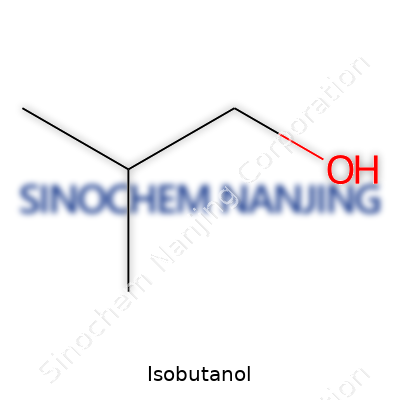
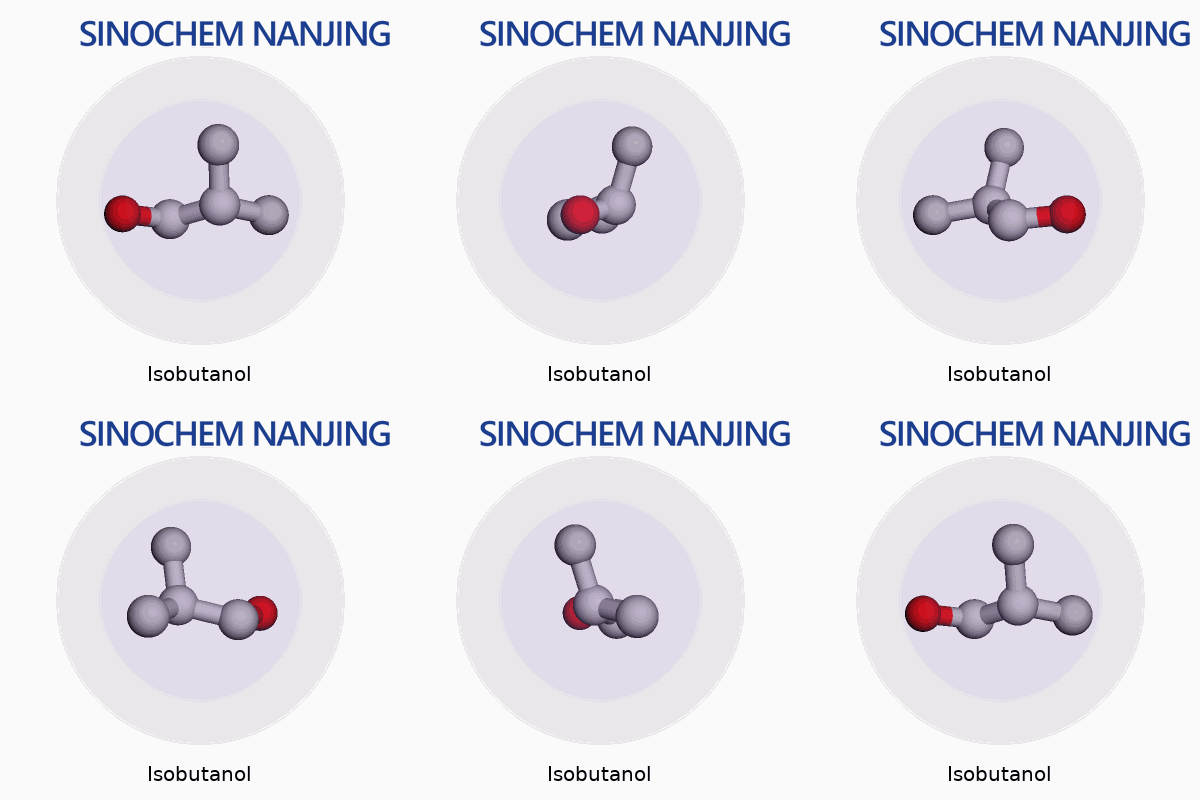
| Names | |
| Preferred IUPAC name | 2-Methylpropan-1-ol |
| Other names |
2-Methyl-1-propanol Isobutyl alcohol Isobutanol 2-Methylpropan-1-ol |
| Pronunciation | /ˌaɪ.səˈbjuː.tən.ɒl/ |
| Identifiers | |
| CAS Number | 78-83-1 |
| 3D model (JSmol) | Isobutanol JSmol 3D model string: ``` CC(C)CO ``` |
| Beilstein Reference | 603752 |
| ChEBI | CHEBI:33198 |
| ChEMBL | CHEMBL44880 |
| ChemSpider | 5736 |
| DrugBank | DB03137 |
| ECHA InfoCard | 100.003.254 |
| EC Number | 603-108-00-1 |
| Gmelin Reference | Gmelin Reference: 82700 |
| KEGG | C11352 |
| MeSH | D013214 |
| PubChem CID | 6560 |
| RTECS number | NI7525000 |
| UNII | 3K9PV786EA |
| UN number | UN1212 |
| Properties | |
| Chemical formula | C4H10O |
| Molar mass | 74.12 g/mol |
| Appearance | Colorless liquid with a characteristic odor |
| Odor | Sweet, musty odor |
| Density | 0.802 g/cm³ |
| Solubility in water | Moderately soluble |
| log P | 0.83 |
| Vapor pressure | 10 mmHg (20°C) |
| Acidity (pKa) | 16.54 |
| Basicity (pKb) | pKb = 5.20 |
| Magnetic susceptibility (χ) | -46.4·10⁻⁶ cm³/mol |
| Refractive index (nD) | 1.396 |
| Viscosity | 2.95 mPa·s |
| Dipole moment | 1.66 D |
| Thermochemistry | |
| Std molar entropy (S⦵298) | 131.5 J·mol⁻¹·K⁻¹ |
| Std enthalpy of formation (ΔfH⦵298) | -327.6 kJ/mol |
| Std enthalpy of combustion (ΔcH⦵298) | -2642 kJ/mol |
| Pharmacology | |
| ATC code | J60AP02 |
| Hazards | |
| GHS labelling | GHS02, GHS07 |
| Pictograms | GHS02, GHS07 |
| Signal word | Danger |
| Hazard statements | H225, H319, H336 |
| Precautionary statements | P210, P233, P240, P241, P242, P243, P261, P271, P280, P303+P361+P353, P304+P340, P312, P305+P351+P338, P337+P313, P370+P378, P403+P235, P501 |
| NFPA 704 (fire diamond) | 2-3-0 |
| Flash point | 28 °C |
| Autoignition temperature | 415 °C |
| Explosive limits | 1.7% - 10.6% |
| Lethal dose or concentration | LD50 (oral, rat): 2460 mg/kg |
| LD50 (median dose) | LD50 (median dose) of Isobutanol: "2460 mg/kg (oral, rat) |
| NIOSH | NA0598000 |
| PEL (Permissible) | 100 ppm |
| REL (Recommended) | 100 ppm |
| IDLH (Immediate danger) | 1600 ppm |
| Related compounds | |
| Related compounds |
Methanol Ethanol Propanol Butanol tert-Butanol |



