Butadiene: More Than Just a Building Block—Reflecting on Its Evolution and Significance
Historical Development
Butadiene’s history reminds me of a story about changing needs and relentless innovation. Born from the early 20th-century push to build better tires and elastomers, butadiene came into the limelight during the war years as a raw material for synthetic rubber. During the Second World War, the scramble for reliable synthetic alternatives spurred chemists to wrestle with steam cracking and fermentation. Factories in the United States, Soviet Union, and elsewhere churned out butadiene by the ton to fill military demands for tires, gaskets, and hoses, setting off an era where industrial chemistry could shift the course of history. It’s an example of how chemistry changes not only products but also economies and societies as a whole. Today, factories dotting the world trace their roots to those urgent days, only with new feedstocks and cleaner operations in many regions.
Product Overview
Describing butadiene in technical terms can sound clinical, but folks in chemical engineering or plastics see it differently—it’s a molecule that enables a surprising number of everyday things. I always think of the squeak of new sneakers or the bounce of a basketball; both often owe their lives to polymers derived from this small, four-carbon diene. On paper, butadiene is a colorless, highly flammable gas with a faint, gasoline-like smell. It doesn’t sound special until you realize that its double bonds make it an ideal monomer for creating polymers. The global reach of butadiene reflects its adaptability, from styrene-butadiene rubber (SBR) for tires and hoses to ABS plastics in appliances, electronics, and vehicles.
Physical and Chemical Properties
If you’ve ever studied this molecule, you’ll notice that its volatility and reactivity demand respect. Its boiling point sits below freezing at standard pressure, so it usually sits in pressurized tanks as a gas or chilled liquid, making safety controls indispensable. The pair of double bonds, sitting conjugated across the four carbons, sets butadiene apart—it polymerizes easily, reacts with a wide range of chemicals, and doesn’t mind picking up new partners in a lab or reactor. That same reactivity, though, brings health and flammability hazards, so process design must emphasize proper containment and monitoring.
Technical Specifications and Labeling
Butadiene comes with a handful of technical standards. When I ran projects around bulk chemicals, labels and specs mattered as much as the product inside the drum. Regulations in major markets—call it OSHA in the US, or REACH in Europe—demand precise grades and clear warnings for everything from purity to shipping weight to emergency instructions. Manufacturers post purity levels (often 99.5 percent or higher) to reduce the chance that side reactions rear their heads in the next production step. Labels warn workers about explosive limits, provide codes for container types, and outline emergency procedures, because a little mistake can have big consequences. This kind of rigor isn’t just bureaucracy. It’s about making sure everyone gets to go home at the end of the shift.
Preparation Method
Making butadiene takes chemistry and engineering working side by side. For years, producers favored steam cracking of naphtha or light hydrocarbons. The process means running feedstock through reactors at high temperature, breaking large molecules into smaller pieces. Out comes a mix, including butadiene, which must be separated, purified, and stabilized before shipping. Alternative routes involve dehydrogenating butanes or butenes, and each pathway comes with its own trade-offs—some yield more product, some give fewer side products, and others match better with available raw materials. In places rich in natural gas, one process makes sense; in regions focused on oil refining, another fits better. Deciding which route to take remains as much about local resources as about chemical finesse.
Chemical Reactions and Modifications
Butadiene’s magic comes from its double bonds facing each other in a conjugated system. That structure gives it a knack for reacting with itself or other molecules to make bigger, stronger chains. Polymerization stands out, where butadiene turns into rubbers or plastics with properties the world depends on. Mix it with styrene and you get the key ingredient in many car tires—heat-resistant, tough, and grippy on pavement. Reaction with acrylonitrile builds ABS, which I’ve seen in everything from children’s building blocks to car bumpers. Modifications through halogenation, oxidation, or cycloaddition reactions continue to widen the pool of possible end-products, stretching the uses far beyond what original inventors might have imagined.
Synonyms and Product Names
Names matter in chemistry, especially if you want to avoid confusion. Butadiene has gone by a host of synonyms: 1,3-butadiene, alpha-gamma-butadiene, and divinyl. If you walk into a plant or research lab, someone might know it as biethylene or erythrene. Industrial blends might list butadiene as a key fraction, or call attention to its presence in rubber or copolymers. This soup of names reflects decades of overlapping industries and regional jargon, sometimes complicating safety or supply chain tracking. Clear labeling and common nomenclature aren’t just paperwork—they help prevent mix-ups that could lead to dangerous mistakes or lost production.
Safety and Operational Standards
Experience tells me that nobody working with butadiene underestimates its hazards. It’s hard to forget the stories of plant accidents or health scares from the middle of the last century, when equipment and protocols lagged behind production demands. Exposure limits for workers now sit firmly in regulation, and medical monitoring covers those with regular contact. Facilities install explosion-proof systems, leak detection, and emergency ventilation. Training programs drill into teams that butadiene calls for vigilance, not improvisation. By following strict storage and handling rules—especially in high-volume facilities—operations remain safe, and disaster response rarely gets tested. This careful approach echoes through every layer of the value chain, from transport to final manufacturing.
Application Area
Butadiene’s utility stretches into places most people never suspect. The bulk still finds its way into rubber for car and truck tires—half of every new tire uses butadiene-derived polymers to hit the sweet spot between grip, durability, and rolling resistance. I’ve walked factory floors where hoses, gaskets, and belts waiting to become part of everyday machines all depend on this molecule. Outside automotive parts, butadiene finds work in latexes for paints, adhesives, and sealants. In consumer products, it broadens the reliability and versatility of plastics for everything from toys to home appliances. Innovations in biomedical devices—like flexible tubing and gloves—leverage copolymers made possible by butadiene. This reach into such diverse markets results from both its chemical adaptability and decades of research into custom-tailored polymers.
Research and Development
The R&D story of butadiene feels like a collaboration across generations. Early work solved the basics—how to make, store, and ship it. Later, chemists and engineers tackled the subtler questions: how to squeeze better performance from polymers, how to turn lower-cost or renewable feedstocks into product, and how to cut emissions or waste along the way. Research centers across Asia, Europe, and the Americas compete and cooperate on new catalyst systems that boost yields and reduce byproducts. Recent years bring calls for bio-based butadiene sourced from sugars or biomass, appealing to a world eager to shrink its fossil footprint. Exploring advanced copolymers for electronics or medical devices keeps research moving, expanding the molecule’s reach without sacrificing environmental or workplace safety.
Toxicity Research
Toxicologists have spent decades unraveling the risks of butadiene, especially for industrial workers with long-term exposure. Information piles up on how inhalation can increase the risk for certain cancers and other health problems, spurring regulatory agencies to clamp down on permissible levels. Today’s research does a better job breaking down exactly what metabolic paths butadiene takes in the body, and which breakdown products do the most harm. That knowledge pushes companies to invest in better ventilation, closed systems, and real-time exposure monitoring. Advances in personal protective equipment, and improved training, have cut dangers, but researchers keep hunting for lower-risk alternatives or ways to neutralize hazards before they reach people or the environment.
Future Prospects
Looking ahead, butadiene’s road will follow the twists and turns of bigger forces—energy prices, technological breakthroughs, and changing consumer demands. There’s no question it faces pressure from both environmental watchdogs and evolving markets. The big story shaping up is the shift toward bio-based production, with several firms piloting routes from renewable raw materials. Sustainability claims more attention, and the industry faces calls to shrink greenhouse emissions, close the loop on plastic waste, and boost energy efficiency in production. At the same time, markets keep demanding new polymers with better performance, which means chemists and process engineers don’t get to rest easy or coast along with the old ways. Rather than seeing butadiene as a relic of smoky old factories, I see it as a proving ground—where science, health, and industry all meet, and where every breakthrough, setback, or accident has lessons for those who shape the materials of tomorrow.
What is Butadiene used for?
A Chemical Shaping Daily Life
Most people have never thought about butadiene, but anyone who puts on a pair of sneakers or jumps into a car relies on products that wouldn’t exist without it. I remember my first old truck—the tires were cracked, and a friend explained how rubber ages. Butadiene gave those tires strength, bounce, and the ability to last for years on the road. Nearly all car tires use synthetic rubber built from butadiene, proving this one chemical keeps global movement rolling.
From Synthetic Rubber on the Street to Soft Grips at Home
Next time you grab a garden hose or squeeze a rubber spatula, there’s likely a butadiene-based polymer at work. Industries favor it for one big reason: durability. Products made from styrene-butadiene rubber flex without falling apart. That ability to soak up stress without cracking means butadiene polymers show up everywhere—from shoe soles cushioning a jogger’s steps to conveyor belts humming in factories.
Latex gloves—especially those for hospitals and food service—use another butadiene-based material called nitrile rubber. Back when the pandemic hit, hospitals scrambled for these gloves. They need to resist chemicals and tears, something natural latex can’t always guarantee. Nitrile blends the stretch and toughness of butadiene derivatives with the safety needed in a medical setting. Stories from frontline workers underline how these gloves offered protection when it mattered most.
Everyday Plastics and the World of Manufacturing
Walk through any hardware store, and butadiene’s fingerprint is all over the shelves. ABS plastic—one of the sturdiest and most common plastics—relies on butadiene for its shock resistance. I’ve relied on power tools tough enough to survive drops, all thanks to ABS. In many homes, the pipes carrying water, the casings protecting wiring, and even the LEGO bricks underfoot all contain butadiene.
Manufacturing depends on butadiene because it lets companies build products that last. Tires, consumer goods, medical equipment, even golf balls, all reflect its contributions. The underlying theme is value—both for manufacturers and for consumers who expect products that don’t break the moment they’re put to use.
The Price of Convenience: Environmental and Health Challenges
Butadiene isn’t all upside. Its manufacture and use bring real risks. I’ve read about the air around chemical plants picking up trace amounts, raising health questions. Studies link prolonged exposure to elevated cancer risks among workers. Since butadiene usually comes from oil refining, the industry faces the same concerns as other fossil-fuel based chemicals: emissions, climate change, and difficult-to-recycle waste.
Better monitoring in factories, safer handling, and research into recycling synthetic rubber can help limit harm. Some companies already run closed-loop systems to keep emissions down. Smart materials scientists are working on biobased butadiene alternatives—these could be sourced sustainably, without the baggage of fossil fuels. Communities living near plants push for tighter controls, and their stories remind us why strict safety protocols matter.
Looking Ahead
Butadiene will keep shaping daily life for years to come. Products will trade raw performance for greener choices, once safer alternatives are ready. For now, real progress requires transparency, good science, and commitment to safer manufacturing. Every time I lace up my running shoes or take a drive, I try to remember the chain of innovation—and responsibility—that makes everyday convenience possible.
What are the health hazards of Butadiene?
Understanding Butadiene
Stepping into most industrial sites, especially those tied to the production of rubber and plastics, often means encountering butadiene in some way. It’s a colorless gas, easy to overlook, but it has a track record that calls for attention. From tires to latex gloves, butadiene quietly makes its way into much of what society uses each day. Despite its prevalence, the impacts it brings to human health can leave a lasting mark.
Breathing in the Risks
Walking through a manufacturing floor that uses butadiene, the fumes can hit the nose before the risks have a chance to reach the mind. Inhaling this gas even at levels considered “safe” by some guidelines has sent workers home with headaches, nausea, and sore throats. Longer exposure, especially without proper protective gear, often leads to more than just discomfort. Respiratory irritation begins to set in, and from there, the problems climb higher—not just into the lungs, but deeper across the body’s systems.
Cancer Links That Can’t Be Shrugged Off
Studies from groups like the National Institute for Occupational Safety and Health and agencies around the globe have pinned butadiene to increased rates of leukemia, especially among people working around it for years. Hematologists have seen blood cancers rise in places where butadiene is used in bulk, and the numbers connect strongly to factory jobs and chemical plants. The data isn’t abstract; it’s stories from people who never thought their work would endanger their lives in this way.
Beyond Cancer: Genetic and Reproductive Fallout
Butadiene’s reach can extend to genetics. In animal experiments, swathes of offspring showed mutations after exposure, and scientists have flagged similar risks in humans. Women who work with this gas have faced higher miscarriage rates. Birth defects have become part of the discussion in communities near large synthetic rubber plants.
Short-Term Exposure: Nothing Minor About It
It doesn’t take years of working with butadiene to feel its effects. Spending a shift in a space where ventilation falls short leaves workers dizzy, tired, and coughing most of the night. Eye irritation follows soon after, and long before any cancer alerts raise flags, the immediate discomfort paints a clear picture of danger.
Solutions Within Reach
Factories and labs that lean on butadiene can make practical improvements. Installing powerful extraction fans and regularly checking for leaks beats the slow cost of illness. Personal protective equipment like supplied-air respirators, not just paper masks, gives an extra line of defense. Training workers—not just managers—to recognize hazards and report them fast, can mean the difference between health and harm.
Health Protections Depend on Action
Butadiene’s story isn’t stuck in textbooks. People carry the long-term effects in their bodies, long after their paychecks have been cashed. Governments and watchdog agencies have set limits to reduce exposure, but rules alone can’t change workplace habits. Each person on the shop floor, from the workers to the supervisors, plays a part in keeping each other safe. Addressing these risks openly lays the groundwork for turning production jobs into jobs that last—and jobs that don’t cost health down the line.
What is the chemical formula of Butadiene?
A Closer Look at C4H6
Butadiene runs a pretty tight ship for a molecule: four carbons, six hydrogens, and a reputation that stretches far beyond its simple formula, C4H6. Sometimes I find it remarkable that such a tidy collection of atoms pulls so much weight in daily life. From car tires to the soles of your sneakers, this chemical keeps the world moving, quite literally. Butadiene doesn’t get flashy headlines often, but you’ll find its fingerprints all over modern materials.
From Chemistry Lab to Main Street
Plenty of us first come across butadiene somewhere between high school chemistry and a factory tour. The molecular drawing shows two double bonds—chemists call this a diene. Those double bonds don’t just sit there. They open up possibilities, creating a playground for chemical reactions. Companies turn streams of natural gas or oil into butadiene using heat and a few smart catalysts, then pump it into processes that create synthetic rubber.
I’ve spent time in shoe manufacturing plants, and it’s impressive to see liquid latex—often based on butadiene—poured and molded into the familiar shapes that wind up under our feet. Whether it’s the shock-absorbing roll of a running sole or the sturdy grip of a car tire on wet pavement, butadiene helps things grip, bounce, stretch, and last. That resilience doesn’t just land out of thin air; it’s the double bonds working hard behind the scenes, linking chains together tight.
Safety Isn’t an Afterthought
Hearing “butadiene” often raises a brow among health and safety folks, and for good reason. C4H6 in the air needs careful handling. It’s a gas at room temperature, and flammability ranks high. Breathing in too much? That’s a real risk, and years of worker health studies show why personal protective equipment and ventilation matter. The World Health Organization and US Environmental Protection Agency both flagged butadiene as a possible cancer risk when inhaled at high levels over long periods. This isn’t something to gloss over. Safer designs, regular air monitoring, and training give workers and communities added protection. Chemical engineers and safety professionals know the molecule’s basic formula, but the responsible handling sets apart world-class operations from the rest.
Building with Butadiene—Better Ways Forward
Synthetic rubber drives a lot of the demand for C4H6, but the reality is supplies come mostly from fossil fuels right now. Teams in research labs across Europe, Japan, and the US look for new ways to make butadiene from bio-based feedstocks, like ethanol or plant waste. A few pilot plants have already produced butadiene from renewable sugars using specialized yeast and catalysts—a promising step toward greener chemistry. I’ve watched some small startups celebrate when their bio-based tires roll off test tracks, thrilled to help cut the fossil fuel cord a bit more each year.
Staying Informed Helps Everyone
Every now and then, that tight formula, C4H6, pops up in unexpected places—a fact sheet, a news headline, maybe even a product label. When that happens, knowing its power and potential pitfalls helps all of us. From keeping workplaces safer to pushing for cleaner, smarter production, everyone stands to gain by understanding a little chemistry that quietly shapes daily life.
How is Butadiene produced?
Understanding Where Butadiene Comes From
Most people don’t stop to think about the journey of the things they use daily. Butadiene ends up in thousands of products—tires, plastics, adhesives, to name a few. Its path from raw material to finished product shows just how interconnected the modern chemical world really is.
Cracking the Process
Butadiene mostly comes from the steam cracking of hydrocarbons. In my time working in a facility near the Gulf Coast, the trucks rolled in carrying naphtha and liquefied petroleum gas (LPG)—fuel blends pulled from oil refineries. These feedstocks go into large furnaces, where extreme heat breaks apart huge hydrocarbon molecules. It’s not all about butadiene; the process throws off a mix of chemicals: ethylene, propylene, benzene, and other olefins.
Butadiene gets pulled out from this mix in a second stage, and it surprised me just how much effort the separation process takes. In a busy control room, operators don’t just press a button and wait. Extractive distillation relies on chemicals like acetonitrile or furfural. They run through tall towers—often the tallest ones in the facility—where butadiene leaves the top in a purified stream. At each step, plenty of sensors and control systems keep things in check, since any drop in efficiency means millions in lost product, or worse, an environmental incident.
From a Byproduct to a Big Deal
A challenge I’ve seen firsthand is that butadiene’s price swings often tie to bigger energy markets. Butadiene isn’t the main product; it’s more a passenger in the steam cracking process. If ethylene plants run less often—maybe because the market is flooded with cheap ethylene or natural gas—butadiene output drops fast. This supply problem hits tire manufacturers hardest, who rely on this chemical for synthetic rubber. I remember scrambling to source raw material during a supply crunch—lag times ran months, not days.
Risks That Come with Reward
Working in butadiene plants, safety heads every conversation. It’s a colorless gas, sweet-smelling at low concentrations, but it’s not something to take lightly. Long-term exposure links directly to cancer. Leaks call for immediate alarms and evacuation protocols—only a few seconds stand between a routine day and a crisis. The 1,3-butadiene in particular brings concern, sparking regulatory changes and big investments in monitoring equipment. Most plants carry emergency kits, air monitors, and strict training schedules for every worker. I’ve seen regulations from both OSHA and the EPA tighten in my career, for good reason.
Cleaner Ways Forward
Pressure mounts to produce chemicals like butadiene with a lighter environmental footprint. Some research labs look at renewable feedstocks—like fermenting biomass or using waste-to-chemicals tech. Startup companies pitch pilot-scale projects splitting ethanol, which is renewable. Admittedly, no approach scales as quickly as steam cracking, but the effort isn’t slowing down. Companies who put serious effort into cleaner butadiene could set industry standards. Even small emissions cuts help, especially in areas facing stricter environmental audits and community watchdog groups.
Getting Past the Hype
Butadiene production draws a straight line between global energy markets and the everyday world. It’s not just about chemistry—it’s a window into bigger questions about sustainability, risk, and how we meet the demands of an ever-changing world.
What are the storage and handling requirements for Butadiene?
Butadiene’s Hazards Change How You Store and Move It
Butadiene doesn’t make headlines, but anyone who works around chemicals knows its name. Used to make rubber for tires, plastics, and other daily goods, butadiene brings a simple message—handle with respect, or trouble follows. A big problem with butadiene is its tendency to catch fire. A leak or spill can turn into a serious emergency, because the gas forms explosive mixtures with air. That’s not just textbook chemistry. There’s a history of fires and blasts from carelessness, and anyone living near a plant knows the risk goes beyond the fence.
Liquid butadiene can turn to vapor at normal temperatures. Cold storage presses the gas into a liquid, but heat from a summer sun or a broken valve can send vapor rushing out. Every valve, flange, and weld point in a storage tank should be checked for leaks, not just during building and installation, but as part of regular maintenance. A damaged gasket might sound boring, but to safety inspectors it’s a red flag. Small leaks give away their location with a sweet smell, but counting on your nose puts you at risk—continuous gas detection makes life safer for everyone nearby.
Choosing the Right Tanks and Equipment
Most butadiene ends up kept in pressurized vessels made from steel, often painted white or silver to reflect sunlight. Tanks have to put up with pressure from liquefied gas, so standards from groups like ASME should never be skipped or “cost-optimized.” Some companies add insulation to keep temperatures stable, but the real work comes from constant pressure monitoring. High-capacity tanks get safety relief valves that open if the pressure climbs, sending gas to a flare or recovery system instead of the open air. This sort of system requires regular checks and clear operating procedures.
Pipelines and transfer lines deserve attention, too. Workers I’ve met often find “just a little frost” on a pipeline, which warns of under-insulation or cold leaks. Flexible hoses and couplings see extra wear, so swapping them out on a schedule reduces headaches down the line. You won’t find short-cuts in plants with a good safety record, just teams who treat every joint and gasket like a point of failure. That’s from years on the job, watching consequences play out.
Keeping People and Neighbors Safe
Plant workers know that butadiene is a suspected carcinogen. Training goes beyond the standard safety video. Respirators, gloves, and eyewear in storage areas protect against more than just routine drips and splashes. Ventilation fans collect stray gas and direct it where it can’t build up or explode. In community meetings, residents ask tough questions about emergency plans in case of fire or release—these plans are only as good as the drills keeping them fresh.
Documentation isn’t just a box-ticking exercise. Strict records and up-to-date Material Safety Data Sheets mean everyone—from the newest hire to the most senior inspector—has the right information close by. Regulators from OSHA and EPA pay close visits to sites handling butadiene, and they should. Plants that stay open for decades earn trust by turning compliance into culture, not just a set of rules.
Simple Steps, Big Results
Most major accidents linked to butadiene have traced back to skipped checks, lazy repairs, or just ignoring a known problem. Better technology—like automated leak detection and remote sensors—pays for itself by saving lives and reducing forced shutdowns. Nothing beats a well-trained team with the power to halt operations if something doesn’t look or smell right. Speaking up about safety isn’t just allowed, it’s expected.
In my years consulting for chemical storage facilities, the best results came from management making safety personal. Incentives for reporting near-misses, real investment in repairs, and respect for the real risks involved keep butadiene from making news for the wrong reasons.
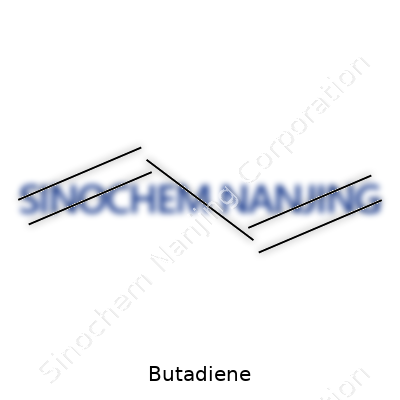
| Names | |
| Preferred IUPAC name | buta-1,3-diene |
| Other names |
1,3-Butadiene Biethylene Divinyl Vinylethylene |
| Pronunciation | /ˌbjuːtəˈdaɪiːn/ |
| Identifiers | |
| CAS Number | 106-99-0 |
| Beilstein Reference | Beilstein Reference: 1641132 |
| ChEBI | CHEBI:39479 |
| ChEMBL | CHEMBL14338 |
| ChemSpider | 5288 |
| DrugBank | DB01982 |
| ECHA InfoCard | 100.013.196 |
| EC Number | 203-450-8 |
| Gmelin Reference | 113 |
| KEGG | C06561 |
| MeSH | D001972 |
| PubChem CID | 7847 |
| RTECS number | EI9275000 |
| UNII | QT9P9F3W8S |
| UN number | UN1010 |
| Properties | |
| Chemical formula | C4H6 |
| Molar mass | 54.09 g/mol |
| Appearance | Colorless gas with a mild aromatic odor |
| Odor | Faint aromatic odor |
| Density | 0.62 g/cm³ |
| Solubility in water | Insoluble |
| log P | 1.99 |
| Vapor pressure | 43 psia @ 20°C |
| Acidity (pKa) | 15.7 |
| Basicity (pKb) | -10.67 |
| Magnetic susceptibility (χ) | χ = -8.10 × 10⁻⁶ cm³/mol |
| Refractive index (nD) | 1.429 |
| Viscosity | 0.19 cP at 25°C |
| Dipole moment | 0.00 D |
| Thermochemistry | |
| Std molar entropy (S⦵298) | 276.6 J·mol⁻¹·K⁻¹ |
| Std enthalpy of formation (ΔfH⦵298) | +111.9 kJ/mol |
| Std enthalpy of combustion (ΔcH⦵298) | -2541 kJ/mol |
| Pharmacology | |
| ATC code | D08AX53 |
| Hazards | |
| GHS labelling | GHS02, GHS04, GHS05, GHS07, GHS08 |
| Pictograms | GHS02,GHS07 |
| Signal word | Danger |
| Hazard statements | H220, H280, H340, H350 |
| Precautionary statements | P202, P210, P261, P280, P308+P313, P377, P381, P405, P501 |
| NFPA 704 (fire diamond) | 3-4-2-F |
| Flash point | -76°C |
| Autoignition temperature | 420 °C |
| Explosive limits | 1.6% - 12.0% |
| Lethal dose or concentration | LD50 (oral, rat): 5470 mg/kg |
| LD50 (median dose) | LD50 (median dose): 5480 mg/kg (oral, rat) |
| NIOSH | 2000 ppm |
| PEL (Permissible) | 1000 ppm |
| REL (Recommended) | 2 ppm |
| IDLH (Immediate danger) | 2000 ppm |
| Related compounds | |
| Related compounds |
Butene Buta-1,3-diyne Cyclobutadiene Isoprene Vinylacetylene |



