Bromoethane: Dusting Off a Small but Mighty Reagent in the Lab
A Look Back at Bromoethane’s Origins
Bromoethane, sometimes called ethyl bromide, didn’t stumble into chemical catalogs by accident. By the middle of the nineteenth century, chemists figured out how to convert ethanol to a far more reactive building block with the help of bromine-based reagents. Early on, the field recognized its knack for slipping a reactive ethyl group onto molecules. Its story reflects a time when the pursuit of better laboratory tools led to experimenting with all sorts of halogenated hydrocarbons. Various luminaries in chemistry circles, from European labs to American research schools, put it through its paces as soon as they got their hands on decent supplies of bromine. Cracking out bromoethane required real attention to detail, since quick, safe, and pure production methods didn’t just fall from the sky. Plenty of trial and error carved a spot for it among the foundational reagents of organic chemistry.
What Makes Bromoethane Tick
Walk into a chemistry lab and ask for bromoethane; someone might roll their eyes at the pungent odor before handing you a bottle of colorless liquid. Chemically, it’s a simple story: one ethyl group stuck to bromine. Boiling happens not too far above room temperature, which means that it’s pretty volatile—open a cap, and you’ll know it’s there almost immediately. The density tips a bit heavier than water, a trait that hints at those halogen atoms swinging the scales. Around water, it doesn’t stick around for long, thanks to its partial solubility and tendency to hydrolyze, and just about any fire risk assessment flags it as flammable and a volatile organic compound of note. From my experience, lab benches get a good airing out after working with it, and gloves stay on throughout—the skin absorbs more than some folks might think.
On the Label: Technical Specs
What the labels miss—beyond the basics like molecular weight and melting and boiling points—are the quirks you learn from handling it. Purity matters, especially for fine chemical synthesis. Commercial supply often hits 99 percent or better, but trace water or other alkyl halides can pose headaches. In practice, chemists check for color, as any yellow tint could point to the product breaking down. Storage in tight containers under cool conditions isn’t just suggested, it’s gospel in any lab that wants reagents to last their shelf lives. The clear, sharp smell is a dead giveaway for leaks, so regular checks aren’t something you leave to chance. I’ve poured over enough material safety data sheets and technical bulletins to know that bromoethane demands respect at every step from receipt to cleanup.
Classic and Current Preparation Routes
Preparing bromoethane in the lab—many of us see it as a rite of passage. The classic route pairs ethanol with a mix of sodium bromide and sulfuric acid. Those with a memory for details will recall the careful distillation to keep things clean, since by-products lurk in the background if you rush. Industry takes the process a bit further, tweaking ratios and scaling up with safety gear that puts even the most diligent teaching lab to shame. Decades of tinkering have chased higher yields and fewer side products, but the principle stands: get the right alcohol and acid mixture with a bromide salt, keep everything dry, and distill with care. Modern greener chemistry pushes for better alternatives, yet in research settings, this prep remains a familiar presence.
Reactive Nature and What Happens Next
You can count on bromoethane to react in all the predictable ways of an alkyl halide. In the right hands, it becomes a quick fix for tacking ethyl groups onto nucleophilic partners—amines, thiols, and oxygen atoms. Its straightforward structure often makes it go-to for testing new reaction methodologies. Chemists have pushed it into a long list of bond-building routines, from the time-honored Williamson ether synthesis to dozens of C–C, C–N, and C–O couplings. In my student days, being handed a flask of bromoethane signaled an afternoon of careful pipetting, glassware cleaning, and final product isolation. You can etch the sequence into muscle memory by the end of a semester, but the reach of bromoethane’s chemistry only grows as new catalysts and methods open up its reactivity even more. If the reaction fails, anyone who’s worked with the compound suspects moisture or escape of that precious, low-boiling reagent.
Other Names for the Same Reagent
Across the world, chemists might call out “ethyl bromide,” “bromoethane,” or even simply C2H5Br. Trade catalogs, research papers, and regulatory paperwork use these names interchangeably. Old literature has dipped into synonyms like hydrobromic ether, especially in translations of late nineteenth-century texts. In practice, you don’t need to look up more than a handful of synonyms to find the bottle you need—if it’s a short-chain, two-carbon molecule with a bromine atom, it’s what the synthesis team wants.
Working with Standards in Mind
Years spent in both academia and industry teach you that not every lab sticks to perfect protocol, but even the most seasoned chemist respects the risks bromoethane brings. Ventilated hoods are a must—its vapor rides high on lists of lab hazards. Gloves and goggles stop the compound from hitting eyes and skin. Proper labeling stares out from every bottle, and the importance of double-checking valves and joints stays fresh for anyone who’s heard gas-phase bromoethane slip into the air. In the bigger picture, industrial sites juggle even stricter standards, pushing for closed handling systems, leak detection, and real-time monitoring. Regulations keep pace, nudging labs towards lower exposure and better training, which is why long experience with bromoethane never drops basic risk awareness from the routine.
Where Bromoethane Does Its Work
Being small and reactive gives bromoethane a special place in organic synthesis. It’s a staple for creating ethylated intermediates—compounds that bridge to pharmaceuticals, dyes, and specialty chemicals. Agri-chemicals research draws on it to build new molecular skeletons. In the pharmaceutical world, those who synthesize APIs search for any route with fewer steps, and bromoethane helps unlock a few key shortcuts. The dye sector and flavors industry sometimes lean on its utility in making elusive aromatic compounds. On rare occasions, it lands in veterinary medicine or niche surface treatments. Most of these applications demand high purity and reliable delivery, so manufacturers in these sectors watch every step from sourcing to final formulation. Anecdotally, teams tackling new synthetic challenges still keep a well-capped bottle on their reagent shelves, knowing old tools often open new doors.
Recent and Ongoing Research
Keeping a finger on the pulse of chemical innovation means watching how old reagents find new work. Research groups have branched out, using bromoethane for asymmetric synthesis, tweaking selectivity or efficiency with novel catalysts. The interest isn’t just academic—manufacturers want ways to shave costs and environmental impact by swapping in greener reagents, reducing solvent waste or improving atom economy. Patent filings tell their own story, with bromoethane at the heart of several new medicines and crop science advances. Journals still print new routes and reaction sequences, expanding the compound’s reach into modern materials and bioactive small molecules. In the hands of creative researchers, bromoethane’s value gets renewed almost every year.
Questions About Toxicity and Handling
The hazards of working with bromoethane aren’t a theoretical concern—they’re built from decades of both measured studies and grim stories from those who missed safety procedures. It’s a central nervous system depressant, and repeated exposure causes headaches and, in severe cases, tremors or confusion. Animal studies underline its toxicity, fueling regulatory interest in handling, storage, and disposal protocols. On a personal level, the sickly-sweet smell alone convinces most lab workers to keep the exposures brief. Environmental impact has crept into discussions as well. Its volatility means atmospheric release isn’t rare during routine use, though modern hoods and traps try to intercept as much as possible. Younger generations of chemists hear more about the cumulative risk and keep a sharper eye on logs, monitoring systems, and exposure limits.
Gazing Forward: What’s Next?
With sustainability guiding a lot of current chemical research, folks want to know how long bromoethane keeps its foothold. Calls for alternatives echo in both regulations and research. Cleaner, safer alkylation methods top the wish-lists of industry and environmental watchdogs alike. That said, the efficiency and reliability of bromoethane in delivering ethyl groups make it tough to swap out overnight, especially when new methods must match both performance and price. Alternatives keep emerging, but real-world adoption runs slower in sectors tuned to productivity over novelty. A handful of process chemists, tired of the same old hazards, work on routes that sidestep bromoethane without sacrificing yield. The future carries both pressure for greener practices and respect for reagents that do the job right—bromoethane’s story shows no sign of closing just yet, as chemists weigh legacy methods against a changing scientific and regulatory landscape.
What is Bromoethane used for?
From Chemistry Labs to Industry Floors
Bromoethane has a reputation as a workhorse in chemical synthesis. I first came across this compound during a college organic chemistry course, where making alkyl bromides introduced us to its signature smell and volatility. Today, industries still reach for bromoethane because it reacts quickly, joining molecules together to form new ones. You’ll often find it in pharma research, helping scientists build complex medicines by lending its ethyl group to different chemical backbones.
Wider Uses Across Many Fields
Beyond textbooks and labs, bromoethane continues to turn up wherever precision and efficiency matter. In factories, it often acts as a starting material for dyes and pesticides. Though some might not realize, products containing bromoethane help keep crops healthy and colors vivid—from vegetable fields to t-shirts. Unlike older compounds that hung around in soil and water, bromoethane breaks down more quickly, which researchers cite as a partial advantage in environmental safety discussions.
Safety Matters
Handling bromoethane can get risky. Many who work with it remember stories of its toxic nature. Even small spills need care, as inhaling the vapors or getting it on your skin leads to irritation or more serious health problems. The National Institute for Occupational Safety and Health puts strict limits on how much workers can breathe and touch each day. These rules matter, not just for compliance but for real-world health. Workers deserve more than empty promises—they need gear that works, spots with good ventilation and training that sticks.
Environmental Responsibility
Bromoethane’s chemical make-up gave it a place in fumigation for years. People used it to clear pests from stored grain or greenhouses. Environmental scientists flagged its role in ozone depletion, similar to some refrigerants and solvents that damaged the sky-high ozone layer. When scientists demonstrated the link using atmospheric samples and lab studies, countries started phasing out bromoethane in many major applications. The Montreal Protocol directly influenced these decisions, pushing industries toward less damaging substitutes.
Innovation and Safer Alternatives
Industries and researchers now put serious effort into creating safer routes to make molecules, both for people and the planet. In pharma and pesticide creation, scientists turn to greener chemistry to cut down on hazardous side products. Changing from solvent-heavy processes to those that use water or renewable feedstocks inches the field closer to sustainability goals. In my own experience, setbacks come frequently in this line of work, but every small improvement on paper often prevents genuine harm out in the real world.
What Comes Next?
Bromoethane still fills a vital role in synthesis and research, but its place keeps evolving. Regulatory agencies inspect new uses and work with companies to monitor emissions, keeping people informed with updated risk assessments and guidelines. The next step involves more cross-disciplinary partnerships, bringing chemists, engineers, and environmental specialists together to review every link in the supply chain. Such teamwork stands the best chance at building a future where industry thrives and communities stay safe.
What are the safety precautions when handling Bromoethane?
Why Bromoethane Demands Attention
Bromoethane might look barely different from a bottle of clear nail polish remover, but it packs a punch that few household chemicals can match. Those who have ever spilled a strong solvent on bare skin know the tingling and smell can stick for hours, but with bromoethane, that hazard climbs much higher. Inhalation, skin exposure, or careless handling can each leave a mark physically or even trigger a visit to the emergency room. Bromoethane’s toxicity and the speed at which it can affect the body mean there’s no room for shortcutting safety.
Direct Contact and Inhalation Risks
Just a splash or an accidental whiff of bromoethane can go straight for the liver, kidneys, and central nervous system. Some might shrug off the first headache or wooziness, but organ damage does not knock politely. OTC painkillers can’t scrub bromoethane out of the bloodstream. Prolonged inhalation, whether working over an open flask or cleaning up a spill, can end with real health fallout—tremors, breathing troubles, or worse.
Work in a well-ventilated lab. Open doors and windows to keep things moving, or better yet, set up under a fume hood if you have one. Respirators with organic vapor cartridges offer needed protection if ventilation can’t guarantee clean air. I’ve seen people gamble on their sense of smell to detect danger, only to suffer symptoms halfway through their task. The chemical often outpaces human senses.
Skin and Eye Protection
There’s no gentle way around the irritation bromoethane brings to unprotected skin. Nitrile gloves hold up better than latex, but even those should be paired with frequent checks for pinholes or tears. Chemical splash goggles belong on your face before you open a bottle, not once you feel a burning sensation in your eyes. Splashproof lab coats block surprises from leaky pipettes or accidents with bottles, saving skin from painful rashes and more serious burns.
Safe Storage and Labeling
Bromoethane does not belong near a heat source or sunlight. A toughened, tightly sealed bottle keeps it from evaporating and leaking. I’ve seen shelves where labels have faded or dripped off—never store anything with an unreadable label. Store containers in cool, fire-proof cabinets, kept away from acids or oxidizers that could kick off a dangerous reaction.
Training makes a bigger difference than all the warning labels in the world. Spend a few hours in a quality lab class and you’ll watch people take safety for granted—until a near-miss wakes everyone up. Nobody in a workspace likes to admit confusion, but clarifying chemical handling instructions sometimes saves blood, time, and dignity.
Waste and Emergency Response
Pouring old bromoethane down a sink drains more than chemicals; it can ruin pipes and send toxins everywhere they shouldn’t go. Every lab should keep spill kits, absorbents, and neutralizers close. Immediate access to emergency showers and eyewash stations doesn’t just tick a compliance box—it spares real injuries when accidents strike. The few minutes saved by skipping cleanup steps could cost hours or days in recovery.
Bromoethane isn’t forgiving. Work slowly, check those gloves, and don’t let curiosity or overconfidence cut corners. Protection and training carry more weight than any label or warning sign. In this field, looking after yourself isn’t just a suggestion—it’s a survival skill.
What is the chemical formula of Bromoethane?
Getting to Know Bromoethane
Bromoethane has a simple chemical formula: C2H5Br. Think of two carbon atoms and five hydrogen atoms bound together, with one of the hydrogens replaced by a bromine atom. In labs and industry, people call it ethyl bromide. The stuff looks like a clear, colorless liquid and has a pretty strong, sweet odor. Handle it the wrong way and you’ll notice that smell quickly.
Why Does the Formula Matter?
The structure sets the stage for everything bromoethane can do. Straightforward, sure, but that arrangement means it reacts fast, and with a lot of other compounds. Researchers in organic chemistry put C2H5Br to work as an alkylating agent. That means it takes a bit of itself and sticks it onto something else, creating new compounds that serve as building blocks for medicines, dyes, and plenty of other products.
There’s a practical angle to knowing chemical formulas. If you’re developing drugs, purity and reproducibility matter. C2H5Br reacts the same way every time if you get the formula and the conditions right. That’s how pharmaceutical companies protect the integrity of their products and why raw material testing always checks for the right composition, not just the name.
Health and Safety Risks: Recognizing the Dangers
Chemistry textbooks stress that bromoethane isn’t something you’d want to handle without gloves and plenty of ventilation. It irritates the eyes and skin. Inhaling even small amounts can lead to dizziness, headaches, or worse after long exposures. These risks have real-life consequences. I remember coming across old research storage areas where leftover solvents, including ethyl bromide, leaked and posed risks to anyone walking in unsuspectingly.
Bromoethane can also impact the environment. If it escapes into the air, it breaks down but not before causing some harm. That’s why sensible labs and industry leaders put their energy into using tightly sealed systems, skilled staff, and good policies to manage risk. Mistakes happen. Good training and awareness help prevent dangerous exposures, and the right chemical formula reminds everyone to treat bromoethane with respect.
Better Ways to Work With Bromoethane
The chemical formula C2H5Br isn’t just academic—understanding it helps set safety limits, proper storage conditions, and emergency response steps. Protocols exist for safe handling, but following them takes real commitment. Companies regularly review MSDS sheets, maintain proper labeling, and run drills for spills. These investments save trouble later.
Research on greener alternatives to bromoethane has picked up speed. The search interests me because finding less hazardous chemicals means fewer accidents in the long run. Some chemists have made substitutions in experiments, but often the reactivity of bromoethane makes it tough to replace. Safety audits and modern ventilation improve conditions, while automated systems lower exposure risk for workers.
Supporting Chemistry’s Progress
Chemists and engineers rely on clear chemical formulas to push science forward. Every time I see “C2H5Br,” I recall not just the structure, but the responsibility it carries. Bromoethane builds molecules that end up in medicines, plastics, and many everyday items, proving that chemistry touches all parts of life. The story of a formula like this isn’t just in textbooks—it's alive in labs, where careful attention matters each day.
How should Bromoethane be stored?
Understanding Bromoethane Risks
Bromoethane looks like a simple clear liquid on a shelf, but safety around it shouldn't get brushed aside. Even if you're used to handling chemicals daily, ignoring the specifics with bromoethane can land a shop or lab in trouble. Many reports point out accidents linked to small storage errors that snowball into bigger incidents. I’ve seen plenty of veteran workers take shortcuts, only to regret it later. Bromoethane can catch fire, and those vapors can creep up without much warning. Health risks—like breathing problems—often go ignored until there’s an incident. It’s not just about ticking boxes for inspectors. It's about respecting a substance that won’t respect you back if taken lightly.
The Real Meaning of Proper Storage
Storing bromoethane asks people to go beyond just “put it in a cool place.” A cool, dry spot, away from sunlight and open flames, matters. I used to work in a lab where the difference between a safe shelf and a makeshift one meant hours of damaged samples and exposed workers. Metal or glass bottles, not plastic, hold bromoethane best. Some plastics crack or soften over time, turning a tiny leak into a big headache. Avoid metal with exposed seams or rust, since bromoethane reacts with several base metals.
Ventilation and Isolation
Too many folks stash chemicals in cramped cabinets. Without solid airflow, bromoethane vapor can build up over a weekend and hit hard on Monday morning. Good lab practice means a ventilated, spark-proof space, not shared with acids, alkalis, or oxidizers. Chemicals don’t judge, but they do react—sometimes violently—when care slips and storage areas get crowded or cluttered.
Labeling and Security—The Overlooked Details
A missing label doesn’t seem urgent until someone mistakes bromoethane for a less harmful solvent. Every year, poison control centers log cases rooted in simple mislabeling or careless storage. At my old job, a new technician once poured bromoethane into the wrong waste bin. The only thing stopping a fire was luck, not planning. A clear label with hazard signs, date of purchase, and owner info can save lives. Also, don’t stash this stuff in public hallways or closets that anyone can walk into; a locked, ventilated chemical cupboard tops the list.
Fire and Spill Preparedness
Many people hesitate to invest in proper fire suppression just for one chemical, but a single missed spark can gut a whole facility. Anyone storing bromoethane should keep a CO₂ or foam extinguisher close—not a water-based one—since water will just spread the burning liquid farther. Spill kits for solvents become crucial; in one spill incident I witnessed, workers wore only rubber gloves, not knowing vapor masks would’ve done more. Quick cleanup gear must be within arm’s reach, not left in some locked storeroom.
Training and Regular Checks
Plenty of disasters start with overconfidence and end in preventable harm. New staff, even those with chemistry backgrounds, benefit from regular drills and real talk about chemical dangers. Check the storage area weekly. Leaks, rusted shelves, and overheated spaces signal it’s time to take action. Taking the few minutes to look over bottles, clear vents, and update labels makes a world of difference. Learn from those who’ve seen close calls—because bromoethane doesn’t give do-overs.
What are the potential health hazards of Bromoethane exposure?
What Is Bromoethane?
Bromoethane shows up in labs and factories—used to make pharmaceuticals, dyes, and other chemicals. It’s a colorless liquid that evaporates fast. Just a whiff signals trouble, even before reading any data sheets. Breathing in something that sharp and sweet isn’t something to shrug off, because the risks run deeper than a foul smell. Knowing what bromoethane can do to the body, and not relying on luck to avoid contact, makes a real difference for workers and people living near production sites.
How Bromoethane Gets into the Body
Most cases of exposure happen by breathing the vapor or from skin contact. Small spills, leaking valves, or contaminated gloves create an invisible risk. The lungs and skin let bromoethane slip directly into the bloodstream. Even brief contact leaves its mark, and the consequences don’t always show up right away.
Short-Term Hazards
People who inhale bromoethane often feel dizzy, get headaches, or feel nauseous within minutes. Eyes might water and skin can feel irritated. At higher levels, bromoethane knocks deeper systems off balance—confusion, fatigue, or even loss of consciousness can pile up fast. I once toured a chemical plant where a worker forgot his mask for lunch break cleanup; he landed in the emergency room a few hours later because he thought he just had a cold, but it turned into much worse. Short exposures at high doses lead to damage in real time. The US National Institute for Occupational Safety and Health (NIOSH) labels bromoethane as immediately dangerous to life or health above 200 parts per million in air. That’s a tiny amount—barely anything in the room—enough for big trouble without proper controls.
Long-Term Dangers
Prolonged contact adds a different layer of risk. Chronic exposure changes how the nervous system works. Some people suffer memory loss, mood swings, or have trouble with balance. Long-term bromoethane exposure can also lead to liver and kidney damage. During my early research training, I met a technician who handled bromoethane for years; his tremors and anxiety were eventually traced to subtle nerve damage from poor ventilation at his station. Researchers point to bromoethane’s ability to change DNA in cells, and animal studies hint at possible links to cancer. No amount of routine makes this type of hazard safe for the long haul.
Putting Health and Safety First
No special insight is needed to see that avoiding bromoethane exposure is safer than treating its effects. Direct ventilation and sealed systems work best for controlling airborne levels. Modern labs use closed handling equipment and personal monitors that sound an alarm if bromoethane escapes into the air. Gloves and face shields block liquid splashes. Training and drills make sure everyone reacts fast if something goes wrong. The Centers for Disease Control and Prevention (CDC) and the Occupational Safety and Health Administration (OSHA) publish clear limits for workplace exposure. These numbers aren’t arbitrary—they reflect the hard lessons from real accidents and published research. Washing hands often, changing out of contaminated clothes right away, and never ignoring symptoms—all of this helps protect workers and nearby communities.
Better Solutions for Safer Workplaces
No single tool stops bromoethane hazards. Layered defenses work best. Automated leak detectors, strict storage rules, and emergency response plans all close gaps. Engineers continue looking for less toxic substitutes where possible, which means new product formulas can sometimes sidestep old risks. Scientists and safety officers share discoveries and accident reports, so everyone raises the bar year after year. Paying close attention to these lessons—from health checks to safer equipment—keeps people healthy and at work.
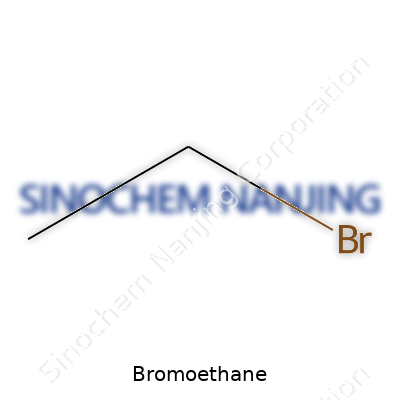
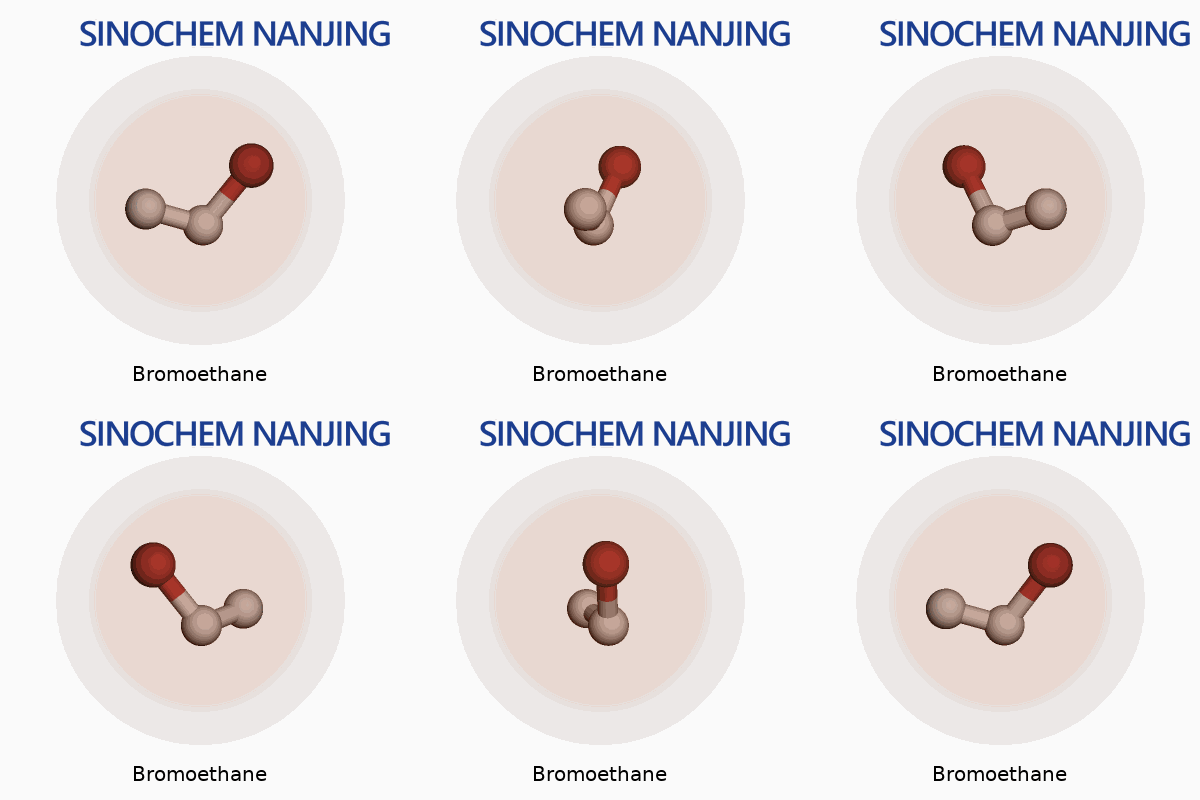
| Names | |
| Preferred IUPAC name | Bromoethane |
| Other names |
Ethyl bromide Ethyl bromine Bromoethan |
| Pronunciation | /ˌbrəʊməʊˈiːθeɪn/ |
| Identifiers | |
| CAS Number | 74-96-4 |
| Beilstein Reference | 3580130 |
| ChEBI | CHEBI:32538 |
| ChEMBL | CHEMBL41524 |
| ChemSpider | 6829 |
| DrugBank | DB01026 |
| ECHA InfoCard | 100.003.022 |
| EC Number | 200-825-8 |
| Gmelin Reference | 956 |
| KEGG | C01782 |
| MeSH | D001943 |
| PubChem CID | 6336 |
| RTECS number | EO1400000 |
| UNII | 2D8TA4F7HM |
| UN number | UN1891 |
| CompTox Dashboard (EPA) | urn:lsid:hubbardhub.com:chemid:744 |
| Properties | |
| Chemical formula | C2H5Br |
| Molar mass | 108.97 g/mol |
| Appearance | Colorless liquid |
| Odor | faintly ethereal |
| Density | 1.46 g/cm³ |
| Solubility in water | 6.88 g/100 mL (20 °C) |
| log P | 2.10 |
| Vapor pressure | 2470 mmHg (at 20 °C) |
| Acidity (pKa) | pKa ≈ 50 |
| Basicity (pKb) | approx. -0.1 |
| Magnetic susceptibility (χ) | -57.0×10⁻⁶ cm³/mol |
| Refractive index (nD) | 1.434 |
| Viscosity | 0.233 cP (20 °C) |
| Dipole moment | 1.83 D |
| Thermochemistry | |
| Std molar entropy (S⦵298) | 109.5 J·mol⁻¹·K⁻¹ |
| Std enthalpy of formation (ΔfH⦵298) | −91.0 kJ mol⁻¹ |
| Std enthalpy of combustion (ΔcH⦵298) | –2876.0 kJ/mol |
| Pharmacology | |
| ATC code | N01AB02 |
| Hazards | |
| GHS labelling | GHS02, GHS06, GHS07 |
| Pictograms | GHS02,GHS06 |
| Signal word | Danger |
| Hazard statements | H225, H302, H312, H315, H319, H332, H335, H351, H373, H411 |
| Precautionary statements | P210, P261, P280, P301+P310, P304+P340, P305+P351+P338, P312, P403+P233, P501 |
| NFPA 704 (fire diamond) | 1-4-0-Σ |
| Flash point | -23 °C |
| Autoignition temperature | 460 °C (860 °F; 733 K) |
| Explosive limits | Explosive limits: 10–15% |
| Lethal dose or concentration | LD₅₀ oral (rat): 835 mg/kg |
| LD50 (median dose) | LD50 (median dose): 860 mg/kg (oral, rat) |
| NIOSH | KK8225000 |
| PEL (Permissible) | 100 ppm |
| REL (Recommended) | 40 ppm |
| IDLH (Immediate danger) | 800 ppm |
| Related compounds | |
| Related compounds |
Chloroethane Fluoroethane Iodoethane 1,2-Dibromoethane |



