Benzyl Benzoate: A Substance with Many Sides
Tracing Roots: The Historical Perspective
Long before Benzyl Benzoate showed up on the shelves of pharmacies and chemical suppliers, this compound started turning heads in the late nineteenth century. Early pharmacists began using it in ointments to treat skin troubles, especially scabies and lice. Medical professionals favored it because its actions against mites stood out compared to other remedies with limited effect and greater risk. Through the decades, researchers kept poking at Benzyl Benzoate, testing its limits and finding new angles for its use — far beyond what first-century alchemists and herbalists could have imagined. The compound’s journey mirrors the path of many chemicals: discovered for one thing, then repeatedly rediscovered as scientific curiosity pushed its story forward.
What Makes Benzyl Benzoate Special?
Benzyl Benzoate often looks like a clear, slightly oily liquid when at room temperature. Its scent has a faintly sweet, balsamic touch, sometimes likened to the aroma of bitter almond or cherry — no accident since it appears naturally in certain fragrant plants. Unlike more temperamental chemicals, it does not break down easily. This stubborn stability contributes to its versatility, as it doesn’t react to air or moderate heat. Solubility in common solvents, like alcohol and ether, makes it a good candidate for mixing in lots of formulations. Recognizing these physical clues, it becomes clear why so many industries have leaned on it, from medicine to manufacturing.
Reading the Label: Technical Details and Presentation
Looking at bottles of Benzyl Benzoate, regulatory requirements call for more than just a name. You will see its chemical formula, C14H12O2, and some technical references list other names it goes by, including Benzoic Acid Benzyl Ester. Labels in the pharmacy or factory always warn about keeping the fluid tightly sealed, away from kids, and far from food storage. These aren’t empty precautions. Even household formulations, like older scabies treatments, have warnings carved in bold type by regulators who expect clear instructions. The professionals handling the substance each day follow strict protocols for measurement and application to prevent mishaps and confusion.
From Start to Finish: Preparation and Production
Chemists most often produce Benzyl Benzoate by reacting benzyl alcohol with benzoic acid. Several methods exist. Some manufacturers use direct esterification, adding acid catalysts and controlling temperature to coax the two chemicals into forming the ester. Others rely on transesterification reactions when using methyl or ethyl benzoate as starting points. Each method has trade-offs in speed, purity, or yield. What drives this effort is the need for a high-quality product — free of contaminants that could spoil medicines or irritate skin. Production facilities gear their operations around these demands. For every liter that rolls off the line, there is quality assurance by lab workers running tests to confirm exactly what is, and isn’t, inside.
What Happens in the Lab: Chemical Modifications and Uses
Benzyl Benzoate, from a chemistry standpoint, offers a reactive site at the ester bond. That feature gives chemists options to tweak its structure, blend it into more complex molecules, or break it down as needed. Research papers detail its transformation into specialty plastics, lubricants, and flavor additives. Sometimes, labs create derivatives that end up in perfumes or as intermediates for other drugs. Its resistance to rapid breakdown under mild conditions keeps it working well in formulations that demand shelf stability. Products that rely on precise chemical properties look to Benzyl Benzoate as a building block, not just an end result.
Safety Standards and Handling in Practice
Safety isn’t a box to check after the fact; it takes center stage from the moment Benzyl Benzoate arrives on site. Medical literature documents both its irritant properties and risks with overexposure. Skin contact for short periods — especially under guidance — often resolves problems like itching without lasting issues. Poison control professionals raise flags about swallowing or chronic inhalation, which can trigger nervous system symptoms or allergic reactions. Hospitals, labs, and manufacturers train staff on containment and use adequate ventilation to curb unnecessary exposure. Regulations around the world, including frameworks from the EPA and the European Chemicals Agency, set boundaries for safe concentration, purity, and storage. Those policies matter, not just for workers but for patients who rely on the compound to work as promised.
The Breadth of Applications
People tend to first hear about Benzyl Benzoate as an ingredient in lotions or shampoos that tackle scabies and lice. That’s not the only string on its bow. Large-scale production in the chemical industry makes it valuable as a solvent for cellulose derivatives and dyes. Textile manufacturers use it for spinning synthetic fibers. In agriculture, some formulas lean on its properties to keep pests at bay, giving farmers extra tools when crops face infestations. Perfumers and flavor chemists have historically valued its sweet, almost almond-like note and ability to act as a fixative for volatile aromas. Rubber and plastic industries incorporate it during mixing, where its stability and solvency help bind components. The sweeping reach of Benzyl Benzoate reflects an intersection between utility and accessibility most other synthetic esters rarely match.
New Frontiers and Ongoing Study
Scientists circle back to familiar chemicals, hoping to squeeze out more potential uses or eliminate safety barriers. Recent research into Benzyl Benzoate keeps opening new doors. Dermatology clinics document patterns of patient response, fine-tuning dosage and exploring blends with other agents to improve results against resistant scabies. Analytical chemists trial its use as a marker in drug metabolism studies. Environmental labs check its break-down rate, seeking assurance that it doesn’t linger unduly in water or soil. The pharmaceutical pipeline continues to analyze derivatives and impurities, motivated by a wave of regulations focusing on patient safety and drug quality. Besides medical and industrial channels, academic groups test its suitability in biodegradable plastics and as a safer alternative in fragrance delivery systems.
Turning a Light on Toxicity Concerns
Though Benzyl Benzoate enjoys wide usage, that’s not an open invitation to ignore health risks. Animal studies have flagged significant symptoms at high concentrations, like tremors and breathing changes, while long-term, low-level use can lead to sensitization or allergic dermatitis in humans. The World Health Organization and national agencies keep its allowable levels under review, especially for use in personal care goods and medications applied to young children. In my own years working with pharmaceutical ingredients, I’ve seen regulatory bodies demand robust toxicity data, batch-to-batch purity tests, and rigorous investigation of impurities or unintended byproducts. Growing consumer scrutiny, sparked by health scares and product recalls, puts even more pressure on companies to ensure that Benzyl Benzoate in final products matches documented safety parameters. Risk assessment sites and poison control centers routinely update their advice based on ongoing toxicology reviews.
Looking Ahead: The Role of R&D
Future prospects for Benzyl Benzoate rest on the shoulders of ongoing innovation. Laboratories worldwide experiment with ways to reduce side effects, improve the efficiency of synthesis, and unlock new value from its core structure. Some researchers focus on its application in delivering active pharmaceutical ingredients for targeted therapies, especially for skin disorders. Others search for green chemistry routes, replacing old acid-based methods with more sustainable catalysts or recyclable solvents. Industry alliances collaborate with regulatory watchdogs to balance innovation with safety, aiming to lower toxicity risks while keeping costs down for mass production. The real momentum comes from this push-pull between practical demand and safety constraints. As new uses keep cropping up, the scrutiny from regulators and the marketplace grows firmer. Close attention to how Benzyl Benzoate behaves, both in the lab and in the real world, will shape its future just as much as any breakthrough in chemistry.
What is Benzyl Benzoate used for?
Everyday Solutions Hiding in Plain Sight
Benzyl benzoate rarely gets much attention outside labs or pharmacy aisles, but anyone who has dealt with persistent skin itching or had pets with stubborn parasites probably has some unspoken gratitude for it. My first introduction to benzyl benzoate was as a young adult, fighting off relentless scabies after volunteering at a summer camp. That small bottle offered quick relief when nothing else seemed to work.
Battle Against Scabies and Lice
Doctors have handed out benzyl benzoate lotions and creams across the globe for decades, especially in places where health systems aim to stretch every resource. It works by paralyzing and killing mites and lice, cutting through cycles of reinfestation that can leave communities miserable. The World Health Organization lists it as an essential medicine for scabies, a condition causing more global suffering than many realize. In crowded cities, rural villages, shelters, and refugee camps, a bottle of benzyl benzoate can mean nights of sleep instead of endless scratching.
Simplicity Pays Off in Tough Conditions
People living in underserved areas often face limited treatment options for skin conditions. Benzyl benzoate’s long shelf life and low cost go a long way here. While prescription-strength alternatives exist, affordability often determines who gets help and who does not, especially where healthcare infrastructure is stretched thin. I’ve spoken with rural clinicians who store benzyl benzoate next to antibiotic creams and painkillers—essentials that earn their place with reliability rather than hype.
Role in Personal Care and Beyond
Most folks never realize benzyl benzoate lurks in perfumes, as a solvent and fixative. It helps extend a fragrance, blending essential oils and stabilizing that signature note in the bottle. Cosmetic chemists rely on it for its low toxicity at recommended levels and its useful properties in the formulation process. People with sensitivities to certain cosmetics might want to check the label, but for most, it quietly does its job, smoothing products before they reach store shelves.
Industrial and Veterinary Uses
Benzyl benzoate does not keep its skills just for people. Veterinarians reach for it to treat mange in livestock, protecting both animal welfare and farmer livelihoods. In textile factories, it sometimes serves as a plasticizer—helping shape or finish certain fabrics, giving them a softer feel or improved durability. Each use rests on a combination of safety record and performance, tried and tested in situations far from the laboratory bench.
Room for Safer Awareness
Proper use of benzyl benzoate matters. Overuse or application to broken skin can lead to rashes or burning, especially in young children or people with sensitive skin. Healthcare advice and clear labeling offer the best chance to avoid misuse. In times of infestation, fast relief brings peace of mind—so long as directions are read and followed.
Striking a Balance With Accessibility
Many countries regulate benzyl benzoate as an over-the-counter product, while keeping safety information front and center. Health authorities and aid organizations can boost education through local outreach and packaging improvements, making this unassuming compound a tool for dignity as well as healing. Its impact reaches beyond home remedies, touching lives in settings ranging from urban clinics to rural corners of the world. I've seen what happens when access breaks down; kids sitting out of school, families struggling to rest, parents worried for their infants. A small bottle can change all that—one use at a time.
How do I apply Benzyl Benzoate?
Understanding Benzyl Benzoate
Benzyl benzoate isn’t new to many folks looking for relief from scabies. Doctors in different countries still write it up for people struggling with that persistent itch. It’s a clear liquid with a faint smell, often provided in concentrations like 25%. I’ve seen family and friends use it, and I’ve read medical advice and safety information from reliable sources, like the World Health Organization, to better understand its use.
Preparation: Don’t Skip Steps
Start with clean skin. A lukewarm shower using mild soap helps remove dead skin and crusts. Dry off gently with a towel that you change afterward, keeping reinfestation risk low. Keep nails trimmed as mites like to hide there. Make sure any jewelry comes off, and if open sores or cuts exist, consider seeing a healthcare provider first. Skin health can make a big difference in how well treatments work and reduces risk of stinging or burning.
Applying Benzyl Benzoate: A Stepwise Approach
Pour some of the liquid into a small bowl. Dip a cotton swab, ball of cotton wool, or a clean, gloved hand into the liquid. Apply it in thin layers over every bit of skin from your chin down to your toes, including your soles and under your nails. Skip the face and the genitals unless your doctor gives you the go-ahead. Most folks miss spots behind knees, elbows, and underarms; that’s where scabies can hide without much effort. I recall a friend missing under her rings—mites hung on longer there. After spreading the medicine, let it dry before putting clothes back on.
Go for loose, cotton clothing. Tight or synthetic fabrics can cause sweating that increases irritation or dilutes the medication. Once application finishes, avoid bathing or washing your hands for 24 hours. If you do wash, dab on a little more to that area.
Safety and What to Watch
Benzyl benzoate stings—badly, sometimes—especially if skin’s been scratched raw. Small kids and older adults may feel more burning. If pain or blistering shows up, rinse off and get medical advice. Never swallow it or get it near the mouth and eyes. Accidental ingestion is serious, and the poison control center will have to step in.
Doctors usually recommend reapplying after a week if itching continues. One full-body treatment often knocks down mites, but eggs can hatch and restart the cycle, so follow-up matters. Cleaning routines—changing bedding and clothes, hot washing towels—go hand in hand with medicine. Mites can last a couple of days in fabric, according to American Academy of Dermatology data.
Treating the Whole Household
Living with others? All household contacts should treat themselves at the same time, even if no one else itches. Otherwise, it’s just back and forth, often for weeks. This advice came from my own doctor years ago. Pets don’t carry human scabies mites, so no need to treat them—focus on people and their stuff.
Improving Success and Comfort
If skin keeps flaring up or if you’ve tried home methods before seeing a provider, schedule a real check-in with a doctor. Scabies treatments work best when people tackle hygiene, stick to instructions, and loop in a clinician for follow-up. No one should feel embarrassed; scabies can happen to anyone.
Are there any side effects of Benzyl Benzoate?
Looking Closer at Benzyl Benzoate
Benzyl benzoate lands on many treatment lists for scabies and lice. Most folks think of it as an old-school answer, trusted by doctors for decades. Still, it brings more than a quick solution. When you look beneath the surface, side effects pop up that matter to families dealing with itchy skin and those worried about safety.
Common Reactions You Might Notice
Benzyl benzoate does its job by handling the mites or lice, but many people end up with irritation on their skin. That burning or tingling feeling comes not long after application. Some call it an itch; some feel a sting that seems stronger than before. Redness and rash aren’t rare either. These reactions stand out for people with eczema or those with dry, sensitive skin. The children in my neighborhood have tried benzyl benzoate under the guidance of their parents, and more than one came away crying because of the sting. These stories matter, especially as younger skin proves more prone to discomfort. According to studies published in the British Journal of Dermatology, mild to moderate irritation strikes almost half of treated children.
Risks That Don’t Go Away Easily
Using more than recommended or putting it on broken skin raises bigger risks. Skin can blister, and thick swelling can show up for some. If someone accidentally swallows it, or applies it to large skin areas, poisoning steps in fast. Symptoms like confusion, muscle twitching, and, in rare cases, convulsions or kidney trouble, have sent folks to the emergency room. The World Health Organization urges strict attention to instructions for a reason.
Asthma or allergy sufferers need extra care. Benzyl benzoate can trigger asthma attacks if fumes get inhaled. It can also cause allergic reactions, with hives and swelling showing up unexpectedly. I met a mother at a pharmacy who needed hospital care for her son after a routine treatment. Their allergy came out of nowhere. That’s a risk that needs talking about—especially without quick access to medical help.
Why It Matters
It’s tempting to stick with old remedies that worked for past generations. Still, modern families face crowded homes, different health conditions, and unequal access to help. A cream that some handle easily can spark serious problems for others. Low health literacy stacks the odds against safe use, as instructions get missed or misunderstood, especially in crowded clinics. Reports from the CDC highlight that benzyl benzoate, while effective, leads to higher reports of discomfort compared to newer scabies treatments.
How to Stay Clear of Problems
Reading directions, sticking to the right amount, and treating unbroken skin cuts down the risks. Talking to a pharmacist or doctor helps, especially for kids, pregnant women, and those with allergies. For families in tight spaces or with limited means, getting clear guidance makes all the difference. Easy-to-understand info sheets and follow-up calls from clinics give people better odds of using the product safely.
Other treatments, like permethrin, can be gentler on skin but not always available or affordable. Community programs that hand out sample packs and teach families about proper use lead to fewer complaints of stinging and fewer ER visits.
Listening to Experience Helps
Products like benzyl benzoate carry more than just instructions. They bring real stories from those who’ve used them and health workers who see results and side effects every day. Trust grows with honest talk about benefits and risks. Families deserve that knowledge as they tackle stubborn skin problems together.
Is Benzyl Benzoate safe for children?
Looking at Daily Use Products
Benzyl benzoate shows up in a lot of products we use every day—lotion, ointments, and some laundry detergents. I’ve seen it listed on the back of scabies treatments and insect repellents, too. Parents often wonder what it actually does, especially when their kids need something for itchy skin or a rash that won’t stop bothering them.
What the Science Tells Us
Doctors have prescribed benzyl benzoate for decades. The World Health Organization includes it in its guidelines for scabies, especially in places where affordable alternatives are limited. This chemical works well at killing the mites that cause scabies and other parasites, so it chases off the source right at the skin. Studies show quick improvement after a few applications. There’s no doubt it can do the job, but what happens to sensitive, developing skin?
I’ve seen kids use these treatments and come out with red, irritated skin, sometimes even raw patches. Reports and case studies warn about stinging, especially for babies and toddlers. Kids scratch, rub their eyes, and sometimes taste what’s on their hands. So, risk isn’t only what’s put on the skin, but also what might end up in the mouth or eyes. Babies have thinner skin than grown-ups, so chemicals sink in faster. That makes even a small dose stronger for a child than for an adult.
Regulation and Recommendations
The U.S. and Europe both take a strict approach. Most over-the-counter scabies medications for kids under two years old skip benzyl benzoate. Dermatologists usually point parents toward milder options, like permethrin or simple sulfur ointments, if possible. The American Academy of Pediatrics suggests using benzyl benzoate for kids only when safer choices aren’t available or have failed. Labels and doctor instructions stress using the right amount and keeping it away from eyes, nose, and mouth.
Weighing Benefits and Risks
As a parent, watching a child itch for days on end is tough. Scabies is stubborn, and home remedies rarely work. Sometimes families feel desperate. Benzyl benzoate offers fast relief, so it’s tempting to reach for it, especially if you’ve tried everything else. Still, the risk of burning or peeling skin—especially for younger kids—asks for caution. I know parents who’ve followed a doctor’s orders, only to end up with crying babies and endless nights. Often, that frustration comes from not fully understanding the risks or missing guidance on how to use the product safely.
Building a Safer Approach
The best bet often comes down to talking things through with a doctor or pharmacist. They can walk through whether benzyl benzoate is the top option or if another route—like permethrin—makes more sense for a child’s age or skin condition. Application matters as much as product choice: skip broken skin, use only as much as recommended, and rinse thoroughly after the treatment period. For infants, waiting for alternatives or using old-fashioned soap and water for mild problems prevents bigger issues in the long run. Good handwashing after applying any medicine also heads off accidental exposure to eyes or mouths.
Tackling health questions for kids has always come with worry. For benzyl benzoate, it’s never a one-size-fits-all call. Understanding the science, the risks, and the lived experience of families helps everyone steer clear of problems while still getting sore skin back to normal.
Can Benzyl Benzoate be used during pregnancy or breastfeeding?
Looking at Benzyl Benzoate Up Close
Benzyl benzoate gets used in creams and lotions, mostly to tackle scabies and lice. Anyone who’s dealt with these itching problems knows relief can’t wait. Pharmacies stock bottles of it over the counter in many countries. That easy access brings its own worries, especially for women carrying or feeding a baby.
Is it Safe During Pregnancy?
Doctors and pharmacists hear the same question a lot—“Can I use this if I’m pregnant?” Government health sites like the FDA and EMA point out that not enough strong safety research exists about benzyl benzoate in pregnancy. The animal tests hint at risks if the dose is high. So far, no scientist has put out definite proof that it harms human babies through topical use, but no one can reassure expectant mothers it won’t, either.
Moms-to-be absorb creams through the skin. The less they absorb, the safer they stay. On damaged or inflamed skin, more of the drug can seep in, possibly reaching a level that’s not safe for an unborn baby. I remember reading about families in crowded living spaces, where scabies outbreaks sweep nursery wards and homes. The urge to reach for a fast treatment is strong. Still, the best advice remains: Don’t use benzyl benzoate on large skin areas or broken skin during pregnancy.
Breastfeeding Raises New Questions
Once the baby arrives, choices don’t get much easier. A mother’s skin remains sensitive after delivery. She might notice baby picks up traces of every cream or oil used on arms, hands, and chest. No studies prove that benzyl benzoate shows up in breast milk at meaningful levels, but that’s not the same as proving it’s absent. If cream accidentally gets on the nipple or chest, a nursing baby could swallow some. Professional bodies like the American Academy of Pediatrics say caution wins out: pick safer options whenever possible, and make sure nothing applied comes near the mouth area.
Trusted Alternatives Exist
Anyone who has spent time in a pediatric unit knows alternatives for scabies exist that come highly recommended during pregnancy and breastfeeding. Permethrin cream, for example, gets top marks for safety by clinicians around the world. Doctors reach for it first because research shows it works without large amounts entering the bloodstream. Old stand-bys like sulfur ointment also stick around for this reason. If there’s any doubt, a skin specialist or pharmacist can point out the newest, safest choices for each stage of life.
The Role of Medical Guidance
One big lesson from years in healthcare: Self-treatment with medicated creams during pregnancy carries more risk than most expect. Even mild reactions matter more when little ones are involved. If itching won’t quit or home remedies miss the mark, reaching out to a doctor saves headaches, time, and, most importantly, brings peace of mind.
So, for anyone pregnant or breastfeeding, benzyl benzoate lands in the “best to avoid” zone except on professional advice. Modern medicine offers better, well-tested answers. With young lives at stake, the extra caution makes sense every time.
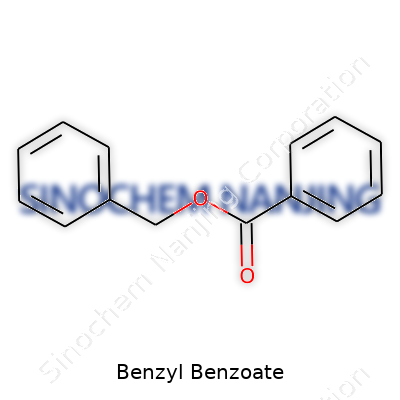
| Names | |
| Preferred IUPAC name | phenylmethyl benzoate |
| Other names |
Benylate Benzyl phenylformate Phenylmethyl benzoate |
| Pronunciation | /ˈbɛn.zɪl ˈbɛn.zəʊ.eɪt/ |
| Identifiers | |
| CAS Number | 120-51-4 |
| Beilstein Reference | Beilstein Reference: 2041115 |
| ChEBI | CHEBI:3137 |
| ChEMBL | CHEMBL1409 |
| ChemSpider | 5468 |
| DrugBank | DB13824 |
| ECHA InfoCard | 100.120.503 |
| EC Number | 204-310-2 |
| Gmelin Reference | 82153 |
| KEGG | C10443 |
| MeSH | D02.241.223.125.302 |
| PubChem CID | 2337 |
| RTECS number | **DB6300000** |
| UNII | ''W6F6WPLA49'' |
| UN number | UN1993 |
| Properties | |
| Chemical formula | C14H12O2 |
| Molar mass | 212.24 g/mol |
| Appearance | Clear, colorless, oily liquid |
| Odor | Faint, balsamic odor |
| Density | 1.118 g/cm³ |
| Solubility in water | 0.03 g/100 mL (20 °C) |
| log P | 3.97 |
| Vapor pressure | 0.0013 mmHg (25°C) |
| Acidity (pKa) | 12.0 |
| Basicity (pKb) | 11.92 |
| Magnetic susceptibility (χ) | -64.0·10⁻⁶ cm³/mol |
| Refractive index (nD) | 1.568 |
| Viscosity | 15 – 20 mPa·s (at 20°C) |
| Dipole moment | 2.99 D |
| Thermochemistry | |
| Std molar entropy (S⦵298) | 378.6 J·mol⁻¹·K⁻¹ |
| Std enthalpy of formation (ΔfH⦵298) | -164.7 kJ/mol |
| Std enthalpy of combustion (ΔcH⦵298) | -5647 kJ/mol |
| Pharmacology | |
| ATC code | D04AA10 |
| Hazards | |
| Main hazards | May cause skin and eye irritation. Harmful if swallowed or absorbed through skin. |
| GHS labelling | GHS07, GHS08 |
| Pictograms | GHS07 |
| Signal word | Warning |
| Hazard statements | Hazard statements: "H302: Harmful if swallowed. H413: May cause long lasting harmful effects to aquatic life. |
| Precautionary statements | P280, P302+P352, P305+P351+P338, P313, P333+P313 |
| Flash point | 138°C |
| Autoignition temperature | 435°C |
| Lethal dose or concentration | LD50 oral rat 2,000 mg/kg |
| LD50 (median dose) | LD50 (median dose): 1,660 mg/kg (oral, rat) |
| NIOSH | DD0525000 |
| REL (Recommended) | 25–100 mg |
| Related compounds | |
| Related compounds |
Benzyl alcohol Benzoic acid Benzyl acetate Methyl benzoate Ethyl benzoate |



