Benzyl Acetate: Fragrance Born from Chemistry and Experience
The Story Behind Benzyl Acetate
Sometimes the most commonplace scents, the ones that bring to mind fresh laundry or blooming jasmine on a spring night, have long histories. Benzyl acetate falls right into this category. Developed through the gradual tinkering of chemists in the 19th century, benzyl acetate's journey began as researchers explored the combinations of benzyl alcohol and acetic acid. Parisian perfume labs in the 1800s saw the earliest experiments, and by the early 20th century, industrial production took off. The gentle, almost nostalgic smell of this compound has been gracing perfumes and soaps for over a hundred years, weaving chemistry into daily routines. This colorful background matters. It shows how scientific curiosity and necessity fueled innovation—palettes of scent shaped by trial, error, and bold ideas.
Snapshot: What is Benzyl Acetate?
Benzyl acetate sits in a group called esters, recognized for their sweet, fruity smells. In the everyday world, the molecule turns up all over the place: in blossoms, in the crisp notes of some fruits, and in cleaning products where a floral essence is wanted. Chemists know it as C9H10O2, and many people without realizing it can summon its scent from memory—think gardenias, ripe pears, even the undertone of some soft drinks. Direct contact with the molecule happens more often than most people realize, whether through perfume, aftershave, or laundry detergent. This compound bridges the lab and the living room, an unsung connector between skillful synthesis and sensory pleasure.
Physical and Chemical Personality
Many chemists remember that benzyl acetate pours as a clear liquid, scooped out of a bottle with little fuss. Its boiling point sits around 213 degrees Celsius, letting it evaporate slower than water but easy enough for it to linger in perfumes. It resists mixing with water but blends well with alcohols and oils, an important trait for anyone working in fragrance making or chemical manufacturing. With a faintly oily slip and an unmistakable sweet aroma, the liquid is usually stable in most common storage conditions, as long as it avoids strong acids and oxidizers. Tidbits like its light refractive index or solvency for some polymers may matter little to consumers, but these factors dictate much of its usability in real-world settings.
What’s Actually on the Label
Labeling benzyl acetate isn’t flashy, but details shape both safety and efficacy. Chemical grade standards, purity percentages, and batch numbers all matter for users. For instance, higher-grade material goes into cosmetics, while technical grades feed into manufacturing or solvent blends. Pictograms that signal flammability or irritant risk shouldn’t be overlooked, and for workplaces, the labeling aligns with international systems such as GHS to offer practical guidance. From a worker’s hands-on perspective, these symbols invite more than compliance—they prompt genuine caution, especially in enclosed spaces.
How Benzyl Acetate Comes to Be
The main synthesis route for benzyl acetate looks simple on paper yet demands real know-how in practice. Reacting benzyl alcohol with acetic acid, usually under the guidance of a catalyst like sulfuric acid, turns out the ester. Control over temperature, purity of starting materials, and removal of water shape the yield and final quality. Side reactions lurk, so attention to detail pays off. Over the years, researchers have worked hard to increase the efficiency and cleanliness of the process, some exploring enzymes for greener production. Whether in a tiny glass flask or by the drum in a chemical plant, small changes in conditions ripple into big outcomes, pushing teams to focus on both cost and sustainability.
Chemical Flexibility and Tweaks
Benzyl acetate doesn’t just smell good—it’s a springboard for other chemistry. Under heat or strong bases, it can break back down to benzyl alcohol and acetic acid, a useful trick for recycling or purification. Chemists seeking new flavors or specialty ingredients often start with benzyl acetate, making small changes to the side chains or functional groups and opening doors to fresh scents or materials. Its structure handles mild oxidation or reduction; in my own undergraduate lab days, these manipulations offered lessons about reactivity and the limits of stability. The molecule's willingness to engage in further reactions keeps it relevant, both as an end product and a building block.
Other Names, Same Compound
The language of chemistry brings aliases and synonyms for almost everything. Benzyl acetate often appears as phenylmethyl acetate or acetic acid benzyl ester. In an industry catalog, those names mean the same substance—no tricks. Real-world users can’t always memorize formulas, so knowing the alternative names offers practical shortcuts, especially in international trade. For those entering fragrance, knowing all the handles for benzyl acetate smooths out paperwork, customs, or regulatory hurdles.
Staying Safe With Benzyl Acetate
Lab time spent with benzyl acetate drills home the importance of basic precautions. The liquid can irritate skin and eyes. Prolonged exposure to high concentrations—say, through inhalation in a poorly ventilated lab—brings headaches or drowsiness. Simple steps like using gloves, splatter shields, and fume hoods aren’t just for show. Industry standards such as OSHA and European REACH regulations outline threshold limits for exposure and storage rules. Safety data sheets draw on both regulatory and hard-earned field experience to highlight first aid or spill response. Experience says shortcuts with even mild materials invite trouble; respect, not fear, keeps things running smoothly for everyone.
Where Benzyl Acetate Fits In
Benzyl acetate reigns in fragrance and flavor creation. Its gentle floral scent enhances perfumes, body sprays, and almost every mainstream detergent. Food scientists, too, use minute amounts to build up the profile of candies, soft drinks, and chewing gums, mimicking natural pear and apple nuances. Industrial chemists tap it as a solvent, particularly when working with cellulose, some inks, or lacquers. Life in an analytical chemistry lab has also shown me that the compound turns up as a trace contaminant in some manufacturing spaces, which matters for precision work. That blend of versatility and familiarity gives benzyl acetate staying power across so many applications.
Current Questions and New Directions
Research today stretches beyond making benzyl acetate in higher yields. Environmental scientists ask how production impacts water, soil, and air. Some projects aim to swap out heavy-metal catalysts for greener, enzyme-driven systems, hoping to cut down on waste. Analytical chemists develop ever-faster ways to spot benzyl acetate among complex mixtures. In my own research experience, pushing the boundaries often meant chasing trace impurities and teasing out new reaction pathways. Students and seasoned researchers alike keep coming back to benzyl acetate, drawn by its central role in both basic and applied work. This ongoing curiosity keeps the substance current and useful.
Digging Into Toxicity
Past studies pegged benzyl acetate as relatively low in acute toxicity, yet that’s not a license for lax handling. Chronic and repeated exposure could contribute to organ effects, including concerns about liver function in animal models if dosing exceeds typical workplace exposures. Regulatory agencies review findings, adjusting safe handling standards and workplace limits when new evidence arises. Most household products containing benzyl acetate contain it at low enough concentrations to avoid risk in daily life, but the push for clear labeling and rigorous toxicological research reflects demands for both transparency and safety. From my time managing chemical inventories, I've learned that respect for long-term safety pays off, even for trusted substances.
Looking Ahead
Benzyl acetate’s future promises both continuity and change. Synthetic biology may soon offer pathways using engineered microbes instead of classic chemical synthesis, potentially lowering environmental impact. Demand from the fragrance market continues, yet shifts toward natural-sourced or “green chemistry” routes could tilt industry practices. Innovations in recycling and purification might shrink waste, squeezing more value from every ton produced. Safety and toxicology data will keep evolving with better monitoring tools and deeper study of subtle health impacts. These trends put benzyl acetate at an interesting crossroads—anchored in tradition, but open to modern science’s influence. That journey combines old-school chemistry skills, a keen eye for new technology, and a respect for the human senses that this fragrant molecule has delighted for generations.
What is Benzyl Acetate used for?
Why Perfume Makers Reach for Benzyl Acetate
Walk down the detergent or shampoo aisle, and try not to get hit by all those heavy floral scents. Plenty of those come straight out of a chemistry lab, and benzyl acetate sits squarely in the formula. This compound delivers a sweet, jasmine-like smell. That’s why perfume and soap companies reach for it every day—they need manageable, pleasant fragrances that don’t fade fast or clash with other scents. Jasmine oil, real and pure, will cost a fortune, but benzyl acetate lets people enjoy a similar experience at a fraction of the price. It started out as a synthetic alternative in the golden era of modern perfumery and stuck around because noses everywhere approve. Chanel No. 5, for instance, uses a blend that relies on this very compound.
What You Eat Without Even Realizing
Benzyl acetate goes under the radar in food flavoring, too. Think artificial strawberry or pear in gum, candy, or drinks. Food scientists add a touch to make flavors pop or taste less “flat.” The U.S. FDA ticks it off as generally recognized as safe. That comfort didn’t land overnight; studies checked its safety thoroughly. Put simply, this little chemical helps turn bland sweets and sodas into something people want to reach for again. I remember this the next time a piece of strawberry gum hits just the right note. That aroma and taste aren’t an accident or a mystery—they’re partly science at work, bringing cheap, reliable results to millions of people each day.
Benzyl Acetate at Work: Beyond the Obvious
Scented polish or a bottle of glue sometimes owes its bouquet to a dose of benzyl acetate. Manufacturing expects reliable solvents that dissolve, clean up, and evaporate without leaving trouble behind. Nail polish removers and cleaning fluids aren’t glamorous, but the ester makes the chemical side more effective and less offensive to anyone who catches a whiff. Once industries realized they could get a decent-smelling solvent along with good performance, the demand grew beyond cosmetics.
Why Think About Safety and Sustainability
It’s easy to miss the big picture when talking about something that smells good. Heavy reliance on benzyl acetate means regular people are exposed to it in homes, stores, and even workplaces. Long-term exposure at high levels may cause headaches or irritation. Big producers follow safety rules, keeping levels below what’s considered risky. I’ve spoken to folks at fragrance labs who care about both cost and safety regulations. Wearing gloves, ventilating workspaces—those practical steps make a real difference.
Sourcing gets more attention these days. Not every manufacturer wants to extract benzyl acetate from petroleum. Some now use fermentation of renewable feedstocks or even make use of enzymes. These approaches cut down environmental impact and earn points among consumers who care about the footprint left behind by their daily products. If we demand safe workplaces and responsible sourcing, industry adapts—sometimes slowly, sometimes faster when customers push for it.
What’s Next?
Fragrance and flavoring won’t disappear, and neither will benzyl acetate. People love to smell fresh sheets, eat sweet candy, and open floral soaps. But the story doesn’t stop with what it adds to daily life. Responsibility sits with companies, watchdogs, and everyone who cares what goes into their body or onto their skin. I’ve learned that transparency, rigorous testing, and honest labeling help everyone know what they’re getting. The more curiosity people show about the sources of their favorite scents and flavors, the more producers move toward better, safer, and more sustainable choices.
Is Benzyl Acetate safe for skin and hair products?
The Hidden Story in Our Beauty Routine
Sitting in front of the mirror, it’s easy to forget how many unfamiliar ingredients go onto our skin and scalp each morning. Benzyl acetate pops up often in lists on the back of shampoos, conditioners, face creams, and even sunscreen. A fruity, floral compound—especially recognized for its sweet, jasmine-like aroma—this ingredient brings more to products than just scent. I’ve spent years scanning ingredient lists to dodge breakouts and reactions, so I looked deeper into what makes this compound a common choice and what that means from a safety standpoint.
Understanding Safety Concerns
Benzyl acetate shows up in beauty formulas mostly as a fragrance component and sometimes as a solvent. According to the Cosmetic Ingredient Review (CIR) and the European Commission’s Scientific Committee on Consumer Safety, benzyl acetate usually gets a green light at the concentrations used in cosmetic products. Both bodies base their recommendations on published research, including studies from animal testing and reports of human use. Generally, for leave-on and rinse-off products, the concentration stays well below levels that would raise flags for toxicity, irritancy, or other negative health effects.
The Environmental Working Group (EWG) also rates benzyl acetate as low risk for skin irritancy and allergy under standard cosmetic use. Still, a patch of skin can always do its own thing. People with fragrance allergies or very sensitive skin may flare up after exposure, especially if they already struggle with product sensitivities. I remember trying out a scented lotion containing benzyl acetate and ending up with red, itchy skin on my forearm. After a bit of trial and error, dropping that product from my rotation made the irritation disappear.
Allergic Reactions: Not Common, but Possible
True allergic reactions to benzyl acetate remain rare in the general population, according to dermatology reports. The compound does not often cause classic contact dermatitis on its own. Still, the risk can increase when mixed with other ingredients that sensitize the skin. Health Canada and the FDA both monitor adverse reactions, but so far serious problems tied to this particular compound don’t show up in official warnings. Fragrance allergies tend to come from the combined cocktail of volatile compounds rather than a single culprit like benzyl acetate.
Long-Term Exposure and Volatility
Benzyl acetate evaporates easily, which means most of it leaves the surface pretty quickly in rinse-off products. For leave-on formulas, extended exposure could cause trouble for people who react easily to fragrance or who use products with higher-than-average concentrations. Scientific data shows limited absorption through the skin—which helps minimize risks to internal organs under typical use. Animal studies do point to toxic effects at very high doses, but these doses are far beyond what you'd ever find in shampoos or lotions.
Practical Advice and Safer Choices
Those with known fragrance allergies, eczema, or sensitive skin should watch ingredient lists for benzyl acetate and its close relatives. Patch testing a new lotion or shampoo helps avoid surprises. Dermatologists recommend unscented or fragrance-free products for people with histories of skin irritation. If you suspect benzyl acetate as the source of itching or rash, switching to simpler skincare can make a difference. Reading honest reviews and checking how a product performs for people with similar skin types helps cut down the guesswork.
Companies can produce more transparent ingredient labels to help everyone make informed decisions. Manufacturers can lower concentrations and use alternatives where needed. Staying up to date with cosmetic safety science and listening to real-world user feedback plays a bigger role than any marketing claim. Personal experience makes the best test panel when it comes to finding what works and what doesn’t for you.
What does Benzyl Acetate smell like?
Catching the Scent in Everyday Life
Benzyl acetate has one of those scents that catches you off-guard and makes you question where you know it from. It’s the reason fresh gardenias, ripe pears, and even the classic whiff of some shampoos and laundry detergents have that sweet, slightly fruity aroma. Anyone working with fragrances knows its impact. Walk down the cleaning aisle, and it hits you—the subtle, yet unmistakably floral note, like an arranged bouquet rather than a wild-growing flower patch.
Why Perfume Makers Value Benzyl Acetate
Growing up around gardens, I always associated the smell of actual flowers with dirt and sun. Benzyl acetate strips away the earthy mess and zeroes in on the clean, heady, almost creamy part of a flower’s character. This is why perfumers crave it. A study by sensory experts at Firmenich described Benzyl acetate as delivering a “jasmine note”—not the shrub itself, but the cleanest, sweetest interpretation of it. Still, it’s never cloying. Add a dash more than needed, and the pleasant scent can start mimicking overripe fruit, even giving off a touch of the synthetic. Controlled well, chemists can anchor a wild medley of florals, balancing out sharper or green aromas.
The Science Behind That Characteristic Scent
Chemically, Benzyl acetate belongs to the ester family, the same family responsible for most fruity and floral smells in nature. It appears in apples, bananas, and strawberries—so it’s all over the produce aisle, tucked into real fruit as a natural compound. The nose picks it up as something halfway between elegance and playfulness, not as deep as vanilla but more substantial than the airiness of citrus. One interesting detail: industrial studies show how even tiny shifts in its concentration can change the character of a finished fragrance or flavor blend. In flavors, the same molecule gets used to round out artificial strawberry or peach.
Synthetic vs. Natural Sources—Does It Matter?
A lot of people ask whether taking the compound out of a flower or making it in a lab really makes a difference. From a molecular standpoint, synthetic and natural Benzyl acetate are identical. The difference shows up in trace impurities that might tag along. But for consumers, those subtleties barely register. The bigger question is sustainability. Natural extraction from plants like jasmine or ylang-ylang demands land, water, and seasonal constraints. Manufacturing it in a lab cuts down the resource drain and, honestly, drives down costs without most folks noticing a drop in quality.
Potential Downsides and Paths Forward
Allergies concern some people, especially with fragrances. Benzyl acetate rarely shows up on allergen warning lists, but that doesn’t mean everyone reacts the same way. Comprehensive safety reviews—like those published by scientific advisory boards in the EU—regularly assess it as safe in the concentrations found in personal care products. That safety comes from years of both industrial experience and peer-reviewed toxicity data. It’s one of the reasons manufacturers build checks into their quality control to keep exposure levels well within guidelines.
Looking ahead, green chemistry could push suppliers to find new ways to make Benzyl acetate directly from renewable bio-feedstocks. Laboratories are already experimenting with fermenting it from waste plant material instead of petrochemicals. If these efforts scale up in the next decade, we’ll have the option for sustainably-sourced fragrances that don’t compromise on scent.
Is Benzyl Acetate natural or synthetic?
The Journey of Benzyl Acetate: From Flowers to Factory
Benzyl acetate stands out in everyday life. A whiff of jasmine or a slice of pear sometimes brings this compound to mind. It finds a place in perfumes, flavorings, and even cleaning products. People start seeing the same name on a food label or a cologne bottle and begin to wonder where it really comes from. Is it plucked from nature, or built in a lab?
Nature's Patchwork: Benzyl Acetate in Plants
Jasmine and ylang-ylang blossoms release their scent in part thanks to benzyl acetate. This ester occurs naturally in many fruits and flowers, including pears, apples, and gardenias. Plants use it to attract pollinators. Its aroma calls bees from feet away, playing a real role in the survival of the plant. If you squeeze a gardener for answers, they’ll mention that natural extraction happens in small quantities. Essential oil distillers do pull out benzyl acetate, drop by drop, for ultra-high-end fragrances and natural flavorings.
The Synthetic Route: Science Imitates Life
Most of the benzyl acetate on the market comes from a chemical process. Factory workers combine benzyl alcohol with acetic acid, and the result is this familiar ester. The process is cost-effective and churns out steady, safe supplies. Major companies buy the lab-made stuff because there’s simply not enough space or money to fill the world’s needs with jasmine petals or ripe fruit. Regulatory bodies like the FDA and the European Food Safety Authority have checked these synthetics for safety, and research has shown both natural and synthetic sources are nearly identical in structure and effect.
Health and Trust: Why It Matters to People
People care about origins because “natural” often feels safer and cleaner. Not everyone trusts a lab coat or a chemical reactor the way they trust a flower. Grocery shoppers scan cosmetics for plant-based certification, and natural flavoring labels sometimes fetch a higher price. But a molecule of benzyl acetate behaves the same whether squeezed out of a jasmine petal or piped out of a reactor. Allergies, metabolism, and aroma remain unchanged. Safety reviews don’t play favorites.
Transparency Over Buzzwords
Many brands sell products with “natural” tags, but few customers realize how rare true natural benzyl acetate is. Growing and distilling jasmine or fruit costs more than factory production. Labeling rules from organizations like the US Department of Agriculture and European regulators let products call benzyl acetate “natural” if it was extracted from plant material—even when most on the market is synthetic. This confuses shoppers and frustrates those who want to support plant-derived options.
Facing the Future: Solutions for Honest Labeling
Building trust means honest communication, not just clever slogans. Clear labels would state when a compound comes from natural sources and when it’s made synthetically. Food companies and cosmetic brands could work with reliable certification groups and offer batch tracing. Governments and trade bodies need tighter rules to make sure claims hold up to scrutiny. Supporting sustainable farming and extraction methods opens the door for more real-deal natural ingredients in premium products. But for everyday soap, perfume, or candy, synthetic benzyl acetate will stay king of the hill, as long as people ask for volume and affordability.
Where can I buy Benzyl Acetate?
The Scented Path to Benzyl Acetate
Benzyl acetate often pops up on shopping lists for perfumers and folks mixing up fragrances at home. Its scent—sweet and slightly floral—drives demand by both major companies and experimenters tinkering with essential oils. In my years exploring fragrance chemistry, the quest to find pure, reliable supplies hasn’t gotten any easier. There’s an appetite to buy locally or online, but navigating the maze of suppliers can feel daunting, especially for someone new.
Where People Look for Benzyl Acetate
Most end up at chemical supply stores—either brick-and-mortar or online shops like Sigma-Aldrich, Fisher Scientific, and sometimes even eBay for small batches. Tried Amazon a few times for unique finds, but chemical products rarely cross ethical and legal hurdles in marketplaces designed for kitchenware and books. Instead, specialty suppliers pop up across the web, offering bottles ranging in price and purity. Even then, every page demands careful reading. Not every seller ships to homes. Some require business credentials, safety documentation, and more, especially due to stricter safety rules for chemicals that might be misused.
Why Buying Benzyl Acetate Isn’t as Simple as Adding to Cart
Lately, regulations around selling lab chemicals have only gotten tighter. The average hobbyist faces forms and questions, sometimes requests for identification. Shops vet customers—they want to trust buyers are using their products safely. I remember talking to a local supplier about access: He explained how simple-sounding items can end up part of hazardous or even illicit activities. Responsible sellers embrace background checks and training resources.
Even legitimate uses call for skill. Mishandling benzyl acetate could risk respiratory irritation or worse in tight spaces. Online, the number of home experiments gone wrong usually tracks with DIY sites leaving out warning labels and safe handling tips. Anyone who buys should brush up on storage guidance—keep it sealed, away from kids and pets, far from heat.
The Role of Trust and Credibility
For something as seemingly niche as benzyl acetate, credibility matters. Plenty of buyers, myself included, go hunting for suppliers with a solid track record and thorough documentation. Looking for suppliers that update ingredient purity specs, safety data sheets, and transport info—this separates a reputable supplier from a risky one. The best shops answer questions directly. They spell out shipping cutoffs, local legal requirements, and policies on returns, which shows they care about both product safety and customer reputation.
Paving the Way Toward Safe Access
Better access grows with stronger education. Sellers can offer guidelines and safety workshops online, making an immediate difference. Clearer labeling and straightforward product descriptions help customers—whether they run small businesses or are students working on science projects—navigate their purchases confidently. Investing in easy-to-read, science-backed guides could keep a lot of accidental misuse at bay.
Benzyl acetate keeps playing a key role in fine fragrances, delicate flavors, and even certain cleaning agents. Its accessibility depends on a network of trustworthy suppliers and educated buyers. As curiosity drives more people to experiment from their own kitchens or classrooms, keeping clear lines between safe curiosity and responsible sourcing protects both individual health and the wider community. My experience shows that informed use of chemicals isn’t about locking doors, but about opening the right ones—always with care.
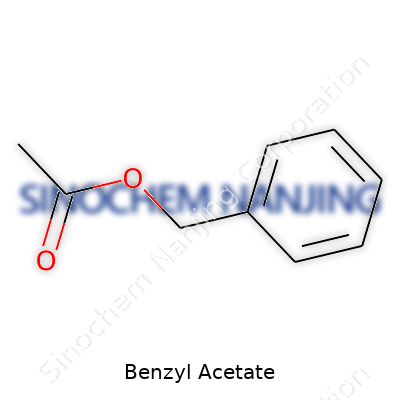
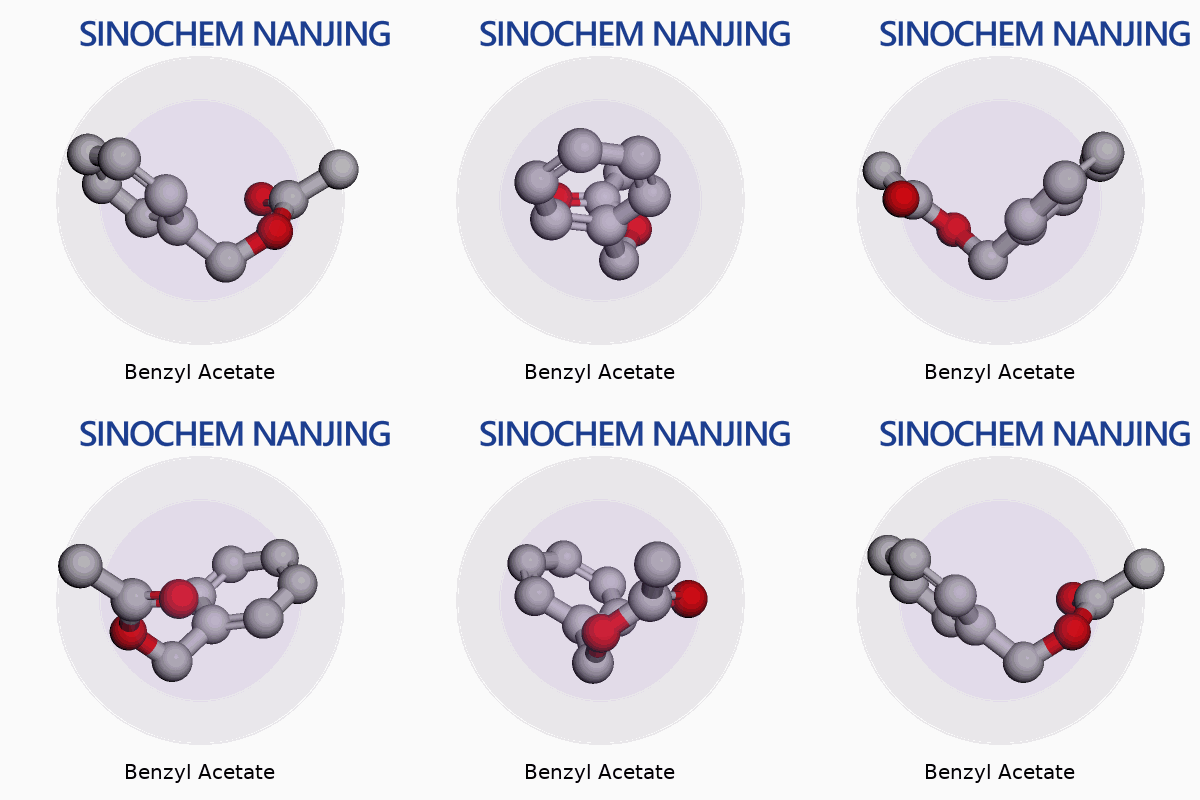
| Names | |
| Preferred IUPAC name | phenylmethyl acetate |
| Other names |
Acetic acid benzyl ester Benzyl ethanoate Phenylmethyl acetate |
| Pronunciation | /ˈbɛn.zɪl ˈæs.ɪ.teɪt/ |
| Identifiers | |
| CAS Number | 140-11-4 |
| Beilstein Reference | 635873 |
| ChEBI | CHEBI:8517 |
| ChEMBL | CHEMBL140483 |
| ChemSpider | 21106230 |
| DrugBank | DB14016 |
| ECHA InfoCard | 100.110.179 |
| EC Number | 3.1.1.7 |
| Gmelin Reference | Gmelin 83038 |
| KEGG | C06127 |
| MeSH | D001584 |
| PubChem CID | 8801 |
| RTECS number | DH1925000 |
| UNII | 8N9UDF2M0F |
| UN number | UN2335 |
| Properties | |
| Chemical formula | C9H10O2 |
| Molar mass | 150.17 g/mol |
| Appearance | Colorless liquid with a pleasant, jasmine-like odor |
| Odor | Sweet, jasmine-like |
| Density | 1.05 g/cm³ |
| Solubility in water | 1.79 g/L (20 °C) |
| log P | 1.96 |
| Vapor pressure | 0.3 mmHg (25°C) |
| Acidity (pKa) | pKa ≈ 25 |
| Magnetic susceptibility (χ) | -60.2·10⁻⁶ cm³/mol |
| Refractive index (nD) | 1.502-1.504 |
| Viscosity | 1.21 cP (at 25°C) |
| Dipole moment | 1.99 D |
| Thermochemistry | |
| Std molar entropy (S⦵298) | 383.57 J·mol⁻¹·K⁻¹ |
| Std enthalpy of formation (ΔfH⦵298) | -358.2 kJ/mol |
| Std enthalpy of combustion (ΔcH⦵298) | -3897 kJ/mol |
| Pharmacology | |
| ATC code | R02AA20 |
| Hazards | |
| GHS labelling | GHS02, GHS07 |
| Pictograms | GHS02,GHS07 |
| Signal word | Warning |
| Hazard statements | H226, H302, H319 |
| Precautionary statements | P210, P261, P273, P280, P301+P312, P305+P351+P338, P370+P378 |
| NFPA 704 (fire diamond) | 1-2-0 |
| Flash point | 102°C (216°F) |
| Autoignition temperature | 615 °C (1139 °F; 888 K) |
| Explosive limits | 1.1–9.5% |
| Lethal dose or concentration | LD₅₀ (oral, rat): 2490 mg/kg |
| LD50 (median dose) | LD50 (median dose) of Benzyl Acetate: Rat oral 2490 mg/kg |
| NIOSH | NA0525000 |
| PEL (Permissible) | PEL (Permissible Exposure Limit) of Benzyl Acetate is "10 ppm (61 mg/m³) |
| REL (Recommended) | 50 ppm |
| IDLH (Immediate danger) | **500 ppm** |
| Related compounds | |
| Related compounds |
Benzyl Alcohol Acetic Acid Benzyl Benzoate Benzaldehyde Phenylacetic Acid Ethyl Acetate |



