Benzoic Acid: A Closer Look at Its Journey and Place in Today's World
Historical Development
Everyday items sometimes carry stories stretching back centuries, and benzoic acid is no different. It didn’t pop up with a neat label and safety data sheet. Instead, researchers first got their hands on benzoic acid distilling gum benzoin in the 16th century, long before the days of particle accelerators and high-powered microscopes. In the mid-19th century, the likes of Justus von Liebig and Friedrich Wöhler untangled benzoic acid’s relationship to hippuric acid, shedding light on metabolism along the way. Later, the compound transitioned out of scientific curiosity into commercial relevance, where food preservation, chemical synthesis, and consumer safety all started relying on it. Its path into the everyday world traced the widening understanding of carboxylic acids, organic chemistry, and how nature gives us both simple and powerful molecules.
Product Overview
People probably walk down grocery aisles and never notice benzoic acid’s presence, but it sits behind the scenes in foods, beverages, and even some pharmaceuticals. Benzoic acid itself forms a white, crystalline powder with a slightly sweet, astringent taste. People use it for its antimicrobial quality, helping food stay fresh and safe. Pharmaceutical preparations also use benzoic acid to protect creams and solutions from spoilage. In factories and labs, manufacturers treat it as an essential building block for bigger, more complex molecules. Chemicals like benzyl benzoate, sodium benzoate, and even dyes start their journey from this dependable compound.
Physical and Chemical Properties
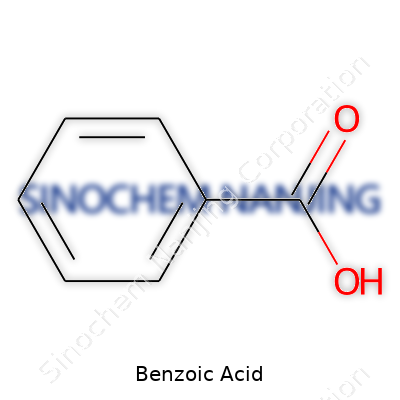
Benzoic acid’s physical form doesn’t set it apart at first glance: white solids, faint aroma, and a low water solubility at room temperature. Heat it up and it dissolves much more readily. Its chemical structure, with a benzene ring and a carboxylic acid group, endows it with low reactivity toward mild acids or bases, but unlocks a world of reactions for people handling organic syntheses. Its melting point hovers around 122°C, a key factor for purification and processing by recrystallization. These features have kept benzoic acid popular both as a preservative and as a go-to for chemical transformations.
Technical Specifications & Labeling
Nobody walks into a chemical supply house looking for “that white stuff in a jar.” Precision matters. Regulatory bodies lay out how companies need to handle benzoic acid in labeling and purity requirements for food-grade and industrial applications. Pharmacopeias and food standards agencies draw lines on allowed impurities, acceptable moisture levels, and proper notation of the source. Clear technical specs not only make lab work easier, they guard against contamination, unexpected byproducts, and allergic reactions for sensitive populations.
Preparation Method
Early researchers turned to gum benzoin for their benzoic acid, but today's world uses toluene and its derivatives in large-scale production. In industrial settings, air oxidation of toluene to benzoic acid under a metal catalyst offers efficiency, better yields, and cost advantages. In lab settings, oxidizing benzyl alcohol or benzaldehyde using potassium permanganate or other oxidants still provides a reliable path when pure benzoic acid is needed for research or specialty products. The move from natural resins to industrial toluene reflects broader industrial trends—getting more from less, cutting down costs, and keeping up with ever-rising demand.
Chemical Reactions and Modifications
Benzoic acid likes to cooperate in organic chemistry labs. The carboxyl group reacts with alcohols to yield esters like methyl benzoate, perfumes and solvents often bearing the aromatic signature. Treat it with bases like sodium hydroxide and it gives up sodium benzoate, an industry workhorse preservative. Scientists regularly tap into reactions at the aromatic ring, adding or swapping groups on the benzene core to create dyes, plastics, pharmaceuticals, or other tailored chemicals. This range of chemistry roots benzoic acid as the foundation of many modern materials and drugs.
Synonyms and Product Names
People rarely encounter just one name for any widely used chemical. Benzoic acid wears many hats—Drugs.com and the European Chemicals Agency call it benzenecarboxylic acid, chemists sometimes shorthand it as BA, and other sources tag it as carboxybenzene. In global trade, glossaries and container paperwork cycle through IUPAC names, common names, and translation variants. The synonym thicket doesn’t add glamour, but it does mean anybody—chemist, exporter, importer—needs to stay sharp to avoid miscommunication or dangerous mix-ups.
Safety and Operational Standards
Benzoic acid may keep bacteria in check, but it still calls for proper respect. Skin and eye irritation can crop up with repeated or prolonged exposure. Though not acutely toxic, Benzoic acid dust in the air can trigger coughing or mild respiratory irritation. Long-haul occupational exposure falls under the gaze of workplace safety groups, who set exposure limits and training requirements. Guidelines from authorities like OSHA and the European Chemicals Agency push for gloves, goggles, and masks in workspaces where large volumes of benzoic acid get handled. Producers monitor particle dust and keep spill kits handy—nobody wants unnecessary risks, even with this relatively benign ingredient.
Application Area
Benzoic acid crosses over from chemistry labs into everyday life more than most people imagine. It locks out spoilage from acidic foods like sodas, pickles, and jams, often as the salt sodium benzoate. In personal care, shout out to topical creams and ointments for fungal infections—benzoic acid gets credit there, too. Plastics and resins use it as a precursor, while industrial dyes branch off its aromatic structure. Even some animal feeds benefit from its ability to keep microbes at bay during storage. No single industry hogs all the benzoic acid; instead, it earns small, reliable roles in dozens of different sectors.
Research and Development
My own experience in research circles bears out what’s in the literature: the story of benzoic acid isn’t over yet. Scientists chase better, greener production methods, minimizing energy use and harmful byproducts. Analytical chemists push for rapid, field-friendly detection in food and environmental matrices, seeking methods to track trace residues with ever-tighter accuracy. Polymer chemists play with benzoic acid building blocks for new plastics that balance strength, flexibility, and recyclability. The constant push for cleaner food, safer drugs, and smarter materials has benzoic acid in the conversation—sometimes as a target, sometimes as a versatile tool.
Toxicity Research
Some people react with suspicion to any “acid” near their food, but the toxicology of benzoic acid draws on a wealth of careful studies. Its metabolism in the body converts it quickly to hippuric acid, passed harmlessly in urine at normal intake levels. Still, authorities set upper limits—often around 0.1 percent in finished foods—to guard against potential effects in vulnerable groups like infants or people with genetic metabolic conditions. Researchers found occasional links between high doses and mild hypersensitivity or asthma-like symptoms, sparking continued surveillance and re-evaluation of allowable limits. This risk-benefit calculation underpins regulations around benzoic acid across continents.
Future Prospects
Looking ahead, benzoic acid will likely stick around as a reliable, well-understood tool and ingredient. The green chemistry movement pushes research toward production routes that use less fossil fuel, generate less waste, or draw on biobased feedstocks. Analytical breakthroughs might soon allow precise, on-site checks for trace residues, offering more consumer confidence—especially as people keep demanding cleaner, “chemical-free” food labels. In plastics, specialty polymers built on benzoic acid promise new applications in electronics, energy storage, and medical devices, turning a classic chemical into a platform for innovation. Keeping ahead of questions about long-term exposure, residue monitoring, and environmental impacts, researchers and regulators have work ahead—but for now, benzoic acid continues to prove itself as a workhorse in a long list of industries.
What is benzoic acid used for?
What Benzoic Acid Brings to the Table
Benzoic acid turns up all over a typical grocery haul. It draws a line against spoilage in salad dressings, jams, fruit juices, and carbonated drinks. As someone who grew up reading labels, I kept seeing this tongue-twister chemical in the fine print. I never paid much attention until food technology became part of my job. It’s not there for flavor or color—it’s there because benzoic acid stops mold, yeast, and some bacteria from taking hold.
Regulators like the FDA and European Food Safety Authority set strict limits on how much benzoic acid a producer can add—about 0.1% of the product by weight. At that level, it acts as a reliable shield, especially for products that sit on shelves for weeks or months. Food safety in my own kitchen depends on habits like refrigeration. Out in the food industry, benzoic acid picks up the slack where household methods can’t stretch.
Benzoic Acid in the Medicine Cabinet
Walk into a drugstore. Look for topical creams and ointments meant to treat fungal infections or ringworm. Benzoic acid shows up in combo products with salicylic acid for stubborn skin issues—athlete’s foot being a classic. Its antifungal skills help stop bugs from causing misery or long-term skin damage. Years ago, I struggled with athlete’s foot after summer swims. OTC antifungal creams containing benzoic acid kept things under control fast.
Doctors sometimes see benzoic acid in specific prescription choices for chronic wounds or as a callout ingredient in medicated powders. Here, the acid helps tamp down microbe growth, complementing gentle cleansers and wound dressings. This double-act matters more for folks with diabetes or immune system problems, when wound healing risks get high.
Hidden Roles in Industry
Turn to other corners of daily life, and benzoic acid stacks up new uses that connect directly to health and safety. Take plastics. Manufacturers use it to create products like PET bottles, the standard for soft drink packaging. Without the right additives, plastics can go brittle or fail health checks. Benzoic acid fits into the larger equation for stable, safe bottles.
Perfumers lean on benzoic acid during fragrance development. It helps stabilize the scent blends that underpin colognes and lotions. Ever bought glue or paint from a hardware store? That faint, sterile tang may have roots in benzoic acid—keeping products from breaking down on the shelf.
Looking at Risks and Better Choices
Any food preservative brings some argument. Benzoic acid rarely triggers side effects at legal levels—but some people develop sensitivities or allergies. Combining benzoic acid with ascorbic acid (vitamin C) can create small amounts of benzene, a compound anyone would want far away from lunch. Producers and watchdogs test aggressively to keep this risk low, using optimized recipes and batch surveillance.
Some natural alternatives—like rosemary extract or vinegar-based blends—have started pressing into service for certain products, but scale and cost still steer many brands toward benzoic acid. For now, reading up on ingredients and choosing what fits a family’s needs gives the strongest defense. Regulators, food scientists, and advocates all watch the numbers.
Why Paying Attention Matters
Benzoic acid’s reach runs from the kitchen pantry to medicine chests and beyond. We count on it for food safety, medicine, cosmetics, and common plastics. Knowing how and why it’s used, what risks pop up, and how alternatives work gives shoppers a better shot at making choices that match their health priorities and values.
Is benzoic acid safe for consumption?
Looking Closer at a Common Food Preservative
Benzoic acid pops up in so many things we eat and drink that most people don’t even realize it’s there. It shows up in sodas, jams, pickles, and salad dressings. The stuff shows up naturally in some fruits too. Food makers add it to slow the growth of mold and bacteria, which helps keep food from spoiling on the shelf. This sounds useful, especially when thinking about how much food gets thrown out every week in homes and grocery stores.
What Science Tells Us About Benzoic Acid
The U.S. Food and Drug Administration lists benzoic acid as “generally recognized as safe.” Health Canada and the European Food Safety Authority say the same. They draw that line at 5 milligrams per kilogram of body weight a day. In real life, someone would have to eat an awful lot of processed food to hit those numbers, and most people don’t even get close. The small amounts showing up in sodas and salad dressings won’t get a body even near the official limits.
Benzoic acid can turn into benzene during storage if it mixes with vitamin C and heat. That caught lots of news coverage in the mid-2000s, mostly tied to soft drinks. Regulators jumped on the issue, promising to keep a close eye on the problem. Chemical tests on dozens of canned and bottled drinks have shown that levels of benzene stay far below what hurts people in developed countries. Makers have changed recipes, and I’ve noticed more companies switching away from using sodium benzoate when possible, just to keep things easier for everyone.
How Benzoic Acid Affects Health
In low amounts, benzoic acid moves through the body and breaks down fast. Some folks can get hives or asthma attacks if they take in too much, but this mostly happens in people who already have allergies or sensitivities. Kids sometimes show more sensitivity. Years ago, my youngest child had a rash breakout after eating bright red popsicles, and a pediatrician said the culprit was likely a mix of artificial colors and preservatives.
Outside of allergic reactions, clear long-term effects in healthy adults haven’t shown up in any major studies at regular dietary levels. I always remind my friends that lots of natural foods contain benzoic acid. Cranberries, plums, and apples hold it as a part of their chemistry, proof that not every preservative is only cooked up in a lab.
Improving Food Choices
Even with the green light from governments, most people I know feel wary about the jumble of preservatives listed on food packages. People want real answers, not just a chemical name they can’t pronounce. More clear, honest labeling would help. Some companies already note “preservative added for freshness” right on the label. That helps people decide for themselves what they feel comfortable putting in their bodies.
Cutting out processed foods and cooking more at home brings down benzoic acid exposure, along with a host of other food additives. At our house, we swap bottled dressings for olive oil and vinegar and skip the bright-colored sodas. This doesn’t mean swearing off convenience altogether, but over the years, these small swaps add up. Focusing on fresh produce and learning to spot common preservatives like benzoic acid puts more choice in your hands. Most people don’t need to panic about benzoic acid, but paying attention and asking questions never does any harm.
What are the storage conditions for benzoic acid?
Why Storage Matters for Benzoic Acid
Benzoic acid lands on the shelf of pretty much every chemistry storeroom — and not only there. Food businesses use it as a preservative. It pops up in cosmetics, medicines, and many industrial formulas. At home, I’ve seen science teachers reach for it as a staple during experiments. A slip in storage here can turn a safe, trusty chemical into something that’s at best useless and at worst hazardous. That’s why the conversation around its storage goes way beyond a technical checklist. It’s about keeping classrooms, labs, and even kitchens safe.
Practical Storage Steps
Benzoic acid takes the shape of a white, sometimes slightly flaky powder. As soon as it’s exposed to air, it can soak up moisture. Dampness turns the powder into a clump that’s tough to use, impacts how much you need for mixing, and in worse cases, spurs tiny bits of mold growth. At the same time, benzoic acid doesn’t care much for sunlight or heat. Warmth pushes it to degrade faster, so quality tanks and some byproducts may even form.
Most storage issues boil down to just a few bad habits. Screwing the cap on loosely lets humidity in. Using thin plastic bags allows air to seep through. Leaving it somewhere hot, like near radiators or in garages, blows up the risk. I’ve opened buckets of chemicals left in direct sun during the summer and found crusted lumps impossible to work with. Small oversights do add up.
Best Practices for Keeping Benzoic Acid Fresh
Best spot? A cool, dry cabinet. If possible, use an airtight glass or hard plastic container. Metal canisters also work, but make sure they’re lined or won’t corrode. Always label the jar with the purchase date. This way, any old, questionable stock gets cycled out. Avoid stashing it under sinks or places prone to leaks. You don’t want water to sneak in and mess everything up.
In commercial setups, storing large bags or barrels directly on concrete isn’t a good idea since condensation can build up under containers. Wooden pallets help by lifting the load off the floor. For home storage, strong zip-seal bags tucked in a solid container work if you keep the environment dry and steady.
Health and Safety Considerations
Breathing in benzoic acid dust flavors the air with an unusual tingle and irritates your airways. If you handle lots of it, use gloves and avoid poking your face after weighing or mixing. Some folks react more strongly, especially if asthma or sensitive skin already causes trouble.
I once saw a student reach straight into a jar that’d been stored near a window — powder stuck to sweaty palms, then eyes started itching. Clean hands, clean scoop, and a habit of quick wiping with a damp cloth avoids these rookie mistakes. Storing chemicals away from sunlight and moisture doesn’t just protect the chemical; it also keeps users safer.
Solutions and Culture
Schools and industries need a routine check. Walk the aisles every few months. Toss out strange-smelling, yellowed, or chunky acid. Fresh containers matter more than stockpiling bulk bags. Clear signage makes it easy for anyone to return the jar where it belongs.
Safety isn’t just about complex rules. It’s a culture, built one smart habit at a time. Benzoic acid isn’t tricky — but respecting the small print on storage pays off in every application, from science labs to sandwich spreads.
What is the chemical formula of benzoic acid?
A Simple Answer with Far-reaching Effects
The chemical formula of benzoic acid is C7H6O2. That arrangement seems straightforward on paper: seven carbons, six hydrogens, two oxygens. But there's depth behind those symbols. Benzoic acid looks basic, but it shapes industries ranging from food preservation to medicine. I remember seeing those white crystals in the chemistry lab, not realizing they played a big role in much of what ends up on grocery shelves.
Why C7H6O2 Matters Outside the Lab
Most folks interact with benzoic acid long before they ever learn its formula. It pops up in ingredient lists as a preservative. The simple structure resists bacteria and fungi, which means it stretches the shelf life of many food and drink products. Back in college, one of my first part-time jobs was at a small bakery. Food waste adds up quickly, especially in small businesses. Benzoic acid and its sodium salt help keep baked goods fresh a bit longer. Less waste means more money stays in the business and fewer resources go to landfills.
Beyond food, benzoic acid stands out in the pharmaceutical world. Some topical creams and ointments for skin infections use it because of its antifungal and antibacterial properties. Families dealing with athlete’s foot or ringworm rely on these treatments. Without a handful of simple compounds like this one, small problems could spiral into much bigger health issues.
The Science in the Structure
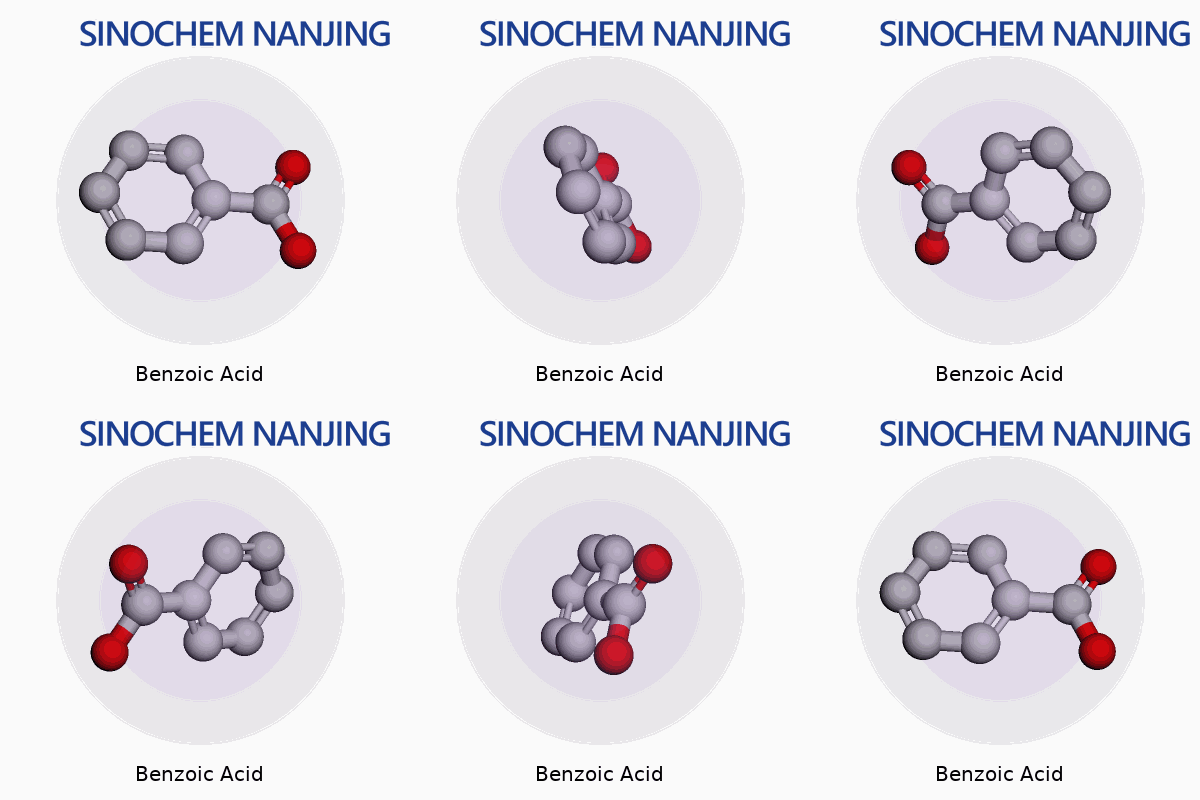
Structurally, the formula spells out a benzene ring (C6H5) with a carboxylic acid group (COOH) attached. That combination packs both stability and reactivity. Chemists appreciate this. The aromatic ring doesn’t break down easily under normal conditions. The carboxylic acid group lets benzoic acid take part in the kind of reactions essential to medicine and material science.
Risks and Responsible Use
Too much benzoic acid in food can cause mild irritation in sensitive people. The FDA and EU food regulators set strict limits. Following these keeps the benefits while lowering the risks. Studies show most people consume far below those limits, but it’s still smart for companies to double-check dosage in their products. This kind of oversight helps build public trust in food safety systems. Making sure additives get used responsibly protects health and supports transparent labeling, which many shoppers demand these days.
Room for Improvement
Food scientists keep searching for ways to make foods last longer with fewer additives. Plant extracts, fermentations, and packaging innovation work alongside tried-and-true preservatives. Chemistry instruction in schools plays a role too, showing students not only what C7H6O2 represents, but how that formula’s real-world impact shapes daily living. Clear education helps future decision-makers balance science, safety, and consumer needs.
Is benzoic acid natural or synthetic?
The Origins People Don’t See
Walk through any grocery store and you’ll find labels everywhere. Some announce “all natural” or “preservative free” in big, proud letters. Flip a package and scan the fine print, though, and sometimes you’ll see “benzoic acid” sitting quietly among the ingredients. A lot of people feel an urge to look it up or try pronouncing it out loud. Is this another lab-made chemical—something to watch out for? The truth behind benzoic acid turns out more complicated than most realize.
What Nature Provides—and What Factories Do
Benzoic acid pops up all over the natural world. Cranberries and blueberries hold small amounts. Plums, apples, and even ripe cloves keep it hidden inside. Over thousands of years, people have eaten this compound without even knowing it. Old remedy books mention using these same berries to preserve other foods, and that’s no accident—benzoic acid slows down the growth of mold, yeast, and some bacteria. Real science backs that up.
Eating fruits and spices won’t land you anywhere near the amount used in processed foods, though. Benzoic acid used as a food preservative in factories usually starts out with crude oil. Chemists make it by tweaking toluene (another chemical) using a specific process. This brings a reliable supply that doesn’t rely on berry harvests or climate swings. The same synthetic version gets made precisely, and every batch matches what’s in nature—the molecular structure is identical. Your body processes both the same way, breaking them down with help from your liver.
Why the Question Matters to People
People care where their food comes from. After hearing so much about “natural versus synthetic,” trust becomes a big part of eating. Some parents worry about the preservatives lining up in their kids’ lunchboxes. Older adults might wonder if these ingredients set off allergies or cause long-term health concerns. Studies so far suggest benzoic acid remains generally safe for most people in small amounts. The FDA and European regulators set strict upper limits to prevent any kind of overexposure. Certain folks with rare metabolic disorders do have to avoid it, but that's the exception.
Not all preservatives earn a bad reputation, but history shows why skepticism exists. People remember publicized recalls and ingredient bans when long-term risks surprise everyone. That’s why experts keep testing and reviewing chemicals in food over time.
Looking for Solutions: A Balanced Approach
Some retailers switched to ingredient lists that name the source, writing “benzoic acid (from cranberries)” when possible. Small brands highlight using only naturally derived additives. Consumer demand pushes big manufacturers to explore ways of extracting benzoic acid from plants on a larger scale or using fermentation with food-friendly microbes. These options need to hit the mark on cost and shelf life.
It helps to keep food labels easy to read, with useful explanations. Open communication from food companies wins trust and helps people choose what fits their needs. Doctors and dietitians get better results by listening to patient concerns, telling the plain truth, and staying ready to share the science. Instead of stirring up worry or suspicion about “synthetic” ingredients, the focus shifts back to honest sourcing, thorough safety checks, and clear information.
Nature makes benzoic acid, and so do factories. Both versions end up with the same effect on your plate—but knowing where it comes from, and why it’s there, puts everyone in a better place to make smart decisions about what to eat.
| Names | |
| Preferred IUPAC name | Benzoic acid |
| Other names |
Benzenecarboxylic acid Carboxybenzene Dracylic acid Phenylformic acid |
| Pronunciation | /benˈzoʊ.ɪk ˈæs.ɪd/ |
| Identifiers | |
| CAS Number | 65-85-0 |
| Beilstein Reference | 3205060 |
| ChEBI | CHEBI:30746 |
| ChEMBL | CHEMBL275 |
| ChemSpider | 502 |
| DrugBank | DB03793 |
| ECHA InfoCard | 03d6c20b-7e20-40a7-8b2f-c9623ccb6b6e |
| EC Number | 200-618-2 |
| Gmelin Reference | Gmelin Reference: **83247** |
| KEGG | C00180 |
| MeSH | D001578 |
| PubChem CID | 243 |
| RTECS number | DH6650000 |
| UNII | RJ364FA12T |
| UN number | UN1231 |
| Properties | |
| Chemical formula | C7H6O2 |
| Molar mass | 122.12 g/mol |
| Appearance | White crystalline powder |
| Odor | Faint, pleasant, characteristic |
| Density | 1.32 g/cm³ |
| Solubility in water | 3.4 g/L (20 °C) |
| log P | 1.87 |
| Vapor pressure | 0.0013 mmHg (20°C) |
| Acidity (pKa) | 4.20 |
| Basicity (pKb) | 11.30 |
| Magnetic susceptibility (χ) | −59.0×10⁻⁶ cm³/mol |
| Refractive index (nD) | 1.504 |
| Viscosity | 2.9 mPa·s (75 °C) |
| Dipole moment | 1.72 D |
| Thermochemistry | |
| Std molar entropy (S⦵298) | 186.0 J·mol⁻¹·K⁻¹ |
| Std enthalpy of formation (ΔfH⦵298) | -385.2 kJ/mol |
| Std enthalpy of combustion (ΔcH⦵298) | -3227 kJ/mol |
| Pharmacology | |
| ATC code | A01AB08 |
| Hazards | |
| Main hazards | Harmful if swallowed. Causes serious eye irritation. Causes skin irritation. May cause respiratory irritation. |
| GHS labelling | GHS07, GHS09 |
| Pictograms | GHS07 |
| Signal word | Warning |
| Hazard statements | H319: Causes serious eye irritation. |
| Precautionary statements | P210, P233, P240, P241, P242, P243, P260, P264, P272, P273, P302+P352, P304+P340, P305+P351+P338, P312, P321, P330, P337+P313, P362, P363 |
| NFPA 704 (fire diamond) | 2-1-0-W |
| Flash point | 121°C |
| Autoignition temperature | 570°C |
| Explosive limits | Explosive limits: 1.7–7.5% |
| Lethal dose or concentration | LD50 (oral, rat): 3040 mg/kg |
| LD50 (median dose) | LD50 (median dose): 3040 mg/kg (Rat, oral) |
| NIOSH | BIC |
| PEL (Permissible) | 5 mg/m3 |
| REL (Recommended) | 300 mg/kg |
| IDLH (Immediate danger) | Benzoic acid: 10 mg/m³ |
| Related compounds | |
| Related compounds |
Sodium benzoate Benzoyl chloride Methyl benzoate Benzamide Phenol Salicylic acid |



