Aniline: The Story, Science, and Stakes Behind a Century-Old Chemical
Historical Roots and Turning Points
Aniline has a reputation that stretches back into the earliest chapters of industrial chemistry. Around the dawn of the nineteenth century, people learned that an aromatic amine derived from coal tar or benzene could drive an entire dye revolution. William Henry Perkin, in the 1850s, tried to synthesize quinine but stumbled upon mauveine—the world’s first synthetic dye. Suddenly, the textile world pulsed with purples and aniline’s name spread from British workshops to German chemical giants. Chemists soon branched out, building dye factories, pharmaceuticals, and agricultural chemicals off its backbone. With each new world war, demand shifted, and regulations caught up. Growing up in a family of teachers, I often found that the intersection of science and the everyday world draws people in, and aniline stands as a textbook case in point: what started as lab curiosity ended up shaping industries and regulations that touch our daily lives.
Physical and Chemical Face
Anyone who has spent time with industrial samples knows aniline has character. People recognize it as a colorless to pale yellow oily liquid with a faint, fishy odor that hangs in the air around old chemical drums. Its molecular formula—C6H5NH2—looks simple, yet that arrangement shapes its every behavior: mildly soluble in water, freely mixing with many organic solvents, and relatively light for a liquid. Aniline boils well above standard room temperatures, which means handling calls for care and patience. Its chemical reactivity comes straight from that lone amino group hanging off a benzene ring, setting the stage for a wide variety of reactions, like acylation and alkylation, and presenting risks of fire and toxicity. People in research labs, myself included, tend to remember it for those unpredictable, stubborn stains and the anxiety of safe cleanup, which tells you plenty about why operational standards matter so much here.
The Many Names of Aniline
Pick up an old chemistry textbook, and aniline turns up under many labels: aminobenzene, phenylamine, benzenamine, and more. Each points to that single atom tweak on the aromatic ring and a shifting catalog of synonyms that’s shaped research, trade, and chemical safety. In industry, these alternate names trace corporate branding or regulatory history. On the lab bench, they shaped test questions, procurement lists, and, occasionally, dangerous mix-ups. This naming jumble drives home how scientists across generations and countries have forged connections through shared tools, even if not always by shared names. Careful labeling and shared understanding have grown into a foundation for safety—an unmistakable signal in an industrial world hungry for clarity.
From Raw Materials to Finished Aniline
The oldest method for making aniline involved reducing nitrobenzene with iron filings in the presence of hydrochloric acid. That classic ‘Bechamp reduction,’ dirty and efficient, built much of the world’s textile dye industry. This process later gave way to catalytic hydrogenation techniques, which brought cleaner products and scaled up to meet climbing demand in plastics and agrichemicals. These shifts mapped ongoing debates around efficiency and safety: my own coursework detailed vapor emissions, waste acid management, and risk of fires—or the long, careful hours I spent watching the reduction’s exothermic bursts in a drafty university fume hood. All these practical hurdles underpinned the technical and regulatory frameworks that chemists and production workers now rely on.
Chemical Reactions and Tinkering
The presence of that amino group gives aniline a chemistry all its own. In undergrad labs, students learned the transformation to acetanilide for purification, the nitration to form picric acid, and the many paths toward dyes. In industry, the focus turns towards broader transformations: sulfonation leads to sulfa drugs, diazotization bridges to azo dyes, and various modifications spawn antioxidants or crop protection chemicals. Tinkering with aniline’s structure often forced chemists to invent new glassware—or, as I saw in graduate research, gave patience-testing yields and stubborn impurities. Each pathway shaped not just products but also accident logs, accident prevention strategies, and updated regulatory guidelines. The craft of chemistry and the safety record both owe plenty to how research teams pushed and prodded this molecule over the years.
The Price of Progress: Safety, Toxicity, and Human Health
People who study aniline never forget its reputation for danger. Years back, working with small samples meant glove checks and repeated handwashing; on full industrial scales, the stakes rise much higher. Aniline can produce methemoglobinemia—a condition where blood loses its ability to deliver oxygen efficiently. Workers exposed to fumes or spills experienced headaches, dizziness, or worse. Studies showed animal exposure led to cancers and reproductive issues, which put sharper teeth into regulatory oversight. Outbreaks in dye factories and early organic synthesis workshops wrote history in suffering and reform. Modern operational standards now demand continuous monitoring, strict ventilation, protective clothing, and regular medical checks. Toxicity research never really stops, and ongoing meta-analyses continue to shape guidelines and give communities tools for conversation—especially when new studies reveal long-term risks that weren’t spotted in short-term data. This is what grounds chemical stewardship in practice, not just policy.
Product Standards and Responsible Operation
Keeping aniline production safe and reliable walks a narrow ridge. National and international standards limit human and environmental exposure—OSHA, REACH, and other agencies maintain strict guidelines for permissible air concentrations, skin protection, and emergency response. In our chemical storeroom, stock rotation and clear labeling meant nobody came close to error. Spill clean-ups became teaching moments, driving home why quick action and correct PPE remain non-negotiable. Technical documents spell out purity requirements, contamination checks, and shelf-life issues. More than just paperwork, these rules act as a shared language for safety, marking the difference between a productive workplace and a hazardous one.
Where Aniline Ends Up: Applications and Science
Aniline’s reach goes further than most people realize. Polyurethane foams in car seats, building insulation, dyes for textiles and inks, pharmaceuticals like paracetamol, and rubber processing chemicals all trace a connection to this single molecule. The shift from classic colors to specialized materials for electronics and medical devices stems from ongoing lab work and industrial invention. Tailor-made functional groups bolt onto the aniline skeleton, pushing further into specialty coatings and next-generation composite materials. Researchers chase methods for greener synthesis and safe decomposition, hoping to blunt the harms seen in legacy factories. Sometimes just one phrase or product logo in daily life—car upholstery, vivid printer ink—signals a complex and carefully regulated supply chain stretching across continents.
Innovation, Discovery, and the Ongoing Journey
Research into aniline now leans heavily into health, safety, and environmental stewardship. Green chemistry approaches aim to swap hazardous reagents for renewable alternatives. Scientists experiment with catalysts that deliver selectivity at lower temperature and pressure, cutting waste and energy use. In my own experience, the draw of new reagents or composite materials offers the biggest thrill—an opportunity not only for technical advancement but for problem-solving that really sticks. New developments, such as heterocyclic analogs or bio-based precursors, aim to maintain useful function while paring back ecological impact. These advances invite regular scrutiny from multidisciplinary teams attuned to risk.
The Future of Aniline: Risks and Rewards
Rising global demand for polyurethane foams and specialty polymers ensures continued pressure for aniline production. At the same time, tightening regulations and consumer concern force companies to reconsider supply chain hygiene and legacy liabilities. New approaches to process safety, waste management, and worker protection shape the field—a direct reflection of past failures and current public scrutiny. The most hopeful signs come from collaborations between chemists, toxicologists, engineers, and regulators, driving replacement technologies and pushing data transparency. Growing up hearing about local waterways and air quality gave me a healthy respect for how technical fixes and real-life impacts rarely track on a straight line. Smart risk management and public engagement look vital, especially when long-term exposures or unknown byproducts raise tough questions. The challenge for the next generation boils down to using the lessons of scientific progress, human error, and resilience—aniline’s history, in many ways, writes that story.
What is aniline used for?
A Glimpse Into Aniline’s Reach
Aniline holds a quiet, yet powerful spot in daily routines, even if its name rarely pops up in casual conversation. It flows through many products we touch and use. As someone who spent years near manufacturing plants and once toured a rubber factory, I know that some of the most useful things come from old-fashioned chemicals. Aniline, for me, is a backbone in modern progress.
Building Blocks of Industry
Take a stroll through any home and you’ll spot aniline’s influence without even knowing it. The cushions on the couch, the insulation inside fridges, and the soles of sneakers all connect back to one thing: polyurethane foam. The biggest portion of aniline goes into making MDI (methylene diphenyl diisocyanate), a core ingredient for polyurethane foam. From home insulation to appliances and car seats, this foam brings more comfort and saves energy for millions. More soundproof homes, warmer winters, quieter cars—all with ease, partly thanks to aniline.
Care Beyond Comfort
While aniline keeps us cozy, it protects as well. You find it in army boots, industrial gloves, hoses, belts, rubber tires, and conveyor belts in every supermarket. Rubber production uses aniline to make rubber stronger, longer lasting, and more elastic. I saw firsthand when touring an auto plant—endless tires, conveyor belts, and machine parts, all made possible by chemicals like aniline that stretch a company’s investment further.
Colors That Tell Stories
Take a look inside a painter’s studio or a fabric shop. That burst of color often comes from aniline-based dyes and pigments. The first synthetic dye in history, mauve, came out of aniline. Today aniline feeds the dye and pigment market for everything from blue jeans to vivid wallpapers. Synthetic dyes don’t just brighten life—they help keep fabric tough and colors long-lasting, even after years of washing.
A Helping Hand in Medicine and Farming
Factories that churn out medicine rely on aniline too. Pain relief like paracetamol, medications for malaria, and other pharmaceuticals all grow from aniline’s chemical tree. In agriculture, many herbicides and weed killers take shape by using aniline as a building block. The reach stretches far—helping put food on the table and fighting disease.
What Are the Risks?
Working with chemicals brings up safety, and aniline is far from harmless. Breathing in or coming into close contact with aniline causes harm quickly. It can cause headaches, drowsiness, or much worse if mishandled. I remember workers suiting up extra carefully at the chemical plant, double-checking valves and wearing gloves with more care than anywhere else. Modern plants focus on personal protective gear and strict monitoring. But not everywhere gets protection right every time. Exposure accidents still happen, especially in places where regulations fall short or oversight is thin.
How to Make Aniline Safer
So much good comes from careful chemistry. The key to safer aniline use starts with training and strong rules. Every worker deserves hands-on instruction and companies need real accountability. Governments and industries should keep standards tight and upgrade them as new studies roll in. Closed systems, automatic shutdowns, and air monitors prevent leaks. Good ventilation and up-to-date gear, like heavy-duty gloves and air masks, are non-negotiable in facilities using aniline.
Looking Forward
Industry keeps finding more thoughtful ways to use strong chemicals without causing harm. Every home full of safe foam, every medicine that helps a family, gives a reason to push for better protections and smarter practices. The future depends on how much care we show for workers and neighbors living near these industries. Aniline’s story tracks alongside the story of progress, responsibility, and respect for everyone who makes our comforts and colors possible.
Is aniline toxic or hazardous?
Getting Familiar with Aniline
Aniline shows up in a lot more places than most people realize. It's a clear, oily liquid, famous for its fishy smell, and dozens of industries use it. You find it in dyes, rubber processing chemicals, pesticides, and pharmaceuticals. Raised in a family that worked both farm fields and factory lines, I heard stories from uncles who spent years close to this stuff—sometimes without a mask, sometimes with windows closed shut. One thing always came up: people felt sick after breathing its fumes or touching their faces after working with aniline.
What Makes Aniline Dangerous?
A short answer: it’s toxic. Breathe in even small amounts of aniline vapor and dizziness creeps up fast. Headaches and a blue tint under the fingernails follow—those are classic signs your blood isn’t carrying enough oxygen. This happens because aniline turns to a compound in your body that binds to hemoglobin, locking up its ability to help red blood cells do their job. Swallowed or spilled on skin, aniline can cause vomiting, sweating, and confusion. Prolonged exposure means even bigger risks: changes to the nervous system, risks for certain types of cancer, and direct damage to organs, especially the liver and kidneys.
The Science and the Numbers
Research leaves little doubt about its risks. The U.S. Environmental Protection Agency classifies aniline as a probable human carcinogen. Workers exposed to aniline experience methaemoglobinaemia more often than those exposed to few other substances—this jives with what industrial health clinics have tracked for decades. Even gloves, if they aren’t the right type, don’t always block aniline. The Centers for Disease Control and Prevention laid out strict occupational limits for air around aniline-handling workspaces. Still, fatal accidents have happened in factories in the U.S., China, and Europe, usually after leaks or missing protective gear.
Daily Life Concerns
Regular shoppers and neighbors don’t face the same levels of risk as workers, but everyone feels the effects after a major spill in water or the air. I still remember the chemical smell after a neighboring city reported an aniline leak about ten years ago. Fish died, kids stayed indoors, and cleanup took weeks. Accidental releases can poison rivers and soil, hurt wildlife, and seep into drinking supplies. No one wants their children playing near abandoned lots where these chemicals once spilled.
Looking Toward Solutions
Better practices at every level make a difference. Factories need solid ventilation, quick spill response, and strong personal protective equipment rules. Regular training shows up as a big factor; people aware of the risks tend to protect themselves. Alternatives do exist for some dyes and pesticides, and some companies already switched to less hazardous chemicals. Government action drives these moves, setting safety limits and hitting polluters with real penalties. Communities can speak up when new factories come to town or old ones expand. Shared knowledge between workers, families, regulators, and manufacturers helps avoid disasters and long-term harm.
What are the physical properties of aniline?
Looking at the Basics
Aniline stands out in the world of chemicals because of some easily recognized features. Pour it into a glass and you’ll see a colorless to slightly yellow liquid that doesn’t mix with water very well. Maybe that’s the first red flag if you’ve ever tried to clean a spill. It just sits there, floating and stubborn. Its smell? Unmistakable. Strong, almost fishy, and certainly pungent—people often describe it as sweet at low concentrations, but usually it’s enough to wrinkle your nose. This isn’t the kind of aroma folks chase after. At room temperature, it shows a density a little lower than water, about 1.02 grams per cubic centimeter, which means it doesn’t disappear in a container but spreads pretty efficiently on surfaces.
Boiling, Melting, and Handling Heat
Heat up some aniline and you’ll hit its boiling point at roughly 184 degrees Celsius. Not exactly something that evaporates away under the sun’s rays, and handling it in the lab, you learn that temperature control matters. Use cold, and you’ll find that aniline freezes, or really solidifies, at about -6 degrees Celsius. Anyone storing or transporting this stuff over the winter knows to watch out—left unprotected, it can turn from a liquid to a solid slab quicker than you might expect.
The Way It Mixes and Moves
Pour aniline into water and you’ll notice it doesn’t dissolve much. Only about 3.6 grams will go into 100 milliliters of water at room temperature. That relatively low solubility means waste, accidents, and environmental risks can stick around if not handled right. On the flip side, it mixes well with alcohol, ether, and many other organic solvents. That property has made it useful in dye production, rubber processing, and even in medicine. Take a look at the glove dyes or old-school photographic films—aniline has played a part there.
Effect on Everyday Safety
Working near aniline calls for real caution. Its vapor is heavier than air, so it can collect near floors in poorly ventilated spaces, sneaking up on workers who don’t take proper care. It’s easy to learn from others’ mistakes—a small spill can linger in labs or chemical plants, creating chronic exposure. According to the U.S. National Institute for Occupational Safety and Health, breathing in vapors or getting aniline on your skin can lead to health issues, including methemoglobinemia, a fancy term for blood not carrying oxygen the right way. That’s a lesson learned quickly in settings where safety gear sometimes gets taken for granted. A simple pair of gloves and a reliable mask can mean the difference between a close call and a hospital trip.
Supporting Solutions
In the places I’ve worked, smarter handling systems changed everything. Good ventilation, spill kits ready to go, and people actually trained to use them—those practical tools protect workers from exposure. Investing in closed handling systems or leak-proof containers keeps accidents rare. And switching to automatic sensors that pick up on vapor before people get sick? That approach has saved plenty of headaches and worse. Ultimately, it’s about mixing common sense with scientific knowledge. If industries stick with the basics and give workers the right tools, the physical quirks of aniline become manageable rather than dangerous.
How is aniline produced or synthesized?
Synthesizing Aniline: The Basics
Aniline unlocks the world of dyes, rubber chemicals, and many everyday products. The backbone of its story starts with benzene. Through nitration, factories introduce a mixture of nitric and sulfuric acids to benzene—this step brings about nitrobenzene. This reaction doesn’t just happen in a flask; it produces real heat. Control stands front and center. If temperature or acid ratios stray, dangerous byproducts crop up—or worse, things can go off the rails.
The next phase takes nitrobenzene and hands it off to reducing agents like iron filings and hydrochloric acid. In my time working around industrial labs, this part demands focus. Getting reduction right means transforming the nitro group into an amino group, releasing water and iron oxide as leftovers. In practice, the smell and the distinctive browns and blues tell everyone nearby what’s happening before even glancing at a readout.
Safety and Environmental Concerns
Anyone who has spent time in chemical synthesis knows aniline isn’t free from baggage. For workers, the process means suiting up: respirators, gloves, and goggles become your daily armor. Benzene and nitrobenzene both carry health risks, with benzene strongly linked to cancers. Even brief exposures in poorly ventilated spaces feel risky, and it’s impossible to ignore the impacts that poor protocols have had on workers in history.
Wastes from aniline manufacture aren’t easily swept away. Iron oxide finds some use, but acid sludge and contaminated water pose real disposal headaches. Outdated wastewater management lets pollutants seep into rivers—something I’ve personally seen spark outrage in downstream communities. Proper capture and neutralization of wastewater isn’t optional. It’s a safety net for neighborhoods that draw drinking water from those same streams.
Innovation in the Industry
Large chemical companies keep searching for cleaner and safer ways to make aniline. Hydrogenation of nitrobenzene offers a more modern take, using high-pressure hydrogen in place of iron. These setups bring fewer solid wastes, slashing disposal costs and harmful byproducts. I’ve watched new plants get built using these methods. While investment costs run higher, safety records show fewer incidents over time. Technology upgrades pay off most in regions juggling limited water supplies and stricter environmental laws.
Switching out older synthetic routes doesn’t always happen fast. Public pressure sometimes gets the ball rolling. Regional fire departments and local advocates help make sure companies stick to their commitments. As a community, we each share a stake—whether drinking the water, working the shifts, or living nearby.
The Road Ahead
Moving forward, it makes sense for every plant to embrace regular audits and transparency about their emissions. Digital monitoring and real-time leak detection could change the game, flagging chemical leaks before they threaten people or land. In the classroom and on the warehouse floor, teaching the next generation of chemists about green chemistry will help reshape how tomorrow's chemicals come to life. Aniline might not turn heads like tech gadgets, but behind every colorfast shirt or car tire stands a chemistry story—and lessons learned that shape our future safety and wellbeing.
What safety precautions should be taken when handling aniline?
Understanding Aniline Risks
Aniline plays a key role in industrial chemistry, especially in making dyes, rubber processing, and pharmaceuticals. Despite its uses, working with it isn’t as simple as just wearing gloves and hoping for the best. If you’ve ever walked into a lab using aniline, one whiff is enough to remind you why proper safety habits matter. The strong odor hints at its toxicity. Breathing in the vapors or getting the chemical on your skin can lead to some nasty health effects—think headaches, dizziness, blue-tinged skin from methemoglobinemia, or worse with repeated exposure.
The Right Gear Prevents Accidents
Direct contact usually creates the biggest problems. I always reach for chemical-resistant gloves—nitrile or butyl rubber instead of general latex. Regular lab coats, along with long pants and closed-toe shoes, become essential in these setups. Eye protection comes next. Splashing isn’t rare, especially when transferring from bigger containers, so goggles or even a face shield belong on your packing list.
Handling aniline in a well-ventilated spot cannot be optional. Good ventilation keeps vapor levels low and reduces the risk of breathing in fumes. Fume hoods work extremely well in labs, pulling harmful vapors away before you even notice them. At my old university lab, using a hood quickly became muscle memory anytime we pulled the aniline out. Keeping indoor air free of toxins protects everyone around, not just the person mixing chemicals.
Storage and Spill Strategies
Unsecured bottles and poor storage make an accident much more likely. Aniline needs a tightly sealed container, kept somewhere cool and away from sunlight. Too much heat or light nudges it toward decomposition, releasing extra toxins. Ordinary shelving doesn’t cut it; chemical storage cabinets marked for toxic substances help avoid confusion and mix-ups.
No matter how careful you think you are, spills happen. Aniline absorbs into the skin quickly, so the best move is to grab the right absorbent, clean it up, and contain the mess, not just use paper towels. Emergency showers and eyewash stations must be easy to reach. It’s important to know exactly how far you are from the nearest wash station—you don’t want to guess in an emergency. Only those trained to handle chemical spills should clean up large amounts, wearing full protective gear and using the correct absorbents. Reporting every spill—no matter how small—keeps the workplace safer for everyone the next time.
Health and Training Make a Big Difference
I remember a colleague who started feeling sick after a long day working with aniline, not realizing he’d spilled a few drops on his forearm earlier in the shift. Skin contact doesn't always feel dangerous; symptoms often show up hours later. Fast action makes the difference. Washing the affected area with plain water—no solvents—should follow immediately. Anyone who gets aniline on their skin or in their eyes needs to seek medical care if they feel off, even after rinsing.
Companies and labs owe it to their teams to give real safety training, not just a poster on the wall. Learning to spot the signs of poisoning, understanding emergency procedures, and double-checking equipment routines strengthens safety culture. Aniline accidents often stem from shortcuts or basic mistakes. Regular, hands-on refreshers, paired with the right safety equipment, keep incidents rare in smart workplaces.
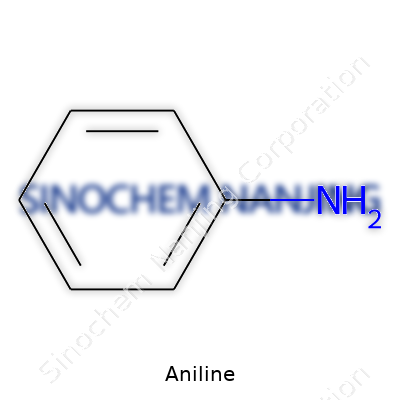
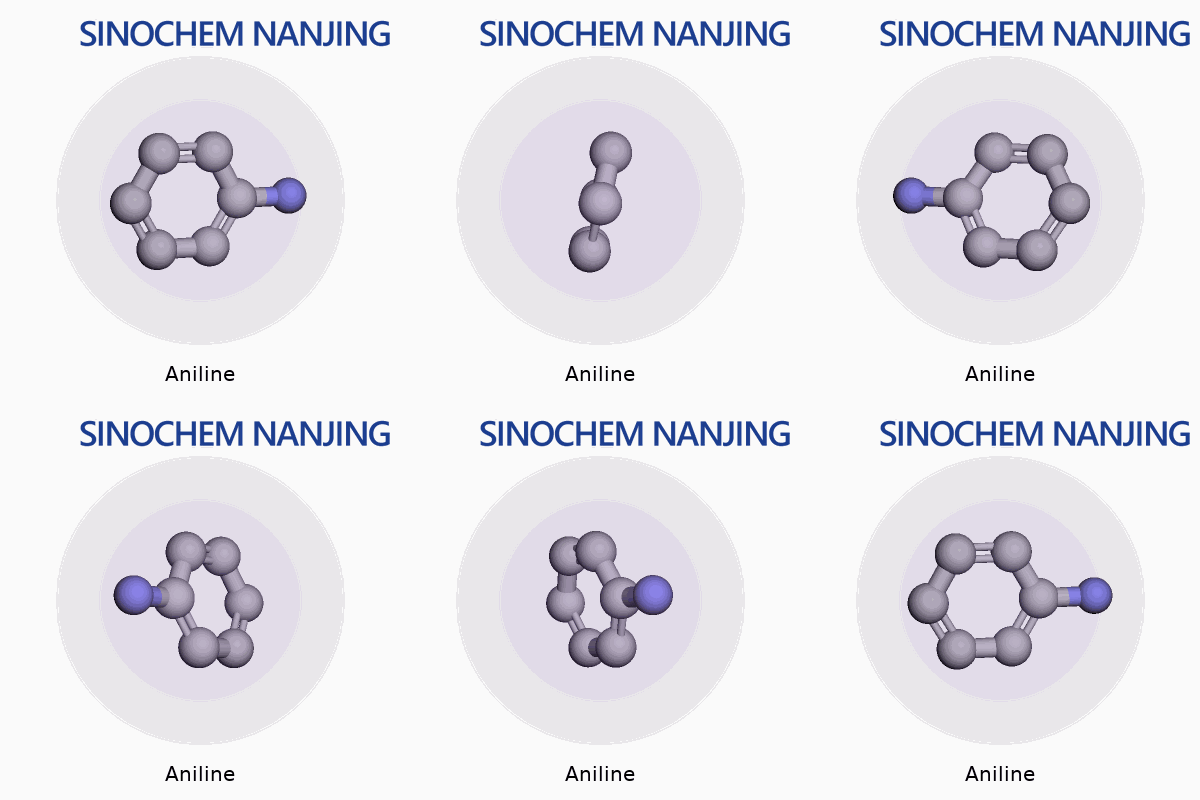
| Names | |
| Preferred IUPAC name | Benzenamine |
| Other names |
Aminobenzene Benzenamine Phenylamine |
| Pronunciation | /ˈæn.ɪ.liːn/ |
| Identifiers | |
| CAS Number | 62-53-3 |
| Beilstein Reference | 605293 |
| ChEBI | CHEBI:17296 |
| ChEMBL | CHEMBL1421 |
| ChemSpider | 583 |
| DrugBank | DB04551 |
| ECHA InfoCard | ECHA InfoCard: 100.001.054 |
| EC Number | EC 200-539-3 |
| Gmelin Reference | Gm160 |
| KEGG | C01407 |
| MeSH | D02.241.081.198 |
| PubChem CID | 6115 |
| RTECS number | BX1590000 |
| UNII | J1Q1V8HL58 |
| UN number | UN1547 |
| Properties | |
| Chemical formula | C6H7N |
| Molar mass | 93.13 g/mol |
| Appearance | Colorless to pale brown oily liquid with a characteristic odor |
| Odor | Characteristic amine-like odor |
| Density | 1.0217 g/cm³ |
| Solubility in water | 3.6 g/100 mL (20 °C) |
| log P | 0.90 |
| Vapor pressure | 0.6 mmHg (20°C) |
| Acidity (pKa) | 4.6 |
| Basicity (pKb) | 9.4 |
| Magnetic susceptibility (χ) | -72.4×10⁻⁶ |
| Refractive index (nD) | 1.586 |
| Viscosity | 3.86 cP (20°C) |
| Dipole moment | 1.50 D |
| Thermochemistry | |
| Std molar entropy (S⦵298) | 87.1 J·mol⁻¹·K⁻¹ |
| Std enthalpy of formation (ΔfH⦵298) | 86.0 kJ·mol⁻¹ |
| Std enthalpy of combustion (ΔcH⦵298) | -3274 kJ/mol |
| Hazards | |
| Main hazards | Toxic if swallowed, in contact with skin or if inhaled; causes damage to organs; suspected of causing cancer; harmful to aquatic life. |
| GHS labelling | GHS02, GHS06, GHS08 |
| Pictograms | GHS06,GHS08 |
| Signal word | Danger |
| Hazard statements | H302, H312, H332, H317, H351, H370 |
| Precautionary statements | P210, P261, P264, P270, P271, P301+P310, P302+P352, P304+P340, P308+P311, P312, P322, P330, P361, P363, P405, P501 |
| NFPA 704 (fire diamond) | 2-2-2-A |
| Flash point | 76°C (closed cup) |
| Autoignition temperature | 705°F (374°C) |
| Explosive limits | Lower: 1.3% ; Upper: 19% |
| Lethal dose or concentration | LD50 oral rat 250 mg/kg |
| LD50 (median dose) | LD50 (median dose): 250 mg/kg (oral, rat) |
| NIOSH | CU1400000 |
| PEL (Permissible) | 10 ppm |
| REL (Recommended) | 0.1 ppm |
| IDLH (Immediate danger) | 100 ppm |
| Related compounds | |
| Related compounds |
Acetanilide Phenylhydrazine Diphenylamine Methyl aniline Nitrobenzene |



