Allyl Chloride: From Pioneering Chemical to Demanding Modern Responsibilities
Unpacking the Legacy of Allyl Chloride
Every field has its workhorse chemicals, and allyl chloride is one that pulled its weight earlier than many realize. Its story stretches back to the early 19th century, when French chemist Auguste Cahours first prepared it. Back then, scientists relied on pretty basic glassware and a mix of curiosity and ambition. They didn’t just uncover a new molecule — they set up the roots for a wave of organic chemistry that shaped everything from drugs to plastics. Unlike some chemical relics, allyl chloride never faded into the background. Its reactive nature and flexible uses kept it front and center, tying old-school chemistry to the demands of advanced industries today.
What Kind of Chemical Are We Dealing With?
Allyl chloride stands out for its sharp, garlic-like odor and its clear, mobile liquid appearance. Its chemical name gives away its personality: 3-chloropropene, or sometimes 1-chloro-2-propene, with the formula C3H5Cl. This small molecule manages to pack reactivity and volatility, boiling near 45°C and catching fire easily — not the kind of stuff you want to be careless around. Unlike some heavy, syrupy solvents, it evaporates in a flash. I remember handling it in a university lab and realizing that even a whiff meant my gloves and fume hood were utterly necessary. It doesn’t shy away from water; it floats and barely mixes, often forming a separate phase. It’s denser than air too, which means vapors linger at ground level.
Details That Matter: Specifications and Labeling
For anyone in chemical manufacturing or research, knowing the specifics makes all the difference. Purity grades tend to fall upwards of 98%, with low water content and minimal stabilizers — sometimes copper is added to slow down decomposition. Every drum needs clear hazard warnings, not just for the health and flammability risks, but for its long-term storage, too. The GHS labels always jump out at me: corrosion, exclamation marks, that nasty skeleton hand — not for show. You don’t forget the sharp warning when prepping even routine syntheses.
Turning Simple Feedstock Into Allyl Chloride
Allyl chloride’s industrial production changed a lot since its discovery. The classic method heats propylene with chlorine in the gas phase, using a catalyst to keep things moving. Chemical companies chose this method because propylene is everywhere in the petrochemical world and reacts predictably with chlorine. In some corners, older routes start from allyl alcohol and phosphorus trichloride, but these fell off due to cost, safety, and waste problems. Each approach needs a careful touch since both feedstock and product like to escape as harmful vapors. I’ve always admired the fine balance between reliability and risk, with engineers and technicians constantly tightening safety and environmental controls.
How Allyl Chloride Gets Along in a Reaction Flask
It doesn’t take much to set allyl chloride off. Its double bond next to the chloride atom makes it useful as an alkylating agent, jumping into SN2 and SN1 substitution reactions as easily as seasoned professionals change their work boots. Chemists use it to introduce the allyl group into molecules — a building block that often shows up in pharmaceuticals, pesticides, and flame retardants. Over the years, methods evolved to coax new behavior from it: reactions with nucleophiles for ethers and amines, the occasional polymerization, and even intricate organometallic couplings. In the right hands, its utility grows, but any misstep risks putting those reactive fumes right where nobody wants them.
Names, Synonyms, and a Web of Uses
Allyl chloride has a few aliases, and old textbooks might mention 3-chloropropene or monochloropropene. In global trade and scientific circles, the name sticks—rarely drifting from these forms. But the impact reaches far. Plastics makers need it by the tanker-load to make epichlorohydrin, which in turn becomes epoxy resins found in everything from circuit boards to wind turbines. Specialty chemical shops rely on it for organosulfur synthesis, and some crop-protection chemistries wouldn’t exist without it as a starting point. There’s even a thread linking it, indirectly, to fragrances and water treatment chemicals.
Living With Risk: Safety and Operations
There’s no getting around the hazards of allyl chloride, whether working in a big plant or a compact research lab. The chemical slices through skin and lung tissue if spills or vapors get past protection. Chronic exposure damages nerves and genes, with some animal studies pointing toward carcinogenic effects. From experience, even small leaks need full-face protection, splash-proof gear, and air monitors on alert — not for drama, just daily practice. Companies that deal with the compound won’t skimp on explosion-proof gear, fire control, and strict hand-off procedures at every stage of use, transfer, and disposal. Firefighters and hazmat crews keep it at the top of their toxic vapor response lists.
Modern Applications Beyond Epoxy
Epoxy resins take the lion’s share, but the list keeps growing. A lot of agrochemical development traces back to allyl chloride because the allyl group often tweaks the activity of herbicides and growth regulators. Some pharmaceutical research leans into its chemistry for intermediate steps on antiviral and antiparasitic drugs. Water treatment plants find value downstream from it, in chemicals that help remove impurities and control microbial growth. I’ve seen innovation teams debate whether bio-based production will ever match the scale and reliability of the traditional chlorine route, but so far, fossil feedstocks dominate the supply.
Digging Into R&D: Sustainability and Safer Pathways
Green chemistry gets plenty of lip service in academia and industry, but making allyl chloride sustainably stands as a real challenge. Researchers dig into alternative feedstocks like glycerol from biodiesel waste, hoping to edge away from fossil fuel dependence. Palladium catalysts and other designer systems tempt scientists who crave less toxic waste, but few breakthroughs had the legs to run at commercial scale. Regulatory pressure mounts, with European and Asian standards forcing companies to squeeze emissions, cut byproducts, and invest in containment. There’s steady push to invent less hazardous substitutes for some uses, yet nothing quite balances the same cost and reactivity.
Understanding Toxicity: The Story from the Lab Bench
Years back, I watched a colleague struggle through the regulatory paperwork and animal test data during an environmental risk assessment and realized how much weight sits on every production run. Lab tests confirmed what earlier anecdotal evidence hinted: acute exposure triggers respiratory distress, chemical burns, even nervous system effects. Chronic low-level exposure links to liver and kidney problems, as well as some DNA mutations. Regulatory authorities use animal studies, not perfect but still revealing, to set workplace and environmental limits. Every risk assessment wades through data gaps, new findings, and the conflicting needs of industry against public health.
Looking to the Future: Can Industry Balance Progress and Prudence?
Allyl chloride shows no sign of disappearing from the global chemical toolkit, especially as demand for epoxies and specialty chemicals keeps growing. Tightening safety and environmental standards mean that producers face constant pressure to innovate on both process safety and emissions control. Long-term prospects might include bio-based sources and better capture technologies, but the present still leans on refining the old system rather than replacing it outright. Cross-disciplinary research — linking chemists, engineers, toxicologists, and policy experts — holds the real shot at progress. Every small advance in safer handling or greener synthesis means fewer tradeoffs between the benefits this molecule brings and the risks it poses to workers, communities, and the wider world.
What is allyl chloride used for?
Why Factories Use Allyl Chloride
Factories rely on allyl chloride for its strong chemical backbone. It shows up in plastics, pharmaceuticals, and especially in the production of epichlorohydrin. Epichlorohydrin leads straight to epoxy resins, which everyone finds somewhere—paint on a garage floor, pipes that never seem to leak, the lining of a windmill blade. No surprise, then, that global demand for allyl chloride has ticked upwards in step with more building, more infrastructure, and new technology.
Link to Everyday Life
Most folks don’t realize parts of their car, drinking glass, or even countertop trace back to this chemical. I once toured a small composite factory, where proud engineers held up a lightweight epoxy panel that looked plain but could handle brutal wear and tear. Later, I learned the story started with allyl chloride reacting in a large vat. This step transforms raw building blocks into something new and lasting. The same basic reaction also leads to flame retardants, allyl alcohol, and agricultural chemicals. Without this link in the chain, all those shiny, break-resistant products might never make it past the drawing board.
The Double-Edged Side
Materials like allyl chloride show their worth, but not without raising concerns. The chemical can irritate the eyes, nose, and lungs if handled wrong. The World Health Organization and U.S. Occupational Safety and Health Administration both set limits for workplace exposure and call for closed systems and personal protection. High exposure can bring headaches, dizziness, and even long-term nerve trouble; lesson learned in stories throughout the chemical industry. Sometimes, listening to workers gives better insight than any data sheet—veterans steer clear of leaks, and good plants keep air monitors running.
Environmental Questions
Producing allyl chloride also brings a burden for air and water. Like most chemicals made on a ton scale, waste streams have to go through strong treatment. A mistake along the way can mean chlorine exposure for workers, or worse, for surrounding neighborhoods. This topic hit home years ago in an industrial town where runoff from a single line ran into a local creek, leading to an uproar and long cleanups. Since then, laws have clamped down, but tradeoffs between production volume and safe handling always remain front and center.
A Path Forward
Companies now invest in closed-loop systems and stricter testing before anything reaches the environment. Smart design cuts back on emissions from the start, and better training keeps accidents to a minimum. Allied fields push for green chemistry, searching for new methods to cut risk and to recycle waste into something worthwhile. Sharing ideas between competitors helps too, since one mistake from any corner hurts the entire industry’s image.
Allyl chloride continues to play a vital role behind the scenes, shaping both the practical stuff people count on and the ongoing drive for safer, smarter industry standards. Paying attention to safety, science, and local impact keeps its risks in check while still allowing the materials we depend on every day.
Is allyl chloride hazardous or toxic?
Recognizing Hazards in Everyday Chemistry
Allyl chloride pops up in factories that produce plastics, pharmaceuticals, and pesticides. It’s a colorless liquid, but behind that unassuming appearance sits a chemical that deserves real respect. Talking about exposure isn’t just for folks in lab coats. Anyone near manufacturing lines, transport containers, or spill sites can run into trouble. I’ve seen workers handle containers with caution, double-checking seals and ventilation, knowing full well what a stray whiff can do.
Health Risks You Shouldn’t Ignore
Take a breath near allyl chloride, and your nose and throat start to burn. Eyes tear up, and coughing comes quick. Heavy exposure ramps up to headaches, dizziness, and loss of coordination. Workers surrounded by vapors without solid protection risk lasting nerve problems and even cancer. Data from the International Agency for Research on Cancer points to possible carcinogenic effects after long-term exposure in animal tests.
Back in the day, I watched an old colleague get urgent treatment after a puddle of this stuff splashed onto his hand. Burns, blisters, and later, a long talk with a safety officer. Years of chemical manufacturing teach you to treat this stuff as more than a nuisance; it’s a test of how tight your safety habits really are.
Not Every Workplace Handles It Right
Health and safety rules require fume hoods, face shields, and gloves. Still, shortcuts happen, especially at smaller plants trying to save cash. Stories linger about improper handling because someone skipped protective gear or ventilated rooms poorly. Accidents show up in reports—the U.S. Environmental Protection Agency has listed allyl chloride under toxic substances which should always get extra attention.
Environmental impact raises its own red flags. Spills slip through drainage systems. Waterways carry traces that harm aquatic life, and once it gets into the soil, cleanup turns expensive and technical. Communities living close to plants face added risks, especially if evacuation plans look weak or warnings come late.
Staying Safer With Better Tools and Training
Real solutions start with meaningful training and gear. Tools like gas sensors and splash shields keep people from becoming casualties. Ongoing drills form muscle memory for what happens during leaks or fire. Plant managers who invest in safety not only protect workers, but save on insurance and downtime. It feels like common sense, but plenty of places play catch-up after the fact.
On a broader level, governments have room to tighten shipping rules and reporting requirements, ensuring that communities and first responders know what’s traveling their roads. People living near chemical hubs deserve transparency about potential dangers so that they’re not last to know.
Accountability Beats Complacency
Allyl chloride’s reputation doesn’t rest on theory. Real lives depend on handling practices and a culture of alertness. For those who work with it or live near production sites, reading the label is never enough. It’s one of those chemicals that rewards care and punishes carelessness—facts, training, and open conversation stay more effective than fancy equipment alone.
What are the storage and handling requirements for allyl chloride?
No Room for Mistakes: Why Allyl Chloride Demands Respect
Working around allyl chloride shifts the mood in any lab or facility. One whiff of its sharp smell, and you realize this chemical carries a punch. There’s a reason behind the extra caution. Inhalation or skin contact can leave burns, eye irritation, and even pose long-term cancer risks. Anyone responsible for its storage and handling quickly learns that the usual routines feel inadequate. If you’ve ever seen vapors cloud a workspace, the lesson sticks: ordinary precautions fall short with this compound.
Temperature and Ventilation
Some chemicals shrug off heat. Allyl chloride reacts. Temperatures over 30°C push vapor levels into dangerous territory. The solution sounds simple: keep it cool, away from heat sources and sunlight. In practice, thermal stability means chilling storage rooms or using insulated cabinets. Experience in hot, cramped warehouses proves just how quickly this stuff can boil or burst out of a poorly chosen container. Flammable liquid cabinets with proper grounding become a must, not a suggestion.
Ventilation separates well-managed spaces from hazardous ones. Standard exhaust fans can’t always manage the invisible threat of heavy vapors. Storage areas benefit from dedicated explosion-proof units that never let fumes build up. Facilities that ignore this have paid the price — sometimes with hours evacuated after a single oversight. No shortcuts survive contact with a chemical that can ignite from a stray spark.
Containers: Why Material Choices Matter
Some lessons come after cleaning up leaks. Allyl chloride eats through certain plastics. It wrestles with rubber seals and soft metals. Only steel drums with tightly fitted seals have earned their place in safe storage. Trying to save a few dollars on the container rarely pays off, especially once corrosion starts. Keeping containers tightly closed blocks the constant threat of moisture, which can trigger dangerous reactions and degrade product quality.
Isolation and Spill Containment
Mixing allyl chloride with incompatible chemicals can turn a routine day into a disaster. Acids and strong bases have no place nearby, since even tiny drips can set off heat or toxic fumes. In practice, wise operators assign separate, clearly labeled zones. If you ever had to scrub up spilled chlorine compounds, you know secondary containment trays seem trivial — until a drum tips or a valve gives way.
Spill kits designed for organic chemicals stay within reach. They cut response time when things go wrong. Properly trained staff handle these fast, capping leaks and wiping up without hesitation. Rushed responses or missing absorbents cause real danger. Nobody forgets the day foam blankets ran out, exposing workers to invisible vapors until emergency crews arrived hours later.
Personal Protection in the Real World
Allyl chloride laughs at light gloves and open goggles. Anyone who spends hours near storage needs layered, chemical-resistant gear, including face shields and full-coverage gloves. Respirators keep workers from breathing in fumes, especially during transfer or cleanup. In my time on plant floors, those who cut corners or skip training always seem to walk away coughing or with splashes they regret. Peer reminders matter just as much as formal protocols for safety gear.
Building Safety Through Real Experience
Proper care with allyl chloride doesn’t happen by accident. It grows from experience and listening to those who have seen things go wrong. Training matters — not as a box to tick, but as a real transfer of knowledge from the seasoned hands to the new hires. Managers who share specific stories rather than recite generic warnings build the habits that keep everyone out of the ER and far from headlines.
What is the chemical formula of allyl chloride?
Real-World Uses and Deeper Meaning Behind a Simple Formula
Allyl chloride isn’t just another compound from chemistry class—it shapes daily life, even when barely anyone ever sees it on a shelf. Its chemical formula is C3H5Cl. Some folks call it 3-chloropropene, a short, punchy name packed with importance for more than one industry. If you’ve sniffed a faint but sharp odor near an old industrial facility, that harsh aroma could be allyl chloride, a wake-up call to just how close chemicals feel to home.
I once visited a contract manufacturer in the plastics industry. In the dodge and weave between tanks and narrow walkways, a supervisor explained, “Allyl chloride starts so many things here.” He wasn’t exaggerating. This colorless, volatile liquid kicks off the process for making epichlorohydrin, which goes into everything from epoxy resins to water filtration equipment. That single change—the replacement of a hydrogen atom in propene with a chlorine atom—opens up massive possibilities.
Behind the Scenes: Why C3H5Cl Matters
Nobody likes to dwell on things going wrong in a chemical plant, yet safety and vigilance make a difference. C3H5Cl sounds so harmless on paper, but the actual stuff will burn skin and lungs if mishandled. Years back, I met an engineer fresh from a safety audit. He repeated, almost as a mantra, the need for real containment, not just paperwork—gloves, masks, sealed tanks, proper ventilation, down to the last bolt. Hospitals and regulators both see spikes in emergency calls tied to simple oversights. Workers talk bluntly about lessons learned, and I trust that raw honesty.
The numbers back up these stories. Data from the CDC points out that allyl chloride exposure can irritate the eyes and respiratory system, with documented effects on the liver and kidneys at higher levels. These aren’t just statistics; they represent people who work overtime, support families, and deserve the trust that comes with responsible chemical handling.
Solutions That Stick—Not Just Patch Jobs
Every factory or lab using allyl chloride faces tightrope decisions. Keep the chemical in and the people safe, or risk breakdowns and costly exposures. Solid training, constant air monitoring, and simple habits like double-checking seals go further than any brand-new regulation. In truth, nothing beats workers who look out for each other and keep the lines of communication open. Safety culture starts with leadership, but everyone on the floor has a stake in speaking up and actually getting things fixed, not brushed aside until the next shift.
As the world leans harder into green chemistry and cleaner manufacturing, some researchers hunt for alternatives or new ways to make needed products without chlorine-based chemicals like C3H5Cl. These efforts take time and money, but progress comes in fits and starts—a tweak in the lab, a better scrubber, new protocols nobody thought of five years ago.
So, a “small” formula turns out not to be so small, and the human impact and technical challenges cast a long shadow. Walking through any production facility, the humble label on an allyl chloride barrel connects thousands of jobs, global industries, and daily decisions—far beyond what the shorthand C3H5Cl might suggest.
How should allyl chloride spills or exposure be managed?
Understanding the Real Risks
Allyl chloride is not a substance to take lightly. Folks who work around chemicals every day know this for a fact. A leak in the line or a drum knocked out of place does not just mean a mess—it means possible lung trouble, skin pain, and real threats to clean groundwater. The gas stings like pepper and the liquid can burn in seconds. The chance of fire climbs higher because this stuff fires up fast with the right spark. So, keeping this chemical under control takes focus and solid habits, not just a trusty spill kit.
Quick Action Stops Bigger Trouble
The moment allyl chloride escapes, even in a small splash or a puff of gas, the clock starts ticking. I’ve seen that a slow response makes small issues blow up real fast. Folks nearby need to hear clear instructions—move away, close doors, and turn up any ventilation that gives fumes a path outside. Every second counts for workers closest to the spill. Tossing on gloves and a regular mask is no match for allyl chloride. Full-face respirators, chemical suits, and boots shield skin from splashes and lungs from choking vapors. The National Institute for Occupational Safety and Health points straight to air-purifying respirators with organic vapor cartridges—no excuses, no shortcuts.
Containing the Spread
Pouring sand or a neutral absorbent ring around the spill keeps the chemical from running across the floor. If it soaks into porous concrete or slips into a floor drain, then you’re looking at a much bigger headache—cleanup crew, not just janitors, come in then. Folks should catch any leaking gas with proper ducting, not just open a window, since vapors can collect and ignite in a heartbeat, especially in closed spaces.
Protecting Water and People
In towns near industry, people worry that what starts inside a plant will end up downstream. That worry’s not just noise: contaminated runoff can poison a creek or well for longer than most think. So, blocking off any nearby drains and checking stormwater paths makes up a smart step that many skip in a rush.
Workers need open eyes and ready hands. Having the right equipment just hanging on the wall does nothing if people don’t know how and when to use it. Few accidents come with a warning—regular drills, clear maps showing chemical locations, and a culture that says “stop and prepare” save more than just fines. Government rules don’t always keep up with real hazards. The U.S. Occupational Safety and Health Administration sets tough standards for airborne exposure, but nothing beats a tight-knit team that watches out for each other and calls out unsafe shortcuts.
Waste Handling and Medical Care
Once the spill’s stopped, cleanup doesn’t end at the mop. Collecting every ounce of residue and sealing it for hazardous disposal takes patience. Vacuum trucks haul away contaminated soils, and folks keep samples to track what left the building. Anybody exposed—skin or lungs—needs medical evaluation, not just a quick rinse and back to work. Even short contact can spark chemical burns or breathing problems days later.
Prevention: The Long View
Looking back at every spill I’ve seen, the real fix comes from prevention. Regular inspection, strong labeling, and tough storage all cut the odds of trouble. Cutting corners, rushing through shifts, or leaving containers half-sealed invites danger. Every plant that handles allyl chloride should push for double checks, honest reporting, and fast action. That kind of care keeps more people safe and the neighborhood a little quieter.
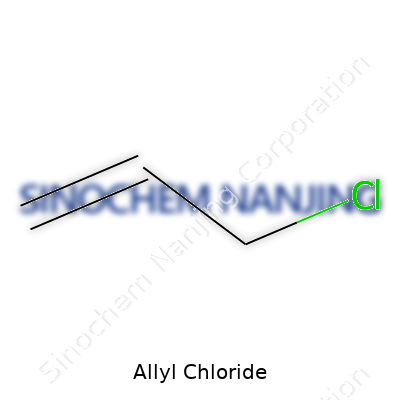
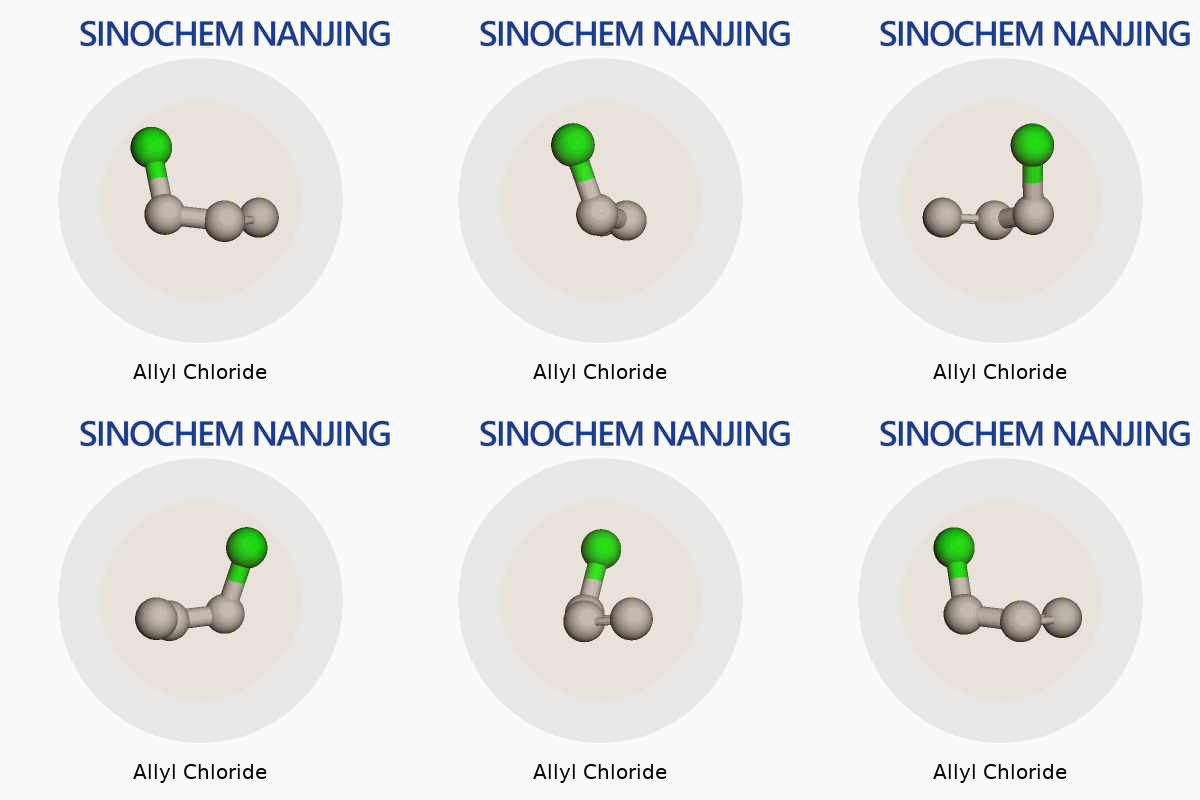
| Names | |
| Preferred IUPAC name | 3-chloroprop-1-ene |
| Other names |
3-Chloro-1-propene 3-Chloropropene Monochloropropene 1-Chloro-2-propene 1-Propene, 3-chloro- |
| Pronunciation | /ˈæl.ɪl ˈklɔː.raɪd/ |
| Identifiers | |
| CAS Number | 107-05-1 |
| 3D model (JSmol) | Allyl Chloride '3D model (JSmol)' string: ``` ClC\C=C ``` |
| Beilstein Reference | 1640223 |
| ChEBI | CHEBI:17437 |
| ChEMBL | CHEMBL12236 |
| ChemSpider | 5647 |
| DrugBank | DB11671 |
| ECHA InfoCard | 03d6707a-c0d4-4036-b54d-bd7f953b7c4d |
| EC Number | 203-457-6 |
| Gmelin Reference | Gmelin Reference: 792 |
| KEGG | C01781 |
| MeSH | D000579 |
| PubChem CID | 7847 |
| RTECS number | KR0350000 |
| UNII | 4HGS4L43TH |
| UN number | 1098 |
| Properties | |
| Chemical formula | C3H5Cl |
| Molar mass | 76.52 g/mol |
| Appearance | Colorless to light yellow liquid with a pungent odor. |
| Odor | pungent garlic-like |
| Density | 0.939 g/cm³ |
| Solubility in water | 0.34 g/100 mL (20 °C) |
| log P | 1.86 |
| Vapor pressure | 25.7 kPa (at 20 °C) |
| Acidity (pKa) | 15.9 |
| Basicity (pKb) | 15.27 |
| Magnetic susceptibility (χ) | -11.3×10⁻⁶ cm³/mol |
| Refractive index (nD) | 1.414 |
| Viscosity | 0.432 mPa·s (25 °C) |
| Dipole moment | 2.21 D |
| Thermochemistry | |
| Std molar entropy (S⦵298) | 240.7 J·mol⁻¹·K⁻¹ |
| Std enthalpy of formation (ΔfH⦵298) | -72.4 kJ/mol |
| Std enthalpy of combustion (ΔcH⦵298) | -2341 kJ/mol |
| Hazards | |
| GHS labelling | GHS02, GHS05, GHS07, GHS08 |
| Pictograms | GHS02,GHS05,GHS07,GHS08 |
| Signal word | Danger |
| Hazard statements | H226, H301, H311, H315, H319, H331, H335, H341, H351, H373, H411 |
| Precautionary statements | P210, P233, P240, P241, P242, P243, P261, P264, P271, P280, P302+P352, P303+P361+P353, P304+P340, P305+P351+P338, P312, P321, P330, P337+P313, P362+P364, P370+P378, P403+P235, P405, P501 |
| NFPA 704 (fire diamond) | 3-4-2-SPECIAL |
| Flash point | -32 °C |
| Autoignition temperature | 225 °C (437 °F; 498 K) |
| Explosive limits | 3.6% - 11.1% |
| Lethal dose or concentration | LD50 oral, rat: 570 mg/kg |
| LD50 (median dose) | LD50 (median dose): 155 mg/kg (oral, rat) |
| NIOSH | NIOSH: **KJ8575000** |
| PEL (Permissible) | 1 ppm |
| REL (Recommended) | 1 ppm |
| IDLH (Immediate danger) | 100 ppm |
| Related compounds | |
| Related compounds |
Allyl alcohol Allyl bromide Allyl iodide Epichlorohydrin Acrolein Glycidol |



