Adipic Acid: Legacy, Lab, and Looking Forward
The Story of Adipic Acid’s Rise
Everyday items often have a backstory filled with more twists than people expect. Adipic acid might sound niche, but take a look around: nylon made from adipic acid lines closets and outdoor gear, and even flavors picked up in chewing gum and gel desserts trace back to this same chemical. People may not know it by name, yet this white, crystalline powder helped spark the nylon revolution and by extension, reshaped the textile and automotive worlds. Early chemists first found adipic acid in beet juice. Over the years, the process of making it shifted to favor industrial chemical routes. The early synthetic pathway started with castor oil, but the shift toward cyclohexanol and cyclohexanone feedstocks gave producers more control and economies of scale, especially during the mid-twentieth century when nylon’s popularity soared.
What Adipic Acid Brings to the Table
Chemically, adipic acid keeps it simple: a straight six-carbon chain flanked by two carboxylic acid groups. In solid form, it looks like plain white crystals, dissolves well in warm water, and tastes acid-sharp. Its melting point sits above room temperature and stays stable under normal conditions, which helps manufacturers across industries use it without complicated handling. It has a reliable pH-lowering effect—handy not just for food but for keeping things shelf-stable elsewhere. Its clearly defined chemical structure makes it an easy target for further transformations, fueling the diversity of products that trace back to it.
Digging Deeper: Making Adipic Acid and Changing it Up
Industrial pathways now focus on oxidizing cyclohexanol and cyclohexanone with nitric acid. This method generates nitrous oxide as a byproduct, which has gotten more attention from people concerned about emissions and environmental footprint. Chemists have tried other approaches: biocatalytic routes pop up in the research journals, tapping engineered microbes to turn sugars into adipic acid with less pollution. Broadening this view, the chemical structure of adipic acid serves as a foundation in labs—its reactivity at each end lets it form esters, amides, and other compounds needed for plastics, resins, and specialty chemicals. It’s called by other names—hexanedioic acid being the most common synonym in scientific circles—but the chemical’s behavior stays the same no matter the label.
Getting the Label Right
Labeling and technical specifications shape how adipic acid moves through commerce and safety chains. Bags and drums report purity, trace metals, heavy metal residues, and moisture content in clear terms—regulatory bodies don’t leave quality up to chance. There’s a practical reason for this: nylon production, food applications, and resin synthesis fail if the input isn’t within a tight specification range. International standards like those from ASTM or ISO guide these metrics, letting manufacturers and regulators work off the same page instead of improvising. Anyone in quality assurance knows how one off-spec batch can upend an entire week of production or raise headaches at inspection.
Safe Handling, Real-World Hazards, and Precautions
Even though adipic acid doesn’t top the toxic charts, it deserves respect in the workplace. Breathing fine dust can irritate airways, and skin or eye contact brings on a burning sensation. Regulatory frameworks like OSHA lay out clear rules, emphasizing well-ventilated work areas, gloves, and eye protection. Dust control isn’t just about comfort—the fine particles have an explosion risk in enclosed spaces. Waste management requires care as well, particularly around the byproducts from traditional synthesis that can harm the environment. Regular employee training, up-to-date material safety data, and robust emergency planning remain pillars for any operation that values both productivity and safety.
Everyday and Advanced Uses: From Nylon to Science
The flagship outlet for adipic acid is nylon 6,6, prized for strength and resilience, found in everything from seat belts to carpeting. The acid links up with hexamethylenediamine, forming sturdy polymer chains with properties that engineers depend on in automotive parts, sports equipment, and textiles. In food processing, adipic acid brings a tart kick to powdered drinks and gelatin desserts, standing out for not absorbing water as easily as citric or tartaric acid—a feature that stops clumping in dry mixes. Polyurethanes and plasticizers also rely on it, making foams and coatings more durable. In the lab, it doubles as an intermediate, prompting new research into greener polymers, biodegradable plastics, and specialty fibers. The sheer reach of this molecule in industry comes from its chemical stability and readiness to form bonds—qualities that chemists, cooks, and engineers all value.
What Research Reveals—and What Still Needs Work
Research doesn’t stop at production tricks or tweaks for improved efficiency. Toxicity studies show that adipic acid scores low for both acute and chronic effects, with no evidence of cancer risk from exposure at handling levels typical in manufacturing and lab settings. In animal studies, high doses can upset digestion and cause mild irritant effects, so the regulatory approach leans toward keeping workplace exposure well below those amounts. As the appetite for more sustainable practices grows, new research explores biological manufacturing, muting side products like nitrous oxide and improving substrate efficiency through metabolic engineering. Pilot plants have shown promising yields by harnessing genetically modified yeast and bacteria, though scaling these innovations to match global demand brings new technical challenges. As biorefineries push forward, society needs more investment in both fundamental biotech research and supply chain adaptation to fully realize lower-emission adipic acid.
The Road Ahead: Cleaner Chemistry and Circular Solutions
Adipic acid occupies a complicated crossroads in the conversation about carbon footprints and resource management. Chemical companies already incorporate emissions controls and explore closed-loop systems wherever possible to cut down on waste and greenhouse gases. Emerging bioprocesses, carbon capture, and recycling offer routes to drive down environmental impact if given the right support and investment. Some segments of the polymer industry shift toward sustainable materials, but every step requires balancing costs, consumer expectations, and regulatory change. Looking ahead, integrating artificial intelligence and real-time monitoring into chemical manufacturing may support smarter process optimization and better waste handling. In the long run, progress will come from building bridges between process chemists, environmental scientists, policymakers, and communities directly affected by industry footprints. The journey of adipic acid—from sugar beet extract to industrial mainstay—stands as a clear reminder that even the most familiar chemicals need fresh thinking and constant vigilance to keep up with the world’s demands.
What is adipic acid used for?
The Hidden Backbone of Everyday Stuff
Every time I zip up a jacket or pull on sneakers, I rarely think about the chemistry behind these daily habits. Adipic acid is one of those chemicals working quietly in the background, shaping much of what we count on. This white powder doesn’t get headlines, yet it holds colors, cushions feet, and even stirs up flavor in some foods. One of the most important roles of adipic acid lies in nylon production. The world uses millions of tons of nylon for everything from car parts to toothbrush bristles, and this acid sits right at the starting line of that journey.
The Nylon Connection
Nylon 6,6—football helmets, laptop bags, kitchen spatulas, and more depend on it—begins with adipic acid matched with hexamethylenediamine. No adipic acid, no sturdy synthetic fibers. Nylon changed the textile world because it blends toughness with flexibility, and it moved beyond fashion. I’ve seen it in the tough filaments for weed trimmers, fishing lines, and car engine parts. Adipic acid isn’t just a silent partner; it’s what allowed us to swap steel for lightweight, fuel-saving plastics in countless modern products.
Cleaner Cars, More Comfortable Homes
Adipic acid shows up where friction or heat matter. Many automotive hoses, seals, and fittings use nylon reinforced by this acid. Weight reduction in cars has become essential to cut emissions and improve fuel economy. By swapping heavy metal parts for lighter, durable plastics, manufacturers reach stricter targets and consumers save at the pump. At home, I can’t help but notice how often it appears in soft, resilient foam cushions—an unsung reason for a comfortable chair or mattress. The acid’s chemistry controls not just flexibility but the absorption of weight and impacts. It feels familiar to press into a cushion and know it bounces back. That bounce is science in action, right in the living room.
Food Additive and Special Uses
Food manufacturers trust adipic acid as a food additive. It lends a tangy kick to powdered drinks, gels, and baked goods, and it stabilizes color. Because it plays well with other flavors, it keeps fruit drinks tart without being overwhelming. I once checked the ingredient list on gelatin desserts and was surprised to find it there. Beyond flavor, it regulates acidity, holding that fruit taste steady during storage. This reliability means fewer spoilage issues and a safer lunchbox.
The Environmental Challenge
Big benefits come with drawbacks. Manufacturing adipic acid releases nitrous oxide, which packs a real punch in the atmosphere and drives climate change more than carbon dioxide. I’ve read reports from the United States Environmental Protection Agency that show how chemical plants have worked for years to capture and recycle these emissions. New catalysts cut harmful byproducts, but the chemistry isn’t perfect yet. We need tougher regulations, greater industry transparency, and continued funding for greener processes. Companies like BASF and DuPont experiment with biobased production methods. Researchers are close to turning waste or renewables into adipic acid, easing the industry off fossil fuels.
Worth Paying Attention To
Most people never see adipic acid by name, but its stamp covers industries vital to life today—clothing, cars, furniture, and even the food we eat. Understanding its role means we can urge smarter design and greener production. As companies push for more sustainable supply chains, pressure mounts to clean up both ingredients and process. We have a responsibility to ask how these chemicals are made, and, more importantly, what happens next. If we support smarter choices at the factory, everyone benefits—right from the morning smoothie to the last light switched off before bed.
Is adipic acid safe for food applications?
Knowing What’s Going into the Mix
Watching ingredients lists grow in length can spark some nerves. Artificial stuff raises eyebrows. Acids with odd names, like adipic acid, seem like something out of a lab, not a kitchen. Still, a little digging shows that context matters. Adipic acid shows up in things like jello, some powdered drinks, or even a few processed cheeses, thanks to its sour flavor and ability to tweak texture. It’s not some fringe ingredient, and the food industry didn’t just plop it into everything without a bit of oversight.
Looking at the Science, Not Just the Name
The word “acid” might sound alarming, but not all acids spell trouble. Adipic acid gets processed in the body a lot like some other everyday substances, breaking down into harmless pieces and washing out naturally. Safety reviews from the U.S. Food and Drug Administration and the European Food Safety Authority gave it a checkmark for use in food, setting a recommended limit. That limit sits way above the levels most folks get day to day. One review in 2006 pooled data from animal studies, and scientists didn’t find clear evidence linking it to health concerns at normal intake levels.
Experience tells me people trust food more when the process and sources are transparent. Some might say “well, the dose makes the poison,” and that’s true. If someone started downing grams of pure adipic acid, stomach upset would follow. That’s far from how manufacturers use it. It shows up in measured pinches, way below worrisome thresholds.
Role in Food Applications
Adipic acid pops up in powdered products mostly for its tart taste, but also to help them pour and dissolve better. It keeps fruit flavors from fading. Gel desserts need the right acid to “set” their texture, and adipic acid’s tang matches up well. This acid isn’t unique; others like citric or malic acid play similar roles. The choice often comes down to stability in packaging, how easily the ingredient mixes, and what flavor companies want.
Who Might Want to Watch Out?
Anyone with kidney issues or certain metabolic conditions might hear from their doctor to limit some food acids. The rest of us don’t get near high enough levels from normal eating. If allergies or intolerances to additives are part of your story, reading labels stays important.
Staying Informed and Choosing Wisely
People have reasons for side-eyeing additives. Sometimes past scandals make us cautious, other times it’s just a matter of gut feeling. I check labels and gravitate toward foods with ingredients I recognize. That doesn’t always mean “all chemicals are bad”—after all, table salt is a chemical, too.
Pushing food companies to keep looking for natural options or explaining why they use something makes a difference. Supporting research that watches for any new risks helps, too. If a new study finds a problem, the picture may shift, so keeping an open mind beats panic-driven headlines.
Finding Balance
Adipic acid has passed a lot of the safety tests that experts use to keep food honest. It has a real role where it’s used. My own approach sticks to moderation and a habit of checking labels, while remembering that plenty of safe foods look odd on paper until you look a little closer.
What are the physical and chemical properties of adipic acid?
The Feel and Look of Adipic Acid
Adipic acid grabs attention even before its chemistry steps in. Walk into a chemical storeroom and spot those snow-white, crystalline flakes, and you’re likely looking at it. The powder flows easily, and you barely get a whiff unless you stick your nose right up to it. Its faint, sharp smell gives away its nature as a dicarboxylic acid, but it doesn’t chase you out of the room like some harsher chemicals do. People working in production or the lab value this solid form. It means less mess, easy measuring, and little dust to inhale, which matters for workplace health.
With a melting point up near 152 °C, you won’t see it liquefy unless you apply real heat. Water struggles to dissolve too much of it at once—about 14 grams per liter at room temperature. This limited solubility plays right into how it gets used in formulations and processes where a slow release or gradual reaction brings better control. Toss adipic acid into organic solvents—ethanol, acetone, ether—and you’ll see it dissolve much more willingly.
Chemical Features That Matter
Adipic acid, or hexanedioic acid, carries two carboxyl groups at either end of a six-carbon chain. Think of these carboxyl groups as chemical grabby hands—they shape how the acid reacts and binds with other substances. Chemists tap into this setup to usher in reactions that form new carbon–carbon or carbon–nitrogen bonds. This two-handed structure forms the backbone of nylon 6,6, one of the world’s most common polymers, and comes up again and again when exploring greener plastics and resins.
The acid is not all that strong; it’s classed as a weak acid, so it won’t strip paint or eat through skin, but it can quietly lower pH in the right product blend. With pKa values around 4.4 and 5.4, both acidic hydrogens can leave in the proper environment, but not with the speed or force of sulfuric or hydrochloric acid. This gentler approach lets it serve as a buffer or mild acidulant in food and pharma applications. The food industry uses it to tweak flavor and add tang without overpowering.
Why the Properties Matter Outside the Lab
These physical and chemical features mean more than just numbers in a datasheet. They shape how factories turn out millions of tons of consumer materials every year. Small things—solid state, mild acidity, selective solubility—keep things safe, make bulk handling simpler, and allow tight control in production. Safety data shows accidents with adipic acid are rare, much because of its predictable and manageable behavior.
The world keeps leaning on plastics and fibers, and with new environmental rules, greener processes climb the priority list. Adipic acid’s chemistry sits right in the debate about cutting nitrous oxide emissions during production—a potent greenhouse gas that comes with old manufacturing methods. Engineering teams now search for catalytic processes and bio-based routes, knowing that every shift matters for factory workers and communities living near chemical hubs.
Even students run into adipic acid in the classroom, measuring its melting point or using it in esterification reactions. Understanding its look, feel, and reactions builds stronger intuition for broader chemistry, pointing to practical questions—like how to balance performance, safety, and sustainability, both in factories and in our daily products.
How is adipic acid manufactured?
How Industry Makes Adipic Acid Today
Factories worldwide pump out millions of tons of adipic acid every year. This powder goes straight into many products—most famously nylon, but also polyurethane foam and even food additives. Almost every factory today relies on one method: starting with cyclohexane, a derivative from crude oil, and then putting it through a series of oxidation steps.
Cyclohexane gets mixed with air and a catalyst, producing a compound called cyclohexanone. After that, the process brings in some strong chemistry with nitric acid. Nitric acid does the job of breaking bonds and adding oxygen, eventually yielding the white crystals of adipic acid that the world needs for textiles, carpets, and car parts.
Environmental Strain: N2O and Waste
Every time a plant makes adipic acid using this standard series of reactions, another gas slips out: nitrous oxide. N2O rises about 300 times faster than carbon dioxide in its warming impact. Many plants struggle to capture or treat this emission. In some places, the amount released into the atmosphere almost matches how much comes from every car on the road. Cutting this waste turns into a real-life challenge, not just a technical puzzle. Some companies have installed systems to destroy N2O before it escapes, but this pushes up the cost and complexity.
Factories need water, catalysts, acids, and a lot of heat. The leftovers—the spent acids and metal catalysts—cannot just get dumped. Disposal and recycling add extra layers of effort. A single plant can produce as much as 10,000 tons of solid waste and still leave traces of toxic metals in the process water. People living nearby often air concerns about pollution, and public hearings bring up questions about safety, water quality, and air.
Alternatives in the Lab: Greener Chemistry
Some researchers almost treat this as an urgent problem and turn to biology or greener chemistry. In places like the US and Europe, scientists have tested making adipic acid from glucose, sugars, or biomass—things you can grow instead of dig out of the ground. Special strains of E. coli or yeast can turn simple sugars into the building blocks for adipic acid. They work without strong acids or high temperatures. Still, these methods usually cost more because of lower yields and the expense of keeping microbes happy at a large scale.
A few companies have begun investing in pilot projects, trying to use clean electricity, cheaper catalysts (like manganese instead of vanadium), or even air as the oxidant rather than nitric acid. These experiments matter because every factory that cuts N2O emissions or finds a new source for adipic acid lowers pollution for the whole community.
What Comes Next for the Industry
Demand for nylon and engineering plastics keeps rising, but people now pay more attention to environmental footprints. Factories that upgrade their processes—through capturing nitrous oxide, recycling water and waste, or using plant-based feedstocks—will likely set the new standard. Rules and incentives help, but sometimes local activism and consumer pushback move things faster than policy ever can.
Buying a carpet or stocking a pantry rarely prompts people to think about adipic acid, but it connects to larger questions: what we make, what we waste, and how willing we are to pay for a cleaner outcome. The next step for both industry and community will involve tough choices about materials, methods, and the planet we hope to share.
What is the shelf life and recommended storage conditions for adipic acid?
Why Shelf Life for Adipic Acid Matters
Anyone working with chemicals long enough learns the hard way that storage conditions can make or break a product’s performance. Adipic acid, a white, free-flowing crystalline powder found in everything from nylon production to food acidulants, is no exception. Keeping this compound in usable shape means protecting quality and keeping risks low. Spoiled raw material does more than sour a batch; it drives up costs, wastes resources, and sometimes even trips up safety. One memorable stint in a mid-scale plastics plant drove home how a few months of poor storage turned an entire pallet of chemical into useless chalk.
How Long Does Adipic Acid Last?
Crystalline adipic acid stays stable for several years. Under industry practices, manufacturers claim a shelf life of about two years from the production date. In reality, its stability stretches further—if you nail the storage. Some labs pull samples out of storage after three years and find no visible caking, no odd odors, and no drop in acid content. Simple analytical checks back this up: the melting point should hover near 152°C, and the purity should sit above 99.5%.
What Affects the Lifespan?
Things unravel fastest when adipic acid draws moisture. Humidity seeps through thin packaging, turning powder into stubborn lumps. This caking might not sound dramatic, but it makes dosing much trickier. Water exposure also nudges the risk of slow hydrolysis or microbial growth—not impossible, but not unheard of in bad storage. Heat doesn’t help either. Temperatures above 30°C cause slow yellowing over years, with a slight but steady loss in product specs.
How To Store Adipic Acid Right
Sensible warehouse practice beats crisis management every time. Adipic acid calls for a dry, cool, and well-ventilated spot. I’ve seen too many drums stored near open loading bays, picking up moisture during humid summers, later showing up in customer complaints. Desiccant packs placed inside the drum go a long way, especially for sites dealing with seasonal humidity swings. Thick, sealed polyethylene or laminated bags inside fiber drums handle small spills and limit uptake of vapor. Industrial users in tropical regions often rotate stock every six months just to be safe.
Sunlight doesn’t break down adipic acid overnight, but six months of direct exposure will yellow the powder and lower purity. Warehouses with blocked-out windows cut this risk. It helps to keep storage areas free of strong-smelling solvents and oxidizers—adipic acid isn’t volatile, but long-term cross-contamination happens. Drum audits twice a year let people catch leaks and clumping early.
Smart Storage Saves Money and Risk
Experience says storing chemicals well ends up gentler on the pocketbook and the planet. Adipic acid stored right lasts much longer than paperwork might claim, but once packaging breaks or humidity climbs, things get dicey. Clear labeling, batch tracking, and first-in-first-out rotation slash spoilage. For smaller users, splitting bulk into manageable, sealed portions reduces exposure with every opening.
For anyone juggling inconsistent ambient conditions, data loggers and regular inspections spot trouble before it grows. Simple habits, picked up after seeing a half-ton drum of wasted acid, stick longer than written policies. Chemical storage deserves attention less for its glamour and more for the headaches it can prevent down the line.
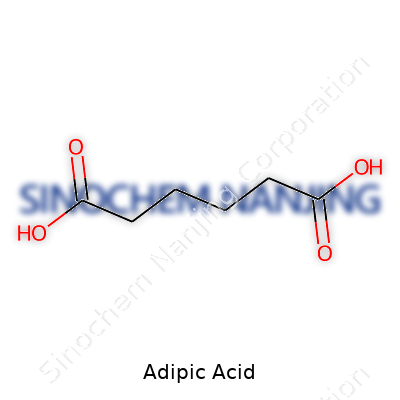
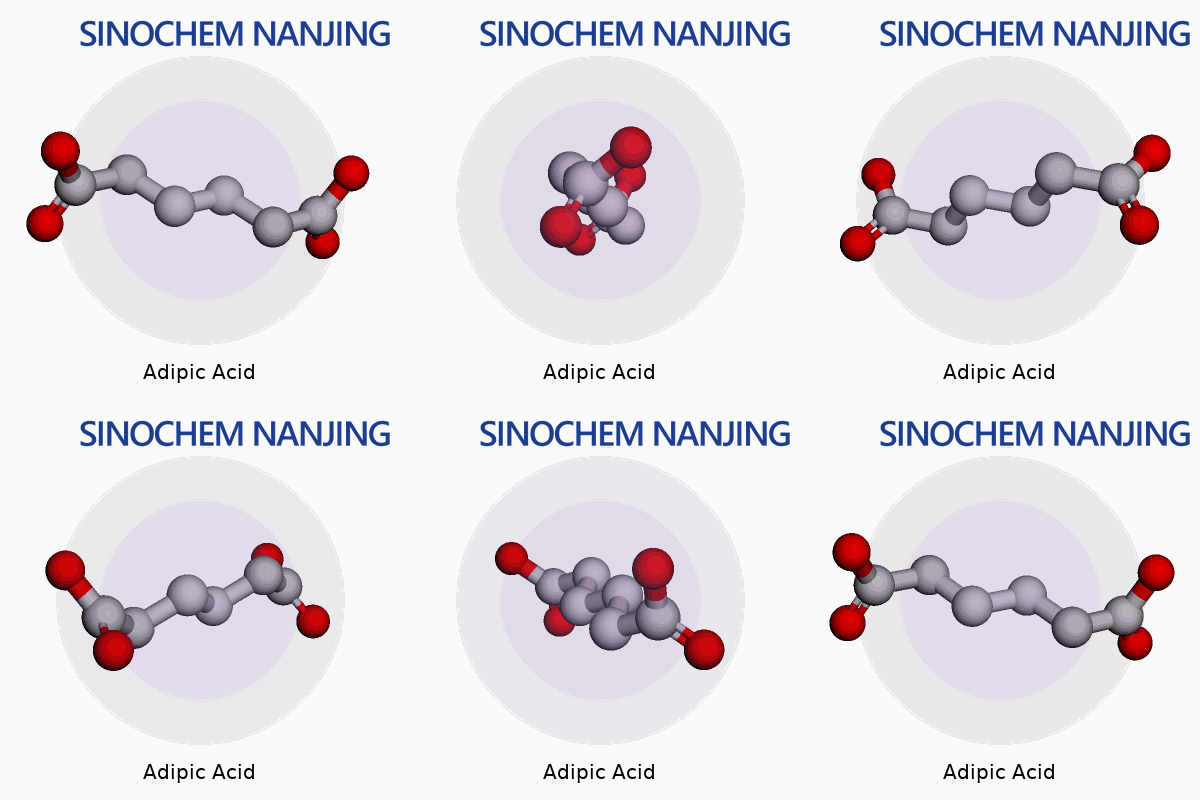
| Names | |
| Preferred IUPAC name | hexanedioic acid |
| Other names |
Hexanedioic acid 1,4-Butanedicarboxylic acid |
| Pronunciation | /ˈæd.ɪ.pɪk ˈæs.ɪd/ |
| Identifiers | |
| CAS Number | 124-04-9 |
| Beilstein Reference | 1203866 |
| ChEBI | CHEBI:30794 |
| ChEMBL | CHEMBL1367 |
| ChemSpider | 727 |
| DrugBank | DB01807 |
| ECHA InfoCard | 100.007.065 |
| EC Number | 204-673-3 |
| Gmelin Reference | 60748 |
| KEGG | C00442 |
| MeSH | D000315 |
| PubChem CID | 196 |
| RTECS number | AR9100000 |
| UNII | 47U76H268F |
| UN number | UN1872 |
| Properties | |
| Chemical formula | C6H10O4 |
| Molar mass | 146.14 g/mol |
| Appearance | white crystalline powder |
| Odor | Odorless |
| Density | 1.36 g/cm³ |
| Solubility in water | 14 g/L (20 °C) |
| log P | -0.29 |
| Vapor pressure | 0.13 mmHg (20°C) |
| Acidity (pKa) | 4.41, 5.41 |
| Basicity (pKb) | 1.84 |
| Magnetic susceptibility (χ) | -7.9e-6 |
| Refractive index (nD) | 1.423 |
| Viscosity | 1.15 mPa·s (at 80 °C) |
| Dipole moment | 1.69 D |
| Thermochemistry | |
| Std molar entropy (S⦵298) | 153.7 J·mol⁻¹·K⁻¹ |
| Std enthalpy of formation (ΔfH⦵298) | -1160.4 kJ/mol |
| Std enthalpy of combustion (ΔcH⦵298) | -3291.4 kJ/mol |
| Pharmacology | |
| ATC code | A16AX10 |
| Hazards | |
| Main hazards | Harmful if swallowed. Causes serious eye irritation. May cause respiratory irritation. |
| GHS labelling | GHS07, GHS irrit. |
| Pictograms | GHS07,GHS08 |
| Signal word | Warning |
| Hazard statements | H319: Causes serious eye irritation. |
| Precautionary statements | Precautionary statements: "P261, P264, P271, P280, P302+P352, P304+P340, P312, P305+P351+P338, P321, P332+P313, P337+P313, P362+P364, P501 |
| NFPA 704 (fire diamond) | 1-0-0 |
| Flash point | > 196 °C |
| Autoignition temperature | 401 °C |
| Explosive limits | Not explosive |
| Lethal dose or concentration | LD50 (oral, rat): 5560 mg/kg |
| LD50 (median dose) | LD50 (median dose): Oral rat 5700 mg/kg |
| NIOSH | AY4425000 |
| PEL (Permissible) | PEL (Permissible Exposure Limit) of Adipic Acid: "5 mg/m³ (OSHA TWA) |
| REL (Recommended) | 250 mg/m³ |
| IDLH (Immediate danger) | 1000 mg/m3 |
| Related compounds | |
| Related compounds |
Glutaric acid Pimelic acid Succinic acid Azelaic acid Sebacic acid |



