4-Nitrotoluene: Tracing the Roots and Weighing the Impact
Historical Development
Some chemicals seem to have a backstage pass to industrial history, and 4-nitrotoluene is one of them. Its story stretches back to the late 1800s, when nitro-compounds and toluene derivatives helped drive the growth of synthetic dyes. With a core role in dye intermediates, explosives, and the birth of organic chemistry as an applied science, the early days saw researchers develop nitrotoluene by introducing nitrating solutions to toluene. Over time, the processes grew more refined, industry scaled up, and this small aromatic molecule found its way into production lines from Europe through America and well into Asia. The journey of 4-nitrotoluene mirrors the expansion of industrial chemistry, managing to persist through changing regulatory, production, and demand landscapes.
Product Overview
Look at a drum of 4-nitrotoluene today and you’ll see a chemical with a distinct yellow crystalline look. Usually positioned as an intermediate, it helps shape products most of us never see directly—colors for textiles and inks, farming chemicals, and pharmaceuticals. This isn’t a headline-grabbing chemical, but it inputs into big industries. Its production gives researchers and chemical engineers room to tinker with reaction conditions, seek higher purity, and minimize waste, all shaped by the need for consistent quality in handling and production.
Physical & Chemical Properties
The solid, yellow appearance of 4-nitrotoluene comes from its unique molecular arrangement—a benzene ring, a methyl, and a nitro group. Melting at about 44 degrees Celsius, it offers a workable temperature for handling during manufacture, though it needs careful storage because of its sensitivity to light and heat. Its mild solubility in water but strong affinity for organic solvents pushes chemists to use it cleverly in multi-step reactions. The nitro group makes it more reactive than plain toluene, opening doors for further chemical transformations.
Technical Specifications & Labeling
You won’t see flash marketing around 4-nitrotoluene, but behind every package sits a strict checklist—purity typically above 98 percent, clear labeling of hazards, batch numbers for traceability, and compliance with local and international regulations like GHS for hazardous chemicals. Labels carry real bite here: they warn workers about handling risks and direct logistics teams for storage decisions. I remember walking through a warehouse, seeing safety pictograms everywhere—reminders of what happens when you skip these basics.
Preparation Method
Industry usually churns out 4-nitrotoluene by nitrating toluene with a mix of concentrated nitric and sulfuric acids. This classic nitration—still rooted in decades of chemical tradition—sends a powerful message: small shifts in reaction temperature or mixing rates can swing the yield between 2-nitrotoluene and 4-nitrotoluene or generate waste. Large manufacturers use tight process control: monitoring acid ratios, temperature, and timing, all to land on the desired para-product. Dissolving, washing, and crystallizing follow, isolating the golden crystals needed for downstream processes.
Chemical Reactions & Modifications
4-Nitrotoluene offers a platform for chemical creativity. Its methyl group can be oxidized to yield 4-nitrobenzoic acid, a key step toward certain pharmaceuticals and plasticizers. Reduction reactions can turn the nitro group into an amine, feeding directly into dye intermediate chains. You see these transformations at work in labs and pilot plants—sometimes the challenge lies not just in the initial reaction but in separating byproducts or avoiding spills and unintended exotherms. Workers improve their processes by looking for better catalysts or greener reaction conditions.
Synonyms & Product Names
Step into any chemistry lab and you’ll see one substance under a few names. 4-Nitrotoluene also travels as para-nitrotoluene or p-nitrotoluene, always a nod to its structure. Older literature sometimes calls it 1-methyl-4-nitrobenzene. Whether you see it written in shorthand or broken out as IUPAC nomenclature, the heart of the molecule stays the same—though the names circle back to its importance for identification and regulatory paperwork.
Safety & Operational Standards
Safety keeps coming up in any talk of 4-nitrotoluene. It doesn't explode at room temperature, but heating or careless static can set off an accident. Workers need gloves, goggles, and masks—no short-cuts. Handling guidelines run deep: dedicated storage away from heat, plans for spills, regular training, and real-world drills. Rules around waste disposal prevent rivers and soils from seeing residues. One misstep, and cleanup costs balloon or health risks spike, a topic that environmental agencies and plant managers both keep front of mind.
Application Area
A walk through chemical industry applications shows 4-nitrotoluene feeding the world of diazo dyes—a foundation for shades seen on everything from blue jeans to packaging. Agriculture taps it for crop protectants, and pharmaceutical development depends on it for drug intermediates. Rubber accelerators and photochemical products call for its unique reactivity. These uses might sound removed from daily life, but the colors, materials, and drugs they help create shape everything from health products to transportation infrastructure.
Research & Development
Lab research on 4-nitrotoluene never stands still. Chemists probe for greener synthesis routes, seeking catalysts that reduce waste or drop the temperature required for nitration. Teams invest in analytical methods—GC, HPLC, NMR—all to ensure less contamination and tighter reaction control. Real progress often happens on the edge: blending continuous flow chemistry with digital process monitoring, aiming for lower emissions and higher yields. Development often means collaboration across academia and technology vendors, each pushing to turn discoveries into scalable, sustainable action.
Toxicity Research
Concerns about toxicity keep researchers and plant managers on their toes. Studies point to 4-nitrotoluene as hazardous if ingested, inhaled, or absorbed. Animal testing and in vitro studies indicate risks to liver and blood, so safe handling and constant monitoring show up on every standard operating procedure. Growing pressure from governments and community groups to document every possible effect — from acute symptoms to long-term exposure — drives scientists to find safer substitutes or improved containment strategies. In my experience, nothing focuses a team faster than staring down new safety research tied to their core production chemicals.
Future Prospects
The future casts a mixed shadow for 4-nitrotoluene. On one hand, demand stays steady in core areas like dyes and intermediates, especially as developing economies expand chemicals manufacturing. Sustainability pressures mount, with companies left balancing cost, environmental demands, and new regulations. Opportunities for greener production, recovery and recycling of spent materials, and transformation into high-value derivatives might offer a way forward. As researchers inch toward cleaner, safer chemistry, the industry keeps asking the same question: what mix of innovation and tradition ensures 4-nitrotoluene keeps delivering value without risking health or the environment?
What is 4-Nitrotoluene used for?
Looking Inside 4-Nitrotoluene’s Role in Modern Manufacturing
4-Nitrotoluene isn’t something you hear about over coffee, but its influence shows up everywhere. This yellow crystalline chemical has roots deep in the world of manufacturing and chemistry. The most important thing to know: 4-Nitrotoluene acts as a building block. Its story connects workers in factories to end products people use every day, including dyes, rubber chemicals, and explosives.
The Dye Industry Banks on It
Color in clothes, plastics, and inks starts with raw chemistry. Many dyes come from the so-called azo group, which relies on 4-Nitrotoluene as a major ingredient. Workers transform it into chemicals like para-toluidine, which eventually ends up in red, yellow, and orange dyes. Next time you pull on a shirt with a bright print, it’s likely there’s a bit of chemistry history hidden in those threads. This isn’t just about adding color. It’s about meeting consistency and safety standards as people grow more aware of what goes into everyday products.
Rubber and Pesticides: Keeping Farms and Factories Moving
Tires, hoses, and belts need to handle years of wear and weather. Producers count on 4-Nitrotoluene to help deliver that toughness. It’s a key starting point for antioxidants that stop rubber from breaking down under sunlight and heat. The link to agriculture is just as strong. Farmers have relied on pesticides containing compounds made from 4-Nitrotoluene to protect their crops. There’s always a discussion around chemical use on farms, so knowing what feeds that chain is important. As consumers push for safer food, transparency in these origins helps people make choices and ask tough questions about sustainability.
Explosives and Safety Standards
Industrial explosives don’t just power mines and quarries. 4-Nitrotoluene serves as a precursor for compounds like TNT. This makes it essential to the construction and defense sectors. Handling comes with risk, and keeping chemical plants safe has always been a big job in itself. Mistakes or leaks create real harm, as history has shown. Governments and companies have invested millions in improving production safeguards for everyone, from workers to nearby neighborhoods.
Environmental Risks and Industry Responsibility
It’s not possible to talk about chemicals without looking at the downstream impact. 4-Nitrotoluene doesn’t break down fast in water or soil. Waste from large-scale production plants can pollute rivers unless it’s managed responsibly. Past spills highlighted how tough cleanup can be and raised questions about transparency and enforcement. Today, watchdog organizations and new technology track pollutants, pushing factories to prove they’re acting within the law. More people in industry circles now see environmental management as a core part of good business, not just a box to check.
Opening the Door for Alternatives
Most factories still depend on 4-Nitrotoluene, but curbing pollution means exploring safer ways forward. Researchers have tried bio-based routes and green chemistry. Progress can be slow because companies need to keep costs low, but every breakthrough counts. Seeing schools and science programs tackle these challenges gives hope. Society benefits when future workers and engineers see chemistry not just as a tool, but as a responsibility.
What are the safety precautions for handling 4-Nitrotoluene?
Why 4-Nitrotoluene Demands Respect in the Lab
Dealing with chemicals like 4-nitrotoluene takes more than just reading a data sheet. Real experience in chemistry labs drives home the point that gloves and goggles only get you so far. This compound, a pale yellow solid used in dyes, pharmaceuticals, and explosives, isn’t just another shelf product. You need to know how to treat it or pay the price. Inhaling its fine dust or even careless contact with skin opens the door to a raft of issues, from headaches to liver complications. It sits on safety data sheets for a reason, but paper doesn’t always translate to practice. Chemists who have worked with aromatic nitro compounds often share war stories about spills and the chaos they cause in the wrong hands.
Personal Protective Equipment Isn’t Optional
Rubber gloves and chemical splash goggles go on before the bottle comes off the shelf. Laboratory coats with full sleeves — not t-shirts — keep exposed skin safe. A face shield provides added insurance in situations involving transfers or risk of splash. Nitrile gloves do the best job since this solid can slip through latex. Shoes should cover feet entirely. PPE often feels like overkill on slow days, but failure to use it gives hazardous chemicals a way in. I’ve known researchers who discovered their carelessness only after the burning itch showed up. That’s usually too late.
A Clean, Well-Ventilated Space Limits Trouble
A regular table at home won’t cut it. Fume hoods in professional labs draw harmful vapors away from your breathing zone. They also contain accidental spills. Even with a well-functioning hood, any handling calls for good housekeeping. Close every container the moment it’s not in use. Avoid moving the solid around unnecessarily, as this reduces risk of dust formation. People tend to underestimate just how easily powders become airborne. Any dust on the floor invites a bigger cleanup later and health risks for whoever enters the space.
Smart Storage and Labeling
Long-term safety owes a lot to proper labeling and storage. 4-nitrotoluene keeps best in steel cans or tightly sealed glass jars, stashed away from sunlight, heat, or sources of ignition. Dry, cool places serve well. Mixing with acids or bases brings the chance of a violent reaction, so incompatible chemicals belong in their own cabinets. Chemical management isn’t glamorous work, but the routine of checking inventory, date, and label condition makes a real difference. I’ve seen too many labs with faded sharpie scribbles on containers, and that sort of neglect invites confusion and mistakes.
Spill Procedures and Emergency Readiness
Spills don’t usually announce themselves. Training pays off, since panic doesn’t solve anything. For minor spills, scoop up solids with a dustpan, then clean the area with a wet towel. Don’t sweep or brush, because this will lift dust into the air. Have eyewash stations, showers, and spill kits close at hand. A solid protocol and regular drills keep everyone calm in the moment. People who take shortcuts regret it sooner or later, and nobody forgets the day a compound like 4-nitrotoluene gets into an eye because gear wasn’t in reach.
Tough Regulations, Smarter Handling
Laws exist for good reason. OSHA standards and local hazardous material rules often give the backbone to safe handling routines. Following regulations shouldn’t feel like an obstacle — it’s an extra layer of real-world experience, written by people who have seen worst-case scenarios. Taking shortcuts with 4-nitrotoluene can land teams in legal hot water and leave lives forever changed. The careful habits built over years in the lab safeguard both health and career. For most chemists, no experiment justifies risking that hard-earned safety net.
What is the chemical formula of 4-Nitrotoluene?
Getting Straight to the Chemistry
People in labs, classrooms, and factories share a common thread — the urge to find formulas that make our work faster and safer. 4-Nitrotoluene isn’t some mystical compound. It’s a product with real-world impact, defined by the formula C7H7NO2. That’s seven carbons, seven hydrogens, one nitrogen, and two oxygens. It’s not just about rattling off elements. The structure tells a big part of the story. The molecule’s ring shape, with a nitro group on the fourth carbon next to the methyl group, makes it particularly suited for special chemistry tasks.
Why This Formula Matters
Many industries walk a fine line between making tried-and-tested products and searching for safer, better methods. 4-Nitrotoluene steps in as a building block. Chemical manufacturers turn to it for dyes, pesticides, and sometimes in rubber processing. Plenty of color in everyday life comes from dyes built on this backbone, and it’s something I’ve seen firsthand among textile workers clamoring for dyes that deliver brighter, more lasting shades. You probably won’t see a bottle labeled “C7H7NO2” on a store shelf, but its fingerprints are found wherever colors last in the sun or rubber holds its bounce.
Handling Hazards and Staying Safe
Hands-on experience beats textbook warnings every time. Once you’re around chemicals long enough, you develop a respect for those that bite when handled carelessly. 4-Nitrotoluene carries toxicity risks. Folks managing batches or cleaning up spills know the stakes. Reports link it to workplace disorders without solid precautions in place. Lab technicians and factory workers make clear-eyed choices about gloves, fume hoods, and training. This isn’t paranoia — it’s respect from bitter experience and real accident reports.
Data That Shapes Safer Policy
Peer-reviewed journals and government databases pile up evidence. The U.S. Environmental Protection Agency keeps close tabs on nitrotoluene compounds, urging regular monitoring of exposure, keeping workers in the loop about what they handle, and pushing for less hazardous alternatives when possible. NIOSH and OSHA set strict limits on airborne concentrations. There’s a reason those numbers get hammered into signage in well-run plants. A slip in protocol doesn’t just mean a slap on the wrist — it often means a hospital visit. Sites that prioritize regular training and transparent practices show better safety stats. This points to something I’ve learned working alongside health and safety pros: the right formula matters, as does the formula for safety culture within the team using it.
Better Choices for Future Chemists
Benefits from 4-Nitrotoluene aren’t going away overnight, but progress doesn’t come from standing still. Universities and industry labs actively study how to replace hazardous chemicals wherever possible. Routes to greener synthesis and stricter waste management have made real differences. Modern courses in chemistry now pair formula memorization with deep dives into safe practice and sustainability. Long gone are the days when memorizing “C7H7NO2” was enough; now students ask, “Is there a cleaner alternative?”
How should 4-Nitrotoluene be stored?
Grasping the Hazards of 4-Nitrotoluene
Anyone who’s spent time in a chemistry lab knows this compound deserves respect. 4-Nitrotoluene brings both industrial value and real risk to human health and the environment. The yellowish powder becomes a problem not just because it’s an irritant, but because under the wrong conditions it threatens to turn an ordinary storeroom into a dangerous place. Even for those who haven’t worked with chemicals, consider its history: explosions tied to poor storage, contaminated air from careless handling, and ruined stock from moisture exposure. Workers and communities nearby all end up on the receiving end of that carelessness.
Keep Heat and Sparks Out
4-Nitrotoluene catches fire more easily than people think. I remember an incident where heat lamps pointed at a bench pushed a chemical container past a safe limit. Thankfully, no one got hurt, but the white-knuckles and racing hearts said enough. Dry, cool spaces work best—think of storage areas that rarely shift beyond 25°C. Elevate containers away from radiators, direct sunlight, or any motor-driven equipment. If a lab sits in a hot region, consider a climate-controlled cabinet. Fans shouldn’t blow directly on any stacks since even a small electric motor can toss sparks onto nearby shelves.
Pick the Right Containers and Labels
I’ve seen colleagues pour nitrotoluene straight from a glass jar left on a dusty shelf--with no sticker or date. That’s a recipe for disaster. Go with sealed, amber-glass bottles or lined steel drums with a tight-fitting lid to keep out moisture and oxygen. A little humidity brings in the risk of degradation and sticky residue, sometimes feeding into clogs or spoiling the whole batch. Every container deserves a large, bold hazard label. Include the date received, expiration, and safety codes. Don’t just hope folks will “know by the smell.” Assume a new team member or visitor could walk in tomorrow.
Limit Access and Use Real Ventilation
After work in larger storage rooms, I learned how close calls often happen because access stays too loose. 4-Nitrotoluene belongs behind lock and key, reserved for staff trained to handle spills or skin contact right away. Ventilated cabinets with proper airflow cut down on harmful dust or vapor buildup. Forget propping open doors with a brick—build a routine that leaves the storeroom closed unless someone’s on duty. Routine checks by supervisors or safety officers keep extra eyes on the inventory.
Pair Chemical Compatibility with Organization
Store 4-Nitrotoluene away from acids and reducing agents. In my own workplaces, mixing up storage—especially in crowded cabinets—brought about a near-miss when an intern loaded flammable bottles near strong acid. Use dividers or distance on shelves so incompatible substances stay separated. Workplaces sometimes overlook this in favor of convenience, but speed isn’t worth the consequences. Keeping strict zones helps if a spill occurs since it limits the impact to a single area.
Emergency Prep: Learning from Close Calls
From my experience, relying on hope never saved anyone in an emergency. Every storeroom should feature absorbent materials, neutralizers, and spill kits close to hand. Train every worker on what to grab and where to meet in an emergency situation. Emergency contact numbers should hang right inside the door. Regular drills—and honest conversations about small mistakes—help keep complacency out the door and everyone a little safer each day.
Is 4-Nitrotoluene hazardous to health or the environment?
Seeing the Risks in Plain Sight
Many people outside chemical plants have never heard of 4-nitrotoluene, but this yellowish substance has shown up across industries for decades. It's part of some dyes, explosives, and agricultural products. That might sound distant, yet the reach expands through wastewater, air emissions, and even workplace dust. My first brush with chemical safety came from touring an older manufacturing site: barrels, faded warning signs, gritty floors. The experience raised the question — are we giving serious enough attention to chemicals with odd names, like 4-nitrotoluene?
What Exposure Means for People
Skin contact, breathing in fumes, or swallowing even a small amount of 4-nitrotoluene can open the door to health problems. This isn't just on paper. OSHA and the National Institute for Occupational Safety and Health both warn about risks like nausea, headaches, dizziness, and even damage to blood cells. Chronic exposure adds more weight. Research over the years has connected workers in some plants with higher levels of methemoglobin, which weakens the blood’s ability to deliver oxygen — that leaves you tired, short of breath, sometimes stumbling with confusion. Long-term studies on animals show liver and spleen effects, and concerns about mutations or cancer keep the debate alive in regulatory circles. Consumers rarely face these levels, yet workers and those living close to chemical plants have new reasons to stay aware.
Environmental Threats Beyond the Fence Line
Companies use engineering controls to trap fumes and filter wastewater, but nothing is foolproof. Accidental spills have made their way into rivers, steams, and groundwater, stunting aquatic growth. Fish and small invertebrates living downstream show poisoned gills, stunted eggs, and abnormal behavior. This doesn’t stop with one splash. 4-nitrotoluene degrades slowly — it can stick around, build up in sediment, and slip from one species to the next. Even after cleanups, traces linger for years. In neighborhoods downwind or downstream, people still ask questions about safety, and trust remains thin when companies say they meet limits but odors or fish kills keep showing up.
Steps Toward Safer Practices
Smart companies know their reputation depends on more than legal compliance. They push for closed systems, regular maintenance, and up-to-date personal protective equipment. Some go further and swap in alternative chemicals with better health and environmental profiles, though not every process has a ready substitute. Local governments and regulators stand as another line of defense. Real monitoring, transparent reporting, and regularly updated emergency plans help limit both the fear and the fallout. Tougher enforcement has brought measurable drops in chemical releases in some states, but strong laws only work if people follow them every day, not just during inspections.
Community Voices Matter
Those living near chemical facilities, often in working-class or marginalized neighborhoods, have played a huge role in driving change. Grassroots groups have organized air-monitoring projects, lobbied for fence-line emissions data, and pushed for site-by-site health studies. Their stories, backed up with facts, help close the distance between technical reports and lived experience. Health and safety should not rest as a gamble depending on where you work or live.
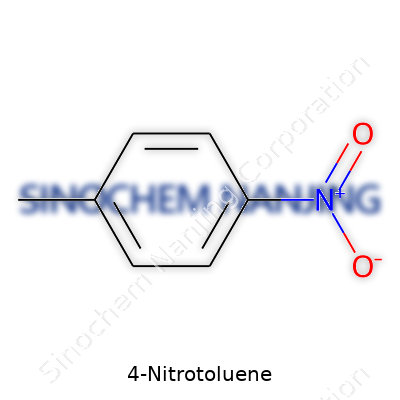
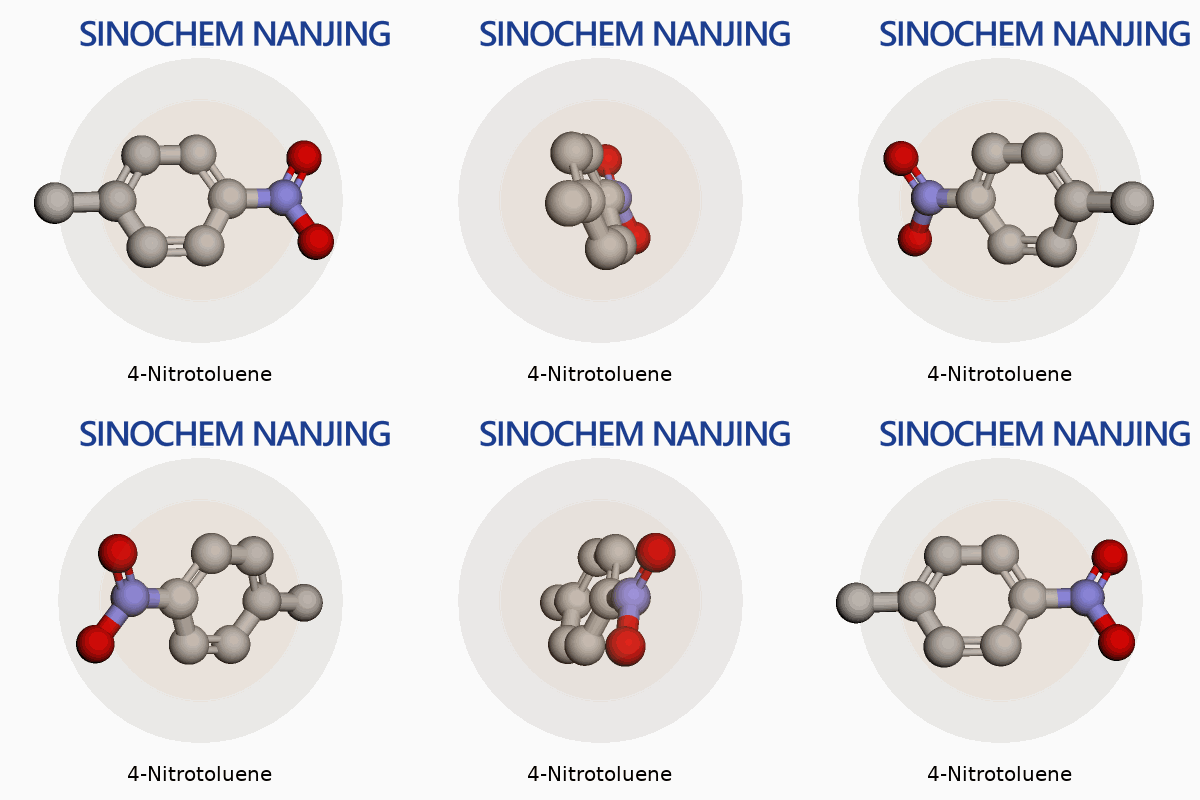
| Names | |
| Preferred IUPAC name | 1-Methyl-4-nitrobenzene |
| Other names |
p-Nitrotoluene para-Nitrotoluene 1-Methyl-4-nitrobenzene 4-Methylnitrobenzene p-Methylnitrobenzene |
| Pronunciation | /ˌfɔːrˌnaɪtrəʊtəˈluːiːn/ |
| Identifiers | |
| CAS Number | 99-99-0 |
| Beilstein Reference | 1209227 |
| ChEBI | CHEBI:15939 |
| ChEMBL | CHEMBL13976 |
| ChemSpider | 6913 |
| DrugBank | DB11662 |
| ECHA InfoCard | ECHA InfoCard: 100.004.095 |
| EC Number | 202-830-0 |
| Gmelin Reference | Gmelin Reference: 172139 |
| KEGG | C01744 |
| MeSH | D015759 |
| PubChem CID | 7417 |
| RTECS number | XZ9625000 |
| UNII | 4OE6C41D5T |
| UN number | 1663 |
| Properties | |
| Chemical formula | C7H7NO2 |
| Molar mass | 137.13 g/mol |
| Appearance | Yellow crystals |
| Odor | aromatic |
| Density | 1.162 g/cm3 |
| Solubility in water | Insoluble |
| log P | 2.4 |
| Vapor pressure | 0.03 mmHg (25°C) |
| Acidity (pKa) | pKa = 11.1 |
| Basicity (pKb) | 9.38 |
| Magnetic susceptibility (χ) | -64.0·10⁻⁶ cm³/mol |
| Refractive index (nD) | 1.543 |
| Viscosity | 2.05 mPa·s (25 °C) |
| Dipole moment | 3.90 D |
| Thermochemistry | |
| Std molar entropy (S⦵298) | 218.1 J·mol⁻¹·K⁻¹ |
| Std enthalpy of formation (ΔfH⦵298) | -21.2 kJ/mol |
| Std enthalpy of combustion (ΔcH⦵298) | -3408 kJ/mol |
| Hazards | |
| GHS labelling | GHS02, GHS06, GHS08, GHS09 |
| Pictograms | GHS02,GHS07,GHS08,GHS09 |
| Signal word | Danger |
| Hazard statements | H302, H315, H319, H332, H335, H341, H351, H373, H411 |
| Precautionary statements | P210, P261, P264, P270, P271, P301+P312, P304+P340, P305+P351+P338, P312, P330, P405, P501 |
| NFPA 704 (fire diamond) | 3-2-1- (for 4-Nitrotoluene) |
| Flash point | Flash point: 111°C |
| Autoignition temperature | 535°C |
| Explosive limits | 0.8% - 5.8% |
| Lethal dose or concentration | LD50 oral rat 1750 mg/kg |
| LD50 (median dose) | LD50 (median dose) of 4-Nitrotoluene: 600 mg/kg (oral, rat) |
| NIOSH | TTQ5000000 |
| PEL (Permissible) | PEL (Permissible Exposure Limit) of 4-Nitrotoluene is 2 ppm (parts per million) |
| REL (Recommended) | 4°C |
| IDLH (Immediate danger) | 200 ppm |
| Related compounds | |
| Related compounds |
Nitrobenzene 2-Nitrotoluene 3-Nitrotoluene Toluene 4-Nitroaniline 4-Nitrophenol |



