3-Methylpyridine: An Editorial Dive into Its Past, Present, and Future
The Legacy Behind 3-Methylpyridine
Digging into the evolution of 3-methylpyridine, its roots stretch back to the early days of organic chemistry, slotted right alongside the discovery of pyridine and its derivatives. Chemists in the late 1800s first isolated methylpyridines while hunting for new compounds in coal tar. Their curiosity transformed what started as a mere byproduct into a staple building block for organic synthesis. The real boost came during the mid-20th century as agriculture and pharmaceuticals started looking for molecules that could do more than sit on a laboratory shelf. Over time, the need for improved herbicides and vitamin B3 synthesis drew research and industry to methylpyridines, especially the meta variant, which offered unique reactivity and versatility. Its journey reflects the broader story of chemical innovation — slow, at times clumsy, but always propelled by practical necessity and the relentless push for progress.
Product Characteristics and Real-World Use
3-Methylpyridine doesn't win beauty contests in the lab. It comes across as a colorless to light yellow liquid, giving off a sharp, pungent odor that anyone who's worked in an organic lab remembers all too well. Its molecular structure, with that lone nitrogen atom perched on the ring and a methyl group at the third position, sets it apart from its siblings. This configuration results in a boiling point that hovers around 144°C and a flash point that's not exactly reassuring, reminding anyone handling it just how flammable it can be. Its solubility in water and organic solvents allows for flexibility during synthesis, though it does mean you have to keep your storage and handling airtight.
Staying Safe and Labeling Right
Bringing 3-methylpyridine into a facility demands respect and discipline. That sharp smell? It isn’t just unpleasant; it hints at the compound’s volatility and the need for careful ventilation. Regulatory standards call for clear hazard labeling—flammable, toxic if swallowed or inhaled, and harmful to aquatic life. Regular users don’t wait for government reminders; strict storage, spill containment, and personal protective equipment form the unspoken rule. I remember a lab mate learning fast after a minor spill—the smell alone chased us out for an hour. Safety data sheets end up dog-eared and within arm’s reach in any seasoned facility, not because they're bureaucratic hurdles, but because they tell hard-won lessons that save skin and sometimes lives.
The Art and Science of Making 3-Methylpyridine
Making 3-methylpyridine isn’t simple, but the core reaction hasn’t changed much: traditional synthesis relies on reacting acetaldehyde with ammonia and formaldehyde in the vapor phase, travelling over a catalyst. This method, developed as a spin-off from pyridine manufacture, offers both selectivity and industrial scalability. Alternatives like catalytic dehydrogenation of piperidine derivatives or even gentle oxidation of the parent pyridine show up in literature, but for bulk production, most operators stick to what works. The process involves high temperatures, careful pressure control, and fine-tuned feed ratios. Even slight changes in any of these variables can shift yields or push unwanted byproducts, meaning operators need keen eyes, steady hands, and a knack for troubleshooting on the fly.
Chemical Reactions and Tweaking the Core
Once in the bottle, 3-methylpyridine opens up a host of synthetic pathways. Its reactivity mirrors pyridine but with that methyl group driving its own chemistry. N-oxidation with peracids, alkylation on the nitrogen, or halogen substitution on the ring—all these reactions rely on that balance between electron donation and withdrawal in the ring. In pharmaceuticals, it often finds itself as a precursor: nitrating it leads to intermediates for antihypertensive drugs, while oxidation transforms it into nicotinic acid or vitamin B3 supplements. For agrochemicals, basic substitutions or fusions onto the ring generate potent herbicide and pesticide actives. Anyone who’s worked on bench-scale tweaking knows that every mole of 3-methylpyridine wasted cuts into both the bottom line and the experiment’s success.
Synonyms, Aliases, and Naming Confusion
The world of chemicals rarely cares for linguistic clarity. 3-methylpyridine goes by several names: beta-picoline, sym-picoline, and even 3-picoline, depending on the discipline or supplier. That tangle of names has tripped up many young chemists who order the wrong isomer or mix up paperwork, resulting in more than a few late-night re-dos. Synonym confusion isn’t trivial; it can lead to regulatory headaches or cross-contamination in multi-product plants. The only way to cut through the mess is sticking to CAS numbers and never trusting a name alone—a habit hammered in by years of close calls and near misses.
3-Methylpyridine Across Industries
This compound plays a bigger role than most casual observers would guess. In agriculture, it’s a backbone for synthesized pesticides and fungicides, boosting crop yields in places with harsh climates or persistent pests. Drug companies count on it for building blocks, turning it into vitamins, especially niacin, and even anti-tuberculosis agents. The chemical itself seldom winds up in a final consumer product, but its fingerprints are everywhere, from higher yields in wheat fields to low-cost vitamin supplements in multivitamin packs. Academic researchers return to it time and again because its simple structure makes it a classic case study in aromatic chemistry and reactivity.
Ongoing Research and Development
People in R&D don’t rest easy with what worked yesterday. Green chemistry trends push for new, safer routes to 3-methylpyridine, ones that replace hazardous reagents with cleaner inputs and minimize hazardous waste. Catalysts with improved selectivity and longer life see heavy testing. Some research groups experiment with biotechnological synthesis, trying to coax microorganisms to churn out the chemical from simple sugars instead of fossil fuel derivatives. Each advancement tweaks the cost structure, the environmental profile, and the safety outlook, though commercial viability always comes with its own set of stubborn hurdles. The impulse to reduce raw material costs while keeping emissions down never goes away, nudging every player—from startup to multinational—to chase better chemistry.
Toxicity and Health Risk Scrutiny
3-Methylpyridine’s hazards aren't hypothetical. Acute exposure results in dizziness, headaches, and throat irritation, showing up at surprisingly low air concentrations. Chronic contact, particularly in poorly ventilated industrial contexts, has raised concerns about liver and kidney impacts. The compound's aquatic toxicity adds another layer—spills or improper disposal end up harming river and pond life, disrupting food chains. Toxicology research keeps pace with its expanding use, and regulatory bodies in Europe, North America, and Asia chime in with stricter occupational exposure limits and monitoring protocols. My years supervising lab spaces taught that no one stays cavalier for long; even with gloves and masks, vigilance never sleeps.
A Look Ahead: Where 3-Methylpyridine Goes from Here
Modern society still leans on chemicals like 3-methylpyridine, but not without questions about sustainability and generational health impacts. The push for safer production, cleaner disposal, and biologically benign alternatives hangs over every strategic roadmap in the industry. Renewably sourced feedstocks, tighter emissions controls, and real-time environmental monitoring pop up as recurring themes in sector conferences and executive conversations. Researchers keep their eyes peeled on not just making the chemistry work, but making it right. The future path for 3-methylpyridine won’t unwind smoothly, but ongoing invention, honest risk assessment, and tough regulatory scrutiny will press the field forward. Those who heed both technological promise and environmental responsibility will lead the charge—and with reason, since the stakes stretch far beyond the lab door.
What is 3-Methylpyridine used for?
A Chemical with Its Boots in the Dirt
Walk into any chemistry lab and ask about the curious family of pyridines. Odds are, a chemist’s face will light up talking about these sharp-smelling rings. Out of the bunch, 3-Methylpyridine holds a simple structure, but it has found its way into more corners of industry than most people imagine. I still remember my first lab days trying to keep that unmistakable odor off my clothes; little did I know just how many products around me leaned in some way on this workhorse chemical.
A Backbone for Agricultural Progress
Farming relies not only on seeds and soil but on a world of molecules. 3-Methylpyridine stands right alongside other chemical building blocks in the race to control pests and boost yields. Manufacturers use it to craft key intermediates for pesticides. From studying market data, I’ve seen that millions of acres of global farmland owe a healthy harvest partly to synthetic nicotinic acid derivatives. These are spun from basic starting points like 3-Methylpyridine. This chemical feeds into the synthesis of nicotinamide—vitamin B3—which acts as a supplement in crop sprays, animal feed, and even in vitamin tablets for humans.
Medicine’s Unlikely Companion
Modern medicine depends on a constant flow of building blocks for drug development. 3-Methylpyridine weaves through the pharmaceutical landscape as a starting point for active pharmaceutical ingredients (APIs). Its presence appears in anti-tuberculosis agents and treatments for other infectious diseases. It’s actually kind of sobering to think how a compound I once handled in a classroom now underpins the tools doctors reach for every day, especially in less privileged regions where infectious illness still runs rampant.
Shaping Everyday Necessities
Look past farms and clinics, and you’ll find traces of this molecule in household goods, dyes, and corrosion inhibitors. I spent a brief internship watching pigment manufacture. It amazed me how something so small could matter so much—dye makers depend on intermediates that begin with chemicals like 3-Methylpyridine. Component by component, a mountain of familiar products grows from these upstream steps.
The Safety Balance
Handling 3-Methylpyridine isn’t for the careless. The chemical pushes right up against the limits of safe exposure. The strong smell acts as an early warning, but inhalation can bring headaches, nausea, and longer-term risks if precautions slip. Workers need well-kept equipment and personal protection. I’ve seen routine safety drills and regular monitoring keep even the busiest factories free of accidents. Fact remains, safe chemical use isn’t optional. Enforcement, proper training, and investment in smarter engineering controls together shape a safer future.
Opportunities for Cleaner Chemistry
Concerns around industrial emissions and hazardous byproducts sparked new research into greener methods for making 3-Methylpyridine. Academic and corporate teams are exploring more efficient catalytic routes and renewable feedstocks. Government funding and smart regulation can guide investment into these cleaner processes. The potential is clear: less waste, lower energy use, and healthier communities downstream.
Looking Beyond the Lab Bench
Every time I walk through a warehouse or see a shipment headed for a pharmaceutical plant, I’m struck by how far basic chemicals like 3-Methylpyridine travel from lab bench to real life. At each stage, thoughtful oversight and inventive research offer chances to strengthen safety and sustain the supply for all who depend on it.
Is 3-Methylpyridine hazardous to health?
A Close Look at 3-Methylpyridine
3-Methylpyridine gets plenty of use in chemical manufacturing. This colorless liquid, also known as beta-picoline, forms part of the backbone for things like pesticides, drugs, and even vitamins. Folks who work with pesticides or in pharmaceutical plants bump into it more than most.
Digging Into the Health Risks
Most people never hear about 3-Methylpyridine unless they're in the lab or work around big tanks and drums. If you inhale its pungent fumes, it doesn’t waste much time hitting the body. There’s real evidence pointing to headaches, nausea, irritation in the throat, and problems with the nervous system from breathing it for too long. The Centers for Disease Control and Prevention (CDC) call out the acute dangers. Eyes and skin feel the sting fast from spills or splashes.
Animal tests offer a scary look at the long haul. Rats breathed in the stuff and wound up with liver damage. Their lungs paid the price too. While nobody wants to run human experiments for proof, our bodies probably won’t thank us for repeated exposure. The National Institute for Occupational Safety and Health (NIOSH) doesn’t mince words: treat it as a potential hazard, wear gloves, and reach for good ventilation.
Why It Matters
A lot of factory workers don’t get much choice in the chemicals they meet on the job. 3-Methylpyridine isn’t floating around every street corner, but it shows up in places that shape our food, water, and medicine. People living near factories sometimes worry about spills or long-term leaks. It’s easy to say, “stick to safety protocols,” but in real life, slip-ups happen—tired folks, short staffing, or broken gear can spell trouble.
I remember my uncle working at a chemical plant. He always talked about the headaches he picked up in big production runs. These aren’t just numbers on a sheet—they’re real lives, sometimes living paycheck to paycheck, hoping for enough warnings before something bad happens.
Numbers That Matter
OSHA standards for chemicals like 3-Methylpyridine get updated once more science comes in. Still, air limits stand at about 5 parts per million for this compound over an eight-hour shift. Cross that line, folks risk more than a sore throat. Factory management keeps tabs with sensors and alarms, but education goes farther than tech alone. Protecting skin and eyes with solid gear lowers the odds for emergency eye washes or chemical burns.
What Can Be Done
Engineering controls like closed systems cut down on accidents before personal protective equipment (PPE) ever gets a chance to help. Some companies swap in less toxic compounds if the process allows. Training is key. Workers need updates—old habits from twenty years ago won’t cut it under today’s safety laws. Investing in air filtration for workspaces, regular maintenance, and tight storage standards makes a difference.
Chemicals built modern life, but no job should bring chronic health worries. Every shift, every operation matters. As more research sheds light on the real toll of 3-Methylpyridine, tough conversations between industry, workers, and public health leaders need to keep rolling out.
What is the chemical formula of 3-Methylpyridine?
Why 3-Methylpyridine Matters
Out on the benches in most chemistry labs, 3-methylpyridine stands out because of its sharp smell and the way it seems to slip into reactions and industrial processes alike. Some folks call it 3-picoline, but either way, when you look at its chemical makeup, the formula tells a story: C6H7N. This isn’t just another bland bit of trivia; formulas like this help scientists shape new drugs, tweak agricultural products, and protect workers who handle volatile substances daily.
Structure Means Function
Add one methyl group to the third position of a pyridine ring and you get 3-methylpyridine. That’s six carbon atoms, seven hydrogen atoms, and a nitrogen atom sitting in a six-sided ring. The structure draws attention because it nudges the usual behavior of pyridine, pushing it into new territory — it changes the way the molecule fits into chemical syntheses or interacts with living systems. In my own work on synthetic intermediates, knowing exactly which methyl group sits where makes the difference between a successful reaction and starting over with a ruined batch.
Everyday Connections: Lab and Industry
Folks working in chemical plants or research centers rely on precise formulas to keep projects safe and cost-effective. The chemical industry sees thousands of tons of 3-methylpyridine roll through their doors yearly. It ends up as a building block for vitamin B3 (niacin) production, swimming pool chemicals, and dyes. If you’ve ever had to puzzle your way through making a batch of custom vitamin additives, you’ve brushed shoulders with this molecule — directly or not. The same formula, C6H7N, guides us every step of the way, whether calibrating instruments or estimating storage needs. Getting it right prevents record-keeping headaches and lost revenue from shipping the wrong grade or quantity.
Safety and Environmental Notes
One reason to talk about 3-methylpyridine’s formula, besides chemical curiosity, comes from safety and regulation. Its volatility and toxicity turn up frequently in safety briefings. Using the correct formula on labels and logs helps emergency responders, environmental engineers, and plant managers plan for spills and exposure. There’s a lesson here for working teams: knowing what you’re handling beats guessing and keeps both employees and the wider community safe. The U.S. Environmental Protection Agency pays close attention to methylpyridines in groundwater, especially near chemical manufacturing sites. Precise formulas back up these regulatory efforts.
Room for Smarter Decisions
It’s easy to overlook the ripple effect of recording the right formula. The accuracy helps medical researchers design safer drugs, ensures food scientists don’t accidentally poison crops, and keeps manufacturers honest. In my experience, clear communication—down to the molecular formula—can save weeks of repeat work and cut out frustrating mistakes. More rigorous chemical training and updated safety protocols can reduce confusion and build trust across scientific teams.
Outlook for Research and Application
Chemists and engineers rarely stumble on new uses for 3-methylpyridine by accident these days; reliable formulas make it easier to prototype new products, meet escalating safety guidelines, and tune industrial-scale synthesizers. So the next time you hear C6H7N mentioned in a meeting or research paper, remember how a simple combination of carbon, hydrogen, and nitrogen keeps so many projects on course.
How should 3-Methylpyridine be stored?
Why Storage Matters
Working in a chemical lab for more than a decade opens your eyes to the small but important details of chemical safety. 3-Methylpyridine isn’t just another lab bottle—one whiff, and you know its potent smell will linger for hours. This compound, often used in the synthesis of drugs and agrochemicals, comes with a reputation for volatility, fire risk, and toxicity. Storage isn’t about following rules from a dusty binder—it's about respecting what experience and common sense have taught us after seeing spills, evacuations, and close calls.
The Fire Risk
The big problem with 3-Methylpyridine starts with its low flash point. A spark, even from static electricity, can ignite its vapors and turn a quiet afternoon into a full-blown emergency. That means putting it anywhere near open flames or heat sources doesn’t just cloud judgment, it could endanger lives. Flammable liquids need to sit in dedicated flammable storage cabinets, away from any source of ignition. Never stack these cabinets near electrical outlets, sunlit windows, or inside a busy workspace.
Avoiding Chemical Mayhem
3-Methylpyridine plays poorly with oxidizers and acids. Stashing it next to bleach or pool chemicals can lead to dangerous reactions with the potential for fumes, fire, or even explosions. The rule on my own team: separate shelves for incompatible chemicals, with clear labels checked monthly. If you’re unsure about storage neighbors, check the Safety Data Sheet (SDS)—or better yet, ask someone who’s handled chemical emergencies before.
Containment That Actually Works
Glass bottles with tight, chemical-resistant caps keep the vapors from escaping and preserve purity over months. Polyethylene containers tend to degrade with harsh chemicals over time, so glass wins out every time unless you’re certain your plastic is up to the job. I’ve seen cheap caps crack or let odors out, so don’t trust untested or old containers. Place secondary containment trays underneath to catch spills—they’re a lifesaver after the inevitable dropped bottle.
Ventilation and Smells
3-Methylpyridine doesn’t just smell bad—it can cause headaches, dizziness, or worse if inhaled. For storage, pick spaces with solid mechanical ventilation, not a simple open window. Dedicated chemical storage rooms with negative air pressure keep fumes from leaking into hallways or offices, protecting not just workers, but anyone sharing the building. In smaller labs, store it in ventilated cabinets or chemical hoods. A few hundred bucks invested in airflow protections pays off by keeping everyone’s health intact.
Personal Safety Means Routine Checks
In my early years, I watched as leaking containers slowly corroded shelving, ending in a hazardous-materials team showing up to clean the mess. Now, I never let a bottle of 3-Methylpyridine go unchecked for more than a week. Inspections catch bad seals, discoloration, or swelling bottles before they cause bigger trouble. Keep written logs, rotate stock, and train new staff often.
Waste and Long-Term Responsibility
Disposing of unused 3-Methylpyridine means treating it as hazardous waste. Never pour leftovers down the drain—one error can pollute water, create toxic fumes, or draw heavy fines. Work with licensed chemical disposal companies. Teach everyone the right procedures, not after the mistake, but before the first day of storage. Safety is a shared, ongoing choice that demands real attention.
What are the handling precautions for 3-Methylpyridine?
Understanding the Risks
3-Methylpyridine brings an unmistakable, sharp odor and a toxic profile that gives anyone who handles it a clear reason to pay attention. Chemists and plant workers have dealt with it for decades in the lab and in manufacturing. Every one of them learns quickly: exposure carries consequences. This compound finds its way into the bloodstream fairly easily—mainly through inhalation or skin contact—and causes symptoms like dizziness, headaches, and nausea. Long-term exposure can create even bigger headaches, damaging the liver and kidneys. A few splashes on the skin can bring irritation and, for some, rapid absorption followed by systemic effects nobody ever wants. Inhalation, even from short spills or leaky containers, attacks the respiratory system straight away.
Protecting Yourself and Your Workspace
My first year in a chemical lab, I watched a senior technician pour 3-methylpyridine into a beaker. He went slow, kept his face far from the bottle, and always worked under an active fume hood. Using a fume hood isn't a suggestion—it makes the difference between a smooth shift and a night in urgent care. Good gloves and splash-resistant goggles never sat on the sidelines either. Chemical-resistant gloves like nitrile stand up better than latex, which 3-methylpyridine can break down faster than you’d expect. Any technician who values their eyesight always keeps goggles or a face shield nearby since this chemical stings and damages eyes on contact.
Even clothing counts. Standard cotton isn’t much of a barrier, so lab coats with cuffs buttoned, sleeves down, and closed-toed shoes act as real shields. Every spill or splash gets immediate attention—no one waits for the safety crew. Paper towels, proper absorbent pads, and local protocols handle cleanup. Once finished, all contaminated gear heads straight to the designated disposal containers—never regular trash.
Storage and Spill Management
Improper storage makes 3-methylpyridine even more dangerous. Anybody with experience knows to keep it locked, upright, and labeled in a well-ventilated, cool area, away from open flames or heat sources. Flammable solvents demand respect; a single spark sets off more than just alarms. Workers with memory of a chemical fire on the line never forget the smell or panic of those moments, so clear signage, grounding, and spark-proof fixtures all matter.
For spills, time works against you. At a university lab, our checklist lived on the wall: evacuate, ventilate, don the right protective gear, and circle the spill with absorbent material. Small spills call for slow, steady cleanup and strict disposal, but large spills demand emergency help. Workers stay in touch via walkie-talkies, not shouts, to avoid breathing more vapors than necessary.
Health and Environmental Precautions
Direct discharge into sinks or outside drains might seem like a timesaver, but it puts local waterways and health departments on your case. Every bit of waste—including soaked towels and gloves—heads for specialized chemical waste handling. Regular air monitoring and routine checkups reinforce safe handling—no exceptions.
Employee well-being sits right next to public health. OSHA sets the exposure limits for a reason, and regular training drills make sure that even new interns know the drill. Clear labeling, safety data sheets on every bench, and instant access to eyewash stations and safety showers limit the damage during accidents.
Continuous Vigilance Pays Off
Over the years, I’ve seen the safest teams treat every bottle—with a scratched-out label or not—as if it holds the most toxic possible material. They demand updated protocols, reinforce each other’s habits, and never treat high-risk substances with shortcuts. Fewer accidents, less downtime, and a record free of chemical injuries reflect the difference. With chemicals like 3-methylpyridine, experience doesn’t replace vigilance. It makes vigilance second nature.
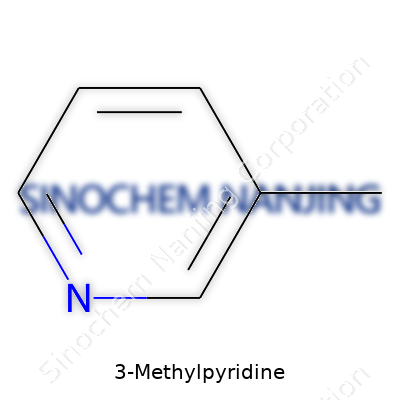
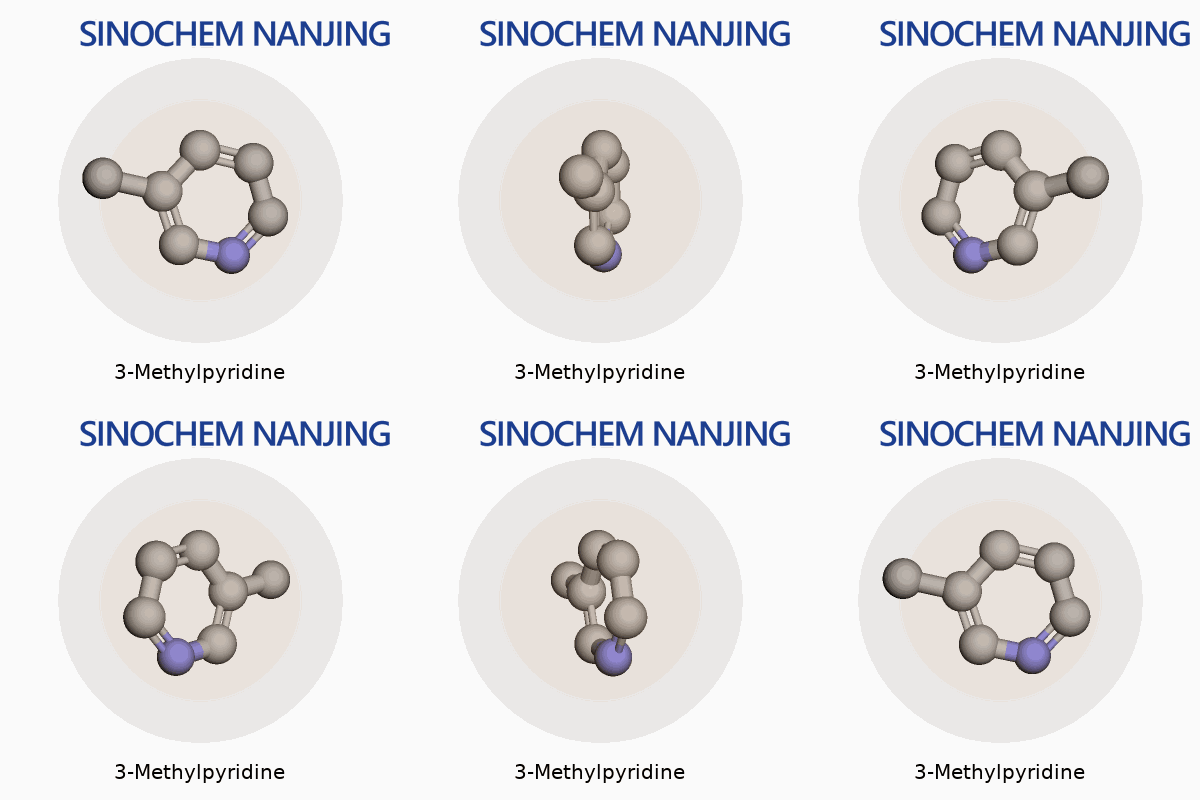
| Names | |
| Preferred IUPAC name | 3-Methylpyridine |
| Other names |
3-Picoline beta-Picoline 3-Pyridylmethane beta-Methylpyridine 3-Methyl pyridine |
| Pronunciation | /ˌθriːˈmɛθɪl.pɪˌraɪdiːn/ |
| Identifiers | |
| CAS Number | 108-99-6 |
| 3D model (JSmol) | ``` 3d:JSmol ``` |
| Beilstein Reference | 1204229 |
| ChEBI | CHEBI:27868 |
| ChEMBL | CHEMBL1409 |
| ChemSpider | 7038 |
| DrugBank | DB03255 |
| ECHA InfoCard | ECHA InfoCard: 100.003.057 |
| EC Number | 203-604-4 |
| Gmelin Reference | 791 |
| KEGG | C01857 |
| MeSH | D010529 |
| PubChem CID | 10461 |
| RTECS number | RW3675000 |
| UNII | 5J7X82X18L |
| UN number | UN1235 |
| Properties | |
| Chemical formula | C6H7N |
| Molar mass | 93.13 g/mol |
| Appearance | Colorless to yellow liquid |
| Odor | Pyridine-like |
| Density | 0.957 g/mL at 25 °C(lit.) |
| Solubility in water | Miscible |
| log P | 0.82 |
| Vapor pressure | 1.77 kPa (at 20 °C) |
| Acidity (pKa) | 5.68 |
| Basicity (pKb) | pKb = 9.21 |
| Magnetic susceptibility (χ) | -41.2·10⁻⁶ cm³/mol |
| Refractive index (nD) | 1.506 |
| Viscosity | 1.06 mPa·s (25 °C) |
| Dipole moment | 1.57 D |
| Thermochemistry | |
| Std molar entropy (S⦵298) | 163.1 J·mol⁻¹·K⁻¹ |
| Std enthalpy of formation (ΔfH⦵298) | 77.2 kJ/mol |
| Std enthalpy of combustion (ΔcH⦵298) | -3308 kJ/mol |
| Hazards | |
| GHS labelling | GHS02, GHS07 |
| Pictograms | GHS02,GHS07 |
| Signal word | Warning |
| Hazard statements | H301, H311, H331, H319, H335, H302, H312, H315 |
| Precautionary statements | P261, P280, P302+P352, P304+P340, P312, P305+P351+P338, P337+P313, P370+P378, P403+P233, P501 |
| NFPA 704 (fire diamond) | 1-3-0 |
| Flash point | 86 °C |
| Autoignition temperature | 535 °C |
| Explosive limits | 1.3% - 11% |
| Lethal dose or concentration | LD50 oral rat 407 mg/kg |
| LD50 (median dose) | LD50 (median dose): Oral rat LD50 = 290 mg/kg |
| NIOSH | SN 8575000 |
| PEL (Permissible) | PEL (Permissible Exposure Limit) of 3-Methylpyridine: 2 ppm (7 mg/m³) |
| REL (Recommended) | 0.5 ppm |
| IDLH (Immediate danger) | 60 ppm |
| Related compounds | |
| Related compounds |
2-Methylpyridine 4-Methylpyridine Pyridine 3-Ethylpyridine 3,5-Dimethylpyridine |



