3-Cresol: A Closer Look at Its Story, Uses, and the Road Ahead
Historical Development
Growing up in a family with deep roots in small-scale manufacturing, I learned early how chemicals like 3-cresol influenced not only production floors but also everyday life. Long before modern chemical plants, 3-cresol drew attention in factories processing coal tar. Chemists saw potential in aromatic compounds and by the late 1800s, 3-cresol began to emerge from those tar pits as distinct molecules with unique properties. That paved the way for its use in disinfectants and wood preservatives. Generations of researchers tinkered with isolation methods and uses, shifting from trial and error in glassware to scalable industrial routes. Seeing this arc, it’s clear that necessity and ingenuity have always shaped 3-cresol’s journey—never simply a product, always a work in progress.
Product Overview
If you ever spent time visiting factories or even rural hospitals as I have, you’d notice a faint smoky-sweet smell in certain disinfectants—3-cresol leaves that signature mark. As a member of the cresol group, it has a benzene ring with a methyl and a hydroxyl group, sitting apart from its chemical cousins because of its position on the ring. Most find it not as widely talked about as phenol or o-cresol, but dig a little and you’ll see it threading through products in antiseptics, resins, and dyes. Its persistence in these fields comes from a balance between potency, cost, and manageable reactivity.
Physical & Chemical Properties
Pouring 3-cresol, you’ll notice a colorless to pale yellow liquid at room temperature with a sharp medicinal aroma. Its melting point hovers around 11°C, and it boils near 202°C—features that help in transport and storage. The compound dissolves in organic solvents like alcohol or ether, which helps manufacturers integrate it into diverse chemical blends. Its moderate volatility adds to worker exposure risks; handling it always calls for ventilation and personal protective gear. On the bench, 3-cresol tends to cling to equipment through its oily consistency, which can frustrate cleanup or contribute to slow release into the environment.
Technical Specifications & Labeling
Regulators require that bottles and drums for 3-cresol carry hazard icons showing flammability and toxicity. Years in occupational safety show that labeling needs to cut through language barriers, not just check regulatory boxes. Clear pictograms warn against skin and eye contact, and safety data sheets always ride alongside any shipment. Regulatory limits on exposure and permissible concentrations typically hover in the ppm range depending on jurisdiction. Purity often sits above 98% for industrial products, and trace impurities from extraction can spell trouble for sensitive applications in electronics or pharmaceuticals, so batch testing matters more than ever.
Preparation Method
Most industrial 3-cresol today springs from coal tar distillation or synthetic methods using toluene sulfonation followed by alkaline fusion. Early chemists relied heavily on coal derivatives because they were cheap and abundant. I’ve watched old-timers talk shop about the predictable mess that comes with working up tars and the modern shift toward selective synthesis. For labs and specialty companies, green chemistry pushes selective catalytic methylation of phenol or even biocatalytic approaches. In practice, big plants lean toward established processes that can handle drum-loads of feedstock and squeeze out streams of useful byproducts.
Chemical Reactions & Modifications
Tinkering with 3-cresol opens the door to a world of derivatives. That lone hydroxyl group loves to react: you can nitrate it for explosive precursors, halogenate it for pesticides, or alkylate it for resin intermediates. Small makers often chase after ether or ester derivatives for use in plasticizers and fragrances. I’ve seen chemists relish the challenge of working with 3-cresol, coaxing it into more valuable compounds through Friedel-Crafts reactions or sulfonation, always keeping an eye on reaction temperatures due to its volatility. Each transformation carries both promise and pitfalls, especially for anyone looking to avoid ugly side reactions or waste streams that require serious cleanup.
Synonyms & Product Names
In catalogues and on containers, 3-cresol also shows up as m-cresol, meta-cresol, or 3-methylphenol. Depending on where you are, older documents might call it ‘meta-cresylic acid’ or even ‘methylphenol oil.’ I’ve had engineers complain during audits about mismatched labeling that confuses operators, risking improper usage or misdirected shipments. Standardizing around clear and simple terminology pays dividends in safety and operational smoothness.
Safety & Operational Standards
Years looking over safety protocols taught me that talk is cheap unless operators buy in fully to protective measures. 3-cresol absorbs through skin, causing burns, irritation, and sometimes systemic symptoms if enough soaks in. Inhalation risks top everyone’s worry-list because vapor exposure in tight spaces can lead to headaches, nausea, or worse. Factories invest in local exhaust ventilation at the point of use, provide gloves resistant to organic solvents, and drill teams in protocols for accidental spills. Eye-wash stations and proper waste disposal systems—these sound mundane but stand between a routine shift and a trip to the hospital. Regular medical screenings, paired with clear signage and hands-on safety training, move beyond paperwork to actually saving lives.
Application Area
Walk through the back rooms of older hospitals or the mixing bays of paint shops and you’ll notice the impact of cresols. 3-cresol blends with soaps, disinfectants, antiseptics, and industrial resin manufacture. If you’ve bought wireless sensors recently, some circuit boards rely on specialty polymers made with cresol derivatives. Agrochemical companies use it to synthesize pesticides, riding its ability to disrupt biological membranes. Paper mills tap it for slimicide agents, keeping molds and bacteria from fouling production lines. DIYers sometimes experiment with m-cresol as a PCB etchant, even though safer alternatives exist. This breadth of use comes with the caveat that end-users and workers must respect its hazards, not just its utility.
Research & Development
Over decades, research around 3-cresol evolved as scientists mapped clearer links between structure and function. University labs keep probing its antimicrobial properties; polymer chemists experiment with new resin formulations aiming for electronics resistant to heat and moisture. Pharmaceutical researchers looked hard at 3-cresol as a preservative or biochemical probe. Environmental chemists scrutinize how slowly it breaks down and what byproducts stick around in soil or water. I’ve seen more interdisciplinary projects spring up lately, where biologists, engineers, and toxicologists pool insight to better understand exposure risks and lifecycle impacts. This kind of hands-on, cross-sector cooperation feels essential as regulations continue to tighten.
Toxicity Research
When you start reading toxicity literature on 3-cresol, it doesn’t take long to realize why safety ranks so high on everyone’s list. Acute contact leads to skin and eye burns. Animal studies link ingestion or inhalation to liver and kidney effects, sometimes even central nervous system depression at high doses. Community groups living near industrial sources press for studies on carcinogenicity and long-term health impacts, and it's clear that low-level chronic exposures don’t simply fade away. Regulators watch water and air concentrations closely, especially around waste treatment plants. Cleaner production steps and improved detection methods now help spot and stop leaks before they become problems.
Future Prospects
Looking past today’s uses, 3-cresol stands at a crossroads. Specialty polymers for electronics and treatable wood products may keep demand steady. Green chemistry pushes hard for cleaner, more sustainable production routes, favoring catalytic and biotechnological methods that cut down on toxic byproducts and energy use. I’ve noticed a shift among manufacturers toward integrating real-time monitoring systems and more robust secondary containment—steps that shrink risk and open doors to broader, safer applications. Researchers keep hunting new synthesis approaches that promise higher selectivity and leave less waste, and regulators demand ongoing reductions in occupational exposure limits. Public demand for safer, biodegradable alternatives grows, pushing everyone in the industry to rethink legacy practices. This keeps 3-cresol not only relevant but also a proving ground for smarter, safer chemical handling.
What is 3-Cresol used for?
Why Talk About 3-Cresol?
Chemicals seem to hide in plain sight in everyday life. One name that crops up in the science world is 3-cresol, known by chemists but less so by most folks. I got interested in 3-cresol after reading about all the different ways simple chemicals can shape so much of what we use. This one keeps surfacing in research, news, and industry, so it’s worth shining a light on what it actually does and why it matters.
Where 3-Cresol Pops Up
Walk down a hardware store aisle and you’ll spot cleaning products. Head to a farm and you’ll pick up a whiff of disinfectants. 3-cresol quietly forms the backbone in both cases. The chemical comes from coal tar or petroleum, but you’ll mostly notice its strong odor before seeing it named on a Safety Data Sheet.
Used for disinfecting, 3-cresol lands in places where germs or fungal growth ruin equipment—think animal barns, hospital floors, or factory tools. It showed up in my university’s old maintenance shed, labeled as part of a mix meant to “clean up the uncleanable.” The science backs that up: 3-cresol fights bacteria and molds. As bacterial resistance climbs, disinfectants like these raise important questions about safer and smarter ways to keep spaces healthy.
Synthetic chemistry grabs on to 3-cresol for more than cleaning. Dye factories, resin manufacturers, and even companies that specialize in fragrances use it as a building block. In the lab, I watched colleagues transform it into colorants for textiles and even stabilize inkjets for printers. This adaptability keeps 3-cresol in demand, from scientific research to large-scale manufacturing.
Why Should We Care?
Plenty of chemicals claim versatility, but few step out of labs and into living rooms or rural towns the way 3-cresol does. Its strong track record in fighting microbes isn’t an accident. The reason disinfectants sometimes still use cresol derivatives comes down to solid results and a long shelf life. But there are big questions: safety, sustainability, and impact on the world around us.
Exposing workers or animals to high doses leads to eye, skin, or even systemic effects. In the regulatory world, limits get set to keep people safe, but stories from older-generation custodians suggest casual handling still happens. My chemistry mentor used to say, “chemical know-how has to include common sense.” Simple advice, but crucial. Consumers, medical staff, and farmers all stand to benefit if the risks stay top of mind.
Some perfume makers and flavor chemists tap 3-cresol for its smoky note, but in much lower, controlled concentrations. The attention from these industries shows a broader principle: the same molecule can be both risky and useful, depending on how it’s handled.
Looking Forward: Smarter Use, Smarter Rules
More research keeps emerging on what happens to 3-cresol after cleaning crews wash it down the drain. It doesn’t simply vanish; some traces land in soil and waterway sediments, raising flags about aquatic toxicity. Policy changes that encourage improved handling, safer disposal, and innovation in greener substitutes do more for collective health than bans or fast fixes. In chemistry, the future often rests on adjusting our habits and investing in better alternatives.
Clear labeling, honest risk education, and focus on alternatives whenever possible shift the focus away from confusion and toward smart, safe use. That is what puts both people and the planet on better footing when handling powerful and complex chemicals like 3-cresol.
Is 3-Cresol hazardous to health?
What is 3-Cresol?
3-Cresol comes from a group called cresols. These show up in coal tar, wood smoke, and even some disinfectants. If you’ve ever had a campfire or smelled antiseptics at a clinic, a whiff of 3-cresol might ring a bell. Its sharp, medicinal smell carries a warning: respect the stuff, or trouble might not be far behind.
Where You Might Run Into 3-Cresol
I used to work summers at a timber yard. Walk through some of those older sheds and you’d catch strong cresol scents – that tangy edge in the air. The same chemicals were used long ago in preserving wood, controlling mold, even disinfecting barns. Most folks don’t think about cresols at home, but if you live near industrial sites, wood treatment plants, or use certain cleaners, exposure can still pop up.
How Exposure Happens and Why It Matters
3-Cresol gets into your body by breathing, swallowing, or through your skin. Inhaling its vapors can sting your throat and nose, especially in work environments with poor air flow. Splashing onto your skin brings its own fun—think angry red rashes, blisters, or rapid heartbeats in unlucky cases. Drinking or eating food that picked up cresol, even by accident, turns stomachs. Swallowing much brings real risks.
What the Science Says
Plenty of research draws a line between cresol exposure and health risks. The CDC lists it as hazardous. Short-term exposure, even a few hours, brings coughing fits, headaches, and skin burns. Longer contact may hit your kidneys and liver, two organs you can’t afford to lose. Animal testing shows cresol can break down cells and hurt organs when it gets inside. A 2014 European Chemicals Agency review linked sustained workplace contact to nervous system and kidney problems. It’s also a suspected carcinogen, though the link isn’t fully proven in humans yet.
Whose Health Is at Most Risk?
Older workers at chemical manufacturing plants once faced the highest risk. These days, anyone handling wood treatments, certain disinfectants, or living near industrial dumping zones should be careful. Kids and pregnant women stay safest by keeping clear, since their bodies don’t flush out harmful chemicals as quickly. Regular exposure, even in low doses, stacks the odds for long-term health problems.
What Can Be Done to Stay Safe?
Job sites with cresol need strong ventilation, gloves that actually block chemicals, and fast cleanup for spills. At home, reading label warnings and wearing gloves around old-school disinfectants works wonders. State regulators should watch for illegal cresol dumping and follow up with regular water and soil checks near factories. Training for workers, not just posted signs, helps. Local doctors ought to ask more about chemical exposures in routine checkups for at-risk folks. On a bigger level, companies can swap out cresol-based chemicals for safer alternatives. If consumers refuse products with questionable chemicals, companies tend to listen.
Final Thoughts
Everyday folks rarely face much danger from 3-cresol in modern cities, but the risks remain for those close to old industries or involved in manufacturing. Personal experience reminds me it’s easy to overlook these invisible hazards until symptoms strike. A little awareness and protection goes a long way—especially where chemical safety is concerned.
What are the storage requirements for 3-Cresol?
Understanding 3-Cresol and Its Hazards
3-Cresol pops up in labs, industrial plants, and even a few medical settings. It packs a real punch—sharp smell, strong antiseptic properties, and some serious health risks if handled without care. Forgetting even the basics around this chemical can end up costing someone their safety, so I want to lay it out without sugarcoating.
Choosing the Right Container
This isn’t a job for chance. 3-Cresol corrodes some metals and eats away at cheaper plastics. Glass, stainless steel, or high-quality, chemical-resistant plastic bottles make safer bets. Container labels need to be more than sticky notes—they should broadcast hazard symbols, the full name, and date of receipt. I've seen too many labs burned by mystery bottles full of who-knows-what.
Conditions That Matter
Heat doesn't help things. 3-Cresol becomes more volatile in warm spaces, sending more fumes into the air. Temperatures hovering around room levels suit it, preferably with real control—no wild swings, no hot pipes running overhead. Sunlight can break it down or cause the bottle to bulge, so keeping it off shelves in direct light isn’t just neat, it’s practical.
Ventilation and Fire Prevention
Stories of chemical rooms with poor air flow aren’t just old news—they keep coming up in accident reports. 3-Cresol fills the air with harsh, toxic vapor, and builds up above its liquid form if sealed wrong. Strong ventilation, such as fume hoods or an efficient local exhaust system, keeps the workspace healthy. Ignoring this step invites headaches, dizziness, or worse.
3-Cresol doesn’t just smell dangerous; it’s flammable. Sparks, static, and open flames can trigger explosions. Class II or III flammable storage cabinets, the kind with built-in grounding, serve as a shield. That extra step—separating 3-Cresol from oxidizers and strong acids or alkalis—cuts down risk even further. I once spoke with a chemist haunted by a fire they barely escaped. Skipping proper chemical separation almost cost their life.
Spill Kits and Emergency Prep
Spills never warn us. Each storage area should have spill kits tailored for phenolic chemicals—think absorbent pads, neutralizers, and sturdy gloves. Showers and eyewash stations within easy reach save critical seconds. Quick access means training everyone—from long-timers to interns—not just stashing a binder on a shelf.
Why It Matters
I’ve witnessed complacency settle into labs where folks tell themselves “We’ve never had an accident here.” 3-Cresol asks for respect. Fumes drift, leaks stay hidden, and a splash can burn skin before anyone reacts. Strict storage standards mean less downtime, fewer injuries, and—just as important—a clear conscience. Workers, managers, and lab owners all win when they remember why these rules exist—to keep us all out of harm’s way.
Looking Forward
New technologies let us monitor temperature, humidity, and air quality without a second thought. Regular audits, honest risk assessments, and ongoing training keep storage practices effective. Take it from someone who’s seen both good and bad set-ups: treating 3-Cresol with the respect it demands turns a risky bottle into just another, manageable part of daily work.
How should 3-Cresol be handled safely?
What’s At Stake With 3-Cresol
Working with chemicals like 3-cresol never calls for a casual attitude. This compound shows up in labs, factories, and sometimes in cleaning products. It comes with a bite: Skin burns, eye irritation, breathing trouble. At higher exposures, you can land in the hospital with more than just a headache. If it leaches into the water supply, it also messes with aquatic life for a long time. So, treating it like it’s just another bottle on the shelf ends badly for people and for the environment.
Protecting Yourself Starts With Personal Gear
Goggles, gloves, a solid lab coat—this is non-negotiable. I’ve seen a few folks try to save a minute by skipping gloves, only to end up flushing their hand for ten. Nitrile or neoprene gloves stand up well to cresol. I always double-check mine for holes before pouring anything. For the face, goggles should wrap around fully; cresol fumes will make your eyes burn in seconds. Don’t forget a face shield if pressure or splashing enters the picture.
Breathing is another big deal. 3-cresol fumes carry a strong medicinal smell and bring headaches or nausea if you inhale them for too long. Work in a fume hood if you can. If not, ventilate the area as much as possible and put on a cartridge respirator rated for organic vapors.
Storage Rules Aren’t Up For Debate
3-Cresol needs to live away from everything flammable, food products, and sunlight. I learned early: never store it in the same cabinet as acids, oxidizers, or bases. A spill or sudden reaction can get out of control before anyone has a chance to fix it. The trend in many labs now is to use double-containment. Set your storage bottle in a bigger, sealed container just to catch drips.
Labels should be bold, readable, and display hazard symbols. Anyone walking by should spot it in an instant. Don’t hide the MSDS in a drawer, either—tack it on the wall near where cresol sits.
What To Do When Accidents Happen
I’ve seen plans tested and I’ve seen panic take over. Keep a real plan, practice it, and make sure everyone knows what to do. Start with fresh, nearby safety showers and eyewash stations. If cresol gets on your skin, running cold water works fastest. Hot water only opens up pores and makes it worse. No shortcuts here. Change contaminated clothes right away.
For spills, break out absorbent pads and keep a disposal drum nearby, not in another room. Neutralize any residue with sodium bicarbonate before cleaning, since mopping up straight cresol just spreads it out.
Building A Culture That Respects Risk
Every workplace benefits from a routine look at chemical storage and usage, not just at audit time. New workers especially will follow the habits they see. Supervisors should walk the floor, not just fill out checklists from an office. Training doesn’t end after day one—refreshers matter after every incident or near-miss. If leadership pushes for speed over safety, it only takes one bad accident to regret it.
Moving Forward: Smarter Handling, Fewer Regrets
Regulators have tightened rules for handling 3-cresol. It’s a smart move, but nothing beats the day-to-day decisions made by people on the floor. If the tools, the training, and the culture keep up, 3-cresol won’t ruin anyone’s day—or their health. That’s the kind of workplace where you don’t just survive, you actually feel respected for looking after yourself and others.
What is the chemical structure of 3-Cresol?
Digging into the Molecule
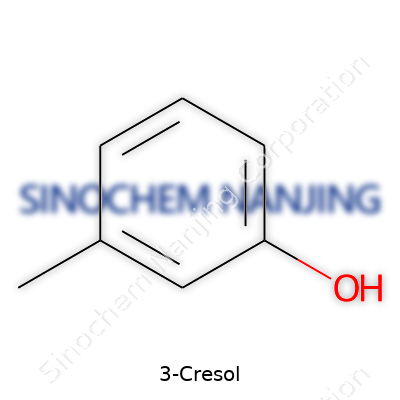
3-Cresol sounds like a puzzle from chemistry class, but it carries more real-world weight than most people think. Anyone who’s spent time in a lab or followed news about industrial pollution has probably heard about cresols. This chemical pops up in disinfectants, wood preservatives, and even some smoke emissions. Inside its name sits its makeup: a benzene ring, a methyl group, and a hydroxyl group.
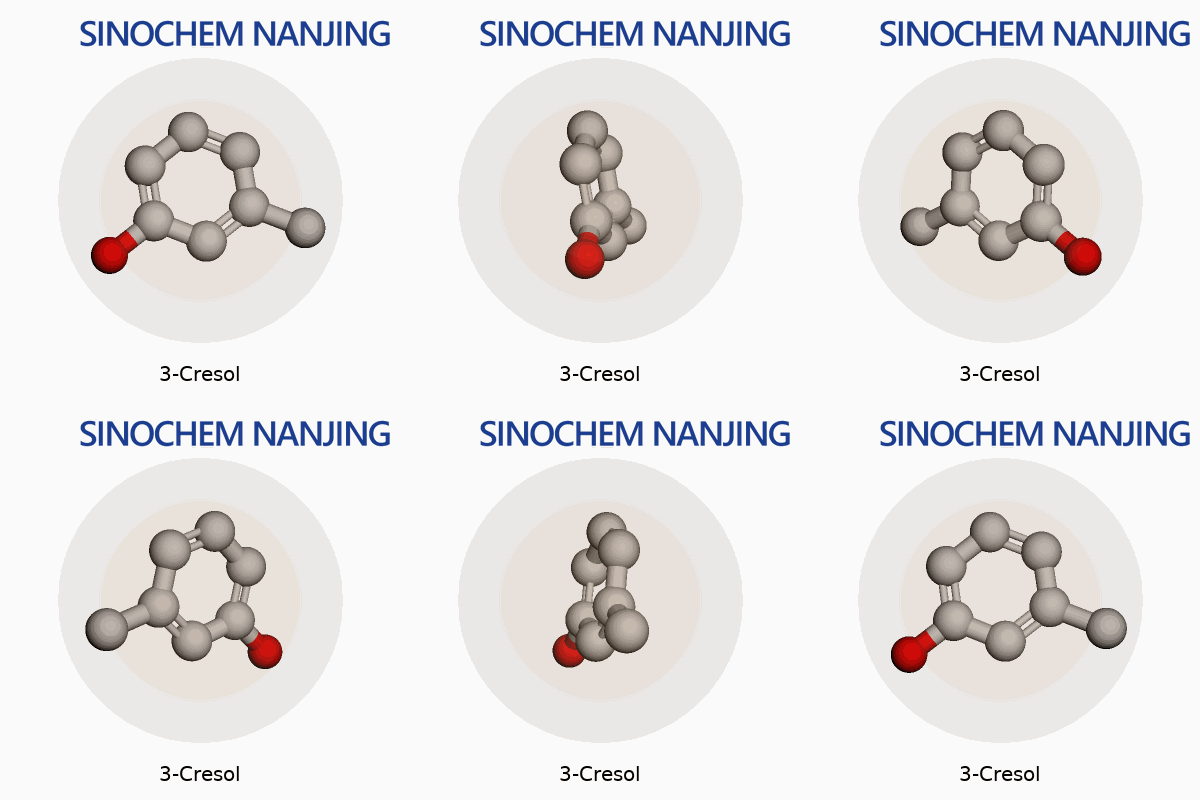
The actual structure shapes how it behaves and the risk it can pose. 3-Cresol—also called m-cresol—has a benzene ring, which is just a hexagon made of carbon atoms, each bonded with both hydrogen atoms and other groups. On this ring, the hydroxyl (–OH) and methyl (–CH3) groups attach at the 1 and 3 positions. To draw it, you’d see the oxygen of the –OH group on one carbon, and the –CH3 just two carbons away. This specific layout changes its behavior when it enters the environment or gets into your system.
Why Knowing the Structure Matters
With 3-cresol’s structure, you know how it interacts with organisms and how it moves once it’s poured down a drain or burnt in a factory. Growing up with a small workshop at home, it was easy to get used to the strong smell of cleaning agents, not knowing that cresol-based cleaners can irritate skin and breathing passages. That comes down to their molecular structure, almost like the way a puzzle piece fits only certain slots. The methyl group at the meta position makes 3-cresol more soluble in organic solvents than in water, which means it lingers in oily waste longer than you’d expect.
Make no mistake: the position of that methyl group isn’t trivial. For example, studies from the Agency for Toxic Substances and Disease Registry say that the exposure limits for cresols are low because repeated contact can damage kidneys and the nervous system. In a hospital, 3-cresol keeps some pharmaceuticals stable, showing up in insulin preparations as a preservative. Knowing its arrangement on the benzene ring clues scientists in on how it stabilizes these sensitive medicines.
Facing the Human and Environmental Risks
It’s easy to dismiss a chemical like 3-cresol as something that only scientists or regulators worry about, but this stuff doesn’t just stay in labs. Runoff from industrial sites can send it into waterways, where it breaks down slowly and sinks into sediment. Fish and birds exposed to even small amounts experience trouble with their central nervous systems. For weeks, news cycles in some regions have covered spills and contamination scares, and much of that stems from how persistent cresols are.
Solutions depend on getting a grip on its chemistry first. Wastewater treatment plants, for example, often use activated carbon filters or advanced oxidation processes designed around benzene derivatives like cresol. From personal experience handling paint thinners in summer jobs, I learned that using protective gloves and good ventilation isn’t overkill. A little knowledge about the molecule’s shape and reactivity goes a long way in protecting health.
Building Awareness Through Science
Without clear understanding of what’s in products, people end up relying on the hope that someone else has thought through the risks. By looking at the basic molecular structure, it becomes possible to ask better questions about safety, disposal, and long-term impact. This creates a chance to push industry and regulators toward safer practices. A benzene ring with a methyl and hydroxyl group doesn’t seem like much at first, yet understanding its layout holds the key to protecting people and the environment.
| Names | |
| Preferred IUPAC name | 3-Methylphenol |
| Other names |
m-Cresol meta-Cresol 3-Hydroxytoluene m-Methylphenol |
| Pronunciation | /ˈθriːˈkriːsɒl/ |
| Identifiers | |
| CAS Number | 108-39-4 |
| 3D model (JSmol) | 3D model (JSmol) string for **3-Cresol**: ``` 3-cresol C1=CC(=CC(=C1)O)C ``` This **string** represents the SMILES notation that JSmol can use to render the 3D structure. |
| Beilstein Reference | Beilstein Reference: 1721413 |
| ChEBI | CHEBI:17236 |
| ChEMBL | CHEMBL14222 |
| ChemSpider | 536 |
| DrugBank | DB03744 |
| ECHA InfoCard | 100.004.489 |
| EC Number | 204-398-9 |
| Gmelin Reference | 822 |
| KEGG | C01573 |
| MeSH | D003436 |
| PubChem CID | 342 |
| RTECS number | GO6300000 |
| UNII | Q51QJ9LRT9 |
| UN number | UN2076 |
| Properties | |
| Chemical formula | C7H8O |
| Molar mass | 108.14 g/mol |
| Appearance | Colorless to yellowish crystals or liquid |
| Odor | Phenolic; medicinal |
| Density | 1.048 g/mL at 25 °C |
| Solubility in water | slightly soluble |
| log P | 1.96 |
| Vapor pressure | 0.11 mmHg (25°C) |
| Acidity (pKa) | 10.09 |
| Basicity (pKb) | 9.86 |
| Magnetic susceptibility (χ) | -64.5·10⁻⁶ cm³/mol |
| Refractive index (nD) | 1.539 |
| Viscosity | 3.35 mPa·s (25 °C) |
| Dipole moment | 1.55 D |
| Thermochemistry | |
| Std molar entropy (S⦵298) | 116.8 J·mol⁻¹·K⁻¹ |
| Std enthalpy of formation (ΔfH⦵298) | −30.7 kJ/mol |
| Std enthalpy of combustion (ΔcH⦵298) | -3607.3 kJ/mol |
| Pharmacology | |
| ATC code | D08AX04 |
| Hazards | |
| GHS labelling | GHS02, GHS06, GHS08 |
| Pictograms | GHS02,GHS06,GHS08 |
| Signal word | Danger |
| Hazard statements | H302, H311, H331, H314 |
| Precautionary statements | P210, P261, P280, P305+P351+P338, P310 |
| NFPA 704 (fire diamond) | 3-2-0- (with the special hazard area left blank) |
| Flash point | 86 °C (187 °F; 359 K) |
| Autoignition temperature | 548°C |
| Explosive limits | 1.3% - 9.9% |
| Lethal dose or concentration | LD50 oral rat 242 mg/kg |
| LD50 (median dose) | LD50 242 mg/kg (rat, oral) |
| NIOSH | SA5600000 |
| PEL (Permissible) | 5 ppm |
| REL (Recommended) | 5 mg/L |
| IDLH (Immediate danger) | 250 ppm |
| Related compounds | |
| Related compounds |
o-Cresol p-Cresol Phenol Thymol Mesitol |



