2-Nitrotoluene: The Chemistry Few Notice, Shaping Industries Many Rely On
Historical Development
Years back, organic chemistry brought some big turning points for manufacturing and medicine, and 2-nitrotoluene stood right at one of those crossroads. Long before the digital age, researchers discovered how nitration transforms plain toluene into something with far punchier chemistry and everyday utility. In the late 1800s, chemists worked out how to add that bright yellow nitro group to toluene’s aromatic ring. This opened the door for dyes, explosives, and pharmaceuticals that defined industries and trade. As synthetic dyes outpaced natural colors, textile mills needed those new colors fast. The demand for reliable intermediates like 2-nitrotoluene kept growing. With two world wars putting strain on chemical supplies, production of intermediates became as important as finished products.
Product Overview
Talk to anyone in the field and 2-nitrotoluene pops up in more applications than most would guess. It sneaks into everyday items: fragrances, dyes, even some over-the-counter pills. On a basic level, this compound builds out bigger molecules with more specific functions, bridging raw feedstocks with the final specialty products that land on shelves. Its fingerprint shows up in everything from agriculture to aerospace, mostly as an essential but invisible stepping-stone. Even now, if you trace many common products back to their chemical roots, you’ll find that yellowish oil, stubbornly present in labs and plants across the world.
Physical & Chemical Properties
Every chemist recognizes 2-nitrotoluene by its pale yellow color and an odor that lingers once you've worked with it a few times. As an aromatic nitro compound, it brings a unique set of properties to the table. Its boiling point hovers just over 220°C, so it stands up to moderate heat without flashing off. This lets it take part in a host of processes, staying liquid when needed instead of vaporizing early. Solubility stays modest—a little in water, a lot better in organic solvents like ether or acetone. That solubility profile means it travels smoothly between phases in industrial setups, which is critical for batch reactions. The nitro group amps up chemical reactivity, inviting reductions, substitutions, and a slate of modifications that keep research labs busy.
Technical Specifications & Labeling
2-Nitrotoluene gets handled as a chemical intermediate with pretty strict expectations around purity, as residues carry over into downstream products. Industry-grade stocks generally hover around 98% purity or higher. That figure matters, because even small impurities can actually sabotage reactions further down the production line. Storage labels need to highlight flammability, toxicity, and the tendency for this oil to absorb through skin or with inhalation, so workers don’t become complacent. Transport keeps to codes that account for these health risks—special drums, proper ventilation, clear hazard labeling, and no open flames nearby. Chemical plants depend on tightly controlled specs and good labeling so accidents and batch losses stay rare.
Preparation Method
Big plants produce 2-nitrotoluene by nitrating toluene with a mixture of concentrated nitric and sulfuric acids. That reaction seems simple enough until you see the heat it throws off, the careful temperature controls, and the need for constant agitation. Small shifts in acidity or heat push yields down or kick off dangerous side reactions. To avoid explosive mishaps, the process runs in robust, corrosion-resistant reactors. The output then undergoes a series of washes, extractions, and sometimes distillation steps to isolate and purify the final product. Generations of chemical engineers have honed this process for throughput and safety, because a runaway nitration costs more than just money.
Chemical Reactions & Modifications
Chemists appreciate how that nitro group — sitting at the ortho position — steers follow-up reactions. 2-Nitrotoluene responds well to reductions, turning into 2-aminotoluene, also known as o-toluidine, another key building block in dye and pigment synthesis. Electrophilic aromatic substitution can tack even more groups onto that ring, customizing molecules for precise uses. The nitro group’s electron snugness means other substitutions will occur slowly unless conditions are ramped up. Over the years, artful process tweaks have let teams tailor the molecule for distinct colorants, antioxidants, rubber accelerators, and even some agricultural chemicals. These reactions have largely set the pace for progress in applied organic chemistry.
Synonyms & Product Names
Pick up a catalog or research paper and you might spot 2-nitrotoluene listed by plenty of aliases. The most common ones: o-nitrotoluene, ortho-nitrotoluene, and 1-methyl-2-nitrobenzene. Some specialty markets also know it as o-NT or, in pharmaceutical circles, by certain legacy codes. These alternative names can create headaches for sourcing and regulatory tracking, but they remind us how versatile—and sometimes confusing—chemical nomenclature still can be across jurisdictions and generations.
Safety & Operational Standards
Years in a lab or plant environment drive home the point that safety around 2-nitrotoluene isn't an optional extra—it's the bedrock of sound chemical handling. Direct skin contact triggers irritation, and inhaling the vapors can spark headaches or far worse, depending on concentration and exposure time. The compound’s toxicity has prompted regulations across North America, Europe, and Asia, capping allowable workplace exposure and setting tough standards on emissions. Personal protective equipment—gloves, goggles, dedicated ventilation—form the first line of defense. Plants often invest as much in worker training and emergency drills as they do in modernized processing tanks. Environmental regulations mandate closed handling systems to cut fugitive emissions and water contamination, driving up operational costs but helping to protect the community around these facilities.
Application Area
While most people never encounter 2-nitrotoluene directly, trace back the supply chain for common azo dyes, rubber chemicals, and some pesticides, and you’ll find its chemical signature. Paints, specialty polymers, agricultural fungicides, and inks have all grown with the help of this molecule. A small share goes into pharmaceutical manufacturing, especially in intermediates for analgesics and antiseptics, though the largest portion ends up as a raw material for dyes and agricultural chemicals. In my experience, synthetic dyes for textiles often represent the most visible legacy of this compound — the explosion of vibrant, affordable colors owes much to that yellow aromatic oil.
Research & Development
Research in aromatic nitro chemistry hasn’t slowed, and 2-nitrotoluene remains a workhorse for innovation. Chemists keep probing ways to achieve greener synthesis: reducing energy demands, switching to less aggressive nitration agents, and running reactions under milder, safer settings. Process intensification—leveraging better catalysts and flow reactors—offers a path toward smaller footprint, higher-yield sites. Analytical chemists refine detection limits for impurities, since even a trace of unreacted acid or metal catalyst could jeopardize downstream processes. Universities and industry teams alike look for new downstream conversions, whether that means safer pesticides, specialty dyes with improved lightfastness, or raw materials for next-generation electronics. With so much demand riding on it, even small breakthroughs in process or application can echo widely through global supply chains.
Toxicity Research
Toxicologists know the risks that come with 2-nitrotoluene. Studies have tracked its short- and long-term effects, finding evidence of methemoglobinemia, skin sensitization, and carcinogenic potential with enough exposure. Data from animal studies feed into regulatory reviews in key manufacturing nations; limits on worker exposure strive to minimize real-world risk. Wastewater treatment and air filtration technology, shaped by this same research, tries to curtail environmental release and eliminate chronic exposure for nearby residents. Decades of improved monitoring have shown that lowering exposure limits, updating protective gear, and investing in closed systems dramatically reduce both acute and latent health issues among chemical workers. The trail of research on toxicity shapes every new safety regulation, so the drive for safer processes never slackens.
Future Prospects
The future for 2-nitrotoluene isn’t set in stone, but trends already suggest a few directions. Modern industries want greener, safer intermediates, so pressure mounts to use renewable feedstocks or switch to catalytic nitration that curbs waste and emissions. Digital monitoring, process automation, and machine learning could soon transform traditional batch chemistry into modular, continuous-flow setups, slashing the risk of runaway reactions and boosting quality control. Research keeps opening doors for specialty derivatives in electronics, medicine, and next-wave dyes that hold up to sunlight, washing, or industrial stresses. At the same time, ongoing scrutiny from regulators about worker and environmental exposure means companies have strong incentives to rethink old ways of operating. No one’s expecting 2-nitrotoluene to disappear from the market soon, but what’s clear is the rules of the game are changing fast, and those who adapt their chemistry and safety standards will stay ahead. The road ahead demands smart investments, nimble R&D, and a closer focus on every link in the chemical value chain—from raw materials to finished consumer goods.
What are the main uses of 2-Nitrotoluene?
A Quick Look at What Makes 2-Nitrotoluene Useful
People won’t run into 2-nitrotoluene at the grocery store, but this compound props up key bits of modern manufacturing. Its chemical formula—C7H7NO2—means it’s a nitro-substituted toluene, and it shows up mainly as a pale yellow liquid with a distinct odor. Even with its unremarkable looks, 2-nitrotoluene plays a central role in several heavy industries.
Dyes and Pigments: Painting the World
Every time someone puts on a brightly colored T-shirt or flips through a glossy magazine, there’s a good chance 2-nitrotoluene had a part in it. One of its big uses lies in the creation of azo dyes. These dyes become vivid oranges, reds, and yellows that factories pour into textiles, plastics, and inks. The world’s dye industry counts on intermediates made from 2-nitrotoluene, like o-toluidine and o-anisidine, to keep production running smoothly. The science behind it comes down to how 2-nitrotoluene lends itself to further chemical reactions, making bright and stable colors possible.
Pharmaceuticals: Steps Toward Cures
The trail from 2-nitrotoluene to medicine cabinets isn’t obvious but it’s real. Pharmaceutical chemists often use this compound to build more complex molecules. For example, makers of certain analgesics and antibiotics rely on processes that start with 2-nitrotoluene because of its reactivity. When researchers look for new drug options, raw materials like this provide flexibility and cost efficiency. This explains the careful regulation covering its handling—nobody wants pharmaceutical impurities.
Rubber Chemicals and Beyond: Tire Performance
Car tires and engine gaskets might never have direct contact with 2-nitrotoluene, but they benefit from its upstream chemistry. Factories use it to make antioxidants, accelerators, and plasticizers that give rubber products longer life. For those living in cities where air pollution from tire debris causes health concerns, improving materials with chemicals like these carries clear public health value. According to data from the European Chemicals Agency, trace changes in rubber formulas—often driven by intermediates like 2-nitrotoluene—influence how long tires last and how safe they feel on the road.
Concerns and Safer Practice
With anything nitro-based, safety takes center stage. 2-Nitrotoluene isn’t something anyone should handle without training or proper gear. Studies show it poses risks of toxicity, both to workers and the wider environment, if spills go unmanaged. Most production facilities keep strict controls, not just because governments say so, but out of real concern for worker health. Improved engineering controls, coupled with better training and equipment, often prevent exposure. Companies aiming to lower risks have started switching over to closed systems and automating processes, reducing the chance someone ends up breathing fumes or getting splashed by liquid chemicals.
Looking to the Future
Industry will likely keep searching for cleaner and less hazardous alternatives, but as of now, 2-nitrotoluene continues to anchor several manufacturing chains. More research into green chemistry points to substitutes, yet the transition takes time and careful cost–benefit weighing. Communities near chemical plants keep asking for tighter monitoring and prompt disclosure of any accidents, and this pressure helps steer companies to act responsibly. Vigilance, smart regulation, and practical process design combine to keep the benefits coming and the risks in check.
What are the safety precautions for handling 2-Nitrotoluene?
Understanding the Risks
My own days working in chemical labs taught me something quick—2-Nitrotoluene is not the sort of thing you want on your skin or in your lungs. It puts off a strong, chemical odor that means trouble for anyone ignoring proper safety steps. If you’ve ever worked with volatile organics, you know how just a tiny spill or a whiff left unchecked can lead to headaches or worse.
Personal Protective Equipment Saves More Than Clothes
Few things beat solid gloves and good goggles. Nitrile or neoprene gloves, goggles that don’t fog up, and a face shield for splash risks form the basics. I’ve seen burns on hands from a careless moment, and it’s not pretty. A well-fitted lab coat protects arms, and slip-resistant shoes keep you grounded in a hurry. Everything that touches 2-Nitrotoluene needs a check for holes or chemical wear—faulty gloves or fraying goggles land you in the emergency shower.
Ventilation Keeps Air Breathable
Open windows don’t cut it for this job. Every lab with 2-Nitrotoluene needs fume hoods. Breathing in vapors brings on dizziness and nausea. Chronic exposure comes with bigger concerns, like liver or nerve damage. I’ve always preferred fume hoods with alarm systems, so you know the airflow’s solid all day. Even short work needs proper airflow, and no shortcuts pay off in the long run.
Storage: Out of Sight, Out of Trouble
Heat sources and sparks spell disaster around 2-Nitrotoluene. The safest spot for storage sits in a solid, cool, and dry cabinet labeled “hazardous.” I like to use steel containers with tight seals—plastic doesn’t hold up as well over time. Chemists must keep incompatible materials (like strong oxidizers and acids) nowhere near this stuff. Every serious accident I’ve experienced started with someone skipping these basics.
Catching and Containing Spills
Spills never follow anyone’s plans. If you see a puddle or even a few drops, absorb it with inert material—think clay or commercial absorbents, not paper towels. Sweep it up carefully and bag it for hazardous waste disposal. Always notify nearby workers. I learned long ago that silent clean-ups only make things worse. Decontaminate surfaces with soap and plenty of water, checking for residue before calling it done. For large spills, it’s time to hit the emergency button and clear the area.
Training and Habit Beat Skill Every Time
No chemistry degree replaces hands-on safety drills. Every place that handles 2-Nitrotoluene should run regular safety refreshers. I’d rather work with someone careful and less experienced than a reckless veteran. Good safety habits stick when leaders encourage questions instead of punishing mistakes. Every employee needs to know where the nearest eyewash and shower stations sit—even if they hope to never use them.
Tools for Health Monitoring
Wearing PPE and checking airflow only go so far if no one keeps an eye on health. Baseline medical checks help catch changes early. Staff should report skin rashes or odd symptoms quickly, before things slide downhill. Most places stay ahead of trouble by screening air for vapor levels. It’s not about paranoia—it’s about going home healthy every day.
Better Solutions Build Safer Workplaces
2-Nitrotoluene isn’t going away from labs and industry, so open conversations and real training matter. Upgrading ventilation systems, choosing the best PPE on the market, and enforcing strict storage policies stop problems before they start. Every worker deserves to go home with nothing more than a good story after handling a tricky chemical.
What is the chemical structure of 2-Nitrotoluene?
Understanding the Anatomy: Atoms and Bonds
2-Nitrotoluene brings up memories of my college organic chemistry lab. Its structure has a benzene ring at the center, with a methyl group (–CH3) attached to the first carbon, and a nitro group (–NO2) on the second carbon—just next door to the methyl. On paper, chemists often write it as C7H7NO2. Draw it, and you get a hexagon, one corner marked for the methyl group, the neighboring spot flagged for the nitro group.
Each atom matters. Methyl lends electron-donating power, nudging the ring’s reactivity up. Nitro acts as a strong electron-withdrawing group, tugging the electrons in another direction. The resulting tug-of-war colors the chemistry of this molecule. Factories depend on these atomic quirks to make dyes, explosives, and several intermediates. A slight shift—say, if the nitro landed on carbon three—would lead to a whole different set of properties and uses.
Risks and the Human Factor
People sometimes overlook the real-life hazards behind basic formulas. In the plant, breathing vapors or handling powders of 2-nitrotoluene without gloves threatens long-term health. Several studies, including those referenced by the National Institute for Occupational Safety and Health, link chronic exposure to blood, liver, and kidney damage—not to mention its possible role as a carcinogen. I remember a former classmate who interned at a pigment manufacturing facility. She told me how important it became to double-check her mask fit and wash her hands scrupulously after handling materials involving 2-nitrotoluene. Lessons in the textbook start feeling urgent when you hear stories like hers.
Rules don’t always get followed as strictly outside the classroom. In smaller manufacturing plants, equipment updates fall behind, and older ventilation systems fail to keep up with vapor emissions. Colleagues of mine in industrial health have seen this play out in developing markets, where laborers work long shifts near open reaction vessels. The chemical’s sweet, pungent smell lingers in their clothes at the end of the day—a warning sign that too much exposure creeps into daily life.
Moving Toward Better Practices
Taking action starts at the ground level. Factories switching to closed systems and ensuring working fume hoods experience fewer leaks. Getting managers on board to supply quality gloves and masks—then following up with regular training—drives down risky exposures. Regular medical checkups for workers, along with air sampling, keep the issue at the forefront. Digital technologies now help automate some safety checks, and using barcodes to track batches can alert teams fast if something contaminates a product lot.
On a larger scale, chemical companies have started exploring greener synthetic alternatives. Some new materials mimic the reactivity of 2-nitrotoluene without carrying the same toxicity burden. Finding ways to phase out hazardous chemicals will always demand investment, but the social cost of neglecting health in the name of profit carries its own price.
Science in Daily Decisions
Learning about chemical structures may start out as memorizing carbon rings and electron shuffling, though it quickly spirals into questions about public health and workplace safety. How these molecules interact with our bodies and our environment should stay at the front of conversations in chemical manufacturing. There’s always a story behind those atoms on the page.
How should 2-Nitrotoluene be stored?
Getting Honest About 2-Nitrotoluene Risks
Nitrotoluene carries a warning label for good reason. One look at its pale-yellow liquid and people might underestimate it, but this material stays on safety watch lists in labs and factories alike. 2-Nitrotoluene has earned that spot due to poisonous fumes, flammability, and the damage it causes if ignored. As someone who’s worked around similar aromatic compounds, I’ve seen close calls caused by lackluster storage routines. The key isn’t fancy equipment, but consistency and respect for the chemical’s hazards.
Storage Calls for Vigilance, Not Guesswork
People sometimes treat chemicals as ordinary stock items. Tossing bottles on open shelves, ignoring expiration dates, using recycled containers—these habits pile up risk. With 2-nitrotoluene, accidents don’t allow much forgiveness. Storage in a cool, dry place does more than keep inventory neat. It protects from dangerous reactions and fire. Too much heat can push vapors into the air, and that’s a ticket for both lung damage and explosion.
Ventilation and Secure Cabinets
Regular, forced air ventilation makes a real difference. I’ve worked in labs where vents stayed on round the clock, and the savings on lung health far outweighed electricity costs. Solvent cabinets with self-closing doors and explosion-proof hardware don’t come cheap, but hospitals and research labs invest anyway. These cabinets protect the chemical from external heat and contain fumes inside. For 2-nitrotoluene, this step isn’t optional.
Sturdy Containers and Quality Labels
Original manufacturer bottles use materials proven to hold up against leaks and chemical attack. Moving this liquid into old soda bottles or generic plastics courts disaster. Glass or specific high-density plastics stay the standard for shipping and longer storage. Faded, handwritten labels can turn a stockroom into a guessing game, especially after a few years. Print-resistant labels with clear hazard markings take guesswork out and stop mix-ups. Under GHS and OSHA standards, labeling saves lives.
Avoiding Incompatible Chemicals
Mix 2-nitrotoluene with strong oxidizers, acids, or bases, and you invite runaway reactions. I once saw a storage room closed for days because staff had stacked unrelated solvents and acids together. Segregating bottles using proper shelves and separate cabinets stops those kinds of emergencies. Chemical compatibility charts hang on the walls in many labs for a reason. Workers follow them not out of habit, but out of understanding what happens when they don't.
Emergency Preparedness and Training
Even with the best storage, spills or leaks can happen. Absorbent pads, proper spill kits, and eyewash stations should always stay within reach. Teams need periodic refreshers on what a chemical like 2-nitrotoluene can do, and how to handle exposures or fires. Safety drills and clear signage aren’t bureaucratic nonsense—they’re daily shields against rare but serious accidents.
Responsible Quantities and Disposal
It’s tempting to stockpile chemicals for future needs. Buying only as much 2-nitrotoluene as needed limits storage headaches and cuts down on expired stock. Safe disposal involves trained hazardous waste contractors. Pouring 2-nitrotoluene down the drain or ignoring disposal rules spells pollution and legal trouble.
Trust but Verify
Storing hazardous chemicals like 2-nitrotoluene requires respect, not fear. Treat the guidelines as acts of protection, not red tape. Proper gear, solid procedures, and teamwork form the real backbone of safe chemical storage. With that approach, working with tricky materials stays manageable and keeps everyone safe.
What are the health hazards associated with 2-Nitrotoluene exposure?
Breathing Dangerous Vapors
Factories and labs use a lot of 2-nitrotoluene in making dyes, rubber chemicals, and pesticides. Workers come face-to-face with this chemical, sometimes without knowing all the risks. Breathing in the vapors often leads to headaches, nausea, weakness, and even dizziness. Long exposure may damage the nervous system, making it tough to concentrate or remember things. I remember a friend working at a dye plant—he often complained of tiredness and persistent headaches, only realizing later that fumes had started to wear him down.
Skin Contact—Trouble Most Ignore
Spills or splashes soak into clothes and get on skin. Rashes and stubborn irritation develop quickly. In worse cases, the skin turns blue—a sign of poor oxygen in the blood, a problem doctors call methemoglobinemia. Not everyone scrambles for a shower after contact, thinking a little chemical won’t hurt. Yet, hospital records show even tiny doses absorbed through skin can drop oxygen levels and make people short of breath. Simple protective gloves and frequent washing put a stop to most of this harm, but not enough workplaces provide proper protection.
Absorption and Long-Term Effects
Breathing or touching 2-nitrotoluene brings the chemical into the bloodstream. Over weeks or months, heavy exposure starts to take a bigger toll. Research has linked it with damage to the liver and kidneys. Animal studies highlight increased cancer risk, stirring debate in scientific circles. The American Conference of Governmental Industrial Hygienists has labeled it as a suspected human carcinogen. Ignoring these warnings because symptoms show up slowly can create lifelong health issues.
Why Children and Pregnant Women Face More Risk
Children and pregnant women move through some affected areas—near plants or in homes where someone carries residue on clothes. Developing bodies react more strongly to toxins. A family living by a chemical site in Louisiana found out the hard way: their young son faced hospital stays for ongoing breathing problems, which subsided only after moving far from the plant. So, environmental monitoring around chemical sites ensures that air and water stay safe enough for vulnerable groups.
Real Solutions for Protection
Workplace training needs urgent improvement. Proper labeling and better ventilation systems go a long way. Employers can install exhaust hoods and air sensors—simple steps that help reduce vapor build-up. Routine medical check-ups pick up early signs of exposure, letting people get care before major organs suffer. Protective clothing, gloves, and eye protection make a real difference.
At home, never take work clothes used around chemicals into living spaces. Community members should demand regular air and soil testing from local factories, and local governments have a duty to enforce safety rules. Health risks start to drop once people take personal safety seriously and management recognizes the dangers lurking in everyday chemicals like 2-nitrotoluene. Experience and medical evidence both say—no shortcut beats prevention.
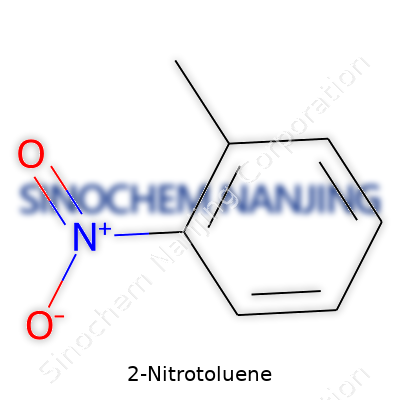
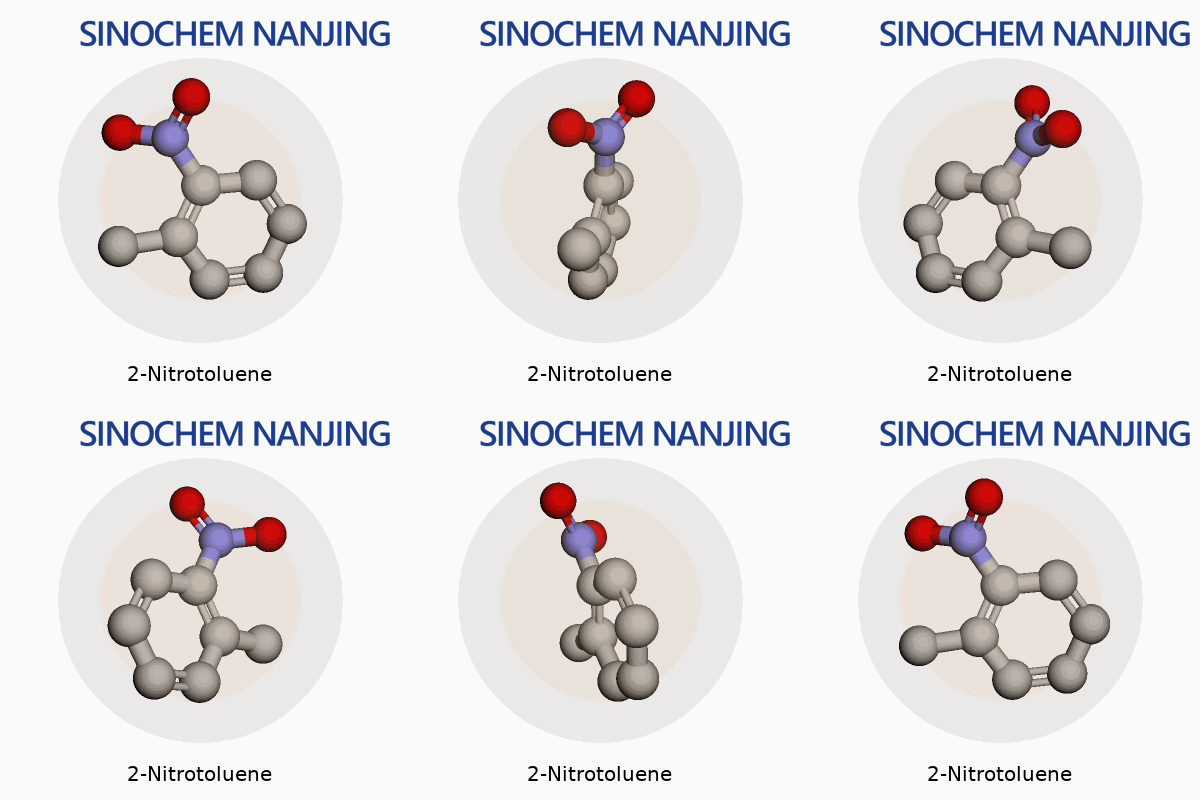
| Names | |
| Preferred IUPAC name | 2-Nitromethylbenzene |
| Other names |
o-Nitrotoluene 2-Methylnitrobenzene o-Nitromethylbenzene |
| Pronunciation | /tuː ˈnaɪ.trəʊ.tɒl.juː.iːn/ |
| Identifiers | |
| CAS Number | 88-72-2 |
| Beilstein Reference | 1209221 |
| ChEBI | CHEBI:34939 |
| ChEMBL | CHEMBL15337 |
| ChemSpider | 7417 |
| DrugBank | DB11321 |
| ECHA InfoCard | ECHA InfoCard: 100.003.144 |
| EC Number | 202-204-7 |
| Gmelin Reference | 898 |
| KEGG | C01733 |
| MeSH | D017355 |
| PubChem CID | 7415 |
| RTECS number | XZ9625000 |
| UNII | 1998J2Q44Q |
| UN number | 1660 |
| Properties | |
| Chemical formula | C7H7NO2 |
| Molar mass | 137.14 g/mol |
| Appearance | Pale yellow liquid |
| Odor | Aromatic odor |
| Density | 1.163 g/cm³ |
| Solubility in water | 0.061 g/100 mL (20 °C) |
| log P | 1.98 |
| Vapor pressure | 0.39 mmHg (25 °C) |
| Acidity (pKa) | 25.0 |
| Basicity (pKb) | 11.77 |
| Magnetic susceptibility (χ) | -60.2×10⁻⁶ cm³/mol |
| Refractive index (nD) | 1.5538 |
| Viscosity | 2.053 mPa·s (25 °C) |
| Dipole moment | 3.67 D |
| Thermochemistry | |
| Std molar entropy (S⦵298) | 190.3 J·mol⁻¹·K⁻¹ |
| Std enthalpy of formation (ΔfH⦵298) | +11.7 kJ/mol |
| Std enthalpy of combustion (ΔcH⦵298) | -3449.2 kJ/mol |
| Hazards | |
| GHS labelling | GHS02, GHS06, GHS08 |
| Pictograms | GHS02,GHS07,GHS08 |
| Signal word | Danger |
| Hazard statements | H302, H315, H319, H335, H351, H401 |
| Precautionary statements | Precautionary statements of 2-Nitrotoluene are: "P210, P261, P280, P303+P361+P353, P305+P351+P338, P405, P501 |
| NFPA 704 (fire diamond) | 2-3-0 |
| Flash point | 76 °C |
| Autoignition temperature | 535°C |
| Explosive limits | Explosive limits: 1.8–9.0% |
| Lethal dose or concentration | LD50 oral rat 890 mg/kg |
| LD50 (median dose) | LD50 (median dose): 889 mg/kg (rat, oral) |
| NIOSH | KW2975000 |
| PEL (Permissible) | PEL (Permissible Exposure Limit) of 2-Nitrotoluene: 5 ppm (skin) |
| REL (Recommended) | 2-NT |
| IDLH (Immediate danger) | 100 ppm |
| Related compounds | |
| Related compounds |
Toluene 4-Nitrotoluene 3-Nitrotoluene 2-Aminotoluene 2-Nitrobenzaldehyde 2-Nitrobenzoic acid |



