2-Naphthol: Beyond the Lab Bench
Historical Development
2-Naphthol has more stories tied to its molecular backbone than most realize. Its existence can be traced back to the early days of the dye industry in the 19th century, when chemists in Europe craved colors that would not fade and manufacturing processes that broke past the limits of natural sources. At that time, naphthalene—the raw source for both 1-naphthol and 2-naphthol—was already a familiar compound distilled from coal tar. Researchers then stumbled upon 2-naphthol nearly alongside the famed discovery of synthetic dyes, which led to it earning a role as a foundation for bright, robust colors. Over generations, 2-naphthol evolved from a chemical curiosity to a central ingredient used well beyond paints, surfacing in pharmaceuticals, agrochemicals, antioxidants, and even the world of scientific research. Some of the oldest synthetic colorants still owe their lasting hues to the chemistry behind this aromatic molecule.
Product Overview
2-Naphthol stands out from its close cousin, 1-naphthol, with the -OH group lodged at the second position of the naphthalene ring. This placement changes how the molecule reacts and performs in industrial processes. It often appears as a white or pale lavender powder or flaky solid, sometimes with a faint naphthalene odor. Its reputation goes well beyond the typical textbook entries—on the factory floor, technicians recognize it as (beta)-naphthol, and in the dye industry, its applications stretch into the hundreds of tons every year. Companies value consistency in purity, often reaching 99% or higher, since downstream reactions depend on tight control. In my own chemical work, I have always respected this molecule's steadfast role as a building block—it's rarely the glamorous star, but its absence can bring an entire plant to a standstill.
Physical & Chemical Properties
2-Naphthol doesn’t dissolve easily in cold water, but warming things up helps, and it proves far more at home in organic solvents like ethanol, ether, and chloroform. Handling it shows its solid structure and tendency to sublimate gently if left exposed to open air. Its melting point sits higher than many common organics but far below the pyrotechnic zone, which helps predict its behavior during purification or handling mishaps. The -OH group makes the molecule stand out as a weak acid, strong enough to participate in chemical reactions where electron swapping rules the day, but mild compared to mineral acids. In the hands of an experienced chemist, 2-naphthol’s reactivity opens the door to forming ethers, esters, and azo dyes that define industrial standards.
Technical Specifications & Labeling
On any genuine drum of 2-naphthol, the labeling must lay out content, grade, batch, and hazardous substance instructions. Manufacturers have no choice but to prove their material's assay and moisture content with each batch, since consistency matters when coloring tons of fabric or blending batches of pesticide. Chemical labels also alert users to solvents, possible residue, and necessary protective gear. International chemical codes and local regulatory requirements add layers of documentation, not to create paperwork, but to anchor safety and reliability in the transfer and use of this compound—something I have seen reduce preventable incidents when followed with care.
Preparation Method
Making 2-naphthol starts most often with sulfonation of naphthalene using concentrated sulfuric acid under heat. The ensuing sulfonic acid then morphs into 2-naphthol through alkaline fusion, where sodium hydroxide cracks open the sulfonic group and replaces it with an -OH, liberating the final product after acidification. This approach, standard for well over a century, is still the backbone of current industrial output. Researchers have tinkered with alternative methods, including transition metal catalysis and oxidation of naphthalene or naphthols, trying to cut costs, reduce waste, and shrink the environmental footprint. Yet, for decades, the classic route remains the workhorse, largely because of economies of scale already built into established facilities. It reminds me—new methods gain ground only when they make sense in dollars, not just journal articles.
Chemical Reactions & Modifications
2-Naphthol earns its keep through versatility in organic transformations. Its hydroxy group participates in both electrophilic and nucleophilic substitution, opening doors for dye makers to create countless azo derivatives with different shades and fastness. Coupling this compound with aromatic amines under mild conditions forges batches of reds and oranges suited to cotton and wool. Chemists prize its reactivity in the formation of ethers, acetates, and sulfonates, each unlocking further downstream products, many with specialty applications from antioxidants to UV stabilizers. I’ve watched R&D labs hunt for new complexes using this molecule, banking on its rigid aromatic framework and accessible functionalization.
Synonyms & Product Names
Depending on context, 2-naphthol comes under labels like beta-naphthol, 2-hydroxynaphthalene, or C.I. 76605 in the colorant world. These names serve as shorthand among chemists, reducing the risk of mix-ups with 1-naphthol and avoiding confusion when sourcing materials. Industry catalogs and regulatory paperwork continue to list it under its CAS number, but the familiar names still anchor discussion in labs and meetings alike.
Safety & Operational Standards
Experience with 2-naphthol teaches respect for its hazards. Its fine dust sits high on the list of occupational irritants, causing skin and respiratory reactions if not handled with gloves, goggles, or suitable masks. Chronic exposure demands careful air monitoring. Long ago, laboratories skipped basic protection, but modern standards, informed by hard lessons, demand closed processing and proper ventilation. Industrial hygiene surveys have reduced workplace complaints since enforcement tightened. Spills respond to containment, not washing down the drain, since local waterways don't benefit from naphthalene relatives in their mix—runoff makes the headlines when communities catch wind of contamination events. Personal training and signage help, but nothing replaces a culture of routinely checking safety equipment before each shift.
Application Area
The largest share of 2-naphthol lands in dye production, especially for making azo compounds that link to fibers with colorfast results. In the past, its reach into antiseptics and antiparasitic drugs gave rise to generations of treatments, though newer molecules now carry that torch. It still finds use as a starting block for antioxidants that protect rubbers, greases, and even some foods from spoilage, and in making naphthylamines used in agricultural chemicals. Smaller volume but high-value uses exist in the synthesis of optical brighteners, photographic chemicals, and liquid crystal intermediates. In each application, consistent quality ensures predictable results, so manufacturers keep a watchful eye on supply chains.
Research & Development
Chemists in both academia and industry keep 2-naphthol close at hand for discovery and innovation. Recent studies often focus on greener synthesis routes or modifications that reduce environmental load or cost. I remember following teams who explored enzymatic methods hoping for selective transformations under mild conditions, which, while promising, saw challenges with scale-up. In organic synthesis teaching labs, students appreciate 2-naphthol’s responsiveness for demonstration of condensation, coupling, and substitution reactions. Analytical chemists measure its traces in various matrices using chromatography or spectroscopy, reflecting its broad relevance even outside direct product manufacture.
Toxicity Research
Scientific literature tells a clear story—2-naphthol has toxicity issues that demand respect in handling and disposal. Acute exposure brings irritation, and repeat, high-level contact can impact liver and kidney health in both lab animals and exposed humans. Chronic studies led to stricter occupational exposure limits. I’ve met colleagues who struggled with allergies after years of contact, underscoring the advice—never treat these materials casually, no matter how often they cross your bench. Environmental toxicity research points to disruption of aquatic systems if the chemical escapes containment, leading some regions to sharply limit its permitted discharge and require robust remediation plans for contaminated sites.
Future Prospects
The future for 2-naphthol will rely on a dual strategy: tight compliance with evolving regulations, and ongoing drive to develop sustainable production and alternative applications. Researchers are probing catalytic methods that generate fewer side-products or use less harsh reagents, while regulatory trends push the supply chain to invest in closed-loop systems and better monitoring. As synthetic dyes and specialty chemicals continue to evolve, demand for this building block remains strong in established sectors, yet faces competition from next-generation compounds that promise lower toxicity. There is room for innovation in polymer additives, advanced light absorbers, and more; companies willing to take a hard look at sustainability without sacrificing performance may find new ground for 2-naphthol, provided they build in genuine transparency and community trust.
What is 2-Naphthol used for?
Understanding 2-Naphthol’s Role in Industry and Everyday Life
Spend a little time in any chemical industry, and you notice that raw materials like 2-naphthol play quiet but crucial roles. Found as a white crystalline powder, 2-naphthol looks unremarkable. But ask a chemical engineer or a dye technologist, and you’ll hear stories about how this compound forms the backbone of colorants and products we encounter daily without a second thought.
2-Naphthol first caught my attention on a trip through a textile processing plant. Rows of fabric came past, moving from bland white to a hundred bright and lasting hues. What drew my curiosity was the process behind these colors. Most commercial dyes for cotton, especially azo dyes, start their journey with 2-naphthol. In the factory, workers blend this compound into solutions, carefully monitoring temperatures to coax out the strongest, most reliable shades. The colors, once fixed, endure washing and sunlight—crucial if a garment has to survive real-world wear.
Building Blocks Beyond Dyes
Though dyes catch the spotlight, 2-naphthol keeps a much wider industrial portfolio. Makers of synthetic rubber rely on it to produce antioxidants. Give a car tire or a kitchen spatula a sniff, and you'll sense quality that needs to last under stress and heat. These antioxidants help prevent cracking and aging, saving costs and inconvenience for both producers and users.
Pesticide manufacturers also use 2-naphthol as a starting material for compounds that protect crops from fungal diseases and pests. Maintaining food security in large-scale agriculture calls for powerful, stable chemicals. Every time a field yields another healthy harvest, there’s a chance chemistry like this did its job behind the scenes.
Personal Experience in Fine Chemistry
I spent a few months working in the synthesis lab of a fragrance ingredient supplier. Only then did I appreciate how much precision it takes to safely handle and transform materials like 2-naphthol. Its reactivity opens a path to all sorts of specialty chemicals—everything from stabilizers in plastics to certain pharmaceutical intermediates. Folks who work on drug discovery know the frustration of a promising therapy derailed by a single batch of impure starting material. The reputation of producers rests on pure and predictable supplies, especially where human health is concerned.
Risk, Responsibility, and Safer Chemistry
Safety with 2-naphthol matters. Exposure can irritate skin and eyes, and long-term risks from inhaling dust need to be managed. Facilities that use this chemical run training sessions and fit handlers with protective gear; good ventilation and strict protocols keep everyone safe. At a former employer, the morning safety meeting often circled back to the basics: gloves, ventilation hoods, and carefully labeling every container.
Some companies now push for greener processes, switching to water-based reactions or searching for biodegradable alternatives. The challenge rests in balancing innovation with reliability. Regulatory oversight helps. In Europe, REACH registration tracks chemical safety. In the US, EPA and OSHA set guidelines for workplace exposure limits and reporting.
Looking Ahead
2-Naphthol sticks around because it delivers strong results in flexible ways. Its uses speak to centuries of steady chemical innovation, grounded in real industry needs. As green chemistry moves from hope to practice, this compound could either evolve with the times or encourage manufacturers to design something new—and safer—for colorants, plastics, and beyond.
What are the safety precautions when handling 2-Naphthol?
Understanding the Risks in Daily Practice
2-Naphthol, a white crystalline powder with a slightly unpleasant odor, finds its place in dyes, pigments, and chemical manufacturing. As someone who has spent time in chemical labs, I know working with it isn’t an everyday kitchen recipe—this compound carries real hazards. One thing that stands out is the irritation risk to skin, eyes, and the respiratory system. Together with its flammability, these dangers push safety from an afterthought to a top priority.
Direct Contact Hazards
Touching 2-naphthol even briefly might lead to red, itchy patches or more severe dermal reactions in those with skin sensitivity. Once, I saw a colleague brush off the powder without gloves. Within the hour, redness spread across his fingers. Lesson learned: don’t skip the gloves, even for quick tasks. Good practice involves wearing splash-resistant goggles and a lab coat, not fashion statements but strong shields against irritation. Ordinary prescription glasses rarely block splashes. The best labs make routine glove changes the norm, not just advice on paper.
Inhalation and Air Quality
Breathing in 2-naphthol dust poses a real threat. Coughing, throat pain, or even dizziness can follow. A poorly ventilated workspace makes matters worse. During my graduate work, we always ran such work under a fume hood, keeping airborne particles away from faces. If fume hoods aren’t available, at least a well-fitted N95 mask can cut exposure. Testing the exhaust fans once a week caught a blocked filter long before it became a hazard.
Handling and Storage
Safe handling centers around keeping spills contained and preventing cross-contamination. I can remember more than one occasion where a missed speck on the benchtop turned up on paperwork or phone screens, multiplying the chance for accidental exposure. Best practice: use a dedicated tray or mat when weighing out 2-naphthol. A sealed, labeled container goes straight to a cool, dry storage area, away from sources of ignition. This solid isn’t explosive, but it can catch fire, so sources of spark and strong oxidizers stay far away.
First Aid and Emergency Response
Accidents still happen. Fast, informed action limits the harm. If powder gets in eyes, a thorough rinse with clean water for at least fifteen minutes makes a difference. I keep an eyewash station within arm’s reach. For skin exposure, remove contaminated clothing and wash with soap and water. If dust or vapor is inhaled, move to fresh air, and don’t hesitate to call for medical help if symptoms linger. Safety data sheets posted near workspaces provide the critical steps during any confusion.
Waste Disposal Concerns
Chemical waste isn’t just a nuisance, it's a responsibility. Pouring 2-naphthol down the drain pollutes waterways and breaks the law. Labs I’ve worked in collect all organic chemical leftovers in labeled containers, picked up regularly by certified disposal services. Documenting every gram sent away keeps compliance officers and the environment safe.
Building a Culture of Safety
Every chemical professional learns that shortcuts cost more than they save. Regular training, honest communication about incidents, and visible commitment to safety measures build habits that last longer than any checklist. 2-Naphthol demands respect. The effort pays off, protecting health and keeping the workspace reliable for everyone who comes through the door.
What is the chemical formula of 2-Naphthol?
A Closer Look at 2-Naphthol
Most people might walk right by naphthol in a school chemistry lab or a factory floor and not realize how involved it is in everyday life. In the case of 2-Naphthol, the simple chemical formula is C10H8O. But formulas don’t just sit on paper; this formula packs generations of industrial impact and scientific curiosity in a few letters and numbers.
Roots in Chemistry and Industry
Growing up around folks who worked at a dye plant, I got a front-row seat to chemistry’s push and pull with industry. 2-Naphthol doesn’t just live in textbooks—it helps build dyes, the kind that make blue jeans blue and other colors that refuse to fade. Textile factories tap into its strong color-building properties, and chemists value its ability to play nice during organic reactions. It’s a common rumble in the world of synthesis, especially in making azo dyes, which rely on it for stable structure and colorfastness.
Understanding the Numbers
The formula C10H8O tells a real story. That ten-carbon backbone shows up as two aromatic rings hooked together—a naphthalene base—while the single oxygen in the form of a hydroxyl group transforms it into an alcohol. That one -OH group on the second carbon gives the “2” in 2-Naphthol. It’s a reminder that tiny changes in structure change everything in chemistry. Its close sibling, 1-Naphthol, offers slightly different properties but comes from the same family tree of simple polycyclic alcohols.
Safety and Health Impact
Years ago, the plant workers rarely wore gloves when handling naphthol derivatives. That led to plenty of rough skin and the occasional health hazard. Now, there’s better awareness. Studies flag inhalation and skin contact risks, so workplaces stock protective gear. In fact, both the National Institute for Occupational Safety and Health (NIOSH) and the European Chemicals Agency (ECHA) warn about long-term exposure risks: irritation, possible liver effects, and links to more serious health issues for those who aren’t careful. Regulations continue to tighten with new research findings on naphthol toxicity and long-term exposure.
Environmental Responsibility
Anytime a chemical winds up in rivers and soil, nature pays the price. 2-Naphthol doesn’t break down quickly; it can linger in groundwater and disrupt aquatic life. Running water tests near dye manufacturing sites has uncovered the lingering presence of this compound after spills or poor waste management. One lesson: invest in robust containment and water filtration systems. Stronger policies can help cut down on leaks and protect both workers and neighborhoods near manufacturing plants.
Steering Toward Solutions
Science offers answers. Plant chemists experiment with greener solvents and closed-loop production to limit exposure. Evolving tech with real-time detection keeps accidental releases from spiraling. Workers protect themselves with modern PPE, and firms roll out proactive training on chemical handling. Environmental monitoring forces companies to clean up and stay honest about emissions.
A Lasting Role in Modern Chemistry
2-Naphthol’s chemical formula stays the same, but our relationship with it keeps changing. By focusing on responsible handling, health oversight, and environmental care, industries and scientists can build a safer, more accountable future. Every symbol on that formula connects chemistry’s progress to real consequences—ones we can learn from with every new solution.
How should 2-Naphthol be stored?
A Look into Real Risks
From walking through labs and storage rooms packed with chemicals, it’s easy to spot the difference between a well-run setup and a place waiting for trouble. Anyone dealing with 2-Naphthol knows it's not just some harmless powder. Inhalation or skin contact brings health risks. I’ve seen folks underestimate fumes, and that comes back to bite them quickly—coughing fits, skin burns, headaches. This isn’t a risk to shrug off with a “just be careful.” It takes the right steps, or trouble follows.
Temperature and Environmental Control
Storing 2-Naphthol in a cool, dry spot matters more than some might think. The material can break down if the air’s too humid or the storage room heats up. Experience shows that a temperature-controlled chemical cabinet—one kept well below average summertime highs—prevents caking and keeps the stuff from degrading. Humidity combines with dust and turns a benign situation sour, spreading what you don’t want spread around.
Containment in Practice
Glass or high-quality plastic containers with tight lids work best for small volumes. Larger quantities demand steel drums with interior liners to prevent corrosion, and every lab worth its salt double-seals containers after scooping out a batch. A single loose cap taught me that lesson fast—the strong, medicinal odor leaking into the room and lingering for hours. It puts everyone on edge.
Distance from Heat and Flames
If there’s a chemistry stockroom near a furnace or old wiring, either fix it or move the chemicals. 2-Naphthol catches fire at high temperatures and releases toxic fumes. No one wants to imagine scrambling for the exits after an avoidable spark. Fireproof cabinets, flame arrestors on nearby outlets, and fire extinguishers close by make all the difference. Every time a safety inspection found flammable solvents stored beside 2-Naphthol, they flagged it as a serious error. Segregation keeps fire risks in check.
Labeling and Security—No Shortcuts
Proper labeling sounds boring, but it stops a lot of confusion in emergencies. Imagine grabbing the wrong bottle during a busy shift. Labels should be big, clear, with hazard signs anyone can recognize. Controlled access comes next—locks on doors, sign-out sheets, and no mystery containers allowed. I have seen well-meaning folks pour leftovers into unlabeled jars. That’s a recipe for disaster, especially with students or new hires cycling through the lab.
Addressing Spills Without Panic
Spills happen. Dust mask, gloves, and a fume hood get pulled out, followed by binding up the powder with an inert absorbent like vermiculite. Sweeping it up dry, never mixing it with water, proves vital. I once watched a rookie try to clean a chemical spill without proper gear—nobody wants to repeat that chaos. Training new team members properly stops overreactions and prevents unsafe shortcuts.
Waste Disposal: Closing the Loop
Disposing of 2-Naphthol waste calls for more than tossing it with regular trash. It needs hazardous waste bins, scheduled pickups, and documentation. The tracking process stops surprises at landfill sites—something both regulators and the local community appreciate. Good chemical hygiene has always paid off for everyone involved.
Is 2-Naphthol soluble in water?
Seeing Science in Everyday Life
Ask a chemistry teacher about 2-naphthol, and you’ll probably get short facts: white crystals, a bit of a mothball odor, and not much love for water. In plain terms, 2-naphthol shrugs off water like oil, and that shapes how chemists work with it. Anyone who’s tried mixing it by hand gets the message pretty fast: stir as long as you want, most of it stays behind. The numbers back it up, too. At room temperature, less than one gram dissolves in a liter. Toss it in, and you’ll end up with a cloudy mess and some gritty news for your glassware.
Why Does This Matter?
People who reach for 2-naphthol see it as more than just another lab chemical. Maybe you’ve smelled it in dye plants, or you’ve read about it as a step in making antiseptics. Solubility tells every user how to set up safe and effective processes. As a teacher, I’ve watched students try to ignore those rules, hoping the material will just work the way they want. But nature follows its patterns. Some molecules blend, others stand apart. Water loves a partner with exposed charges—lots of -OH or -NH2 groups. 2-Naphthol holds itself together with firm carbon rings, only offering up a single, shy -OH. This small polar patch can’t overcome the rest of the nonpolar bulk. So, water politely refuses meaningful company.
Industrial Puzzles
Manufacturers face a choice: work around this stubbornness, or switch materials. In textile dyeing, for instance, you rarely use 2-naphthol directly with water. Mixing with a base, like sodium hydroxide, pulls out the hydrogen from the -OH group, and what’s left behind—the naphtholate anion—finally drops its guard. Now you get the degree of solubility that moves the process forward. Sometimes solvents like ethanol step in to bridge the gap, and nobody in the plant burns hours hoping a water-only approach will behave differently.
Environmental Headaches
Poor water solubility isn’t all downside. For folks tracking industrial waste, it means 2-naphthol tends to stay put when spilled on soil, rather than racing into rivers and groundwater. Cleanup plans factor this in; the compound clings to earth more than it flows away with rain. But heads up—what doesn’t dissolve can build up. Bacteria have to work harder to break down clumps, and chronic exposure in some settings still poses a risk worth managing. Regulations call for care at every stage: production, handling, and disposal.
Smarter Laboratory Choices
Back in the classroom, I like to hand out this challenge: take two test tubes, water and ethanol, add a pinch of 2-naphthol to each, and stir. The result becomes a hands-on lesson in chemical compatibility. Students also learn about the limits set by molecular structure. Instead of fighting solubility with brute force, they start thinking about solvent swaps or how to use chemical reactions to nudge stubborn solids into solution. This prepares people for research and industry, where a small fact like “not water soluble” guides both safety and success.
Turning Knowledge into Solutions
No one wins by ignoring solubility data. If you’re put in charge of waste plans, you design landfill liners with this low-solubility in mind. If you’re dyeing fabric, you pick reagents and steps that will play nice with 2-naphthol. If anything, this flawed relationship with water pushes you to understand chemistry, not just memorize it. Good science comes from respecting these details—and using them to solve bigger problems.
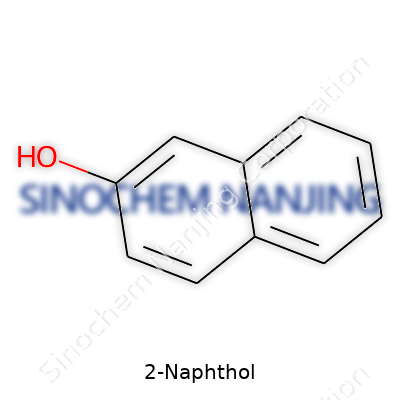
| Names | |
| Preferred IUPAC name | Naphthalen-2-ol |
| Other names |
2-Hydroxynaphthalene beta-Naphthol β-Naphthol 2-Naphthalenol |
| Pronunciation | /tuː-ˈnæfθɒl/ |
| Identifiers | |
| CAS Number | 135-19-3 |
| Beilstein Reference | 636953 |
| ChEBI | CHEBI:18041 |
| ChEMBL | CHEMBL1401 |
| ChemSpider | 536 |
| DrugBank | DB06710 |
| ECHA InfoCard | ECHA InfoCard: 100.003.142 |
| EC Number | 202-089-5 |
| Gmelin Reference | 7787 |
| KEGG | C01629 |
| MeSH | D009290 |
| PubChem CID | 8660 |
| RTECS number | QJ0525000 |
| UNII | 809XAJ3QJZ |
| UN number | UN2811 |
| Properties | |
| Chemical formula | C10H8O |
| Molar mass | 144.17 g/mol |
| Appearance | White to light yellow crystalline powder |
| Odor | phenolic |
| Density | 1.222 g/cm3 |
| Solubility in water | 1.7 g/L (20 °C) |
| log P | 2.7 |
| Vapor pressure | 0.00004 mmHg (25 °C) |
| Acidity (pKa) | 9.51 |
| Basicity (pKb) | 9.57 |
| Magnetic susceptibility (χ) | -85.0·10⁻⁶ cm³/mol |
| Refractive index (nD) | 1.640 |
| Viscosity | 2.2 cP (20°C) |
| Dipole moment | 2.36 D |
| Thermochemistry | |
| Std molar entropy (S⦵298) | 111.0 J·mol⁻¹·K⁻¹ |
| Std enthalpy of formation (ΔfH⦵298) | -36.7 kJ·mol⁻¹ |
| Std enthalpy of combustion (ΔcH⦵298) | -5094.4 kJ/mol |
| Pharmacology | |
| ATC code | D11AX12 |
| Hazards | |
| Main hazards | Harmful if swallowed, causes skin irritation, causes serious eye irritation. |
| GHS labelling | GHS02, GHS07 |
| Pictograms | GHS05, GHS07 |
| Signal word | Danger |
| Hazard statements | H302, H315, H319, H335 |
| Precautionary statements | Precautionary statements: P210, P280, P305+P351+P338, P337+P313, P403+P235 |
| NFPA 704 (fire diamond) | 2-1-0 |
| Flash point | Flash point: 153 °C |
| Autoignition temperature | 526°C |
| Lethal dose or concentration | LD50 (oral, rat): 1960 mg/kg |
| LD50 (median dose) | LD50 (median dose): Oral rat 1960 mg/kg |
| NIOSH | RN0160 |
| PEL (Permissible) | 50 mg/m³ |
| REL (Recommended) | 50 mg/L |
| IDLH (Immediate danger) | 100 mg/m3 |
| Related compounds | |
| Related compounds |
1-Naphthol Naphthalene Naphtholsulfonic acids |



