Examining 2-Hexanone: The Many Angles of a Modest Ketone
Historical Development: Chemical Curiosity and Industrial Attention
Chemists have taken notice of 2-hexanone since the earliest explorations of solvent chemistry. Back in the 19th and early 20th centuries, as modern organic chemistry took shape, the family of straight-chain ketones began turning up in labs experimenting with carbonyl chemistry and the effects of chain extension. At first, 2-hexanone seemed like another modest addition to a growing list of volatile liquids, but by the mid-1900s, manufacturers saw value: it was easier to make and extract than some alternatives, and it played nicely in mixtures designed for specialized coating, cleaning, and extraction jobs. Its place in solvent history traces both the growth of industrial chemistry and an expanding understanding of toxicology, as early workers began to see the downside of repeated exposure long before modern regulations tightened things up.
Product Overview: What Sets 2-Hexanone Apart
Unlike some more glamorous or high-profile solvents, 2-hexanone fills a niche that comes from a particular blend of characteristics: not too volatile, not too strong-smelling, strong enough to dissolve a variety of organic compounds. It’s a colorless liquid—one of those classic lab bottles that looks innocent enough until you remember the warnings and listen to the stories out of old research facilities. Some call it methyl butyl ketone, and in certain industries, the name stands out for the very specific tasks it’s trusted to do. Industrial cleaning, paint production, adhesive formulations, and some extraction processes all rely on this clear liquid for performance where water, ethanol, or acetone might fall short.
Physical and Chemical Properties: Accessibility and Utility
Physical properties matter in real-world chemistry, even if they often sound like textbook trivia. 2-hexanone boils at about 128°C, which means it sticks around longer in open air than acetone or even methyl ethyl ketone. That slower evaporation helps when controlled drying or extended contact time is needed. It’s barely soluble in water but blends into most standard organics with no trouble. If you’ve ever worked with it, the slightly sweet, sharp odor is a dead giveaway, and it helps you realize quickly that even a bit of air movement is your friend in spaces where it’s handled. It’s flammable, as most solvents are, so it demands a level of respect—no open flames, no loose smoking, and decent ventilation as a rule.
Technical Specifications and Labeling
Technical standards for 2-hexanone follow the usual pattern: purity at or above 98 percent when used for critical industrial processes, sometimes with tighter limits for sectors such as pharmaceuticals. Regulatory labeling emphasizes its status as a hazardous material. United States and European standards spell out requirements for hazard pictograms related to flammability and health risk, and the safety phrases warn against inhalation and skin contact. These rules don’t just protect the workers—they exist because people have learned, not always easily, what can go wrong without proper handling. Manufacturers publish the nitty-gritty on things like residual water, acidity, and stabilizer additives, but in practice, the main thing is consistency.
Preparation Method: Origins in Cracking and Synthesis
Factories turn out 2-hexanone these days using several routes, but the most common involves oxidation of 2-hexanol, itself usually derived from petrochemical fractions. This connects the fate of 2-hexanone directly to oil refining and the network of upstream chemical plants handling lighter hydrocarbons. Certain synthetic pathways use catalytic dehydrogenation, while some older processes involved alkylation and subsequent oxidation, but most share the principle of assembling the six-carbon skeleton in a straightforward way. In a lab setting, the preparation feels almost routine once you set up for the right reaction temperatures and distillation. The scalability matters most, since industrial quantities funnel out by the ton for global commerce, not just for scientific study.
Chemical Reactions and Modifications: A Platform for More
Chemically, 2-hexanone’s main draw is its carbonyl group, sitting two carbons from each end. That C=O center welcomes nucleophilic attack, enabling it to serve as a precursor in the synthesis of more complex molecules. In organic synthesis, it stands in as a test ketone for reduction (using sodium borohydride or catalytic hydrogenation) and alpha position reactivity (enolization, halogenation, and beyond). Because of its balance between reactivity and stability, students and professionals alike use it to explore classic reactions like Grignard additions or the formation of hydrazones and oximes. Modifications can lead to both functionalized solvents and intermediates for fragrance or pharmaceutical ingredient synthesis, especially where a straight-chain structure is step one in a multi-stage sequence.
Synonyms and Product Names: Navigating the Language of Chemistry
Names are slippery in chemistry—one lab calls it 2-hexanone, another prefers methyl butyl ketone, and sometimes you hear MBK in industrial lingo. This matters more than people think. Someone ordering chemicals can get tripped up by a supplier’s catalog, especially when checking compatibility, regulatory guidance, or health data. The CAS number (591-78-6) serves as chemistry’s common language, but on the floor it pays to double-check whether “hexanone” means a mix of isomers, or the specific 2-isomer. That kind of misstep in labeling or communication has tripped up plenty of otherwise careful technicians over the years.
Safety and Operational Standards: Hard-Learned Lessons
Walk into any responsible facility using 2-hexanone and you see caution built into the design. Workers wear gloves that resist organic solvents, splash goggles are standard, and proper ventilation is non-negotiable. Fire suppression gear sits close at hand. Over the past few decades, experience with 2-hexanone—and solvents like it—drove hard improvements in fume extraction and exposure monitoring. It isn’t just a matter of following the book. I recall a co-worker exposed daily in a poorly ventilated workshop years ago; he developed tingling in his hands, an early sign of possible neuropathy linked to chronic exposure. The safety data sheets make it plain: this chemical can do lasting harm if used carelessly. Industry standards, from OSHA in the US to those set by international bodies, require real-time monitoring and routine health checks for high-use settings. Spills get immediate attention with absorbents and neutralization, not just paper towels and hope.
Application Area: From Factory Floor to Laboratory Bench
2-Hexanone never hit the spotlight like acetone or MEK in popular culture, but in coatings, adhesives, and cleaning agents, its properties carve out specific value. Its slower evaporation lets certain varnishes and lacquers cure at a controlled pace, and adhesives formulate with it for the right tackiness or drying window. It extracts waxes and oils from botanicals as part of industrial food and cosmetic production, though modern scrutiny over safety has seen it replaced in some sectors. Labs often turn to it for experimental organic synthesis and as a reference material in analytical chemistry. The automotive, aerospace, and electronics industries continue to tap 2-hexanone where old-fashioned elbow grease and water aisle cleaners fall short.
Research and Development: Pushing Beyond Basic Solvent Work
Traditional uses for 2-hexanone have started facing new pressures as green chemistry gains steam. Researchers explore ways to tweak the molecular structure, hoping for derivatives that keep the solubility and handling characteristics but dial back the toxicity. Ongoing studies focus on biodegradation and how engineered microbes break down this compound in wastewater streams. There’s work, too, aiming to substitute 2-hexanone with renewable, less hazardous chemicals derived from waste biomass or other non-petroleum sources. For process chemists, figuring out downstream recycling or recovery—so that every drum of used solvent can be cleaned and re-used—offers both economic and environmental payoff. Research isn’t just academic; plenty of “bench-to-plant” initiatives probe at better detection, faster manufacturing, and real-time exposure testing.
Toxicity Research: Lessons from Experience and Study
Few things shaped public attitudes toward 2-hexanone like toxicity data. Early industrial workers, especially in the plastics and coatings industries, sometimes suffered neurological symptoms such as numbness and muscle weakness, a condition traced to both 2-hexanone and related solvents like n-hexane. Modern studies have pointed to the way certain metabolites interfere with nerve function. Animal trials provide strong evidence for neurotoxicity at both acute and chronic levels, pressing safety regulators to tighten occupational limits. I’ve seen facilities shift entirely to safer substitutes following findings of cumulative risk, even at exposure levels below those once considered safe. Blood and urine testing became standard among high-frequency users, and clinicians learned to ask about workplace exposures when dealing with unexplained neurological symptoms. The evidence spurred updates to permissible exposure limits, often well below traditional thresholds, and even pushed companies to rethink their entire approach to solvent choice.
Future Prospects: Looking Forward with Caution and Curiosity
The next chapter for 2-hexanone points in two directions: safer practices for traditional uses and a search for green alternatives. As regulatory agencies strengthen rules and public attitudes keep shifting, I see industries phasing out high-risk solvents where practical, even if it means retooling processes or requalifying products. At the same time, the need for high-performance solvents—not just water or benign alcohols—remains strong; sectors like electronics manufacturing or specialty coatings sometimes have few comparable options. Future research holds promise for molecular redesign, cleaner production from renewable feedstocks, and techniques for closed-loop recycling of spent solvent streams. People in the field need more than new molecules, though—they need smarter engineering, stricter oversight, and real transparency about what’s in their chemical toolkit. The long-term hope is to keep the advantages of 2-hexanone’s chemistry without reliving mistakes of the past, blending innovation with the hard-won lessons of occupational health history.
What is 2-Hexanone used for?
Understanding 2-Hexanone
2-Hexanone has its own place in industry, though you might not see it mentioned much outside technical circles. This organic solvent carries a reputation that calls for both respect and caution. I spent a few weeks at a solvents plant, which pushed me to look closer at substances like this. Plenty of chemical tools get used all across different manufacturing settings, but some draw more attention due to safety and health impacts. 2-Hexanone fits into that group.
The Workhorse in Manufacturing
Most people working in rubber plants, paint shops, or adhesive factories have come across 2-Hexanone. Its value comes from dissolving things other compounds cannot. Machine parts caked with oil residue might need a strong touch; 2-Hexanone takes care of the job where gentler options fall short. In rubber manufacturing, it helps shape or mold products by softening raw materials, making them easier to work with. For lacquer and paint production, it ensures mixtures blend evenly, giving a consistent finish—no streaks or bubbles.
I've watched mechanics clean up machinery caked with stubborn residues, corners unreachable by basic cleaners. This solvent proved itself more than once, pulling up gunk that would have left the equipment barely usable. Not every chemical can pull its weight in such a situation. This kind of power, though, comes with questions worth our attention.
Why Safety and Health Matter
Powerful solvents demand respect. Easy to forget, especially for folks pulling double shifts, but essential. Companies that use 2-Hexanone face rules for a reason. Long exposure to it damages nerves—a lesson some workers learned the hard way during the earlier decades of its use. Hands and feet can go numb. Muscles might turn weak over time. Scientific reports call it neurotoxic, so anyone handling this chemical should have gloves, masks, and proper training. A little caution upfront saves a lot of headaches (literal and otherwise) later down the line.
Health complaints linked to 2-Hexanone pushed workplaces to update their safety steps. My own experience taught me how much difference it makes to respect warning labels. Too many accidents happened because shortcuts seemed faster or personal protection felt like a hassle. Now, most companies provide better gear and monitor air quality, not just for compliance but for real health reasons.
Moving Toward Safer Solutions
The world changes all the time, but large-scale manufacturing can be slow to adjust. Some facilities hunt for alternative solvents with less risk, like methyl ethyl ketone or even greener chemicals. Results depend on cost, effectiveness, and the job at hand. Some jobs still call for the unique capabilities of 2-Hexanone—engineers often have to weigh the trade-offs. My old supervisor used to say, “You use the right wrench for the bolt.” Sometimes, 2-Hexanone is the only wrench that fits, at least for now.
Ongoing research might uncover safer options and better protective measures. Regulations keep tightening, guided by new studies and worker health stories. At the end of the day, demanding safer workplaces has real value. Conversations around these chemicals matter, both for those on the plant floor and for the people who use the finished products. Experience says: ask questions, wear protection, and keep looking for smarter ways to get the job done.
Is 2-Hexanone hazardous to health?
Everything Starts with the Air You Breathe
Factories and labs have used a lot of strange chemicals over decades, and 2-hexanone is just one that found its way into workplaces. You don’t have to be a chemist to bump into it. Some use this in paints, glues, synthetic leather, and cleaning fluids. The stuff gives off a sweet odor, but don’t let that fool you into thinking it goes easy on your body.
Breathing, Touching, and Long Days on the Job
I’ve chatted with people who spent years in places where fumes hover in the air. Some of them wore gloves, masks, and coveralls—others didn’t bother. Health problems pop up quietly. Research shows that 2-hexanone gets into your system mostly by inhalation, but skin contact counts, too. Once this substance travels through your bloodstream, it sticks around in body fat, picking on your nervous system over time.
A factory worker might think nothing of a nagging tingle or a bit of numbness. Over time, though, people exposed to this chemical have developed nerve damage. The fingers and toes start getting clumsy or lose feeling, kind of like wearing socks all the time. The technical term for this is peripheral neuropathy. Some cases got bad enough that folks tripped or dropped things without knowing it was coming.
How Much Is Too Much?
It’s not just factory workers; sometimes, people come across old cleaning supplies in storage or buy secondhand paint remover without knowing what’s in it. People have an instinct to worry about short-term exposure, but most of the stories and research point to long-term, repeated contact. Short whiffs might sting your nose, cause headaches, or irritate eyes, but it’s regular day-in and day-out breathing and touching that triggers the real problems.
Government agencies like OSHA looked at evidence from workplaces and set exposure limits—currently 5 parts per million over an 8-hour shift. That matters, because I’ve talked to folks in small workshops that never had the right exhaust fans, and their symptoms fit what’s in the science journals.
What Works to Stay Safer
Working somewhere that uses this chemical? Decent exhaust fans make a huge difference. Wearing gloves and a respirator should be a given. Some companies run regular air tests, checking whether fumes cross the OSHA limit. I once saw a plant manager get complaints about numb fingers for an entire year before finally changing the ventilation. The fixes weren’t fancy, but they worked.
None of us can read every label on every supply shelf, but more products now list what’s inside. If you spot hexanone—2 or otherwise—find a safer alternative or use the right safety gear. Some states are already nudging manufacturers to switch to greener solvents.
If you notice numbness, tingling, or clumsy hands after working with solvent-rich products, talk to a doctor who gets workplace exposure. Blood and nerve tests can spot early effects before they become permanent. For anyone running a small business or workshop, it helps to check old supplies and make sure no one’s breathing in outdated chemicals by accident.
Keep It Simple: Respect Chemicals, Watch Your Health
2-hexanone doesn’t make headlines every day, but it has a documented record of nerve damage, especially for people who don’t have the right safety systems. Companies and schools can teach workers what dangers come with solvents, swap in safer products, and set up better airflow. That’s how folks protect their health, stay on the job, and avoid years of nerve trouble that sneaks up too late to reverse.
What are the physical properties of 2-Hexanone?
Getting to Know 2-Hexanone
2-Hexanone, sometimes called methyl butyl ketone, finds a spot in the world of industrial solvents. It’s a clear, colorless liquid with a mild, sweet scent. In a room, you’d spot it by smell before noticing anything else. That subtle scent tells you a lot about its volatility—how quickly it can become a vapor and enter the air around you.
Boiling and Melting Points Shape its Use
2-Hexanone boils at about 128°C (262°F). This middle-of-the-road boiling point means it evaporates faster than water but slower than acetone. You won’t see it vanish instantly, but give it some time in an open container and you’ll notice it thinning out. The melting point drops to –54°C (–65°F), so you won’t find it freezing under usual conditions. This liquid state, even in colder storerooms, makes it handy for lots of chemical processes.
Density and Solubility
A quick pour reveals its density lands at 0.813 g/cm³ at 20°C. That’s less than water. Pour it in, and 2-hexanone floats on top, not mixing unless stirred. In water, it dissolves a bit, but never completely. It forms a cloudy layer—enough so spills during cleanup need some care. It blends more happily with organic solvents like alcohol and ether.
Volatility and Vapor Pressure
Volatility isn’t just academic. With 2-hexanone, the vapor pressure registers at around 6 mmHg at 20°C. That might not sound like much, but given its distinct odor, workers can pick up leaks or spills quickly. It means you need decent ventilation in the workspace. The speed with which it enters the air makes inhalation a concern if left unchecked.
Flash Point and Flammability
In my time handling chemicals, one lesson sticks: respect a solvent’s flash point. 2-Hexanone’s flash point sits at 37°C (98°F). That’s not far above room temperature. Store it anywhere warm, and a spark or open flame becomes a real hazard. Flammable liquids need thoughtful handling and proper storage—not on a crowded shelf or near any ignition source.
Appearance and Odor in Daily Work
Colorless liquids sometimes seem harmless, but the nose knows better. The faint sweet scent of 2-hexanone helps in storage safety, though relying on smell isn’t enough for safe practices. Personal experience here: always double-check container labels and never assume anything clear is just water.
Why These Properties Deserve Attention
Spending time around solvents gives you a sense for how small differences in physical properties lead to big changes on the ground. A difference in boiling point can shift a solvent’s role from degreaser to paint remover. Density helps decide what fills a tank or floats during a spill. Knowing these numbers means safer workplaces and better results, whether cleaning, processing, or synthesizing.
Safer Storage and Handling
Good ventilation and proper storage go together with 2-hexanone. I’ve seen how a well-marked flammable cabinet makes cleaning up easier and keeps workspaces safer. Always use appropriate gloves and eye protection—this isn’t a chemical to get careless with, given its volatility and the risk of inhaling vapors.
Wrapping Up the Properties
In the end, understanding the physical properties of 2-hexanone means we can handle it with confidence and keep our environments safer. Boiling and flash points, density, solubility, and volatility—these aren’t just numbers in a data sheet. They shape how we store, use, and respect every bottle on the shelf.
How should 2-Hexanone be stored and handled?
Understanding the Risks
2-Hexanone, known to many as methyl n-butyl ketone, plays a role in industrial processes such as solvent cleaning and extraction. Anyone who’s had to store or move this chemical knows the bubbling worry about health and safety. The smell sticks with you. Direct skin contact burns, and breathing in the fumes leaves you dizzy or confused. Long-term exposure links to nerve damage—something researchers, like those cited by the National Institute for Occupational Safety and Health, traced to its use in factories decades ago. That history alone speaks volumes about why care isn’t just a suggestion but a responsibility.
Location Matters
Walk into a well-managed supply room—what do you see? Chemicals grouped by compatibility, good air flow, and labels that don’t force you to squint. 2-Hexanone belongs with organic solvents, far from oxidizers and acids. Store it in a cool, dry place, away from sunlight, sources of heat, and flames. I’ve seen small shops learn the hard way when leaky containers mixed near a heater nearly set off a disaster. Don’t just keep containers upright and tightly sealed—check for corrosion or leaks regularly. Even a drip can escalate to an expensive, hazardous spill before anyone notices.
Containment That Counts
Metal drums with chemically resistant linings offer solid protection for bulk storage. For lab-scale amounts, glass bottles with tight-sealing screw caps give you a bit more reassurance. Both options need durable secondary containment—trays or bins that keep spills off the floor. Once, in a university storeroom, we switched to plastic spill pallets after small leaks ate through a wooden shelf. That move meant less cleaning, fewer fines, and safer air. Never use food-grade or drink containers to repurpose for chemicals—mislabeling risks poisoning anyone not in the know.
Handling Precautions: Gloves, Goggles, Ventilation
Anyone handling 2-Hexanone should wear proper gloves, safety goggles, and a lab coat. Nitrile gloves last longer against ketones than latex. Even the tough, old-timers in maintenance buckle down with PPE after seeing coworkers wind up in the ER with breathing trouble or skin burns. Use a chemical fume hood or handle containers outdoors if possible. Proper ventilation isn’t just bureaucratic red tape—it actively stops vapor from building up. I worked one summer with inadequate airflow, and every shift ended with headaches. Once we added fans and opened windows, the air cleared and so did our heads.
Label Everything, Train Everybody
Labels matter, and so does training. People often assume their colleagues will know what’s dangerous and what isn’t. I’ve watched confusion melt away when teams run quick training updates. Explain the symptoms of exposure, review the steps for cleaning up a small spill, and post the emergency contact numbers at eye level. According to OSHA, regular drills and clear labeling reduce accidents and speed up emergency response.
Waste Disposal: Don’t Cut Corners
Disposing of 2-Hexanone means going beyond the trash bin. Local waste regulations usually require sealed, labeled disposal drums for hazardous solvents. Never pour leftovers down the drain or toss them outside—a move that contaminates soil and water, risking legal trouble. Contract with a licensed chemical disposal provider. This may feel tedious or costly, but fines and cleanup costs after improper dumping cut deeper.
The Bottom Line
Caring for your team, workspace, and environment starts with how you treat chemicals like 2-Hexanone. Store with intention, handle with respect, and never undervalue quality gear and training. Staying mindful now beats scrambling during a crisis later.
What safety precautions are needed when working with 2-Hexanone?
Understanding the Risks
2-Hexanone shows up in tons of labs and industrial spaces. It’s a clear, slightly sweet-smelling liquid that acts as a solvent. Folks use it for adhesives, paint removers, and even cleaning solutions. The stuff isn’t as flashy as some other chemicals, but it brings real dangers if handled carelessly. The big worry centers on its impact on nerves — too much exposure and you’re looking at possible nerve damage. Memory issues, numb fingers, and muscle weakness have shown up in workers facing chronic exposure. This isn’t just theory; studies of shoe factory workers and those in textile plants point to these real outcomes.
Breathe Easy or Else
Once 2-Hexanone turns into vapor, it goes right through the lungs and into the bloodstream. Inhaling even small amounts too often can raise health risks sharply. Many shops install active fume hoods for just this reason. Relying on a window won’t cut it — you need real air movement pulling fumes away. Wearing a properly fitted respirator with organic vapor cartridges can make a difference, especially during spills or cleanups. Don’t make the mistake of thinking that a little whiff is harmless. Guidelines from NIOSH and OSHA exist for a reason. Anything over 5 ppm in the air over an eight-hour shift should spark changes in how you’re working.
Hands and Skin
People think gloves serve as a magic shield. Not all materials actually keep out 2-Hexanone. Nitrile has held up in our tests longer than latex or vinyl. Still, change them out if you get a splash. Even a small soak-through lets 2-Hexanone go straight into your system. Folks who have even a tiny cut or rash can feel the effects much quicker. Covering arms and wearing protective aprons stand as common practice where spills might happen. Simple routine — before grabbing a coffee, wash your hands. The stuff sticks around and can cross-contaminate break rooms in no time.
Eyes Wide Open
Splash risks grow with careless pouring or open transfers. Standard goggles with side shields handle minor exposure, but face shields give more coverage when pouring or mixing big batches. Some still think glasses alone offer enough — one drop in the eye proves the opposite. Eyewash stations nearby matter just as much as gloves; accidents rarely give you a warning.
Storage and Spill Solutions
2-Hexanone doesn’t play nice with every material. Keep it in sealed metal or HDPE containers away from sources of heat or sparks. Don’t let bottles linger open. Simple labeling avoids mixups. Inventory checks and secondary containment trays keep surprises at bay. In my work, we dealt with an oops moment pouring from a full drum — absorbent pads and shovels kept the chemical from seeping under equipment. Fast action, plus clear roles in spill cleanup, protected the team. Emergency training isn’t just a checkbox for OSHA; it pays real dividends in the heat of the moment.
Looking Out for Each Other
Sensors and badges, as seen in many plants, catch leaks fast. Spot-checks and medical monitoring help pick up early warning signs of nerve problems. Clear recordkeeping links symptoms to possible exposures, giving workers better tools to keep their health intact. We’ve seen groups in the same shop notice one person’s tremor and step in quick, sending everyone else for checks. That kind of attention keeps everyone safer around chemicals like this.
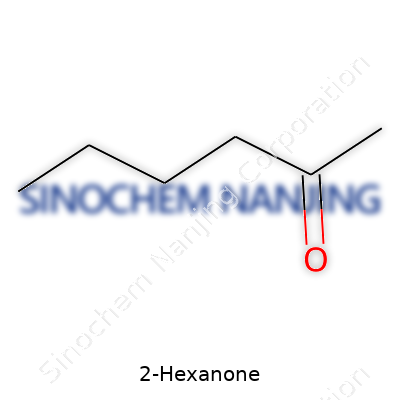
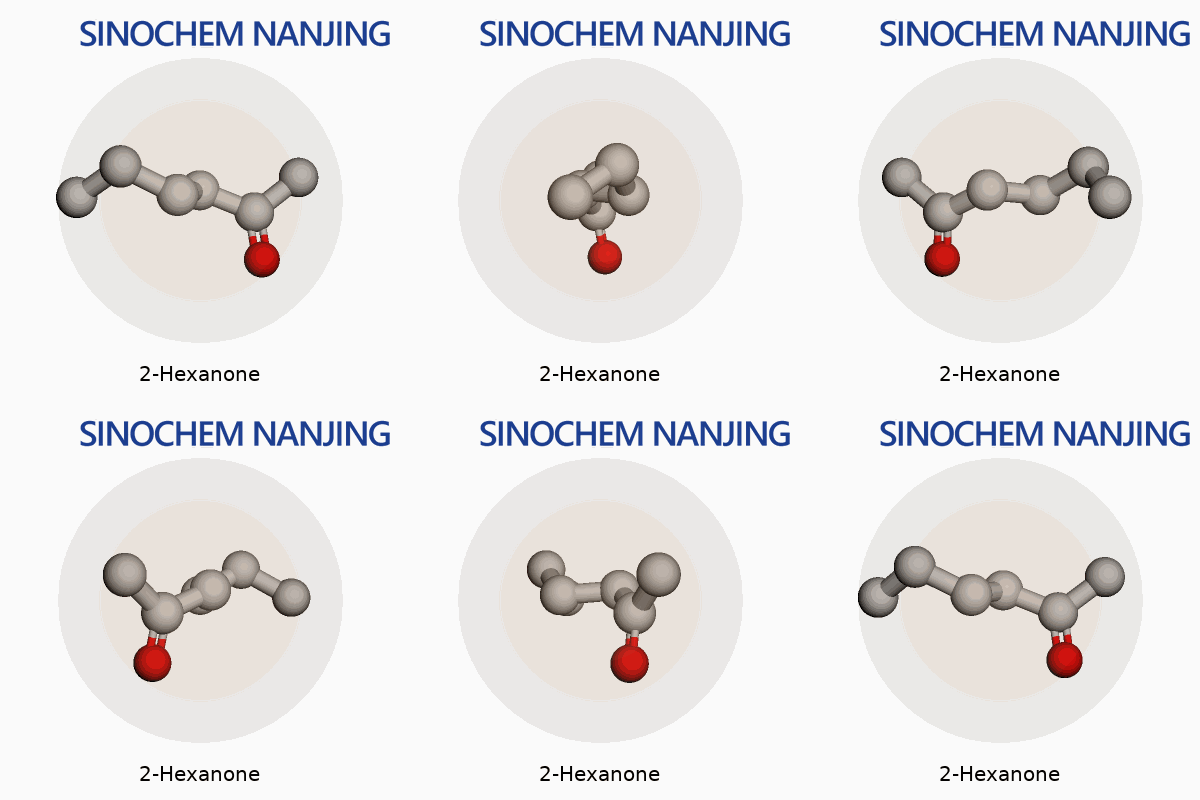
| Names | |
| Preferred IUPAC name | Hexan-2-one |
| Other names |
Methyl butyl ketone MBK Hexan-2-one |
| Pronunciation | /tuː ˈhɛk.səˌnoʊn/ |
| Identifiers | |
| CAS Number | 591-78-6 |
| 3D model (JSmol) | `3d:JSmol?model=C(C)CCCC=O` |
| Beilstein Reference | 635068 |
| ChEBI | CHEBI:31376 |
| ChEMBL | CHEMBL16433 |
| ChemSpider | 6618 |
| DrugBank | DB02141 |
| ECHA InfoCard | 100.004.216 |
| EC Number | 01-2119433307-44-xxxx |
| Gmelin Reference | 8786 |
| KEGG | C01652 |
| MeSH | D006524 |
| PubChem CID | 8057 |
| RTECS number | MN9275000 |
| UNII | N5I23K56SZ |
| UN number | UN 1915 |
| Properties | |
| Chemical formula | C6H12O |
| Molar mass | 100.16 g/mol |
| Appearance | Colorless liquid |
| Odor | Sweet, fruity, minty |
| Density | 0.813 g/mL at 25 °C |
| Solubility in water | 14 g/L |
| log P | 0.89 |
| Vapor pressure | 1.85 kPa (at 20 °C) |
| Acidity (pKa) | 20.27 |
| Basicity (pKb) | 6.20 |
| Magnetic susceptibility (χ) | -7.38×10⁻⁶ |
| Refractive index (nD) | 1.410 |
| Viscosity | 0.657 mPa·s (at 25 °C) |
| Dipole moment | 2.44 D |
| Thermochemistry | |
| Std molar entropy (S⦵298) | 309.5 J·mol⁻¹·K⁻¹ |
| Std enthalpy of formation (ΔfH⦵298) | -302.6 kJ/mol |
| Std enthalpy of combustion (ΔcH⦵298) | -3523.5 kJ/mol |
| Hazards | |
| GHS labelling | GHS02, GHS07 |
| Pictograms | GHS02,GHS07 |
| Signal word | Warning |
| Hazard statements | H225, H302, H319, H332, H373 |
| Precautionary statements | P210, P260, P280, P301+P312, P304+P340, P312, P330, P403+P233, P501 |
| NFPA 704 (fire diamond) | 2-2-0 |
| Flash point | 42 °C |
| Autoignition temperature | 515 °C |
| Explosive limits | 1.1–8.4% |
| Lethal dose or concentration | LD50 oral rat 1,600 mg/kg |
| LD50 (median dose) | LD50 (median dose): Oral rat 1.6 g/kg |
| NIOSH | MN1400000 |
| PEL (Permissible) | 100 ppm |
| REL (Recommended) | 50 ppm |
| IDLH (Immediate danger) | 100 ppm |
| Related compounds | |
| Related compounds |
Hexanol Hexanoic acid Hexanal |



