A Close Look at 2-Bromopropionyl Bromide: Past, Present, and Looking Ahead
Historical Roots and Product Insight
Chemistry has a way of turning simple beginnings into remarkable tools, and 2-Bromopropionyl bromide offers a perfect map through that story. Years ago, the need for acyl bromides led researchers to experiment with ways to create substances that could spark unique transformations. Nomenclature stuck close to structure—2-Bromopropionyl bromide goes by a handful of synonyms, folks often call it α-bromopropionyl bromide or 2-bromopropanoyl bromide depending on the textbook or catalog. Its journey mirrors the wider advances in organic synthesis. Chemists have relied on it not only for basic research but for building blocks that go straight into medicines, new polymers, and specialty chemicals. The compound didn’t just appear overnight; years of incremental development, trial and error, and relentless curiosity fueled by more than academic ambition helped establish its place in the modern lab.
What Sets It Apart: Physical and Chemical Personality
One run-in with 2-Bromopropionyl bromide is enough to remember its sharp, biting smell—a warning built right into its liquid form. The colorless or pale yellow appearance delivers a hint at purity and freshness, but the real action starts with its chemical temperament. With a molecular formula of C3H4Br2O and a molar mass close to 231.87 g/mol, it packs two reactive bromides and a carbonyl, which turns it into an impressive acylation agent. It breaks down quickly in water, releasing corrosive hydrobromic acid, so direct handling isn’t an option without proper gear and planning. The boiling point sits around 136–138°C, enough to manage in standard labs, but volatility poses constant caution for storage and transport. These characteristics, both helpful and hazardous, trace back to strong polar bonds and the broader context of halogenated organics.
Preparation and Shaping the Molecule
Methods for making 2-Bromopropionyl bromide keep evolving as chemists hunt for cleaner, more efficient reactions and ways to handle the substance with less risk. The established path starts with 2-bromopropionic acid, reacting it with agents like phosphorus tribromide or thionyl bromide. Temperature and anhydrous conditions become crucial, since moisture not only ruins the yield but raises safety concerns. Each step in the process aligns with the drive in the scientific world to find greener syntheses, tighter controls, and higher purity—the kind of concerns anyone working with sensitive or hazardous molecules immediately recognizes and respects.
Chemical Behavior and Tuning Reactions
Folks in organic labs reach for 2-Bromopropionyl bromide because of its eager participation in acylations and esterifications. Its bromides invite nucleophilic attack, which means chemists can graft functional groups with precision. The compound often headlines in reactions crafting β-bromopropionyl derivatives, yielding intermediates for pharmaceuticals and advanced materials. Modifying the core molecule creates countless offshoots, from bromoamides to complex heterocycles. Each transformation opens new research routes, revealing more about molecular design and underlying mechanisms. The chemical curiosity this molecule inspires hasn’t faded; if anything, it shows just how much ground remains to be explored in functional group exchange and tailored reactivity.
Understanding the Labels: Standards in Detail
Staying safe with 2-Bromopropionyl bromide means more than reading label warnings. Most labs know the red diamonds on chemical bottles: corrosive, toxic, environmentally hazardous. Anyone working with this compound learns to trust not only safety data sheets but practical habits—ventilated hoods, skin barriers, and immediate access to neutralizing agents. Standardization helps, but real knowledge comes from hands-on experience and endless attention to detail. Transport and storage demand ventilation and avoidance of all traces of moisture. Regulatory guidelines tie in with ongoing updates from research into hazards, reflecting the industry’s responsibility to workers and the environment.
Areas of Use: Where the Molecule Goes
Looking at applications reveals a lot about chemistry’s role in broader technology. 2-Bromopropionyl bromide spends much of its commercial life helping to create pharmaceuticals, including certain antibiotics and enzyme inhibitors. It also pairs with biodegradable polyesters in specialty plastics and acts as a tailored acylating agent in organic research. The beauty here is in versatility: slight tweaks to conditions or reagents spin the core molecule toward dramatically different ends. Research outfits rely on its snap reactions and unusual reactivity for developing novel products, from chemical probes that light up specific biomolecules to synthetic intermediates that eventually streamline mass production of drugs or advanced materials.
The R&D Pipeline: Pushing the Boundaries
Research labs rarely settle, and 2-Bromopropionyl bromide keeps popping up in patent filings and journals covering both traditional organic synthesis and new fields like medicinal chemistry or sustainable materials. Recent decades saw scientists explore safer substitutes for problematic reagents, yet the unique structure and reactivity of this bromide continue to make it a favorite for targeted modifications. Technological advances in purification and reaction monitoring have pushed reproducibility and safety, which means more labs (even those without industrial budgets) dip into research streams involving this compound. Every fresh study raises another question: can the process be cleaner, safer, or faster? Is there a way to coax new selectivity or minimize byproducts? Answers, or even partial fixes, promise to ripple through multiple sectors.
Toxicity and What It Means for Work and Waste
Nobody shrugs off toxicity concerns when dealing with acyl bromides. Exposure to 2-Bromopropionyl bromide brings risks: inhalation causes breathing difficulties, and contact burns skin and eyes. Sustained exposure or improper disposal creates bigger problems, including impact on surrounding ecosystems. Researchers track not just immediate injury data, but sub-chronic and chronic outcomes, feeding into regulations that tighten packaging, workplace limits, and require staff training. Workplace stories and accident reports prove that direct experience—sometimes painful—has shaped the best modern policies. Many facilities now demand air filtration, double-gloving, and strict compartmentalization for volatile chemicals like these. As with all hazardous synthesis work, relying on both documented protocols and old-fashioned caution prevents disaster.
Looking Forward: Prospects on the Horizon
Prospects for 2-Bromopropionyl bromide rest on real-world needs in pharmaceuticals, polymers, and specialty research. Regulatory scrutiny continues to rise, prompting better production methods, alternative disposal strategies, and the hunt for safer analogs. Progress doesn’t come from compromise, but from an honest look at risks versus benefits. If synthetic biologists or green chemists develop pathways that match or surpass today’s yields without the baggage of hazardous halides, expect the landscape to pivot quickly. At the same time, demand for targeted acylating power keeps labs invested—especially those pushing into next-generation therapeutics where unique building blocks make the difference. This molecule may not headline mainstream science news, but its impact runs deep, woven into the ever-developing fabric of laboratory practice and industrial progress.
What is the chemical formula of 2-Bromopropionyl Bromide?
Getting Down to the Details
2-Bromopropionyl bromide isn’t something the average person tosses around in conversation, but this chemical holds weight in many research labs across the globe. The formula for 2-Bromopropionyl bromide is C3H4Br2O. Having seen this compound used in a synthetic lab, I know it’s more than just a string of letters and numbers. The structure breaks down to three carbon atoms, four hydrogen atoms, two bromine atoms, and a single oxygen atom.
Looking past the formula, this substance carries practical significance for chemists working on building blocks for pharmaceuticals and specialty materials. It’s not some obscure thing tucked away in a dusty chemical catalog; it features in real-world syntheses for making more complex molecules. If a researcher needs to introduce both an acyl group and a bromine atom into a molecule, this compound works like a multipurpose tool. The formula C3H4Br2O immediately speaks to how reactive it can be, due to those two bromine atoms and the acyl group staring right back at you.
Why Understanding the Formula Matters
Memorizing C3H4Br2O might not change the course of someone’s life, but for someone designing a new molecule, it sets the stage for safe handling. Bromine compounds bring a harshness to the table; they aren’t to be trifled with, and knowing their atomic makeup can mean the difference between a successful experiment and a dangerous spill. The fact that 2-Bromopropionyl bromide contains not just one but two bromine atoms alerts informed chemists to its potential hazards, such as reactivity with water and the release of toxic fumes.
This is more than textbook trivia. In one research project, our team had to prepare a series of inhibitors targeting bacterial enzymes, and the intermediate steps used compounds similar to this. Single atoms make a difference—swapping a bromine for a chlorine completely changed the behavior of our final product. Precision counts; understanding these formulas makes it possible to reproduce results, compare data, and follow safety guidelines. Someone handling this compound needs to know its properties to limit accidents.
Supporting Facts and Real-World Context
According to data from chemical suppliers, 2-Bromopropionyl bromide is often stocked in ampoules to prevent contact with moisture. The presence of two bromines boosts its reactivity, especially during acylation reactions. NIOSH and the Centers for Disease Control and Prevention classify such compounds as hazardous, recommending use in fume hoods and proper personal protective equipment.
Mistakes in formula recognition have led to several reported laboratory incidents. These situations ranged from minor irritations to serious chemical burns. Once, during the early days of my lab work, I saw a colleague reach for what he thought was a simple acid chloride and misjudged the reactivity, leading to an evacuation. Lesson learned: formulas aren’t just symbols; they’re shorthand for real risks and opportunities.
Improving Safety and Education
Better training helps. Chemistry courses benefit from hands-on sessions that go beyond memorizing molecular formulas. Integrating case studies involving 2-Bromopropionyl bromide and similar reagents can build experience before someone ever picks up a pipette. Posting safety data near chemical storage and requiring double-check protocols have made my own lab’s environment much safer.
Beyond the lab, knowledge like this matters as synthetic biology grows in popularity and chemicals become more accessible. If researchers and suppliers share clear information about substances like 2-Bromopropionyl bromide, fewer people face surprises. With clear facts, purposeful education, and the right caution, formulas become more than just footnotes—they become tools for progress and safety.
What are the primary uses or applications of 2-Bromopropionyl Bromide?
Getting Chemicals to Do More
2-Bromopropionyl Bromide might sound like a tongue-twister from a chemistry textbook, but its value shows up in day-to-day industry. This compound’s real bread and butter comes from its work as an intermediate. In plain talk, that means it links together other molecules to build new stuff. You’ll find chemists reaching for it when they want to add a bromo group and a carbonyl group to other chemicals, a process that opens a lot of doors.
Pharmaceuticals and Better Drugs
Medicines often need small tweaks to keep side effects low while targeting the right sickness. 2-Bromopropionyl Bromide plays a role in that by helping to build active drug ingredients. Laboratories use it to make amino acid derivatives, especially as a step in crafting α-bromopropionyl-labeled peptides and small molecules. That’s a long way of saying this compound helps put the fine-tuning in modern drugs — a critical job, considering the pharmaceutical industry’s drive for safety and therapeutic potential. Reports in journals such as "Organic Process Research & Development" often mention it as a key tool in synthesizing everything from antibiotics to anti-cancer agents.
Advanced Polymers: The New Plastics
Chemical manufacturers do not just make household plastics anymore. Advanced polymers now crop up in electronics, coatings, and specialty films, and 2-Bromopropionyl Bromide helps connect building blocks in these new materials. Take atom transfer radical polymerization (ATRP), for example. This method needs initiators like those made from our friend here. Chemists rely on these initiators to control how chains of molecules grow, which in turn lets them customize how tough, flexible, or sticky a finished material acts. Custom-made polymers define today’s electronics, medical devices, and membranes for water purification.
Life Sciences Research Steps Up
Not every win in science ends up as a drug or phone case. Sometimes, researchers chase down how a protein folds or how an enzyme hops on and off its target inside a cell. 2-Bromopropionyl Bromide gives them a hand in labeling or tagging biomolecules. The compound reacts easily with amino groups, which show up in many proteins and peptides. Once attached, scientists use that chemical “tag” to track or isolate specific molecules during experiments. This approach brings clarity to research and fuels discoveries in biology and genetics. These kinds of breakthroughs lie behind most medical advances of the past two decades.
Risks and Next Steps
I’ve handled plenty of hazardous substances, so chemicals like 2-Bromopropionyl Bromide set off alarm bells. This compound reacts fiercely with moisture and gives off acid vapors. Gloves, goggles, real-deal ventilation: those are non-negotiable. There’s strong evidence that regular overexposure could trigger skin burns or lung damage. For safety, researchers and factories benefit from closed-system synthesis, fume hoods, and proper waste management. Training goes a long way too — nobody should learn about chemical burns the hard way.
Modern industry often looks for greener alternatives. That drive shapes how we view old standbys like 2-Bromopropionyl Bromide. Chemists experiment with new coupling strategies and swap out traditional halogenated reagents when possible. Cleaner, safer options will never erase the need for precision chemistry, but they can tip the scales toward less hazardous workplaces and eco-friendly labs.
What are the storage and handling requirements for 2-Bromopropionyl Bromide?
Understanding the Chemical’s Nature
2-Bromopropionyl bromide falls into the category of acyl halides. This group demands respect—each comes with its own quirks. Anyone who’s handled a bottle knows it doesn’t play nice with moisture or warmth. Even opening the container releases harsh pungency. Breathing those vapors feels like a punch to the nose. Over years spent in labs, I learned it’s tough on the skin, quick to burn, and tough on the lungs. Its reactivity doesn’t pause for carelessness.
Safe Storage Practices
Reliable storage starts in a ventilated space. Fume hoods act as the front line of defense. I’ve seen too many situations where bottles sat on open benches for convenience, which is a shortcut to trouble. This compound thrives in the cold—think low humidity and a locked, dedicated corrosives cabinet. Folks sometimes put “do not store above room temperature” stickers on the label as a simple reminder. This isn’t paranoia. Temperatures creep up, and pressure builds inside, risking a rupture. The container’s seal matters. Glass with a Teflon-lined cap works best, keeping moisture out and stopping leaks. Throwing it next to acids, bases, or strong oxidizers risks dangerous reactions, even explosions.
Handling Precautions and PPE
Protective gear tells a story for this chemical. During handling, I never skip gloves—nitrile, not latex. Lab coats stay buttoned, eyes shielded with goggles. I’ve seen chemical splash incidents. Burns appear instantly; trying to rinse after the fact proves tough because it reacts with water. A full-face shield goes the extra step. Don’t work alone. Accidents escalate when there’s no backup. If a spill happens, sand and absorbent pads work better than paper towels, which can heat up when they react with the liquid. Have a spill kit nearby, not in another room.
Transport and Labeling
Transporting 2-Bromopropionyl bromide inside the lab or shipping between sites needs extra planning. I’ve used specialty carriers—glass bottles inside sealed plastic bags stashed in metal or plastic secondary containers. Clear hazard labeling isn’t a chore. It keeps everyone informed, especially in shared spaces. Forgetting to relabel an aliquot invites mistakes; I’ve seen students reach for the wrong flask more than once. Emergency showers and eyewash stations shouldn’t be far away. Preparation beats panic every time.
Disposal Wisdom
This isn’t something to pour down the drain or toss into regular lab waste. Professionals neutralize it first, usually by slowly adding it to ice-cold alcohols under careful supervision. Doing so in controlled conditions avoids heat and toxic fumes. Waste gets sealed tight and handed to certified chemical disposal services. Skipping this step could land someone with hefty fines and a contaminated work area. In my experience, it’s always better to invest a few extra minutes rather than deal with the cleanup and health risks that follow shortcuts.
Building Safer Routines
Everyone involved in research or production must treat 2-Bromopropionyl bromide with extra respect. Training sessions make habits stick, and routine checks catch forgotten bottles or swollen caps. Clear instructions and open communication limit the chance of mistakes. By focusing on the physical realities—corrosiveness, volatility, and reactivity—labs and manufacturers keep their people and their projects on track.
What are the safety hazards and precautions associated with 2-Bromopropionyl Bromide?
The Hazards Around 2-Bromopropionyl Bromide
2-Bromopropionyl bromide doesn’t usually get headline attention, but if you’ve ever worked with it in a lab, the risks stick out. This colorless, strong-smelling liquid gets used a lot in organic synthesis, but it’s not something anybody should take lightly. Breathing in its vapors can hit your respiratory system with a harsh burn. Skin contact turns dangerous fast, causing blisters and even deeper chemical burns. Getting any splash in the eyes stings badly and can even cause permanent damage if not flushed out right away.
This chemical doesn’t just stop at causing irritation. It reacts quickly with moisture—including the water in your skin or in the air—releasing corrosive hydrogen bromide fumes. That turns a small spill into a real emergency. In my own experience working alongside synthetic chemists, the tension around handling this kind of compound is always high. One mistake, and the cost cuts deep, both to health and productivity.
Why Safety Gear Really Matters
Putting on the right protective gear isn’t just standard procedure—it’s necessary. Nitrile gloves, a full lab coat, and tight-fitting goggles feel clunky, but they keep skin and eyes safe from contact. Proper respirators matter in places that lack strong ventilation, because one whiff of those fumes sneaks up quicker than you’d expect. I’ve seen folks get away with just a fume hood, but after a small leak cleared out a whole floor, nobody in our lab makes that mistake anymore.
Handling and Storage—Lessons from the Lab
People in research often get complacent after working with hundreds of reagents. 2-Bromopropionyl bromide won’t let you forget its hazards. Keep it in a cool, dry place, sealed tight in containers made from glass or Teflon—metal won’t hold up to its corrosive bite. If it mixes with water by accident, the reaction kicks up a lot of heat and toxic vapor. I’ll always remember a close call during undergrad work: someone used a cracked bottle, and moisture crept in overnight. By morning, crystallized product had fused the cap shut, and the smell was enough to keep people outside until everything got cleaned up.
Dealing with Spills or Accidents
Fast action can keep a problem from turning disastrous. Spilled chemical on the skin? Wash off with plenty of water, and don't just wipe clean. Breathing in the fumes needs fresh air fast—sometimes, a trip to the emergency room makes sense, especially after strong symptoms. Spills stay contained with proper absorbent material, but people need to stay clear until the area clears out. A lot of incidents happen after clean-up, when residues stick around on surfaces that look dry and safe.
Building a Culture of Safety
It helps to keep the conversation going about safety, not just through warning signs but through real stories. People often pay more attention after hearing about a burned hand or an eye injury. Simple steps make the difference: keep the workspace organized, rehearse emergency showers and eyewash stations, and double-check equipment before starting. The best defense always comes from preparation, not luck.
Looking Ahead with Smarter Solutions
Newer labs invest in automated systems and sealed reaction vessels to cut out direct handling. Even older setups can improve with regular training, good signage, and easy access to personal protective equipment. Respect for chemicals like 2-Bromopropionyl bromide doesn’t just protect workers in science—it sets a standard for everyone who handles hazardous materials. Staying prepared saves both time and health, and helps science move forward without putting lives on the line.
What is the shelf life or stability of 2-Bromopropionyl Bromide?
Handling a Highly Reactive Chemical
2-Bromopropionyl bromide sounds like just another name in a chemistry textbook, but anybody who’s spent time in a lab knows how unpredictable and touchy these chemicals can get. Its uses, mostly as an acylating agent or intermediate, might not mean much outside of a research setting, but the dangers and quirks of handling it always stick with you.
Open a fresh bottle and a wave of acrid fumes hits you. That biting smell alone gives a warning most folks shouldn’t ignore. This stuff doesn’t like water—think of what happens if rain hits hot oil, but in a fume hood. It releases hydrogen bromide gas quickly, and nobody wants that indoors. That points out why any containers must stay tightly closed and kept dry. Losing track of moisture control, even for a night, shortens the shelf life and brings risks.
Why the Shelf Life Matters
Stability, in plain terms, means knowing the stuff in your container won’t turn into something else, or into dangerous gases, before you can use it. 2-Bromopropionyl bromide falls into the camp of chemicals that eat away at their shelf life through contact with the air or trace water vapor. From experience in university storage, a bottle can keep its punch for six months to a year if you treat it with the respect it demands. Unless you use an inert atmosphere like nitrogen or argon, even less time feels comfortable. I once came back to a bottle after five months only to find a crust around the cap—in other words, hydrolysis well underway.
The Merck Index and chemical supplier data back this up; they warn about sensitivity to moisture, temperature, and even light. High temperatures cook reactions you’d rather not have in storage. Best bet is a cool, dark cabinet—ideally at 2 to 8°C, where decomposition slows sharply. But even then, time always works against you with compounds like this. Most bottles come with a stamp—expire within a year of opening, or sometimes even sooner.
Tales from the Bench: Minimizing Waste and Risk
Letting stockpile chemicals gather dust is all too common in both academic and industry labs. Not only does degraded 2-bromopropionyl bromide risk accidents—it also wastes research budgets when you have to pitch half-used bottles because of hydrolysis or contamination. Students hate dumping expensive reagents, but risking chlorine-like fumes or breakdown products isn’t worth it. Buying only what you plan to use within a short timeframe keeps everyone safer and budgets leaner.
Fume hoods, personal protective equipment, and dry-box techniques matter a lot more than paperwork warnings. You see the difference right away—the fresher the reagent, the cleaner the reactions. Also, keeping a tight chemical inventory—marking your open date, checking the seal each month, and logging any odd smells—makes a huge difference. Some labs even batch-purchase for just-in-time delivery. It pays off compared to risking both people and projects because of expired, unstable chemicals.
Safer Working, Better Science
In the end, the real measure isn’t just in months and years but in vigilance. Good habits—cool storage, dry atmosphere, regular checks—let scientists stay productive without looking over their shoulder every time they reach for a bottle. If more workplaces took chemical stability as seriously as they do scientific results, fewer accidents and wasted resources would turn up in the news.
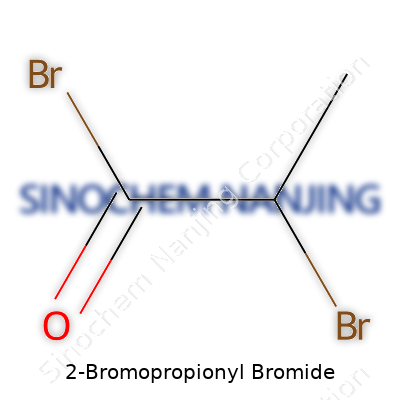
| Names | |
| Preferred IUPAC name | 2-bromopropanoyl bromide |
| Other names |
2-Bromopropanoic acid bromide Bromopropionyl bromide Bromopropionic acid bromide Propanoic acid, 2-bromo-, bromide |
| Pronunciation | /tuː-broʊ.moʊˈproʊ.pi.ə.nɪl ˈbroʊ.maɪd/ |
| Identifiers | |
| CAS Number | 598-19-6 |
| Beilstein Reference | 1720297 |
| ChEBI | CHEBI:51515 |
| ChEMBL | CHEMBL15440 |
| ChemSpider | 20588073 |
| DrugBank | DB08594 |
| ECHA InfoCard | 13f41ef5-059c-475b-b243-d83bc1ed4302 |
| EC Number | 211-188-9 |
| Gmelin Reference | 8287 |
| KEGG | C19198 |
| MeSH | D015473 |
| PubChem CID | 653388 |
| RTECS number | UF8225000 |
| UNII | 706OP6I385 |
| UN number | UN2526 |
| CompTox Dashboard (EPA) | QVT3333Z50 |
| Properties | |
| Chemical formula | C3H4Br2O |
| Molar mass | 215.83 g/mol |
| Appearance | Colorless to light yellow liquid |
| Odor | Pungent |
| Density | 1.992 g/mL at 25 °C |
| Solubility in water | Reacts violently |
| log P | 0.0 |
| Vapor pressure | 14 mmHg (20 °C) |
| Acidity (pKa) | -7.1 |
| Basicity (pKb) | -6.23 |
| Magnetic susceptibility (χ) | -7.19 × 10⁻⁶ cm³/mol |
| Refractive index (nD) | 1.4840 |
| Viscosity | 1.711 cP (20°C) |
| Dipole moment | 2.60 D |
| Thermochemistry | |
| Std molar entropy (S⦵298) | 367.7 J·mol⁻¹·K⁻¹ |
| Std enthalpy of formation (ΔfH⦵298) | -209.6 kJ/mol |
| Std enthalpy of combustion (ΔcH⦵298) | -416.5 kJ·mol⁻¹ |
| Hazards | |
| GHS labelling | GHS02,GHS05 |
| Pictograms | GHS05,GHS06 |
| Signal word | Danger |
| Hazard statements | H314, H331, H302, H372 |
| Precautionary statements | P210, P260, P280, P305+P351+P338, P310 |
| NFPA 704 (fire diamond) | 3 3 0 W |
| Flash point | 86 °F |
| Autoignition temperature | 238°C |
| Lethal dose or concentration | LD₅₀ Oral Rat: 430 mg/kg |
| LD50 (median dose) | LD50 (median dose): Rat oral 430 mg/kg |
| NIOSH | RX8225000 |
| PEL (Permissible) | Not established |
| REL (Recommended) | 0.1 ppm |
| IDLH (Immediate danger) | IDLH: Not established |
| Related compounds | |
| Related compounds |
Propionyl bromide 2-Bromopropionic acid 2-Bromopropionitrile 2-Bromopropanoyl chloride |



