2-Bromopropane: Behind The Scenes of a Small But Mighty Industrial Chemical
Historical Development
The story of 2-bromopropane began well before most chemists started scanning labels for safety flags. Back in the day, halogenated hydrocarbons like bromopropanes were seen as a step up from messy old reagents. 2-bromopropane started turning up in labs and factories around the middle of the twentieth century for its straightforward synthesis and workhorse role in organic reactions. Before restrictions on certain solvents and intermediates, 2-bromopropane made its mark because of its simple structure and versatile reactions, especially where a clean, secondary alkyl bromide proved useful. That’s the sort of historical context I keep in mind; industrial chemistry didn’t spring up out of nowhere, and safer handling practices are constantly evolving because of lessons learned when modern safety standards didn’t yet exist. Chemists who looked for higher yields and more efficient alkylations found themselves working with 2-bromopropane as soon as it became commercially feasible, and it's here that the chemical entered its own, for better or for worse.
Product Overview
2-bromopropane, sometimes referred to as isopropyl bromide, stands out from the crowded field of alkyl halides thanks to a compact molecular structure. It's a secondary alkyl bromide with a history of being used as a building block for other chemicals. Not only does it function as an intermediate for pharmaceuticals and agrichemicals, but it once played a role in specialty cleaning and extraction operations. I'm wary of adjectives like ‘versatile’ because, in practice, every new application can bring a hidden set of risks. Still, its chemical profile brings certain benefits to organic chemists, especially in substitution and elimination reactions where other halides are slower or less selective. The practical importance hits home for those in R&D, who need compounds that are both reactive and reasonably straightforward to handle (as long as safety procedures are followed).
Physical & Chemical Properties
Anyone who’s spent real time in a lab knows that the textbooks don’t always prepare you for the actual look, smell, and feel of a chemical. 2-bromopropane comes as a colorless, slightly sweet-smelling liquid, and if spilled, its volatility quickly introduces vapors to the workspace. It boils at around 59-60°C, and while it doesn’t dissolve well in water, it mixes with most organic solvents. The density lands somewhere higher than water, so it sinks in a beaker or a spill. All of that factors into handling decisions: the quick evaporation makes for rapid concentration in air if not managed, and a high density means accidental spills are more likely to stay put until cleaned. Chemists can count on it for classic alkyl bromide reactivity—good leaving group, strong tendency for substitution, moderate tendency toward elimination in a hot reaction mixture.
Technical Specifications & Labeling
Labels on bottles of 2-bromopropane include hazard symbols that speak to both flammability and toxicity. If you spend any time handling this stuff, you learn to respect the globes and skulls, not just file them away as paperwork. Shelling out for purity comes at a cost, so research-grade material often states a purity above 98 percent, which can make a difference in the selectivity of synthetic steps. Storage details aren’t just for show: a tightly sealed, well-ventilated space away from sunlight and open flames keeps both the chemical and the staff out of trouble. Since even small leaks can quickly vaporize, adequate signage, gloves, goggles, and careful stock control become second nature in a professional setting.
Preparation Method
Old-school chemistry prep for 2-bromopropane often starts with acetone or isopropanol, reacting them with hydrobromic acid or phosphorus tribromide. Each route lays bare the hazards of making alkyl bromides: fumy atmospheres, risk of overreaction, and side products. Batch processes, common in smaller labs, still see use, but large-scale setups resort to more efficient methods to minimize hazardous waste and improve yield. I’ve seen firsthand how an awareness of by-products, reaction times, and even the source of the starting alcohol can affect outcomes; any misstep means dealing with intractable residues or hazardous emissions. That’s why smaller operations stick with smaller batches and robust fume controls, while manufacturers with bulk demand invest in closed-loop systems and rigorous monitoring.
Chemical Reactions & Modifications
2-bromopropane excels in typical nucleophilic substitution reactions, providing an effective leaving group for introducing a wide range of other atoms or functional groups. In my own bench work, it has served in the conversion of secondary alcohols into a variety of substituted products, including amines and ethers. The molecule isn’t shy with eliminations, producing propene under conditions favoring E2 mechanisms, especially with strong bases at elevated temperatures. Derivative chemists often tinker with modifications, swapping different nucleophiles for the bromine, or using it as a probe to introduce isotopic labels. In synthesis campaigns, the secondary structure engenders less selectivity than tert-butyl derivatives but more than methyl or ethyl halides, enabling careful tuning of product profiles if you know what you’re aiming for.
Synonyms & Product Names
In catalogs and purchase orders, 2-bromopropane sometimes sneaks in under other names, most often as isopropyl bromide. The chemical registry number (CAS No. 75-26-3) helps cut through any confusion, and seasoned chemists match synonyms like “2-propyl bromide” or “secondary propyl bromide” to this three-carbon brominated compound. Knowing these terms isn’t just about semantics; it prevents dangerous mix-ups between similar-looking bottles with fundamentally different properties. The importance of accurate naming jumps out for those managing inventory and regulatory compliance—one slip with a similar-sounding compound introduces major risks.
Safety & Operational Standards
Nobody walks into a lab or factory assuming everything goes according to plan. For 2-bromopropane, rigorous safety standards grow directly out of hard-earned experience. Ventilation—the kind that draws fumes away instead of just rattling the sash—becomes non-negotiable. In my own work, not having the right gloves, mask, or eye protection taught hard lessons about irritation and exposure. Chemicals with a tendency to vaporize rapidly demand attention to spill response and air monitoring. Working directly with 2-bromopropane, you soon learn that engineering controls, closed systems, and hands-on training in cleanup and containment keep operations safe. Anyone responsible for storage also pays close attention to shelf life, the condition of containers, and periodic checks for leaks or vapor buildup. Environmental disposal rules grow increasingly strict, and rightly so—the compound’s volatility and potential toxicity force handlers to respect both workplace safety and environmental stewardship.
Application Area
The main job of 2-bromopropane hasn’t shifted much: it remains a cornerstone intermediate in organic synthesis. It enables formation of other chemicals used in making pharmaceutical precursors, agricultural agents, and specialty solvents. I’ve seen it pressed into service as an alkylating agent on both pilot and industrial scales. Specialty labs sometimes use it to craft compounds that then anchor larger, more complex synthesis chains. As broader regulations squeeze out more toxic or persistent brominated compounds, 2-bromopropane survives by virtue of a generally predictable reactivity profile and well-documented outcomes. Some smaller scale operations regarded it as a cleaner alternative to older, less controllable reagents. Yet, its toxicological profile limits use in areas where chronic exposure could be hard to control, so high-end applications often run under tightly managed, purpose-built environments.
Research & Development
R&D teams continue to put the molecule through its paces, focusing on developing new synthetic pathways that can lower waste or reduce dangers for staff and the environment. In academic labs, 2-bromopropane helps illustrate foundational principles in nucleophilic substitution, elimination, and reactivity trends in alkyl halides. Some research delves into the design of catalysts that mediate reactions with 2-bromopropane with higher precision or lower energy consumption. Front-line researchers handle it to prototype greener transformations and better process integration, mindful that even subtle by-products can affect downstream purity. Scaling up from bench-scale flask reactions to pilot plant batches often exposes gaps in data collected at small scale, spurring development of better metrics for safety and efficiency. Over time, those efforts help push forward best practices in chemical production.
Toxicity Research
Experience and published case studies around 2-bromopropane make its risks clear. Early toxicity research, largely overlooked as usage spread, now stands as a warning for anyone who underestimates chemical hazards. In the 1990s, factory workers exposed to 2-bromopropane developed reproductive and hematological issues, prompting new scrutiny from regulatory bodies. Follow-up studies documented everything from bone marrow suppression to impacts on nervous and immune systems. I see those lessons ripple through modern chemical safety training. Today, any workplace using 2-bromopropane devotes resources to air quality monitoring, exposure limits, and routine medical surveillance for hands-on staff. Substitution with safer intermediates becomes a recurring theme in process improvement, but where no direct drop-in replacement exists, robust ventilation and closed processes grow even more essential.
Future Prospects
Use of 2-bromopropane faces challenges from tighter regulations and ongoing concerns over toxicity, especially in regions implementing stricter rules for workplace safety and environmental emissions. Ongoing research focuses on reducing risks associated with production, storage, and disposal, aiming to develop both safer substitutes and improved production methods. The push for greener chemistry means researchers trial alternative alkylating agents or systems that can recover and neutralize waste streams. In R&D and education, 2-bromopropane still serves as a clean example for showing core reaction principles, but real-world deployment trends toward applications with strong safety oversight. Looking ahead, markets relying on this compound continue to serve critical supply chains, but face mounting pressure to balance productivity with worker health and environmental responsibility. Developing new routes, tighter controls, and possible replacements keeps the story of 2-bromopropane moving, a testament to the long memory and adaptability of the chemical industry.
What is 2-Bromopropane used for?
What 2-Bromopropane Does in the Lab and Beyond
If you ever walked through a chemistry research lab, there’s a good chance you’ve smelled something sharp and chemical in the air. That’s often because chemists work with compounds like 2-bromopropane. People don’t talk about it much outside of scientific circles, yet its uses touch everything from creating new drugs to making plastic parts. The thing about 2-bromopropane is that it works as a building block. On its own, it doesn’t get much attention, but inside a reaction flask, it opens doors.
Key Role in Organic Synthesis
I spent a summer washing glassware and helping with reactions at a small chemicals start-up. We used 2-bromopropane mainly to introduce a propyl group into molecules. In the world of chemistry, this process is called "alkylation," and it often changes how a substance behaves. Adding this group lets companies create new materials and medicines. For example, pharmaceuticals sometimes rely on 2-bromopropane to tweak the shape and properties of drug candidates, helping researchers create pills that work better or last longer in the body.
Plastic and Polymer Manufacturing
It’s surprising, but the plastics industry owes some of its advances to humble intermediates like 2-bromopropane. While working with a family friend who molds parts for electronics, I saw first-hand how materials teams test dozens of chemical tweaks just to get a more reliable, heat-resistant plastic. Chemists use 2-bromopropane to set up molecules that, linked together, become the raw materials for these plastics. Without intermediates like this, many everyday devices wouldn’t last as long as they do. That means less waste and fewer busted electronics in landfills.
Industrial Solvents and Cleaners
Though not the main selling point, 2-bromopropane finds its way into solvent blends and some specialty cleaners. These aren’t the kind you splash around at home — they're used where heavy-duty cleaning and degreasing matter, like in auto repair or metalworking shops. Its ability to dissolve grease and certain residues makes it useful in tough industrial environments, though safety is always a concern. It’s crucial to keep good ventilation or use protective gear, as inhaling its fumes can be risky, something workplace safety groups remind us about again and again.
Health and Environmental Concerns
Any discussion about this compound has to address the elephant in the room: potential danger to health. Reports of workers getting sick after handling 2-bromopropane in cramped, poorly ventilated shops are hard to ignore. Research shows that exposure to high levels can cause nerve damage and trouble with the blood. Regulations and proper equipment can lower the risk. Companies using this chemical owe it to their teams to invest in proper handling systems, exhaust fans, and regular air quality checks. There’s also a push in academic research for safer alternatives that still get the job done.
Looking for Safer Alternatives and Smarter Handling
Responsibility doesn't stop at the plant or the lab. There’s a need for stronger oversight from governments and more transparency from companies about what goes into products and waste streams. Quality training, strong guidelines for disposal, and routine health monitoring make a difference — not only for those in the lab coat, but also for everyone downstream. As innovation continues, the spotlight should focus on greener and safer chemicals, alongside proper handling of the old standbys like 2-bromopropane.
What is the chemical formula of 2-Bromopropane?
Understanding 2-Bromopropane’s Structure
2-Bromopropane, often called isopropyl bromide in labs, carries the chemical formula C3H7Br. Just hearing the name brings to mind high school chemistry: a propane backbone, one hydrogen swapped for a bromine atom. The switch might sound simple, but it tells a much bigger story about how chemists can modify molecules for a purpose, whether in research, manufacturing, or medicine.
Why the Formula Matters
I remember staring at skeletal structures on a faded chalkboard, trying to figure out why a single atom could change everything. C3H7Br means that instead of just carbon and hydrogen, now there’s a bromine. Bromine isn’t just heavy compared to hydrogen; it's highly reactive. This action makes 2-bromopropane a favored tool in organic labs, especially for learning about nucleophilic substitution reactions.
For students and chemists, knowing this formula is more than trivia. It means understanding what can be made from it — other chemicals, pharmaceutical intermediates, or building blocks for plastics and coatings. In classrooms, instructors use 2-bromopropane to teach how atomic swaps affect molecular behavior.
The Role of Halogenated Compounds
Adding a bromine to propane alters much more than mass. Halogenated organics like 2-bromopropane are easier to turn into all sorts of new things. That’s why chemical makers rely on these starting points for crafting medications, cleaning agents, and even materials resistant to fire.
Halogen compounds can also carry risks. Exposure to 2-bromopropane shouldn’t be taken lightly. Over the past twenty years, researchers flagged health concerns after observed reproductive harm in industrial workers. This brought tighter handling rules and better personal protection in the workplace.
Challenges and Safer Handling
Many workers and students work directly with organic solvents such as 2-bromopropane. Even careful people can underestimate fumes or splashes. Years back in a summer internship, I watched a spill clear out half the lab. The event led to stricter ventilation checks and more conversations about chemical safety.
Shifting toward safer chemicals isn’t always easy. Chemists search for non-halogenated alternatives, but 2-bromopropane keeps showing up on material lists for key reactions. Manufacturers encourage closed systems, improved ventilation, and regular safety training. Regulatory agencies in the United States, Europe, and Asia continue to update exposure limits as new studies roll in.
Potential Ways Forward
Science lessons are filled with cases where small changes in a formula led to big impacts — good and bad. In industry, the push continues for greener chemistry. For instance, catalyst improvements cut the amount of 2-bromopropane needed, and a few creative researchers experiment with plant-based reagents. Sharing data, publishing risks openly, and updating best practices foster a more knowledgeable and protected community.
Everyday Chemistry’s Broader Impact
C3H7Br sums up a molecule with far-reaching effects. Knowledge about structure and formula leads straight into smarter lab work, safer factories, and informed regulation. For students, uncovering what it means to swap a bromine for a hydrogen turns abstract formulas into meaningful tools. The practice of chemistry hinges on these details—looking beyond the letters and numbers, seeing the broader ripple.
Is 2-Bromopropane hazardous or toxic?
How People Encounter 2-Bromopropane
Anyone who has worked around a chemistry lab or in manufacturing might have heard of 2-bromopropane. Used as a solvent and in the synthesis of pharmaceuticals or other chemicals, this compound doesn’t get much attention outside industrial circles. Each time I’ve seen it in the lab, safety protocols kicked in just as they would with anything carrying a bromine atom. That’s no accident; halogenated compounds, especially those with bromine, aren’t exactly friendly to people.
What the Science Shows About Toxicity
Research from South Korea in the '90s drew a lot of concern on this substance. Factory workers exposed to 2-bromopropane developed some nasty health effects. Reports showed reproductive damage in both men and women — cases of bone marrow suppression, menstrual irregularities, and low sperm counts. The exposure wasn’t just brief, and those folks didn’t have proper protective gear or ventilation. When looking closer, animal studies made the same connections: reproductive problems and toxicity to the nervous system.
A study published in Occupational and Environmental Medicine documented how 2-bromopropane caused ovarian failure and infertility among female workers who used it as a cleaning solvent in an electronics plant. That story still sticks with me because these cases weren’t just numbers on a page — they were real people who never expected such risks from their everyday jobs.
2-Bromopropane Regulations and Guidelines
Such incidents pushed governments to act. Countries like South Korea set workplace exposure limits for 2-bromopropane, and the US National Institute for Occupational Safety and Health (NIOSH) added it to its list of hazardous substances. The American Conference of Governmental Industrial Hygienists (ACGIH) put 2-bromopropane on its list of workplace hazards, too. Some states such as California included it in their Prop 65 list, meaning businesses have to warn about potential exposure.
You won’t find 2-bromopropane listed as a Group 1 carcinogen, but its record for causing reproductive harm stands out. Not all chemicals with a warning label pose an equal risk; in this case, the research and real-world experience both say to take it seriously.
Why Vigilance Matters in Chemical Safety
Lab work in the real world rarely feels dangerous if you’re careful, but looking back at accidents and exposures reminds me not to grow complacent. Lack of proper ventilation, gloves, or goggles can allow 2-bromopropane to absorb through skin or drift into the lungs. Each time people shortcut safety, the risk climbs. Strong science and real stories feed the policies behind protective gear, air monitors, and safety data sheets prominently posted in workplaces.
Safety training isn’t about ticking boxes — it’s about getting home healthy. I’ve seen younger workers sometimes take shortcuts before understanding the risks. Employers have a role to play, beyond just training: investing in fume hoods, regular air testing, and medical monitoring. Open conversations in the lab encourage people to ask questions and rethink routines if something feels off.
Moving Forward With Safer Choices
Many companies now search for alternatives to 2-bromopropane when possible, just to reduce risk and compliance headaches. Green chemistry trends look for less toxic solvents and processes. Nobody benefits from repeating past mistakes, and the push for safer labs and factories doesn’t start with regulators — it comes from real lessons learned and better options now available.
How should 2-Bromopropane be stored?
Why Chemical Storage Deserves Careful Thought
Folks working around chemicals know complacency creates the biggest mess. Handling a compound like 2-Bromopropane, carelessness leaves no room for error. 2-Bromopropane isn’t some water-based cleaner—it’s flammable and carries real health risks. Even one slip in storage can mean breathing trouble or skin damage. In my early days in a lab, I watched an experienced tech develop constant headaches, only to discover a cracked storage bottle had been quietly evaporating 2-Bromopropane nearby. Stories like that underline the need for a thoughtful approach built on facts and hands-on experience.
Don’t Just Grab Any Shelf
Flammable liquids like 2-Bromopropane never belong next to heat or sunlight. Putting bottles on an open shelf makes them vulnerable. Proper storage demands a fire-resistant cabinet, away from any spark or open flame. There’s real risk in storing it with oxidizers or acids; disastrous chemical reactions don’t wait for someone to finish a cup of coffee. I’ve seen the near-misses when shelving gets crowded and labels fade—so segregation and clear labeling matter more than any fancy storage system.
Ventilation Stands as the Hidden Hero
Some folks overlook air flow in chemical storage. Without good ventilation, fumes build up, even if containers stay sealed. Those vapors can catch fire or sicken someone just opening the door. A storage space should keep air moving and clear of excess humidity, since rust weakens those metal cans over time. Maintenance checks, in my experience, are often the difference between a safe workspace and a sudden evacuation.
Container Quality Makes All the Difference
Not all bottles hold up to flammable solvents. Cheap plastics sometimes soften or crack, slowly leaking toxic vapor into the air. Only containers rated for chemical resistance and fitted with tight lids belong in your cabinet. Mislabeling triggers confusion, so take a moment to use clear, permanent markings with hazard warnings. My own habit after a long shift: check caps and look for haze on glass, since slick or cloudy residue means danger may be lurking.
PPE Isn’t Just for Show
Protective gear deserves respect, not eye rolls. Whenever someone moves or handles 2-Bromopropane, gloves, goggles, and sometimes even a respirator belong in the picture. Splashing a drop while hauling a bottle or getting a whiff while unsealing a container reminds anyone that this isn’t a substance for shortcuts.
Training Keeps Hazards From Turning Into Disasters
People need practical training, not just a spot on a sign-in sheet. Everyone who might handle 2-Bromopropane should know what risks to look for—fire, fumes, skin irritation—and the first step to take if something does go wrong. Spill kits, absorbents, and emergency eyewash stations keep trouble from getting out of hand. From what I’ve seen, drills work better than binders full of protocols, since muscle memory often kicks in faster than reading instructions during an emergency.
Safer Workspaces Grow From Shared Responsibility
Good chemical storage is about more than ticking boxes on a checklist. Regular walk-throughs, honest talk about near-misses, and personal accountability catch the little things before they become big problems. It’s worth remembering that most accidents stem from overlooked basics—labeling, air flow, or keeping storage dry and locked up. Responsibly storing chemicals like 2-Bromopropane shapes not just a safer lab but also a workplace where people trust each other’s judgment.
What are the safety precautions when handling 2-Bromopropane?
Understanding the Risks of 2-Bromopropane
2-Bromopropane often ends up in laboratories and industries as a solvent or chemical intermediate. It’s more than just another bottle on the shelf—it has a way of slipping into the air and onto skin if you don’t pay attention. Over the years, people have seen real dangers tied to careless handling: irritation in the lungs, headaches, even reproductive risks if there's long-term exposure. If you look up workplace case reports out of Korea and Japan, it’s clear—things can go wrong without basic care.
Safe Handling Starts with Proper Gear
The first step always begins with what you wear. I’ve learned there’s no cutting corners. Lab coats made from flame-resistant material, chemical splash goggles, and gloves (nitrile or neoprene) form the basic ‘uniform’ for working around 2-Bromopropane. Standard latex gloves won’t stand up to this solvent. If you’re ever tempted to just ‘grab and go’, remember that skin absorption doesn’t require a splash, just a little contact over time.
Inhaling fumes is another real concern. The stuff evaporates quickly and can hang in the air without much smell. I remember my first workday in a freshly painted lab, where a tech was handling solvents with nothing but a cracked window for ventilation. It wasn’t enough—complaints about dizziness and coughing followed. Chemical fume hoods or well-ventilated areas stop vapors from building up. Even the best respirator won’t help if you skip the basics here.
Storage and Housekeeping Set the Foundation
Out of sight does not equal out of mind. Secure storage away from heat, direct sunlight, and incompatible chemicals like oxidizers reduces the chance of fires or unexpected reactions. It helps to keep containers labeled and sealed tight—in my own lab days, unlabeled bottles always led to confusion and, once, a dangerous mix-up.
Mopping up spills right away also keeps everyone safe. Chemical spill kits should be within arm’s reach in any area that deals with 2-Bromopropane. It’s not just about following a rulebook; it’s about knowing who to call, where to find the absorbent pads, and how to keep the mess off your body and out of the air.
Training Turns Policy Into Habit
Good habits come from good training. Too many workplaces only run through the motions during onboarding. The most knowledgeable people I worked with treated chemical safety as a skill to practice, not a box to check. Repeating drills, talking through real accidents, keeping up with new research—it keeps everyone alert. Safety data sheets aren’t just paperwork; they turn into a reference that people learn to trust and actually use.
If you ever work around 2-Bromopropane, think about how the smallest oversight—like forgetting to check for ventilation or grabbing the wrong gloves—could set off a chain reaction. Building a work culture where people speak up about bad practices often keeps trouble from ever starting.
Practical Solutions: What Works on the Ground
Investing in local exhaust ventilation, automatic shut-off valves, and personal monitoring badges has proven to reduce exposure. I’ve seen labs where a checklist by the door—with glove types, eye protection reminders, and spill protocol—made more impact than any memo. Respect for the chemical and for your colleagues shows up in the details: clear labeling, up-to-date training, and clean workspaces. These simple moves keep work safe, productive, and human.
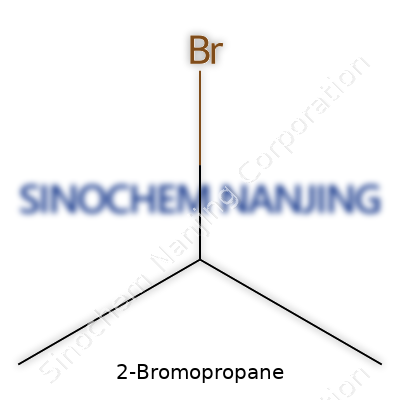
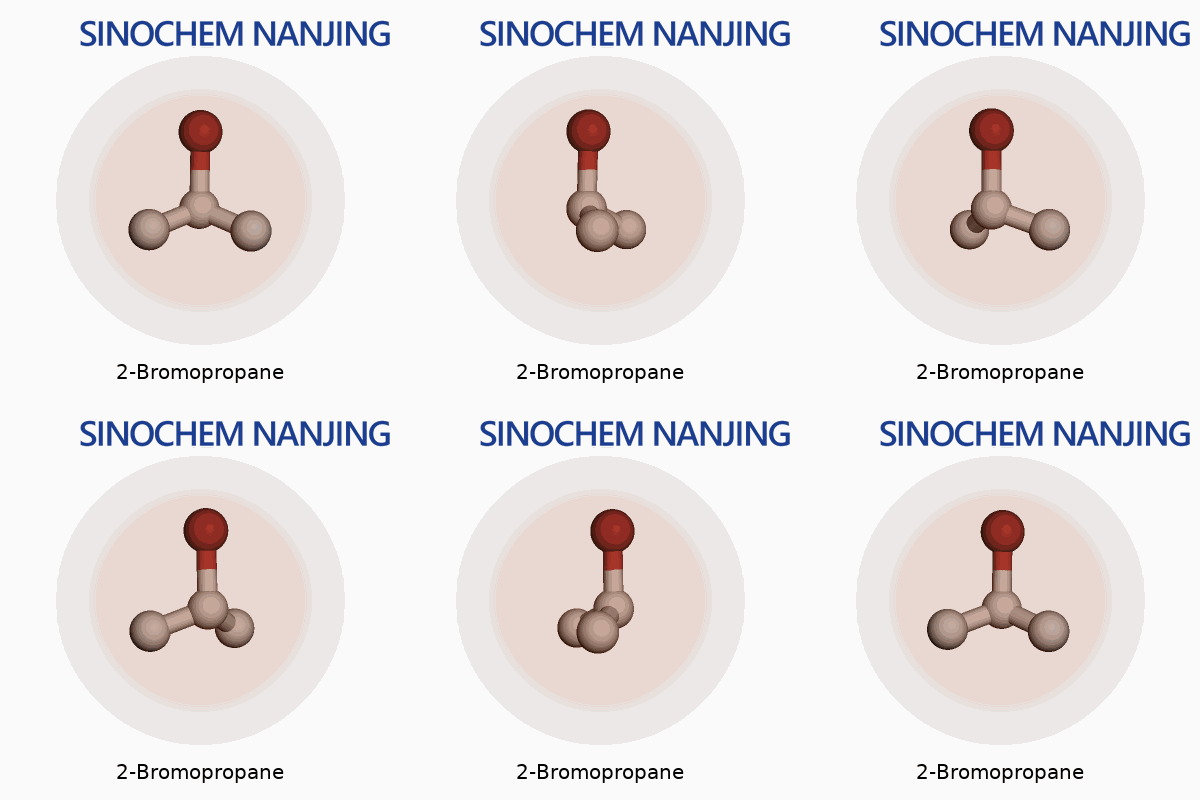
| Names | |
| Preferred IUPAC name | 2-Bromopropane |
| Other names |
isopropyl bromide 2-propyl bromide sec-propyl bromide propan-2-yl bromide |
| Pronunciation | /tuː-broʊ-moʊˈproʊpeɪn/ |
| Identifiers | |
| CAS Number | 75-26-3 |
| Beilstein Reference | 1718733 |
| ChEBI | CHEBI:63593 |
| ChEMBL | CHEMBL51508 |
| ChemSpider | 7278 |
| DrugBank | DB11654 |
| ECHA InfoCard | ECHA InfoCard: 100.011.788 |
| EC Number | 200-864-4 |
| Gmelin Reference | 1868 |
| KEGG | C01414 |
| MeSH | D018153 |
| PubChem CID | 6586 |
| RTECS number | TC8750000 |
| UNII | 2BXY52J8L5 |
| UN number | UN2344 |
| Properties | |
| Chemical formula | C3H7Br |
| Molar mass | 122.993 g/mol |
| Appearance | Colorless liquid |
| Odor | sweet odor |
| Density | 1.31 g/mL |
| Solubility in water | Slightly soluble |
| log P | 1.98 |
| Vapor pressure | 3.4 kPa (20 °C) |
| Acidity (pKa) | 47 |
| Magnetic susceptibility (χ) | `-59.0 × 10⁻⁶ cm³/mol` |
| Refractive index (nD) | 1.434 |
| Viscosity | 0.64 mPa·s (20 °C) |
| Dipole moment | 2.05 D |
| Thermochemistry | |
| Std molar entropy (S⦵298) | (285.7 J·mol⁻¹·K⁻¹) |
| Std enthalpy of formation (ΔfH⦵298) | -52.7 kJ/mol |
| Std enthalpy of combustion (ΔcH⦵298) | -2078 kJ/mol |
| Hazards | |
| GHS labelling | GHS02, GHS07 |
| Pictograms | GHS02,GHS07 |
| Signal word | Warning |
| Hazard statements | H225, H315, H319, H336 |
| Precautionary statements | P210, P261, P280, P305+P351+P338, P337+P313 |
| NFPA 704 (fire diamond) | 2-2-0 |
| Flash point | 23°C |
| Autoignition temperature | 410 °C |
| Explosive limits | 2.2–9.5% |
| Lethal dose or concentration | Rat oral LD50: 2,520 mg/kg |
| LD50 (median dose) | LD50 (median dose): Oral rat LD50 = 1800 mg/kg |
| NIOSH | WI6640000 |
| PEL (Permissible) | 50 ppm |
| REL (Recommended) | 200 ppm |
| IDLH (Immediate danger) | 800 ppm |
| Related compounds | |
| Related compounds |
2-Iodopropane 2-Chloropropane Isopropanol Propene |



