2,2'-((Oxybis(Ethane-2,1-Diyl))Bis(Oxy))Diethanol: Looking Past the Nomenclature
Historical Development
Chemistry has always surprised me with how seemingly obscure compounds become part of our everyday lives. Take 2,2'-((Oxybis(Ethane-2,1-Diyl))Bis(Oxy))Diethanol—more widely called Tetraethylene Glycol or TetraEG. It stepped onto the scene well over a century ago, when folks digging into the broader glycol family found more than just the sweet stuff used in antifreeze. Early records from industrial chemistry journals show how universities and research labs sought longer-chain glycols for specialized needs. Back in the early 1900s, this group started popping up in discussions about new solvents and lubricants; chemists leaned on trial and error, isolating and purifying mixtures from the routine ethylene oxide reactions. The compound drew modest interest through the decades, riding along as industry pursued safer plasticizers and more resilient chemical building blocks.
Product Overview
Getting down to what TetraEG actually brings to the table, it stands as a colorless, viscous liquid in its pure form. The glycol family always turns heads for balance between water solubility and oily texture. TetraEG is less volatile than the smaller diols, which gives it greater thermal stability and a knack for sticking around in processes demanding a higher boiling point. Manufacturers appreciate that kind of reliability. The truth is, TetraEG often hides in blends and formulations. Common uses bet on its performance as a solvent, plasticizer, and sometimes as a conditioning agent in personal care products. Markets seldom shout its name because its work supports the flashier additives and active ingredients.
Physical & Chemical Properties
Working with TetraEG means handling a liquid thicker than water, free of strong odor, and friendly with both water and organic solvents. Not many chemicals match that double-duty ability, and it makes sense why it found a loyal following in the chemical industry. Its boiling point sits comfortably above 300°C, giving it a place in high-temperature processes. Chemists value its mild reactivity; the multiple ether and alcohol groups hang ready for further chemical tinkering without offering surprises at room temperature. Its viscosity keeps it from evaporating into thin air, so loss during processing stays low.
Technical Specifications & Labeling
Looking at real-world packaging, most commercial TetraEG bottles show purity levels above 99%. Labels only tell you so much—product quality often means low levels of water, chloride, or acidity, since these can throw off sensitive industrial reactions. Industry standards push for transparency about residue limits and potential trace impurities, motivated by both product performance and user safety. Experienced chemists thumb through the fine print checking glycol grades because even trivial differences can make or break downstream reactions.
Preparation Method
Bringing TetraEG into existence involves coaxing ethylene oxide through polymerization, repeating the reaction to build out the backbone. Ethylene glycol forms the starter, with sodium or potassium hydroxide acting as a catalyst, and each addition of ethylene oxide lengthens the chain. The whole method demands precise control of temperature and reactant ratios. Distillation comes next, stripping out shorter glycols and leaving the target product. Over time, advances in reactor design and automation made the process safer and more consistent, shrinking the number of out-of-spec batches and slashing operating costs.
Chemical Reactions & Modifications
TetraEG gets plenty of attention in research for the flexibility that its structure offers. Those hydroxyl ends can anchor new chemical groups, allowing alkylation, esterification, or the creation of specialty polymers. All sorts of surfactants and crown ethers draw on TetraEG’s structure as a starting point, adapting its properties for uses from drug formulation to industrial lubrication. Scientists keep finding ways to push its chemistry thanks to those reactive ends, using it as a scaffold or building block instead of the finished product.
Synonyms & Product Names
The chemical sounds intimidating in full IUPAC. You’ll see it under many names: TetraEG, Tetraethylene glycol, or 2,2'-Oxybis(ethylenedioxy)diethanol. The world of chemical trade prefers shorter, memorable codes. This helps people without a chemistry background navigate catalogs, though sometimes synonyms cause confusion if quality standards differ between suppliers or markets. I’ve seen colleagues order the wrong chain length because they caught the word “glycol” but missed the prefix—so clear communication and cross-checking matter.
Safety & Operational Standards
Safety in handling TetraEG builds on lessons learned with other glycols. Acute toxicity runs low compared to plenty of other solvents, but operators still use gloves, goggles, and good ventilation. Spills feel slick, and surfaces gum up if left too long. Fire risk is not major under ordinary use, thanks to its high flash point. Regulatory guidelines focus on exposure limits and wastewater controls. Mishandling or prolonged skin contact can cause mild irritation, so training never goes out of style. Waste disposal regulations keep people honest about flammability, aquatic toxicity, and bioaccumulation. Most larger plants incorporate closed-loop systems that reduce both worker exposure and environmental impact.
Application Area
TetraEG shows up wherever stable, inert solvents are needed. Paint and coating formulators rely on its low volatility to slow drying times and improve application quality. Textile manufacturers add it to dye baths, letting colors soak deeper into fibers. Oilfield sectors count on it as a component in specialty brines and fracturing fluids. The private label cosmetics trade sometimes uses it for mildness in skin creams and conditioners, though regulations and shifting consumer preferences toward natural ingredients mean its role has shrunk lately. On the plastics side, it crops up as a plasticizer—giving extra flexibility to PVC and similar polymers. For people working in research or development, TetraEG acts as both a solvent and a carrier for more complex chemistries in new materials.
Research & Development
Academic journals fill up fast with papers on new uses for glycols. TetraEG sits at the intersection of several big R&D efforts: greener solvents, safer antifreeze formulations, and specialty polymer synthesis. Recent work looks at tuning its chain length for tailor-made solvents in battery electrolytes. Biodegradability stands as a key concern; several groups focus on enzyme-based breakdown techniques and alternative catalytic systems that might limit environmental persistence. Startups and university labs see value in ‘drop-in’ solutions—swapping in TetraEG where older, more toxic solvents once stood. On the analytical side, TetraEG sometimes helps scientists model molecular interactions in water-organic systems, thanks to its balanced solubility.
Toxicity Research
People sometimes think of glycols as benign, but studies reveal the importance of understanding dose and exposure. High levels in lab animals cause mild kidney and liver effects over sustained periods, but the threshold for concern remains well above typical industrial exposure. Environmental persistence of TetraEG also receives scrutiny, especially where wastewater finds its way into vulnerable waterways. Animal studies turn up low acute toxicity, yet ongoing research checks for subtle effects from byproducts or from chronic exposure to mixtures. Regulatory agencies respond to fresh data quickly, with recommendations around safety limits shifting as evidence accumulates. In most countries, disclosure requirements protect industrial workers, but gaps remain in monitoring sub-lethal health effects—an area that deserves more funding to close knowledge gaps.
Future Prospects
The march toward greener chemistry will shape TetraEG’s trajectory in the next decade. Industry faces consumer and regulatory pressure to find alternatives to petroleum derivatives, and TetraEG’s balanced profile means it could play a larger role in biodegradable plastics and safer solvent systems. Scientists chase better catalysts for both its production and disposal, eyeing paths to lower its carbon footprint. Some optimism surrounds newer uses in high-tech industries, especially as lithium-ion batteries, advanced composites, and engineered fluids need stable, tuneable components. Investors and innovators watch this space closely—not for headline-grabbing breakthroughs, but for incremental gains that show up in product safety, processing speed, and long-term sustainability. No single compound covers every industrial base, but TetraEG’s history and proven versatility mean it will stick around in some form, adapting as chemical manufacturing evolves.
What is 2,2'-((Oxybis(Ethane-2,1-Diyl))Bis(Oxy))Diethanol used for?
Everyday Chemistry in Surprising Places
Walk down any supermarket aisle, glance at soap labels, or peek under a kitchen sink, and the odds lean in favor of spotting traces of complex chemicals with long-winded names like 2,2'-((Oxybis(Ethane-2,1-Diyl))Bis(Oxy))Diethanol. This mouthful shows up in ingredient lists for more reasons than its ability to fill space. Most folks know it by simpler monikers: Tetraethylene glycol, or sometimes as a part of PEG (polyethylene glycol) families.
Why It Matters in Our Homes
Most folks unwittingly rely on this chemical every day, especially in cleaning products. These molecules break down grease and grime, allowing water and soap to rinse them away effortlessly. The oil and water mix thanks to the way the molecule grabs onto both, making cleaning a less daunting task. Laundry detergents use it to boost their cleaning action, loosening up embedded dirt.
Beyond cleaning, personal care products benefit too. Shampoos, lotions, and creams depend on these molecules for their texture. They help prevent products from separating and keep things smooth. Companies rely on this chemical’s mild profile as it rarely irritates skin, another reason it shows up in products meant for direct skin contact.
Solvents and Safety in Industry
Industrial workers often cross paths with this chemical inside solvents, coolants, or hydraulic fluids. Its low toxicity and high boiling point offer a level of safety that many alternatives fail to reach. It doesn’t catch fire easily, making it practical for environments where sparks and heat create risk. Paints and inks use it to control drying so colors don’t streak and lines stay crisp.
Pharmaceutical companies tap into 2,2'-((Oxybis(Ethane-2,1-Diyl))Bis(Oxy))Diethanol as a carrier when formulating pills and liquids. It helps dissolve active ingredients, letting them be absorbed properly. This property prevents clumping in liquid medicines and improves the evenness of a dose. Intravenous solutions sometimes use similar glycols to help medicines move smoothly through tubing without sticking.
Environmental Questions
No chemical with this level of use slides by unnoticed by environmentalists. Wastewater treatment systems deal with it regularly, since it breaks down over time thanks to bacteria that feed on these molecules. Large spills or improper dumping, though, can stress local ecosystems. Glycol-based substances in large quantities suck oxygen out of water as they decay, sometimes suffocating fish and insects.
Producers can address the risks by updating manufacturing processes and looking for ways to recapture losses instead of letting runoff mix with city water. Regulators monitor large users, but smaller drains still add up. Those of us buying products make an impact by choosing biodegradable cleaners or using less. Small steps add up the same way runoff does.
Looking Forward
Chemistry shapes a quieter part of daily life than most people imagine, and 2,2'-((Oxybis(Ethane-2,1-Diyl))Bis(Oxy))Diethanol highlights that truth. Tracing its path through laundry, medicine, and beyond reveals a spectrum of positive uses, sprinkled with areas that deserve scrutiny. By keeping an eye on where and how it enters our lives, and pushing for higher standards, we get the best results where safety, effectiveness, and environment all matter.
Is 2,2'-((Oxybis(Ethane-2,1-Diyl))Bis(Oxy))Diethanol safe to handle?
Digging Into the Details
Walking through any industrial facility, you’ll see chemicals like 2,2'-((Oxybis(Ethane-2,1-Diyl))Bis(Oxy))Diethanol—also known among chemists as Tetraethylene Glycol. Its uses pop up in coolant blends, hydraulic fluids, solvents, and sometimes in polymers. At first glance, it looks like a simple, almost harmless, syrupy liquid. That can be tricky—visual cues alone never tell the whole safety story.
Why Caution Remains Key
Years of working in labs taught me that clear liquids, especially glycols, earn respect. Misjudging them because of a sweet smell or noncorrosive feel leads to careless handling. No burning skin on contact doesn’t mean absence of risk. Safety data sheets for Tetraethylene Glycol show low acute toxicity. That makes it safer than many strong acids or reactive solvents, but there’s more to safety than toxicity levels.
Exposure comes in subtle forms. Inhalation isn’t a big worry since evaporation stays slow at room temperature, but spilling a bit onto your hand or getting splashes in your eyes can still bring irritation. Over time, repeated or long exposure may cause dehydration and dry out skin due to its solvent properties. There’s little reason to panic if a drop falls on your arm, but handwashing after use should be a habit, not an afterthought. A good friend of mine developed sensitive skin after cleaning glassware without gloves, and that minor contact built up after years.
The Bigger Picture: Environmental and Regulatory Aspects
The compound doesn’t pose a high risk of acute poisoning, but the story widens with environmental impact. Industry uses millions of kilograms of these glycols every year. Wastewater streams don’t always process them efficiently, which can stress water treatment systems. Fortunately, Tetraethylene Glycol breaks down in the environment faster than many more persistent chemicals. Still, nobody wants to turn a blind eye to disposal; accidental releases and poor waste management stack up over decades.
Agencies like OSHA in the United States and REACH in Europe keep tabs on glycol ethers but don’t single out Tetraethylene Glycol with tight restrictions. That creates a gray area, where companies sometimes skip deeper analysis in risk assessments. I’ve seen this in practice: workers don’t always get proper chemical training for low-profile compounds. That’s a gap worth fixing.
Safe Handling Habits Pay Off
Keeping safety in reach starts simple: gloves and goggles during handling, even for “nontoxic” chemicals. Good ventilation cuts down on airborne risk, though vapor isn’t the main issue with glycols. Clean up spills quickly—don’t let puddles collect. Dispose of waste through approved routes instead of the sink. Supervisors should push regular training. These habits aren’t just boxes to tick—they’re about building workplace trust and reliability.
Chemicals like Tetraethylene Glycol rarely cause emergencies, but letting guard down encourages risky shortcuts. Responsible handling forms the backbone of industrial safety culture. Years of steady practice confirm that even low-toxicity materials need consistent respect.
What are the storage conditions for 2,2'-((Oxybis(Ethane-2,1-Diyl))Bis(Oxy))Diethanol?
Real Stakes in Real Storage
Most of us rarely stop to think about what happens to specialty chemicals once they’re delivered. Safety data sheets live stacked on a desk, and the drum nestles quietly in a corner. The chemical, known among chemists and industry folks as a PEG-diol derivative, often gets pressed into service for resins, lubricants, cutting fluids, and some cosmetic formulations. Yet, how this stuff—let’s just call it the diethanol—sits in storage makes a difference to workers, costs, and product quality.
Temperature and the Trouble with Moisture
Walk into any warehouse and you’ll see a dance between temperature and humidity. The diethanol runs clear and slightly viscous, so it seems pretty harmless at first glance. Leave it exposed in a drafty area or someplace where temperatures swing, and hygroscopic behavior kicks in. Think of sugar left out on a humid summer day; pretty soon, it’s sticky and clumpy. This chemical grabs moisture from the air, turning from usable material into a potential contaminant. On a factory floor, that tiny shift messes with batch consistency and leads to breakdowns in processes, especially if water shouldn’t be present in the end-product.
Best bet with this diol is storing it in a sealed container kept around room temperature—ideally, between 20 and 25°C. Too cold, and the viscosity climbs, making pumping or pouring a chore. Too warm, especially above 40°C, and degradation can start creeping up over months. Having wrestled with sticky drums and ruined batches during a sweltering summer, I’ve watched repair costs bite into operating budgets. A reliable thermostat and a shaded, indoor location usually solve these issues before they start.
The Battle with Air and Light
Air isn’t always a friend. Some chemicals catch a spark and burst into flames; diethanol won't do that, but oxygen encourages slow changes nobody wants—yellowing, breaking down, or growing less effective. In practice, I’ve seen companies cut corners by leaving drums half-open for convenience. After a few weeks, what was once high-grade raw stock ends up with a tinge of color and a less predictable shelf life.
Opaque, airtight containers matter. Heavy-duty drums with a tight closure offer more than just peace of mind. Staff who see labeling, know where to find spill kits, and know these risks make fewer mistakes. It’s a chain reaction: safer storage means less waste and less training stress for new folks.
Real-World Solutions and Responsibility
I’ve learned a routine really makes a difference: clear inventory tracking, regular checks on storage area temperatures, and reminder signs on chemical drums. Alarm systems that alert staff if the climate shifts catch issues early. Good practice means labeling containers with receipt and opening dates. That simple step made it easier to identify when it’s time to retest or replace a drum.
Supply partners improve transparency by delivering diethanol with clear handling instructions and equipped with tamper-proof seals. Disposal protocols should never take a back seat; leftover or aged product belongs in chemical waste, not down the drain. Plenty of younger colleagues have never dealt with a chemical reaction gone wrong, and they shouldn’t have to—if storage routines are solid, everyone stays safe.
Why Good Storage Keeps Costs—and Safety—Down
Taking shortcuts has a way of coming back to bite. Laboratories and production sites running lean can’t afford lost batches or regulatory trouble. I’ve watched facilities lose licensing or spend months cleaning up after a careless spill. Simple actions—airtight closures, cool shaded storage, moisture control, and good labeling—save a ton of trouble. A little care in how you store 2,2'-((Oxybis(Ethane-2,1-Diyl))Bis(Oxy))Diethanol goes a long way for safety, bottom lines, and peace of mind.
Does 2,2'-((Oxybis(Ethane-2,1-Diyl))Bis(Oxy))Diethanol have any hazardous properties?
What Kind of Chemical Is It?
This chemical—sometimes called Tetraethylene Glycol—shows up in a range of commercial and industrial uses. It works as a solvent, a processing aid, and sometimes gets pulled into research labs for its specific properties.
Health Considerations
Handling any substance in a workplace asks for a real look at how it could affect people over time. Real experience in labs and plant settings puts safety first. For this glycol ether, skin and eye contact can cause mild to moderate irritation. If it splashes on exposed skin, the skin might start stinging or show redness. Eyes usually feel the problem more quickly. Breathing in high concentrations of vapor can make some people cough or feel lightheaded, although it takes a pretty high concentration to get there. In some rare events after prolonged exposure, folks working with glycols have reported headaches or a mild feeling of nausea.
Swallowing some can lead to gastrointestinal complaints—nausea, stomach pain, maybe some diarrhea. Actual poisoning cases in industrial settings are almost nonexistent, but the rule always stands: keep chemicals like this off your hands and out of your body.
Environmental Impact
Glycol ethers can move through soil and reach water sources. Reports have shown that 2,2'-((Oxybis(Ethane-2,1-Diyl))Bis(Oxy))Diethanol breaks down slowly in the environment. Once it gets into water, it does not evaporate quickly. That matters in settings where places use hundreds of liters and then toss out their water waste. Fish and aquatic life can feel the impact if large quantities slip through into rivers. The risk in practice often ties to poor waste management, not lone accidental spills.
Reacting With Other Substances
This chemical stays pretty stable under normal conditions. Stories from industry show few fire hazards, as it only burns at a fairly high temperature. Still, it should not be allowed near strong oxidizers—mixing those can sometimes cause unexpected reactions or heat release.
Protecting People and Places
Most experts in chemical handling say gloves, eye protection, and good airflow can stand between a worker and avoidable trouble. Simple habits—washing hands, keeping containers closed, and fixing leaks quickly—cut down most exposure risks. On a personal note, I remember a time on a factory floor where routine spills from lesser-known glycols got ignored. Once skin complaints popped up, people got serious about covering up and using barrier creams. Complaints faded, and work moved on.
Wastewater stays as the big challenge. European legislation about water discharge sets the stage for how producers should collect and clean used solvents. Many companies have now stopped direct discharge, using closed-loop systems that reuse or break down the solvents. The right treatment—activated carbon or advanced oxidation—scrubs out much of this chemical before leftovers reach city water.
Better Practices Make the Difference
Accidents and unsafe handling don’t just harm workers—they sour community trust and inspire regulators to crack down. Real training—using examples from actual plants—stays much more effective than a few generic rules on a poster. Suppliers need to share data about hazards transparently, so the end user knows how to adapt processes. Choosing alternatives is possible in some cases, but until then, careful storage, responsible disposal, and serious awareness among workers keep the risks tied to 2,2'-((Oxybis(Ethane-2,1-Diyl))Bis(Oxy))Diethanol in check.
Where can I buy 2,2'-((Oxybis(Ethane-2,1-Diyl))Bis(Oxy))Diethanol?
The Realities of Sourcing Specialized Chemicals
Sourcing a compound like 2,2'-((Oxybis(Ethane-2,1-Diyl))Bis(Oxy))Diethanol involves more than a quick online search. This substance, often used by researchers and people in manufacturing, doesn’t show up on typical online shopping platforms. Most people cannot just stroll into a pharmacy or grocery store and expect this on the shelf. Chemical procurement stays tightly controlled for safety, legal, and ethical reasons.
Why Trust and Reputation Matter
Over the past few years, I’ve seen questions about where to buy laboratory chemicals come up often—especially from students and small business owners working on niche projects. Many chemical distributors have solid reputations built on years of serving research institutions, universities, and technical companies. Companies like Sigma-Aldrich, Alfa Aesar, and Thermo Fisher Scientific operate worldwide and list products like 2,2'-((Oxybis(Ethane-2,1-Diyl))Bis(Oxy))Diethanol. Shopping from these outlets also means you get proper certificates of analysis, batch traceability, and robust safety documentation. The comfort of knowing you aren’t receiving counterfeit or mismarked stock can’t be overstated, especially with health and environmental concerns in play.
Regulations Shape the Marketplace
Rules exist for a reason. Chemical sales get tightly watched by authorities. Vendors usually ask for proof of use and sometimes require paperwork before releasing products, especially if the chemical carries any risk profile. In my experience, a lack of paperwork or clear intentions closes the door to purchases more often than cost or availability alone. If someone runs a registered lab or licensed business, access grows simpler. Hobbyists and DIYers meet more hurdles, and that’s often for everyone’s safety.
Why Buying from Questionable Online Sources Risks More Than Money
Temptations from cheap resellers or sketchy online platforms pop up everywhere. These places promise quick delivery and no questions asked. But in this field, low cost can signal high risk. Fakes do circulate. I once heard from a colleague who ordered a specialty solvent online to save on expense, but the delivered chemical contained contaminants that wrecked months of work and nearly put workers in harm’s way. Aside from wasted money, these situations open up exposure to liability or even criminal investigation. Sticking with accredited distributors protects against most of that.
The Paper Trail Matters
A legitimate purchase includes receipts, batch numbers, and regulatory compliance documentation. This helps with quality control, but also covers anybody down the line if audits or inspections happen. Researchers and manufacturers also lean on these safeguards to trace back any quality problems, since chemical purity sometimes makes a huge difference in results.
Alternatives and Practical Steps
If getting access proves difficult, contacting local universities or research institutions sometimes opens doors. Many have purchasing cooperation agreements or can suggest approved suppliers. I advise colleagues and students to look for local authorized resellers or reach out to major chemical manufacturers for a list of dealers in their region. Attempts to sidestep standard routes usually end in frustration.
Building Awareness Around Safe Chemical Sourcing
Raising awareness about these issues helps keep everyone safe—scientists, workers, communities. Policies grow stricter for good reason. Education and proper access protect not only researchers and industry professionals but everyone around them.
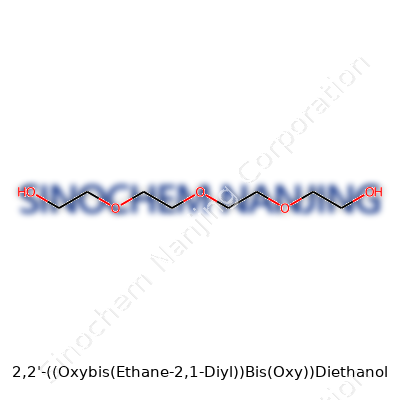
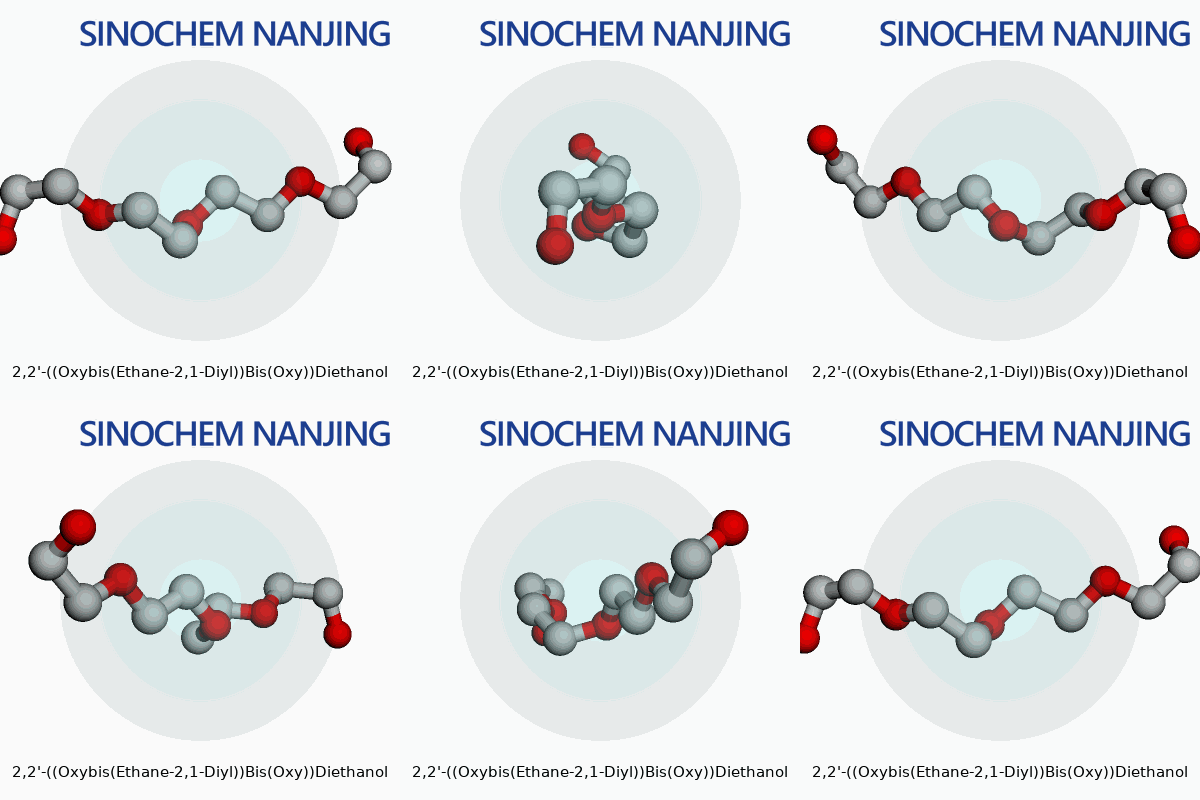
| Names | |
| Preferred IUPAC name | 2,2'-{Oxybis(ethane-2,1-diyl)}bis(oxy)diethan-1-ol |
| Other names |
TEGDME Tetraethylene Glycol Dimethyl Ether Tetraethylene Glycol Dimethyl Ether Dimethoxy Tetraethylene Glycol Diethylene Glycol Dimethyl Ether Diglyme |
| Pronunciation | /ˈtuː tuː ˈɒk.sɪ.bɪs ˈɛθ.eɪn tuː wʌn ˈdɪl ˈbɪs ˈɒk.si ˈdaɪˈɛθ.ə.nɒl/ |
| Identifiers | |
| CAS Number | '112-59-4' |
| Beilstein Reference | Beilstein Reference 1721349 |
| ChEBI | CHEBI:53091 |
| ChEMBL | CHEMBL3160021 |
| ChemSpider | 27106 |
| DrugBank | DB04319 |
| ECHA InfoCard | 100.013.273 |
| EC Number | 205-592-1 |
| Gmelin Reference | 16640 |
| KEGG | C05904 |
| MeSH | D004727 |
| PubChem CID | 8097 |
| RTECS number | KL2975000 |
| UNII | 2MHS39WJ6J |
| UN number | UN3082 |
| CompTox Dashboard (EPA) | DTXSID0028097 |
| Properties | |
| Chemical formula | C8H18O5 |
| Molar mass | 210.24 g/mol |
| Appearance | Colorless liquid |
| Odor | Odorless |
| Density | 1.126 g/cm³ |
| Solubility in water | soluble |
| log P | -1.471 |
| Vapor pressure | Negligible |
| Acidity (pKa) | 13.86 |
| Basicity (pKb) | 7.86 |
| Magnetic susceptibility (χ) | -66.4×10^-6 cm³/mol |
| Refractive index (nD) | 1.458 |
| Viscosity | 81 mPa·s (25 °C) |
| Dipole moment | 2.78 D |
| Thermochemistry | |
| Std molar entropy (S⦵298) | 302.5 J·mol⁻¹·K⁻¹ |
| Std enthalpy of formation (ΔfH⦵298) | -1926.1 kJ/mol |
| Std enthalpy of combustion (ΔcH⦵298) | -3623.2 kJ/mol |
| Pharmacology | |
| ATC code | A06AD15 |
| Hazards | |
| Main hazards | May cause respiratory irritation. |
| GHS labelling | GHS07, GHS09 |
| Pictograms | GHS07,GHS08 |
| Signal word | Warning |
| Hazard statements | Hazard statements": "H315: Causes skin irritation. H319: Causes serious eye irritation. |
| Precautionary statements | P264: Wash hands thoroughly after handling. P280: Wear protective gloves/protective clothing/eye protection/face protection. |
| NFPA 704 (fire diamond) | 1-1-0 |
| Flash point | 210 °C |
| Autoignition temperature | 202 °C |
| Lethal dose or concentration | LD50 Oral Rat 16,500 mg/kg |
| LD50 (median dose) | LD50 (oral, rat): 12,900 mg/kg |
| NIOSH | 0014 |
| PEL (Permissible) | Not established |
| REL (Recommended) | 10 mg/m3 |
| IDLH (Immediate danger) | Not established |
| Related compounds | |
| Related compounds |
Triethylene glycol Tetraethylene glycol Polyethylene glycol Diethylene glycol Ethylene glycol |



