2,2,2-Trifluoroethanol: Substance, Story, and Significance
Historical Development
Not many folks outside of chemistry circles spend much time thinking about 2,2,2-Trifluoroethanol. It’s easy to miss, not flashy in the way big pharmaceutical discoveries grab headlines, but over the last century, this small molecule has carved out a solid place in both academic labs and industrial production lines. Its story started in the early twentieth century, closely tied to the rising interest in fluorinated compounds. Chemists working with the big chemical firms in the US and Europe began to see that adding fluorine to small alcohols unlocked some surprising properties, both in terms of stability and solubility. As the world’s appetite for pharmaceuticals, polymers, and crop protectants grew after World War II, synthesis of fluorinated alcohols like 2,2,2-Trifluoroethanol became not just a curiosity but a necessity. Over the decades, improved manufacturing techniques and expanded applications have made it a staple in the toolkits of synthetic chemists everywhere.
Product Overview
2,2,2-Trifluoroethanol, often abbreviated as TFE or TFEtOH, belongs to the family of organofluorine compounds—meaning it brings together carbon, hydrogen, oxygen, and fluorine. Its formula, CF3CH2OH, hints at its special character: part alcohol, part fluorocarbon. On shelves, it usually turns up as a clear, colorless liquid, easy to pour but quick to tell you, by its strong odor, that this is no ordinary alcohol. Chemists pick it because it pushes reactions in directions that plain ethanol cannot touch, lending both strength and fine control to laboratory processes.
Physical & Chemical Properties
Pouring TFE into a flask, you notice something different right away. The liquid flows with the look of water, all clarity and lightness. It boils at a lower temperature than water, around 78 degrees Celsius, but the vapor carries a unique, sharp scent—almost sweet and biting at the same time, a signature of many fluorinated organics. The presence of three fluoride atoms on the same carbon pulls electron density away from the alcohol group, making it behave differently from common ethanol. That electronegativity ramps up both its acidity and its ability to dissolve tough substances, even some polymers that water and ethanol ignore. Its miscibility with water and organic solvents lets TFE serve as a bridge in solutions where chemists need to mix the unmixable.
Technical Specifications & Labeling
On containers, 2,2,2-Trifluoroethanol features the unmistakable chemical formula and CAS Registry Number (75-89-8). Labels stress the need for careful handling, often listing both concentration and purity—something critical because trace impurities can throw off sensitive lab work. These technical details aren’t just for show; they help users stay within regulatory boundaries set out by workplace safety guidelines, including those from OSHA and the European Chemicals Agency.
Preparation Method
Chemists developed several methods to prepare 2,2,2-Trifluoroethanol, honing in on efficiency and environmental care over decades. Early routes relied on halogen exchange reactions, swapping atoms around under high heat and pressure, with hydrogen fluoride as both reagent and risk. Later approaches focus on hydrolysis of 2,2,2-trifluoroethyl esters, pushing towards higher yields and fewer hazardous byproducts. It takes experience and good process control to keep the chemistry clean and scalable, striking a balance between productivity and safety.
Chemical Reactions & Modifications
TFE’s chemical life doesn’t stop once it leaves the production line. In the lab, scientists use its acidity to guide sensitive transformations, like the activation of carboxylic acids and the stabilization of peptide structures in solution. This alcohol’s capacity to break secondary bonds makes it a tool of choice in protein folding experiments, breaking apart and sometimes rebuilding the delicate helix-and-sheet arrangements that biologists study. Its reactivity with Grignard reagents, bases, and acids has led to new routes for the synthesis of pharmaceuticals and specialty chemicals.
Synonyms & Product Names
Names for this compound show up in the literature in many forms: trifluoroethyl alcohol, TFE, CF3CH2OH, and sometimes as ethyl alcohol, trifluoro-. Standardization clears up confusion, something especially critical in international trade and scientific publication. Any chemist searching for research or regulatory documents needs to chase all the names to get the full story.
Safety & Operational Standards
No responsible lab or factory lets its workers get careless around TFE. The vapor irritates skin, eyes, and lungs, demanding good ventilation and stringent containment even at moderate volumes. Gloves, goggles, and fume hoods become routine, not optional. Industry guidance traces dangers from accidental inhalation or ingestion, with documented effects on the nervous system and organs at higher exposures. Regulatory bodies have set exposure limits, and modern facilities knit those standards into training and routine oversight. Over years in the lab, most chemists learn to appreciate the discipline this chemical requires, placing real-world safety ahead of speed or convenience.
Application Area
Wherever precise control over chemical reactions matters, TFE draws attention. In pharmaceuticals, it tweaks reaction pathways that create active ingredients for cancer drugs, antivirals, and antifungals that patients around the world rely on. Its ability to dissolve peptides means TFE speeds up biochemistry research, while its power as a co-solvent stretches into polymer technology and electronics. New generations of materials—both in medicine and industry—rely on syntheses that sometimes only work with fluorinated alcohols like TFE on hand. Researchers in structural biology use it to probe protein folding and aggregation, a step key to breakthroughs in Alzheimer’s and Parkinson’s disease research.
Research & Development
Research into 2,2,2-Trifluoroethanol has not slowed down. In academic papers and patents, new uses pop up every year, from synthetic methods to greener production technologies that cut down on industrial waste. Teams drive forward both small lab-scale innovations and large-scale process tweaks that shave off energy consumption and costs. As new reaction cascades and catalysts emerge, TFE keeps its place at the center of development efforts. Its role as both catalyst and solvent pushes discovery, especially in the search for new drugs and advanced materials.
Toxicity Research
Hard facts underline TFE’s usefulness, but studies of its toxicity make scientists pause. The compound can be absorbed through the skin or lungs, with acute effects ranging from dizziness to more severe impacts on the liver and kidneys in animal models. Chronic exposure studies point to possible longer-term risks, driving industry and regulators to keep tightening exposure guidelines. Researchers have explored metabolic pathways in mammals, identifying breakdown products and modes of action. On the positive side, with well-controlled lab settings and proper personal protection, incidents drop dramatically, confirming a direct link between safety habits and health outcomes.
Future Prospects
Looking ahead, trends in pharmaceuticals and green chemistry line up squarely with 2,2,2-Trifluoroethanol’s strengths. As companies chase more effective medications with complex, chiral structures, the demand for fluorinated building blocks keeps climbing. New production methods that use fewer hazardous reagents, cut down on waste, and lower energy use appeal to a growing sense of industrial responsibility. In life sciences, advances in protein chemistry depend on the fine-tuned solvent properties that TFE delivers. There is room for safer alternatives and recycling processes, but for now, few substances offer quite the same blend of strength and selectivity. As with many specialty chemicals, the real challenge lies in matching its performance with a lighter footprint, both for workers and for the planet.
What is 2,2,2-Trifluoroethanol used for?
Looking Beyond the Lab Coats
A lot of people drive past chemical plants and never stop to think about what rolls out the other end. Take 2,2,2-trifluoroethanol, a mouthful that sounds like something from a science fiction storyline. Really, it's just a small alcohol molecule with a twist: three fluorine atoms. If you've ever worked in a lab, maybe you know its sharp smell and how it clears a flask in no time. But outside research circles, hardly anyone recognizes it, even though it touches lives in more ways than folks realize.
The Real Uses on the Ground
Pharmaceutical companies pay close attention whenever 2,2,2-trifluoroethanol comes up. In my graduate days, we used it to build certain drugs because its structure helps lock in the shape of proteins during experiments. Solid protein folding isn’t just a niche concern—drugs like insulin and certain cancer medications only work if their molecules hold the right shape. Mess up the folding and you’ve got a useless medicine. By helping researchers see how proteins twist and curl, this chemical quietly boosts new therapies that end up in hospitals and clinics.
The textile industry also makes a surprising amount of noise about 2,2,2-trifluoroethanol. Dyemakers and synthetic fiber folks use it to fine-tune reactions and pull off specialty coatings. That waterproof jacket on sale at the outdoor store likely started with chemicals developed using trifluoroethanol. It plays a role in preparing surfaces so that clothing stands up to rain, mud, and coffee spills, not just lemonade on a picnic.
Agriculture chimes in here, too. Pesticide makers rely on it as a solvent—something to help blend active ingredients into a form that spreads easily over fields. Farmers battling fungus or insects want sprays that work fast and vanish from the plant without leaving nasty residues. Solvents that evaporate quickly and cleanly help achieve that, and trifluoroethanol fits the bill.
Keeping Safety Front and Center
Anybody working with strong-smelling chemicals knows you don’t just pop the lid and dive in. My lab always kept bottles of 2,2,2-trifluoroethanol inside a fume hood. Safety teams drilled us on keeping eyes and lungs protected, since this stuff burns if you get careless. The need for safe handling isn’t just a checklist item; it drives smart storage policies and prompts communities to ask tough questions about chemical plant placement, worker protection, and local air quality.
Room for Smarter Solutions
Trifluoroethanol packs a punch for researchers and manufacturers, but it costs more than your average chemical. The world doesn’t make rivers of it, which keeps the supply chain tight—especially now, when inflation and freight costs rattle the markets. Some labs play with smaller amounts or turn to alternatives to dodge high prices. Others keep a close watch on waste and recycling, knowing every drop holds real value.
There’s demand for greener, safer ways to do the same jobs. If chemists can swap in less toxic solvents or invent new materials that don’t lean on tricky chemicals, both factory workers and the planet see benefits. So far, nothing quite does what 2,2,2-trifluoroethanol can, but tight budgets and tougher regulations keep the pressure on for fresh solutions.
Why It Matters to More Than Just Scientists
Some people call chemicals invisible helpers. They keep medicine safe, clothes dry, and crops healthy. While 2,2,2-trifluoroethanol doesn’t get billboard treatment, it powers quiet advancements in pharmacy, clothing, and farming. That kind of unseen influence shapes what’s possible, on shelves and in the fields, reminding us that even tongue-twisting molecules can put real tools in human hands.
Is 2,2,2-Trifluoroethanol toxic or hazardous?
What’s on the Bottle?
Pick up any lab solvent and you’ll find warnings plastered over the label. 2,2,2-Trifluoroethanol — often abbreviated as TFE or TFEtOH — shows up with its own hazards. Used in everything from pharmaceutical research to peptide synthesis, this colorless liquid smells sharp, almost sweet, and acts a lot like ethanol, except with a few extra punches. Those fluorine atoms make the molecule trickier to handle. One quick look at its Material Safety Data Sheet brings up a long list of cautions, and in my experience, lab techs keep it behind extra layers of plastic and glass.
Health Hazards: What Science Says
TFE absorbs through the skin, travels into the air, and delivers toxic effects quickly. Compared to ethanol, TFE acts more like a cousin of chloroform or methanol. Studies have shown that breathing even moderate concentrations causes dizziness, headache, and nausea. Animal research backs this up — scientists record effects on the liver, kidneys, and central nervous system. Long-term, repeat exposure increases those risks. For humans, acute exposure irritates the eyes, nose, lungs, and skin. If you accidentally spill any on your hands, the tingling sensation turns uncomfortable fast. Direct contact can also lead to burns. I’ve heard stories of colleagues needing a visit to occupational health after a splash.
Fire and Chemical Hazards
This liquid doesn’t just threaten health through contact. TFE packs serious chemical energy. It’s flammable, like most alcohols, and spills release vapors that can ignite with a spark. Add that to its toxicity and you get a substance that demands attention and respect in every step, from storage to disposal. I remember a fume hood fire in graduate school triggered by a poorly sealed TFE bottle. The cleanup alone lasted hours, and every technician started double-checking their containers for months afterward.
Environmental Worries
Pouring unused TFE down the drain seems quick and easy, but the impact lives much longer. The compound breaks down slowly in water. Aquatic organisms suffer from much lower doses than people do. Lab managers often designate TFE waste streams for incineration. Local wastewater authorities refuse to take it. There’s a reason global chemical risk lists mention 2,2,2-trifluoroethanol — persistent toxins flow downstream from one sloppy disposal, and the effects pile up silently.
Safe Handling Makes a Difference
Mitigating TFE’s hazards means more than slapping warning labels on a bottle. Always keep bottles tightly sealed, away from heat or sparks. Labs install special exhausts and train staff on proper spill response. Nitrile gloves, splash goggles, and fume hoods set the baseline for personal safety. At home, there’s no safe use case for TFE — it belongs strictly in professional settings with proper controls. Workers need up-to-date safety sheets, access to medical support, and continuous training.
Building a Safer Routine
Changing the culture around hazardous solvents takes time. Institutions can adopt substitutes for the least essential uses, reduce unnecessary stockpiling, and send spent materials through reputable waste contractors. All these steps cut exposure and shrink environmental impact. Safer science grows from open conversations, realistic risk assessments, and a commitment to following best practices. Those steps protect not just the people in the lab but the world outside its walls.
What are the storage and handling requirements for 2,2,2-Trifluoroethanol?
Understanding the Substance in the Lab
Ask any lab tech who works with solvents, and they’ll recognize the strong, almost medicinal smell of 2,2,2-Trifluoroethanol. This liquid plays a role in many organic syntheses, peptide work, and NMR studies, so knowing how to handle and store it safely matters. I remember the first time I used it. The small glass bottle felt innocuous, until I got a whiff: instant reminder that some chemicals command serious respect.
Storage: Keeping the Lab and Everyone in It Safe
Trifluoroethanol runs with a flammability rating that matches many thinner, lighter solvents. The boiling point sits near 74°C, easily hit by a standard hotplate or even a careless placement near a radiator. Any storage plan should start with a tightly closed cap. It’ll evaporate fast, and the vapors pose a combustion risk. A chemical storage cabinet rated for flammable liquids makes sense, typically away from any ignition sources or direct sunlight.
One common mistake: storing it near oxidizers. That sets up a recipe for trouble. If a spill happens around incompatible chemicals, even small quantities can trigger a violent reaction. Acid cabinets and flammable cabinets serve different purposes in the chemical storeroom, and it’s important to respect those divisions.
Personal Precautions: Keeping Your Own Safety in Mind
I always grab nitrile gloves and a pair of goggles when handling this—splashes sting and trifluoroethanol absorbs through skin more efficiently than many might believe. Splash risks aren’t just about eyesight. Even short contact dries out skin and could cause deeper, invisible problems. Long sleeves and a real, fitted lab coat prevent the unpleasant surprise of a strong chemical burn if the bottle drips.
Some colleagues like to work on an open bench. I’ve learned that a fume hood is really the only place to open up a fresh bottle. Trifluoroethanol vapor irritates eyes and the nose quickly at low concentrations. In poorly ventilated spaces, the stuff can hang around and cause a headache, so decent airflow should back up every operation.
Spill Management and Waste
Every lab I’ve worked in keeps a spill kit nearby, and that’s not overkill. A few milliliters on the floor can turn into a slip hazard in a hurry. Vermiculite, paper towels, and a bottle of sodium bicarbonate cover most spills. Once it’s contained, chemical waste rules demand a clearly labeled waste container—never let trifluoroethanol run into the sink.
Regular checks keep leaks and outdated bottles out of circulation. I’ve seen peroxides form in old trifluoroethanol, particularly if the cap sits loose or UV sneaks in. Those tiny, crusty residues around the mouth signal it’s time for disposal, not more use. Keeping inventory logged and rotated supports a healthy and compliant workspace.
A Practical Focus for the Lab
It’s easy to overlook safe handling when work piles up and deadlines loom, but every good chemist treats 2,2,2-Trifluoroethanol with routine respect. Lab safety culture starts with good storage, regular cleanups, and an honest look at chemical compatibility. Small changes—like double-checking where you stash your bottles or refreshing spill response skills—cut down risks for everyone sharing the workspace.
OSHA and local safety guidelines exist for a reason. Following them keeps labs running and workers healthy, and in my experience, keeping it simple and thorough beats any shortcut.
What is the chemical formula and structure of 2,2,2-Trifluoroethanol?
The Chemical Formula
2,2,2-Trifluoroethanol packs a punch with its formula: C2H3F3O. Stripped to basics, this molecule holds two carbon atoms, three fluorine atoms, three hydrogen atoms, and one oxygen atom. Chemists often shorten it to TFE in lab notes or conversations. People who handle solvents and make pharmaceuticals keep 2,2,2-Trifluoroethanol on hand for tasks that regular alcohol can't manage. Sometimes, it even pops up as a co-solvent for protein studies and specialized syntheses.
The Structure: Straightforward, Powerful
This compound doesn't hide any tricks. Its backbone resembles ethanol, but all three hydrogens on the methyl group have turned into fluorines. You get CF3CH2OH. One carbon connects to three fluorines, the second carbon chains next with two hydrogens and an -OH group. The strong pull of the fluorine atoms gives this alcohol a real personality—greater acidity and reactivity compared to plain old ethanol.
Why TFE Stands Out in the Lab
One time, I watched a protein scientist swear off regular alcohols, switching almost overnight to 2,2,2-Trifluoroethanol. The trick? TFE stabilizes protein secondary structures. Most solvents break things apart, but TFE helps build alpha-helices—the shapes proteins crave for proper function. This property comes from those greedy fluorines, pulling electrons and keeping the -OH group ready to work.
TFE also dissolves compounds that shrug off water or ethanol. Medicinal chemists love this ability for tough synthesis projects. Its strong hydrogen-bonding capacity comes directly from the way its atoms line up. TFE’s high polarity and the structure make it great for coaxing stubborn molecules into solution. This opens new routes for designing drugs or testing new reactions.
Risks and Opportunities
With strength comes responsibility. TFE’s volatility and toxicity mean that folks working with it have to stick to proper ventilation and handling procedures. My stint in a chemical warehouse taught me to respect those fuming bottles—eye and skin protection became habits. There’s no sense taking shortcuts when inhaling a few too many vapors could spell trouble for your nervous system or liver.
As regulations shift worldwide, safer alternatives might show up for certain roles. But for stubborn synthetic pathways or tough research setbacks, nothing quite replaces TFE’s blend of properties. Labs that value worker safety can keep bans and exposure limits practical by investing in fume hoods, leak detection, and clear training for anyone pouring out this compound.
Looking Forward
Knowledge about 2,2,2-Trifluoroethanol will keep growing. Detailed studies have already mapped its behavior in proteins, reactions, and complex mixtures. Companies searching for greener options will have to balance TFE’s abilities with sustainability goals and safety concerns. What's clear: dig into TFE’s formula and structure, and you’ll find a case study in how a few fluorines can shape an entire chemical's personality and usefulness.
Can 2,2,2-Trifluoroethanol be used as a solvent in biochemical research?
A Practical Tool for Protein Chemists
Lab benches often display a lineup of solvents, each serving a distinct purpose. Among them, 2,2,2-trifluoroethanol (TFE) attracts attention for its ability to influence protein structure in a way few others do. TFE dissolves both polar and nonpolar substances, offering unique value for anyone wrestling with protein refolding or peptide synthesis. Bench scientists turn to TFE when water or alcohols leave them short of answers.
Unfolded proteins, by nature, resist coming together in orderly fashion. Repeated experiments with aqueous solutions sometimes end in frustration, proteins clumping or denaturing before analysis. Swapping in TFE can stabilize secondary structures like alpha helices—a useful tool for exploring how mutations or drugs affect folding. Researchers tracked these changes using spectroscopy, watching as peptides transition between shapes. Data drawn from journals like Nature Structural & Molecular Biology show TFE frequently paving the way for key discoveries in folding mechanisms.
Safety and Reliability Count
The smell of TFE in the air signals both promise and caution. The solvent brings clear benefits but sits on regulatory watchlists due to its toxicity and volatility. In my own work, keeping TFE in a tightly closed bottle and handling it under a hood became routine. No one wants to deal with irritated eyes or dizziness mid-experiment. TFE exposure can irritate skin, eyes, and the central nervous system, so gloves and goggles remain non-negotiable.
Reliable results depend on recognizing these hazards up front. Protocols set by safety officers stay grounded in data; the Centers for Disease Control and Prevention monitors safe levels, with recommended limits in air of 2 parts per million over an eight-hour period. Waste collection drums labeled for TFE in the hallways keep contaminated material out of drainpipes, confirming how research routines rely on both scientific method and environmental stewardship.
Critical Applications and Challenges
Some colleagues hesitated to introduce TFE, worrying about effects on delicate biomolecules. Too much TFE, and proteins may adopt artificial shapes, muddying results. Yet, low to moderate concentrations push research forward. Take circular dichroism spectroscopy: results grow clearer by dissolving peptides in TFE, revealing structural details invisible otherwise. Synthetic peptide chemists rely on these insights to compare native and mutated variants, inching closer to drugs or diagnostics that could improve health outcomes.
Cost sometimes raises eyebrows. TFE isn't cheap or easily recycled; tight research budgets make every milliliter count. Even so, results matter. One recent study in The Journal of Biological Chemistry showed TFE’s role in identifying amyloid-forming sequences linked to neurological diseases. These insights can’t come from conventional solvents.
A Push for Greener Chemistry
Labs now face pressure to revisit old habits and find more sustainable tools. Some research groups in Europe and North America test alternatives like ionic liquids or biobased solvents but admit these substitutes lack TFE’s track record. Replacing TFE without sacrificing data quality stays front-of-mind for many teams.
A practical way forward balances safety and necessity. Transparent documentation, shared protocols, and honest reporting on both the benefits and risks shape responsible research. Academic mentors teach younger scientists when TFE’s payoff outweighs risks, nudging lab culture toward both innovative discovery and responsible stewardship.
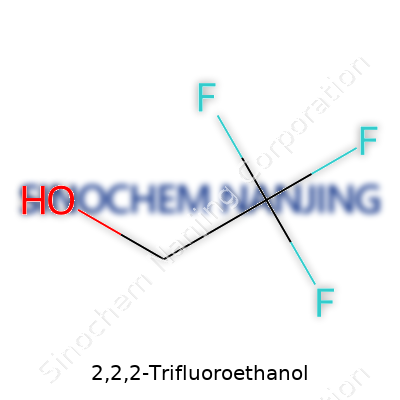
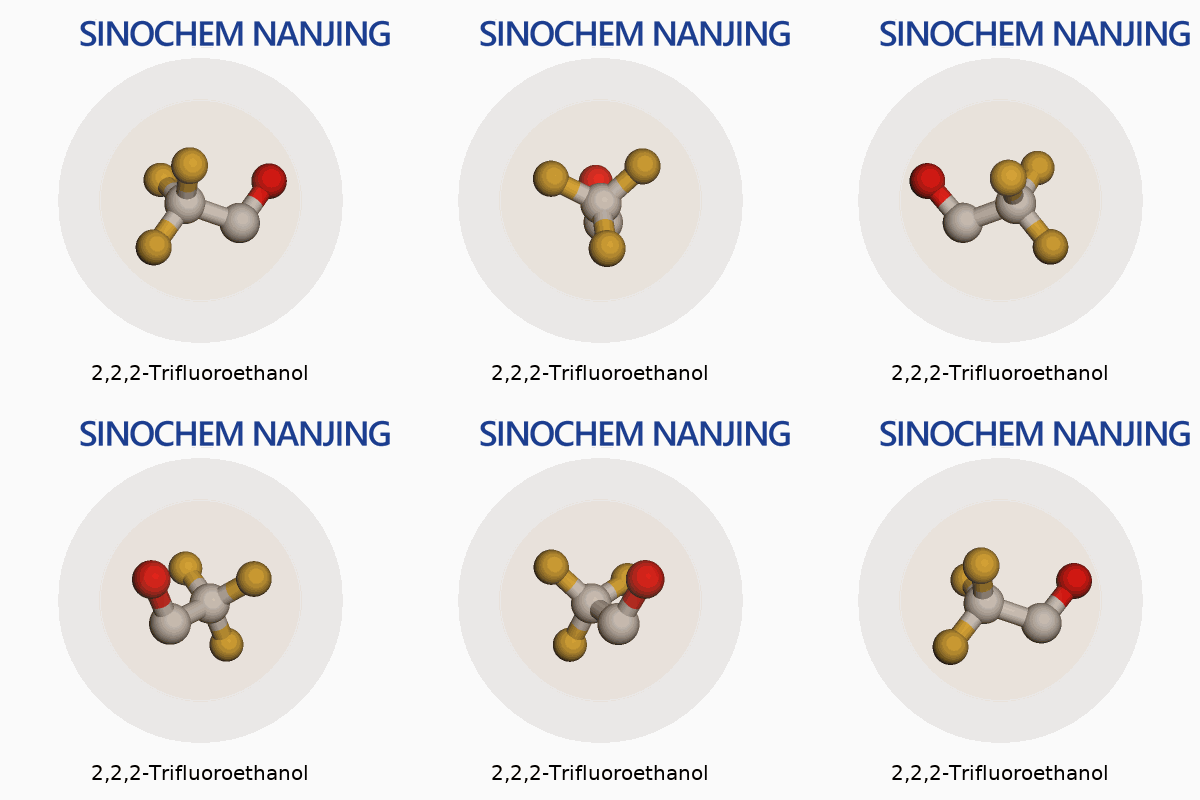
| Names | |
| Preferred IUPAC name | 2,2,2-Trifluoroethan-1-ol |
| Other names |
TFE Trifluoroethyl alcohol Perfluoroethyl alcohol 2,2,2-Trifluoroethan-1-ol |
| Pronunciation | /ˌtraɪˌflʊəroʊˈɛθənɒl/ |
| Identifiers | |
| CAS Number | 75-89-8 |
| Beilstein Reference | 1721391 |
| ChEBI | CHEBI:42121 |
| ChEMBL | CHEMBL1377 |
| ChemSpider | 5794 |
| DrugBank | DB03757 |
| ECHA InfoCard | 100.007.764 |
| EC Number | 200-580-7 |
| Gmelin Reference | 60742 |
| KEGG | C01716 |
| MeSH | D014960 |
| PubChem CID | 6372 |
| RTECS number | KN0350000 |
| UNII | KAG09FSTFN |
| UN number | UN1992 |
| CompTox Dashboard (EPA) | DTXSID5020664 |
| Properties | |
| Chemical formula | C2H3F3O |
| Molar mass | 100.04 g/mol |
| Appearance | Colorless liquid |
| Odor | Alcohol-like |
| Density | D=1.377 g/mL at 25 °C(lit.) |
| Solubility in water | miscible |
| log P | -0.24 |
| Vapor pressure | 21 mmHg (20°C) |
| Acidity (pKa) | 12.4 |
| Basicity (pKb) | pKb: 15.9 |
| Magnetic susceptibility (χ) | -33.3e-6 cm³/mol |
| Refractive index (nD) | 1.293 |
| Viscosity | 1.422 cP (25°C) |
| Dipole moment | 1.548 D |
| Thermochemistry | |
| Std molar entropy (S⦵298) | 216.7 J·mol⁻¹·K⁻¹ |
| Std enthalpy of formation (ΔfH⦵298) | -697.5 kJ/mol |
| Std enthalpy of combustion (ΔcH⦵298) | -1440 kJ·mol⁻¹ |
| Hazards | |
| GHS labelling | GHS02,GHS05,GHS06 |
| Pictograms | GHS02,GHS05,GHS06 |
| Signal word | Danger |
| Hazard statements | H225, H301, H311, H331, H370 |
| Precautionary statements | P210, P261, P280, P301+P312, P305+P351+P338, P337+P313, P403+P233, P501 |
| NFPA 704 (fire diamond) | 1-3-0 |
| Flash point | 42 °C (closed cup) |
| Autoignition temperature | 425 °C |
| Explosive limits | 4.8–15.2% |
| Lethal dose or concentration | LD50 oral rat 706 mg/kg |
| LD50 (median dose) | LD50 (median dose): Oral rat 706 mg/kg |
| NIOSH | KL5950000 |
| PEL (Permissible) | PEL (Permissible Exposure Limit) of 2,2,2-Trifluoroethanol: "50 ppm (205 mg/m³) as TWA |
| REL (Recommended) | 5 ppm |
| IDLH (Immediate danger) | 400 ppm |
| Related compounds | |
| Related compounds |
Ethanol Hexafluoroisopropanol Trifluoroacetic acid Trifluoroacetaldehyde |



