1-Propanol: One Molecule’s Footprint Across Industry and Science
Historical Development
Looking back at the early side of organic chemistry, 1-propanol didn’t draw headlines in the same way as ethanol or methanol, but chemists noticed it early in their study of alcohols. Around the 19th century, as scientific understanding took its first big leaps, research into fermentation and petroleum derivatives brought 1-propanol out of obscurity. Scientists tied it to both the natural breakdown of fats and the newer world of refinery output. The molecule, often discovered in parallel with its isomer isopropanol, found small but useful roles in labs and industry. Generations of chemists treated 1-propanol as a useful marker in distillation, and its clean-burning properties kept it relevant in research related to energy and solvents.
Product Overview
1-Propanol goes by several other names—n-propyl alcohol, propan-1-ol, and sometimes plain old propyl alcohol. It belongs to the family of aliphatic alcohols, landing squarely between methanol and larger alcohols in both size and function. Across chemical manufacturing, chromatography, pharmaceuticals, and even flavor and fragrance work, this molecule carves out its own space. In my own research days, I saw 1-propanol shelved alongside common solvents, quietly reliable, never staining glassware, and always ready for another round of extraction, precipitation, or cleaning under a hood.
Physical & Chemical Properties
What sets 1-propanol apart is the combination of its structure and its interactions. With a boiling point close to 97°C and a slight, biting odor, it’s noticeably more pungent than ethanol—enough to make you realize that even small differences in carbon chain count change the way alcohols behave. It’s colorless, mixes freely with water, and handles like a lighter alcohol. Chemically, the single hydroxyl group at the terminal position drives reactivity, especially in oxidation and esterification. Solubility is high in water and organic solvents alike, which means extraction or separation methods rarely leave much propanol behind. I never worried about it sticking around in glass or plastic after a quick rinse, which speaks to the way it interacts with its environment.
Technical Specifications & Labeling
Industry sets the purity bar high for 1-propanol, particularly in analytical and pharmaceutical uses. Labels always feature international chemical identifiers, purity percentages, and hazard warnings, because the line between useful solvent and toxic hazard stays thin. I’ve watched safety officers check CAS numbers and batch purity before shelving any reagent in shared labs. The transparency on labeling, from hazard pictograms to detailed chemical grades, keeps accidents down and trust up, especially in large-scale applications where even trace byproducts present problems.
Preparation Method
Most industrial 1-propanol comes out of petrochemical setups. Catalytic hydrogenation of propionaldehyde—produced by hydroformylation of ethylene—delivers high yields. There’s a clean logic behind this route, matching feedstocks that companies have in abundance to a product that fits growing demand. Older texts reference fermentation routes, but such processes rarely show up on plant process diagrams today, due to lower efficiency and difficulty with separation. Lab-scale synthesis sometimes takes a more roundabout path, recycling propanoic acid or using reduction methods known more for their demonstration value than for production volume.
Chemical Reactions & Modifications
1-Propanol’s utility grows in chemical reactions. The most common transformations exploit its terminal alcohol group. Oxidizing propanol yields propionaldehyde and further processing leads to propionic acid. Esterification with different acids produces a variety of propyl esters that serve as solvents, flavorings, and intermediates. In the lab, I’ve run reductions and substitutions on propanol, watching the molecule’s backbone stay solid while functional groups come and go. Reactions with halides, formation of ethers, or even dehydration to alkenes all reflect the flexibility that this simple molecule offers to the inventive chemist.
Synonyms & Product Names
“1-Propanol” isn’t the only name you’ll hear in the corridors of science or industry. You’ll run into “n-propyl alcohol” on older labels, “propan-1-ol” for IUPAC sticklers, and even propanolic alcohols in the trade catalogues. It’s useful to keep track of these synonyms, because regulatory, transportation, and procurement documents sometimes swap between names. Friends in logistics once told me stories of shipments delayed or misplaced because customs paperwork didn’t match product labels, all due to switching between identities for the same substance. The lesson: Clear, up-to-date chemical naming saves headaches across borders and industries.
Safety & Operational Standards
Safety concerns with 1-propanol echo those of other simple alcohols. Inhalation or skin exposure leads to irritation, and accidental ingestion quickly calls for medical attention. Its flammability presents the greatest operational risk—vapors can ignite at room temperature, so proper storage in explosion-proof cabinets and careful attention to ignition sources stays important. I’ve seen near-misses from small spills evaporating in poorly ventilated spaces, reinforcing why procedures matter. Organizations like OSHA and the European Chemicals Agency maintain guidelines for handling, storage, and disposal. When shops and factories stick to the protocols, accident rates drop and insurance premiums tend to follow.
Application Area
1-Propanol pops up in unexpected places. Solvents in pharmaceutical formulation, extraction in analytical chemistry, and raw material in the production of esters or pharmaceuticals all draw on its properties. Cleaning electronics, preparing botanical samples, or serving as an intermediate for resins highlight its flexibility. Flavor scientists and fragrance developers sometimes turn to propyl esters for fruity or floral notes, though the parent alcohol generally sits backstage in these industries. For me, its stubborn ability to dissolve a surprising range of substances meant 1-propanol earned a spot on the bench whenever other solvents fell short.
Research & Development
Research activity on 1-propanol rarely makes the front page, but the volume of papers, patents, and process improvements speaks to sustained interest. Scientists push for greener synthesis, maximizing yields from biomass or renewable feedstocks. Advances in catalysis create less waste and consume less energy. Analytical chemists look at new detection methods in environmental monitoring, aiming to trace propanol and its metabolites as indicators of spoilage or fermentation. I recall one university lab exploring ways to transform surplus propanol into specialty polymers, proving the adaptability of even older chemicals in newer research contexts.
Toxicity Research
Toxicity studies get rigorous review because 1-propanol straddles the line between utility and hazard. Data from animal studies show that ingestion or chronic exposure brings risks—central nervous system depression, metabolic acidosis, and in some cases, liver and kidney stress. Regulatory agencies like the EPA and ECHA trace workplace exposure, drinking water contamination, and accidental release, keeping public health front and center. Medical research has to weigh symptom management for intoxication, which usually resembles that of ethanol but often shows up with more severe irritation or nausea. Chronic exposure data drive workplace controls and personal protective equipment mandates. I’ve watched safety teams overhaul ventilation and screening after fresh toxicity studies revealed hidden risks with older workplace practices.
Future Prospects
Looking ahead, 1-propanol’s role in industry and science stands to grow along with pushes for cleaner technology and renewable feedstocks. There’s active work on using it as a hydrogen carrier, integrating it into biofuel strategies, and leveraging its hydrogen bonding for new catalytic processes. Advances in biotechnology, especially synthetic biology, could soon deliver fermentation routes that match petrochemical yields, supporting carbon-neutral production targets. Realistically, regulations will get tighter and scrutiny of exposure deeper. What feels certain is that 1-propanol will stay part of the chemical toolbox—unflashy, essential, and shaped by both tradition and innovation. Keeping safety up, reducing environmental impact, and focusing on smarter synthesis all stand as keys to making the most of this three-carbon workhorse, whatever the future might hold.
What is 1-Propanol used for?
Why 1-Propanol Matters
1-Propanol isn’t something most people talk about over coffee, though it crops up in more places than you might expect. Used in labs, factories, and even in products we use at home, its story deserves some attention. My own run-ins with 1-Propanol started in a college chemistry course. Our professor, always careful to point out the harsh smell, loved sharing tales about the unexpected places these chemicals pop up. Once you learn how deeply woven a simple alcohol can be in daily life, you start reading labels a little differently.
Common Uses in Industry and Daily Life
Take walk through a pharmacy—or even a hardware store—and there’s a good chance you’ll find products containing 1-Propanol. Its ability to dissolve oils and chemicals without leaving behind much residue makes it a popular solvent. Factories lean on it heavily for making things like resins and coatings. Paints dry smoother and faster after a dose of 1-Propanol. Manufacturers often choose it over similar alcohols because it evaporates at just the right speed and doesn’t make the final product sticky.
1-Propanol pulls extra duty as a disinfectant. Hospitals sometimes use solutions made with it to wipe down surfaces or clean hands. Not every disinfectant on the market works the same way, but 1-Propanol breaks apart cell membranes, killing germs in a hurry. Its germ-busting powers don’t end up front-and-center on every disinfectant bottle, but you can bet health workers notice how fast it dries and how it leaves little residue behind.
In the Lab and Beyond
Scientists lean on 1-Propanol for more than cleaning or mixing. It shows up in making medicines, helping pull out the right active ingredients in pharmaceuticals. Ever look at the back of a bottle of cough syrup or nasal spray and see a chemical name that rings a bell? Sometimes, 1-Propanol helped in the process, working behind the scenes during manufacturing. It also helps in genetic research—DNA extraction protocols often use it to help gather enough pure genetic material for study.
Safety and Risks
People hear “alcohol” and might think of beverages, but drinking anything with 1-Propanol leads to trouble fast. It shouldn’t touch your skin for long. Even breathing in its vapor for a while might cause headaches and irritation. I’ve watched a lab partner ignore the rules about fume hoods during an experiment with 1-Propanol. The lesson hit home with watery eyes and a headache that didn’t lift for hours. Safety gear and good ventilation aren’t “extra,” they’re essential.
Disposing of 1-Propanol takes some care, too, since it can hurt plants and animals if it leaks into the environment. City waste departments usually have special rules for chemicals like this. Dumping them down the drain isn’t just risky, it can land you in serious trouble.
What Needs Attention
Safer alternatives for cleaning and disinfection keep popping up, but not every product matches 1-Propanol’s blend of convenience and strength. Companies owe it to their workers to follow up-to-date safety practices. Schools and laboratories can teach these habits early. If more folks pay attention to safety gear and proper disposal, we can cut down on accidents and protect both people and the environment from unnecessary risk.
Everyday exposure isn’t likely unless you work in industries that use chemicals. Still, 1-Propanol’s reach serves as a reminder: the chemicals in our world shape health and safety more than we sometimes notice.
Is 1-Propanol safe to use?
Understanding 1-Propanol in Daily Life
1-Propanol shows up more than many realize. From my work with industrial cleaning, I've seen it used as a solvent and sanitizer. Plenty of folks spot it listed on lab supply orders, and it sometimes turns up in pharmaceutical processes. Safety isn’t just about hazard labels but about what actually happens where it gets used.
Direct Contact and Exposure Risks
On the factory floor, the first thing anyone asks about a chemical is, “If I splash this, what’s my risk?” With 1-Propanol, skin irritation is the main immediate concern. In my experience doing glove changes between tasks, it’s clear—this stuff can dry out your hands fast and sometimes cause a burning feeling with too much exposure. Eyes react badly if liquid gets in them, often getting red or irritated.
Inhalation feels more serious. At one lab, vapors built up during mixing. Even with the exhaust on, headaches and a lightheaded feeling hit me after an hour. Published research points to central nervous system effects when exposure reaches high levels, so solid ventilation makes a real difference. 1-Propanol evaporates fast, so even if you don’t see puddles, the air can get heavy with fumes, especially in small rooms.
Swallowing and Toxicity
No one should try tasting 1-Propanol. It acts as a central nervous system depressant if swallowed. Drinking even a few teaspoons by mistake can mean nausea, breathing problems, or coordination loss. The chemical structure is close to isopropyl alcohol, which brings its own dangers. Data from poison control centers show hospital trips after accidental ingestion, especially among kids or careless storage. At home, safe chemical storage trumps everything—one spilled bottle under the sink turns into a medical emergency.
Environmental Impact
Washing 1-Propanol down the drain after cleaning tools seems harmless. It breaks down in water and air, but not always fast enough to avoid harming aquatic life if enough gets out. Regulations, including EPA and REACH in Europe, list safe disposal practices. I’ve watched wastewater compliance teams measure chemical residue at factories. They take readings because local ponds pick up runoff. Over time, even seemingly “light” solvents build up, and that changes things for fish and plants.
Safer Use at Work and Home
Workers on cleaning crews or in production lines carry a big share of risk. Gloves, goggles, fresh air, and clear labeling matter every day. I know crews that switched to water-based alternatives to reduce chemical headaches and skin trouble. In hospitals, pharmacy staff monitor exposure limits, sometimes locking up even low-toxicity chemicals in cabinets. OSHA and NIOSH list legal exposure limits—sticking to those numbers helps.
For home users, storing bottles out of sight and reach of children and pets makes a difference. Label anything repackaged from bulk jugs—one old soda bottle with clear liquid can fool anyone. If someone does get exposed, local poison control centers give the fastest, safest advice.
Room for Improved Practices
Change often starts with training. Short, clear safety talks keep people alert. I’ve seen big safety gains from simple steps: labeling every bottle, opening windows during use, and swapping single-use gloves often. Manufacturers already include warning labels for a reason. Sweet-smelling, “harmless” appearance tricks people, but real experience always proves that careful handling pays off—every time.
What is the chemical formula of 1-Propanol?
Understanding the Chemical Formula
1-Propanol pops up in many labs and industries, thanks to its structure: C3H8O. The way three carbon atoms link with eight hydrogens and a single oxygen forms more than just a formula—it forms a practical tool in cleaning, manufacturing, and research. People sometimes think science takes place only in big, mysterious laboratories, but I remember my college days, mixing this same alcohol with patience, gloves pulled tight, and a strong respect for flammable liquids. This one never asked for drama; it just did its job.
Why C3H8O Matters
The value of 1-Propanol goes beyond textbook diagrams. Chemists use it as a solvent, and it earns its keep in hand sanitisers and disinfectants. During the early days of the COVID-19 pandemic, suppliers scrambled to meet the spike in demand—not only for ethanol and isopropanol but also 1-Propanol. Its formula gave it a place in hand rubs that made hospitals just a little safer and helped families everywhere.
My uncle, who used to run a small painting business, always kept a drum of 1-Propanol in the workshop. He chose it because it could dissolve paint residues without leaving streaks or stubborn build-up. Clean-up became easier, and the air didn’t fill with overpowering fumes. There are choices in solvents, but 1-Propanol’s formula gives it the right blend of performance and safety for small-business work.
Health and Safety Issues
Handling chemicals with C3H8O means respecting health standards. Inhaling its vapour or letting it soak into the skin opens the door to headaches, drowsiness, and even worse—long exposure has consequences people shouldn’t ignore. People need clear labels, well-maintained safety data sheets, and solid training. For many workers without chemistry degrees, the line between safe use and risk rests on clear instruction and a workplace culture that takes safety seriously.
Not every location worldwide enforces the same chemical handling rules. I’ve seen warehouses stacked with bottles of 1-Propanol next to snacks, and offices that store cleaning supplies with barely a warning sign. Teaching safety should start before someone ever twists open a cap. Small steps—like better hazard symbols, frequent reminders, and open conversations—can make a noticeable difference.
Improving Chemical Stewardship
Safe use of C3H8O benefits from strong supply chains and community trust. Back in school, we cleaned up every spill immediately. That habit stuck with me for life, both in research and in my garage at home. Companies must keep high standards for labeling and storage; regulators need to support small businesses with simple, practical guides, and distributors ought to look out for fake products slipping into the market.
Tools for safe chemical handling should feel accessible to everyone. Digital safety sheets, short training videos, and community drop-off points for expired chemicals would help push the world towards better habits. Simple steps, repeated and shared, help keep families and businesses safe—even when they work with something as every day as 1-Propanol.
How should 1-Propanol be stored?
Let’s Talk about What You’re Dealing With
Anyone using 1-Propanol at work or in a home lab knows it’s much more than just another chemical on the shelf. 1-Propanol is a colorless liquid, and like other alcohols, it gives off vapor at room temperature. In a busy lab, I learned quickly that it’s not something you want just sitting on an open bench. The risk comes from how flammable it is; small sparks or even static can turn a minor slip-up into a real emergency. The flammable label means storage isn’t just a paperwork detail—your safety depends on doing it right every time.
Storing for Safety, Not Just for Compliance
It’s tempting to shove bottles wherever there’s space, especially when shelves are packed. This is a mistake you only make once. 1-Propanol belongs inside flammable storage cabinets, away from direct sunlight, heat sources, or any equipment that could create a spark. I’ve seen bottles stashed near radiators, under a fume hood with hot plates, and even next to acid containers—each spot creating bad combinations. Industry guidelines, like those from OSHA and the National Fire Protection Association (NFPA), stress separating flammable liquids from incompatible materials, such as oxidizers and strong acids. Fire marshals visit my lab once a year, and mixing these chemicals always gets flagged as a violation.
For busy teams, something as simple as color-coded shelves or clear signage stops mistakes. In a facility I worked in, labels on cabinets spelled out exactly what belonged inside—red for flammables, yellow for corrosives. After one near miss, we even held short training talks so new hires never missed those warning signs.
Why Ventilation Truly Matters
Even tightly capped, 1-Propanol gives off vapors. Breathing those over time causes headaches and dizziness, and in poorly ventilated areas, the fire hazard gets worse. I’ve walked into rooms where a faint alcohol smell meant someone forgot to close a lid completely. I learned from my old supervisor that keeping storage spaces ventilated—either with dedicated exhaust fans or by placing cabinets near airflow—isn’t an overreaction. It keeps both the people and the space safer. Many chemical storage cabinets now have venting options. If you store more than a couple of bottles, investing in one with those features goes a long way.
Keep It Locked, Keep It Safe
For anyone with curious kids, pets, or even just a lot of foot traffic, locks make a huge difference. The danger from 1-Propanol isn’t just fire; swallowing or spilling it can cause serious health problems. In my experience, cabinets with built-in locks prevented plenty of accidents, especially around students or night-shift workers not familiar with what’s inside. Insurance audits always ask about this kind of detail—not because it’s red tape, but because accidents often happen out of hours, when fewer people are around to notice something going wrong.
Don’t Gamble on Expired Chemicals
Old or leaking containers turn a low-risk bottle into a ticking time bomb. In more than one place, I’ve found half-evaporated chemical bottles—leftover from a past project, catching dust. Manufacturers usually print expiration dates or recommend shelf lives. If anything smells off or looks discolored, it won’t be worth keeping. My team sets regular checks and a disposal calendar. Properly closing bottles, labeling with the date opened, and having secondary containment trays have caught more than one slow leak before it became a bigger problem.
Simple steps—dedicated cabinets, locks, good ventilation, regular inventory checks, and clear labels—keep 1-Propanol safe and out of harm’s way. Forget one, and it’s only a matter of time before something goes sideways. No one wants to be remembered for the wrong reason.
What are the differences between 1-Propanol and 2-Propanol?
The Basics on Both Alcohols
Anyone who’s done a little high school chemistry remembers playing around with alcohols—maybe not exactly these, but the science behind them shows up everywhere. Both 1-Propanol and 2-Propanol are close siblings on the chemical tree. They both pack three carbon atoms, but there’s a small switch-up in their structure. That alone creates a noticeable ripple, changing not just how they look on paper, but also how people put them to work in labs, factories, and even around the house.
Structures and Smells
Take a look at the names. 1-Propanol stacks its alcohol group (the -OH group) at the end of the chain. That sets it up as a primary alcohol, which means during reactions, it tends to be a little less bulky and moves differently through chemical pathways. 2-Propanol, on the other hand, puts this group in the middle—on the second carbon—earning the “secondary” title.
Most folks know 2-Propanol by another name: isopropanol or rubbing alcohol. It’s the familiar smell in hospitals and cleaning wipes. 1-Propanol smells a bit milder—maybe closer to the spirits you’d find in certain industrial products. Years ago, a friend who worked in a paint shop told me they could tell which type was in a solvent by the nose alone. For anyone sensitive to strong odors or working around the stuff daily, even this little detail could make a difference.
Health and Safety Differences
Both of these alcohols land their punches if handled carelessly. Rubbing a bit of 2-Propanol on a cut doesn’t burn as much as pure ethanol, yet it dries out skin fast. Drinking it or inhaling too much vapor brings on headaches, nausea, and—at high doses—serious health risks. 1-Propanol carries bigger risks. The body deals with it differently, and it comes out more toxic than its middle-sibling isopropanol. Accidental ingestion or high exposure—especially in industrial spills—brings on nerve and kidney problems. If you work around chemicals, you learn quick not to let labels turn into background noise.
Jobs They Land: Where to Find Each
Walk down the cleaning aisle and you’ll spot 2-Propanol in plenty of bottles. Hospitals pick it for sanitizers and disinfectants because it kicks germs without leaving oily residue. I’ve used it to clean glass, wipe electronics, and as a cheap disinfectant at home. Factories use both types, but 1-Propanol tends to show up more in production processes—pharma, cosmetics, or as a solvent for things like ink, resins and dyes. Its higher toxicity means you won’t find it in your average home.
The pandemic highlighted the power and pitfalls of these chemicals. Demand for sanitizers shot up, and so did confusion about which alcohols killed viruses effectively. Both can help, but concentrations and safe use matter. For most non-scientists, the safest path means sticking with known, labeled products—manufacturer’s guidance counts.
Room for Improvement—And Watch Points
Factories working with propanol still face real risks—explosions, spills, or long-term air pollution. Regular training and crystal-clear warning systems help keep workers safe. In countries with less oversight, informal use and poor storage often tip the balance toward accident and injury. Smarter regulations, better labeling, and ongoing worker training could save lives. At home, sticking with store-bought formulas and resisting homemade sanitizer recipes will usually keep folks out of trouble.
Why Chemical Street Smarts Matter
A bottle isn’t just a bottle if you ignore what’s inside. Getting the difference between 1-Propanol and 2-Propanol boils down to understanding their risks, why they’re chosen for certain jobs, and practicing safe habits whether you work in a lab, on a production line, or just want a clean countertop. Facts, careful habits, and a respect for tiny differences make all the difference.
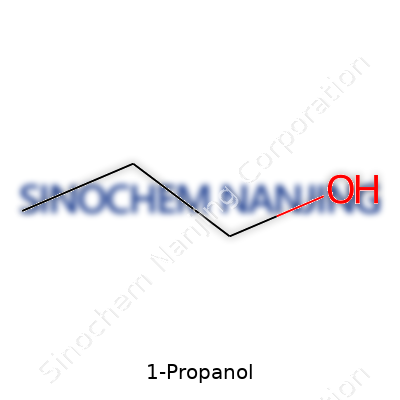
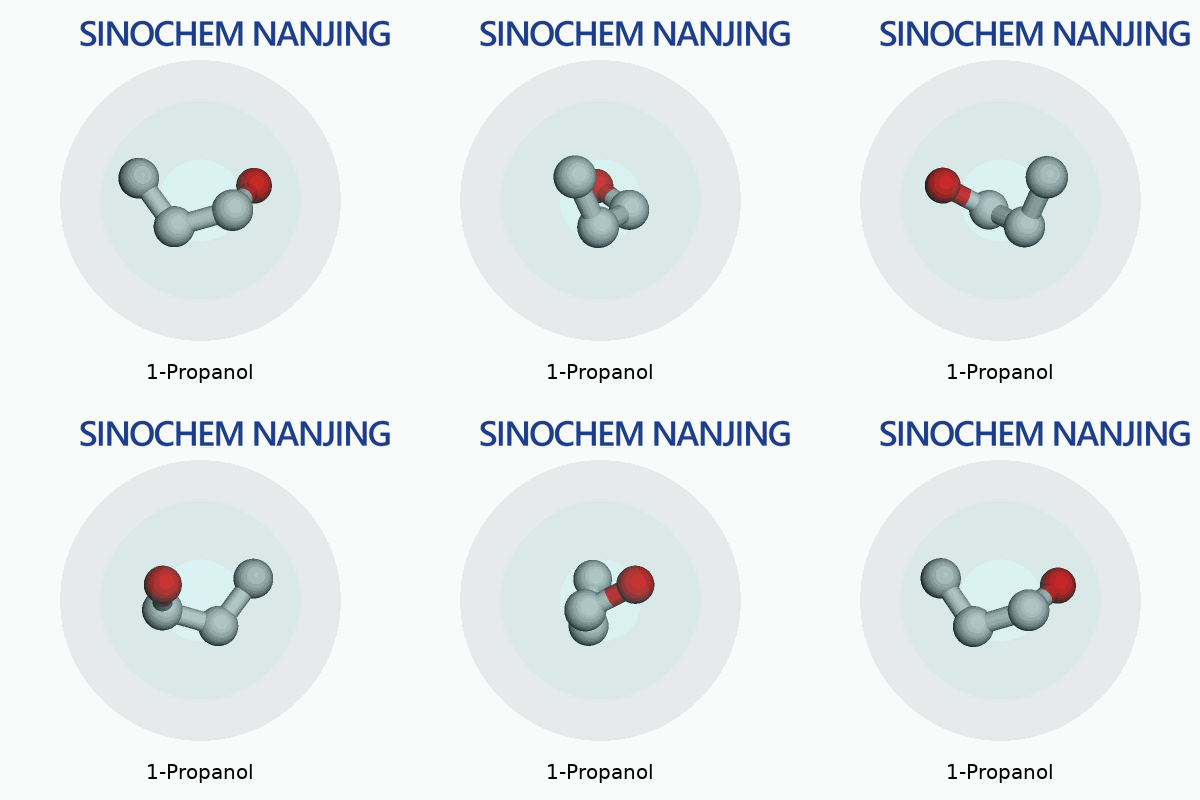
| Names | |
| Preferred IUPAC name | propan-1-ol |
| Other names |
n-Propanol n-Propyl alcohol 1-Propanol Propan-1-ol Propyl alcohol |
| Pronunciation | /ˈproʊ.pəˌnɒl/ |
| Identifiers | |
| CAS Number | 71-23-8 |
| Beilstein Reference | 604127 |
| ChEBI | CHEBI:17824 |
| ChEMBL | CHEMBL15961 |
| ChemSpider | 7277 |
| DrugBank | DB00439 |
| ECHA InfoCard | ECHA InfoCard: 100.000.858 |
| EC Number | 200-746-9 |
| Gmelin Reference | Gmelin Reference: 8367 |
| KEGG | C00474 |
| MeSH | D017444 |
| PubChem CID | 1031 |
| RTECS number | UE4447000 |
| UNII | UDM83C7VOI |
| UN number | UN1274 |
| Properties | |
| Chemical formula | C3H8O |
| Molar mass | 60.10 g/mol |
| Appearance | Colorless liquid |
| Odor | Alcohol-like |
| Density | 0.803 g/cm³ |
| Solubility in water | Miscible |
| log P | 0.25 |
| Vapor pressure | 14 mmHg (20°C) |
| Acidity (pKa) | 16.1 |
| Basicity (pKb) | Basicity (pKb) of 1-Propanol: 16.1 |
| Magnetic susceptibility (χ) | -48.6×10⁻⁶ cm³/mol |
| Refractive index (nD) | 1.384 |
| Viscosity | 2.27 mPa·s (at 20 °C) |
| Dipole moment | 1.68 D |
| Thermochemistry | |
| Std molar entropy (S⦵298) | 111.4 J·mol⁻¹·K⁻¹ |
| Std enthalpy of formation (ΔfH⦵298) | −302.6 kJ/mol |
| Std enthalpy of combustion (ΔcH⦵298) | –2021.0 kJ·mol⁻¹ |
| Pharmacology | |
| ATC code | D01AE14 |
| Hazards | |
| GHS labelling | **GHS02, GHS07** |
| Pictograms | GHS02,GHS07 |
| Signal word | Danger |
| Hazard statements | H225, H319, H336 |
| Precautionary statements | P210, P233, P240, P241, P242, P243, P260, P264, P271, P280, P303+P361+P353, P304+P340, P305+P351+P338, P312, P337+P313, P370+P378, P403+P235, P501 |
| NFPA 704 (fire diamond) | 2-3-0 |
| Flash point | 24 °C |
| Autoignition temperature | 412 °C |
| Explosive limits | 2.1–13.7% |
| Lethal dose or concentration | LD50 Oral Rat: 1870 mg/kg |
| LD50 (median dose) | LD50 (median dose): 1,870 mg/kg (rat, oral) |
| NIOSH | CA9481800 |
| PEL (Permissible) | 200 ppm |
| REL (Recommended) | 0.07 ppm |
| IDLH (Immediate danger) | 800 ppm |
| Related compounds | |
| Related compounds |
2-Propanol 1-Butanol 2-Butanol Methanol Ethanol |



