The Story of 1-Pentanol: More Than Just an Industrial Alcohol
Historical Development
Looking back at how 1-Pentanol entered the stage, it’s easy to see why chemists took such an interest in longer chain alcohols. People were already familiar with ethanol from centuries of brewing, but as organic chemistry took root in the late 1800s, curiosity grew about what these bigger alcohols could offer. 1-Pentanol didn’t gain fanfare right out of the gate, but through distillation of fusel oil during spirit production, researchers began to tease out its specific properties and value. Industrial use expanded in the early twentieth century as the chemical industry moved beyond basic solvents and started seeking components for plastics, flavors, and fragrances. The old labs didn’t have GC/MS or fancy NMR machines, so the work involved lots of boiling, separating, and sniffing—literally. Lab notebooks from the past make it clear the human senses had a big role back then, especially in identifying the distinctive odor 1-Pentanol brings to mixtures.
Product Overview
1-Pentanol, often called n-pentanol, stands out as a five-carbon straight-chain alcohol. Its presence in nature is more common than one might expect, found in traces in fruits and some fermented drinks. At first glance, it seems like just another clear liquid, but beneath that simple exterior lies a molecular structure that brings unusual versatility. My own time handling this alcohol showed me how 1-Pentanol’s medium length often fills the gap when shorter alcohols dissolve too well or evaporate too fast. It’s not just about replacing solvents though. Manufacturers reach for 1-Pentanol when they want more control over evaporation rates, especially in coatings or inks, and its gentle oily texture can help with lubrication in specialized setups. Flavor chemists and perfumers sometimes seek this molecule for its harsh, almost woody note in formulations—a reminder that not every “alcohol” in industry has to burn the nose with sharpness.
Physical & Chemical Properties
The character of 1-Pentanol comes out in the lab beaker long before it hits any product shelf. A boiling point around 138°C, a faint but perceptible odor, and a moderate polarity set it apart from its close relatives like butanol and hexanol. Its density sits comfortably just shy of 0.82 g/cm³ at room temperature, making it lighter than water but heavier than most gases encountered with shorter alcohols. If you spill some, you’ll find it floats but doesn’t mix easily, reminding everyone how its longer chain cools down the desire to dissolve in water. The hydroxyl group opens the door for classic alcohol reactions—oxidation to pentanoic acid for instance—but the carbon tail keeps it from getting too reactive. In my experience, its slower evaporation means it can linger on surfaces and in closed spaces, a property helpful for specific chemical syntheses and unwanted if you care about vapor exposure.
Technical Specifications & Labeling
Quality control in the chemical industry leans heavily on clear labeling, and for something like 1-Pentanol, this detail matters. Purity above 98% is a reasonable ask for most lab and industrial work, but some applications, including certain pharmaceuticals and food preparations, demand extra purification to remove other isomers and trace components, especially those contributing strong off-odors. Labels should clearly state “n-pentanol” or “1-pentanol” to avoid confusion with isopentanol or other branched-chain pentanols, since these differences, even invisible to the naked eye, completely alter physical behavior and toxicity. Most reputable suppliers include batch traceability, which allows users to pinpoint if a contaminant traces back to the feedstock or to post-processing. The presence of inhibitors or stabilizers, usually unnecessary for 1-Pentanol, should be declared if present to prevent confusion during research trials.
Preparation Method
Industrial production of 1-Pentanol typically traces itself back to petrochemical feedstocks. The oxo process, where propene and synthesis gas get converted by hydroformylation to pentanal before being hydrogenated, dominates in modern plants. Older methods, like fractionation from fusel oil, still pop up in smaller-scale or specialty production, especially in places with strong tradition in spirit distillation. In my own lab, we tried to synthesize it by reducing pentanoic acid with lithium aluminum hydride—a method too costly for large scale, but handy for small, high-purity batches. Each production method comes with its own impurity profile, so users in sensitive industries like flavors or fragrance always request documentation about the origin and likely impurities, which include branched isomers or shorter/longer chain alcohols.
Chemical Reactions & Modifications
Anyone working with alcohols knows how the functional group opens endless possibilities. 1-Pentanol can undergo esterification to form pentyl esters—a class of chemicals bringing strong fruity aromas and used in flavor labs and perfumeries. Oxidation, under controlled conditions, sends it towards pentanoic acid. Converting it into pentyl halides or ethers creates versatile intermediates for organic synthesis. One interesting observation: as the chain grows, reactions that look speedy with methanol or ethanol slow down, often requiring more energetic reagents or higher temperatures for equivalent transformation. This property can frustrate those hoping for fast reactions, but in process chemistry, this sluggishness sometimes adds the control needed to stop at a specific stage, which matters a lot for large-scale batch runs.
Synonyms & Product Names
Behind every bottle of 1-Pentanol, you'll find an array of names that sometimes trip up new researchers. In catalogs and technical papers, it's often listed as “n-pentanol,” leaning into the idea that the straight chain matters. Other names like “pentan-1-ol,” “amyl alcohol,” or “primary pentyl alcohol” crop up across older literature. In commercial settings, “normal pentanol” still shows up, a nod to days before systematic naming rules. As a word of caution, “amyl alcohol” without any extra detail can refer to a whole mixture of C5 alcohols, including isopentanol, turning a routine procedure into a guessing game for the unprepared.
Safety & Operational Standards
Handling 1-Pentanol isn't the same as working with volatile solvents like acetone or methanol, but safety cuts both ways. Its lower vapor pressure reduces acute inhalation risks at room temperature, but accidental spills cling to fabrics and skin, creating persistent exposure—especially if ventilation falls short. Absorption through the skin and contact with eyes bring irritation, as I learned during my early lab days. Regulatory standards treat 1-Pentanol with care but don’t set alarm bells ringing unless concentrations spike. Ventilation, gloves made of nitrile, and safety goggles keep risks manageable in routine environments. In my experience, the main threat comes from overconfidence; people who’ve handled gentler alcohols think all are alike, forgetting that repeated low-level exposure can add up or trigger subtle allergic reactions over time. Emergency protocols focus on thorough washing and, if inhaled in large amounts, getting to fresh air fast. Local regulations occasionally set occupational exposure limits, though chronic toxicity claims aren’t as aggressive as for some smaller alcohols.
Application Area
1-Pentanol graduated beyond its role as just a niche solvent. In paint formulation, it helps tweak drying times, giving coatings just enough time to spread smoothly before hardening. Printing inks benefit similarly, with the added bonus that 1-Pentanol doesn’t evaporate away in a flash like some solvents. In the realm of fragrances and flavors, its ability to act as a starting material for organic synthesis shines—especially in making pentyl esters like amyl acetate, which fruits like banana and pear naturally emit. Surfactants and plasticizers also claim 1-Pentanol as a component, with its medium chain length balancing compatibility and performance. Medical research occasionally explores its role as an anesthetic or biological probe, but these uses need careful handling and clear labeling.
Research & Development
Chemists and engineers still keep 1-Pentanol on their research lists because its properties straddle a tricky middle ground. One open area: green synthesis. Teams are testing biotechnological approaches, especially engineered microbes designed to ferment biomass straight to C5 alcohols without waste. These bio-based routes promise fewer fossil-derived impurities and align with the broader push toward sustainable chemistry. Scientists also investigate potential use of 1-Pentanol derivatives in advanced lubricants or as intermediates for specialty polymers. My own group once looked at modifying its alcohol group to introduce unique functionalities, a move that saw some success in the field of functionalized surfactants for drug delivery. With new analytical tools, pinpointing trace impurities now gets easier, opening up pharmaceutical uses not viable in decades past.
Toxicity Research
Toxicology studies on 1-Pentanol don’t uncover surprises on par with methanol or ethylene glycol, but they still demand respect. Acute exposure can lead to symptoms much like other alcohols—headaches, dizziness, central nervous system depression—but only at fairly high doses. In animal studies, high levels affected coordination, an effect that usually subsided once the source was removed. Chronic exposure research remains sparser, but the available evidence doesn’t show cumulative organ toxicity in the same way as some other solvents. Despite this, safety data sheets always lean on the cautious side, reminding handlers that “less toxic” never means “harmless.” Some studies touch on the irritation 1-Pentanol causes on repeated contact with mucous membranes and skin, an experience mirrored in busy production halls where workers don’t always take gloves as seriously as they should.
Future Prospects
Looking ahead, the future of 1-Pentanol seems nested in the larger move toward renewable chemicals. Biotechnologists have their eyes on microbial engineering, searching for ways to coax bacteria or yeast into spitting out C5 alcohols straight from renewable carbohydrates. Success here could shift production away from oil and gas-derived feedstocks, reducing carbon footprints and smoothing supply chain volatility. Sustainable practices matter greatly now, as regulatory landscapes tighten around petrochemical solvents. Beyond that, its use as an intermediate for smart materials and green solvents keeps drawing research interest, especially as industry looks for ways to balance performance with safety and environmental profiles. The coming years might see 1-Pentanol shift further from background solvent to a specialty chemical in its own right, a testament to its flexible core and the persistence of people chasing cleaner, smarter chemistry.
What is 1-Pentanol used for?
Digging Into 1-Pentanol’s Real-World Value
Walking through a hardware store or strolling down a chemistry lab’s aisle, you’ll likely never see a bottle labeled “1-pentanol” beckoning from a shelf. Still, this clear liquid plays a role in more corners of our lives than most would ever guess. I remember first encountering it while studying solvent effects in an undergraduate organic chemistry course. The stuff had a sharp smell and felt slippery on gloves, but textbook lists alone never tell the full story of how one little molecule shapes real experiences.
Making Scents and Flavors Work
Food scientists and perfumers care about what something tastes and smells like, not just what goes on paper. Here’s where 1-pentanol makes itself useful. Manufacturers use it as a flavoring agent, blending a hint into artificial fruit flavors or baked goods. In perfume production, 1-pentanol’s slightly floral and woody scent becomes a middle note, helping anchor more volatile ingredients. It’s used where a touch of smoothness or body rounds out the aroma of a finished product, letting the crafted scent last a little longer on clothes or skin.
Solvent in the Lab and Shop
Chemists reach for 1-pentanol when water just doesn’t cut it. Its molecular structure allows it to dissolve a wide range of substances that water won’t touch. Lab benches and industrial setups put it to work in the creation of resins, adhesives, and dyes. Workers rely on its ability to thin paints, clean glassware, and extract active components from raw materials. One time in my own lab, adding a dash of 1-pentanol transformed a stubborn, sticky mix into something workable. This kind of reliability matters much more than glowing marketing promises ever could.
Fuel Additive and Future Innovations
1-pentanol stands out as a potential biofuel. Farmers and engineers view it as a promising gasoline additive, since it mixes well with standard fuels and packs more energy than some alternative alcohols. Researchers keep exploring routes to produce 1-pentanol from plant waste, aiming at greener fuel. With the world trying to shrink its fossil fuel habit, using this alcohol could tip the balance in favor of cleaner combustion or more reliable engines—fewer pollutants, smoother running cars, and less demand for oil.
Keeping Risks and Benefits Clear
Not every story lands on the positive side. 1-pentanol, like many industrial chemicals, calls for respect. Breathing its vapors or getting it on bare skin poses health risks. Workplaces set up strong ventilation and train workers to handle it safely. Regulators lean on reliable data when setting exposure limits, so those who spend time around it day after day stay healthy and comfortable. Learning safe handling rules early kept my classmates and I out of trouble during experiments.
Looking Ahead: Safer, Smarter Use
One path forward is greater transparency and education. Imagine clearer labels and safety data available to anyone curious about what goes into their products. Continued investment in greener processes—making 1-pentanol from biological sources instead of petroleum—strengthens both environmental progress and energy security. When people understand where and how something fits into their lives, making informed choices gets easier. That’s a win for workers, researchers, and everyday consumers.
Is 1-Pentanol safe to handle?
Getting to Know 1-Pentanol
1-Pentanol pops up in labs, schools, and some industrial spaces. It’s got a sharp smell, not exactly pleasant, and usually sits in a clear liquid state. Some people know it from experiments, others see it as an ingredient in manufacturing or research work. Either way, it’s not something you want to treat casually.
Experiences on the Lab Bench
I’ve worked with a range of alcohols—1-Pentanol among them—and it’s always been clear, following solid safety habits can make a world of difference. Skin contact usually stings a bit, but it doesn’t stop there. Longer or repeated exposure dries out the skin, and inhalation brings headaches, dizziness, and sometimes nausea. If you manage to get a good whiff, you won’t forget it soon.
Safety data backs that up. The National Institute for Occupational Safety and Health (NIOSH) reports that 1-Pentanol causes irritation to eyes, nose, and throat. Swallow some by accident, you’re looking at vomiting or even central nervous system effects. That doesn’t mean panic is needed, but it does demand respect.
Why Safe Handling Really Matters
Some folks shrug, thinking it’s just another alcohol. Ethanol shows up in drinks, so all alcohols must be pretty mild, right? Not quite. 1-Pentanol gets absorbed by the body quickly, and even moderate doses intoxicate or depress the nervous system. Too much exposure over time may stretch the damage past a simple headache.
Beyond the obvious discomfort, stories have come up from workplaces where simple slip-ups caused bigger problems. A worker splashed a small amount on bare hands and didn’t rinse it off quickly. Hours later, the rash was inflamed, and it stuck around longer than he expected. In another case, someone stored it near an open flame; lucky for them, nothing happened, but 1-Pentanol catches fire more easily than water boils. Accidents rarely announce themselves ahead of time.
Solid Safety Habits That Work
Goggles, gloves, and a good lab coat serve as a first line of defense. In real-world terms, that means setting up before you even uncap the bottle. Splash-proof gloves hold up better than vinyl ones that tear. Ventilation gets overlooked, but it’s a huge deal. Good air flow drives fumes away, making breathing decent and minimizing risk.
Label every bottle. At home or school, stray bottles end up reused for all sorts of things, and it only takes one forgotten jug for a mix-up to happen. I’ve watched enough beginners pour water into a beaker only to find out it’s something else. Regular reminders about hazard symbols go a long way, especially for new faces in the lab.
Practical Steps for Safer Spaces
If storage feels like a chore, picture the aftermath of a chemical spill. Flammable liquids should live away from open flames and heat sources. Store them low, since vapors rise and drift to places you’d least expect. Spill kits never seem important until you reach for them mid-accident. Stocking up on absorbent pads and eyewash bottles gives everyone a fighting chance if things go sideways.
Every place using 1-Pentanol benefits from open training. Share stories about what went wrong—those stick better than rules on a wall. Building a routine around respecting chemicals shapes habits, not just checklists. If you forget everything else, know this: respect costs nothing, but a shortcut can cost more than you want to pay.
What are the physical properties of 1-Pentanol?
Getting to Know the Basics
1-Pentanol, also known as n-pentanol or amyl alcohol in some circles, belongs to the family of alcohols with a long, straight carbon chain. Its chemical formula is C5H12O, fitting right between butanol and hexanol in both structure and behavior. This organic compound keeps things simple on paper but brings up some interesting traits in practice.
Appearance and Smell
Pour 1-pentanol out and you'll see a clear, colorless liquid. It carries a familiar pungent, almost fruity odor—enough to stand out in any lab but not harsh like some of its shorter-chain cousins. I still remember a spilled beaker of it fresh out of college; that strong, sweet scent stuck in my clothes all day. The distinct smell comes from its molecular structure and how it interacts with our olfactory system, which is why it draws attention during experiments or industrial use.
Boiling and Melting Points
The boiling point of 1-pentanol clocks in at around 137°C (279°F). Compared to shorter-chain alcohols like ethanol, it sits much higher, thanks to the increased van der Waals forces between its longer chains. The melting point stays well below freezing, about -78°C, so this liquid only solidifies under seriously cold conditions. These properties make it stable at room temperature, which comes in handy across manufacturing and research settings.
Solubility and Mixing with Water
Alcohols mix with water to different degrees, and 1-pentanol sits at an interesting spot. At room temperature, it dissolves a bit in water—roughly 22 grams per liter. Its solubility drops compared to something like ethanol, since the longer carbon chain of 1-pentanol repels water molecules more strongly. In my own lab experience, shaking 1-pentanol with water leaves you with two distinct layers, unlike the complete mixing you get with shorter-chain alcohols. In oils and other non-polar solvents, it blends in easily.
Viscosity and Feel
Compared to lighter alcohols, 1-pentanol feels thicker between the fingers. Its viscosity gives it a slower pour and a slicker touch. Anyone working with it quickly learns to wipe up spills fast, since it spreads across surfaces before you know it. Most users wear gloves when handling it, not just for safety but to avoid the lasting odor and slippery feeling.
Flammability and Safety
Like most alcohols, 1-pentanol catches fire easily. Its flash point comes at about 49°C (120°F), so standard safety protocols apply in places where ignition sources pop up. Adequate ventilation, flame arrestors, and proper storage can head off most accidents. Awareness of its volatility and combustibility should stay front and center—not just for lab professionals, but for those in industrial operations where drums and large containers may be present.
Density and Practical Applications
Its density sits at about 0.815 g/cm3 at 20°C, putting it lighter than water but still giving it substance in the hand. Knowing this helps workers separate it from denser materials in layered mixtures. 1-Pentanol doesn’t just fill test tubes in classrooms; industries tap it for uses in flavorings, fragrances, plasticizers, and even fuel additives. Its physical properties make it suitable for tasks where lighter molecules just won’t cut it.
Addressing the Challenges
Dealing with 1-pentanol often comes with headaches—literally and figuratively—because of that strong smell, flammability, and moderate toxicity. Simple steps like using fume hoods, wearing protective gear, and labeling containers clearly go a long way in keeping risk down. Switching to less volatile alcohols or adopting better ventilation systems addresses many workplace concerns. Keeping updated on storage guidelines from credible sources, such as the National Institutes of Health and OSHA, adds a layer of protection. Using real-life experience along with established fact helps people stay both productive and safe with this versatile but sometimes overlooked compound.
How should 1-Pentanol be stored?
Understanding the Risks
Working around chemicals like 1-pentanol takes more than a label and a locked cabinet. This is a clear, colorless liquid with a distinct odor, and it handles like a lot of the organic solvents in the lab—except it can sneak up on you. I remember treating it as nothing special, just another number on the shelf alongside countless bottles. That casual approach changed real quick after a spill left our workbench stinking for days and had a lab partner calling in sick.
Fire Safety Isn’t Optional
This alcohol burns. Literally and figuratively. Its flash point clocks in at about 49°C. That means regular room temperatures in a hot summer or a malfunctioning air conditioner could push it into a danger zone. Don’t put it near a heat source, and don’t leave the container in direct sunlight. In my teaching days, I saw students let a bottle sit by an open window, and after a few hours the room filled with fumes. Ventilation matters—keep that air moving, because inhaling its vapors brings headaches and nausea.
Material Choice Makes the Difference
Glass holds up best against 1-pentanol. Plastic starts to deform, and metal can react or corrode over time. Always reach for a container with a strong seal. One time I grabbed an old plastic screw-cap bottle, thinking I was saving money and space. A week later, the cap had warped, and pentanol started leaking down the shelf. Clean-up took hours, and replacing compromised stock grew expensive.
Label Every Container
Sloppy labeling turns into a guessing game, usually ending with someone opening a container, getting a face-full of fumes, or making a mixing mistake. Unlabeled or poorly labeled bottles send everyone scrambling for safety sheets, never sure if the exposure brings irritation or something much worse. Correct labels—date, name, hazard pictograms—cut confusion and panic. Good practice? Use chemical-resistant ink or labels made to survive spills.
No Skipping on Personal Protection
Splashing 1-pentanol on your hands brings irritation, and breathing in high concentrations just once knocked a colleague out of a research rotation for two weeks. Goggles and gloves seem like overkill until the day they save you from a burn or sick day. In shared spaces, I reached for a respirator any time I moved or transferred chemicals with a strong odor.
Don’t Store High or Low—Go Eye Level
Pentanol shouldn’t live on a top shelf where a slip spills a whole liter onto the floor or someone’s face. Storage at eye level cuts accident risk. Safety cabinets fitted for flammable chemicals do more than meet a checklist. Even a small fire near a pentanol stockpile grows deadly in minutes.
Stay Ready for Spills and Disposal
Nothing gets rid of a missed splash like time and stubbornness, but those days often bring headaches. Store spill kits close by. Soaking up with absorbent pads meant for solvents prevents messes soaking into benches or floors. Once, a simple paper towel made matters worse as it spread the spill even further. Waste must go into special containers—never the drain.
Solutions
Training every team member on chemical storage and emergency protocols builds habits. Invest in chemical storage designed for solvents, never cut corners on containers or labels. Check and double-check those seals before leaving for the night. Review inventory monthly, replace old stock, and watch for leaks or bulging containers. The small details may feel tedious, but from experience, overlooking any step turns a minor risk into a costly headache.
Is 1-Pentanol soluble in water?
The Straightforward Answer
1-Pentanol does not mix well with water. Try to dissolve it, and you’ll find the two tend to separate into layers. That’s no random fluke—chemistry puts up a clear line between substances like 1-pentanol and water. The molecules in 1-pentanol are just too different in character. The five-carbon chain in 1-pentanol adds some heft, making it feel oily. Water, on the other hand, works best with smaller alcohols like ethanol and methanol. Drop a bit of ethanol in water, and you won’t find a trace; it vanishes right in. Try the same with 1-pentanol, and you'll spot that second oily layer.
Chemistry at Work
At the core of solubility sits this idea of like dissolves like. Polar dissolves polar, nonpolar dissolves nonpolar. Water plays the polar game—it pulls in substances with a charge difference on their molecules. 1-Pentanol has an alcohol group, which does interact a bit with water, but the long carbon chain acts like a rebel, refusing to let the molecule blend comfortably. That carbon backbone pushes away from water, acting hydrophobic. For someone handling chemicals day-to-day in a lab, watching how 1-pentanol floats or forms droplets tells you everything you need to know. Its solubility in water clocks in at about two and a half grams per hundred milliliters, just enough to notice but not enough to call it actually soluble in a practical sense.
Why This Matters Beyond the Lab
Many overlook the little battles in a beaker—water and 1-pentanol just don’t want to cooperate. But down the line, this matters. Think about industrial solvents. Industries need to pick the right compound for mixing paints, drugs, or cleaning agents. If you pick 1-pentanol thinking it’ll blend right into a water solution, you’ll end up with a mess. Instead, folks use it for applications where separation makes sense, like in extraction processes. Its reluctance to mix with water makes it a useful tool for pulling out substances that also shy away from water. In bioprocessing, for example, engineers call on 1-pentanol to help collect flavors or fragrances made by microbes, using its character to separate out the goods. The fact that it only partially dissolves in water helps keep those flavor compounds from washing away.
Lessons Learned as a Chemist
Spending time in a research lab does not let you forget these chemistry basics. I watched students pour 1-pentanol into water, expecting everything would go smoothly. Instead, they got cloudy mixtures, oily beads on the surface, and a whiff of frustration. That’s a teachable moment, showing how molecular structure picks the winners and losers in solubility. If you want full mixing, you look for alcohols with shorter carbon chains. Hexanol or even longer molecules barely mix at all, turning almost entirely separate. Picking the right chemical for mixing jobs requires looking at how molecules behave, not just taking guesses in the dark.
Better Solutions and Smarter Choices
1-Pentanol will not easily blend with water, and knowing that shapes smarter choices. Folks in industry and research can sidestep mistakes by diving into a substance’s chemistry before filling up a tank or launching a new production line. The facts steer you clear from wasting time and resources—and prevent failed mixtures. Picking a more compatible solvent may cost a bit more up front, but it pays off by keeping everything running as planned. In chemistry, small lessons like this mean smoother projects, safer handling, and fewer surprises. It's all about understanding molecules and respecting what they can—or won’t—do.
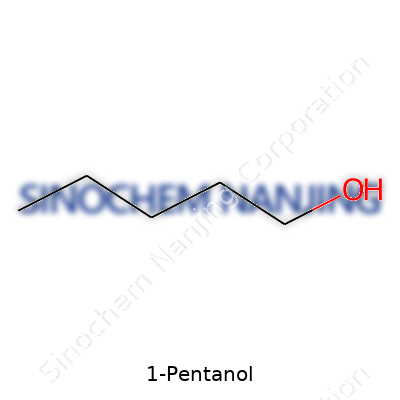
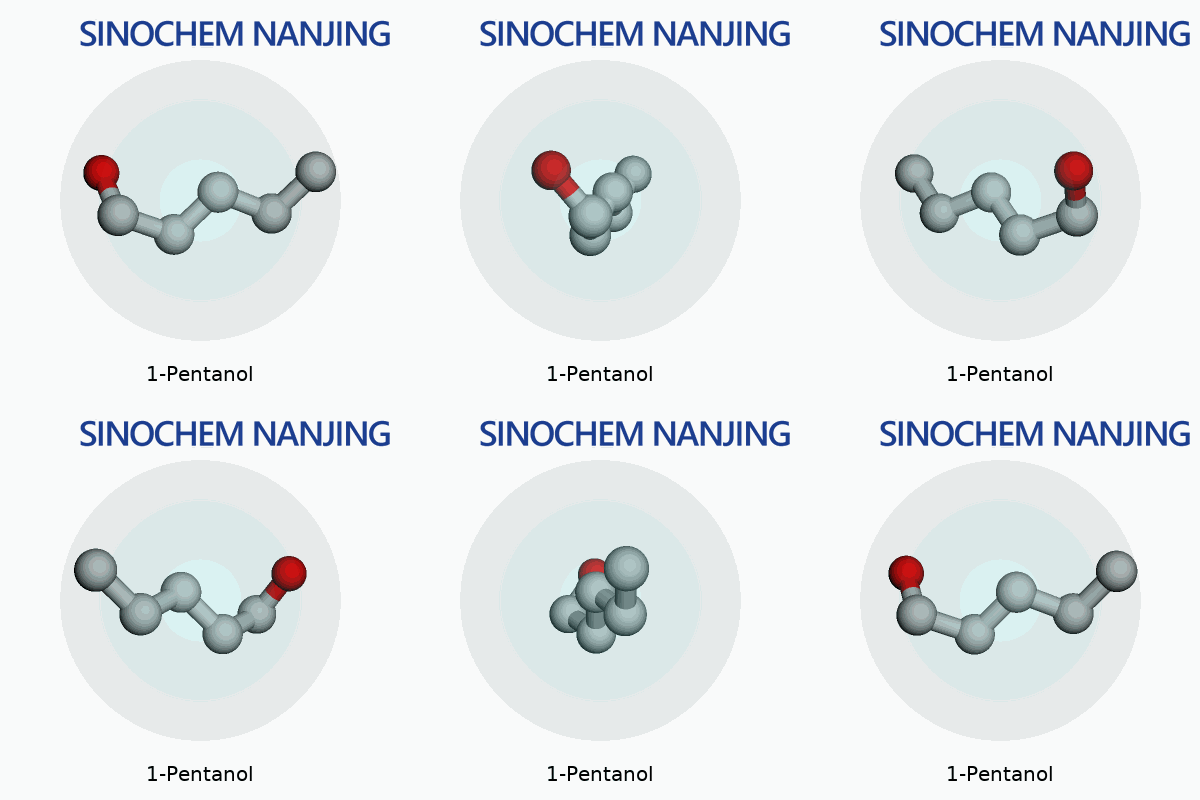
| Names | |
| Preferred IUPAC name | pentan-1-ol |
| Other names |
Amyl alcohol n-Pentanol n-Amyl alcohol pentan-1-ol |
| Pronunciation | /paɪˈtæn.ɒl/ |
| Identifiers | |
| CAS Number | 71-41-0 |
| Beilstein Reference | 635858 |
| ChEBI | CHEBI:15636 |
| ChEMBL | CHEMBL14036 |
| ChemSpider | 6828 |
| DrugBank | DB03793 |
| ECHA InfoCard | ECHA InfoCard: 100.003.878 |
| EC Number | 203-852-3 |
| Gmelin Reference | 63941 |
| KEGG | C00474 |
| MeSH | D017507 |
| PubChem CID | 627 |
| RTECS number | SD5425000 |
| UNII | 3K9PSB2JZJ |
| UN number | UN1105 |
| Properties | |
| Chemical formula | C5H12O |
| Molar mass | 88.15 g/mol |
| Appearance | Colorless liquid |
| Odor | banana-like |
| Density | 0.814 g/mL |
| Solubility in water | 22 g/L |
| log P | 1.51 |
| Vapor pressure | 1.8 mmHg (at 25 °C) |
| Acidity (pKa) | 16.1 |
| Basicity (pKb) | pKb = 5.84 |
| Magnetic susceptibility (χ) | -63.2·10⁻⁶ cm³/mol |
| Refractive index (nD) | 1.410 |
| Viscosity | 4.44 mPa·s (20 °C) |
| Dipole moment | 1.7704 D |
| Thermochemistry | |
| Std molar entropy (S⦵298) | S⦵298 = 282.0 J·mol⁻¹·K⁻¹ |
| Std enthalpy of formation (ΔfH⦵298) | -357.0 kJ/mol |
| Std enthalpy of combustion (ΔcH⦵298) | –3509 kJ·mol⁻¹ |
| Pharmacology | |
| ATC code | V03AB20 |
| Hazards | |
| GHS labelling | GHS02, GHS07 |
| Pictograms | GHS02,GHS07 |
| Signal word | Warning |
| Hazard statements | H226, H302, H315, H318, H335 |
| Precautionary statements | P210, P233, P280, P303+P361+P353, P305+P351+P338, P337+P313, P370+P378, P403+P235, P501 |
| NFPA 704 (fire diamond) | 1-1-0 |
| Flash point | 49 °C |
| Autoignition temperature | 300 °C |
| Explosive limits | 1.1–7.5% |
| Lethal dose or concentration | LD50 oral rat 1870 mg/kg |
| LD50 (median dose) | LD50 (median dose): Oral, rat: 2,870 mg/kg |
| NIOSH | ST0350000 |
| PEL (Permissible) | PEL (Permissible Exposure Limit) of 1-Pentanol: 100 ppm (310 mg/m³) |
| REL (Recommended) | 1,000 mg/m³ |
| IDLH (Immediate danger) | IDLH: 1,500 ppm |
| Related compounds | |
| Related compounds |
1-Butanol 2-Pentanol 3-Pentanol Isopentanol 1-Hexanol |



