An Editorial Look at 1-Methyl-3-Butylimidazolium Chloride: Evolution, Insights, and Future Trajectories
Seeking Perspective Through History
Chemistry often feels like a landscape shaped by decades of curiosity and trial, where certain molecules keep showing up as game-changers. 1-Methyl-3-Butylimidazolium chloride, an ionic liquid featuring a bulky imidazolium ring, traces a fairly recent path. Early roots came out of the research surge for more sustainable, versatile solvents in the late 20th century. While traditional solvents brought countless breakthroughs in materials and pharma, they also raised flags for toxicity and volatility. Pioneers in green chemistry started to seek molecules that could dissolve both polar and nonpolar compounds, resist high temperatures, and slip into custom roles across analytical and synthetic labs. It was in this modern wave that compounds like 1-Methyl-3-Butylimidazolium chloride stepped up, promising to sidestep some of the environmental and safety baggage of old-school chemistry.
What Sets 1-Methyl-3-Butylimidazolium Chloride Apart?
As far as structure goes, this molecule looks much like others from the imidazolium family: a five-membered ring with nitrogen atoms and a chloride tail. Swap a butyl for an ethyl group, stir in a methyl at nitrogen’s side, and you have a recipe that tugs the liquid’s melting point below many conventional salts. This makes it pourable at room temperature—something once thought odd for an ionic compound. Over time, chemists learned that by tweaking these "side chains," they could control fluidity, polarity, electrostatic interactions, and ability to dissolve stubborn substances. Labs turn to this chloride salt for tasks like electrochemistry, catalysis, organic synthesis, and polymer processing. It also gained a name for coaxing stubborn biomolecules into solution, which has real implications for protein chemistry and green manufacturing.
The Physical and Chemical Character Behind the Liquid
Unlike volatile organics or sluggish mineral salts, this compound lands in a sweet spot. It shows nearly zero vapor pressure, scrapings of volatility that translate into lower inhalation risks and less air pollution. Chemically, the chloride ion fills in for reactivity but keeps a grip on stability. The 1-Methyl-3-Butylimidazolium cation, meanwhile, offers a broad electrochemical window—meaning it stays stable whether you zap it with reducing or oxidizing power. Its ability to dissolve ionic or covalent solids and to host reactive species in electrochemical setups has seen it adopted from extraction schemes to energy storage experiments. The distinct lack of significant water uptake separates it from some hygroscopic ionic liquids—an asset when dry conditions are critical.
What’s Labeled and What to Watch In Technical Use
Walk into a lab and you’ll likely find flasks labeled with dense acronyms like [BMIM]Cl—chemistry’s own shorthand for this salt. Labels typically include purity (often above 97 percent for research use), refrigerating or air-shielding stipulations to protect from hydrolysis or decomposition, and a warning for gloves and airtight handling. Its technical data sheets point to viscosity curves that shift with temperature, conductivity that makes or breaks its use in batteries, and spectral signatures that anyone running NMR or IR looks for at a glance. Given the industry’s attention to detail, these specs aren't about bureaucracy—they reflect a deeper push for reproducibility and safe scaling of experiments.
How Do Scientists Make It?
Ask around in academic labs and you’ll soon hear stories of reflux setups and round-bottom flasks. Usually, making 1-Methyl-3-Butylimidazolium chloride starts with an alkylation step: react 1-methylimidazole with 1-chlorobutane. The process requires strict control over moisture and temperature, as both reactants and product can be touchy. After heating the components together (sometimes sealed, sometimes under nitrogen), the crude salt is cleaned up by repeated extraction or recrystallization, followed by vacuum drying. The protocol favors straightforward ingredients and provides a higher safety margin than some ionic liquids founded on exotic or heavily regulated substances. This route scaled up smoothly during the past two decades, boosting academic experiments while seeding small-industry applications.
How Does This Liquid Behave in Reactions?
Chemists tout this compound for its duality—both as a stable medium and a reactive partner. In polar and nonpolar settings, it dissolves a range of starting materials for organic synthesis, catalysis, or even metal extractions. In electrochemistry, it works as an electrolyte that resists decomposition, withstanding voltage swings that would wreck common solvents. It behaves as a phase-transfer catalyst or a media for biotransformation, steering everything from cross-couplings to enzymatic reactions. Researchers regularly modify its core using anion swaps or by attaching functional groups for more targeted activity. These tweaks create customized ionic liquids tailored for specific separation processes or workforce in designing batteries, solar cells, and advanced sensors.
Other Names in the Wild
Anyone poking through research papers will see aliases like [BMIM]Cl, 1-Butyl-3-methylimidazolium chloride, or simply BmimCl. The nomenclature can throw off newcomers, especially when old literature leans on non-IUPAC names, but anyone in the field spots the pattern right away. Staying literate with both old and new tags matters, because cross-referencing industrial applications or tracing safety documentation depends on catching every synonym that appears in patents, journals, or regulatory lists.
How Do Workers Stay Safe?
Handling 1-Methyl-3-Butylimidazolium chloride doesn’t feel like working with runaway toxics, yet nobody should discount the importance of goggles, gloves, and fume hoods. The salt, while less volatile and flammable than its hydrocarbon ancestors, brings a risk of irritation or possible toxicity on skin or inhalation contact—consistent with many ionic liquids. Shelving bottles away from oxidizers, keeping spills off benchtops, and using closed systems during reactions stand out as practical advice. Regulatory frameworks like GHS (Globally Harmonized System) put this compound under “harmful” in some markets, so vigilance remains key, especially in scaled-up production or long-reaction runs.
Where Does It Deliver Value?
Ask energy researchers about battery electrolytes, materials scientists about polymer processing, or green chemists about recyclable solvents—they’ll reach for data firsthand. This compound carved out applications from cellulose dissolution, where few other liquids break down wood or cotton for renewable plastics, to electrochemistry experiments aiming for new-generation capacitors. It has edged into pharmaceutical synthesis as a solvent or reaction media, letting reactions run at lower temperatures or higher selectivities. Industrial scenes show it tackling dye-sensitized solar cells and even extracting metal ions for recycling or purification. Its compatibility with both biocatalysis and metal complexes hints at a crossing of green and sustainable chemistry, helping bridge gaps between industrial-throughput and environmental responsibility.
Active Research: What’s Changing?
Research groups worldwide keep probing this molecule’s limits. In protein science, attention has turned to whether [BMIM]Cl can unfold or refold stubborn enzymes, opening possibilities in pharmaceuticals and industrial biocatalysis. In electrochemistry, efforts aim at boosting conductivity for fast-charging batteries or robust capacitors, leveraging its broad electrochemical window and stability. Surface modification and immobilization techniques are under the microscope, targeting uses in separation membranes, chromatography, or pollution scavenging. Cross-pollination with fields like nanotechnology or environmental remediation brings promise but also means real scrutiny for downstream effects.
What Do We Know About Toxicity?
Context matters for safety. Most research shows lower volatility and flammability compared to conventional solvents, yet toxicity remains an open question, especially for chronic exposure. Early studies with cell lines and freshwater organisms detect a certain level of toxicity at higher concentrations. Concerns include potential impacts on aquatic life or soil biology if spills reach the environment. Regulatory attention has begun, and many labs now treat disposal with respect—a reminder that new technology still needs responsible stewardship. Compared to more notorious organics or heavy-metal-laced solvents, this class often fares better, but nobody should treat it as entirely benign.
Looking to the Future
Prospects for 1-Methyl-3-Butylimidazolium chloride look strong as the world pushes for greener chemistry and efficient resource use. Innovation on anion swapping and chain alterations hints at better-tuned ionic liquids coming down the line. Expect expanded roles in energy storage, biocatalysis, cellulose-based industries, and possibly waste recovery. The field still needs answers on biodegradability and lifecycle assessment, but current research trends underline a shift: designers are not just focused on function, but seeking molecules that cut waste, save energy, and fit a more sustainable future. The road from research bench to real-world product is long, but the continued attention paid to 1-Methyl-3-Butylimidazolium chloride says a lot about the kind of chemistry people want to build toward.
What is the chemical structure of 1-Methyl-3-Butylimidazolium Chloride?
Getting to the Heart of the Molecule
1-Methyl-3-butylimidazolium chloride has unlocked plenty of attention from chemists who care about ionic liquids and greener solvents. At the core, the name spells out what you need: there’s an imidazole ring, with a methyl group at one position and a butyl chain at another. Chloride keeps the charge in check, making the whole thing an ionic compound.
Chemical Structure—Not an Abstract Puzzle
Draw the molecule out, and it looks almost friendly. The imidazole ring is a five-membered structure, sort of like half-broken benzene with nitrogens in the right spots. One nitrogen links up with a simple methyl group (a single carbon), and another connects to a longer butyl chain (four carbons long). The chloride lingers as the counterion—nothing fancy, just Cl-.
Where This Structure Shines
The shape of 1-methyl-3-butylimidazolium chloride means it acts differently than everyday table salt. Instead of building solid crystals under room conditions, this forms a liquid, ignoring conventional rules. That makes it a hit as a “room-temperature ionic liquid.” The secret sits in the asymmetry: big, awkward chains hang off the ring, so the molecules can’t pack tightly. They slide into a soupy mess, letting the liquid flow at temperatures where you'd expect a hard chunk.
Real Impacts: Going Beyond the Lab Bench
Labs worldwide use this compound as a solvent—especially for tricky chemical reactions or separations. Chemical engineers can enjoy dissolving cellulose or recycling metals without relying on harsh, volatile organics. That seems promising for industries looking to cut pollution and improve safety. Researchers at the University of Alabama ran extractions to recover rare-earth elements, finding these types of ionic liquids could replace toxic organic solvents while performing just as well.
Electrochemistry benefits, too. That imidazolium core helps stabilize certain ions, which means batteries and capacitors could last longer or run safer. Energy storage projects look to this molecule as a possible electrolyte for next-generation devices. It resists water, ignores oxygen, and shrugs off high voltage.
Concerns and Practical Solutions
No chemical comes without questions. Some see “ionic liquid” and assume perfect safety, but reality checks matter. Imidazolium-based compounds inch into the environment, and toxicology studies still chase the long-term effects. For instance, aquatic creatures react differently to these salts—some species absorb, others break them down, and a few get hurt.
Waste handling stays important. Researchers at the Technical University of Denmark highlight options like biodegradation and careful containment. Recyclability also needs attention. Processes that recover and clean spent ionic liquids keep them cost-effective and less wasteful. I’ve seen labs reuse this compound by simple distillation and filtration, cutting down both bills and environmental impact.
What Matters Most
Every molecule tells a story, but some, like 1-methyl-3-butylimidazolium chloride, force us to rethink big parts of chemistry. The structure makes all the difference in behavior, safety, and usefulness. Staying informed and using best practices—from handling to disposal—helps get the most from this remarkable compound without causing headache down the line.
What are the typical applications of 1-Methyl-3-Butylimidazolium Chloride?
Tough Problems Need Smart Chemicals
Some chemicals stand out for the way they handle jobs that stymie others. I see 1-Methyl-3-Butylimidazolium Chloride show up again and again for a reason: it steps up where water or standard solvents stumble. It’s part of a group called ionic liquids. No smell, no need for strong ventilation, and it usually doesn’t care whether you’re at room temperature or cranking the heat. Back in graduate school, I got my first taste of how it can break down cellulose, and the memory stuck with me—watching sawdust, stubborn as ever, dissolve into what looked like green syrup.
Uses in Chemistry Labs and Beyond
Ionic liquids like this one catch the eye of chemists working with reactions where water or alcohols wreak havoc. In catalysis, these liquids act almost like invisible scaffolding. They help catalysts do their job again and again, with little waste left behind. This sort of reusability saves both money and resources. In my own lab experience, swapping out volatile solvents for ionic liquids meant less flare-up and fewer headaches about safety rules. That alone changes the way people look at a process, especially with students around.
Tackling Plant Biomass
Breaking down wood, straw, or even paper for biofuels or bioplastics isn’t easy. Lignin and cellulose stick together like glue. Old-school acids or bases attack everything at once, leaving a mix that’s hard to untangle. I watched a pilot project where 1-Methyl-3-Butylimidazolium Chloride was poured onto shredded plant material. It did a better, cleaner job of pulling the fibers apart, setting the stage for enzymes to step in. This cleaner separation gives less gunk downstream, which matters for industries chasing lower waste. The Environmental Protection Agency keeps a close eye on how these processes lower emissions and cut down water use, which fits with bigger sustainability goals.
Electrochemistry Gets a Boost
Anyone fiddling with batteries or sensors hears about ionic liquids. With this compound, the game changes for room-temperature batteries and fuel cells. Regular salts stick around as white powders unless you heat them, but this ionic liquid is ready to go at room temperature. Researchers build new supercapacitors and sensors with it. Its stability and ability to shuttle electrons give engineers the flexibility to design safer, longer-lasting devices without the constant worry about water or acid leaks.
Dreams and Realities in Pharmaceuticals
Pharmaceutical companies hunt for better solvents in drug design all the time. More stable, less toxic processes bring costs down and make regulatory approval smoother. During one intern stint, I saw a medicinal chemist use 1-Methyl-3-Butylimidazolium Chloride to separate compounds that used to stick together. He filled out paperwork for months, but the payoff arrived faster reactions and higher purity with fewer byproducts. This approach means less cleaning up at the end, and patients see faster delivery of new medicines.
Looking Ahead: Cost and Access
Widespread commercial use hinges on scaling up production and keeping costs in check. As more industries move toward cleaner methods, companies that stay transparent about sourcing and safety will lead the pack. By focusing on closed-loop recycling and worker training, manufacturers and researchers can use chemicals like 1-Methyl-3-Butylimidazolium Chloride not just for performance, but for long-term health and environmental gains too.
Is 1-Methyl-3-Butylimidazolium Chloride hazardous or toxic?
Getting to Know the Chemical
My first brush with ionic liquids came in a dim college laboratory, the air bitter with solvent tang, and I remember the assistant carefully measuring colorless liquids with a seriousness usually reserved for handling venom. 1-Methyl-3-butylimidazolium chloride (BMIM Cl) belongs to this class. Researchers like using these salts for dissolving cellulose and running fancy electrochemical experiments because they don’t evaporate like old-school solvents.
Looking at the Hazards
The word “chloride” in a chemical’s name can set off alarm bells. Plenty of dangerous compounds hide behind that suffix; think phosgene or vinyl chloride. BMIM Cl, though, stands in a different light. Multiple studies rate its direct toxicity as lower than traditional industrial solvents. But “lower” doesn’t mean “benign.”
Take a peek at the safety datasheet. Lab techs wear gloves and goggles for a reason. Pure BMIM Cl irritates skin and eyes, and can trigger coughing if inhaled as dust. European Chemical Agency data calls it “harmful if swallowed” and recommends keeping it out of waterways; aquatic life doesn’t handle it well. It disrupts enzyme activity in earthworms, and low-level exposure stunts algae in test ponds.
People, Places, and Precaution
Most folks never cross paths with BMIM Cl outside an industrial site, but chemical safety isn’t just about people who splash around in beakers all day. Closed systems and protective gear usually keep risks manageable in research labs. Spills and leaks raise bigger concerns, especially in places without strict cleanup rules. Disposal always matters. Pouring anything down a sink without a thought can invite surprises later, especially when a chemical lingers in soil and water.
What the Research Shows
A 2016 review in Green Chemistry put numbers to the discussion: BMIM Cl scored several hundred times less toxic to rats compared to methyl methacrylate but roughly 30 times more toxic to pond snail embryos than sodium chloride. This doesn’t mean it’s a new DDT, but regular use adds up. The molecules stack up in sludge and slow-moving rivers, higher than you’d think for a “green” solvent. One German study detected residue months after treatment ended, especially where sunlight couldn’t help break it down.
Better Solutions and Smarter Choices
Few chemicals carry zero risk. The lesson from BMIM Cl matches what my old lab taught: Hazards hide in the margins. Protecting people boils down to keeping containers sealed and working with proper ventilation. For the environment, companies must invest in closed-cycle processes, recover and recycle the chemical, and test local waters during and after use. Regulators could demand more real-world data before green-lighting new uses, instead of leaning on claims straight from manufacturers.
Next time anyone walks into a lab and spots the imidazolium label, it’s worth asking how safely waste streams are handled and where runoff travels. “Less toxic” proves a step forward, but never tells the whole story. Common sense, clear rules, and vigilance prevent those awkward surprises years down the line.
What is the solubility of 1-Methyl-3-Butylimidazolium Chloride in water and other solvents?
What Sets 1-Methyl-3-Butylimidazolium Chloride Apart?
Lab technicians and chemists get excited when they find an ionic liquid that blends easily with water or polar solvents. 1-Methyl-3-butylimidazolium chloride (sometimes shortened to [BMIM]Cl) stands out for its high solubility in water, and this characteristic drives a lot of its uses in chemistry and industry. From experience, anything you toss into water and watch disappear without fuss becomes valuable for synthetic tweaks or extraction work. Pouring [BMIM]Cl into a beaker of water, you see it dissolve with speed and without stirring much, even when using cold tap water, which says a lot about its interplay with hydrogen bonds. The ionic nature here pulls the salt apart, letting it mix comfortably with other polar molecules.
What Happens in Water?
It's rare to meet a chemist who hasn’t come across an imidazolium ionic liquid in the lab. [BMIM]Cl dissolves in water at concentrations well over 50% by weight, with many sources pointing to full miscibility at room temperature. This kind of solubility means research groups lean on it as a solvent for biocatalysis, cellulose processing, and advanced separations, leveraging that easy mix for quicker reactions and fewer headaches. Anyone who’s struggled with less cooperative salts appreciates just dropping some crystalline [BMIM]Cl into water and watching it vanish within seconds.
Solubility in Solvents Beyond Water
Solvent decisions shape processes and outcomes. Strong polar solvents welcome [BMIM]Cl; methanol, ethanol, and dimethyl sulfoxide (DMSO) are all up to the task, dissolving this salt without leaving residue. Methanol and ethanol prove especially useful for researchers aiming to recover or reuse the ionic liquid after an extraction or reaction. Solubility drops as you approach less polar solvents such as acetone, and [BMIM]Cl barely budges in nonpolar systems like hexane or toluene. Experience in handling ionic liquids teaches you to expect these trends, as the polar nature of [BMIM]Cl seems allergic to anything lacking a dipole moment. In practice, this saves time: researchers don’t waste effort trying to dissolve the salt in unsuitable media.
Why Should Solubility Matter to Everyday Users?
Easy solubility isn’t just a lab convenience. In paper pulping or textile industries, where dissolving cellulose can slash energy use and chemical waste, a water-miscible ionic liquid like [BMIM]Cl unlocks cheaper and greener manufacturing. Analytical chemists run into trouble if target compounds remain undissolved, so using a reliable ionic liquid simplifies cleanup and produces better yields. Green chemistry thrives with solvents that do their job without excess waste, and this salt checks that box.
Addressing the Hazards and the Way Forward
Anyone working with ionic liquids needs to pay attention to toxicity, both for workers and the environment. Water solubility speeds up recovery and recycling, but it also increases spill risks, making it easy for the salt to reach wastewater streams. Factories and research teams must find or invent strong protocols for capturing and recycling spent [BMIM]Cl. More studies on degradation, breakdown products, and low-impact disposal push the field forward, and some projects focus on modifying the imidazolium core to reduce hazards. Sharing results transparently and tightening controls at the source can cut down the footprint of ionic liquids in real-world production and testing.
Beyond Just Solubility
Solubility tells only part of the story for an ionic liquid like [BMIM]Cl. Treatments that reduce toxicity, improve recovery, and shrink costs drive adoption just as much as rapid dissolution in water. Researchers, engineers, and environmental staff can pull together—pooling data, improving recovery systems, and lobbying for smarter regulations—to make the most out of these powerful, adaptable solvents. In the process, it pays off for everyone when a solvent not only works but also works responsibly, keeping safety and sustainability at the forefront.
How should 1-Methyl-3-Butylimidazolium Chloride be stored and handled?
Understanding the Chemical
1-Methyl-3-Butylimidazolium Chloride grabs attention in research labs and industry alike. It works as an ionic liquid and offers unique properties compared to traditional solvents. With roots in green chemistry, its low volatility and non-flammability make it attractive, but people sometimes forget that “green” does not always mean “safe to ignore.”
Real-World Storage Practices
I remember walking into a cluttered lab in grad school, shelves lined with reagents that weren’t cared for as they should’ve been. Experience taught me one solid truth: even routine handling shapes safety, not just costly accidents.
Keep this compound in tightly sealed glass or compatible plastic containers. Humidity plays havoc—water can sneak in and mess with purity, sometimes changing the way the liquid behaves. Dry, cool storage beats improvising. Shelves away from sunlight, heat sources, or steam vents make a difference. As a rule of thumb shaped by memory: unexpected heat leads to unexpected reactions.
Always label containers with the full chemical name and hazard info, never just a formula scribbled in marker. I’ve watched confusion burn through hours of work simply because corners got cut on proper labeling.
Handling: Straight Talk
Nitrile or neoprene gloves protect your skin from direct contact. Lab coats and chemical goggles or a face shield keep splashes at bay. Some folks skip goggles thinking a splash “never happens to them”—until it does. One careless shift of a beaker taught a colleague that lesson the hard way.
Work in a well-ventilated area or under a fume hood if you’re heating or transferring the chemical. Even low-volatility substances can give off vapors or fine sprays. Spills turn sticky fast, trapping dust and debris, so having absorbent pads or spill kits within arm’s reach saves time and worry. Mop up spills right away and use soapy water, not just a rag—ionic liquids can stick around.
Don’t use metal tools if corrosion is a concern. Glass and certain plastics handle the job without unexpected side reactions. A friend once thought any spatula would do, then spent hours figuring out why his reaction failed; corrosion had sneaked in.
Health and Environmental Care
1-Methyl-3-Butylimidazolium Chloride may pose toxicity to aquatic life, and long-term effects in humans still raise questions. Nobody wants their chemical legacy dumped into a drain. Collect waste in dedicated, labeled containers to prevent cross-contamination and accidental disposal. Local regulations often spell out disposal steps; following them avoids trouble down the road.
I once worked alongside an environmental chemist who insisted on double-checking disposal routes. People grumbled, but as policies got stricter worldwide, her careful records paid off. Documenting each step in storage and disposal built trust inside and outside the lab.
Building Better Habits
Education forms the backbone of safe handling—annual training sticks in the mind far better than an overlooked sign taped by the door. Role models matter, too: seasoned researchers showing good habits influence newcomers more than any poster ever could.
For teams ordering and using specialty chemicals, regular audits of storage spaces and updated inventories help spot mistakes before they grow. It only takes one mismarked bottle or forgotten corner to cause headaches, waste time, and risk health. Every bottle, glove, and spill matters in practice—not just on paper.
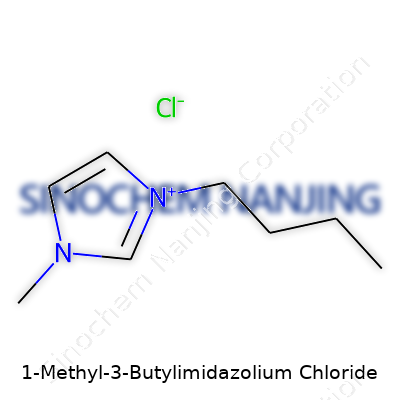
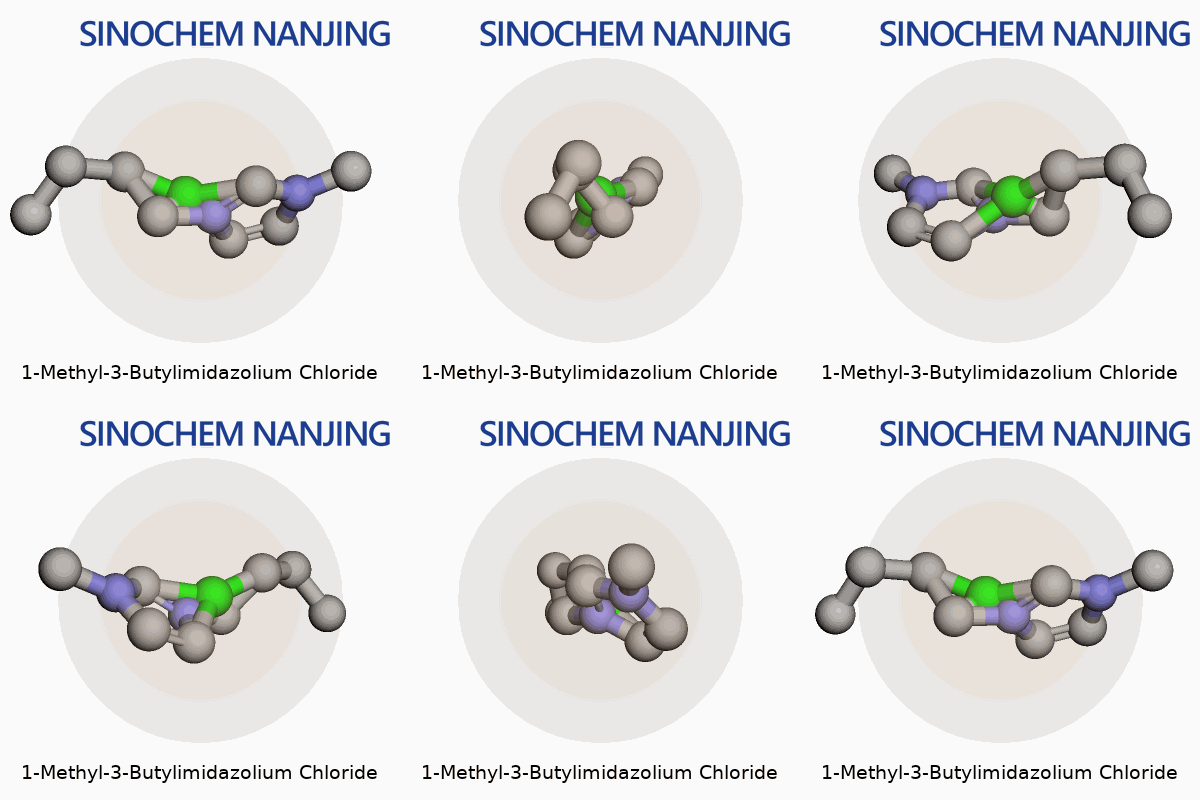
| Names | |
| Preferred IUPAC name | 1-methyl-3-butyl-1H-imidazol-3-ium chloride |
| Other names |
BMIMCl 1-Butyl-3-methylimidazolium chloride 1-Butyl-3-methylimidazolium chloride BMIM chloride |
| Pronunciation | /waɪˈmɛθɪlˌθriːˈbjuːtɪlˌɪmɪˈdæzəliəm ˈklɔːraɪd/ |
| Identifiers | |
| CAS Number | 64690-97-9 |
| Beilstein Reference | 3582963 |
| ChEBI | CHEBI:85139 |
| ChEMBL | CHEMBL2030750 |
| ChemSpider | 21428097 |
| DrugBank | DB11197 |
| ECHA InfoCard | 100.234.065 |
| EC Number | 638-230-2 |
| Gmelin Reference | 1530287 |
| KEGG | C21084 |
| MeSH | D000077451 |
| PubChem CID | 11479372 |
| RTECS number | RR0700000 |
| UNII | W0O39891FG |
| UN number | Not assigned |
| CompTox Dashboard (EPA) | DTXSID8036183 |
| Properties | |
| Chemical formula | C8H15ClN2 |
| Molar mass | 174.68 g/mol |
| Appearance | White to off-white solid |
| Odor | No characteristic odor |
| Density | 1.06 g/cm³ |
| Solubility in water | soluble |
| log P | -2.54 |
| Vapor pressure | 0.0000133 mmHg at 25 °C |
| Acidity (pKa) | pKa ≈ 10.7 |
| Basicity (pKb) | 1.79 |
| Magnetic susceptibility (χ) | Diamagnetic |
| Refractive index (nD) | 1.495 |
| Viscosity | 86.75 cP |
| Dipole moment | 8.48 D |
| Thermochemistry | |
| Std molar entropy (S⦵298) | 178.6 J·mol⁻¹·K⁻¹ |
| Std enthalpy of formation (ΔfH⦵298) | -126.9 kJ/mol |
| Std enthalpy of combustion (ΔcH⦵298) | -570.6 kJ/mol |
| Hazards | |
| Main hazards | Causes serious eye irritation. |
| GHS labelling | GHS07, Warning, H315, H319, H335, P261, P305+P351+P338 |
| Pictograms | GHS07 |
| Signal word | Warning |
| Hazard statements | H315, H319, H335 |
| Precautionary statements | P280, P305+P351+P338, P337+P313 |
| NFPA 704 (fire diamond) | 1-1-0 |
| Flash point | 187 °C |
| Autoignition temperature | > 244 °C |
| Lethal dose or concentration | LD₅₀ (oral, rat): 400 mg/kg |
| LD50 (median dose) | LD50 (median dose): Oral rat 200 mg/kg |
| NIOSH | Not established |
| PEL (Permissible) | PEL (Permissible Exposure Limit) for 1-Methyl-3-Butylimidazolium Chloride: Not established |
| Related compounds | |
| Related compounds |
1-Butyl-3-methylimidazolium bromide 1-Butyl-3-methylimidazolium tetrafluoroborate 1-Butyl-3-methylimidazolium hexafluorophosphate 1-Ethyl-3-methylimidazolium chloride 1-Octyl-3-methylimidazolium chloride |



