1-Butene: Fueling Industry from Past to Tomorrow
Tracing the Road Behind: Historical Development
Think of 1-Butene as one of those behind-the-scenes players in chemistry. Not flashy, but critical. Folks started separating it from cracked naphtha and refinery gases back in the early twentieth century. Oil and chemical engineers noticed that these light olefins held promise. With the rise of petrochemicals after World War II, extracting butenes from mixed streams grabbed serious attention. Soon, folks learned that tiny tweaks in distillation columns made it possible to pull out fairly pure 1-butene, rather than a mish-mash of isomers. This steady march of industrial progress kept ramping up in the 1960s when plastics and synthetic rubbers took off, pushing demand for alpha-olefins like 1-butene into the mainstream.
Taking a Closer Look: Product Overview
1-Butene, which chemists call an alpha-olefin due to its double bond at the first carbon, rarely grabs the headlines outside of a lab. Yet, this clear, colorless gas holds deep importance for modern manufacturing. When condensed, it becomes a liquid that slips easily into reactor vessels and large-scale production lines. Commercially produced 1-butene mostly comes from either steam cracking or ethylene oligomerization, not by accident, but because these methods fit sprawling chemical plants that have to churn out tons without stopping. Decades of refinement transformed what started as an industrial byproduct into a staple feedstock.
What Science Says: Physical & Chemical Properties
1-Butene might look humble, but it packs a punch where reactivity matters. Boiling a few degrees above freezing yet still stable enough to store under mild pressure, it offers a volatility that works well for making plastics. No color, barely any noticeable scent, and mixes with organic solvents. Its double bond has a knack for jumping into polymerization reactions, which gave the world better plastics. Chemists noticed that 1-butene’s molecular geometry makes it more than just a backbone builder; it helps catalyze faster, more efficient reactions, especially when paired with the right metals or co-monomers.
Speaking the Details: Technical Specifications & Labeling
Every drum of pure 1-butene shipped to a factory gets scrutinized for purity, water content, and traces of other butenes. Consistent, well-labeled cans or pipeline shipments build trust between buyer and seller. Purity usually sits above 99%, but everything depends on the end use. Major producers make sure that containers carrying this gas follow rules laid out by industry panels, and workers rely on one clear set of codes to recognize and handle it. These standards help ensure no one gets nasty surprises from moisture or reactive contaminants, both of which can stir up trouble in sensitive reactions.
Crafting the Molecule: Preparation Methods
Refineries and chemical plants go after 1-butene using tricks honed over years. Steam cracking heavy hydrocarbons belongs to the tried-and-true club. This approach uses high temperatures to break apart bigger molecules, leaving behind a mix of small gases where 1-butene must be extracted by careful distillation. Modern technology then employs molecular sieves, sorbents, or selective catalysts to isolate 1-butene from its chemical cousins, especially 2-butene and isobutene. A different path called ethylene oligomerization strings together ethylene molecules, with skilled catalyst selection steering the outcome toward 1-butene. Industrial operators continue fine-tuning these steps, always seeking higher yields with less waste.
Getting Creative: Chemical Reactions & Modifications
People rarely use 1-butene as it is. Its greatest strength comes from joining bigger molecular chains. Most of it heads straight into polymerization reactors, churning out linear low-density polyethylene or resin blends that wind up as milk jugs, packaging films, and specialty plastics. The double bond sitting at the alpha position invites attack from a host of reagents: acids, peroxides, and metallic catalysts rush to add new atoms or form crosslinks. 1-Butene can dance through hydroformylation, oxidation, and many clever transformations that create flavors, fragrances, or rubber additives. Scientists keep hunting for new twists in reactivity, looking to improve yields or squeeze cost and energy from each reaction.
Talking Names: Synonyms & Product Names
1-Butene often shows up under a handful of monikers. Names like but-1-ene, alpha-butylene, or simply butylene can all turn up in lab notes or shipping manifests. The casual shorthand hides the technical lineage, with alpha describing the place of the double bond, a detail that shapes its chemical behavior. Distributors stick to standards, but it pays to double-check labels in older textbooks or cross-border shipments since regional quirks and trade customs sometimes linger.
Staying Safe: Safety & Operational Standards
Even though 1-butene doesn’t seem especially vicious, it brings its own hazards. The gas can cause headaches or lightheaded feelings in poorly ventilated spaces, plus its high flammability means leaks can spell trouble fast. Plants set up hardened safety drills—think gas detectors, strict grounding, and leak checks at every turn—to prevent fires or toxic exposures. Guidelines from groups like OSHA or Europe’s REACH program spell out clear thresholds for workplace exposure, and experts run regular audits to spot trouble before it starts. Chemical operators know full well that a lapse in attention could lead to a dangerous situation, so continuous training is the only way to go.
Building Blocks: Application Area
Most people don’t realize just how wide a net 1-butene casts. Over half disappears into the making of plastics, especially as a co-monomer for linear low-density polyethylene. This touch helps tailor the strength and flexibility of packaging films, trash bags, and even playground equipment. Rubber manufacturers turn to it for producing polybutene-1 and for comonomers in specialty elastomers that keep car tires gripping safely on wet roads. Smaller but lucrative streams of 1-butene show up in the production of lubricants, adhesives, and even certain flavors and synthetic oils for industrial machines. As technology keeps moving, 1-butene will likely find work in battery materials, specialty coatings, or lighter, tougher polymers.
Chasing New Ideas: Research & Development
The search for greener chemistry keeps scientists up late, tinkering with 1-butene’s possibilities. Catalysts with higher efficiency, made from earth-abundant metals, hold promise not only for trimming costs but for shrinking each plant’s carbon footprint. Recently, people have looked at converting biomass into olefins, which could one day offer a renewable stream of 1-butene, sidestepping the need for fossil hydrocarbons. Research also explores recycling mixed polymer wastes: finding ways for 1-butene monomers to slot back into the production cycle, closing the loop instead of sending old plastics to landfills. Each experimental process faces steep technical hurdles, but the draw of a cleaner, more circular economy offers strong motivation.
Under the Microscope: Toxicity Research
Compared to nastier hydrocarbons like benzene or toluene, 1-butene ranks relatively low on most toxicity charts. It can irritate eyes or lungs at high concentrations, and mishandling large quantities in confined spaces presents genuine health risks. Long-term research tracks how trace exposures might affect workers and nearby communities. Reliable studies show no strong correlations to chronic health effects at normal workplace exposure levels. Regulators and health agencies keep it on their watch lists and require employers to monitor air quality and enforce good lab practices. Future research aims to dig deeper into subtle metabolic effects, especially as analytical tools keep getting more sensitive.
Peering Ahead: Future Prospects
Looking at factory floors and engineering blueprints from here, 1-butene doesn’t fade into the background. Its key role in producing more agile, lightweight plastics grows as companies chase efficiency in packaging, automotive, and electronics. Researchers tweak catalysts to deliver cleaner, more selective reactions, shaving off byproducts and emissions. With the push toward recycling and bio-based production, 1-butene stands out for versatility, able to transition from traditional oil-based chemistry to new, more sustainable processes. People will keep pushing for safer handling, improved performance, and smarter ways to close the loop. 1-Butene may never get star treatment, but it keeps quietly helping industries step forward, making materials stronger, lighter, and maybe a bit kinder to the planet along the way.
What is 1-Butene used for?
Digging Into What 1-Butene Does
1-Butene often gets skipped over in science class, but you run into it every day—maybe without knowing it. This stuff lines the pockets of big industries, sitting in the background of manufacturing but showing up in things people lean on, from food packaging to durable pipes. With my years working alongside engineers and plant managers, I have noticed that folks who know how to turn simple hydrocarbons into valuable products keep factories running, jobs steady, and prices lower for everyday families.
Invisible Power in Plastics
Picture this: Most sturdy plastic wraps or bottles resist cracking and bending because chemists blend in 1-butene during production. Polyethylene—the world’s most-produced plastic—gets an upgrade thanks to 1-butene. A consumer probably doesn’t think about what makes their water bottle lighter and still tough. Behind the scenes, 1-butene acts almost like a flex agent, making plastics more reliable and see-through without bumping up the cost. A 2023 report from the International Energy Agency points out that over 70% of 1-butene lands in the creation of plastics.
Sticking with polyethylene, certain grades used in baby food pouches, milk jugs, and similar items rely on this colorless gas. One reason: It adds flexibility and helps manufacturers meet health standards. I have watched companies select 1-butene because it lines up with safety regulations, especially around food safety, showing there’s more behind material choices than just price.
Pipe Dreams—and Real Infrastructure
Anyone who has ever paid for repairs after a burst water line will tell you, plastic pipes changed the game. High-density polyethylene (HDPE) pipes get their strength and bending ability in part from 1-butene. In some municipalities where corrosion wrecked metal systems, engineers switched to HDPE pipes. Fewer leaks, fewer expensive call-outs, and longer-lasting infrastructure all link back to this unsung molecule.
Farmers and contractors use plumbing pipes or cable coverings regenerated from compounds containing 1-butene. These pipes withstand freezing, buckling, and soil pressure better than many older materials. During the ice storms in Texas recently, my contacts shared how HDPE pipes stood up, while metal ones failed, keeping water flowing in emergencies.
Cleaner Burning Fuels and Specialty Chemicals
Refineries blend small amounts of 1-butene into gasoline to boost octane. Higher-octane fuels help engines run smoother and knock less, translating into longer engine lives and better mileage. With stricter fuel efficiency and emissions rules, 1-butene isn’t just an industrial footnote but a tool for cleaner burning.
The specialty chemicals industry turns to 1-butene as a building block for detergents, lubricants, and even some adhesives. Whether it’s making synthetic motor oil that lasts longer or surfactants for soaps, these products often stem from mixtures made with 1-butene. More companies invest in projects to recycle and reuse plastic containing 1-butene, aiming to limit landfill waste and help meet global recycling goals.
Making the Most of 1-Butene’s Potential
As industries keep pushing for better materials, efficient infrastructure, and cleaner fuels, the role of 1-butene seems set to grow. Leaders in manufacturing and environmental science need to keep tracking demand and invest in new ways to recycle plastics. Advancements in chemical recycling, already showing promise in pilot projects, create a path for using resources smarter. If new technologies can capture and reuse more 1-butene-containing plastics, supply chains grow more stable and the planet pays a smaller price. Learning from those real-world results will shape how 1-butene continues to matter in our lives.
What are the physical and chemical properties of 1-Butene?
What 1-Butene Looks and Feels Like
1-Butene is a colorless gas that reminds a seasoned lab hand of faint gasoline. Its boiling point lands just under the freezing mark, -6.3°C to be exact. So, at room temperature, you’re not going to spot any puddles of this stuff. Scientists who’ve handled compressed cylinders of 1-butene will tell you to treat it with respect. In a warm room, it tends to vanish quickly into the air. There’s some reassurance in knowing it’s barely soluble in water—about 300 mg/L. So, once released, it takes to the atmosphere instead of the tap.
Handling and Storage: Practical Observations
Open a valve, and 1-butene pours out with a sharp, mildly sweet scent that bites at your nose. In industry settings, safety glasses and good ventilation rule the day. You’ll usually see it pressurized in lightweight steel cylinders, because leaking gas can ignite with the tiniest spark. Old hands in petrochemicals keep it well away from heat or static electricity, since it catches fire at 383°C and forms explosive mixtures with air from as little as 1.6% concentration.
Reactivity and Everyday Chemistry
Chemists know this four-carbon molecule by its double bond at the front. That’s where the action is. The presence of that bond sparks a curiosity in me: It’s always ready to react, connecting with hydrogen, halogens, or acids in ways a plain alkane never manages. That double bond makes 1-butene a key player for plastics, particularly for producing polybutene or modifying polyethylene—turning simple gases into tough films and containers that fill supermarket aisles.
If you’ve ever seen an addition reaction in the lab, you’ve watched 1-butene’s carbon-carbon double bond open up like a trapdoor, letting new atoms glide in. Add hydrogen, the compound turns into butane, losing the double bond and becoming more stable and less reactive. Toss in bromine or chlorine, and bright solutions turn colorless almost as quickly as you mix them. These tests never fail to impress newcomers; they remind us that the right molecular handshake can change everything.
Risks and Solutions for Safer Handling
Those working with this gas in refineries and chemical plants mention the main risks—fire, explosions, inhalation dangers. Regular training helps, but controls matter even more. Well-maintained detectors and regular leak checks keep disasters at bay. Long before a factory starts up, engineers study ventilation patterns and ground all nearby equipment with care.
If regulations get overlooked, one small leak could lead to catastrophe. Modern protocols mean storage tanks and pipelines come equipped with sensors, automatic shutoff systems, and strict labeling. From my experience, proper signage—combined with real hands-on safety drills—prevents most accidents. Operators also swap stories about colleagues who skipped a step or ignored a drip, only to pay for it later. Real-world vigilance trumps paperwork every time.
Looking at the Bigger Picture
For the chemical world, understanding the quirks of 1-butene takes lab time and plenty of review. Its volatility, easy ignition, and tendency to polymerize keep folks careful. Every new product or process sparks debate about greener catalysts or less risky substitutions. At the end of the day, this molecule’s behavior shapes policies, drives safer facility designs, and fosters innovation. Those willing to put safety first, backed by real data and field wisdom, keep the public and environment a little safer each year.
Is 1-Butene hazardous or toxic?
What 1-Butene Really Does
If you ever read the fine print of plastic labelling or industrial chemical lists, 1-butene pops up more than you might expect. Used in making polyolefins (the stuff in flexible plastics), 1-butene floats around storage tanks and pipelines across major manufacturing regions. It slips through factories and processing plants, and most folks outside the industry don’t give it a second thought. Still, anyone who spends time around industrial chemicals knows you can’t ignore something just because it seems low profile.
Clear Hazards in the Real World
1-butene, like its cousins in the butene family, comes as a colorless gas under normal conditions. It smells faintly sweet. Spend any time in a facility handling it, anyone with a sharp nose will pick it up fast. Now, a sweet scent in the air doesn’t always warn people to move away—even the most experienced worker sometimes ignores a whiff they can’t quite place. Truth is, even low-level vapors can irritate eyes, nose, or throat. At higher concentrations, it’s a straight-up asphyxiant, crowding out oxygen in small or enclosed spaces. People caught in those situations risk lightheadedness, confusion, or even losing consciousness.
Anyone who maintains gas systems, repairs valves, or tests for leaks will tell you: treating flammable gases with casual effort only works until you get burned. 1-butene flashes easily. An ignition source—static electricity, a lit cigarette, a spark—can set off intense fires or explosions in confined areas.
Digging Into Toxicity
Generally, 1-butene does not stack up as a high-toxicity substance. Massive exposures are rare, and long-term cancer risks stay low compared to truly notorious chemicals like benzene. In workplaces, regulators such as OSHA keep the permissible exposure levels straightforward, usually around 250 ppm over an eight-hour day. Under those limits, most healthy adults don’t suffer lasting harm. Regular air monitoring, leak detection, and ventilation systems keep workers protected.
Breathing moderate amounts during a leak still sends people to clinic with headaches, dizziness, or sore throats. Even short bouts can put workers on edge. Contact with liquefied 1-butene can also cause frostbite, something most training sessions pull up in the safety slides but that seems too remote—until emergency showers and medical rooms get some real action.
Solutions That Actually Work
Nobody inside chemical operations skips hazard control. Engineering safeguards, personal protection, and disciplined training are daily business. Leak detectors with alarms, flameproof equipment, and routine shutdown mock-drills lower risks to the level you’d expect of any modern facility. Managers keep updated safety data sheets and action plans at arm’s reach. In the field, nobody takes shortcuts on lockout/tagout or relies on rumors about what’s “probably safe.”
Laws and safety standards don’t just exist for paperwork’s sake. Countries like the United States and Germany call for special containment, labeling, and transportation of flammable gases. That includes limiting tank sizes, requiring full face shields and gloves, and enforcing evacuation zones when something spills. Even off-site, truckers, emergency response teams, and hazmat crews demand training geared toward the quirks of each chemical.
Trust but Verify: The Human Factor
In the end, 1-butene isn’t the villain of the chemical world. It’s more of a tough-guy neighbor: not seeking trouble, but demanding respect. On well-run sites, it rarely causes problems as long as safety systems and habits hold up. Anyone sharing space with it—warehouse workers, maintenance crews, emergency staff—leans on both training and real-world experience. Overconfidence and shortcuts breed more danger than the chemical itself.
How should 1-Butene be stored and handled?
The Nature of 1-Butene
1-Butene shows up as a colorless, gaseous hydrocarbon used mostly to make plastics and other chemicals. Its flammability brings a serious fire risk, and leaking vapor can turn even a minor mishap into a dangerous situation. Shop floors and chemical plants deal with it every day, which means the folks handling this material have a real stake in staying safe.
Real Hazards, Real Preparation
I’ve seen colleagues burned by thinking “it won’t happen to me” or by skipping the safety checklist. 1-Butene isn’t something to take lightly. The gas spreads fast and sinks low, hugging the floor where it can hit an ignition source before anyone notices. Static sparks or stray flames can light off invisible vapor and turn an ordinary shift into a nightmare. People on the ground know that grounding tanks and containers isn’t just a formality—it’s the difference between a close call and a tragedy.
Proper Storage Matters
Anyone in the business of storing 1-Butene uses pressure-rated tanks made of steel. These containers don’t just hold the gas—they help keep everyone safe. Tanks stay in well-ventilated areas outdoors, away from ignition sources, hot pipes, or electric panels. It’s not about red tape; an open storage yard and a chain-link fence stop accidents cold. In high-traffic plants, alarms and gas detectors add an extra shield, warning crews at the slightest sign of a leak.
Protecting People First
Experience teaches you it’s easy to let your guard down. With 1-Butene, that’s a big mistake. Training gets personal: everyone should wear gloves and goggles rated for chemical work, even during short shifts. Respirators or supplied air become standard for jobs cracking open pipes, filling tanks, or working downwind from connections. Overlooking simple steps like labeling never does anybody favors, either. Clear labels and up-to-date records spell out where tanks sit and what’s inside. Emergency shut-offs, eyewash stations, and portable extinguishers shouldn’t collect dust—crews put them to the test in regular drills, building good habits before pressure ever drops or lines rupture.
Preventing Mistakes and Building Strong Habits
Staying prepared isn’t about paranoia—it’s about accountability. I remember one incident where a tired forklift operator clipped a pipe. Gas hissed out, but alarms and emergency routines meant everyone evacuated fast, and the worst outcome was a lost afternoon. No injury, no damage. That wasn’t luck. It took routine inspections, regular coil checks, and a culture of speaking up if something seemed off. Tracking temperature and pressure keeps a lid on surprises, since overfilled or overheated tanks build up pressure until valves fail. Crews take written logs seriously, and repairs happen as soon as something seems worn or loose.
What Actually Works
Modern industry tries not to reinvent the wheel. Standards from groups like OSHA and the NFPA lay out clear rules for equipment and training. Plants that treat these standards as a floor, not a ceiling, see fewer incidents. Periodic reviews and peer checks stop corners from being cut. Peer pressure helps, too—nobody wants to be the reason a friend ends up in the hospital.
Safety around 1-Butene boils down to old-fashioned respect for the hazard and a willingness to sweat the details every day. In my time, I've seen shortcuts tempt busy teams—but at the end of the day, following the basics makes sure everyone gets home safe. That’s worth more than any saved minute.
What are the main industrial methods for producing 1-Butene?
Understanding Where 1-Butene Comes From
Anyone who spends time around plastics or chemicals probably recognizes the name 1-butene. You’ll find it inside car bumpers, food packaging, even some pipes around the neighborhood. But every time you use something made with plastic, you’re touching a material shaped by heavy industry, guided by teams of engineers and decades of research. Getting to 1-butene takes more than flipping a switch. Factories chase cost, speed, and a clean result—with a dose of elbow grease and smart chemistry guiding their hand.
Steam Cracking Plants: Turning Naphtha into Useful Bits
I got my early taste of the chemical world in a refinery, where I watched steam cracking in full swing. Superheated steam and naphtha—a type of crude oil fraction—come together in long, twisting coils. Temperatures touch around 800–900°C. You get a mess of products, but among them, you’ll spot a stream of butenes. Plants separate the straight-chain 1-butene from other similar molecules using distillation. Even though only a fraction of the output, it pushes through most of the world’s 1-butene demand. Facts back this up: global stats say over half of new 1-butene each year comes from steam crackers mixed with a little bit from fluid catalytic crackers, which handle heavier oils.
Ethylene Dimerization: A Tailored Route
Some sites need a purer supply. They grab the ethylene dimerization route. Take two ethylene molecules, zap them with a nickel-based catalyst at modest pressure, and out comes 1-butene with much less fuss. This method runs at a smaller scale but makes a product sharp enough for high-grade plastics. You see this process close to places that already pump out ethylene—usually near the same big petrochemical plant neighborhoods.
Olefin Metathesis: Chemistry’s Shuffle
Metathesis feels almost like magic. You start with a mixture of light olefins like ethylene and 2-butene, blend them together over a tungsten or molybdenum catalyst, and the atoms reshuffle into 1-butene and propylene. The elegance here is turning two leftovers from refinery streams into something valuable, without cooking up new inputs. In practice, some companies lean into metathesis for its clever use of what’s already on hand.
Why These Methods Matter: My Take
Factories don’t just swap between techniques on a whim. Steam cracking has been around decades, proven by sheer volume coming from every continent. Ethylene dimerization steps in for specialist needs. I’ve toured one such plant—smaller building, less clatter, but the output goes straight to pharmaceutical and high-end packaging lines. Metathesis keeps momentum where resource use counts. Restarting these reactions touches on sustainability, since waste streams get diverted straight back into useful supply, rather than getting burned off.
Yet, all these methods pull from fossil feedstocks. That connects our daily plastic use to drilling rigs and tankers. There’s a growing push toward green chemistry—swapping naptha and ethylene from fossil fuel for bio-based feedstocks. I see researchers nudging the industry forward, testing catalysts that could handle new, renewable inputs. Plants might capture more waste heat or cut water use. Regulatory pressure already starts to squeeze. The story of 1-butene production shows a snapshot—practical, sometimes messy, but always searching for something smarter. If more of us start demanding cleaner ways, those big crackers could wind up running on a whole new script.
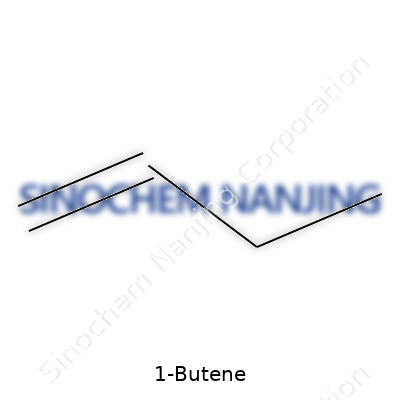
| Names | |
| Preferred IUPAC name | but-1-ene |
| Other names |
1-Butylene Ethylethylene |
| Pronunciation | /ˈwʌnˌbjuːtiːn/ |
| Identifiers | |
| CAS Number | 106-98-9 |
| 3D model (JSmol) | As requested, here is the **JSmol 3D model string** for **1-Butene**: ``` C\C=C/C ``` This is the **SMILES** (Simplified Molecular Input Line Entry System) string that JSmol and similar viewers use to generate the 3D model for 1-Butene. |
| Beilstein Reference | 633873 |
| ChEBI | CHEBI:28387 |
| ChEMBL | CHEMBL14252 |
| ChemSpider | 6929 |
| DrugBank | DB13874 |
| ECHA InfoCard | ECHA InfoCard: 100.003.968 |
| EC Number | 203-446-6 |
| Gmelin Reference | 82168 |
| KEGG | C08288 |
| MeSH | D001410 |
| PubChem CID | 7844 |
| RTECS number | ES5425000 |
| UNII | 6HG78ONE0E |
| UN number | UN1012 |
| Properties | |
| Chemical formula | C4H8 |
| Molar mass | 56.11 g/mol |
| Appearance | Colorless gas |
| Odor | Sweet odor |
| Density | 0.614 g/cm³ |
| Solubility in water | 0.32 g/100 mL (20 °C) |
| log P | 0.94 |
| Vapor pressure | 1850 mmHg (20 °C) |
| Acidity (pKa) | pKa ≈ 44 |
| Basicity (pKb) | pKb ≈ 25 |
| Magnetic susceptibility (χ) | \-8.6×10⁻⁹ |
| Refractive index (nD) | 1.378 (20 °C) |
| Viscosity | 0.175 cP (at 25 °C) |
| Dipole moment | 0.36 D |
| Thermochemistry | |
| Std molar entropy (S⦵298) | 322.7 J·mol⁻¹·K⁻¹ |
| Std enthalpy of formation (ΔfH⦵298) | -0.1 kJ·mol⁻¹ |
| Std enthalpy of combustion (ΔcH⦵298) | −2712.0 kJ/mol |
| Pharmacology | |
| ATC code | V03AB18 |
| Hazards | |
| GHS labelling | GHS02, GHS07 |
| Pictograms | GHS02, GHS07 |
| Signal word | Danger |
| Hazard statements | H220, H280 |
| Precautionary statements | H225, H280 |
| NFPA 704 (fire diamond) | 1-2-2-ال |
| Flash point | -75 °C (-103 °F) (closed cup) |
| Autoignition temperature | 385 °C (725 °F) |
| Explosive limits | Explosive limits of 1-Butene: "1.6% - 9.7% |
| Lethal dose or concentration | LC50 rat inhalation 274,000 mg/m³ 2 hours |
| LD50 (median dose) | LD50 (median dose): 4400 mg/kg (rat, oral) |
| NIOSH | BUV3500000 |
| PEL (Permissible) | Butene, 1-: 250 ppm (600 mg/m^3) |
| REL (Recommended) | 3 ppm |
| IDLH (Immediate danger) | 8000 ppm |
| Related compounds | |
| Related compounds |
Butane 2-Butene Isobutene |



