1,5-Pentanediol: A Down-to-Earth Look at a Workhorse Chemical
Historical Development and Origins
Chemists in the early-to-mid twentieth century were on a mission to create better building blocks for industry and daily life. 1,5-Pentanediol, a five-carbon diol packing two alcohol groups, came about as inventive researchers looked for new ways to craft flexible, durable, and safe materials for everything from plasticizers to pharmaceuticals. While the exact year of its first synthesis gets blurred in the fog of chemical history, it’s clear that as petrochemical feedstocks grew cheaper, diols like this one gained attention not just in academic labs but on the manufacturing floor. Over decades, industry demand steered innovation, prompting improvements in production methods and purity standards. Every generation saw a tweak here, a new purification there, reflecting society’s shifting needs for safer and more sustainable ingredients.
Product Overview
At its core, 1,5-Pentanediol offers versatility. It’s a straight-chained, five-carbon molecule equipped with two hydroxyl groups—like having two well-positioned handles for chemical transformations. This substance’s reach stretches across multiple sectors. On paper, it seems like a solvent or plasticizer, and in practice, its value grows as industries recognize the benefit of such a simple, adaptable chemical. Personal experience in laboratory work highlights one thing: having a reliable diol on hand streamlines countless synthetic steps and simplifies formulation challenges. Contemporary uses span cosmetics, coatings, pharmaceuticals, and specialty polymers—industries with little room for low-quality or dubious ingredients.
Physical & Chemical Properties
1,5-Pentanediol presents itself as a colorless, viscous liquid that’s virtually odorless. Handling it feels familiar if you’ve ever worked with its cousins like 1,4-butanediol or ethylene glycol. Its melting point usually sits just below room temperature, giving it a thick but pourable consistency. Boiling occurs above 200°C, so it doesn’t evaporate in use unless applications hit extreme heat. Its two alcohol groups make it strongly hydrophilic, ready to blend with water or dissolve a variety of polar substances. In chemical terms, these hydroxyls act as reliable reaction anchors. From my time in formulation labs, I learned that this particular diol stands out for being stable under normal conditions, so you won’t see problems like spontaneous oxidation or breakdown on the shelf.
Technical Specifications & Labeling
Purity counts in every industry. Quality standards for 1,5-pentanediol set limits for moisture, color, acidity, and allowed trace impurities. Packaging always includes hazard symbols, reflecting its status as a low-to-moderate hazard chemical rather than a benign food additive. Safety data emphasizes the need for gloves and eye protection—which every industrial chemist knows is less about panic and more about not taking dumb risks around solvents or diols in general. Labels mark not just the CAS number but all trade names and batch codes, a direct response to regulatory agencies’ push for transparency and quality assurance. Reliable producers submit their products to external testing, feeding a cycle where end users don’t just hope for— but demand—consistency.
Preparation Method
The main route for preparing 1,5-pentanediol builds on hydrogenation chemistry. Most commercial processes start from glutaric acid, reducing it in the presence of a catalyst to yield the desired diol. Fine-tuning temperature and pressure delivers a product without excessive byproducts, a reality that keeps cost and labor under control. Lab-scale syntheses sometimes experiment with alternative feedstocks—like renewable resources or bio-based acids—in search of greener methods. Every time I’ve seen a company consider switching to new production routes, a barrier pops up: economics, scalability, or just matching the performance of established reduction techniques. Sustainable chemistry is catching up, but most industry output still relies on the hydrogenation playbook perfected in big chemical plants.
Chemical Reactions & Modifications
Give 1,5-pentanediol the right partners and conditions, and it acts like a canvas for chemists. Its dual alcohol groups support esterification, etherification, and polymerization. This molecule works as a chain extender in polyurethane chemistry, giving flexible or resilient properties to foams and coatings. In crosslinking reactions, the diol’s two reactive spots make it valuable for fine-tuning molecular architecture, as experienced in resin development cycles where compromise between toughness and elasticity often comes down to diol and diamine ratios. In pharma, it sometimes functions as a spacer in molecule design, linking active groups at precise intervals. Anyone with basic synthetic experience knows the joy of tapping into diol chemistry to bridge, lengthen, or modify much larger molecules.
Synonyms & Product Names
Chemicals tend to gather aliases as they circulate between languages and industries. Standard nomenclature points to 1,5-pentanediol, but you might also encounter pentane-1,5-diol, pentamethylene glycol, or simply PDG in trade circles. Synonyms help track down information across regulatory filings or patents. Recognizing these names in scientific articles or safety documentation streamlines research, so it’s worth learning them—not just for curiosity’s sake but to prevent costly ordering mistakes or regulatory missteps.
Safety & Operational Standards
Throughout the chemical industry, safety starts with respect for the unexpected. 1,5-pentanediol is relatively gentle compared to many industrial substances—acute toxicity levels are modest, and exposure leads more to irritation than life-threatening effects. That said, inhalation or skin absorption still complicates health when workers get careless. Modern workplace standards—globally harmonized under systems like GHS—require clear ventilation, personal protective gear, and documented safe-handling practices. I once saw a production batch stall because a simple eyewash station lacked water pressure, reminding everyone that procedural lapses can escalate quickly, even with a mid-range substance like this one. Investing in proper training, signage, and incident response keeps small problems from morphing into large ones.
Application Area
Dig into the market uses, and you find 1,5-pentanediol in places both obvious and surprising. In cosmetics, it often replaces controversial preservatives or less skin-friendly glycols. Its gentle solvency improves formulations for creams and lotions, a fact I’ve seen appreciated by formulators keen to reduce allergenic risks without compromising stability. Coatings and sealants draw on the diol’s flexibility to toughen finishes while reducing brittleness. Polyurethane production relies on it as a soft segment, yielding foams or elastomers refined for performance. Drug companies use it as a carrier or intermediate in synthesis, and researchers hunt for even more biomedical roles, targeting everything from excipients to drug delivery vehicles. As new green chemistry regulations phase out less sustainable compounds, pentanediol’s profile continues to rise, especially when cleaner or safer alternatives lag behind.
Research & Development
Across R&D departments, pentanediol generates curiosity and funding. Current projects target bio-based alternatives and milder production pathways, shaped by regulatory pushback against fossil-heavy syntheses. University teams experiment with catalytic processes under milder conditions, seeking ways to save energy or cut emissions. Application chemists explore how modified diol derivatives might produce next-generation polymers with better resistance or biocompatibility. Recently, collaborative industry-university efforts have looked into using it as a monomer in new biodegradable polymers, tapping consumer demand for products that don’t persist in the environment. Corporate labs spend real money probing untapped uses in electronics, green plastics, and even as a solvent in battery research. I recall back-and-forth meetings where regulatory risk and commercial payoff kept pushing teams to stretch the role of this straightforward molecule past its old boundaries.
Toxicity Research
Toxicologists keep a close watch on chemicals like 1,5-pentanediol, even if historic data points to low concern compared to harsher glycols or solvents. Acute toxicity levels in animal models indicate relatively mild effects. The bigger picture focuses on chronic exposure, environmental breakdown, and possible endocrine disruption—areas where reliable data still builds. Research so far suggests a favorable profile for direct human contact, a factor that boosted its use in sensitive consumer products. Regulators continue to test for mutagenicity and long-range health effects, especially as routes for environmental exposure broaden through larger scale industrial use. Given society’s intolerance for chemical surprises, investing in rigorous, long-term toxicity screening only helps, as any missed hazard can trigger expensive recalls or reputational blows that dwarf short-term savings.
Future Prospects
Society’s relentless shift toward greener, safer, and more versatile substances keeps molecules like 1,5-pentanediol in the spotlight. Demand will surge as industries leave behind older, more controversial glycols or seek plant-derived replacements. Scaling up bio-based production has a way of lowering costs and emissions, addressing stakeholder and public pressure alike. Research into novel uses—especially in biodegradable polymers, sustainable solvents, and high-performance materials—gives this molecule fresh relevance in markets ranging from packaging to biotech. For innovators, the real opportunity lies in chasing performance gains without tradeoffs in safety or sustainability. Each new regulatory volley or consumer-driven shift rewrites the market for intermediate chemicals. Having watched the slow but ongoing pivot toward safer chemistries, I’m convinced that the story of 1,5-pentanediol is barely half written.
What is 1,5-Pentanediol used for?
One Chemical, Many Jobs
People rarely talk about the raw materials that go into products we use every day. 1,5-Pentanediol doesn’t get much attention, but it shows up in more places than most realize. As a chemical tinkerer, I learned early that diols like this one shape everything from hand cream to touchscreen glass.
Building Better Everyday Products
Creators of cosmetics and personal care products count on 1,5-pentanediol as a skin-friendly solvent and moisturizer. Many creams and serums rely on it to help other ingredients dissolve without leaving a sticky film behind. The ingredient also keeps bacteria at bay, so formulas last longer on the shelf. Professionals working with sensitive skin know the search for mild but effective preservatives can take ages. Pentanediol stands out by being both gentle and reliable, which matters, since bad skin reactions and ruined batches cost trust and money.
Manufacturers of paints, sealants, and adhesives add 1,5-pentanediol to boost flexibility. Paint that cracks or peels after a few months wastes work and material, so each additive must do its part for long-lasting surfaces. The diol’s structure makes it a trustworthy backbone for polyesters and polyurethanes, which hold up against heat and sunlight. Watching paint crack on my workshop walls taught me the hard way how each molecule can make or break a recipe.
Safe Touch Is No Small Feat
Electronics need reliable coatings too. Modern touchscreens and gadget housings face constant stress, greasy fingers, and sunlight. Polymers made from 1,5-pentanediol create smooth, clear surfaces that withstand repeated use. This kind of durability is not just for looks—dropped phones cost users and manufacturers alike. A good protective layer can mean the difference between a minor scratch and a shattered display.
From Labs to Everyday Life
Medical industry players use this ingredient in special plastics for drug capsules, syringes, and flexible tubing. Unlike harsher chemicals, 1,5-pentanediol doesn’t leach harmful substances, helping protect patients. The search for safer, more stable ingredients in medical supplies feels never-ending. Watching hospital equipment degrade drives home why even “invisible” ingredients must pass tough standards.
Every sector faces pressure to replace older, toxic chemicals with greener, safer alternatives. People want products that work but also respect health and the environment. 1,5-Pentanediol often gets the job because it balances performance and safety better than many rivals. Not everything declares “Made With Safer Chemistry” right on the label, but consumer trust grows when businesses make smart, responsible choices.
Where Do We Go From Here?
Public awareness about chemical choices keeps rising. Consumers ask more questions, regulators watch more closely, and brands feel pressure to explain every ingredient. The demand for traceability and cleaner manufacturing keeps growing. Support for more testing and supply chain transparency can only help industries avoid mishaps like supply contamination or recalls. Open communication between chemical makers, manufacturers, and users can keep products both safe and effective.
The more experience I gain, the more respect I have for the discipline behind each ingredient. 1,5-Pentanediol may not get flashy headlines, but steady, well-tested chemicals form the quiet backbone of safer, better products.
Is 1,5-Pentanediol safe for use in cosmetics?
What Is 1,5-Pentanediol?
If you read the ingredient list on your favorite moisturizer, you might spot a long chemical name: 1,5-pentanediol. This clear, odorless liquid lands in bottles because chemists want something that can help preserve products and keep them feeling pleasant on your skin. The ingredient acts as a solvent and humectant, which means it attracts moisture and helps other ingredients dissolve. Some people hear "chemical" and worry—makes sense, since we all want safe, gentle products on our skin.
What Do Research and Regulators Say?
Scientists have spent time poking and prodding 1,5-pentanediol to see if it causes harm. Cosmetic Ingredient Review (CIR) experts dug through available studies. They found this ingredient doesn’t tend to irritate healthy skin in most concentrations. Allergic reactions look rare, according to published dermatology case reports. Animal testing hasn't shown evidence of reproductive harm, cancer risks, or serious toxicity at the levels used in personal care. Peer-reviewed sources, like the International Journal of Toxicology, describe it as low-risk for the way it’s used in lotions and cleansers.
EU regulators, who usually draw the line quickly when a chemical shows risk, allow 1,5-pentanediol in cosmetic products. The U.S. Food and Drug Administration watches ingredients in a similar way and hasn't flagged this substance for extra caution, unlike others that made headlines in the past. The ingredient’s safety record keeps major companies comfortable adding it to popular lines found on store shelves.
Concerns and Real-Life Experiences
Some worry about possible eye irritation, especially if a face cream finds its way too close to the lashes. I’ve accidentally wiped a bit of lotion into my eye after forgetting to wash my hands—it stings, but not more than most beauty products with similar agents. I know folks who worry about buildup or breakouts, and there’s always room for individual sensitivity. This ingredient can’t work for absolutely everyone. If someone finds their skin reacts, no dermatologist would frown at switching brands.
There’s growing talk about mixing so many modern preservatives and alcohols in one bottle. Long ingredient lists get confusing. Industry insiders admit that gentle, simple formulas catch fewer complaints from consumers with sensitive skin, and “clean beauty” shoppers look for transparency about what they put on their face. Most dermatologists suggest patch testing new products, especially if you have allergies or eczema.
Finding Solutions and Staying Informed
Product safety should never get stale. Researchers and companies keep watch for any new evidence and revise formulas as needed. Consumers can push for better labeling, which lets people make smart choices for their own needs.
If you really want to double-check what you’re applying, looking up ingredient safety on resources like EWG Skin Deep or consulting your dermatologist goes further than scrolling quick headlines. Calling out the full ingredient list and testing products on a small skin patch brings peace of mind and avoids surprises.
The story of 1,5-pentanediol in cosmetics reflects a bigger theme: we all want products that deliver results but don’t compromise health. Paying attention to science, staying alert to possible irritation, and sharing feedback with brands together helps keep products both safe and effective.
What are the physical and chemical properties of 1,5-Pentanediol?
Physical Properties of 1,5-Pentanediol
1,5-Pentanediol stands out as a versatile organic compound that appears as a colorless liquid. The liquid feels oily to the touch, which reminds me of the sensation you get handling other glycol-based substances. People who work in labs often notice its slightly sweet odor; it’s faint but definitely there. The boiling point hovers around 242°C. This high boiling threshold makes it practical for processes requiring heat stability.
Its melting point sits low at about -16°C, keeping it liquid at room temperature across many environments. This explains its popularity in applications where flexibility and easy handling matter—anyone who's handled it in bulk can vouch that it doesn’t thicken or crystallize easily during regular storage. The molecular weight comes in at 104.15 g/mol, which falls into the light category. If a team wants to dilute it, they’ll notice it blends well with water, thanks to its two terminal hydroxyl groups. Water solubility points to useful mixing for producers of polymer solutions.
Density measures about 1.02 g/cm³ at room temperature, very close to water. This can be a boon or a challenge depending on the process—sometimes users want it to mimic water’s behavior for formulations, sometimes they need separation. Viscosity, another important aspect, means it’s easy to pour and measure, but it doesn’t run like ether.
Chemical Properties of 1,5-Pentanediol
This compound features two primary alcohol groups, one linked to each end of a five-carbon straight chain. Both of these hydroxyl groups take part in reactions, giving the molecule its diol designation. In my experience, this makes the compound handy for creating esters or for entering into polymerization reactions.
The two –OH groups act as nucleophiles, meaning they’ll form bonds easily with acids, isocyanates, or carbonyl-containing molecules. Manufacturers put this to use when engineering plastics, flexible foams, and surface coatings. 1,5-Pentanediol shows noticeable stability when exposed to moderate heat or under normal atmospheric conditions. Companies appreciate not having to worry about stored barrels degrading quickly or producing hazardous byproducts without provocation.
Getting into real-world chemistry, it resists oxidation but still reacts with strong oxidizers—a lab needs to exercise care. Compatibility with other alcohols and glycols expands its value for blends and copolymers. People in cosmetics and pharmaceuticals harness its mild nature; the compound rarely causes irritation or severe reactivity in the small concentrations typical for these products.
Uses and Importance
Earning its reputation across industries, 1,5-pentanediol finds frequent use in polymer production, as a humectant in cosmetic products, and within the pharmaceutical supply chain. Its relatively low toxicity means it fits regulatory standards worldwide, easing the risk headaches for both producers and end-users.
Because it mixes well, resists breakdown, and offers those handy terminal alcohol groups, the material gets chosen for engineering stable emulsions, personal care preparations, and new generations of biodegradable plastics. That high boiling point and harmless smell mean safer labs and pleasant working environments—which, if you’ve ever spent hours in a chemical plant, makes a huge difference.
Potential Challenges and Solutions
The main challenges show up in storage and sourcing. Supply chain snags sometimes lead to inconsistent quality, which frustrates manufacturers. Simple precautions—closed containers, temperature regulation, and well-ventilated storage—help preserve quality. Some researchers aim to scale up green synthesis, reducing reliance on petroleum-based feedstocks. Progress here would lower the environmental footprint, smooth out costs, and keep the raw material supply sustainable for years to come.
How should 1,5-Pentanediol be stored and handled?
Direct Experience in Chemical Storage
Working in a lab teaches a lot about paying attention, especially around chemicals like 1,5-Pentanediol. Clear labeling on containers, regular checks for leaks, and following a strict routine make a real difference. Years spent with chemicals underline how slip-ups in storage or handling turn a standard workday into a dangerous situation.
Why Proper Storage Matters
1,5-Pentanediol seems simple — clear, oily, and low odor. Yet, ignoring its quirks brings trouble. Its boiling point stands high enough to handle most room temperatures, but it stays flammable. Keeping it in a cool, well-ventilated area cuts down risk. Fumes linger more in cramped spaces, raising exposure for anyone nearby. A fresh air setup reduces those hazards, and even one fan or open window can help prevent a headache or worse.
Choosing the Right Containers
A robust plastic or glass bottle with a tight-fitting cap reduces spills. Metal sometimes reacts with glycols or their byproducts, especially if containers show scratches or rust. One day without replacing a cheap lid can mean days cleaning up and reporting the leak. Instead of trusting shrink-wrapped seals, professionals favor tested screw tops.
Protecting Workers: Gear and Training
No matter how familiar a compound feels, it pays to throw on goggles and gloves. Nitrile gloves protect skin well. Spills absorb right through thin latex in seconds, which is easy to forget after years of safe use. Small amounts soaked up on the skin cause dryness or irritation, and over time, these little exposures add up. In a real disaster, a chemical splash to the eyes means pain, possible eye damage, and a trip to the emergency room. Fast access to an eyewash station is vital; relying on a sink never works in a panic.
Fire Hazards: Signs and Solutions
Rushing through work with flammables never turns out well. 1,5-Pentanediol catches fire at high temperatures, but accidents come from carelessness, not just faulty wiring. Static buildup, open flames, and hot glassware all carry risk. Storing it away from sources of ignition and keeping clear signage around storage rooms help everyone remember to stay alert. Regular fire extinguisher checks and basic fire drills should be part of the monthly routine, not a once-a-year afterthought.
Spills and Emergency Cleanup
Anyone tired after a long shift knows the urge to wipe up a spill with the nearest rag. That mistake spreads contamination and increases fire danger. Absorbent pads, proper disposal bags, and a written cleanup protocol save trouble in the end. A single small spill is easy to track if everyone logs incidents. Over time, those logs show patterns – is storage too close to foot traffic? Are old containers wearing out? Adjusting routines based on these real-world notes builds a safer, more predictable work environment.
Conclusion: Putting Safety First
Handling chemicals like 1,5-Pentanediol takes habit, not just knowledge. Vigilance, quality equipment, and open communication have kept my workspace incident-free for years. A small investment of attention protects people, equipment, and peace of mind.
Where can I buy 1,5-Pentanediol and what is its price?
Why 1,5-Pentanediol Stirs Up Interest
The chemical called 1,5-pentanediol draws attention from both large manufacturers and solo inventors. Its main uses show up in the world of cosmetics, specialty coatings, pharmaceuticals, and even high-end 3D printing resins. At a molecular level, it helps chemists and formulators lock in the right consistency and stability. Laurel about its safety and low toxicity spreads, and honestly, I see why hobby skincare brands and cosmetic startups chase down a reliable supplier.
Where to Buy 1,5-Pentanediol
Most buyers look to established chemical marketplaces. Sigma-Aldrich, ChemSpider, and TCI America rank as go-to suppliers for academic labs and product developers. Online aggregators, such as Alibaba or ChemExper, list hundreds of choices from both verified and newer companies. The bulk of these sellers focus on B2B buyers, shipping in drum-sized lots or kilogram pails. Some shops and third-party resellers—like Amazon Business or eBay’s trusted chemical vendors—do offer consumer-sized batches. Most of my colleagues in cosmetic formulation choose chemical distributors with transparent track records and proper shipping credentials. Local restrictions matter a ton. In the US, getting laboratory-grade or cosmetic-use 1,5-pentanediol from Spectrum Chemical or Fisher Scientific works, but paperwork proves necessary for anything outside research or industrial use.
Outside the States, Europe sees bulk buyers contacting Brenntag or VWR, while some buyers in Asia partner directly with factories in China or South Korea. For smaller batches, specialty retailers tied into the personal care market—like Lotioncrafter in the US or MakingCosmetics—often list 1,5-pentanediol by the pound or even smaller bottles, with all documentation ready to view before you order.
Pricing in 2024: What Buyers See
Cost varies with the size of purchase, level of purity required, and geography. I checked recent listings: one-kilogram bottles from reputable US suppliers land between $30 and $75, depending on whether the grade is technical, ACS, or cosmetic. Higher purity (over 99%) or pharma-grade lots command more. Some wholesale importers can drop the per-kilo rate to under $12 if the buyer needs ten kilos or more, but that usually means longer lead times. My own price checks in May 2024 showed Alibaba’s verified sellers quoting $4 to $8 per kilo for large drum orders, but sea freight, customs, and quality variances ramp up total costs. Add up the import fees and shipping for home-based buyers, and savings fade fast.
Small cosmetic labs and DIY enthusiasts spot the best deals through specialty ingredient websites, but pay a premium for labeling, traceability, and batch testing. Expect that ounce-sized bottles wrapped for home use cost much more per gram, but give peace of mind if you’re trying to pass a small-batch product safety review.
What to Watch For: Quality and Safety
A low price means nothing if the product arrives contaminated or mislabeled. Real risks include cross-contamination with solvents or phthalates (from shared drums), especially when buying from unverified channels. Regulatory bodies, like the FDA or the European Chemicals Agency, recommend tight controls for cosmetic or medical-grade batches. I always choose a supplier that posts a certificate of analysis and ships in sealed, tamper-evident containers. If you plan to sell products or use them on skin, skip bargain-bin sources—even a few ppm of an unknown impurity can ruin a launch or cause a recall.
Navigating Rules and Protecting Yourself
Each region treats 1,5-pentanediol differently for registration, transportation, and handling. In the US, bulk orders might prompt supplier paperwork, especially for private individuals. The EU sets extra requirements if you plan to list it in beauty or medical products. Startup founders should budget time for compliance—regulatory failure costs more than premium-priced, lab-tested ingredients. Ask for safety data sheets, storage advice, and sample testing, especially for direct imports.
Smart Sourcing Pays Off
Big labs and garage-scale experimenters share one lesson: quality, reliability, and traceability always outvalue small savings. My early days buying chemicals for R&D taught me that every shortcut brings new headaches, especially with unfamiliar suppliers. A few dollars extra now keeps the process safe and reputations intact.
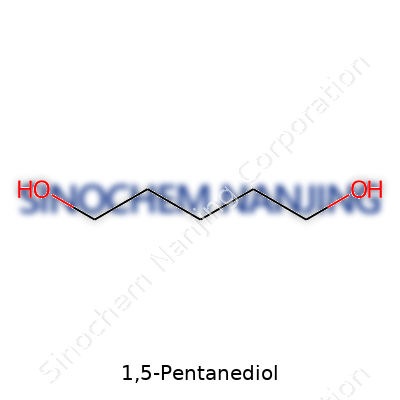
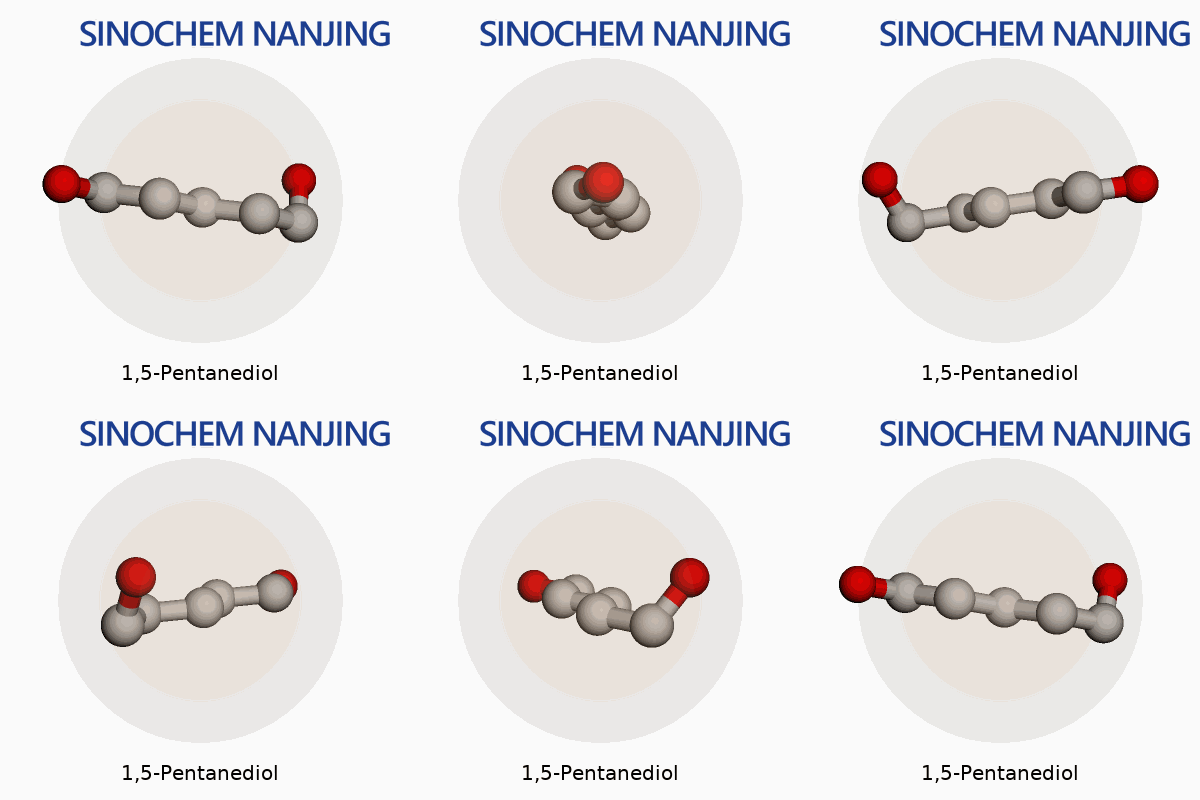
| Names | |
| Preferred IUPAC name | pentane-1,5-diol |
| Other names |
Pentane-1,5-diol 1,5-Dihydroxypentane |
| Pronunciation | /ˌwʌn.faɪvˌpɛnˈteɪndiːɒl/ |
| Identifiers | |
| CAS Number | 111-29-5 |
| Beilstein Reference | 1852474 |
| ChEBI | CHEBI:42500 |
| ChEMBL | CHEMBL16252 |
| ChemSpider | 7494 |
| DrugBank | DB08350 |
| ECHA InfoCard | 03df221e-7ee4-40db-9ae2-c7b2a1a05e82 |
| EC Number | 203-856-5 |
| Gmelin Reference | 72787 |
| KEGG | C01840 |
| MeSH | D06BB16 |
| PubChem CID | 8103 |
| RTECS number | SA5950000 |
| UNII | 8Z6Q2M497Q |
| UN number | UN No. 2810 |
| CompTox Dashboard (EPA) | DTXSID0022118 |
| Properties | |
| Chemical formula | C5H12O2 |
| Molar mass | 104.148 g/mol |
| Appearance | Colorless liquid |
| Odor | odorless |
| Density | 0.989 g/cm³ |
| Solubility in water | miscible |
| log P | 0.64 |
| Vapor pressure | 0.025 mmHg (25°C) |
| Acidity (pKa) | 14.52 |
| Magnetic susceptibility (χ) | `-9.68 × 10^-6 cm³/mol` |
| Refractive index (nD) | 1.446 |
| Viscosity | 104 mPa·s (25 °C) |
| Dipole moment | 2.99 D |
| Thermochemistry | |
| Std molar entropy (S⦵298) | 285.8 J·mol⁻¹·K⁻¹ |
| Std enthalpy of formation (ΔfH⦵298) | −466.2 kJ/mol |
| Std enthalpy of combustion (ΔcH⦵298) | -3356.8 kJ/mol |
| Pharmacology | |
| ATC code | D04AX12 |
| Hazards | |
| Main hazards | Causes serious eye irritation. |
| GHS labelling | GHS labelling of 1,5-Pentanediol: `"Not a hazardous substance or mixture according to Regulation (EC) No. 1272/2008."` |
| Pictograms | GHS07 |
| Signal word | Warning |
| Hazard statements | H319: Causes serious eye irritation. |
| Precautionary statements | P210, P233, P280, P305+P351+P338, P337+P313 |
| NFPA 704 (fire diamond) | 1,1,0 |
| Flash point | 113 °C |
| Autoignition temperature | 210 °C |
| Explosive limits | Explosive limits: 1.2–9.2% |
| Lethal dose or concentration | LD50 Oral Rat 4,250 mg/kg |
| LD50 (median dose) | LD50 (median dose): Oral rat LD50 4,910 mg/kg |
| NIOSH | PY8750000 |
| PEL (Permissible) | Not established |
| REL (Recommended) | 100 ppm |
| Related compounds | |
| Related compounds |
1,4-Butanediol 1,6-Hexanediol 2-Methyl-2,4-pentanediol Neopentyl glycol Glutaric acid |



