Taking a Closer Look at 1,4-Butanediol: More Than Just a Commodity
Historical Development
People have tinkered with different alcohols for more than a century, but 1,4-Butanediol really started turning heads in the mid-20th century. Chemists saw potential not just because of what it is, but what it can turn into. Initially, it showed up while searching for better industrial solvents, and soon after, manufacturers realized its value as a feedstock for other materials. Interest has only grown as economies search for greener production and less reliance on oil-derived inputs.
Product Overview
Think of 1,4-Butanediol as a bridge linking several worlds. On one side, it’s a chemical sitting in a drum at a factory; on the other, it ends up in fibers, plastics, and sometimes in less savory places thanks to misuse. It gets bought by manufacturers needing a reliable intermediate for plastics, polyurethanes, and spandex. It also often pops up during chemical research or in the search for novel materials that last longer or perform better under stress. Its versatility drives continual demand, making it a stable fixture in the chemical industry—almost invisible until you trace it back to countless everyday products.
Physical & Chemical Properties
1,4-Butanediol looks like a colorless, almost syrupy liquid when poured. You might notice a faint sweet odor if it’s recently been unsealed. It dissolves well in water, which matters for how it’s processed or stored—qualities found in many glycols. It holds up against heat fairly well, unless pushed hard with acids or bases. With two ends perfectly set up for reactions, it fits into a unique spot among other diols, always ready to act as a building block.
Technical Specifications & Labeling
On technical sheets, chemists check for purity, moisture, and slight differences in structure that affect end use. Labels show chemical identity, potential hazards, and safe handling instructions. Anyone handling it in a lab or factory needs to take labeling seriously; misreading can lead to accidents or wasted product. The industry keeps hammering away at accuracy and clarity in labeling, thanks to safety standards shaped over years by global groups and regulatory bodies, and it’s clear those are lessons that came at a cost.
Preparation Method
Factory lines churning out 1,4-Butanediol usually pull from two main routes. The first relies on petrochemical processes—acetylene and formaldehyde come together in a series of steps involving hydrogenation. A more recent method draws on renewable feedstocks like succinic acid, which promises a cleaner lifecycle and appeals to an audience worried about sustainability. In either path, timing, temperature, and cleanliness stand between a smooth yield and a ruined batch. These aren’t just laboratory details; they feed into our longer push away from fossil fuels and toward more circular, planet-friendly economies.
Chemical Reactions & Modifications
This diol easily gives itself up for polymerization, which is how it winds up in elastic fibers and tough plastics. Reacting with acids produces esters and cyclic compounds—critical for making plastics with specific strengths and bendability. In research, folks play with its chemical backbone to add features, boost performance, or create whole new classes of materials. It’s rarely about the molecule itself but what you convince it to become, which explains the continual buzz in R&D circles.
Synonyms & Product Names
Out in the wild, this compound answers to a handful of nicknames—BDO, Tetramethylene glycol, and 1,4-Butylene glycol among them. On technical sheets, the CAS number does the heavy lifting for identification. These synonyms help chemists keep track, since the same stuff can appear under totally different banners, and making mistakes here once led to real-world mix-ups and costly recalls.
Safety & Operational Standards
Working with 1,4-Butanediol requires sharp attention to ventilation, skin protection, and training. In poorly managed settings, overexposure can bring dizziness, drowsiness, or worse symptoms. Regulations exist for a reason. Manufacturers adopt tight controls and routine inspections because complacency has burned people before. Lessons from accidents keep shaping operational guidelines, and as the industry modernizes, stricter environmental and health standards ride along.
Application Area
You’ll find 1,4-Butanediol quietly woven into things that last longer, bend further, and resist breaking when stretched—everything from phone cases and bicycle tires to car parts and electronics protective coatings. It serves as the guts of polyurethane foams and as a backbone for engineering plastics. In pharmaceuticals, controlled uses exist, though safety hurdles limit its spread in this field. Every day, the stuff keeps showing up further down supply chains, ready to fill roles that old-school materials struggle to match.
Research & Development
Researchers constantly ask what else this compound can do. Labs test renewable production paths, investigating routes that turn food waste or agricultural residue into fresh batches of BDO. Biocatalysis and engineered microorganisms promise to loosen the grip of oil-based synthesis. Teams eye tweaks that lock in better resistance to wear, greater flexibility, or even smart reaction to light and temperature changes. A wave of startups and academic centers seem convinced this field hasn’t hit its ceiling yet.
Toxicity Research
Cutting corners leads to trouble. Toxicology reports connect overdoses with nervous system depression, which has turned up all too often in news headlines due to unregulated sales and misuse. Animal testing has shown possible issues with chronic exposure, but modern approaches stick with the mantra that prevention beats treatment. Teams in regulatory science keep tracking low-level, long-term impacts across humans and animals, looking for connections that could sharpen workplace safety rules. The rise in incidents outside industrial settings—especially among youth—keeps the pressure on for stricter regulation and community education.
Future Prospects
The shift toward green chemistry and lower emissions could turn 1,4-Butanediol from an ordinary industrial solvent into a showcase for circular production. Its basic structure suits the move to plant-based, less polluting chemical plants. More companies are testing renewable sources and bioprocessing, hoping to deliver equivalent or better performance at a lower environmental price. Ongoing work suggests this compound will play an anchor role in new categories of plastics, fibers, and foams, with a stronger focus on recycling and environmental responsibility. Smart policy, tough oversight, and fresh thinking from researchers will decide if it becomes a model for future manufacturing—or just another cautionary tale.
What is 1,4-Butanediol used for?
What Is 1,4-Butanediol Really Doing Out There?
Everyday life often runs right past the behind-the-scenes players in chemicals. 1,4-Butanediol, or BDO, doesn’t make headlines, but it shapes plenty around us — quietly at work in factories, workshops, and even in some less-expected places. Take a moment and check the label on soft, stretchy clothes. Most of the time, the magic ingredient for that flexibility comes from spandex fibers, and BDO is a key building block in the chemistry behind it.
1,4-Butanediol at the Core of Modern Manufacturing
Ask anyone working in plastics: if the shop churns out plastic products, there’s a high chance they rely on BDO. Manufacturers use it to create polyurethanes, the stuff in everyday things like phone cases, shoe soles, car interiors, and insulation foams. BDO has a molecular shape that links easily with other chemicals, so builders in the plastics world appreciate the versatility it brings to their creations.
Bigger operations, from car manufacturing to construction, have a place for BDO-derived compounds. Polybutylene terephthalate (PBT) comes up all the time in these industries. This is an engineering plastic known for being tough and electrical-resistant. It lands in electrical sockets, connectors, and appliances, making homes safer and gadgets longer-lasting. BDO, as a base ingredient, keeps the assembly lines running and the products reliable.
The Role of BDO in Everyday Items
Glancing around a modern office, it’s easy to point out items with BDO connections: printer housings, keycaps, and computer parts. Even the humble garden hose might get its durability thanks to polyurethane produced from it. The adhesive under tiles, the paint on a wall, packing foams — these often owe their resilience to a little help from BDO behind the formula.
Health and Safety: A Double-Edged Sword
BDO’s usefulness doesn’t erase the risk. In poorly ventilated settings, overexposure to vapors can cause eye or respiratory irritation, and at higher doses, it turns toxic. Some people chase it for recreational highs, since the human liver converts BDO into gamma-hydroxybutyrate (GHB), a central nervous system depressant. Taking BDO this way is dangerous. It can cause unconsciousness, coma, or even death. Handling it safely takes respect for chemical knowledge and solid workplace practices — gloves, goggles, and clear procedures make the difference.
Steering Toward Safer Practices and Sustainability
Communities and regulators want more than production for the sake of profit. They’re asking companies to track BDO shipments, train staff, and respond quickly to spills or leaks. Lessons learned from past factory accidents teach us that a culture of safety — not just rules on a wall — keeps both workers and whole neighborhoods safer. Technology lends a hand, as real-time monitors flag leaks before people get hurt.
Biotechnology is changing how BDO gets made, too. Newer techniques use fermented sugars instead of fossil fuels. This means future spandex, plastics, and resins could have a lighter carbon footprint. Chemical workers learning new skills, chemists pushing for green solutions, and buyers asking about sustainable sources all add up. BDO might not be glamorous, yet its story shows how a simple chemical shapes much of what we touch, wear, and use — for better or for worse.
Is 1,4-Butanediol safe to handle?
Everyday Use Meets Chemical Reality
You’ll find 1,4-butanediol in plenty of industrial and consumer spaces. People use it to make plastics, elastic fibers, solvents, and sometimes it even appears in cleaning products or automotive fluids. It looks like a straightforward liquid to pour or mix, clear and almost odorless. It doesn’t look scary at first glance.
But I’ve seen firsthand in labs and production settings how easy it is to let caution slip. Most workers rely on gloves or splash goggles, figuring it’s enough. More than once, I’ve scrapped off a sticky layer from a workbench before realizing somebody hadn’t worn enough protection days before. That mistake can send you for a nasty ride. Skin absorbs 1,4-butanediol quickly. Absorption can sneak up—not all chemicals sting or burn, but this one still moves through the skin and gets into your bloodstream.
Health Risks Go Deep
Once inside the body, 1,4-butanediol turns into GHB, a neurotoxic compound best known for use as an illegal recreational drug. Even small amounts by the oral route can cause drowsiness, confusion, slow heart rate, and sedation. Accidental splashes or breathing in the vapor on busy production floors caused workers in the past to blackout or become seriously ill. Longer-term exposure hasn’t been studied much, but acute poisoning events have landed people in emergency rooms.
According to data from the U.S. National Library of Medicine and National Institute for Occupational Safety and Health, people handling this substance run the risk of eye, skin, and respiratory tract irritation. Oral ingestion can be deadly, and children have suffered severe toxicity after accidental swallowing at home. It’s not harmless in any form.
Workplaces Aren’t Always Ready
I remember some workplaces storing open barrels or using old chemical pumps meant for water. The vapor doesn’t always have a strong smell, but exposure piles up fast. Even reputable companies sometimes skimp on training, and some don’t provide enough Personal Protective Equipment to match guidelines. That makes accidents more likely.
I’ve also seen how mislabeling or poor housekeeping leads to accidental contamination. Wipes or towels soaked with 1,4-butanediol end up in the regular trash. No one wants to bring these problems home on their shoes, but it happens.
Staying Safe Means Real Investment
The right way to work with 1,4-butanediol involves clear labels, proper ventilation, and gloves that resist chemical penetration—not just thin latex. Face protection matters, especially during transfers. Emergency eyewash stations and showers should sit close to work areas. Detailed safety training shouldn’t stop after orientation; it must continue, tailored for old-timers and new hires alike.
Companies that hold regular drills for spill response or personal exposure handle fewer injuries. At home, keeping this substance out of reach and in its original packaging with child-resistant caps proves essential. Poison control centers list accidental ingestion of butanediol as a medical emergency—kids are drawn to colorless, sweet-tasting liquids that could cost lives.
Regulations and Responsibility
OSHA and similar agencies lay out requirements for chemical handling, but enforcement depends on local habits and management’s priorities. Lack of investment leads to unnecessary emergencies in both industrial and household settings. In my experience, putting people first—through real investment in safety gear and honest education—cuts down near-misses and lets everybody go home whole.
With countless alternatives on the market, the question often boils down to respect: respecting the chemical, respecting workers, and respecting the home.
What are the storage requirements for 1,4-Butanediol?
Understanding 1,4-Butanediol's Nature
1,4-Butanediol serves as a raw material for making plastics, solvents, and elastic fibers. It attracts attention not just in chemical plants but also in tech spaces that need it for special polymers. Its colorless, almost odor-free nature makes it look harmless, but beneath the surface, there are real safety stories worth learning. I remember a colleague who once assumed it was just like water—this chemical taught him quickly that appearances can't always be trusted in a lab setting.
Stability Only Feels Simple
Store 1,4-Butanediol indoors where the temperature stays cool, ideally between 20°C and 25°C. Extreme heat or freezing temperatures cause the substance to break down or crystallize, which harms both quality and safety. Factories that try to cut corners on temperature control have ended up with unusable product more than once. In my own experience, a malfunctioning storage room forced an entire batch to crystallize in drums, which led to costly delays and disposal headaches.
Moisture: The Quiet Threat
Moisture finds its way everywhere, and 1,4-Butanediol picks it up fast. If it absorbs water, you see dilution of purity, but you also get potential for dangerous side reactions. Drum seals made from the wrong material or a roof leak can have outsized consequences. Keeping drums in tightly sealed containers is essential. I’ve seen more than one shipment rejected because even a small leak let humidity in. Make use of dehumidifiers if weather turns unpredictable or the storage room lacks proper airflow.
Material Compatibility Saves the Day
Steel and polyethylene containers both work well. Avoid copper, brass, or aluminum—an old tank with the wrong lining led to a costly spill at a facility I visited many years ago. Paint and rust flakes can contaminate the product or even spark unexpected chemical changes. If handling large volumes, double-checking drum integrity and gasket material pays off.
Ventilation: More Than a Check Box
Fumes can concentrate and pose health or fire risks. Well-ventilated storage rooms keep the air fresh and lower the danger—one stifling summer day my team learned this the hard way, when poor ventilation let a faint odor escalate to uncomfortable levels. Toxicity may not leap out at you, but it adds up quietly when spaces stay closed up.
Separation from Incompatibles
Keep 1,4-Butanediol away from strong acids, oxidizers, or strong bases. Mixing with the wrong chemical isn’t something to gamble with—a single misplaced drum can endanger everyone on site. Having a distinct, clearly labeled section in storage prevents accidents. I'll never forget a near-miss years ago when a janitorial mistake—a wrong shelf assignment—almost caused unwanted mixing.
Fire Protection Steps
Classified as a combustible material, 1,4-Butanediol deserves both automatic sprinklers and fire extinguishers rated for chemical fires. Sprinklers must stay unobstructed, and staff should know procedures for tackling spills or leaks. Periodic safety drills have saved my teams from confusion when a drum got punctured by a careless forklift operator.
Taking Storage Seriously
Keeping people and property safe means treating storage conditions for chemicals like 1,4-Butanediol with real respect. A well-managed inventory, strong container choice, stable environment, and attention to separation do more than protect a bottom line—they mean everyone gets to go home healthy each day.
References:- CDC: NIOSH Pocket Guide to Chemical Hazards
- PubChem: 1,4-Butanediol Safety Data
- European Chemicals Agency: Guidance on Storing Hazardous Chemicals
How should 1,4-Butanediol be disposed of?
Understanding What’s at Stake
1,4-Butanediol isn’t just another chemical tucked away on a shelf in some industrial lab. You’ll find it in everything from solvents and plastics to some types of cleaning agents. Here’s the thing: this compound can harm water systems, wildlife, and communities if handled carelessly. Some folks only focus on its uses, maybe the value in some manufacturing setup, but fewer want to talk about what happens after it’s no longer useful.
Not Just Washing It Down the Drain
Dumping 1,4-Butanediol in the sink or tossing it into regular trash creates a dangerous ripple down the line. Wastewater treatment plants aren’t equipped for chemicals like this. It will often slip through, travel downstream, enter rivers, and eventually run into our drinking water sources. There’s recent reporting tying improper chemical disposal—even with less toxic compounds—to health complications and persistent environmental impacts. With 1,4-Butanediol, the risks hit both immediate surroundings and faraway communities.
Safety for People and the Planet
Most folks never see the downstream effects. In some jobs, I’ve witnessed firsthand the difference between quick disposal methods and responsible ones. Fast ways save a few dollars and time but leave a cost that stretches across neighborhoods. Exposure to this compound, especially in places without strong chemical controls, can lead to headaches, dizziness, and even more serious reactions. Wildlife doesn’t fare better—the parts per million that seem minor to us translate to whole populations of frogs, fish, or birds in trouble.
Common Sense Steps and What Actually Works
Instead of pretending the chemical simply disappears, smart facilities collect it in tightly sealed containers, clearly labeled to avoid confusion. Workers trained on proper handling understand: touching or smelling this stuff can go south quickly. Find a licensed hazardous waste company instead of hoping local trash or sewer lines will “deal with it.” These specialty outfits burn or treat it at high temperatures in controlled incinerators. Combustion with enough heat stops the compound from slipping back into the environment as a harmful byproduct.
Looking Beyond Quick Fixes
Some think diluting a bit in water or mixing with other waste cuts the problem down to size, but this has set back entire water systems before. There’s no simple shortcut. Rules keep getting stricter for a reason. Industry veterans, environmental scientists, and government agencies have studied this, often driven by too many close calls. Trained teams and strong rules can prevent “out of sight, out of mind” thinking—the lazy route that’s fueled disasters from Love Canal in New York to ongoing issues with hormone-disruptors in waterways.
What Makes a Real Solution?
Transparency builds trust. Track every ounce—down to the documentation. The Environmental Protection Agency (EPA) and similar agencies overseas offer guidelines and connection points for households and industries. Programs exist to take chemicals like 1,4-Butanediol off your hands safely. It’s not just about following a checklist but thinking about those up the road who share the same aquifers and lawns. Community collection events, workplace training, and straightforward labeling—these move us closer to a world where hazardous chemical disposal stops being an afterthought.
Keep the Cycle Clean
Real responsibility doesn’t have an off day. Careful disposal starts at the point of use. Friends or neighbors sometimes joke about rules around chemical waste like they’re red tape, but they only see the tip of the iceberg. Every step done right helps ensure that soil, air, and water stay clean long after the chemical leaves someone’s hands. It’s about more than compliance or ticking a box. It makes sure we don’t hand our headaches to someone else.
What is the chemical formula of 1,4-Butanediol?
Why 1,4-Butanediol Matters
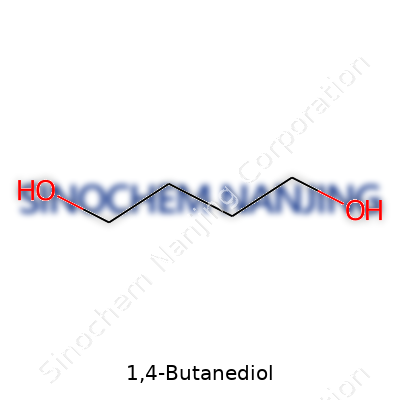
1,4-Butanediol—often just called BDO by people who use or work with it—looks like a simple name, but don’t let that fool you. This compound gets its fair share of attention from manufacturers, chemists, and regulators. For good reason, since it goes into everything from plastics and fibers to industrial solvents. To get right down to the basics, the chemical formula for 1,4-Butanediol is C4H10O2. That stands for four carbon atoms, ten hydrogens, and two oxygens.
How That Formula Shapes What BDO Does
This formula gives 1,4-Butanediol some special properties. Folks working in production plants often talk about how its pair of hydroxyl groups—those -OH connections—open up a lot of possibilities for chemical reactions. This is one reason why you find BDO being transformed into polyurethanes, elastic fibers, and engineering plastics like PBT.
I remember visiting a production line in a run-down industrial park, and the plant operator mentioned how they value BDO for its flexibility in polymer synthesis—good stuff for anyone trying to tweak the toughness of a plastic. The chemical formula boils down to more than numbers; it points to those two reactive ends. Because of that, the product links easily with other chemicals, letting chemists shape molecules that suit everything from car parts to laptop cases.
Health, Safety, and Questions That Won’t Go Away
Talk of BDO doesn’t stop with what it builds. Its structure means it’s regularly scrutinized by safety experts. BDO converts in the body to gamma-hydroxybutyrate (GHB), which stirs up conversations about misuse and tighter controls. Safety data sheets tell people to keep their gloves on and plenty of fresh air moving whenever BDO shows up at the workbench. Workers who’ve been around it for years say they don’t take shortcuts, especially with that syrupy texture that makes spills a real headache.
Looking at global production, chemical companies keep pushing for responsible manufacturing. Europe, the U.S., and parts of Asia all have their own rules on handling and transporting this molecule. There’s a push for better training, so people who drive the tankers or pour the stuff in blending rooms know exactly what the risks are. Anyone using BDO in a university or small business knows these rules aren’t just paperwork—they cut down on accidents and protect communities from chemical leaks.
Thinking About Solutions, Not Just Dangers
BDO’s versatility means it sticks around in industry, but there’s growing talk about shifting towards greener methods of making it. Researchers in the bio-based sector look for ways to make BDO from renewable feedstocks like sugars instead of fossil fuels. That switch could trim the carbon footprint, and several companies are trying out fermentation as an alternative to oil-based synthesis.
Understanding the formula, C4H10O2, means seeing the link between textbook chemistry and the decisions businesses, governments, and workers face every day. Working with chemicals like BDO pushes everyone to keep sharpening knowledge on safety, sustainability, and the next breakthrough. With more folks paying attention to sourcing and handling, the story of BDO heads in the right direction—one molecule at a time.
| Names | |
| Preferred IUPAC name | Butane-1,4-diol |
| Other names |
BDO 1,4-Butylene glycol Tetramethylene glycol Butane-1,4-diol |
| Pronunciation | /ˌwʌn.fɔːr.bjuːˈteɪn.diː.ɒl/ |
| Identifiers | |
| CAS Number | 110-63-4 |
| Beilstein Reference | 1857156 |
| ChEBI | CHEBI:16987 |
| ChEMBL | CHEMBL697 |
| ChemSpider | 7289 |
| DrugBank | DB02166 |
| ECHA InfoCard | 03b5b7b5-1c8a-477a-92a5-c436eb5a5c3c |
| EC Number | 203-786-5 |
| Gmelin Reference | 82177 |
| KEGG | C01703 |
| MeSH | D017166 |
| PubChem CID | 8064 |
| RTECS number | EO1400000 |
| UNII | 6B82Y379DS |
| UN number | UN 1148 |
| Properties | |
| Chemical formula | C4H10O2 |
| Molar mass | 90.12 g/mol |
| Appearance | Colorless, oily liquid |
| Odor | Odorless |
| Density | 1.017 g/mL at 25 °C(lit.) |
| Solubility in water | Miscible |
| log P | -0.96 |
| Vapor pressure | 0.01 mmHg (20°C) |
| Acidity (pKa) | 14.5 |
| Basicity (pKb) | 1.20 |
| Magnetic susceptibility (χ) | -61.0×10⁻⁶ cm³/mol |
| Refractive index (nD) | 1.445 |
| Viscosity | 80.1 mPa·s (25 °C) |
| Dipole moment | 2.33 D |
| Thermochemistry | |
| Std molar entropy (S⦵298) | 198.0 J·mol⁻¹·K⁻¹ |
| Std enthalpy of formation (ΔfH⦵298) | -537.0 kJ/mol |
| Std enthalpy of combustion (ΔcH⦵298) | -2542.0 kJ/mol |
| Pharmacology | |
| ATC code | D04AX |
| Hazards | |
| Main hazards | Harmful if swallowed. Causes serious eye irritation. May cause respiratory irritation. |
| GHS labelling | GHS02, GHS07 |
| Pictograms | GHS07,GHS05 |
| Signal word | Warning |
| Hazard statements | H302: Harmful if swallowed. |
| Precautionary statements | Precautionary statements: "P210, P233, P240, P241, P242, P243, P260, P264, P271, P280, P303+P361+P353, P304+P340, P305+P351+P338, P312, P337+P313, P370+P378, P403+P235, P501 |
| NFPA 704 (fire diamond) | 1-1-0 |
| Flash point | 135°C |
| Autoignition temperature | 424 °C |
| Explosive limits | 2.2% - 14.3% |
| Lethal dose or concentration | LD₅₀ Oral (rat): 1,525 mg/kg |
| LD50 (median dose) | 1,525 mg/kg (rat, oral) |
| NIOSH | RT3575000 |
| PEL (Permissible) | 50 ppm |
| REL (Recommended) | 200 mg |
| IDLH (Immediate danger) | 200 ppm |
| Related compounds | |
| Related compounds |
Tetramethylene glycol 1,2-Butanediol 2,3-Butanediol 2-Butene-1,4-diol Tetrahydrofuran |



