Unwrapping the Story of 1,2-Propylene Glycol 1-Ethyl Ether: Perspectives from the Lab and Industry
A Walk Back Through Its Roots
Curiosity, need, and accident have long fueled the chemistry world, and that rings true for 1,2-Propylene Glycol 1-Ethyl Ether. The search for effective solvents picked up steam in the mid-1900s as industry ramped up and old substances started to catch flak for health risks. This molecule answered the call for a glycol ether that cleans, dissolves, and blends, without causing the headaches—or worse—that came with some heavy-duty industrial chemicals. Over decades, the chemical established a foothold, especially among paint formulators and cleaners who wanted power without the drawbacks of aromatic hydrocarbons or more hazardous ethers. Researchers kept digging, noticing that tacking an ethoxy group onto a propylene glycol backbone balanced solubility just right—not too greasy, never too feeble. Factories quietly made it a staple, although the story rarely made the nightly news.
What Makes This Molecule Tick
Chemists spend a lot of time hunting for materials that pull their weight without causing trouble elsewhere. 1,2-Propylene Glycol 1-Ethyl Ether stands out because it brings together an ether group and a secondary alcohol. The result: a clear, nearly odorless liquid that hums at room temperature but shrugs off cold, refusing to freeze in weak winters. It mixes easily with water and many organic solvents, breaking old boundaries that forced paint or cleaning fluid manufacturers to compromise. Density hovers around that of water and it doesn’t boil away too quickly, so you don’t catch heavy fumes in the air. Its flashpoint falls right around where most indoor workplaces need to pay attention, but nothing too alarming for a sensible warehouse or plant.
Where the Science Hits the Label
In practice, industry cares as much about how something performs as what it looks like on a spec sheet. Every barrel of 1,2-Propylene Glycol 1-Ethyl Ether usually comes tagged with CAS number 1569-02-4. You’ll spot it under names like “Ethyl Propylene Glycol Ether” or abbreviations such as “EPGE.” If you know your way around chemical shorthand, C5H12O2 tells you everything you need: carbon atoms, hydrogen, and a sprinkle of oxygen, all arranged to work hard in solution. That structure lets manufacturers chase a Goldilocks zone of solvent power, volatility, and water-miscibility.
How to Make a Useful Glycol Ether
No magic goes into making this chemical—just solid process chemistry. The main route involves reacting propylene oxide with ethanol under controlled pressure and the watchful eyes of industrial chemists. Catalysts ease along the process, turning out high yields with minimal leftovers. Quality matters at every turn, since any stray contaminant can gum up a finished product or cause unwanted side effects. As in most efficient syntheses, distillation finishes the job, leaving behind a product fit for broad applications, but always under careful monitoring for tight tolerances of purity and water content.
Changing with Chemistry: Reactions and Extra Steps
Versatility keeps a chemical relevant. The secondary alcohol in 1,2-Propylene Glycol 1-Ethyl Ether opens doors for tweaking and even polymerization if needed. Chemists can coax it into esters or use it for alkylation reactions, so there’s room for derivative products or customized blends. That lets formulators fine-tune product behavior for jobs like specialty inks or spot removers. At its core, though, the primary value comes from the raw molecule, sliding between greasy and watery worlds where other solvents might refuse to play.
Names Change, Performance Doesn’t
One of the quirks of chemical commerce is the tendency for a single substance to surface under a spread of names, depending on which catalog or shipping manifest you read. In this case, some will call it Propylene Glycol Monoethyl Ether; others split hairs on the numbering, but trained eyes recognize the pattern. Folks in the coatings industry recognize EPGE or PGE as shorthand, though regulatory labels prefer clarity. For researchers, names can get tangled, but a reliable identifier links up all the synonyms in one place so work in one country counts elsewhere.
Safety: What I’ve Learned the Hard Way
Glycol ethers ride a fine line—many work wonders as solvents, but early ones created real worries about air quality and even toxicity on the line. Experience taught the industry not to cut corners with training, labeling, ventilation, and personal protective gear. For 1,2-Propylene Glycol 1-Ethyl Ether, the story is less grim. It doesn't cause the acute effects that dogged previous glycol ethers, but chronic exposure can still dry skin or cause mild respiratory irritation if operators forget their gloves or respirators. Compliance with OSHA, EU, or local board standards helps, but “safe enough” never stays safe forever unless habits stick.
From the Floor: Where People Actually Use It
People rarely see this solvent unless they work in coatings, cleaning, or electronics. Its edge comes out in high-performance paint stripper formulations where you need action but don’t want to risk launching clouds of volatile organics. I’ve seen it transform stubborn resin build-up on my brushes and help ink manufacturers tweak dry-time and penetration just right for glossy magazines or tricky surfaces. In water-based paints, it solves the classic puzzle: keep pigment dispersed, keep brushes clean, and avoid nasty smells. Electronics makers go for it when they need residue gone but can’t risk shorting circuits, since it dries clean without leaving corrosive byproducts. Textile professionals call on it for specialized cleaning due to its knack for dissolving both water-borne and oily stains.
The View from Research and Development Labs
Innovation never slows in the chemical world, and 1,2-Propylene Glycol 1-Ethyl Ether offers a reliable starting point for researchers taking aim at new high-performance solvents or investigating “greener” cleaning agents. It often gets tested as a carrier, a cosolvent, or even a reactant in specialty polymer synthesis. Environmental chemists love to pit it against natural analogues in biodegradability trials, tracking how fast it breaks down and what compounds arise after disposal. As new standards roll out and environmental targets tighten, the search for faster biodegradation and lower toxicity picks up pace. Its balance of functional groups gives laboratories a controllable variable, letting teams swap in different alcohol or ether arms and see what happens in the latest blends.
Toxicity: Cutting Through the Myths
Safety obsessed every paint plant I ever walked through, and rightfully so, since nobody wants another tragedy traced to glycol ethers. 1,2-Propylene Glycol 1-Ethyl Ether generally skirts the pitfalls that plagued some of its cousins. Oral, dermal, and inhalation toxicity sit lower than solvents like butyl glycol ether, and regulatory authorities haven’t flagged it for major endocrine or reproductive disruption at worksite concentrations. Still, you don’t want careless exposure, especially during long shifts or in poorly ventilated rooms. Warnings about cumulative effects—headaches, mild central nervous system symptoms, temporary liver marker elevations—weren’t just regulatory red tape, but came straight from medical monitoring in the early industrial trials. Periodic reviews help keep workplace practices honest, spurred by new epidemiological studies and animal toxicology data flowing in from universities.
Peering Ahead: Where Does the Molecule Go Next?
The future for 1,2-Propylene Glycol 1-Ethyl Ether depends on how industries respond to calls for safer workplace chemicals, greener footprints, and smarter engineering in formulation science. Paint companies test blends with bio-sourced glycols to see if they can bump up its environmental profile or even synthesize it from renewable feedstocks. Cleaners and degreasers keep experimenting with lower-use concentrations, often pairing it with plant-based surfactants or lower-energy processing. Academic labs keep digging into its toxicity, not out of fear but as part of the global push for transparency and better risk/benefit calculations. Challenges remain—regulators want more real-world exposure studies and clearer metabolite tracking in the body and the environment. As demand for ever-safer and more sustainable solvents tightens, history suggests that useful molecules evolve or give way to newer contenders. Right now, 1,2-Propylene Glycol 1-Ethyl Ether is holding strong, a reminder that carefully crafted chemistry continues to shape the spaces where we live, work, and build.
What is 1,2-Propylene Glycol 1-Ethyl Ether used for?
The Role of 1,2-Propylene Glycol 1-Ethyl Ether in Industry
This ingredient stands out across several industries because it bridges the gap between solvents and user safety. The chemical, sometimes listed as DOWANOL™ PnP, finds heavy use where cleaning strength and safety meet tough challenges. In daily work, I’ve seen it inside paints, inks, and cleaners. Knowing what chemicals land on your hands, counters, and walls means a lot.
Paints, Coatings, and Inks
Every can of water-based paint tries to find the sweet spot between drying time, smooth application, and clean-up. Years ago, whenever I painted a room or touched up cabinets, I looked at the ingredient list—many paints list propylene glycol ethers like this one. The goal isn’t just even spread; the paint needs to stay wet long enough to get those brush marks out. 1,2-Propylene Glycol 1-Ethyl Ether keeps pigment suspended and stops clumps from forming, which helps ensure the finish looks right.
Beyond your living room, the printing industry pulls this solvent in, too. Printers need inks to dry quickly. At the same time, ink that dries on press rollers ruins production. This ether gives companies that control. It lets ink roll out smoothly and keeps print runs clean and crisp.
Cleaning Products
Tough stains and sticky residues don’t give up easily. This is where propylene glycol ethers show up again. Many strong cleaners for glass, metal, and plastic carry these solvents because they break down oily grime without blasting fumes into the air. Over the years, I’ve worked with commercial-strength glass cleaners that cut through grease off restaurant ovens and display cases. Looking at those labels, you’ll likely spot a glycol ether. Skin sensitivity comes up a lot; safety sheets show that compared to some older, harsher alternatives, propylene glycol ethers tend to cause less irritation. Choosing the right cleaner can mean safer hands and lungs, especially after a long shift.
Automotive and Industrial Use
Shop floors, body shops, and repair bays depend on degreasers and fluids that actually do their job. 1,2-Propylene Glycol 1-Ethyl Ether turns up in things like brake cleaners and industrial solvents, where breaking apart oily residues quickly saves hours. I’ve used products based on it while overhauling machinery, and the payoff is in speed—wash off the grime, wipe it clean, keep the process moving. Regulatory pressure pushes manufacturers to reformulate away from more toxic choices, and glycol ethers offer a middle ground between power and safer exposure limits.
What Safety Data Tells Us
Worker safety matters more now than ever. Data from the European Chemicals Agency and US EPA show this compound has a favorable profile compared to some close relatives—it’s less volatile and carries lower acute toxicity. In practice, this leads to better indoor air quality and fewer complaints about headaches or breathing problems. Still, gloves and ventilation matter, especially with repeated exposure.
Better Options for Tomorrow
There’s steady progress as technology around solvents evolves. Plant-based solvents and bio-derived alternatives enter the market, promising similar performance with a shorter environmental tail. Still, 1,2-Propylene Glycol 1-Ethyl Ether covers a unique spot: effective for stubborn cleaning but much safer than options my parents worked with decades ago. Watching the shift up close, I’ve learned that chemical policy, safety, and industry demand move step by step, not by leaps.
Is 1,2-Propylene Glycol 1-Ethyl Ether hazardous to health?
Understanding the Chemical in Daily Life
1,2-Propylene glycol 1-ethyl ether shows up in places most folks don't think to look. Paints, cleaners, inks, and coatings lean on solvents like this one. Behind every fresh coat of industrial paint or spotless glass panel, there’s a decent chance you’ll find traces of this chemical. It’s colorless, mixes well with water and other liquids, and smells faintly sweet. These features make it useful for breaking up grease or helping colors flow smoothly.
Examining Health Concerns
Some people don’t pay much attention to safety data sheets. I used to be one of those, especially with chemicals that sound more like a mouthful than a threat. But it doesn’t take long working around cleaning products or paint to learn that not every chemical in a spray bottle belongs near your lungs or skin. There are reports about headaches, skin and eye irritation, and, with heavy exposure, dizziness or even tiredness. These effects sometimes turn up in industrial or poorly ventilated situations, not just from a splash, but from enough exposure over time.
The Organization for Economic Co-operation and Development (OECD) tested this solvent and found that, at high concentrations, it can irritate eyes and the respiratory tract. The EPA notes that repeated, direct skin contact can dry and crack skin or cause dermatitis. Most homes won’t see those levels, but workers in factories or folks using products all day get a higher dose. If you breathe it in regularly or handle it without gloves, odds go up for unwanted side effects.
Long-Term Exposure and Vulnerable Groups
Looking at long-term risks, data is thinner but still worth heeding. Chronic exposure studies with rodents didn’t show cancer links at everyday levels, but they did highlight issues like liver and kidney changes at higher test doses. Kids, older people, or anyone with breathing troubles don’t react the same as healthy adults. Even if the numbers on dangerous levels look pretty high, jobs that take you near concentrated solvents day after day deserve closer attention. Not every body handles chemicals the same.
Balancing Use and Safety
Using chemicals like 1,2-propylene glycol 1-ethyl ether doesn’t mean throwing out every cleaner under the sink. It means checking labels, wearing gloves, and opening a window if you need to use products with strong fumes. Factories and companies have a bigger responsibility: adding good ventilation, clear labeling, and training people on safe handling. Trusting workers to “just know better” doesn’t cut it, especially since some symptoms start out as simple irritation and only get serious after long-term contact.
Rethinking Safer Options
Some manufacturers have pulled back or reformulated products where possible. There’s been a steady push toward safer, less volatile alternatives, especially in paints and cleaning agents, as consumers and workers ask more questions about what they’re breathing and touching. Supporting these safer substitutes, using more personal protection, and demanding better air quality indoors all drive the shift toward less risky workplaces and homes. On the individual level, a little caution and reading up on what’s in a can or bottle can shave down risks a lot more than most folks realize.
What are the storage requirements for 1,2-Propylene Glycol 1-Ethyl Ether?
Essential Properties Impacting Storage
1,2-Propylene Glycol 1-Ethyl Ether, a solvent found in specialty coatings and cleaning formulations, needs proper consideration for safe storage. This chemical boils at a moderate temperature and evaporates a bit quicker than water. It’s less volatile than some ethers, yet still enough to spark concern about vapor build-up. Liquid form can irritate skin and eyes, and the vapors may cause headaches or dizziness if inhaled too long. I learned after a mild headache working in a print shop—some solvents sneak up if there’s not enough air moving through the space. This experience drives home the need for ventilation, not just with obvious offenders but with any glycol ether, including this one.
Physical Storage Conditions
Keeping this material out of sunlight makes sense. Transparent drums stacked near a window can heat up, which increases the solvent’s vapor pressure and strain on container seals. Strong sunlight also triggers chemical reactions—nobody wants a drum corroding from within or venting unexpectedly. A cool, dry, dark area helps. This sort of temperature control doesn’t just prolong shelf life, it reduces the risk of evaporation loss. I’ve seen sealed containers lose weight over the years, which might not bother a large manufacturer but means extra cost and risk for smaller operations.
Container and Material Compatibility
Standard steel drums with epoxy linings or high-density polyethylene tanks handle 1,2-Propylene Glycol 1-Ethyl Ether without incident. No contact with soft plastics, aluminum, or copper alloys—over time these develop leaks, staining, or breakdown. Someone storing glycol ethers in the wrong container often learns the hard way: puddled liquid beneath a drum and a sticky clean-up. Storage areas need spill containment. Secondary trays or bunded flooring isn’t just about ticking a regulatory box. I once saw a smashed 20-liter drum pour down a warehouse trench. With proper containment, clean-up was simple. Without it, local drains could have carried the chemical off-site, turning a headache into a fine.
Ventilation: A Practical Step
Stale air, especially under a roof or in a shipping container, concentrates vapors. Even at moderate temperatures, glycol ethers can reach lower explosive limits in confined spaces. Open windows or exhaust fans keep vapors from accumulating. Local exhaust above storage drums gives added peace of mind. Workers should not rely on a nose test; some vapors seem faint yet still cause symptoms. Sensors tuned for organics can warn if concentrations creep up too high. The investment in a meter pays off, especially for teams working with multiple solvents. Experience taught me to avoid enclosed or unventilated storage for any organic liquid.
Labeling, Access, and Human Factors
Drums and totes marked clearly and handled only by trained people cut down on accidents. Training never feels urgent until you see someone attempt to move a leaking tote without gloves or goggles. Emergency eyewash stations and showers nearby can turn a bad day into a minor inconvenience. Fire extinguishers within reach—in this case, foam or CO₂ types—add another layer of protection. Proper signage like hazard pictograms reminds staff and outside responders what’s inside, even if the container sits for years.
Safer Practices for the Long Term
Periodic inspection, rotation to cut down on old stock, and clear procedures for disposal cut waste and risk. Spilled glycol ethers turn slick and can soak into concrete if ignored, so a robust clean-up plan helps keep the floor, and everyone’s shoes, safe from slips. Following these basics protects both people and property. When storage sets up for safety, busy days run smoother, and accidents stay rare.
How should 1,2-Propylene Glycol 1-Ethyl Ether be handled safely?
A Real-World View on Chemical Safety
Few things in the workplace catch attention like a chemical with a name you need to sound out. 1,2-Propylene Glycol 1-Ethyl Ether sounds odd, but for folks working in coatings, paints, and degreasing operations, it’s a regular companion. In my own years around industrial sites, I’ve seen what can happen when shortcuts tempt people and how those decisions shape health and reputation. You don’t always get a second chance after a bad spill or careless mistake.
What Happens During Direct Contact?
On the shop floor, skin and eyes get the brunt of things when handling a solvent like this. I’ve watched coworkers rush without gloves or goggles, sometimes thinking a quick transfer won’t cause problems. More than once, I’ve seen red, irritated skin, and in one instance, someone accidentally splashed some in his eye. That injury cost him a night in the ER, sleepless hours, and several weeks of blurry vision. So, donning the right gloves and eyewear isn’t just a box to tick on a checklist; it’s a shield against hard lessons.
Breathing in the Problem
I recall the time our plant skimped on ventilation, thinking extraction fans could wait during a remodel. Air thick with vapors led to headaches and nausea on the floor. The Material Safety Data Sheet for 1,2-Propylene Glycol 1-Ethyl Ether warns about inhaling the stuff—workers who breathe its fumes may develop dizziness, irritability, or worse. Studies back up what we learned the tough way: solvents can injure more than just the person who spills it; poor air means risk for many. Simple moves—local exhaust hoods near mixing stations, and regular air checks—cut down symptoms and absenteeism in real time.
Attention to Storage and Spills
Cans and drums of solvent stacked with care are less likely to tumble, but in reality, tight quarters and time pressure tend to foster stacks that sag and lean. I once saw a drum topple and leak into a floor drain. Hazardous waste protocols kicked in, but cleanup took hours. Flammable materials like this one need proper storage. Even a few sparks from a busted tool or static charge could turn a small leak into a disaster. Grounding containers, keeping lids tight, and training new operators stops simple mistakes from turning nightmareish.
Never Getting Used to Risk
It’s easy to treat familiar chemicals as less of a threat—familiarity often breeds shortcuts. With 1,2-Propylene Glycol 1-Ethyl Ether in play, treating every new drum like the first time you met the stuff saves more trouble than any shortcut. Build a habit of reading the label, checking glove integrity, and setting up fans. Encourage folks to report leaky pipes or cracked hoses. Simple habits add up—lower exposure, fewer doctor visits, better working lives.
Better Industry Practices Worth Following
Companies that invest in safety lock in skilled workers—it’s no secret. I’ve seen turnover drop when fresh safety training kept people alert. Spill kits placed at arm’s reach, emergency eyewash stations ready, clear signage in the shop—everyone benefits. There’s no magic answer, but stories from the work floor tell us something: the best-composed safety talk means nothing if you don’t live its lessons day after day. It’s not just about compliance or paperwork; it’s about sending everyone home healthy, every shift. That ethic raises quality, builds loyalty, and guards against headlines nobody wants to read.
What is the chemical formula and CAS number of 1,2-Propylene Glycol 1-Ethyl Ether?
Understanding the Importance of Accurate Chemical Identification
Knowing exactly what’s inside a chemical bottle keeps everyone safer in the lab and on the production floor. I’ve seen more confusion over similar chemical names than many would imagine. That’s why clear and specific information matters so much, especially with something like 1,2-Propylene Glycol 1-Ethyl Ether. Here we’re not talking about regular propylene glycol or the usual glycol ethers used in paints and cleaners. This one has its own identity, with a unique chemical formula: C5H12O2.
Chemical Structure Details
This glycol ether stands out because of the way its structure combines a propylene glycol backbone with an ethyl group. Instead of both ends linking to simple hydrogen or methyl groups—as happens with everyday glycols—this ether brings in an ethoxy side, boosting solvency and changing its behavior in mixtures. You don’t often see it turning up in household products, but industrial professionals sometimes choose it for specialty cleaners or ink.
The CAS number—straight from trusted sources like ChemSpider, PubChem, or the Sigma-Aldrich catalog—gives a second layer of certainty. The unique CAS Registry Number for 1,2-Propylene Glycol 1-Ethyl Ether stands as 1569-02-4. This strings of numbers serves as the true fingerprint, helping people track regulations, safety data sheets, and sourcing around the world, avoiding mix-ups that could disrupt business or pose safety risks.
Practical Reasons for Specificity
Some folks outside chemistry circles might shrug at a chemical formula, but there’s bigger meaning behind these details. People like me, working in research settings, remember moments where similar-sounding chemicals got swapped on an order form or stockroom shelf. Even small mix-ups mess with results, cause hazardous reactions, and sometimes even halt production. When teams stick to clear identifiers like “C5H12O2” and CAS 1569-02-4, they can confidently manage inventory and keep environmental health standards on track.
Hazard Awareness and Worker Safety
No two glycol ethers act exactly the same. This compound brings specific toxicity and flammability levels that differ from both regular propylene glycol and from common glycol ethers like PGE (propylene glycol monomethyl ether). Regulators track exposures forthrightly, keeping worker health in focus. The right formula and CAS number let environmental teams look up hazard ratings quickly, implement personal protective equipment plans, and communicate the real risks to the people who handle, store, or transport these materials every day.
Building a Culture of Responsibility
Clear labeling, access to data, and solid record-keeping all add up to a culture I respect—one that values workers, the environment, and corporate reputation. People in industry, academia, and beyond rely on precision when storing, transporting, blending, and even disposing of chemicals. Reliable information makes it possible to trace an ingredient back through a product’s supply chain to its origin, fostering trust among buyers and regulators and providing evidence if liability questions arise.
Accurate chemical identification will keep matter-of-fact communication flowing, prevent dangerous shortcuts, and help anyone working with chemicals make smarter, safer choices day after day. That’s good news for anyone handling 1,2-Propylene Glycol 1-Ethyl Ether or nearly any compound stocked on the shelf.
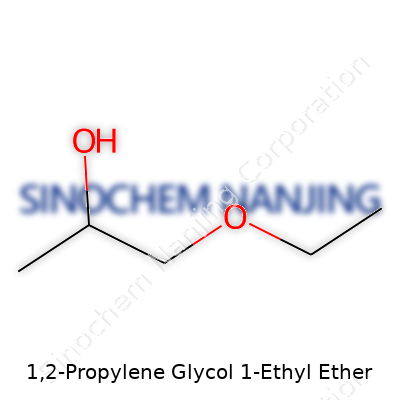
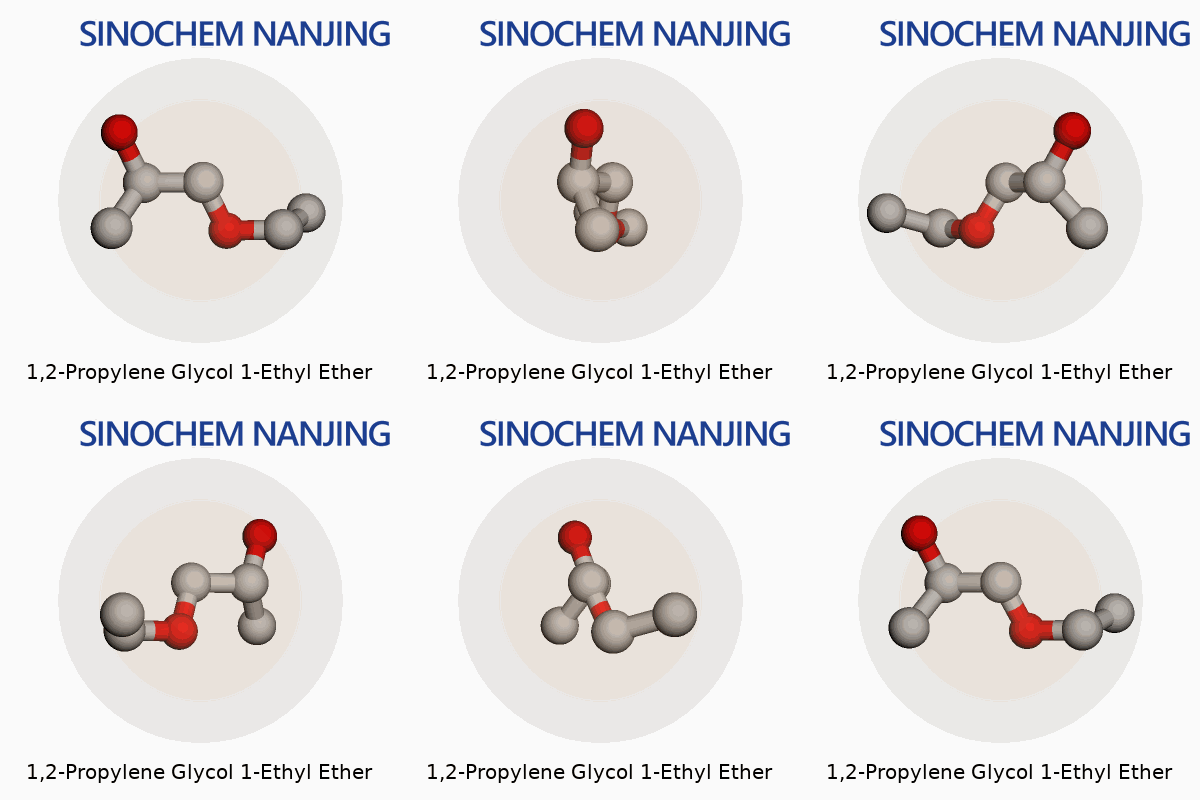
| Names | |
| Preferred IUPAC name | 1-ethoxypropan-2-ol |
| Other names |
Propylene glycol monoethyl ether 1-Ethoxy-2-propanol Ethyl propyleneglycol ether 2-Propanol, 1-ethoxy- PGME |
| Pronunciation | /ˈprəʊpɪliːn ˈɡlaɪkɒl wʌn ˈiːθɪl ˈiːθər/ |
| Identifiers | |
| CAS Number | 1569-17-1 |
| 3D model (JSmol) | `COCC(C)CO` |
| Beilstein Reference | 1209288 |
| ChEBI | CHEBI:81379 |
| ChEMBL | CHEMBL16307 |
| ChemSpider | 69310 |
| DrugBank | DB13987 |
| ECHA InfoCard | 07b27e60-ace2-45c5-8536-c608c9d95c9d |
| EC Number | 603-177-00-8 |
| Gmelin Reference | C14, 821 |
| KEGG | C19609 |
| MeSH | D064151 |
| PubChem CID | 12421 |
| RTECS number | YQ8750000 |
| UNII | 6Z9L37M71P |
| UN number | UN3082 |
| Properties | |
| Chemical formula | C7H16O2 |
| Molar mass | 118.18 g/mol |
| Appearance | Colorless transparent liquid |
| Odor | Mild ether-like |
| Density | 0.930 g/cm3 at 25 °C |
| Solubility in water | miscible |
| log P | 0.14 |
| Vapor pressure | 0.46 mmHg (20 °C) |
| Acidity (pKa) | 15.1 |
| Basicity (pKb) | 13.41 |
| Magnetic susceptibility (χ) | -62.5×10⁻⁶ cm³/mol |
| Refractive index (nD) | 1.417 |
| Viscosity | 2.8 mPa·s (25 °C) |
| Dipole moment | 2.97 D |
| Thermochemistry | |
| Std molar entropy (S⦵298) | 273.6 J·mol⁻¹·K⁻¹ |
| Std enthalpy of formation (ΔfH⦵298) | -504.4 kJ/mol |
| Std enthalpy of combustion (ΔcH⦵298) | -4716 kJ/mol |
| Pharmacology | |
| ATC code | D07AX |
| Hazards | |
| GHS labelling | GHS labelling: "Not a hazardous substance or mixture according to the Globally Harmonized System (GHS) |
| Pictograms | GHS02,GHS07 |
| Signal word | Warning |
| Hazard statements | H319: Causes serious eye irritation. |
| Precautionary statements | P210, P233, P240, P241, P242, P243, P280, P303+P361+P353, P370+P378 |
| NFPA 704 (fire diamond) | 1,1,0 |
| Flash point | Flash point: 51 °C |
| Autoignition temperature | 215 °C (419 °F; 488 K) |
| Explosive limits | 3.0% - 15.3% |
| Lethal dose or concentration | Inhalation rat LC50 > 2135 ppm/6 hr, Oral rat LD50 3089 mg/kg, Dermal rabbit LD50 11400 mg/kg |
| LD50 (median dose) | LD50 (median dose): 3089 mg/kg (rat, oral) |
| NIOSH | UB3850000 |
| REL (Recommended) | 50 ppm |
| IDLH (Immediate danger) | No IDLH established. |
| Related compounds | |
| Related compounds |
1-Methoxy-2-propanol 1-Ethoxy-2-propanol 2-Ethoxyethanol Propylene glycol methyl ether acetate Dipropylene glycol methyl ether |



