1,2-Dichloropropane: Tracing Its Past, Present, and Possible Future
Historical Development
Looking at the timeline of 1,2-dichloropropane, its roots stretch back to the period when the chemical industry boomed in the mid-20th century. Chemists locked horns over new synthetic pathways, hunting for ways to wring extra value out of petrochemicals. That search led to developing chlorinated hydrocarbons like 1,2-dichloropropane. At first, big players focused on its usefulness as a solvent since it could dissolve greases and residues in a variety of settings, from cleaning machinery to formulating crop-protection chemicals. Older literature often points to the hustle of early chemical manufacturing hubs, usually in Europe and North America, to scale up processes around this compound during the ‘50s and ‘60s. As companies standardized purification methods, commercial volumes really took off. The story of 1,2-dichloropropane is tangled up with industrialization itself, moving in step with the broader adoption of halogenated solvents and the rise of regulatory scrutiny around chemical exposures.
Product Overview
Known by several alternative names like propylene dichloride and 1,2-DCP, this clear, colorless liquid enters the market packaged for use in a range of industries. You’ll find it present not just as a raw material, but as an intermediate that helps build more complex molecules in chemical manufacturing. Some people may have encountered it in cleaning solvents, but it rarely stands alone without modification or blending, especially given the shift away from single-use chlorinated solvents. Its persistence in the modern world owes more to how it enables downstream synthesis than to consumer-facing roles.
Physical & Chemical Properties
On the lab bench, you notice right away that 1,2-dichloropropane offers a sharp, sweet odor and a boiling point that accommodates many processing needs—sitting around 96 degrees Celsius. This volatility gives technicians enough leeway to apply it in extractions or as a carrier fluid. A density of about 1.16 g/cm³ puts it heavier than water, which makes separation after solvent uses somewhat straightforward in basic bench work. It doesn’t mix with water. Its chlorinated structure confers resistance to oxidation, though sunlight and heat can eventually break it down. That’s exactly why storage conditions matter for its longevity and safe handling.
Technical Specifications & Labeling
Regulators around the world have tightened the screws on handling and labeling. These days, drums or bulk containers display warnings in bold lettering about inhalation risks, skin absorption, and fire hazards despite the chemical’s relative stability. Purity levels for industrial-grade material often push toward the upper 90s percentile, but specialty applications can demand even higher. Trace impurities, like other chlorinated byproducts, typically draw a hard line, with maximum levels set by end-use specs. Direct labeling requirements lean on hazard pictograms and risk statements, signaling to professionals exactly what’s inside so nobody gets caught flat-footed by an accident.
Preparation Method
Production usually kicks off with propylene or its derivatives. Chemists run the raw material through chlorination in the presence of catalysts, sometimes at elevated temperatures, letting chlorine atoms swap places with hydrogens on the carbon chain. These reactions don’t happen in a vacuum: side products like 1,3-dichloropropane show up unless conditions are tuned just right. Most plants operate closed systems now, which minimize emissions and keep the process efficient, but years ago open-batch systems were far more commonplace, raising safety and environmental concerns we now work hard to avoid.
Chemical Reactions & Modifications
What draws interest to 1,2-dichloropropane is its knack for serving as a building block. With two chlorines on adjacent carbons, the molecule handles nucleophilic substitution reactions both in laboratory syntheses and large-scale industrial reactors. These reactions open avenues to glycols, amines, or other halogenated derivatives. In synthetic pathways leading to useful intermediates, this flexibility makes it a familiar sight on chemical machinery schematics. Modifying 1,2-dichloropropane through reductive or hydrolytic approaches lays the groundwork for plasticizers, surfactants, and specialty chemicals, each with their network of downstream users.
Synonyms & Product Names
Across documents and safety datasheets, the chemical pops up as propylene dichloride, 1,2-dichloropropane, or DCP. Older texts sometimes use the term “alpha, beta-dichloropropane.” Scientists and procurement teams often have to keep a sharp eye on synonyms. It’s easy to trip over nomenclature quirks, especially when switching between American and European suppliers or crossing reference catalogs in academia and industry.
Safety & Operational Standards
Exposure rules have shifted over the years, reflecting mounting toxicity data and incidents from less-regulated eras. Workers now face exposure limits framed by bodies like OSHA and similar international groups, restricting airborne concentrations with both time-weighted averages and ceiling values. Routine safety meetings stress the need for gloves, goggles, and ventilation, and facilities invest in air monitoring systems. Spill protocols exist to prevent vapor buildup, which can flash into fire with enough heat or spark. After lessons drawn from factory mishaps, root cause reviews usually point fingers at poor equipment maintenance or lapsed training, so periodic refresher courses aren’t optional luxuries—they’re essentials that sink in through experience.
Application Area
Though its heyday as a general solvent has waned, the chemical still carves out a niche in specialty synthesis. Manufacturers feed it into reactions that turn out epichlorohydrin—a key precursor for epoxy resins. In agriculture, the past saw it blended into soil fumigants and pesticides, but many countries now clamp down on those uses citing health risks. Other industries harness it in smaller volumes for cleaning electronics and metals, though environmental and health policies have forced recurring reviews of every application. Taking a walk through older factory districts, I’ve seen traces of its past—rusting storage tanks or faded signage hinting at a time when environmental oversight just wasn’t tight enough.
Research & Development
Academic and industrial teams push for better catalysts and greener synthesis methods every year, chasing reductions in waste and energy use. The phrase “green chemistry” isn’t a buzzword anymore; it’s a guidepost. Researchers tinker with engineered microorganisms or alternative pathways to squeeze out side products and crank up yields. Some remain laser-focused on remediation—looking at how microbes break down residual 1,2-dichloropropane in soil and groundwater, especially at sites flagged for contamination cleanup. Every advance in detection and removal technology inches communities closer to restoring land previously written off as too polluted for safe use.
Toxicity Research
Toxicologists zero in on liver and kidney damage from exposure. In the vernacular of the lab, the numbers paint a stark picture: chronic exposure in animals has led to cancer findings and organ toxicity. Studying worker health records from chemical plants gives us a grim list of possible outcomes ranging from respiratory distress to skin sensitization and, in some cases, potential links to certain cancers among exposed populations. Regulatory agencies cite these results when tightening controls or banning uses outright. As scientific understanding sharpens, the safety margin narrows. Researchers track metabolic pathways, focusing on how small changes in enzyme expression might shield or sensitize individuals—personalized risk assessments replacing the old blanket limits.
Future Prospects
Demand for 1,2-dichloropropane will keep running up against health and environmental standards. Its continued use probably rides on better containment, ongoing improvements in processing, and alternatives that don’t carry the same baggage. My experience with older industrial processes makes plain that innovation isn’t just about inventing new molecules but making current practices safer and cleaner for workers and neighbors alike. Cleaner synthesis, biodegradable substitutes, and advanced remediation are turning regulatory compliance from burden to business opportunity. Meeting tomorrow’s strict rules isn’t negotiable—it’s the only way the sector keeps its license to operate amid mounting public scrutiny and calls for accountability.
What is 1,2-Dichloropropane used for?
From Solvent to Soil Fumigant: Where You’ll Find This Chemical
1,2-Dichloropropane looks pretty dull on paper: a colorless liquid with a sharp, sweet odor. Open a container and anyone in the room knows right away “something’s up.” Over years spent working in a lab, I saw this chemical pop up in places where grease, ink, or certain plastics needed stubborn cleaning or dissolving. Factories reach for it when other options can’t cut through the mess. It also turned up in paint strippers, varnish removers, and degreasers, especially before safer choices came around.
Its Agricultural History—A Cautionary Tale
Some older farming guides still mention 1,2-dichloropropane as a soil fumigant. The promise was simple: kill nematodes and weeds before planting. But there’s a cost to using chemicals with such punch. Farmers who relied on this stuff started having second thoughts once researchers linked it to groundwater contamination and possible cancer risk. Japan, for example, banned it from agricultural use after workers developed bile duct cancer from chronic exposure. Most countries have now cut back or stopped this agricultural application, but some places still hold onto old habits.
Factories and Industrial Processes
Plastics manufacturers use this chemical as a starting point for making other substances. They want something that reacts fast and delivers consistent results, and 1,2-dichloropropane fits the bill. It’s also shown up as a chemical intermediate—basically, a bridge in the process of making more valuable chemicals. Some old dry-cleaning shops once used it to spot clean tough stains, but newer regulations and better safety information have nearly pushed 1,2-dichloropropane out of those businesses. I’ve visited plants where the cleaning power of this liquid made quick work of ink and grease, but I also saw workers glove up and keep the ventilation fans roaring long after machines stopped running.
Health Risks That Won’t Go Away
Ask any industrial hygienist about solvents, and 1,2-dichloropropane comes up sooner or later. A single whiff tells you this isn't something you want in your lungs. Over time, studies tied exposure to liver and kidney damage, central nervous system effects, and cancer. Accidental spills forced some companies to rethink their safety training, and legal bills from employees who developed health problems have grown higher than anyone expected. It isn’t just about people on the job, either. Chemical leaks have contaminated groundwater and prompted evacuations in communities downwind from factories. That kind of legacy follows a chemical for decades.
Finding Better Options
There’s pressure today to switch away from toxic solvents, and many labs and manufacturers have replaced 1,2-dichloropropane with alternatives like water-based cleaners, citrus terpenes, or even good old elbow grease and patience. Some states in the U.S. now require permits and regular reporting for anybody handling large quantities. I’ve sat through safety meetings where supervisors spelled out which chemicals are on the “get rid of as soon as possible” list, and 1,2-dichloropropane made the cut every time. It’s a lesson: once a chemical turns up in enough lawsuits and environmental reports, its days as the industry norm are likely numbered.
Looking at the Big Picture
The story of 1,2-dichloropropane isn’t just about chemistry—it’s about how quickly new information can change what’s considered “safe enough.” It took far too long for its risks to become widely accepted, but the pattern is familiar. Better testing, public pressure, and honest conversations in break rooms do more to drive change than any one regulation ever could. The task now is staying ahead of the next chemical surprise, so workers and communities don’t carry the fallout for decades to come.
What are the safety precautions when handling 1,2-Dichloropropane?
Recognizing the Risks
1,2-Dichloropropane is a clear, sweet-smelling liquid. Most people using it work in labs, factories, or places dealing with solvents and chemicals. Exposure can irritate eyes and skin, affect breathing, and harm the liver over time. Long-term, frequent low-level exposure has raised worries about cancer risks. I remember my early days running a column in an old lab, thinking a fume hood meant full protection—until a small splash landed on my sleeve. That sharp smell baked into my memory how easily safety steps get forgotten.
Personal Protection: More Than Just Gloves
Nitrile gloves work better than latex or vinyl. Covering skin means wearing a lab coat, eye protection with side shields, and closed shoes. If there's potential for a spill or splash, face shields are worth the extra step. Let’s be honest: nobody likes wearing full PPE, especially in a cramped, stuffy space. But a soaked sleeve or burned eye turns a normal day into an emergency quicker than anyone expects.
Fresh Air and Fume Hoods Matter
Many labs run exhaust fans, but that alone doesn’t cut it for heavy-duty chemicals. A working fume hood pulls vapors away from your face and out of the room. Before setting up, check that the airflow isn’t blocked—watch for clutter and keep the sash low. Sometimes, locating a spill or handling a reaction means leaning in, but the farther your nose stays from those vapors, the better your odds of leaving work headache-free.
Planning for Spills: Don’t Rely on Luck
Spills happen when nobody expects them—sometimes a loose cap, sometimes a slippery bottle. Always have absorbent pillows or pads nearby, along with chemical spill kits. I once watched a coworker freeze up after knocking over half a bottle, then wander the aisles looking for paper towels. That just spreads the problem. Knowing exactly where cleaning gear sits—and how to use it—lets you jump into action fast.
Sensible Storage
Store 1,2-Dichloropropane in a cool, dry spot, away from direct sunlight and heat sources. Use only tightly closed, labeled containers. Mixing this chemical with acids, alkalis, or oxidizers can set up dangerous reactions. In one plant, improper storage led to a surprise release; nobody expects an accident till sirens blare. Separation and labeling prevent these messes before they get started.
Safe Waste Handling
Pouring waste down the drain isn’t an option. Seal waste solvents in containers made for hazardous chemicals, marked with clear labels. Arrange collection with licensed disposal teams. Even if it seems easier to ignore small leftover amounts, consistent safe disposal keeps water sources and soil clean—an easy win for both labs and neighbors.
Health Monitoring and Training
Few people talk about health watch when thinking of chemical exposure. Many workplaces provide medical exams for those handling toxic substances. Regular checkups spot slow-developing issues, including liver and respiratory problems linked to this chemical. Training seems basic, but repeating emergency steps makes a difference during real problems. Sharing stories about accidents—without blame—keeps everyone ready.
Building a Safer Routine
Using 1,2-Dichloropropane safely means more than ticking boxes. It’s about building habits: checking your gear, keeping air moving, knowing your cleanup tools, and respecting your own body’s limits. Everyone remembers shortcuts taken during busy shifts. But over time, experience teaches that real safety grows from preparation, honest checks, and a willingness to ask for help when needed.
What are the health hazards associated with 1,2-Dichloropropane exposure?
Recognizing a Real Threat
Factories, print shops, and cleaning companies have used 1,2-dichloropropane for years, but knowledge about the health toll hasn’t always kept pace. This solvent smells sweet, almost unremarkable, and slips easily through clothing, skin, and airways. Some people work around it daily and barely notice. Others might walk by a site, get exposed, and not think much of it. I grew up around industrial zones, and the stories of sudden illness at local facilities stayed in my mind. It's tempting to trust regulations alone, but experience shows that understanding chemicals like this helps everyone—not just experts—make safer choices.
Short-Term Exposure: Immediate Risks
Getting a whiff of 1,2-dichloropropane in a poorly ventilated space triggers warning signs fast. Eyes and throat start to burn, skin gets red and itchy. People have reported headaches, nausea, and dizziness even from quick exposure. Once, a neighbor came home from work at a small warehouse feeling off—she blamed the smell in the air. Later, she learned the team handled containers of this solvent with fans off for hours. These symptoms don’t sound dramatic at first, but left unchecked, they signal much deeper trouble.
Bigger Health Stakes with Repeated Exposure
People handling 1,2-dichloropropane every day sit in real danger. Medical research shows that regular contact increases risks for damage to liver and kidneys. Studies link repeated inhalation to lung injury. The connection between this solvent and certain cancers—especially bile duct cancer—deserves far more attention. Japan saw an unusual outbreak of cancers among print shop workers in the last decade, and further investigation traced cases right back to this chemical. These aren’t isolated situations; long-term exposure changes lives, often silently at first.
Why Workers and Families Should Care
It’s easy to feel safe in a country with strict workplace rules. But accidents, outdated equipment, and lapses in oversight still happen. Anyone can end up exposed—workers, neighbors, even family members whose clothes pick up residues. Kids with asthma living near industrial sites face higher risks since their lungs can’t fight off toxins as efficiently. The CDC says the best protection against these health threats means understanding the sources, not just cleaning up spills after the fact.
Turning Knowledge into Action
Better ventilation in workspaces sounds simple, but companies sometimes skip that step to save money. Wearing gloves and masks may feel inconvenient, but skipping these precautions lets 1,2-dichloropropane get under your skin. Workers need honest training about these hazards, and employers should back it up with working safety gear. Regular blood tests and health screenings catch warning signs early—these don’t cost much compared to hospital bills. Friends who organize at work tell me that policies only mean something if people at every level pay attention and speak up.
No Shortcut to Accountability
Government agencies set exposure limits for a reason, but keeping businesses accountable needs community awareness, too. Local health departments offer advice on how to report suspected chemical spills, and grassroots groups keep pressure on when polluters cut corners. Families deserve clean air at home and at work. Chemical safety never belongs only to inspectors or policymakers—everyone has a stake in educating themselves and asking hard questions about what’s in the air.
How should 1,2-Dichloropropane be stored and disposed of?
Why Proper Storage Matters
1,2-Dichloropropane shows up in industrial cleaning and as a chemical intermediate, but most folks forget what just a splash of it can do. It gives off vapors strong enough to hurt your lungs, and it doesn’t take much to impact the liver or kidneys if you breathe it in a closed space. I once saw a small warehouse get evacuated because someone left a cap loose—just a minor mistake set off alarms for days. Labelling and sealed containers keep everyone safer, and that peace of mind isn’t just for chemical engineers. Neighbors down the street deserve that too.
Picking the Right Container
I’ve noticed some people still use whatever jug is lying around, hoping a lid solves their problem. Big risk. 1,2-Dichloropropane eats away at certain plastics over time and seeps out of thin materials. Steel drums lined with chemical-resistant coatings do the job. These containers block sunlight, cut down leaks, and they hold up when stacked. Always store drums in a cool, dry spot, far from the loading dock doors and away from anything with a spark. Storing it around acids or strong bases sets the stage for chemical reactions no safety plan needs.
Safe Storage Practices Keep Trouble Down
Spills happen. I cleaned up one myself after a small drum split at the seam during shipping. Floors should have proper containment trays—simple concrete curbs with a chemical sealant work, and they rescue you from bigger headaches. Every drum deserves its own spot on a rack or pallet, not stacked on soft ground. Fire extinguishers don’t belong across the warehouse; keep them less than 50 feet away, with clear emergency signs meaning nobody guesses what to do next. In my work, walking these precautions directly saved a team from a dangerous situation, and I learned you can’t take any of it lightly.
Disposal: Taking Responsibility Seriously
Most towns have rules, and they aren’t just for show. Pouring 1,2-Dichloropropane down a drain sends it into rivers and groundwater, and it sticks around, threatening local fish and the folks who drink nearby well water. I’ve seen soil remediation crews dig for days in a fenced-off park because someone broke the rules. If there’s leftover liquid, licensed hazardous waste facilities accept it for incineration or advanced treatment. They document every step, tracing the chemical from hand-off to destruction. Contaminated rags, gloves, or gear go into sealed bins, never the regular dumpster. Incinerators running at high temperature with strict controls break down the molecules, not just mask the danger.
Practical Steps for Safer Workplaces and Communities
Training matters a lot more than people let on. Teams need refreshers with real-world examples, not just a dusty manual. Regular inspections pick up small leaks or rusted drums before they become news stories. I remember a facility that shared photos of misuse—open containers, signs of spills, even half-read labels—and the next week, everyone treated the job differently. Community responsibility grows out of transparency. Companies that talk openly about their waste management—inviting local leaders and posting their disposal receipts—build trust with neighbors who know the risks are real. Steering the conversation away from fear and toward solid habits makes everyone safer.
Stronger Habits Save Lives
Good storage and disposal habits for 1,2-Dichloropropane don’t just tick off regulatory boxes. They keep workers healthy, prevent chemical releases, and show respect for the community. Drawing on close calls and lessons learned, it’s clear sloppy shortcuts don’t just threaten fines—they hurt real people. It takes commitment, a good dose of common sense, and the will to fix problems before they happen.
What is the chemical formula and physical properties of 1,2-Dichloropropane?
Chemical Profile of 1,2-Dichloropropane
1,2-Dichloropropane carries the chemical formula C3H6Cl2. Each molecule comes built from three carbon atoms, six hydrogens, and two chlorine atoms. This straightforward formula delivers a solvent with some punch but also some significant risks, both in laboratories and wider industry settings.
I’ve noticed over the years that this clear, colorless liquid tends to turn up where degreasing or cleaning has to get done efficiently. You’ll catch a faint whiff of its sweet, yet sharp aroma before you even see the bottle. At room temperature, it flows easily, and it won’t hesitate to evaporate into the air.
Physical Properties and Why They Matter
Let’s talk characteristics. 1,2-Dichloropropane carries a boiling point sitting near 96°C (205°F). Its density lands heavier than water, at about 1.16 g/cm3. This means spills won’t float; instead, they settle, seeping into cracks or low spots. Its vapor slides across surfaces with a weight that’s hard to ignore, and I’ve seen firsthand how quickly fumes can build in a closed workspace. The stuff dissolves organic matter and certain plastics with ease, making cleanup tricky if you aren’t careful with equipment choices.
Workers tally up exposure mostly through inhalation. The solvent evaporates fast, sending vapors into the breathing zone in minutes. Once inside, it acts as a central nervous system depressant. The skin doesn’t like it either — splashes lead to redness or peeling after short contact. Many people might not realize that 1,2-Dichloropropane turns highly flammable if vapor concentrations rise. Sparks and static turn dangerous fast in these situations.
Health and Environmental Considerations
Past research and my own review of major regulatory reports show that frequent use of 1,2-Dichloropropane puts people at risk for more than headaches or dizziness. Chronic exposure connects to damage in the liver, kidneys, and, with recent studies, increased cancer risk. In the 2010s, clusters of bile duct cancer among Japanese print workers drew attention to the dangers of this solvent. That’s not just an industry footnote — it’s a warning about what unchecked exposure can do over months and years.
Spills find their way into groundwater if left uncontained. Once there, this chemical sticks around and resists easy cleanup. Wildlife and drinking water supplies pay the price, making containment and proper disposal non-negotiable steps in any workplace culture handling this stuff. The EPA classifies 1,2-Dichloropropane as a hazardous air pollutant, underlining that risk isn’t something anybody can shrug off.
What Safer Practices Look Like
It helps to put strong ventilation front and center, especially in small spaces. I’ve found well-maintained fume hoods or exhaust systems can keep air quality in the safe range even during heavy use. Respirators and gloves make a difference, but ongoing training and honest conversations about risk often matter most. Safety data sheets need to be read, not just filed away.
Alternative solvents sometimes fill the same jobs with fewer hazards, but change isn’t always easy or cheap. Still, the cost of ignoring proper practice can be measured in lives. Keeping 1,2-Dichloropropane in tightly sealed containers, tracking every use, and never letting routine take the place of respect for risk — these habits save more than just time and money. Fact-driven safety doesn’t get in the way of productivity; it enables everyone, from the new hire to the seasoned chemist, to head home healthy at the end of the day.
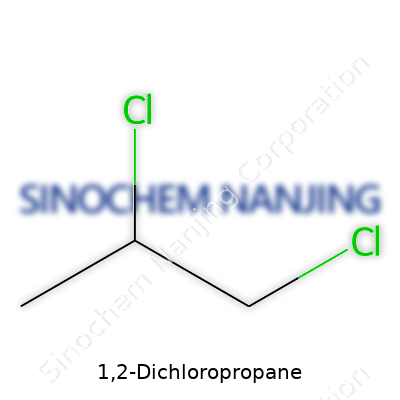
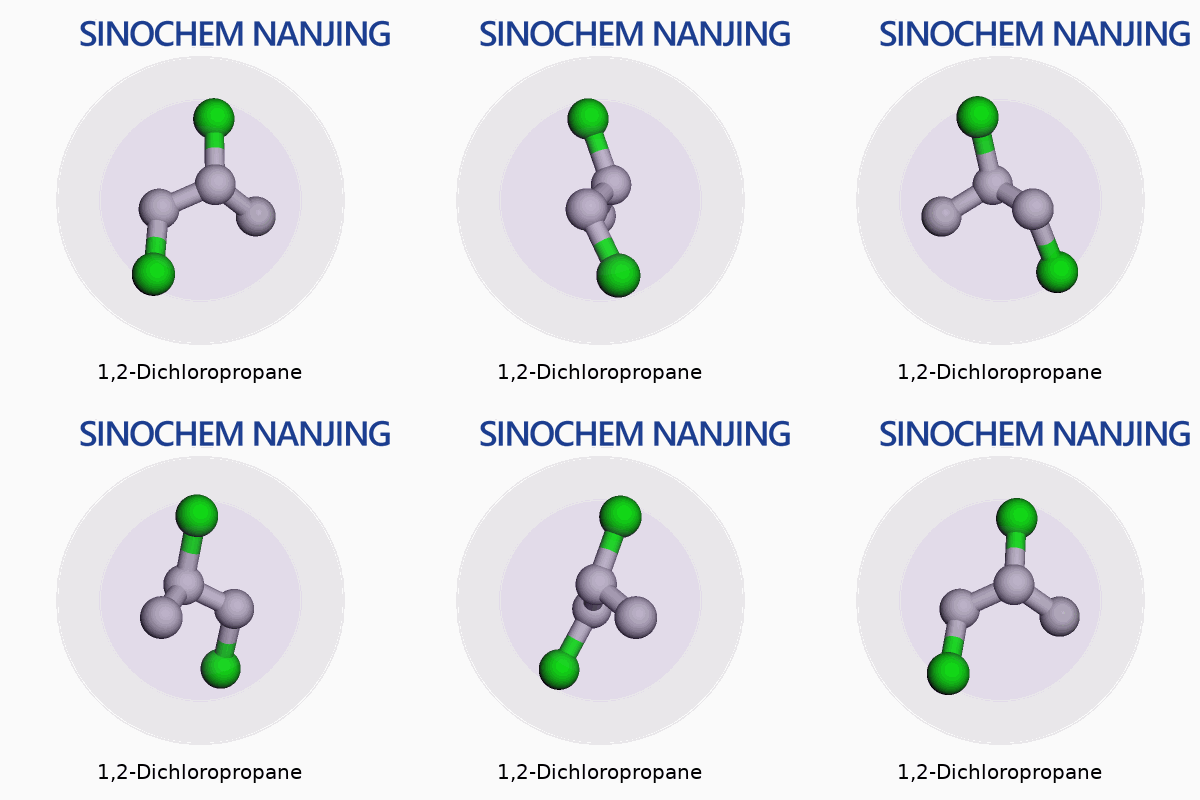
| Names | |
| Preferred IUPAC name | 1,2-dichloropropane |
| Other names |
Propylene dichloride 1,2-Dichloropropane Propane dichloride DCP |
| Pronunciation | /ˌwaɪ.tuː.daɪˌklɔː.rəˈprəʊ.peɪn/ |
| Identifiers | |
| CAS Number | 78-87-5 |
| Beilstein Reference | 1718732 |
| ChEBI | CHEBI:35860 |
| ChEMBL | CHEMBL187597 |
| ChemSpider | 7271 |
| DrugBank | DB11775 |
| ECHA InfoCard | 03c530ae-7b06-4929-9d16-35f271e36549 |
| EC Number | 200-838-9 |
| Gmelin Reference | 8778 |
| KEGG | C06572 |
| MeSH | D004049 |
| PubChem CID | 8017 |
| RTECS number | UE9100000 |
| UNII | N96U159S1Y |
| UN number | UN1279 |
| Properties | |
| Chemical formula | C3H6Cl2 |
| Molar mass | 120.99 g/mol |
| Appearance | Colorless liquid |
| Odor | Sweet chloroform-like |
| Density | 1.16 g/mL at 25 °C(lit.) |
| Solubility in water | 2.75 g/L (20 °C) |
| log P | 2.28 |
| Vapor pressure | 23.4 mmHg (20°C) |
| Acidity (pKa) | 14.48 |
| Basicity (pKb) | 1,2-Dichloropropane |
| Magnetic susceptibility (χ) | -62.9×10⁻⁶ cm³/mol |
| Refractive index (nD) | 1.444 |
| Viscosity | 0.86 mPa·s (at 20 °C) |
| Dipole moment | 2.33 D |
| Thermochemistry | |
| Std molar entropy (S⦵298) | 219.7 J·mol⁻¹·K⁻¹ |
| Std enthalpy of formation (ΔfH⦵298) | -122.8 kJ/mol |
| Std enthalpy of combustion (ΔcH⦵298) | –2141.7 kJ/mol |
| Pharmacology | |
| ATC code | D08AX06 |
| Hazards | |
| GHS labelling | GHS02, GHS07, GHS08 |
| Pictograms | GHS02,GHS07,GHS08 |
| Signal word | Danger |
| Hazard statements | H225, H315, H319, H335, H336, H351, H373, H411 |
| Precautionary statements | P210, P260, P271, P280, P301+P310, P303+P361+P353, P304+P340, P305+P351+P338, P308+P311, P403+P233, P405, P501 |
| NFPA 704 (fire diamond) | 2-2-0 |
| Flash point | 62 °F |
| Autoignition temperature | 600 °C (1,112 °F; 873 K) |
| Explosive limits | 4–14% |
| Lethal dose or concentration | Lethal Dose (oral, rat): 1,100 mg/kg |
| LD50 (median dose) | LD50 (median dose): 1,900 mg/kg (oral, rat) |
| NIOSH | JN8575000 |
| PEL (Permissible) | 10 ppm (40 mg/m³) |
| REL (Recommended) | 10 ppm (40 mg/m³) |
| IDLH (Immediate danger) | 600 ppm |
| Related compounds | |
| Related compounds |
1,3-Dichloropropane 2,2-Dichloropropane 1,2-Dichloroethane Propylene dichloride Chloropropane Propylene |



