1,2-Dichloroethane: Substance with a Double-Edged Legacy
Historical Development
The story of 1,2-dichloroethane, also called ethylene dichloride, reminds me of how chemistry often solves one problem by creating another. Back in the 18th and 19th centuries, as chemical factories geared up for the industrial age, researchers discovered you could bubble chlorine through ethylene and come out the other side with this clear, sweet-smelling liquid. In the decades that followed, factories scaled up, and by the 20th century, the compound played a major role in making plastics, particularly PVC. Demand stepped up sharply after World War II, with manufacturing hubs on the Gulf Coast and in Europe shipping it around the world by the tanker-load. Much of society benefited from safer plumbing, cheaper packaging, and new kinds of medicine bottles. The journey from lab curiosity to industrial workhorse speaks to how fast science can change daily life.
Product Overview
What stands out about 1,2-dichloroethane is its versatility. On one hand, it’s a chemical workhorse that has kept construction, car manufacturing, and medicine moving for decades. It acts as an intermediate to create vinyl chloride, which is the main ingredient in PVC pipes and siding. Factories also use it as a solvent to remove grease from metal parts and to help synthesize other chemicals, including some that find their way into pharmaceuticals. Its simple chemical structure hides the fact that the modern world leans on it heavily, especially in parts of the world where plastic infrastructure is still growing.
Physical & Chemical Properties
Having handled small samples occasionally in a lab, I can say you notice its sweet, almost chloroform-like odor right away. It’s a colorless liquid, with a relatively high vapor pressure, meaning it evaporates faster than water at room temperature. Weigh it and you’ll find it denser than water—so it sinks, not floats. It dissolves many organic substances that water won’t touch, but it doesn’t mix with water itself. Chemically, it's fairly stable at room temperature, reluctant to decompose unless you heat it or hit it with something reactive, which makes it attractive for industrial use but problematic if spilled.
Technical Specifications & Labeling
Labels on drums or containers must list its hazards clearly. The pungent aroma signals risk, not just a laboratory quirk. United Nations and OSHA call for strict flammability warnings and toxicity icons. Transport regulations require clear hazard codes for fire risk and acute health concerns. Anyone using the compound in a professional setting deals with strict standards—ventilated environments, spill containment, and workers wearing masks or respirators. That’s no overkill, as even “normal” exposures can cause headaches or worse, especially without proper ventilation and equipment.
Preparation Method
Most of the world’s supply comes from the chlorination of ethylene, which looks simple but runs on careful controls. Factories combine ethylene and chlorine gas, usually with a catalyst to keep the reaction from running wild. The result, after careful cooling and separation, is crude 1,2-dichloroethane, which then undergoes further distillation and purification. This isn’t backyard chemistry—operators have to manage toxic byproducts and keep emissions tightly controlled, both for worker safety and to stay on the right side of environmental law. Older plants sometimes used iron or ferric chloride as a catalyst, while modern systems aim for greater selectivity to cut down on unwanted side reactions.
Chemical Reactions & Modifications
Inside chemical plants, 1,2-dichloroethane rarely sits idle. Its main transformation comes from thermal cracking, where heat breaks it down to vinyl chloride gas, which then polymerizes into PVC. Side reactions can generate hydrochloric acid and, at high temperatures, dioxins or other chlorinated nasties. Less often, chemists modify 1,2-dichloroethane directly to produce specialty chemicals, insecticides, or industrial solvents. Being a decent chlorinating agent, it sometimes helps transfer chloride atoms in organic syntheses, though more selective reagents have taken over that job.
Synonyms & Product Names
1,2-dichloroethane travels under many names. Some know it as ethylene dichloride; safety sheets use the abbreviation EDC. On older solvent bottles, you might even see “dichloroethylene,” leading to confusion, as that’s a different molecule entirely. This confusion across languages and years occasionally causes headaches for regulators and shippers, so standardized codes and chemical abstracts numbers now guide identification.
Safety & Operational Standards
On-the-ground safety demands respect for this chemical. Breathing its vapors leads to dizziness, nausea, or liver and kidney problems. Long-term exposures run a cancer risk, so guidelines require ventilation, chemical fume hoods, and regular air monitoring. Fire risk remains high—vapors can ignite at relatively low temperatures, so plants divide workspaces into safe and hazardous zones, separate from other flammable materials. Workers suit up in gloves, goggles, and special aprons, recognizing that skin contact can cause irritation or burns. Regulations make a clear case: air levels must stay low, spills get neutralized quickly, and emergency wash stations line the walls.
Application Area
The big use stays locked to PVC production, which makes up the bulk of sales and factory output. The booming cities of Asia and the Middle East push demand upward as pipes, siding, and wire insulation fill out the bones of new infrastructure. Outside this, a smaller fraction slips into solvents, cleaners, and pharmaceutical manufacture. Decades ago, you’d find it in degreasers or leaded gasoline, but those uses withered under environmental restrictions. Some labs still use it for extracting fats or waxes, though safer replacements edge into those spaces. No matter the application, workers and communities need to weigh economic benefit against the twin risks to human health and the environment.
Research & Development
Laboratory studies today often focus on risk reduction and process optimization. Researchers experiment with better catalysts to slice energy use in manufacturing, hoping to drive down emissions and increase selectivity for desired products. Some chemistry groups look at green chemistry alternatives—methods that sidestep toxic intermediates altogether. Others track the fate of 1,2-dichloroethane in soil and groundwater, developing sensors and analytical techniques to catch spills before they become public health hazards. Industrial chemists collaborate closely with toxicologists and environmental scientists now in a way that rarely happened decades ago, swapping data to keep communities safe.
Toxicity Research
Exposure to 1,2-dichloroethane grabbed the attention of toxicologists after workplace illnesses started spiking in the 1960s. Studies found the compound affects almost every organ: high doses cause CNS depression, chronic low doses trigger liver and kidney woes. The compound sees the inside of research animals in laboratory studies far more often than is comfortable, and results consistently pushed regulators to limit workplace exposure. Its possible carcinogenicity to humans led to more protective standards. Environmental monitoring became crucial, especially as it passes easily through soil to groundwater, threatening drinking water supplies if not contained. Public health agencies prioritize screening wells near production plants, tracking not only acute symptoms but also potential long-term cancer risks in communities close to chemical hubs.
Future Prospects
The future for 1,2-dichloroethane hangs in a balance. Growth in regions investing in new housing and infrastructure keeps use steady and, in some markets, rising. At the same time, global momentum pushes toward safer materials and green chemistry. Companies test alternative manufacturing routes to avoid producing hazardous intermediates entirely, and researchers weigh the feasibility of plant-based inputs or closed-loop recycling strategies for plastics that shrink the market for the compound. Regulating bodies tighten emission caps and worker exposure standards every few years, forcing the chemical industry to innovate or risk losing social license to operate. Both the promise and the peril of this compound—so valuable and yet so hazardous—show where the next breakthroughs in industrial chemistry have to come from: safer processes, greener products, and tighter collaboration with workers and communities. Old habits die hard, but the lessons from 1,2-dichloroethane’s complicated history urge society to expect better, not just more.
What is 1,2-Dichloroethane used for?
The Backbone of Vinyl Production
Most folks never hear about 1,2-dichloroethane, but it runs quietly behind the scenes of modern life. This colorless, sweet-smelling chemical mostly goes to making vinyl chloride, the starting point for PVC pipes and plastic bottles. You find PVC in plumbing, flooring, and food packaging across homes and businesses. Anywhere clean water moves through pipes or products use plastic film, 1,2-dichloroethane’s story unfolds. It jump-starts the chain reaction, helping factories turn basic chemicals into long plastic threads that shape our daily environment.
The Things We Don’t See
Factories rely on 1,2-dichloroethane not just because it works, but because it keeps production costs down. That means everything from water pipes to raincoats stays affordable. Synthetic solvents and degreasers for machines, pesticides, and adhesives all draw on its chemistry. Many old cleaning products once featured this solvent, prized for dissolving grease and dirt that water alone couldn't touch.
What Science Says About Its Impact
The benefits of 1,2-dichloroethane seem obvious until the health concerns show up. Researchers at National Cancer Institute and EPA tracked links between long exposure and increased cancer risk, especially by inhalation. Skin, eyes, and lungs show irritation on brief contact, and workers in chemical plants sometimes report headaches and nausea. Earlier generations rarely wore protection, leading to unsafe exposure. Modern health and safety laws now demand gloves, masks, and air monitors, but accidents and leaks still happen in warehouses or factories lacking strict oversight.
Runoff and accidental spills can pollute water sources. This solvent seeps into the ground faster than most people realize — and groundwater with even small levels risks contamination for decades. CDC warns that lasting exposure can hurt livers and kidneys. I remember stories from a family friend who worked in plastic manufacturing in the 1980s. Safety lessons came slow, and it took visible illness before standards improved. For those living near large plants, safe air and water remain justified concerns, not paranoid worries.
Moving Toward Safer Practices
Some countries push industry to recycle solvents wherever practical, cutting fresh chemical demand and waste production. Others set tough limits on workplace exposure and tightly monitor emissions. Companies not only have to report large-scale use; many face pressure to show exactly how waste gets treated. Efforts stretch from strict container storage rules to incinerators built to break down chemical leftovers completely. In my neighborhood, local recycling events teach folks how to get rid of old cleaning products without dumping them at home.
Switching away from materials like PVC isn’t as simple as it sounds. Alternative plastics often cost more or don’t hold up as well outdoors. Still, ongoing research turns towards low-toxicity substitutes, both for solvents and the plastics they help create. It takes open discussion, honest reporting, and investment in better designs before significant change unfolds on a large scale. 1,2-dichloroethane remains tied to affordable goods and modern convenience, but thoughtful oversight and community awareness promise a way to minimize harms without giving up progress.
Is 1,2-Dichloroethane hazardous to health?
Understanding 1,2-Dichloroethane
1,2-Dichloroethane shows up a lot in the chemical world. It gets used in making vinyl chloride, which itself turns into PVC — that sturdy, cheap plastic you see in pipes, siding, even toys. Factories use it as a solvent, and people might run into it at work, around old storage tanks, during chemical spills, or through the air if a plant fails at containing its emissions.
The Health Risks We Face
Breathing 1,2-dichloroethane, even for a short time, doesn’t just give you a headache or a bout of dizziness — it can irritate throats, eyes, and lungs. Folks working close to the stuff say it brings nausea, drowsiness, and even trouble keeping steady on their feet. Longer or heavier exposures go further: trouble with the liver and kidneys, and in serious cases, the heart and nervous system take a hit. Researchers link long-term exposure to higher chances of certain cancers. The U.S. Department of Health and Human Services put it pretty simply — this chemical probably causes cancer in people.
The real concern comes from how sneaky the exposure can be. 1,2-dichloroethane evaporates quickly, turning into an airborne risk for people near spills or production facilities. Groundwater close to factories sometimes tests positive for it. What goes into the air and water finds its way into the community, not just workers inside a plant. Pregnant women and children dealing with contaminated water face special risk: toxins just don’t play fair with young or developing bodies.
Facts and Science Set the Stage
Government agencies don’t just worry over worries. They back the rules with plenty of research. You can find dozens of studies, official reports, and recommendations from EPA, OSHA, and organizations worldwide laying out the dangers. Federal safety limits set for air and water get enforced because the science points out real, lasting harm, not just hypothetical problems.
A 2019 review in “Chemosphere” lays out the effect even small doses can have on people’s DNA, which explains the cancer concern. Animal tests pile up the evidence that breathing or drinking in 1,2-dichloroethane over time invites tumors in the lungs, livers, and other organs. Lab technicians and environmental specialists talk about it with the kind of seriousness that comes with experience — these folks see how “acceptable exposure” can get redefined with each new study.
Reducing Risk and Finding Safer Practices
Most people won’t run into 1,2-dichloroethane in daily routines, but the chances get higher around industries handling plastics or solvents. Upgrading the tech in chemical plants actually prevents leaks. Companies that monitor air, test groundwater, and replace old pipes protect both workers and local families. Emergency plans for chemical spills, and quick, honest reporting when things go wrong, can halt a problem before it damages an entire neighborhood.
Anybody working near 1,2-dichloroethane ought to wear the right protective gear — gloves, goggles, real ventilation masks, not just the paper ones. Knowing the rules for safe handling becomes a part of the job, not just a formality. Workers deserve training, and neighbors deserve real information, not just a promise that “it’s safe.”
Communities can get involved by pushing for better standards — not waiting until an accident forces change. Asking for full transparency from industry and government puts pressure where it counts. Every family expects clean water, safe air, and a fair say in what comes through town. Chemical risks don’t vanish with good intentions. They need investment, oversight, and real voices at the table.
How should 1,2-Dichloroethane be stored?
The Basics No One Should Ignore
1,2-Dichloroethane doesn’t get much attention outside labs and factories, but this clear liquid stands out for all the wrong reasons—flammability, toxicity, and a knack for sneaking into soil and water. My first encounter came in a university lab, where the instructor’s warnings still echo: treat this chemical like a loaded trap. The risks are real; the liquid boils low, vapors start forming fast, and breathing it leaves headaches and nausea in its wake. People have lost their health, and companies have gotten hit with heavy clean-up costs or punishment for slips with this compound.
How Smart Storage Makes a Difference
Some warehouses skimp on details, relying on old drums and poor paperwork. It’s tempting to focus on price, but cheap choices bring bigger trouble. For 1,2-dichloroethane, rust-free, sealed metal containers outshine all others. Think about leaks—the thinner the wall, the sooner you’ll face a spill. Nothing ruins a manager’s week like dealing with a drum that cracked under pressure.
Stacking matters too. Keeping drums on low racks or spill pallets stops accidents from spreading. The floor must resist chemicals. Nobody wants a puddle eating away at concrete, or worse, seeping to groundwater. Separating this solvent from oxidizers prevents explosions fit for disaster headlines. Even a rookie can follow color-coded storage to prevent these mix-ups.
Cool, Dark, and Dry—No Shortcuts
Heat wakes up vapors, so spots near boilers or sun-facing windows are out. A cool, shaded storage room works best. I’ve seen places tuck chemical containers close to break rooms, but putting distance between people and dangerous materials keeps workers out of trouble. Humidity and rain can sneak in through weak seals, and water plus chemical volatility equals double trouble. Warehouse staff—often the first on the scene—should learn early where evacuation routes run, especially in older buildings with airtight doors.
Ventilation and Detectors Are Worth It
Fresh air counts for more than most realize. After one hot summer day, I watched a worker walk blindly into a cloud of fumes just from popping a lid off a barrel. Installing exhaust fans and air quality monitors takes everyone’s safety up a notch. Signs warning about inhalation risks should never gather dust—fresh posters remind workers not to cut corners.
PPE, Training, and Honest Communication
Workers handling this solvent trust in gloves, goggles, and lab coats to get them home without harm. Supervisors who don’t skimp on this gear show they value staff. I’ve worn both sides of the badge—receiving orders and later giving them. The difference always boiled down to training and honest updates about chemical dangers. The real solution lies in repeating spill drills and updating emergency plans, not just ticking off boxes before an audit.
Stay Compliant, Stay Safe
Regulations from OSHA and the EPA aren’t just government red tape—they spell out what’s already proven to keep people healthy. Ignoring storage laws too often ends with lawsuits, fines, or long-term health damage. Keeping up with best practices for labeling, secondary containment, and record keeping turns into a long-term investment. Responsible storage starts with common sense, gets backed up by training, and finishes with looking everyone in the eye and promising they’ll walk away safe.
What are the safety precautions when handling 1,2-Dichloroethane?
A Chemical That Demands Attention
Growing up near a large industrial site, I saw the way chemicals change a place. 1,2-Dichloroethane, or EDC, isn’t just another clear liquid—this stuff packs dangers for anyone who treats it like ordinary solvent. You can smell it at very low levels, which your body hates for good reason. EDC evaporates fast, and both the liquid and its fumes harm the lungs, liver, and nervous system. Extended exposure raises cancer risks and can eat up skin and eyes. Anyone who works around it for long learns not to trust their nose alone—safe handling begins with real respect for what this chemical can do.
Gear Up Thoughtfully
Personal Protective Equipment, or PPE, is not a formality around EDC. Chemical splash goggles shield eyes from splatters. A face shield offers another layer if splashing seems likely. Regular work gloves will not cut it—nitrile or neoprene gloves hold up much better against EDC than old-fashioned latex. Aprons or full chemical suits protect the rest of your body. The best labs and facilities keep clean gear handy and replaced often.
You can’t breathe easy, either. EDC vapors cause coughing, dizziness, and long-term lung damage. Work areas need strong mechanical ventilation that pulls solvent fumes away from workers, not just stirring air around. In some settings, air-purifying respirators fitted with organic vapor cartridges keep exposure down. Emergency eyewashes and showers should sit close at hand—seconds count if EDC gets sprayed on a person.
Smart Storage and Safe Transfer Matter
EDC catches fire with enough heat, so keep it away from sparks or open flames. Store it only in tightly sealed, labeled containers built to handle solvents. Metal drums or high-density polyethylene work well—anything weak or worn-out risks leaking. Keep these drums in cool, dry spaces with real spill containment, not just stacked on ordinary shelving. I’ve seen poorly stored drums leak during hot weather, sending strong fumes into closed offices. No spreadsheet captures what that does to health.
Always move EDC using secure pumps, not buckets or open jugs. Even a small spill brings risks—liquid evaporates and fumes fill closed rooms with scary speed. Have decent absorbent pads ready; don’t use sawdust or rags, since those make toxic disposal tougher and can start fires.
See, Smell, and Understand the Risks
Regular air monitoring reveals any problems that noses miss. Check work spaces for leaks or bad ventilation—even small exposures add up. Make sure everyone gets real training, not just a rushed safety video. Emergency drills build habits. Listen to workers’ concerns—sometimes the best safety fixes come from people who spend their days on the line, not a manager’s desk.
More Than Rules—Changing Mindsets
OSHA and other agencies keep updating rules for chemicals like EDC. These guidelines show what it takes to prevent sickness and accidents. Tough rules make sense when you remember the lives they protect. Respecting what EDC can do means thinking before acting and speaking up if something looks wrong. We owe that care to our coworkers and ourselves. There’s no shortcut substitute for that kind of responsibility.
What are the physical and chemical properties of 1,2-Dichloroethane?
Physical Properties that Stand Out
My first encounter with 1,2-dichloroethane came in a university lab. Opening the bottle, the sharp, sweet smell almost knocked me over. This chemical packs a punch in more ways than one. It's a colorless liquid at room temperature, which might give a false sense of safety. Don't let the innocuous look fool you. It evaporates quickly and forms a heavy vapor that hugs the ground.
Water barely mixes with it, and even if you shake it hard, it floats on water. The density rolls in around 1.25 grams per cubic centimeter—heavier than tap water by a noticeable amount. The boiling point matters for users: about 83°C. Get a flask too hot, and those vapors rise fast. In the real world, that makes managing it trickier than working with ordinary solvents.
Talking viscosity, it feels a little bit oilier than water, but it pours easily. At room temperature, this property makes it handy in manufacturing. Its refractive index, a detail the eye misses but industries care about, sits near 1.44. Not flashy, but this signals how much it bends light—a quirk that shows up during identification checks.
Chemical Traits and Risks
1,2-dichloroethane comes built on a short carbon skeleton, just two carbons, dressed up with chlorine atoms. In everyday speech, those two chlorines dig into reaction chemistry. The molecule hates to break apart under mild conditions—it resists reactions unless you really push it. Strong acid, base, or a genuine fire, that’s how you get it to budge.
The real story lies in its flammability. Yes, you still need a solid spark or flame—its flash point sits above room temperature, about 13°C. But it lights up faster than you want if things go wrong in a warehouse or chemical plant. And burned, the fumes get much nastier, releasing hydrogen chloride and phosgene, both hazardous to lungs. Years back I heard about an incident in a factory storage room—the lesson stuck. Proper handling and strict storage conditions aren’t just compliance boxes to tick—they keep people breathing easy.
Chemically, this stuff dissolves most organic materials and many plastics. This solubility makes it a go-to in industry, especially for making polyvinyl chloride (PVC). Companies run vast amounts of it through closed systems to keep exposures under control. Long-term exposure puts workers at risk. That’s the reason regulators across the world set tough limits on workplace concentrations.
Health, Environment, and the Next Steps
People living near factories worry about spills and emissions. 1,2-dichloroethane doesn’t stay locked up in soil—it leaks into groundwater and travels. The health effects stir debate, but the evidence sits heavily in favor of caution. The International Agency for Research on Cancer (IARC) counts it as a possible carcinogen. Those warnings aren’t idle talk; documented cases link repeated exposure to liver and kidney harm and even cancer risks.
Modern industry shifts toward closed-loop systems and less toxic replacements for good reason. Tackling leaks, keeping workers in protective gear, and monitoring every step keep risks in check. Still, some countries lag on environmental enforcement. Better detection, tighter containment, and investment in safer alternatives cut off the worst health hazards before they spread. Instead of hiding from tough chemicals, the smarter move points toward transparency and ongoing improvements in control. That’s what builds safer communities and workplaces for everyone.
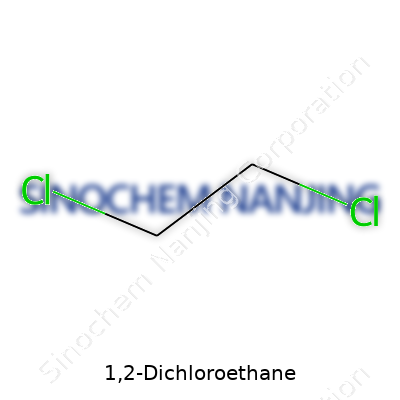
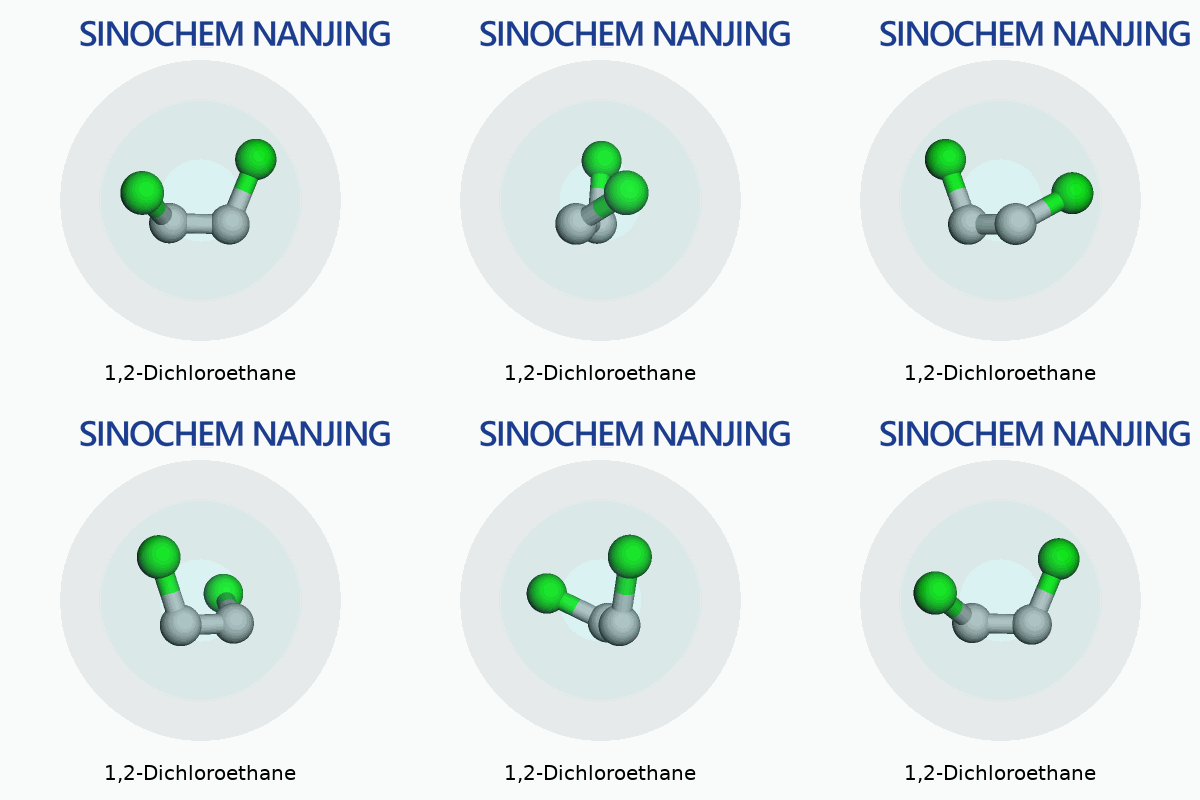
| Names | |
| Preferred IUPAC name | 1,2-dichloroethane |
| Other names |
Ethylene dichloride EDC 1,2-Ethylene dichloride Dichloroethylene Glycol dichloride Dichloroethane |
| Pronunciation | /ˌwʌn ˌtuː daɪˌklɔːroʊˈeθeɪn/ |
| Identifiers | |
| CAS Number | 107-06-2 |
| Beilstein Reference | Beilstein 605250 |
| ChEBI | CHEBI:35716 |
| ChEMBL | CHEMBL41632 |
| ChemSpider | 5877 |
| DrugBank | DB00764 |
| ECHA InfoCard | 03a955af-75ac-496d-aa01-43060b3d4b97 |
| EC Number | 203-458-1 |
| Gmelin Reference | Gmelin Reference: **10357** |
| KEGG | C01407 |
| MeSH | D002527 |
| PubChem CID | 10707 |
| RTECS number | KI0525000 |
| UNII | 1IIP9355EO |
| UN number | UN1184 |
| Properties | |
| Chemical formula | C2H4Cl2 |
| Molar mass | 98.96 g/mol |
| Appearance | Colorless liquid with a chloroform-like odor |
| Odor | sweet chloroform-like |
| Density | 1.25 g/mL at 25 °C |
| Solubility in water | 8.7 g/100 mL (20 °C) |
| log P | 1.48 |
| Vapor pressure | 78.4 mmHg (20 °C) |
| Acidity (pKa) | pKa ~35 |
| Magnetic susceptibility (χ) | −9.97×10⁻⁶ cm³/mol |
| Refractive index (nD) | 1.4440 |
| Viscosity | 0.84 mPa·s (at 20 °C) |
| Dipole moment | 1.80 D |
| Thermochemistry | |
| Std molar entropy (S⦵298) | 200.41 J·mol⁻¹·K⁻¹ |
| Std enthalpy of formation (ΔfH⦵298) | –224.4 kJ/mol |
| Std enthalpy of combustion (ΔcH⦵298) | -1295.7 kJ·mol⁻¹ |
| Pharmacology | |
| ATC code | JY20 |
| Hazards | |
| GHS labelling | GHS02, GHS07, GHS08 |
| Pictograms | GHS02,GHS07,GHS08 |
| Signal word | Danger |
| Hazard statements | H225, H302, H312, H315, H319, H332, H351, H411 |
| Precautionary statements | P201, P202, P210, P233, P240, P241, P242, P243, P260, P264, P270, P273, P280, P301+P310, P303+P361+P353, P304+P340, P305+P351+P338, P308+P313, P312, P314, P330, P337+P313, P370+P378, P403+P235, P405, P501 |
| NFPA 704 (fire diamond) | 2-3-0 |
| Flash point | 13 °C |
| Autoignition temperature | 413 °C |
| Explosive limits | Explosive limits: 6% to 16% |
| Lethal dose or concentration | Lethal dose or concentration: Oral rat LD₅₀: 670 mg/kg |
| LD50 (median dose) | LD50 (oral, rat): 670 mg/kg |
| NIOSH | SK3910000 |
| PEL (Permissible) | 50 ppm (190 mg/m³) |
| REL (Recommended) | 10 ppm |
| IDLH (Immediate danger) | 50 ppm |
| Related compounds | |
| Related compounds |
Ethylene chloride Vinyl chloride Chloroethane Ethylene Tetrachloroethane |



