1,1,2,2-Tetrachloroethane: A Hard Look at an Old Chemical
Historical Development
People started working with 1,1,2,2-tetrachloroethane back in the nineteenth century. In those early days, the chemical industry was having its industrial coming of age, chasing down ways to make new solvents, refrigerants, and intermediates. Tetrachloroethane carried a lot of promise. Researchers produced it through the chlorination of acetylene and by direct chlorination of ethylene. By the 1920s, factories in Europe and North America saw growing demand for this heavy liquid, pushing production to fill a need for both solvents and precursors to other chlorinated compounds. The historical pipeline runs straight into the development of chemical synthesis for military and agricultural use, with tetrachloroethane becoming part of the backbone of certain pesticides and fumigants. A few decades down the line, scientists connected the dots between exposure and serious risks, especially after cases started piling up in industrial workers. That forced rethinking and set the stage for today’s heavy scrutiny.
Product Overview
In practice, 1,1,2,2-tetrachloroethane shows up as a dense, oily, colorless liquid. It has a sweetish odor, which seems less sharp compared to other chlorinated hydrocarbons like chloroform or carbon tetrachloride. People who handle the stuff recognize it for its superb ability to dissolve fats, oils, resins, and waxes. The chemical has served as both an industrial cleaning solvent and a building block for making trichloroethylene, trichloroethane, and tetrachloroethylene. The product isn’t widespread today, mostly because of its health risks and the way regulations tightened up through the late twentieth century. You still run into it on the market, but mainly in tightly controlled settings where operators use it as a chemical intermediate rather than as a general-purpose solvent.
Physical & Chemical Properties
You see straight away that 1,1,2,2-tetrachloroethane weighs more than water, with a density close to 1.6 g/cm³. It boils at around 146°C and freezes below zero at about –35°C. Neither air nor sunlight breaks it down quickly, which makes spills a headache since the liquid persists and spreads far. It doesn’t mix with water, but it does blend well with most organic liquids. In storage, it puts out vapors that can pick up in closed spaces. Tetrachloroethane isn’t especially flammable, but heating it gives off dangerous gases like phosgene and hydrogen chloride, which start serious trouble in an accident or fire.
Technical Specifications & Labeling
Bottles and drums holding 1,1,2,2-tetrachloroethane must bear clear hazard warnings under international standards. Labels carry statements about its toxic nature and strong recommendations for gloves, goggles, and ventilated hoods. Chemical purity for reactive use sits near 98 percent or better; small amounts of other chlorinated compounds often sneak in, but process lines work to keep those out. Safety data sheets cite its registered numbers, hazard codes, and exposure limits set by authorities in the US, Europe, and Asia. No competent operator skips these details, because every step of moving or using tetrachloroethane brings a health risk.
Preparation Method
Industry relies on well-worn synthesis paths hung on the concept of progressive chlorination. One approach uses ethylene reacted with chlorine, with temperature and catalysts guiding the product distribution. Carefully controlled reactors shepherd this process, since too little control leads to a messy mix of other chlorinated liquids. Some older plants used acetylene instead, bringing it together with chlorine in presence of iron chloride as a catalyst. These days, workers spend as much care on controlling emissions and keeping waste streams from reaching the environment as they do on making high-purity tetrachloroethane.
Chemical Reactions & Modifications
Tetrachloroethane acts as a useful starting point for several chemical changes. Strong bases or metals can break chlorine atoms free, leading to vinyl chloride or trichloroethylene. Nitration, hydrolysis, or UV radiation changes the structure even more, opening paths to other specialty chemicals. Over time, chemists learned to tune reaction conditions to get high yields of downstream products, especially since demand for things like tetrachloroethylene or vinyl chloride monomer kept climbing. Most of the real-world demand comes from using it as an intermediate instead of an end-use product, reflecting ongoing worries about straight-up exposure to the parent compound.
Synonyms & Product Names
Ask around, and you’ll find 1,1,2,2-tetrachloroethane goes by several other names: acetylene tetrachloride, sym-tetrachloroethane, s-tetrachloroethane, and just plain tetrachloroethane in some older literature. Chemical catalogs from big suppliers carry all these names, each aiming at different end markets. One upshot is that safety training has to cover the full list so handlers and lab techs understand exactly what bottle they’ve got on the bench. Skipping a label or ignoring a synonym risks mixing it up with 1,1,1,2-tetrachloroethane, a different isomer with a separate risk profile.
Safety & Operational Standards
Working safely with 1,1,2,2-tetrachloroethane means more than following checklists. Strong ventilation, sealed systems, and airtight personal protective gear matter because inhaling the vapors or letting the stuff touch your skin can lay you up in a hurry. Chronic exposure—whether on the factory floor or through environmental mishaps—links to serious nervous system and liver problems. Industrial hygiene teams run air monitoring and insist workers wear carbon-filter respirators. Any plant manager who learned hard lessons from chemical injuries treats routine training and emergency drills like gospel. Environmental regulators raise a red flag fast if they see operators cutting corners on containment, a lesson hammered home by high-profile leaks in the chemical industry.
Application Area
In decades past, factories counted on 1,1,2,2-tetrachloroethane as both a stand-alone solvent and a steppingstone to bigger molecules in the chlorinated solvent world. Paint removers, degreasers, and textile processing used plenty of it before its health costs caught up with its benefits. Its most enduring use sticks close to chemical manufacturing—especially for making trichloroethylene and tetrachloroethylene, two workhorse solvents for dry cleaning and metal degreasing. That shift away from direct use shows how changes in risk awareness can steer a market. Labs keep a stock for synthesis experiments, but nobody drifting through a general hardware store runs into this stuff nowadays.
Research & Development
Research about 1,1,2,2-tetrachloroethane today lives in two places: finding safer alternatives for its few remaining uses, and digging deep into the way it breaks down in the environment and inside the body. Environmental studies keep tracking how spills from aging industrial sites taint groundwater and stick around for decades. On the synthetic side, chemists keep chasing cleaner routes, tinkering with catalysts that cut byproducts and clamp down on waste. Research into detection technology matters, too, since measuring low levels in air or water takes robust tools and sensitive sensors to protect workers and the public.
Toxicity Research
Toxicology studies on tetrachloroethane paint a tough picture. Evidence stacks up for liver and nervous system damage in workers breathing fumes or handling the liquid regularly. Laboratory animals show cancer risk at higher exposures. Immediate symptoms include headaches, dizziness, and nausea—followed by risk of collapse at high doses. Regulators in the US and Europe set strict occupational limits, often measured in fractions of a part per million. Chronic or acute poisoning cases in previous generations led to sharply reduced handling on production lines. Public health officials pressed hard for alternatives in open-use products, and ongoing medical monitoring tracks workers who had long exposure histories. Cleanup standards at contaminated sites now use some of the most conservative benchmarks in the environmental field.
Future Prospects
Looking forward, the days of easy access to 1,1,2,2-tetrachloroethane look numbered. Most large chemical companies favor less toxic substances as solvents, and green chemistry policies keep pressure on to cut out high-hazard organic chlorides. Ongoing use sticks to specialized production lines with layered containment and oversight. Treatment technologies for contaminated water and soil keep getting better—thermal desorption, advanced oxidation, and biodegradation each play a role in site cleanup. Future work probably focuses even more on finding drop-in substitutes for the last applications, designing organic syntheses that sidestep tetrachloroethane entirely, and setting tighter safety thresholds wherever it remains in use. The shift is slow, but it signals a broad lesson: the chemical industry’s priorities have changed, often because past experience taught a hard lesson about harm and responsibility.
What are the main uses of 1,1,2,2-Tetrachloroethane?
Main Uses in Industry
1,1,2,2-Tetrachloroethane doesn’t grab headlines, but it pops up in industrial work across the globe. Factories rely on this chemical mainly as an intermediate to make other products — especially vinyl chloride, an ingredient in PVC plastic. PVC pipes and flooring wouldn’t exist without it. My years of following the chemicals market tell me that demand for such basic blocks never dips by much, even as environmental movements gain strength.
In the past, workers would have spotted drums of this stuff stacked next to degreasers and solvent tanks. Industry turned to it for dissolving fats, oils, waxes, or resins, all because it’s so effective at breaking molecular bonds. These days, solvents with fewer health risks are taking its place, but some plants still keep it around for cleaning or processing machinery and tools.
Role in Chemical Synthesis and Formulation
Not everyone realizes it, but 1,1,2,2-Tetrachloroethane is a workhorse during the synthesis of other chlorinated chemicals. Vinylidene chloride, trichloroethylene, and similar compounds often trace their origins back to this substance. Producers transform it via chemical reactions because the bond arrangement makes things easier at the molecular level. Technicians like how it reacts predictably, which saves money and avoids surprises during large-scale runs.
I once toured a plant that used this chemical as a reaction medium for specialty pigments. Engineers spoke about the reliable yield and bright results, but they couldn’t ignore new regulatory pressure pushing them to swap to greener choices.
Health and Environmental Concerns
Few people outside factory walls realize how toxic 1,1,2,2-Tetrachloroethane can be. Even a brief whiff can bring dizziness or headaches, and chronic exposure links to nervous system and liver damage. Years of research, including work from the U.S. Environmental Protection Agency, have tied this compound to cancer risks as well. It used to be more common in everyday products, but tighter rules and growing health awareness have shrunk its use in domestic goods.
Leaks into groundwater worry folks living near old manufacturing sites. Chlorinated solvents move easily through soil and don’t break down fast. Drinking water contamination turns a technical problem into a public trust issue. Agencies like the Centers for Disease Control and Prevention now recommend tight controls and careful monitoring wherever the chemical shows up, urging manufacturers to adopt closed systems and modern leak detection.
Paths Forward and Safer Alternatives
Change rarely happens overnight, but technology moves people forward even with entrenched chemicals. Some plants have shifted to solvents like n-propyl bromide or safer glycol ethers, which offer similar cleaning power without the high toxicity profile. Chemical engineers I’ve spoken with say switching costs money, since re-tooling equipment isn’t cheap, but they recognize the benefits for worker safety and environmental compliance.
Communities near chemical facilities worry about legacy pollution, so cleanup programs and real-time monitoring earn public trust. Some old sites get remediated through soil vapor extraction and pump-and-treat systems that catch and destroy lingering contaminants.
1,1,2,2-Tetrachloroethane reminds us that yesterday’s solutions sometimes become today’s problems. Paying attention to what goes into industrial processes — and what comes out the other end — protects health and keeps progress from stalling just because a shortcut worked once upon a time.
Is 1,1,2,2-Tetrachloroethane hazardous to health?
A Closer Look at a Common Industrial Chemical
1,1,2,2-Tetrachloroethane shows up in more places than most people expect. Industries use it mostly as a solvent and for making other chemicals. At first glance, that just sounds like another laboratory liquid, something far away from normal daily life. But over the years, health experts and regulators started taking a harder look at how this chemical can affect real people, not just lab rats or workers in factories.
Health Hazards Backed by Years of Evidence
People have known about the dangers tied to this chemical for decades. Breathing in 1,1,2,2-Tetrachloroethane, even at low concentrations, causes headaches, nausea, and dizziness. At higher levels, folks ended up with serious liver and kidney problems. Liver toxicity shows up fast, with damage seen in animal studies and human case reports. Proving the point further, records from factories in the mid-1900s described workers getting chronically sick, with clear links to the same solvent. I grew up near a plant that used stuff like this. Workers talked about skin rashes, burning eyes, chest pain—symptoms that became so common they got treated like part of the job. That shouldn’t be normal for any workplace.
The story doesn’t stop at just workplace contact. This chemical often slips into groundwater and soil, traveling further than most realize. Once it finds its way into drinking water, entire communities face exposure without knowing. The U.S. Environmental Protection Agency flagged 1,1,2,2-Tetrachloroethane as a likely human carcinogen, drawing on lab findings where mice and rats developed tumors after exposure. Even if everyday drinking water carries less than what those lab animals got, the risks are nothing to shrug off. Chronic low-level exposure builds up over years, so the bodies of children and pregnant women could face even bigger risks.
Regulation and Management: Room for Improvement
Federal agencies set strict limits for this chemical in drinking water and workplaces, but accidents happen and leaks go unchecked too long. In the 1980s, several well-publicized spills sent the chemical into rivers, highlighting just how quickly a contained industrial hazard could become a public health concern. Cleaning up that mess took years and cost millions. Real change happened only after enough sick people started speaking out. In my own hometown, companies waited too long to fix leaks because people couldn’t see the danger—colorless, mild-smelling, but potent at even tiny levels.
Better monitoring technology helps catch leaks earlier these days, but effective protection takes more than just regulations. Workers need real training and the right gear. Community members need clear alerts when there’s a risk of contamination in water or air. Companies can’t cut corners to save a few dollars without risking people’s safety. Local governments should push for regular testing of wells and municipal water near factories. Residents deserve access to these results without jumping through hoops.
Personal Actions and Moving Forward
People living near industrial sites can take small but important steps—using certified water filters, following local advisories, and reporting strange tastes or smells in water. Community awareness builds pressure for better corporate and government action. If history shows anything, it’s that silence only helps the problems linger.
1,1,2,2-Tetrachloroethane isn’t just a number in a safety data sheet. Its track record in harming workers and neighbors should keep everyone on alert. Real solutions start with honest talk, responsible corporate behavior, and a commitment from every stakeholder to put health ahead of profit and convenience.
How should 1,1,2,2-Tetrachloroethane be stored and handled safely?
Understanding the Risks
1,1,2,2-Tetrachloroethane stands out for its toxicity and the threat it poses to both health and the environment. Inhalation or skin contact can cause everything from headaches and nausea to liver damage and nervous system effects. Reports show it can also contaminate groundwater, leaving long-term environmental harm. During my years working around industrial solvents, I saw a few close calls spark lasting changes—a colleague fell ill after a careless spill, another needed weeks to recover after a single misstep during a transfer. The link became clear: this chemical can't be treated casually.
Storage: Never an Afterthought
A container choice isn't just about keeping liquids in—it's about keeping hazards out. Steel drums with a solid lining block 1,1,2,2-Tetrachloroethane from corroding its way through. Any leaks spell big trouble for both worker safety and facility cleanup. Lines and labels must stay intact, offering instant identification in emergencies. I recall a mix-up during an inspection; faded labels forced a full shutdown until everything could be sorted safely. That wasted time and money, but it prevented an accident with far worse consequences.
Storage spaces need solid ventilation. Sealed containers can prevent vapor buildup, but only as long as seals stay tight and temperature stays below 30°C, far from any heat or ignition. Experts at NIOSH and OSHA stress the value of separate chemical storage—no stacking with oxidizers, acids, or flammables. The cost of a dedicated storage shed may seem steep until you add up the risks of an uncontrolled reaction.
Handling: Gear, Training, and Attitude
I’ve seen good PPE habits save folks from near disaster. Nitrile gloves, thick aprons, chemical splash goggles—this gear isn’t for show. Sometimes it’s the only thing standing between a routine transfer and a trip to the emergency room. Emergency showers and eyewash stations turn a dangerous splash into a manageable event. Without them, every second counts against you.
Even so, not everyone takes the time to review a material safety data sheet before stepping into the lab or plant. Training, not protocol posters, makes the difference here. I’ve led training sessions where old-timers get candid about shortcuts, and that honesty helps everyone understand the real stakes. Stories travel faster than written rules. Creating a culture where people look out for one another shifts the whole game, especially with substances like 1,1,2,2-Tetrachloroethane.
Monitoring and Emergency Prep
Regular checks spot corrosion, weak seals, and leaks before they become disasters. Vapor detectors and periodic medical exams catch harm early. Spill kits and ready-to-use respirators belong at arm’s reach—no one should need to dig through a supply closet during a spill. More than once, quick access to sand and neutralizer stopped small leaks from turning catastrophic. Cleanup plans draw from hard-learned lessons accumulated over years working with volatile chemicals.
Looking Forward
Facilities can’t afford to ignore changing regulations. In fact, some companies already limit how much 1,1,2,2-Tetrachloroethane enters the workplace, substituting safer solvents wherever possible. Others build redundancy into storage systems and conduct regular drills to keep the “what-ifs” at the front of everyone’s mind. Solving these issues means investing in both hardware and people—alarms, secondary containment, and most importantly, a well-trained team.
Getting storage and handling right doesn't just check off boxes. It shapes a workplace where workers feel valued and where accidental exposure never gets a foothold. In my experience, those efforts make every difference, especially with a chemical as unforgiving as this.
What are the potential environmental impacts of 1,1,2,2-Tetrachloroethane?
Unpacking What Happens After Release
Factories and chemical plants used 1,1,2,2-Tetrachloroethane as a solvent and in making other compounds for years. Old tank leaks and sloppy disposal practices have left many communities dealing with contaminated ground and groundwater. Unlike some pollutants that break down quickly, this stuff sticks around. I saw a similar legacy problem in my hometown, where a forgotten waste pond kept leaching chlorinated chemicals into wells decades after the plant shut down.
How It Moves and Lingers
This chemical moves easily through soil and dissolves in water, which means a single spill can travel far from its source. A small release upstream taints river water and sneaks into municipal wells miles away. That’s not science fiction—that’s what happened in New Jersey, where groundwater contamination from old industrial sites is still an issue. It doesn’t break down in sunlight or water very fast. Sometimes, communities get hit twice: first through their tap, later on through vapors that seep up into basements.
Risks to Wildlife and People
Fish and small aquatic critters don’t fare well when this chemical enters streams and ponds. It targets their nervous systems and throws their development out of whack. The EPA places 1,1,2,2-Tetrachloroethane on its priority pollutant list partly because it’s toxic at low doses. Birds and mammals eating tainted insects and fish get hit with the same problems. Farmers have watched livestock lose condition or turn up with odd illnesses after drinking from tainted sources.
People shouldn’t ignore warnings here either. The chemical evaporates and can creep up from the ground into homes built over contaminated soil. In some neighborhoods, testing uncovered vapor levels above safety limits, driving families into months-long hotel stays while officials cleaned up. Long-term exposure increases the risk of liver and kidney damage and may raise cancer risk. The CDC and WHO both flagged this problem after studies traced unusual cancer clusters near contaminated sites.
Managing the Legacy and Looking Ahead
Ignoring old problems just piles up more trouble. Quick fixes like covering spills with dirt never worked for my old neighbors—rain would just wash the contamination deeper. Communities have found more success using soil vapor extraction and pump-and-treat systems for groundwater. These solutions aren’t cheap, but the alternative means leaving kids and wildlife to face the consequences.
Testing wells regularly, especially near factories and dumps, picks up issues early. Local groups can push for polluters to pay—sometimes that comes after years of lawsuits, but at least it helps foot the cleanup bill. More than once, residents have organized to demand transparency and set stricter standards for cleanup, forcing government action. Education also plays a big role. People want to know what’s in their water, and deserve plain answers, not technical documents filled with jargon.
Preventing the Next Disaster
Chemical firms follow tighter rules these days. Safe storage practices and tracking every barrel keep new spills rare. Switching to less toxic alternatives would cut risk further. Still, we need watchdogs—both official and grassroots—to keep track of sites where 1,1,2,2-Tetrachloroethane might still lurk underground. Sticking our heads in the sand hasn’t cleaned up a single drop. Only steady pressure, better science, and honest conversations get the job done.
What precautions should be taken in case of a spill or exposure to 1,1,2,2-Tetrachloroethane?
Why 1,1,2,2-Tetrachloroethane Demands Respect
Working around chemicals like 1,1,2,2-Tetrachloroethane means facing a real health risk. With a pungent, sweet smell and a clear, oily look, this substance slips under the radar in busy labs or industrial floors. Its very nature—easy to inhale, able to slip through skin—makes careless moments a hazard. This is the kind of chemical that you want nowhere near your lungs, eyes, or hands. I recall early in my career, reading case after case where folks ended up in rough shape, just from a splash or a sniff too many. The science backs my worry: this solvent can damage your liver and central nervous system, sometimes from brief exposure.
What It Takes to Build a Safe Work Culture
Walking into a workspace handling this solvent, the first thing to check is air flow. A shop fan won’t cut it. Real ventilation, strong enough to pull fumes away and outside, keeps workplaces safer. I’d take a solid fume hood or a proper exhaust system over any chemical-scented air freshener.
For personal protection, there’s no replacement for chemical-resistant gloves, face shields, and goggles that fit tight. I’ve seen folks trust their insurance on cotton lab coats—useless against this solvent. The right gear matters. Nitrile or viton gloves, splash-proof lab coats, even a respirator with organic vapor cartridges in case the air’s thick. No one gets a day off from safety when this solvent’s in the mix.
What to Do When Spills Happen
Let’s talk spills. Maybe someone drops a flask. Don’t grab paper towels. 1,1,2,2-Tetrachloroethane needs spilled-liquid absorbents designed for volatile organics—think clay-based granules or special polymer pads. Shut down open flames right away; this chemical’s vapors don’t play nice with sparks.
Clear the area if you smell it in the air or see a puddle. Keep folks out who aren’t suited up for cleanup. Send fresh air through the space—open doors, run exhaust fans. Someone exposed needs water and lots of it—fifteen solid minutes under the safety shower, or an eyewash station if it splashed near the eyes. I’ve witnessed quick thinking with emergency drench hoses save coworkers from much worse burns.
Used absorbents and contaminated clothing don’t go in the normal trash. Toss them into a labeled, sealed hazardous waste drum. Document every drop and report it as soon as possible. This habit has kept many incidents from becoming legal nightmares down the line.
Preventing the Next Spill: Training and Attitude Matter
Every worker around this chemical needs training—not just chemical names, but real-life spill drills. Teams who run practice emergencies respond smarter and calmer. I encourage new hires to treat the emergency shower, the eyewash station, and the spill kit like lifelines—because that's truly what they are.
Engineering solutions and good training turn dangerous situations into manageable ones. It's been my experience that when leadership makes safety a visible, daily priority, shortcuts stop looking tempting. A culture where everyone points out leaking valves or forgotten PPE without fear keeps everyone safer—no matter how toxic the tools we're paid to use.
More Than Rules—Respecting the Risks
Working with 1,1,2,2-Tetrachloroethane isn't about fear—it’s about respect. Mishandling leads to illness or worse. Taking the right steps, fitting up with the right gear, and practicing honest, no-shortcuts cleanup protocols keep this substance from turning routine work into an emergency room visit. That’s why I never treat a chemical like this one with anything less than a professional mindset—and why I think sharing these habits makes every workplace stronger.
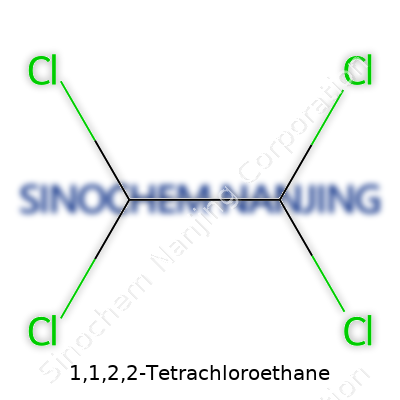
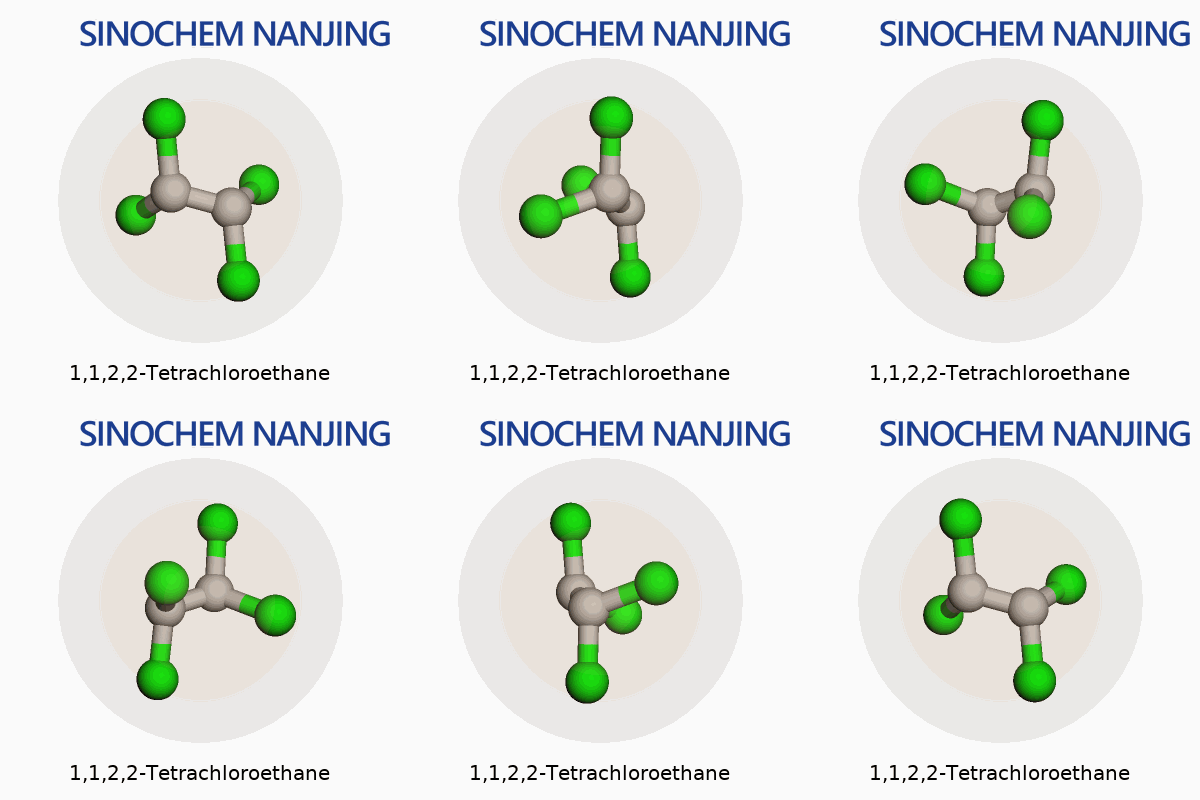
| Names | |
| Preferred IUPAC name | 1,1,2,2-Tetrachloroethane |
| Other names |
Sym-tetrachloroethane Acetylene tetrachloride Tetrachloroethane Ethylene tetrachloride |
| Pronunciation | /ˌwʌn ˌwʌn ˌtuː ˌtuː tɛˌtrəˌklɔːr.oʊˈɛθ.eɪn/ |
| Identifiers | |
| CAS Number | 79-34-5 |
| 3D model (JSmol) | `JSmol.loadInline("data:chemical/x-mdl-molfile;base64,ClC(C(Cl)(Cl)Cl)Cl")` |
| Beilstein Reference | 878234 |
| ChEBI | CHEBI:34771 |
| ChEMBL | CHEMBL25437 |
| ChemSpider | 10754 |
| DrugBank | DB01850 |
| ECHA InfoCard | 03bda8e0-5ede-4312-b33e-532a8dd8c178 |
| EC Number | 602-006-00-4 |
| Gmelin Reference | 1065 |
| KEGG | C14045 |
| MeSH | D013618 |
| PubChem CID | 8254 |
| RTECS number | KI8575000 |
| UNII | TE7J2M730M |
| UN number | UN1891 |
| CompTox Dashboard (EPA) | DTXSID3020295 |
| Properties | |
| Chemical formula | C2H2Cl4 |
| Molar mass | 167.85 g/mol |
| Appearance | Colorless liquid |
| Odor | Chloroform-like |
| Density | 1.59 g/mL at 25 °C |
| Solubility in water | 14 g/L (20 °C) |
| log P | 2.39 |
| Vapor pressure | 17 mmHg (20°C) |
| Acidity (pKa) | 1.57 |
| Basicity (pKb) | 1.84 |
| Magnetic susceptibility (χ) | −9.76 × 10⁻⁶ cm³/mol |
| Refractive index (nD) | 1.505 |
| Viscosity | 2.44 mPa·s (20 °C) |
| Dipole moment | 2.20 D |
| Thermochemistry | |
| Std molar entropy (S⦵298) | 309.0 J·mol⁻¹·K⁻¹ |
| Std enthalpy of formation (ΔfH⦵298) | -224.0 kJ/mol |
| Std enthalpy of combustion (ΔcH⦵298) | -654.1 kJ·mol⁻¹ |
| Pharmacology | |
| ATC code | V09CX03 |
| Hazards | |
| Main hazards | Toxic if swallowed, in contact with skin or if inhaled. Causes skin irritation. Causes serious eye irritation. Suspected of causing cancer. May cause damage to organs through prolonged or repeated exposure. |
| GHS labelling | GHS02, GHS06, GHS08 |
| Pictograms | GHS06,GHS08 |
| Signal word | Danger |
| Hazard statements | H302, H315, H319, H332, H351, H373 |
| Precautionary statements | P261, P280, P301+P310, P303+P361+P353, P304+P340, P305+P351+P338, P308+P313, P405, P501 |
| NFPA 704 (fire diamond) | 2-2-0 |
| Flash point | 87°C (189°F) (closed cup) |
| Autoignition temperature | 430 °C (806 °F; 703 K) |
| Explosive limits | 5.9–15.4% |
| Lethal dose or concentration | LD₅₀ (oral, rat): 1,900 mg/kg |
| LD50 (median dose) | LD50 (median dose): 1210 mg/kg (oral, rat) |
| NIOSH | KI8575000 |
| PEL (Permissible) | 5 ppm (35 mg/m3) |
| REL (Recommended) | 5 ppm (30 mg/m3) |
| IDLH (Immediate danger) | IDLH: 100 ppm |
| Related compounds | |
| Related compounds |
Ethylene dichloride Hexachloroethane Trichloroethylene Tetrachloroethylene |



