Yttrium Nitrate: A Closer Look at Past, Present, and What Lies Ahead
Historical Development
Chemists started taking a closer look at yttrium compounds more than two centuries ago, around the time folks in Europe became fascinated by rare minerals unearthed in a Swedish quarry. Yttrium nitrate, specifically, didn’t catch widespread attention until researchers needed reliable soluble salts for analytical chemistry and materials science. Early on, production was slow and heavily limited by how tough it was to separate yttrium from other rare earths like erbium and ytterbium. The push to get pure products ramped up with postwar electronics industries moving into new territory, particularly cathode-ray tubes and early laser applications. Over the decades, the refining techniques moved away from those laborious fractional crystallizations. Companies began using extraction processes and modern ion exchange, gradually making yttrium nitrate available at the quality level that science and industry began to demand. Watching that change play out felt like a lesson in patience, reminding me that every pure material appearing on a lab bench carries decades of incremental progress behind it.
Product Overview
Walk into any lab supply room and a bottle labeled “Yttrium Nitrate” stands out as an essential reagent, especially for anyone working with advanced ceramics or phosphors. Typically, it comes as a white crystalline powder, highly soluble in water, and straightforward to handle in most standard lab glassware. Unlike some more exotic yttrium salts, this nitrate is easy to weigh and dissolve, which makes it a favorite for prepping homogeneous solutions. In my own experience, the quality and consistency of yttrium nitrate from reputable suppliers mean experiments run smoother, and one avoids time-consuming troubleshooting of contamination headaches later on. Manufacturers sell it under various brand names, but regardless of label, purity and particle size distribution remain at the forefront of the spec sheets for labs making electronics, glass, or specialty catalysts.
Physical & Chemical Properties
Yttrium nitrate sits as a white, slightly hygroscopic powder, melting at around 83°C and breaking down if pushed past 500°C. It dissolves quickly in water and gives clear, neutral solutions when stirred. The chemical formula, Y(NO₃)₃·6H₂O, tells you right away that there’s a good bit of water of crystallization, and that matters — it affects how much metal content hits your beaker. Yttrium sticks close to trivalent ions, rarely forming anything else; as a nitrate salt, it reacts in predictable ways, which makes it reliable for research use. I always check the freedom from heavy metal impurities before getting started, since the presence of iron or lead will throw off any fluorescence or electrical measurements downstream.
Technical Specifications & Labeling
Bottles of yttrium nitrate come with labeling that includes not just the chemical name and molecular formula, but essential details like batch number, purity (frequently ≥99.99% for electronics or research work), water content, and storage instructions. Labs usually look for technical specs that give clear minimum guarantees on rare-earth purity, maximum allowed amounts of contaminants, and precise information about hydration state. Costs edge higher as purity and quality demands push up, especially for products tailored to optical or photonic devices. In my own purchasing experience, clear labeling saves hours of double-checking compatibility with downstream processes, as even minor deviations can affect crystal growth or catalyst performance.
Preparation Method
Most of the yttrium nitrate on shelves begins life as a rare-earth concentrate. Producers leach out yttrium from ores, usually bastnäsite or monazite, and run the crude extract through solvent extraction to pull away neighboring lanthanides. After the solution gets enriched with yttrium, nitric acid turns the metal into its nitrate salt. Evaporation and careful crystallization yield the hexahydrate form most labs use. Industrial setups focus on recycling and minimizing waste acids, as environmental regulations become stricter. Years ago, methods relied much more on open systems and simple batch processes. Today, closed-loop purification and more precise reactors help keep the product clean and steady in quality.
Chemical Reactions & Modifications
Yttrium nitrate plays well with a range of reagents. Reacting with oxalic acid drops out yttrium oxalate, a critical precursor for high-purity oxide ceramics and phosphor powders. Adding ammonium carbonate or hydroxides lets researchers pull out yttrium hydroxide, useful for doped nanoparticles or phosphors. In combustion synthesis, the nitrate group helps drive self-propagating reactions, letting scientists cook up specialty powders quickly and with high control over particle size. In day-to-day research, tweaking pH or heating with organics can lead to a host of coordination complexes, increasingly important in biomedical imaging or as single-molecule magnets under low temperatures.
Synonyms & Product Names
Routine conversations about yttrium nitrate usually hit upon a few alternate names: yttrium(III) nitrate, simply “Y nitrate,” or sometimes “yttrium nitrate hexahydrate.” Suppliers often put these right on the bottles, alongside codes to indicate analytical, electronics, or reagent grade. It’s smart to double-check product data sheets since names alone do not guarantee identical composition or absence of contaminants.
Safety & Operational Standards
Working with yttrium nitrate calls for the same kind of solid lab hygiene as any rare-earth compound. The stuff isn’t highly toxic by most measures, but inhaling dust or getting it on skin can irritate or cause allergic responses. Eyes and mouth protection, gloves, and a clean fume hood keep splashes and powder away from your face. It loves to pick up moisture, so keep it well-sealed, and never store near food or drinks. Modern lab standards make it clear that good record-keeping and responsible waste disposal are as important as using the right gear. Mixing yttrium nitrate with combustible materials poses a hazard — the nitrate group serves as an oxidizer if broken down, so keep it far from organic solvents or powders that can ignite.
Application Area
Phosphor technology leans heavily on yttrium nitrate, especially in making the red and green phosphors for modern television displays and efficient LED lighting. Laser crystals and some superconductors rely on the high-purity form for crystal growth, with yttrium-doped materials forming the backbone for many near-infrared lasers. Chemists reach for yttrium nitrate to craft advanced ceramics with controlled electronic and magnetic properties, including next-generation barrier coatings and specialized engine parts. I have seen researchers using it for biomedical imaging tags and as part of catalysts that drive clean chemical reactions. The substance’s versatility ensures a steady demand across electronics, optics, materials science, and energy applications.
Research & Development
Labs keep pushing new uses for yttrium nitrate, especially as engineers look for materials that survive tougher conditions or offer unique magnetic and optical effects. Recent studies use it for synthesizing nano-sized oxides, which behave quite differently from their bulk counterparts, opening up work on high-density information storage or efficient gas sensors. In my own collaborations, mixing yttrium nitrate in sol-gel processes yields transparent, flexible films for smart windows or sensor layers. Some teams are moving toward sustainable, closed-cycle processes that use less acid and generate less waste — an achievement that benefits everyone down the line. As collaborative projects between chemists and engineers ramp up, it seems we’re just scratching the surface of what yttrium nitrate can deliver in emerging tech.
Toxicity Research
Most data show yttrium nitrate behaves with moderate toxicity, less aggressive than lead or cadmium compounds, but far from benign if mishandled. Inhaled powder or repeated contact can stress respiratory and immune systems, and it accumulates in the liver and spleen if exposure runs high. Chronic exposure carries risks of kidney and lung impacts, so it’s not something to brush off with basic gloves. Animal studies, done over the past two decades, guide industrial hygiene recommendations, but the evidence around environmental accumulation remains patchy. Even low-level leaks into water or soil pose long-term risks; rare-earths don’t break down easily in the environment. Regular risk assessments and improved monitoring matter a lot, especially in recycling and disposal.
Future Prospects
The push toward quantum computing, energy-efficient lighting, and high-strength lightweight alloys all point to more demand for yttrium nitrate. As supply chains grow tighter, researchers are investigating bio-based recycling or mining red mud from aluminum production for cost-effective rare earth extraction. Synthetic biology could shake up the industry, using microbes to selectively concentrate yttrium. In fields like green hydrogen catalysts or targeted cancer therapies, the demand for next-level purity and functionalized coatings means chemists will keep refining how yttrium nitrate is made and put to work. It’s exciting to imagine how upcoming students and researchers will find fresh applications in data storage, medical imaging, and energy materials, as long as safety and sustainability ride alongside progress.
What is Yttrium Nitrate used for?
Shaping High-Tech Materials
Ask most folks about elements, and precious few mention yttrium before gold, silver, or even iron. Yet, yttrium nitrate quietly shapes parts of our modern world. Scientists often use it as a starting material when they build special ceramics and powders. When you want a ceramic that survives punishing temperatures, yttrium does the job. Add yttrium nitrate to a mix, and you are nudging the chemistry in a way that brings extra toughness—valuable for jet engines, electronics, and even some surgical tools.
The path usually starts with dissolving or mixing yttrium nitrate into a solution, then heating it to coax out yttrium oxide. This oxide ends up woven into high-performance spark plugs, powerful lasers, or LED bulbs. Every time I flip on an energy-efficient light, I think about how rare earth elements, like yttrium, keep bringing us new tools for saving energy at home.
Modern Electronics and Research
Yttrium nitrate has found its place in the labs of folks trying to cook up new electronics. Researchers rely on this compound when growing thin yttrium oxide films. These films act as insulators or substrates, making them crucial for computer chips or memory storage.
In my college chemistry lab, we once used small amounts of yttrium nitrate for a demonstration. Our instructor pointed out that, with enough care, you can coax yttrium into hosting ions from other elements—making fluorescent materials for display screens or advanced optical devices. This kind of cross-over between chemistry and electronics reminds me how much modern innovation depends on picking the right building blocks from the periodic table.
Medicine and Clean Energy
Yttrium compounds play a role in medicine. Some cancer treatments use radioactive isotopes of yttrium to target tumors. Yttrium nitrate doesn’t go straight into the treatment, but it gets processed and refined along the way. By starting with a pure nitrate, scientists can create custom doses and forms suited for targeting specific cells. Stories from hospitals always bring home the point that strong building blocks—picked with care—can make the difference in patient outcomes.
Researchers also test yttrium-based materials for fuel cells or batteries. These technologies stand at the center of the push for clean energy. Yttrium oxide’s stability and high conductivity help it move ions efficiently inside solid oxide fuel cells. Often, yttrium nitrate provides the pure starting chemical, giving engineers control over exactly what they make.
Environmental and Safety Questions
The mining and refining of yttrium, like many rare earth elements, do not come without headaches. Waste can pile up, and the process sometimes leaves toxic byproducts. I’ve read reports suggesting that more attention to recycling and better waste controls helps a lot. Some companies now recover yttrium from electronic waste, reducing harm and stretching supplies further.
Handling chemicals like yttrium nitrate in the lab calls for careful storage and respect for hazards. Proper personal protective equipment, good ventilation, and clear lab procedures mean a spill or accident won’t turn into something worse. Sharing those habits with the next generation of students keeps everyone safer and helps turn rare earth chemistry into practical products we can all use.
Making the Most of What We Have
Today’s world depends on smart chemistry at almost every step. Choosing yttrium nitrate wisely lets researchers invent new materials, improve medicines, and build better batteries. Rethinking how we mine, recycle, and handle it shapes both tomorrow’s technology and its impact on our environment.
Is Yttrium Nitrate hazardous or toxic?
Looking at Yttrium Nitrate’s Risks
Yttrium nitrate is no stranger in labs and advanced material factories. You won’t find it at home, and for good reason. This compound brings some real safety questions. I’ve handled various chemicals, and anything involving nitrates demands firm respect. Yttrium nitrate—white, odorless—lures you into a sense of security, yet it hides dangers that affect both workers and the environment.
Health Hazards Lurk in Dusts and Fumes
Breathing in yttrium nitrate dust can irritate your nose and throat, and longer-term exposure might bother your lungs. Even in well-ventilated spaces, yttrium’s fine particles often find their way onto your skin or into the air. From what I’ve seen, gloves and well-fitted masks aren’t just suggestions—they keep technicians safe. Touching the compound with bare hands, even by accident, can lead to redness or itching. Grinding, heating, or any activity that stirs up dust only makes that risk worse.
If someone ever ingests yttrium nitrate by mistake, they’re signing up for an upset stomach and possibly far worse. Nitrates mean business in the body, which has led safety agencies to set strict workplace limits. The US National Institute for Occupational Safety and Health (NIOSH) recommends keeping yttrium dust exposure below 1 mg/m³ for a reason. Some research points to kidney and liver strain after repeated or heavy exposure to rare earth salts, including yttrium.
Fire Risks Add to the Danger
That nitrate part gives this chemical an extra punch. Mixed with combustible materials or if spilled near flames, yttrium nitrate can speed up or even start a fire. In factories, one spilled tub can set off alarms—sometimes literally. This risk puts pressure on storage teams to keep the chemical sealed tight, far away from anything that burns easily. There’s no cutting corners here, and emergency training becomes non-negotiable.
Waste and Environmental Hazards
Getting rid of yttrium nitrate waste is a delicate job. Dumping waste in the trash or drains doesn’t just break the law—it wrecks waterways and soil. On more than one occasion, I’ve watched strict protocols mandate neutralizing waste and shipping it to designated hazardous sites. Even trace amounts in rivers can threaten aquatic life. Yttrium builds up, stretching beyond the factory walls.
Staying Safe Around Yttrium Nitrate
The real recipe for safety starts with strong work habits. Lab coats, goggles, fume hoods, and reliable gloves stand between you and unnecessary risk. Companies using yttrium nitrate must train everyone on spills, leaks, and emergency cleanup, not just management. Ventilation remains crucial. Supervisors should check exposure levels regularly; not all hazards show up in plain sight.
Government oversight plays a part too. Difficult chemicals like yttrium nitrate deserve ongoing scrutiny. Regulatory agencies need boots on the ground—visiting sites, updating standards, and making sure waste handling lines up with the latest research. There’s no shortcut for protecting workers or the local creek.
Summary
Yttrium nitrate’s hazards aren’t always obvious, but anyone working near it needs to stay alert. It carries real toxicity, fire risks, and environmental hazards that require more than just common sense. Careful handling, regular training, strong protective gear, and steady oversight make sure the benefits of this compound never come at the cost of health or nature.
How should Yttrium Nitrate be stored?
Common Sense Meets Chemistry
Storing chemicals like yttrium nitrate might sound straightforward, yet any time someone works with oxidizing agents, a little extra thought can save headaches, money, and accidents. Yttrium nitrate deserves respect. Folks who’ve spent time in a chemistry lab remember the basic rule: treat every bottle as if it matters, because one loose cap or careless action can turn a routine day into a bad memory.
Moisture: The Silent Saboteur
This compound draws water from the air. Over time, moisture changes the powder to a clumpy mess, making accurate weighing tough and changing its reactivity. Labs often rely on desiccators or cabinets lined with silica gel or another drying agent. The difference is clear: a dry solid measures right and reacts how it should, while a damp mess doesn’t just ruin experiments—it can corrode containers, break equipment, and make a small problem big.
Temperature and Light: Everyday Enemies
Heat can break down nitrates—yttrium nitrate included. Some folks shove bottles on high shelves, but keeping this chemical in a cool, consistent place pays off. Direct sunlight speeds up reactions or heats bottles without warning; shop floors or windowsills aren’t reliable storage.
Separation: Keep It Simple and Safe
Oxidizers like yttrium nitrate don’t mix well with fuel sources. Anyone who’s handled mixing bowls at home knows that a little confusion leads to burned cookies or worse. On a larger scale, that mistake can put people in the hospital. Flammable organics and acids go elsewhere. This isn’t about compliance, it’s about not wanting to call the fire department. Labels should always face out, and colored dots or tape often help busy staff or students spot what’s risky.
Containers: Not All Plastics and Glass Are Equal
Most suppliers ship this chemical in a strong, sealed plastic or glass bottle. A veteran tech knows that an old, scratched container can crack or leak, especially in bulk storage. Tightly closed caps stop spills, water, and vapor from getting in or out. Swapping damaged bottles for new ones feels like a chore, yet the peace of mind speaks louder than any safety checklist.
Fire—And How to Avoid It
Yttrium nitrate can fuel a fire, so storage near open flames or heat sources doesn’t just break the rules, it breaks trust with coworkers. Fire-retardant cabinets with clear hazard signs protect everyone in a busy workspace. Good signage gives even someone walking into the lab for the first time a clear idea of what not to touch.
People Are Part of the Solution
Training beats any label or cabinet. New staff or students pick up habits from those around them. I’ve seen accidents stem from gaps in training more often than poor storage hardware. Supervisors who run regular walkthroughs spot trouble early and catch misunderstandings before they cost time or health. The real experts build a culture of care—not just compliance.
Stepping Beyond the Basics
Yttrium nitrate isn’t just ‘another jar on the shelf’. Paying attention to the details—dry, cool, separate, well-marked, and handled by folks who know their stuff—turns risky business into daily routine. Real safety never comes from checklists alone; it rises from good habits, clear thinking, and an eye for the little things that keep chemists and their work around for the next session.
What is the chemical formula of Yttrium Nitrate?
Beyond Symbols: Understanding Y(NO₃)₃
The chemical formula for Yttrium Nitrate jumps straight out as Y(NO₃)₃. Reading those characters tells a bigger story than just what’s cooked up in a lab beaker. Anyone who’s spent time in a general chemistry lab, smelling that familiar scent of nitric acid in the air, knows there’s a life to these formulas. Yttrium, with the atomic number 39, often acts as a supporting player in specialty fields like electronics, medicine, and advanced ceramics. Pair it with three nitrate groups, and you get a salt that dissolves in water and finds its way into a surprising number of uses.
Why Bother with Yttrium Nitrate?
Every time a scientist picks Y(NO₃)₃, it's not just for the thrill of mixing rare-earth elements. Yttrium Nitrate enters the scene in the real world — from phosphors in LED screens to medical imaging. I remember back in school, watching a professor demonstrate how nitrates make terrific oxidizers. Nobody forgets those bursts of color when burning salts over a flame. Yttrium, though, brings far more than fireworks. Analysts use it to prepare advanced ceramics that show up in superconductors and laser systems.
The actual composition of Y(NO₃)₃ comes down to good old-fashioned ionic chemistry. Yttrium takes on a +3 charge. Each nitrate, NO₃, steps up as a -1 counter. Line up three nitrates, neutralize that +3, and you’ve built Y(NO₃)₃. Textbooks give the same answer, but handling the compound, you discover its pale color and crystalline structure, often appearing as a white powder. Water invites it right in, leading to easy solutions — crucial for many practical applications because it helps produce thin films by simple chemical deposition.
Importance and Real-World Face
Take a smartphone apart, and you’ll see the invisible hand of Yttrium Nitrate. It gives a boost to the phosphors in displays, helping deliver those robin’s-egg blues. Hospitals count on it, too. Certain yttrium complexes, with just a little tweaking, step up for cancer treatment — specifically in radioactive form for targeted therapies. Universities worldwide report discoveries using yttrium salts for new materials that withstand extreme temperatures, ticking up the performance of engines and turbines.
Many researchers face the brunt of storing rare-earth nitrates safely, keeping them away from moisture and acid to prevent clumping or unwanted reactions. As someone who’s had to go hunting for dry desiccators in a crowded stockroom, I know the struggle to keep rare chemicals safe and effective in a real lab environment. The delicate nature of these compounds means every step — from sourcing to disposal — demands careful attention to avoid environmental and health hazards.
Solutions and Moving Forward
Securing high-purity Yttrium Nitrate often raises the price and the stakes. Universities tag-team with industrial labs to streamline production using methods that sidestep toxic byproducts. The push for greener chemistry means researchers pursue alternatives that reduce the need for heavy acidic conditions. Platforms for chemical sharing and transparent sourcing help smaller labs access quality chemicals, while improved container designs tackle exposure and moisture control.
Students coming up in science today need good, practical guides on handling, storing, and disposing of chemical salts like Y(NO₃)₃. Online resources and community knowledge-sharing do more for safety than any thick manual left unread on a shelf. If you ever get the chance to work with rare-earth nitrates, carry the lessons of precision and care into the next project.
What is the proper way to handle and dispose of Yttrium Nitrate?
Understanding the Substance
Yttrium nitrate isn’t something most folks keep under the kitchen sink. This chemical, known in the science world for its role in advanced ceramics or specialty glass, doesn’t look dangerous. But health experts point out it can irritate eyes, skin, and even the lungs if someone isn’t careful.
Personal Experience and Safety
I spent a year interning in a lab that ran all sorts of rare earth experiments, including those with yttrium compounds. I remember the labeling—bold red warnings and a thick binder full of instructions. Gloves weren’t just a suggestion; they felt as essential as the goggles on my nose. Getting lax could mean dealing with skin burns or worse.
The folks I worked with hammered one thing home: never treat specialty chemicals like regular trash. Spills called for absorbent pads, not paper towels. No one touched anything barehanded. Simple soap and water came in handy for surfaces, though the rinse water went straight into a labeled waste drum. Ignoring that step risked flushing toxins into regular plumbing—something everybody worked to avoid.
Why Proper Handling Matters
Government rules treat yttrium nitrate as hazardous. The Environmental Protection Agency (EPA) sees discharging it carelessly as a major violation. Ingesting or inhaling even small residues over time can lead to organ damage. Scientific journals back this up; a 2022 study in Chemosphere traced spills to higher rates of respiratory symptoms in poorly ventilated facilities. That hits home for anyone who’s spent hours in small analysis rooms.
Many labs lay out training sessions for newcomers. You walk the waste route, see where every bit of used chemical ends up, and sign a paper promising to follow the plan. This isn’t just bureaucratic tape. Years ago, a junior tech in a local university dumped waste down a regular drain. The clean-up cost over ten thousand dollars because local water systems weren’t built to filter those particles. Neighborhood leadership responded by upping inspection frequency, turning a technical misstep into a whole community’s concern.
Disposal: Doing It the Right Way
Yttrium nitrate waste belongs nowhere near household trash bins or public drains. The right move is to collect it in separate, tightly sealed containers—clearly labeled with the hazard class. Larger districts send these containers to licensed hazardous waste facilities. Some companies keep dedicated pick-up services. These outfits possess the right permits for transport and storage, and their workers don’t scrimp on protective gear.
In rural areas or small labs, educators call the state’s hazardous waste hotline for advice. They usually get directions on safe storage and a pick-up date. Training on how to double-bag containers, check for leaks, and store vessels away from sunlight reduces the risk of accidental exposure. No open flames or sources of sparks go anywhere near the waste, either; yttrium compounds can intensify paper or trash fires.
Moving Toward Better Practices
Some research teams have tried to replace yttrium nitrate with safer alternatives where possible. Recycling programs have begun popping up in tech hubs, driven by rising costs and tighter regulations. In regions where chemical handling still falls short, more funding for training and community awareness helps close the safety gap.
Safe handling isn’t just a checklist item. It means recognizing even trace amounts have long-lasting effects and respecting the rules that keep everyone healthy. My time in the lab left me cautious—even today, I treat every chemical with a combination of respect and diligence, remembering both personal safety and the well-being of the water, air, and people around me.
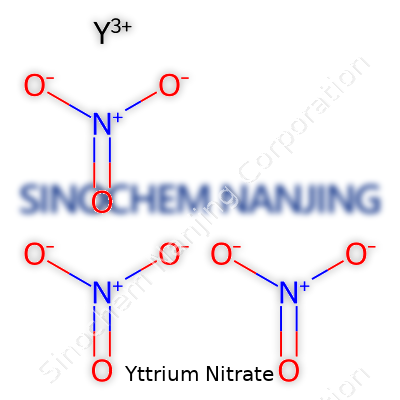
| Names | |
| Preferred IUPAC name | Yttrium trinitrate |
| Other names |
Yttrium trinitrate Yttrium(III) nitrate Yttrium nitrate hydrate Yttrium(III) nitrate hydrate |
| Pronunciation | /ˈɪtrɪəm ˈnaɪtreɪt/ |
| Identifiers | |
| CAS Number | 13494-98-9 |
| Beilstein Reference | 14608 |
| ChEBI | CHEBI:78037 |
| ChEMBL | CHEMBL1201727 |
| ChemSpider | 10209 |
| DrugBank | DB14645 |
| ECHA InfoCard | 03bc57df-e9b1-401f-97cf-35ce5ad9d1f6 |
| EC Number | 231-714-2 |
| Gmelin Reference | 72340 |
| KEGG | C00290 |
| MeSH | D015842 |
| PubChem CID | 24816 |
| RTECS number | ZH6980000 |
| UNII | 3K74AW219J |
| UN number | UN1514 |
| Properties | |
| Chemical formula | Y(NO3)3 |
| Molar mass | 272.928 g/mol |
| Appearance | White crystalline powder |
| Odor | Odorless |
| Density | 2.68 g/cm³ |
| Solubility in water | Soluble |
| log P | -4.44 |
| Basicity (pKb) | pKb ≈ 9.31 |
| Magnetic susceptibility (χ) | −73×10⁻⁶ cm³/mol |
| Refractive index (nD) | 1.815 |
| Viscosity | 3.14 cP (25°C, 0.5M aqueous solution) |
| Dipole moment | 2.97 D |
| Thermochemistry | |
| Std molar entropy (S⦵298) | 219.5 J·mol⁻¹·K⁻¹ |
| Std enthalpy of formation (ΔfH⦵298) | −1795 kJ/mol |
| Pharmacology | |
| ATC code | V10BX03 |
| Hazards | |
| Main hazards | Oxidizing, harmful if swallowed, causes serious eye irritation. |
| GHS labelling | GHS02, GHS05, GHS07, GHS08 |
| Pictograms | GHS05,GHS07 |
| Signal word | Danger |
| Hazard statements | H272, H315, H319, H335 |
| Precautionary statements | P210, P220, P221, P280, P305+P351+P338, P370+P378, P501 |
| NFPA 704 (fire diamond) | 1-0-0-OX |
| Autoignition temperature | 535 °C (995 °F; 808 K) |
| Lethal dose or concentration | LD50 oral rat 1,873 mg/kg |
| LD50 (median dose) | > 1,640 mg/kg (rat, oral) |
| NIOSH | # "WW3625000 |
| PEL (Permissible) | PEL (Permissible Exposure Limit) for Yttrium Nitrate: 1 mg/m3 (as Yttrium) |
| REL (Recommended) | Not established |
| Related compounds | |
| Related compounds |
Yttrium oxide Yttrium chloride Yttrium sulfate Yttrium carbonate Yttrium fluoride |



