Tungsten Hexafluoride: A Close Look at Its Evolution, Uses, and Challenges
The Roots and Progression of Tungsten Hexafluoride
Tungsten hexafluoride doesn’t get much attention outside specialty chemistry circles, but this compound has played an outsized role in shaping industries built on micro-scale precision. Back in the early 20th century, scientists looked at tungsten’s ability to withstand high temperatures and began tinkering with its compounds. Fluorine’s intense reactivity pushed chemists to create some of the most aggressive chemical products known, and pairing it with tungsten gave the world WF₆. By the 1950s and 1960s, as electronics evolved, WF₆ became a mainstay in processes that demanded razor-thin layers and pure reactions. Stories from that era aren’t full of fanfare—the breakthroughs mostly sit buried in the technical papers and patents of those years—but this is how tungsten hexafluoride gradually secured its place in the manufacture of ultra-miniature electronics and tough coatings that often go unnoticed by everyday users.
What Is It? Lifting the Hood on Tungsten Hexafluoride
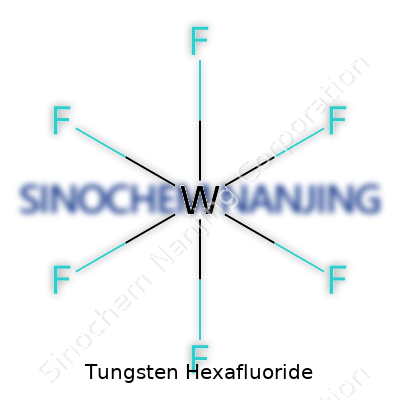
Most people will never see a bottle of tungsten hexafluoride. It’s a colorless, corrosive gas under normal conditions, and you wouldn’t want it anywhere near unprotected skin. Its formula, WF₆, hints at its makeup: a single atom of tungsten surrounded by six tightly held fluorine atoms. Once you get past the initial throat burn of its chemical pedigree, it becomes obvious why WF₆ matters in certain industries: it offers a direct route to ultra-pure tungsten metal films, which form the veins in advanced semiconductors. Whether building high-speed chips or modern display technology, anything that relies on an exacting approach to layering conductors often draws on tungsten hexafluoride as a starting reagent.
Physical and Chemical Traits That Set It Apart
The most striking thing about tungsten hexafluoride isn’t just how it looks or smells (it has a sharp, pungent odor), but its behavior in real-life settings. As a gas, it’s heavier than air and highly corrosive, especially to organic material and some metals if moisture is present. WF₆ condenses into a liquid not too far below room temperature—so chilled storage and solid stainless pipes are the norm in labs and factories. Chemically, it stands out as a powerful fluorinating agent. People who’ve handled it always remember its speed at attacking glass or metals that haven’t been properly protected. Even tiny leaks in a supply line can chew through seals, making proper engineering and regular maintenance a must for anyone using this stuff.
Technical Specs and Right-Labeling: A Responsible Approach
Nobody working with tungsten hexafluoride takes short cuts with technical documentation. Pure WF₆ comes close to 99.99% in grade, especially when destined for chip manufacturing. Storage tanks require pressure-tested valves and connectors to handle its corrosive nature and weight. Technicians label cylinders with clarity—identifying not just its name but also hazard classes and emergency handling rules. Failing to respect these standards isn’t just a paperwork offense—it risks worker safety and plant uptime in very real terms.
Prepping Tungsten Hexafluoride: Recipe for Risk and Precision
Producers rely on direct fluorination of tungsten metal, a process that involves passing gaseous fluorine over heated tungsten surfaces. There’s minimal room for improvisation—temperatures and flow rates need to stay within tight bounds or the system fouls quickly with unwanted byproducts. Veterans in the field point to the decades of trial-and-error that taught process engineers to keep everything bone-dry, since even tiny slips in moisture control lead to corrosion and dangerous hydrogen fluoride gas. In my early job at a chemical plant, an out-of-place drop of water once ruined a batch and left us scrubbing contaminated lines for a week. Trust in the recipe grows only with hands-on experience and the right respect for the chemistry.
Reactive Nature and Where Chemistry Gets Interesting
For all the dangers, the reason the compound earns its keep is its remarkable reactivity. In semiconductor fabs, WF₆ acts as a tungsten donor: it breaks down when it hits a silicon or heated surface, depositing a thin film of pure tungsten. The reaction gives off gaseous byproducts—mostly silicon tetrafluoride, if reacting with silane—so the engineering challenge lies in controlling flow rates, exhaust venting, and purity. Modifying WF₆ itself isn’t common practice, but downstream users tweak process conditions or blend it with hydrogen and other gases to modulate deposition rates and grain structure in final films. Those who work closely with equipment design often describe the challenge as ‘taming the beast’—give WF₆ a channel and the right set of controls and it delivers, stray off-course and it bites back fast.
More Than One Name, One Importance
Chemists and manufacturers sometimes call it tungsten fluoride, tungsten(VI) fluoride, or even perfluorotungstic acid (in less common contexts), but the name WF₆ sticks in most conversations. Barcode labelers or international shipping documents use the CAS number, yet in the trenches of R&D and production, efficient operators still default to the familiar shorthand.
Safety Built on Experience, Not Just Standards
Every briefing or SOP involving tungsten hexafluoride starts with a hard look at safety. PPE requirements run higher than for most specialty gases: full-face respirators, acid-resistant gloves, and positive-pressure suits in some settings. Ventilation takes top billing—this gas pools in low spaces, so fan placement and leak sensors mark the difference between routine runs and emergencies. Oxygen sensors join the array because WF₆ can displace breathable air in confined areas. Standards like the ones set by OSHA and EU chemical safety boards lay the groundwork, but seasoned crews trust drills and peer checks as much as rulebooks. The cost of missing a safety step is never abstract; even brief exposure leaves burns and long recoveries.
Where Industries Tap Into Tungsten Hexafluoride
Despite its hazards, WF₆ finds a stronghold in sectors that rely on precision metal coatings. Semiconductor plants grab most of the headlines, using it to grow tungsten plugs and lines in processors and memory chips. But the story doesn’t end at chips. Some toughened glass, hard-wearing machine parts, and specialty optics harness its unique chemistry to build up tungsten films in controlled layers. Research outfits still depend on WF₆ for experiments in high-temperature superconductors and as a starting agent in new chemical syntheses. The draw never comes from quantity—it’s always the matchless purity and the fine touch that WF₆ permits at an atomic level.
Designing the Future: What Research Chases with WF₆
As microchips keep shrinking and demands grow for faster, more efficient electronics, research labs dig even deeper into how tungsten hexafluoride can deliver tighter, cleaner metal lines. The push now focuses on lowering defect rates and making sure each drop of the gas delivers maximum usable metal with minimum waste byproducts. Engineers and scientists study alternative process chemistries, ways to reclaim fluorine byproducts, and tools to handle WF₆ with less worker exposure. The care paid to environmental impact rises year by year. Some university teams grow hyper-thin layers under new plasma conditions, hoping to unlock even harder or more conductive coatings for the next generation of optoelectronics and quantum computers. Regulatory shifts toward stricter control over toxic fluorides keep the field honest, forcing sustainable process advances instead of the brute-force scaling that marked earlier decades.
Learning the Hard Way: The Challenge of Toxicity
The reputation of tungsten hexafluoride in toxicology circles is not enviable. Anyone who’s come in close contact with fluoride compounds learns to brace for burns, respiratory distress, or worse if procedures go sideways. WF₆ reacts with water vapor in the lungs to create corrosive hydrogen fluoride—a problem recognized by both regulators and insurers. Long-term studies on chronic exposure are still incomplete, but nobody waits for perfect science before enacting tough controls. In my time in chemical handling, a single missed sensor reading led to a rushed evacuation and emergency medical checks—a pointed reminder that textbook protocols save real lives. Environmental groups keep watch on any risks of accidental release, knowing that the same traits that make WF₆ valuable in microfabrication turn it into a liability if handled carelessly. Hospitals and emergency crews near semiconductor clusters drill for these very risks, building muscle memory with mock leaks and rescue plans.
The Road Ahead for Tungsten Hexafluoride
Today, tungsten hexafluoride stands at a junction. As demand for denser, faster electronics grows, the pressure mounts for purer, greener, and safer process chemistries. The compound won’t leave front-line applications anytime soon, but new research leans toward improved recycling, containment, and digital monitoring to curtail worker risk and environmental fallout. Some startups and research consortia chase replacements with lower toxicity and equal performance, but so far, WF₆ keeps its edge in purity and reliability. Like other specialty chemicals with outsize impacts and risks, the next breakthroughs may not look dramatic to the casual eye. But for those working at the intersection of chemistry, safety, and engineering, each step toward safer use and tighter control means better-built products and healthier workplaces. The journey with tungsten hexafluoride serves as a reminder that even the most dangerous tools, handled well, can push technology forward in ways that ripple far beyond lab benches or factory floors.
What is Tungsten Hexafluoride used for?
The Heart of Microchip Manufacturing
Tungsten hexafluoride stands out in the tech world. Every time I upgrade my phone or laptop, I think about the dozens of complex layers hiding within those microchips. Tungsten hexafluoride helps to build some of those layers. As a gas, it plays a central role in chemical vapor deposition, a process that puts ultra-thin tungsten films onto silicon wafers. These films create the circuits that let our electronics process information at blazing speeds.
Only a few materials can handle the job of connecting tiny transistors within chips. Tungsten is one of the best, since it handles heat and current better than copper or aluminum at incredibly small scales. Companies rely on tungsten hexafluoride to deliver pure, even deposits. I’ve seen how even a little bit of inconsistency can lead to chip failures or wasted batches during manufacturing. At the cost and scale these factories operate, that gets expensive fast.
Why Industry Pays Attention to Purity
Factories that handle semiconductor production don’t forgive mistakes. Purity matters. Just a trace of water vapor in the wrong place could cause tungsten hexafluoride to break down into corrosive byproducts. This not only risks equipment, but also spoils expensive batches of chips. I’ve read reports where whole nights were lost and millions spent just dealing with such contamination. This pushes suppliers to deliver tungsten hexafluoride that meets demanding standards. There are industry checks, constant monitoring, and layers of redundancy to make sure what goes into the process doesn’t ruin the investment.
Hazards and Handling Concerns
Anyone near tungsten hexafluoride in a factory wears plenty of protective gear for a reason. At room temperature, it’s a colorless gas, but it's highly toxic and reacts with moisture to produce acids. I know engineers who insist on tight protocols. The gas can corrode equipment, and a small leak poses health threats. This has led to strict storage recommendations, specialized piping, and plenty of regular inspections.
These days, more companies are looking for ways to automate wafer fabrication, in part to reduce the risks that come with handling such dangerous materials. Robotics and remote control systems keep people further from harm, but it’s hard to outsmart the hazards completely. Good ventilation and advanced sensors help catch leaks early.
Environmental Impact and Solutions
Materials like tungsten hexafluoride don't break down easily. Because it’s so reactive, careful waste management stands as a priority. Improper disposal can harm water systems and soil. There are processes for neutralizing spent gases, but these add cost and complexity. I remember covering a story about a semiconductor plant that invested millions in gas abatement to stay within environmental guidelines, and it paid off in the form of fewer complaints from the community and fewer fines from the government.
One solution coming up in the industry is a move toward closed-cycle gas recovery. Tech improvements recover and recycle gases, cutting waste and lowering operating costs. There’s no one-size-fits-all fix—tungsten hexafluoride risks persist—but good engineering, ongoing training, and strict oversight help make the industry safer and cleaner.
What are the safety precautions when handling Tungsten Hexafluoride?
Learning to Respect Tungsten Hexafluoride
Tungsten hexafluoride isn’t a household name, but in the world of semiconductor manufacturing and high-tech glass production, it comes up more often than most people think. I first came across this compound while exploring industrial processes. What surprised me was not just its vital role in creating microchips but the trouble it causes if handled carelessly. So many of these compounds do their job without fuss—right up until someone skips a step in safety and ends up with a hazmat team at the door.
Physical Risks—What Actual Experience Shows
Clear, colorless, easily turning to gas at room temperature, tungsten hexafluoride seems a little less scary than it should. The problem appears fast: as a gas, it spreads out invisibly and reacts intensely with water vapor—even humidity in the air turns it into corrosive, toxic fumes. People who’ve been around the stuff learn quickly that even a whiff means burning eyes, a sore throat, and probably a rush to emergency wash stations.
The worst stories I’ve heard involve sealed lines failing, allowing the compound contact with skin or lungs. As someone who worked briefly in a clean room, I watched teams follow a checklist with almost military discipline. Gloves, face shields, lab coats—you use double or triple what feels normal. Nitrile or neoprene gloves stand up to tungsten hexafluoride better than latex. Maintenance techs suit up with full respiratory protection since a standard mask just doesn’t cut it.
Chemical Hazards—More Than Just a Bad Smell
Mixing even one mistake with tungsten hexafluoride can end careers. This compound reacts aggressively with organic matter, so it doesn’t care if it’s a waxed floor or a person’s hand. The hydrofluoric acid produced during accidental exposure causes deep tissue damage, often without pain to warn you until it’s too late.
I once talked to a safety officer who treats every storage cylinder as if it might already be leaking. Every area holding this chemical gets strong ventilation, exhaust systems with acid traps, and dedicated sensors watching for leaks. Good luck convincing anyone to trust an old gasket—routine inspection means everything. The people who’ve dealt with leaks say you learn to trust your tools and check your partner’s gear before you even check your own.
Packing, Transport, and Emergency Planning
Only trained workers handle this chemical, and shipping containers always come marked with clear hazard symbols. Distribution runs on a buddy system, and routes run far from main workplace aisles. First responders and lab workers share the same protocol: in case of a spill, clear the area, wear full chemical protection, and neutralize the mess with calcium gluconate if hydrofluoric acid exposure happens.
As someone who’s made safety calls in labs, I see the value in regular drills and treating every close call as a learning opportunity. Companies that cannot recall the last safety training, or that store cylinders in busy corridors, court disaster. The best workplaces treat tungsten hexafluoride with the seriousness it deserves.
Improving Safety Culture, Not Just Checklists
Many industries put procedures in place because regulators demand them. Lessons from experienced teams show that top-down edicts alone don’t prevent injuries. Accountability and teamwork give people the confidence to speak up if something looks off. Keeping procedures clear, running frequent safety reviews, and always assuming human error is possible make the biggest difference.
Tungsten hexafluoride demands attention, respect, and real investment in training and equipment. The health of workers and the future of companies both depend on following up-to-date safety practices and focusing on education beyond yearly certifications. That lesson never changes, no matter how advanced the technology around us becomes.
What is the chemical formula and molecular weight of Tungsten Hexafluoride?
What’s Behind WF6?
Tungsten hexafluoride, known in chemistry circles as WF6, proves that six simple atoms can pack a punch in industry and science. The chemical formula looks straightforward—one tungsten atom sits at the center, surrounded by six fluorine atoms. The molecular weight clocks in at about 297.83 g/mol, which makes sense given tungsten’s heavy character. In most labs, I’ve seen that people don’t fuss over formulas unless they run into tricky reactions or short deadlines on material sourcing.
Seeing It in Action
The first time I came across WF6, it was cold outside and we were hunting for a better way to lay down tungsten thin films in semiconductor processing. Specialty gases like this sit at the crossroads of chemistry and engineering. The reason is practical: chips work because of sharp boundaries and clean circuits. WF6 vapor lets manufacturers lay pure tungsten through a process called chemical vapor deposition. Instead of building up gunk or corroding sensitive tools, tungsten hexafluoride responds quickly and deposits a thin, reliable metal line where it’s needed—all at relatively low temperatures.
Numbers tell a clear story. In the chipmaking world, even one defect can mean hundreds of faulty processors. Using WF6 cuts down on those nasty surprises. I remember regular complaints about lines going open because older methods just weren’t clean or precise enough. Once we got WF6 working in our reactors, yields jumped, and troubleshooting became more about software glitches or dust than metal quality itself.
Challenges on the Shop Floor
That said, dealing with WF6 takes focus. It isn’t friendly. This is a gas at room temperature, highly toxic, and it can bite into glass and metal without much warning. Safety training means more than slides—full-face masks, double-gloved hands, and system checks before and after use. I learned that trust in chemical handling runs deep, because people bring their health and lives into these rooms. There is no shortcut around proper engineering controls, leak checks, and robust emergency plans. It sticks with you the first time you hold the emergency stop, hoping you never need to use it.
Solutions and Growth
Too often, people brush aside the safety piece until something goes wrong. Factories have grown smarter by installing advanced leak detection, redundancy in storage tanks, and more feedback from pressure sensors. Some companies even started remote monitoring so techs can see issues before stepping into a high-risk area. Universities and trade schools that teach real-world lab skills—not just theory—give new chemists and engineers a leg up in facing these challenges.
Improving shipping and storage of specialty gases goes hand-in-hand with technical progress. Supply chain problems hurt the tech industry, so companies work with more suppliers, build local storage, and invest in training at every level. With demand for smaller, faster chips exploding, chemicals like WF6 will stay important. In classes and production meetings, hands-on knowledge about these molecules pays off—both in output and in keeping everyone safe.
How should Tungsten Hexafluoride be stored?
Understanding a Nasty Chemical
Tungsten hexafluoride doesn’t care about your mistakes. This colorless gas, used in semiconductor manufacturing and other high-tech applications, comes with risks that most folks outside the lab never consider. You won’t find many weekend hobbyists wanting to work with it for a reason. It reacts aggressively with water—even the moisture in air—forming toxic and corrosive products like hydrofluoric acid. That kind of behavior always demands respect, especially in storage.
Straight Talk About Container Choices
I remember seeing a restless technician nervously checking stainless steel cylinders in a semiconductor fab, double and triple verifying valve tightness. Steel, nickel, or Monel containers handle the chemical loads. Forget about regular carbon steel or anything that fluorides can bite through. Valves and fittings matter just as much, since a leaky seal doesn’t mean a small drip here—just a few grams escaping create life-threatening problems in minutes. Well-trained crews suit up, not out of habit or a desire to look tough, but because a single mistake spells disaster.
Keep It Dry, Cold, and Secure
One challenge with storage is keeping moisture out. If humidity sneaks in, the chemical attacks. Facilities keep cylinders bone dry, using desiccated air and monitoring lines for leaks. Every connection and gasket receives a chemistry lesson and faces regular inspections. Tungsten hexafluoride cylinders sit upright in cool, ventilated spaces. No heating vents, no sunlight, no excuses.
Temperature control goes beyond comfort. If the gas gets warm, pressure builds fast inside the cylinder. Overpressure sets the stage for ruptures or leaks. Pressure-relief devices aren’t optional; they’re as important as the lock on the front door. Digital alarms and failsafes stay in the loop since guessing isn’t an option when public safety and worker health hang in the balance.
Labeling, Security, and Training: No Shortcuts Allowed
Anyone storing this chemical needs clear labels and tight inventory control. Each cylinder displays not just the name but clear hazard warnings. No mystery bottles. Only authorized employees get the keycard or code for these store rooms. This stuff doesn’t share space, either; it stands alone, away from anything even remotely reactive, such as acids, strong bases, or organics.
Training isn’t just a formality. I’ve watched experienced workers quiz each other before handling cylinders, making sure everyone knows what to do in an emergency. They know the drill for leaks: full face shields, acid-resistant gloves, fresh-air-supplied respirators. Emergency shutoff valves and spill kits sit within reach. Emergency showers and eyewash stations, maintained with the kind of care you wish your home’s smoke detector would get, aren’t hidden in a back room.
Better Awareness, Safer Storage
Recent incidents in labs and industry highlight why no one should slack off. Decades of painful chemical accidents taught the biggest lesson: chemicals like tungsten hexafluoride reward careful, methodical storage and punish carelessness. Regulations from groups like OSHA and the EPA give basic instructions, but real safety comes from getting everyone—operators and supervisors alike—on board and paying attention.
Good practice relies on more than paperwork. Facilities need regular risk reviews and honest conversations about safety. Investing in better storage equipment, stronger training, and modern detection systems makes a difference that no spreadsheet can ignore. I’ve seen older labs overhaul legacy storage rooms and, for once, employees rest easier during shift changes.
Risk never completely vanishes, but diligence and respect for chemicals turn a dangerous task into one that offers a measure of safety—for everyone under the roof and far beyond.What are the physical and chemical properties of Tungsten Hexafluoride?
Getting to Know Tungsten Hexafluoride
Tungsten hexafluoride, or WF6, isn’t something the average person runs into, but folks in electronics and the chip world definitely know its punch. This compound stands out in the crowd because it brings together a truly grumpy set of atoms—tungsten and a full ring of six fluorines. It only takes a glance at its strong, almost winded chemical structure to know it isn’t here to play nice.
What It Looks Like and How It Moves
WF6 is a colorless gas at room temperature, but it doesn’t take much to see it shift—once the air drops below just 17°C (63°F), it condenses into a pale yellow liquid. I’ve seen a container go from clear to that faint shade in a cooled lab bench, and it always reminds me nature loves a surprise. In its purest gaseous state, it’s heavier than air, which can spell trouble if it leaks, since it hovers low and doesn’t drift easily away.
Besides its stubborn weight, WF6 has a pungent, stinging smell that tells the nose (and your skin) to stay away. In the lab, you respect a compound like this because it attacks moisture—including anything in your nose, mouth, or eyes—right away. Liquid tungsten hexafluoride looks harmless, but even a drop can cause chemical burns. These traits stick with me because safety lines aren’t just good sense, they’re survival when dealing with these chemicals.
What Makes Tungsten Hexafluoride Special Chemically?
WF6 pulls out all the stops with its reactivity. The six fluorine atoms want to latch onto just about anything that contains hydrogen, so introducing WF6 to water—yes, even air with enough humidity—kicks off a reaction that forms hydrofluoric acid and tungstic acid. Both of those are notorious for causing destruction. I remember once seeing what happens to glassware when a careless hand left a flask of WF6 exposed: instant etching, as though it had been scraped by steel wool.
Most chemists know WF6 for its ability to break down and redeposit tungsten metal with steel-like precision. In microchip factories, it’s the go-to source for chemical vapor deposition—a process that lays down razor-thin tungsten layers inside circuits. Nobody wants to risk electrical resistance ruining a multi-million-dollar batch of chips, so the clean, reliable reduction of WF6 to pure tungsten is a major advantage. I’ve watched the process as vapor turns to shining silvery wires on a wafer, and it’s a snapshot of how tightly science and technology are woven together in everyday electronics.
Problems and Ways Forward
The hazards never stay far from WF6. Leaks, accidental contact, and waste disposal bring environmental and health headaches. Hydrofluoric acid, in particular, does more than burn; it causes deep tissue damage that sneaks up on you. Companies keep strict controls, train handlers carefully, and use sealed, monitored containers to cut down exposure. The industry has seen too many close calls, and regulators don’t take it easy on plants storing large quantities.
Some researchers are hunting for alternative compounds to reduce reliance on WF6, aiming to keep performance while dialing down risk. Better ventilation, continuous air monitoring, and fast-acting neutralization stations are steps that have saved lives. I’ve noticed, though, that experience in handling counts for as much as shiny equipment—teams that drill safety routines and treat the compound with healthy fear rarely run into trouble.
The Balance Between Usefulness and Risk
Tungsten hexafluoride keeps proving it’s a powerful tool, especially for tech pushed to its limits. Working with such a volatile, clever compound reminds me every day that progress always walks hand-in-hand with risk. It’s the respect and commonsense approach—plus constant innovation in safety—that keep dangers in check while letting science move forward.
| Names | |
| Preferred IUPAC name | Tungsten hexafluoride |
| Other names |
Tungsten fluoride Tungsten(VI) fluoride Tungsten hexafluoride (WF6) |
| Pronunciation | /ˈtʌŋstən ˌhɛksəˈflʊəraɪd/ |
| Identifiers | |
| CAS Number | 7783-82-6 |
| Beilstein Reference | 4697444 |
| ChEBI | CHEBI:29837 |
| ChEMBL | CHEMBL1201571 |
| ChemSpider | 10197706 |
| DrugBank | DB15746 |
| ECHA InfoCard | 03b1fa56-e25b-425b-830f-5a924dc6295d |
| EC Number | 231-977-3 |
| Gmelin Reference | 676 |
| KEGG | C18612 |
| MeSH | D014420 |
| PubChem CID | 24816 |
| RTECS number | XN8575000 |
| UNII | 39G5K51W8H |
| UN number | UN2196 |
| Properties | |
| Chemical formula | WF6 |
| Molar mass | 297.83 g/mol |
| Appearance | Colorless gas |
| Odor | Pungent |
| Density | 12.4 g/cm³ |
| Solubility in water | Reacts violently |
| log P | -0.5 |
| Vapor pressure | 0.0245 atm (20°C) |
| Acidity (pKa) | -4.5 |
| Basicity (pKb) | pKb 18 |
| Magnetic susceptibility (χ) | +156 × 10⁻⁶ cm³/mol |
| Refractive index (nD) | 1.381 |
| Viscosity | 0.0126 cP (0°C) |
| Dipole moment | 0 D |
| Thermochemistry | |
| Std molar entropy (S⦵298) | 298.5 J·mol⁻¹·K⁻¹ |
| Std enthalpy of formation (ΔfH⦵298) | −1257 kJ/mol |
| Std enthalpy of combustion (ΔcH⦵298) | -1390 kJ/mol |
| Pharmacology | |
| ATC code | V10BX02 |
| Hazards | |
| Main hazards | Toxic if inhaled, causes severe burns to skin and eyes, reacts violently with water, releases toxic and corrosive fumes. |
| GHS labelling | GHS02, GHS05, GHS06 |
| Pictograms | GHS06,GHS05 |
| Signal word | Danger |
| Hazard statements | H331, H314, H300 |
| Precautionary statements | P260, P262, P271, P273, P280, P284, P304+P340, P305+P351+P338, P308+P313, P320, P330, P342+P311, P403 |
| NFPA 704 (fire diamond) | 4-1-3-OX |
| Flash point | -17 °C |
| Autoignition temperature | 480 °C (896 °F; 753 K) |
| Lethal dose or concentration | LC50 rat 593 ppm, 1 hr |
| LD50 (median dose) | > 0.007 mg/L (rat, inhalation, 1 hour) |
| NIOSH | WN4200000 |
| PEL (Permissible) | PEL (Permissible Exposure Limit) of Tungsten Hexafluoride: "0.1 ppm (0.84 mg/m³) as an 8-hour TWA (OSHA) |
| REL (Recommended) | 0.1 mg/m³ |
| IDLH (Immediate danger) | 250 mg/m3 |
| Related compounds | |
| Related compounds |
Molybdenum hexafluoride Tungsten hexachloride Tungsten hexabromide Tungsten(VI) oxytetrafluoride |



