Tris(2,3-Dibromopropyl) Phosphate: The Price of Fireproofing Progress
Historical Development
The history of Tris(2,3-dibromopropyl) phosphate (TRIS) winds through decades of chemical industry ambition and regret. Created in the spirit of making safer textiles, TRIS emerged in the late 1960s as a flame retardant, mainly for children’s pajamas. In those days, people worried about house fires and saw chemical innovation as a ticket to peace of mind. The fear of flash burns drove companies to pour research dollars into molecules that could stop flames dead in their tracks. TRIS looked like a miracle solution, passing the flammability tests that older fabrics failed.
The optimism did not last. By the late 1970s, evidence surfaced showing TRIS could latch onto DNA, causing mutations in animal studies. Once parents learned about the dangers through published reports, pajamas containing TRIS vanished from store shelves. Government agencies, including the U.S. Consumer Product Safety Commission, reacted by banning its use in children’s sleepwear. So TRIS became an example told in both chemistry textbooks and policy circles: a reminder that technological solutions can backfire when safety assessments lag behind marketplace adoption.
Product Overview
TRIS holds chemical appeal because it interferes with the combustion process. Manufacturers blended it into synthetic textiles, plastics, and polyurethane foams to slow fires down. At one point, millions of garments contained this compound, all in the name of protecting everyday folks from disaster. Its story doesn’t end there, though; some countries continued using it for flame-resistant furniture, plastics, and insulation even after the U.S. ban on pajamas. The pattern repeats across flame retardants, with older versions shifting into less-regulated corners after public exposure.
Physical & Chemical Properties
TRIS takes the form of a viscous, pale yellow liquid at room temperature. It does not dissolve easily in water, but mixes well with organic solvents like alcohols and ethers. With three bromine atoms per molecule, it packs a lot of halogen, a feature that lets it suffocate flames by releasing dense gases and interrupting burning reactions. Its high boiling point and low volatility made it attractive for textile applications, since finished products didn’t emit strong odors or fumes under ordinary conditions. The molecule contains phosphate groups, and these increase its thermal stability compared to many earlier fire retardants.
Technical Specifications & Labeling
Manufacturers relied on TRIS’ ability to blend into polymer matrices without changing the product’s mechanical strength or feel. Labels rarely told the full story. Shoppers saw tags touting “flame resistant” features, rarely accompanied by ingredient disclosures. Only recalls and regulatory pressure brought real transparency to what went into products. After the fallout from TRIS’ rapid adoption and withdrawal, today’s manufacturers face tougher scrutiny, with chemical content disclosures and third-party reviews forming the new normal—at least for consumer goods meant for children.
Preparation Method
Producing TRIS requires brominating propylene derivatives under controlled factory conditions. Manufacturers add elemental bromine to 1,2-dibromopropanol and then react the resulting intermediate with phosphorus oxychloride. The end result flows thick and sticky, easy to transport in drums and mix into resins before shaping foams or extruding plastics. The chemical recipe isn’t especially exotic; it illustrates how accessible these substances can be to companies with modest laboratory gear. That lends urgency to regulatory vigilance, since the formula isn’t locked away in a single high-security lab.
Chemical Reactions & Modifications
In practice, TRIS behaves like other organophosphate flame retardants, resisting hydrolysis and moderate heat once buried in a textile or foam product. Chemists have tinkered with molecular tweaks: swapping out some bromine atoms, adding chlorine, or stretching carbon chains, all in the search for less toxic or more stable alternatives. These modifications come with trade-offs—sometimes lower fire resistance, other times less permanence after repeated washing or use. The ongoing challenge: balance flame retardancy with toxicity, ensuring dangerous byproducts aren’t produced during use or disposal.
Synonyms & Product Names
Over the years, TRIS accumulated a confusing list of synonyms that showed up in regulatory documents and chemical catalogs, such as “TBPP” and “tris(2,3-dibromopropyl) phosphate.” This jumble of names hampered public understanding and clouded consumer decision-making, especially before tighter labeling laws took hold. The problem persists across the flame retardant industry—new compounds appear under trade names or subtle variations, leaving buyers and even regulators scrambling to connect the dots between a substance and its full toxicological record.
Safety & Operational Standards
Within factory walls, TRIS demands careful handling. Workers rely on gloves, respirators, and good ventilation to keep exposures low. Few outside the chemical sector realize how much of the industry’s risk picture plays out before a single couch or shirt hits the market. Despite the dangers, unsafe practices and limited oversight led to heavy occupational exposures in some places. Modern safety standards look much tougher: stricter limits for airborne concentrations, spill response plans, routine medical checkups. These practices aim to keep workers out of harm’s way, learning the hard lessons from TRIS’ early, less cautious era.
Application Area
The biggest draw for TRIS was its ability to check off the “flame resistant” box in all kinds of polymer-based goods. Clothing led the charge, but after the ban in pajamas, companies pivoted to plastics, rubber, wire insulation, and even building materials. Escape from fire remained a strong selling point. Yet few people got the whole story at the time: the same chemistry that protected against burns quietly steered toxic elements into landfills, workplaces, and, in some cases, household dust. TRIS put a public spotlight on the choices society makes when one risk overshadows another.
Research & Development
After TRIS fell from favor, research labs switched gears. Chemists and toxicologists alike tried to find and assess replacements, wrangling with the uneasy knowledge that alternatives shouldn’t repeat old mistakes. Some newer fire retardants use less persistent halogens or toss phosphate chemistries in favor of nitrogen-based approaches. Meanwhile, universities and agencies ramped up testing methods, pushing for faster ways to predict genotoxicity and environmental fate before new flame retardants go mainstream. The TRIS episode taught that progress in fire safety can’t come only from the lab bench; real advances need transparent science and open debate on trade-offs.
Toxicity Research
Genotoxicity data sealed TRIS’ fate. Early animal tests flagged genetic mutations and suggestive cancer risks. By the time the details filtered into medical journals, the wave of adoption in pajamas had already happened. Even now, researchers dig into how TRIS and related chemicals disrupt DNA and hormone systems, examining exposures among factory workers, children, and the environment. Put simply, flame-resistant pajamas became an unexpected vector for toxicological learning. Modern public health demands more than fire resistance only on paper—it demands chemical choices that keep people safe on every front.
Future Prospects
TRIS reshaped the way regulators and consumers judge chemical innovations. Today’s fire retardant landscape faces double pressure: reduce fire risks, and show low hazard profiles for health and environment alike. The arms race in chemical design keeps racing forward, but researchers now test for toxicity at the starting line. Policy shifts also favor non-chemical strategies, like smoke alarms, self-extinguishing fibers, and stricter building codes. Plastics and textiles might always need some protection from flame, but TRIS’ ghosts guide the conversation every step. If new compounds reach the market, they now rise or fall not just on what they prevent, but on what unintended baggage they bring.
What is Tris(2,3-Dibromopropyl) Phosphate used for?
A Chemical with a Nasty History
Tris(2,3-dibromopropyl) phosphate—often called Tris or “TRIS-BP”—started out as a hero in the world of fire safety. Manufacturers added it to plastics and textiles, especially kids’ pajamas, to keep clothes from bursting into flames. On paper, this looked like progress. Back in the 1970s, fires in the home sparked a lot of fear. Household goods needed to meet stricter standards, and a chemical solution promised an easy fix.
Scientists figured out TRIS-BP did its job by helping fabrics resist ignition. It worked by releasing bromine when heated, which tamped down the chemical reactions that feed a fire. This seemed to give parents peace of mind, and the textile industry churned out pajamas labeled “flame-retardant.” What didn’t make headlines were the questions about the safety of the flame retardant itself.
From Firefighter to Troublemaker
Researchers discovered something unsettling about TRIS-BP: it didn’t just stay in the material. Kids wore pajamas infused with the stuff, which rubbed off onto skin and leaked into the air. In animal studies, TRIS-BP clearly caused mutations in DNA. The U.S. Consumer Product Safety Commission found enough risk to ban it from children’s clothing in 1977. This was big. The law rarely moves that swiftly on chemical safety, so a ban pointed to a serious health risk.
Since the ban, scientists have linked TRIS-BP to cancer. The National Toxicology Program lists it as “reasonably anticipated to be a human carcinogen.” Still, the story didn’t quite end there. Some manufacturers just shifted to using the chemical in other products. You won’t find it in pajamas anymore, but testing has sometimes found TRIS-BP in certain plastics and materials—things like furniture foam and some construction products.
Why Should Anyone Care?
My own experience comes from years of paying attention to safety labels, lately as a parent. With so many chemicals out there, figuring out which ones to avoid feels like a full-time job. A flame retardant meant for safety—ending up on lists of known health threats—tells me the story isn’t just about chemistry or policy. It’s about trust. Parents counted on safer kids’ clothes, but the chemical trade-off turned out to be heavier than expected.
Studies keep showing that children are especially vulnerable to toxic residues. Their bodies absorb more by weight, and their developing systems have less defense. Flame retardants have a way of sticking around, building up in dust, and settling into our homes. TRIS-BP doesn’t just break down quickly and disappear.
Where Do We Go from Here?
Science and regulators caught up with the dangers of TRIS-BP in kids’ clothes, which marked real progress. Still, loopholes let these chemicals pop up in other products. The fix lies in giving safety testing more teeth before a chemical lands in homes. European rules, for example, require a lot more proof of safety up front than the patchwork system in the U.S.
Consumers can help by reading labels, pushing for transparency from brands, and supporting policies grounded in public health. Every time I choose a sofa or a mattress, I look for products that meet fire codes without added chemicals like TRIS-BP. It’s not always easy, and safer options sometimes cost more, but peace of mind isn’t cheap. If we treat chemical safety as a must-have, not a luxury, we’ll see fewer surprises like the story of TRIS-BP.
Is Tris(2,3-Dibromopropyl) Phosphate toxic or carcinogenic?
Chemicals and Our Everyday Risks
Many chemicals jump from lab research to the stuff laced into children's pajamas and home furnishings. Tris(2,3-Dibromopropyl) phosphate, often called "Tris" or simply "brominated Tris," lived this story. Big textile companies blended it into fabrics, hoping to make clothes less likely to catch fire. For families, that looked like a good trade. Reduced fire risk means fewer tragedies. But after years of widespread use, science hit back hard on health effects.
Why Parents and Workers Started Worrying
People started asking questions in the 1970s, as lab tests piled up. Researchers saw that animals given brominated Tris developed cancers, especially in the liver and kidneys. Mice and rats in those trials weren't just getting minor symptoms. They grew tumors after exposure. Government toxicology programs flagged this early, and by 1977, the Consumer Product Safety Commission yanked brominated Tris out of children's sleepwear.
I still remember neighbors bagging up all those little pajamas and switching fast to cotton. Nobody wanted to risk a cancer link, especially for their kids. This wasn't just a theoretical risk. Big names like the National Cancer Institute and EPA stepped in, echoing findings that Tris acts as a mutagen, disrupting DNA in cells. Not just rodents, but several studies saw mutations in human cell cultures.
Tris Didn’t Just Vanish
Pulling brominated Tris off pajamas didn’t make the danger disappear. This chemical turned up in other uses: adhesives, plastics, and some imported textiles. Toxic dust from treated foam can build up in house air and on surfaces. Just last year, environmental groups tested household dust and still found traces of flame retardants related to Tris in samples from living rooms, cars, and classrooms.
Some workers, like those in recycling centers or mattress manufacturing, keep bumping into these substances at much higher concentrations. Family members working in these spaces sometimes carry chemicals home on their clothes and skin. This makes exposure tricky to control, especially if nobody knows they’re at risk.
Trying to Stay Safe and Move Forward
Better labeling can make a difference. Trust grows from companies that tell people what goes into a product from day one. Europe and some progressive U.S. states now require this for flame retardants, drawing firm lines about what’s acceptable in children's items and home goods. Still, imported products often sidestep tough local standards, landing on store shelves all over the country.
Consumers have more power than they think. If there's a choice, natural fibers like untreated cotton or wool don't bring the same baggage as synthetic materials treated with flame retardants. Paying attention to certification labels—like OEKO-TEX—may help you avoid unwanted chemicals.
Doctors and scientists keep pressing to replace risky additives with safer ones, or ditch them in favor of engineering solutions (like smoke alarms and better wiring) that prevent fires without chemical cocktails. Some states now ban brominated Tris in household goods altogether. This moves the needle: safer homes, healthier air, and smarter policy.
The Balancing Act Continues
Tris(2,3-dibromopropyl) phosphate is no small issue for public health. Animal research, regulatory crackdowns, and ongoing environmental monitoring remind us why choosing what's in our homes, schools, and clothing means more than just price tags or trendy features. Sometimes, the hazards of chemical safety land squarely in our own living rooms, long after the headlines fade.
What are the health risks associated with Tris(2,3-Dibromopropyl) Phosphate exposure?
Unpacking a Legacy Flame Retardant
Years ago, kids ran their hands over pajamas and soft furnishings, never guessing that flame retardants had soaked into the fabric. Tris(2,3-Dibromopropyl) phosphate, sometimes shortened to "TRIS" or "brominated tris," landed on shelves as a protector against fire. Health researchers began to question not just what TRIS accomplished, but what it left behind in bodies and indoor spaces.
How TRIS Touches Lives
People don’t think twice about what’s inside foam or textiles unless a strong smell escapes. Most never realize chemicals like TRIS gradually rub off, mix into house dust, then hitch a ride into mouths, skin, and lungs. I remember cleaning under furniture during a move, clouds whirl up, and the fine particles stick to your skin and clothes. Even small amounts of these particles can add up with repeated exposure, whether you’re a baby crawling on the carpet or an adult lounging on the sofa after a long shift.
What Evidence Reveals About Health Risks
TRIS has left a mark well beyond homes. Health studies point to several tough truths. Investigators found that this substance can change DNA, a warning sign for cancer risk. Not just rodents in labs, but real-world workers in manufacturing jobs have seen higher rates of some cancers when exposed to brominated flame retardants over years. The U.S. Consumer Product Safety Commission banned TRIS from children’s pajamas in the late 1970s after finding it caused tumors in animal studies. Years later, European agencies echoed those same concerns.
Brominated organophosphates hang around in the environment. They get into water and dust, then stay in the body longer than many expect. Doctors and scientists have flagged changes in hormone levels, especially those tied to the thyroid, from chemicals in the same family as TRIS. Disrupted thyroid hormones throw off brain development and can lower attention and memory scores in young children. Fertility researchers worry about impacts on reproductive health as well—some studies link exposure to lower sperm quality and menstrual changes.
Everyday Choices and Policy Shifts
At home, most parents just want safe pajamas for their children and durable mattresses. Finding products free from outdated or risky flame retardants isn’t as simple as glancing at a label—manufacturers swap one chemical for another, and the substitutes aren’t always proven safer. When I help a friend set up a new nursery, we spend more time asking questions about chemical content and looking for safety certifications. Many people can’t put in that kind of legwork, so the responsibility falls on regulators and the makers themselves.
Stronger chemical policy would do the heavy lifting here. The most effective response doesn’t just wait for problems to appear in hospital charts. Lawmakers and agencies should require better safety data before new flame retardants reach the market. Public funding for studies on long-term health effects helps the conversation shift from “is it risky?” to “how do we keep everyone safe?”
Pulling outdated chemicals off shelves worked in the past. Making sure safer alternatives have solid science behind them closes the loop—and protects the next generation from picking up problems we can avoid.
In which products can Tris(2,3-Dibromopropyl) Phosphate be found?
Understanding Where Tris(2,3-Dibromopropyl) Phosphate Shows Up
Look in the fine print of some older polyurethane furniture or children’s sleepwear labels, and the name Tris(2,3-Dibromopropyl) Phosphate—or more simply, “Tris”—pops up. It’s a chemical once chosen for its ability to slow down flames. Over the years, I’ve read labels on mattresses and foam cushions, wondering what those complicated names mean for kids’ and adults’ health. Tris, back in the 1970s, landed in foam padding inside sofas and recliners, drapes, and especially in pajamas marketed for children. Companies leaned hard on its flame-retardant powers, counting on it to keep fires at bay.
Flame retardants matter because house fires spread fast. People wanted protection, so factories mixed Tris into plastics, upholstery stuffing, and drapery fabrics. At one point, manufacturers even blended it into some rubber and vinyl toys. Some industrial uses stuck around longer: you could find it in wire and cable coatings, automotive seat padding, and insulation used in construction. Even now, old couches or thrift store finds might still carry traces inside their foam.
Health Warnings That Changed Everything
A lot of us learned about Tris from news reports linking it to cancer. Studies started showing it didn’t just sit inside products—it leached out, turning up in household dust. Inhaling or touching this dust means it gets into the bloodstream. The U.S. Consumer Product Safety Commission put together evidence in the late ’70s and early ’80s, reminding everyone that these flame retardants were ending up in kids, just because their pajamas touched their skin at night.
California stepped up, banning Tris from being used in children’s clothing. That started a chain reaction, with manufacturers across the country finding substitutes. It became clear: what’s inside our furniture matters. Scientists found a link between Tris and genetic mutations. Some animal studies tied it to toxicity in liver and kidneys. The International Agency for Research on Cancer ended up listing it as a possible human carcinogen.
Why This Still Matters—And What Can Be Done
I once helped a friend haul a used couch from the curb and wondered what old chemicals might still linger inside. Years later, I realized we never really get rid of certain products, just pass them down. Flame retardants don’t vanish; they migrate into dust, spreading across homes. Researchers have detected these compounds in the air and in house dust samples, showing just how far they travel. That means anyone, not just factory workers, faces risks if they breathe it in or touch surfaces treated with it.
Replacing outdated furniture and textiles remains the best bet. Families can use a HEPA-filter vacuum, wet mop floors, and wash hands often, especially before meals. Donating old foam items might just shift the problem to someone else, so recycling programs built to handle hazardous material safely are the responsible way out.
Consumers deserve simple answers about what’s in household goods. Clear labeling, stronger chemical regulation, and transparent lists from manufacturers would make it easier to avoid hidden dangers. Retailers who test and certify products provide peace of mind. Flame-resistant designs that skip toxic additives are now catching on, too. For children’s clothing and bedding, natural fibers like wool, which resist fire without added chemicals, can give families safer options.
Learning what’s inside common products changes everyday routines and shopping habits. Risks like those linked to Tris show no corner of the home feels totally safe without a second look at the fine print.
Are there regulations restricting the use of Tris(2,3-Dibromopropyl) Phosphate?
Trouble in the Flame Retardant World
Tris(2,3-Dibromopropyl) phosphate, known as TRIS-BP, once showed up in pajamas and children’s sleepwear. In the 1970s, concerns started growing after studies connected this chemical to cancer in lab animals. It also showed mutagenic effects—meaning it could mess with DNA. That doesn’t sit well with anybody, especially when kids come into the picture.
Regulations Snap into Place
Laws don’t always move fast, but sometimes public pressure lights a fire. In 1977, the U.S. Consumer Product Safety Commission (CPSC) acted to ban TRIS-treated children’s clothing. The ban didn’t just rely on speculation. Researchers, including those at the National Cancer Institute, flagged the health dangers. These days, manufacturers in the United States rarely touch this substance for consumer goods.
Other countries moved in the same direction. Not just the U.S.—Europe also keeps TRIS out of reach for consumer products, especially those that stick close to children. The European Union labeled TRIS as a Substance of Very High Concern (SVHC) under REACH regulations. Canada flagged it too, listing it in its Domestic Substances List as not suitable for consumer products aimed at children.
Why So Strict?
TRIS doesn’t just wash out during a laundry cycle. Studies found traces in urine after kids wore pajamas made with the chemical. It absorbs through the skin, sticks around, and can affect organs over time. The harm stacks up, especially with regular exposure. That fact alone makes government action less about red tape and more about public health.
Gaps and the Global Market
Rules can stretch differently around the world. In some regions with less oversight, textiles or foams can still show up with banned substances. Exported items might sneak through, especially with online shopping. Some countries might not have clear laws about TRIS in adult clothing or furniture. Loopholes can slip through when regulations target only a few high-risk groups.
It’s frustrating to see banned chemicals pop up in thrift shops or imported goods. That calls for better enforcement at the borders and stronger penalties for skirted rules. Public testing programs, like what California does with its Prop 65 law, keep a sharp eye out too. Prop 65 regulations flag not just TRIS, but any chemical linked to cancer or reproductive harm.
Looking Toward Safer Choices
Industry has its hands full finding replacements. Fire resistance is still important. Still, safety wins out over cost and convenience. More companies switch to less harmful flame retardants, or chase alternative methods—like safer textiles that don’t burn easily in the first place. Moves in consumer education matter too. Parents need easy access to information, and labels need to say more than just “flame resistant”—they should spell out exactly what’s used for peace of mind.
At home, many people turn to older practices—like cotton pajamas or wool bedding, both low-risk and reliable. These choices come from a place of caution shaped by regulatory action and personal concern. With facts, enforcement, and honest labeling, health and safety can stay ahead of chemicals that never belonged in household products to begin with.
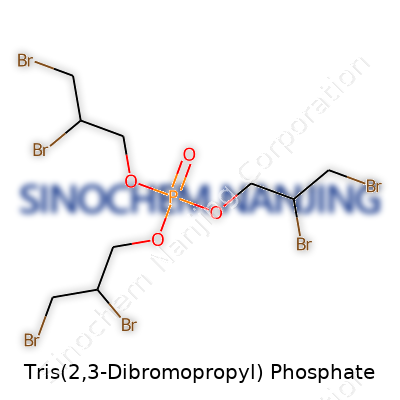
| Names | |
| Preferred IUPAC name | Tris(2,3-dibromopropyl) phosphate |
| Other names |
Tris(DBP) Tris(2,3-dibromopropyl)phosphate Tris(2,3-dibromopropyl)orthophosphate TDCPP Tris(dibromopropyl)phosphate |
| Pronunciation | /ˈtraɪs tuː θriː daɪˈbroʊmoʊˈproʊpəl ˈfoʊsfeɪt/ |
| Identifiers | |
| CAS Number | 126-72-7 |
| Beilstein Reference | 1631245 |
| ChEBI | CHEBI:81937 |
| ChEMBL | CHEMBL402219 |
| ChemSpider | 21533 |
| DrugBank | DB14015 |
| ECHA InfoCard | 03f5569c-8e8c-43e9-9c56-7b51b2f1bcf1 |
| EC Number | 215-548-8 |
| Gmelin Reference | 1651207 |
| KEGG | C18409 |
| MeSH | D014268 |
| PubChem CID | 6568 |
| RTECS number | TF0350000 |
| UNII | H60QRT6I9G |
| UN number | UN3278 |
| Properties | |
| Chemical formula | C9H15Br6O4P |
| Molar mass | 697.69 g/mol |
| Appearance | White crystalline solid |
| Odor | Odorless |
| Density | 1.61 g/cm³ |
| Solubility in water | Insoluble |
| log P | 2.96 |
| Vapor pressure | Negligible |
| Magnetic susceptibility (χ) | -7.4E-6 cm³/mol |
| Refractive index (nD) | 1.5950 |
| Viscosity | 550 cP (25°C) |
| Dipole moment | 1.72 D |
| Thermochemistry | |
| Std molar entropy (S⦵298) | 505.8 J·mol⁻¹·K⁻¹ |
| Std enthalpy of combustion (ΔcH⦵298) | -6660 kJ/mol |
| Hazards | |
| Main hazards | Toxic if swallowed, suspected of causing cancer, causes skin and eye irritation, may cause damage to organs through prolonged or repeated exposure. |
| GHS labelling | GHS02, GHS07, GHS08 |
| Pictograms | GHS06, GHS08, GHS09 |
| Signal word | Danger |
| Hazard statements | H360fd: May damage fertility. May damage the unborn child. |
| Precautionary statements | P261, P264, P270, P272, P273, P280, P302+P352, P308+P313, P363, P501 |
| NFPA 704 (fire diamond) | 2-3-1-特殊 |
| Flash point | Flash point: > 110°C (230°F) |
| Lethal dose or concentration | LD50 (oral, rat): 1,150 mg/kg |
| LD50 (median dose) | 1,150 mg/kg (rat, oral) |
| NIOSH | TT0345000 |
| PEL (Permissible) | PEL (Permissible): Not established |
| REL (Recommended) | 0.001 ppm |
| IDLH (Immediate danger) | IDHL: Not established |
| Related compounds | |
| Related compounds |
Tris(2-chloroethyl) phosphate Tris(1,3-dichloro-2-propyl) phosphate Triphenyl phosphate Tricresyl phosphate Tris(2-ethylhexyl) phosphate |



